


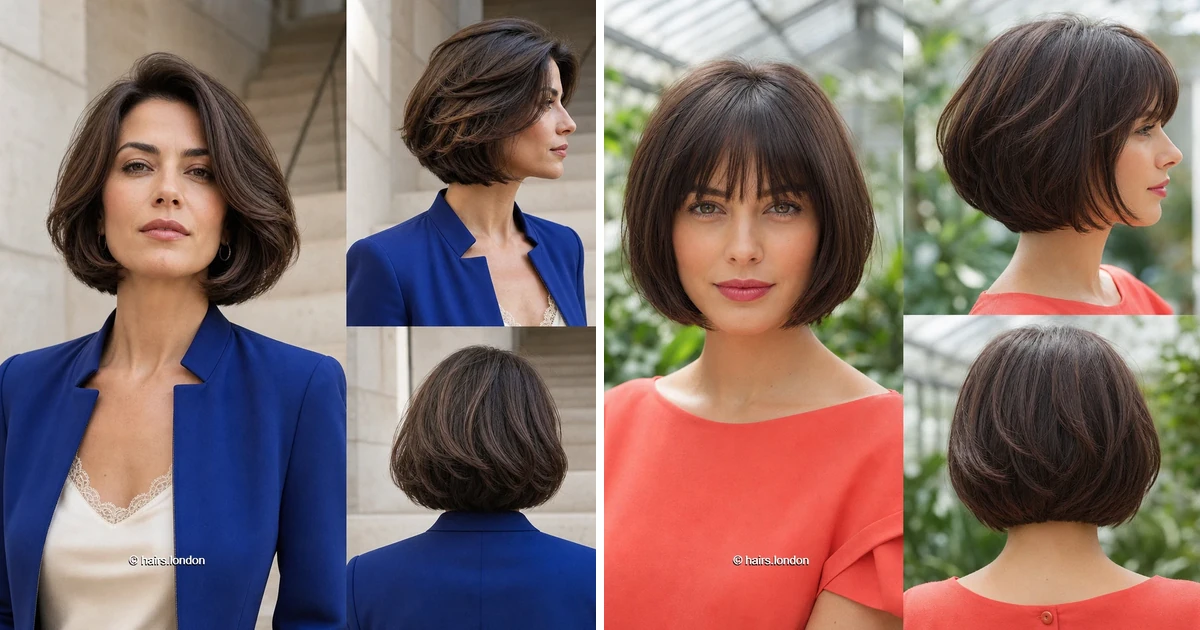
11. Textured Brunette Bob with Short Bangs
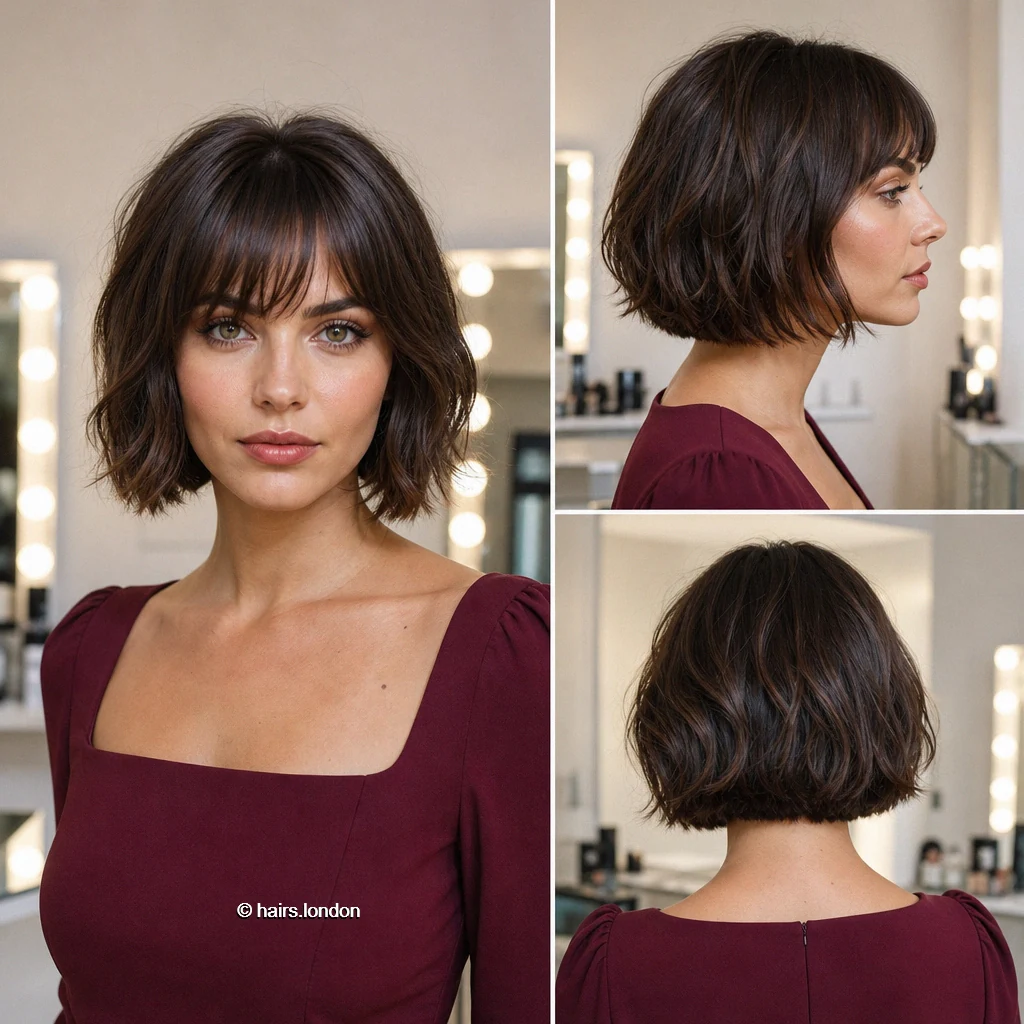
This brunette bob reaches the jaw, combining short, separated bangs with irregular, softly textured ends around the sides and back. Visible waves interrupt the outline, especially through the side sections, so the lower edge reads relaxed rather than perfectly smooth or precisely blunt overall. Scrunch in a light foam and let natural movement develop, using a diffuser if you prefer more controlled drying. If your hair is very fine, request selective texture instead of removing too much weight from the perimeter. Trim the fringe when it blocks your view, while allowing slightly more flexibility between trims for the tousled ends.
12. Warm Brown Bob with a Feathered Fringe
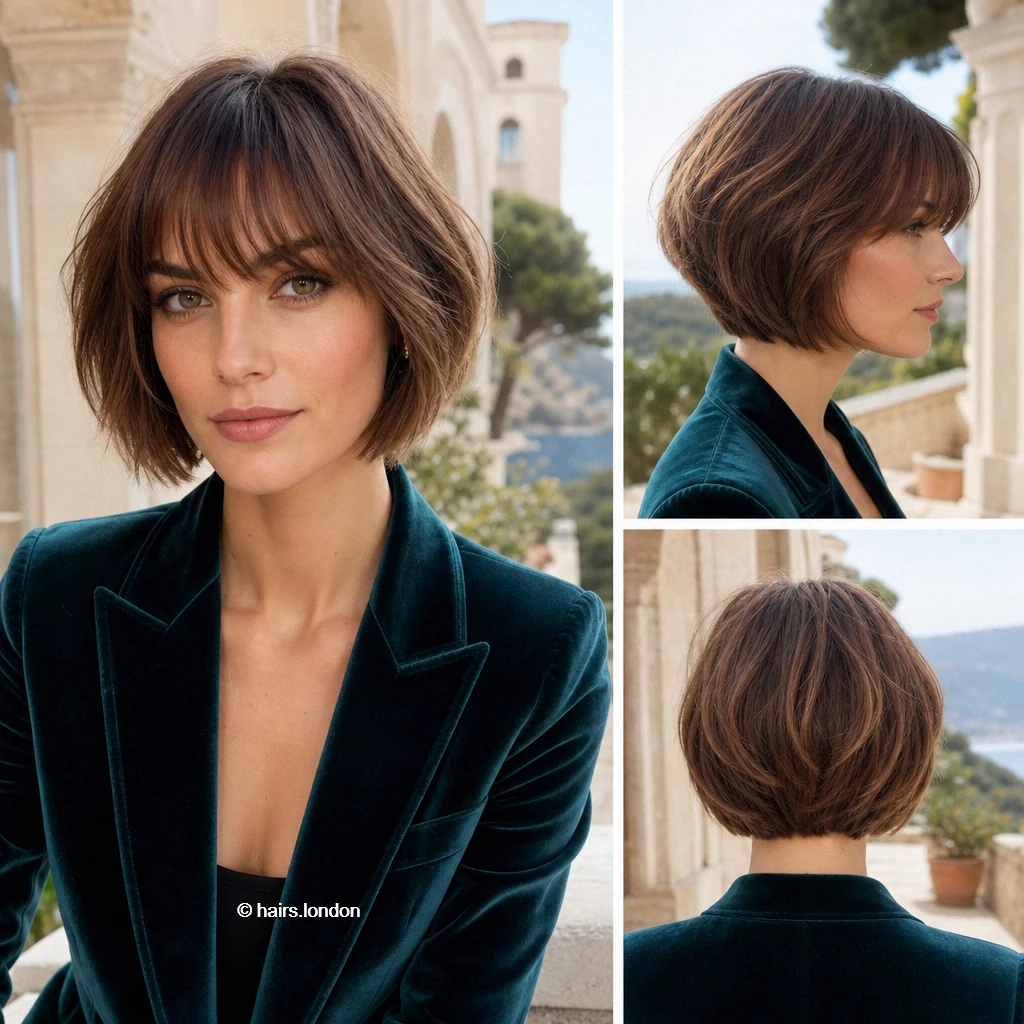
Warm brown hair forms a compact, jaw length bob with a wispy fringe and softly rounded volume behind the ears. The side and back views show a shorter neckline beneath layered fullness across the crown, giving the ends movement without a severe angle. Lift the roots as you dry, then guide the fringe across the forehead with a brush and light airflow. This shape may need careful weight placement on dense hair, while finer hair could require a less layered baseline. Plan neckline trims to preserve its compact finish, and refresh the warm color according to how visibly it fades.
13. Soft Chestnut Bob with Light Bangs
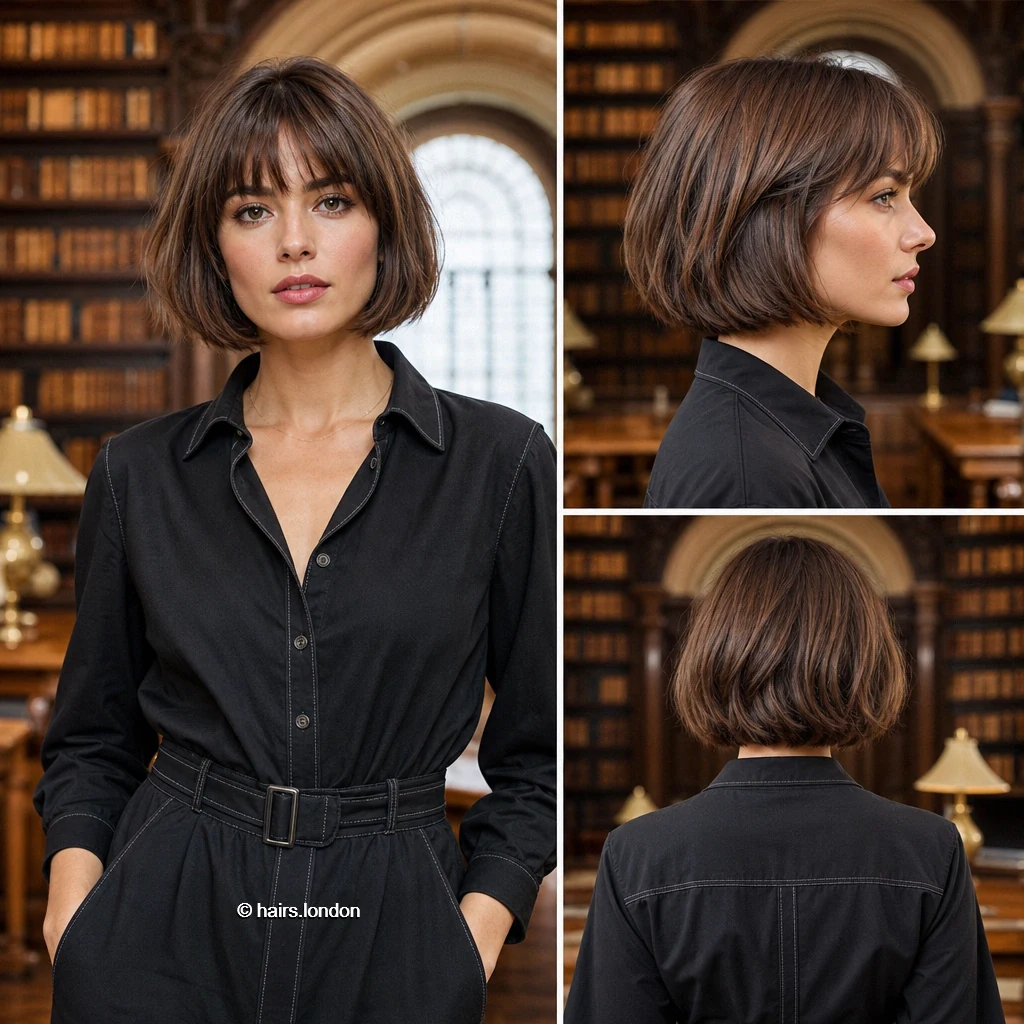
Light bangs soften this chestnut bob, whose jaw length sides sit above a neat neck length back and gentle curve. The visible layers add movement around the cheeks through the surface without erasing the outline, creating a finish that looks polished but not stiff. Smooth the lower edge with a brush, then break up the fringe with your fingertips rather than heavy product. Ask your stylist to adjust the layers for your density, especially if your hair tends to expand or collapse. Fringe upkeep may be more frequent than full trims; watch the back edge for signs of lost definition.
14. Choppy Brown Bob with Curtain-Like Fringe
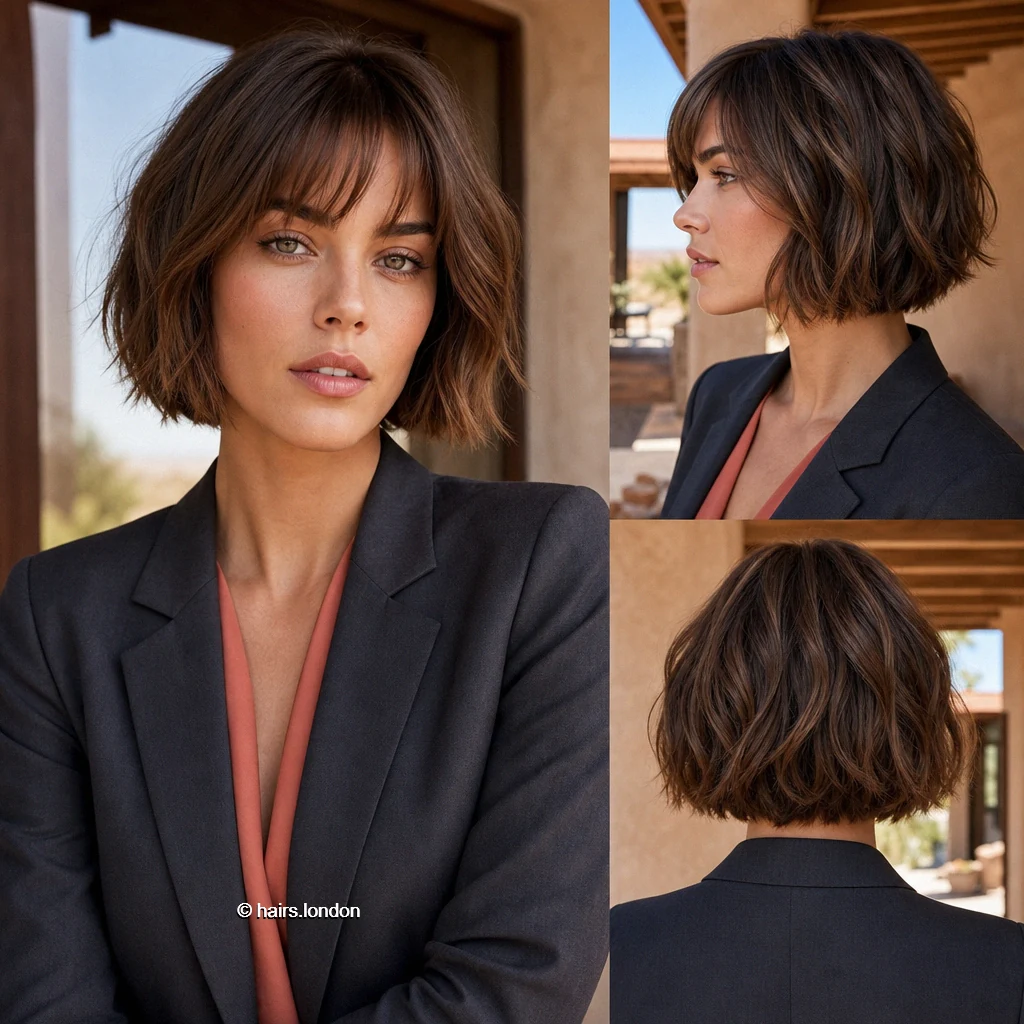
Brown hair with warm highlights sits around the jaw, with a loose central fringe and visibly choppy movement at the ends through the sides and back. The side and back views show a softly irregular perimeter, not the clean weight line of a blunt bob. Scrunch lightweight cream into damp lengths, then direct the front pieces away from the face as they dry. This texture can help thicker hair feel less solid, but fine hair may need more weight left below. Trim when the lower shape becomes uneven for your taste, and protect highlighted strands from unnecessary heat during styling.
15. Layered Chestnut Bob with Flipped Ends
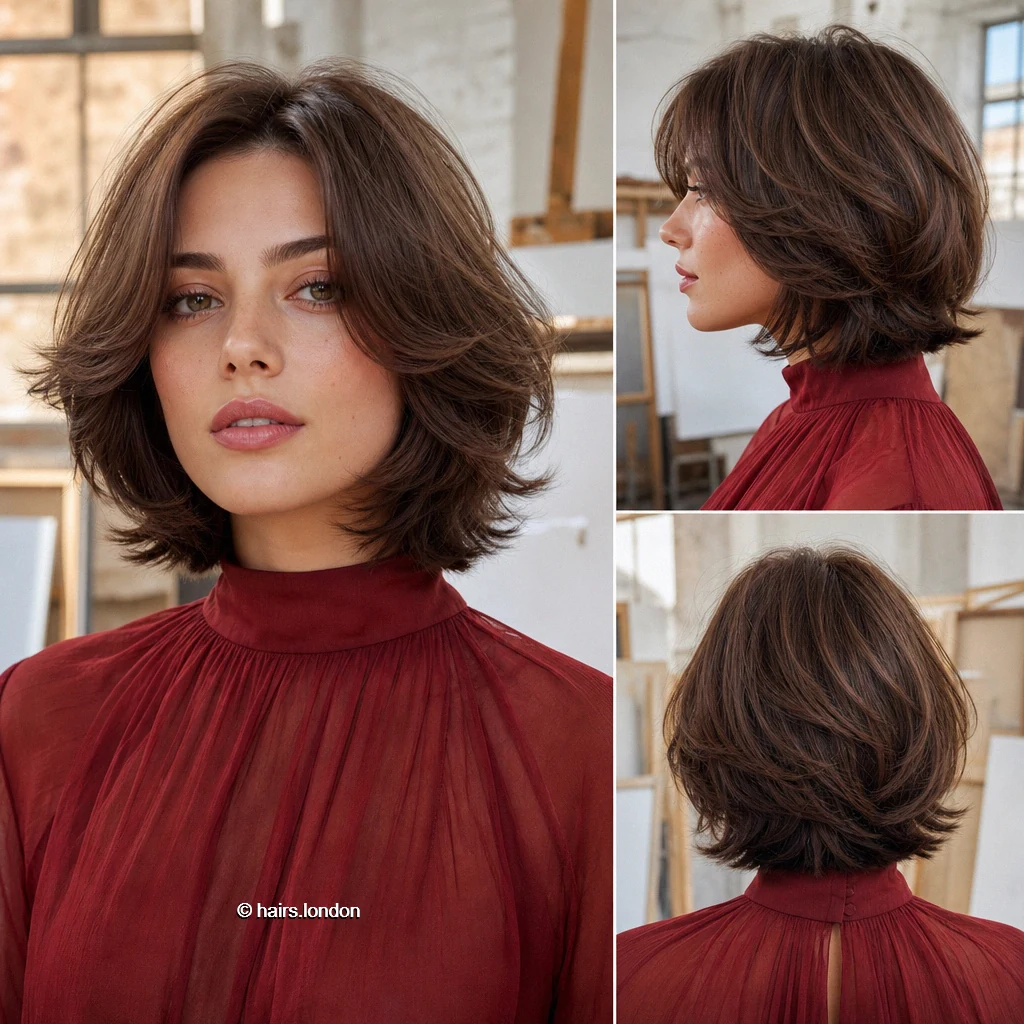
Chestnut brown hair is cut into a layered bob that falls around the jaw, with longer front pieces opening outward. The side and back views reveal flicked ends along the lower outline beneath fuller layers, giving this silhouette more lift than a smooth bob. Dry with a brush directed away from the face, then shape selected ends outward using modest heat and protection. Thick hair may need deliberate weight control, while fine hair could require fewer short layers to retain its body. Maintain the visible layers as they lengthen, and ask for small perimeter adjustments rather than removing movement altogether.
16. Brunette Layered Bob with Side-Swept Fringe
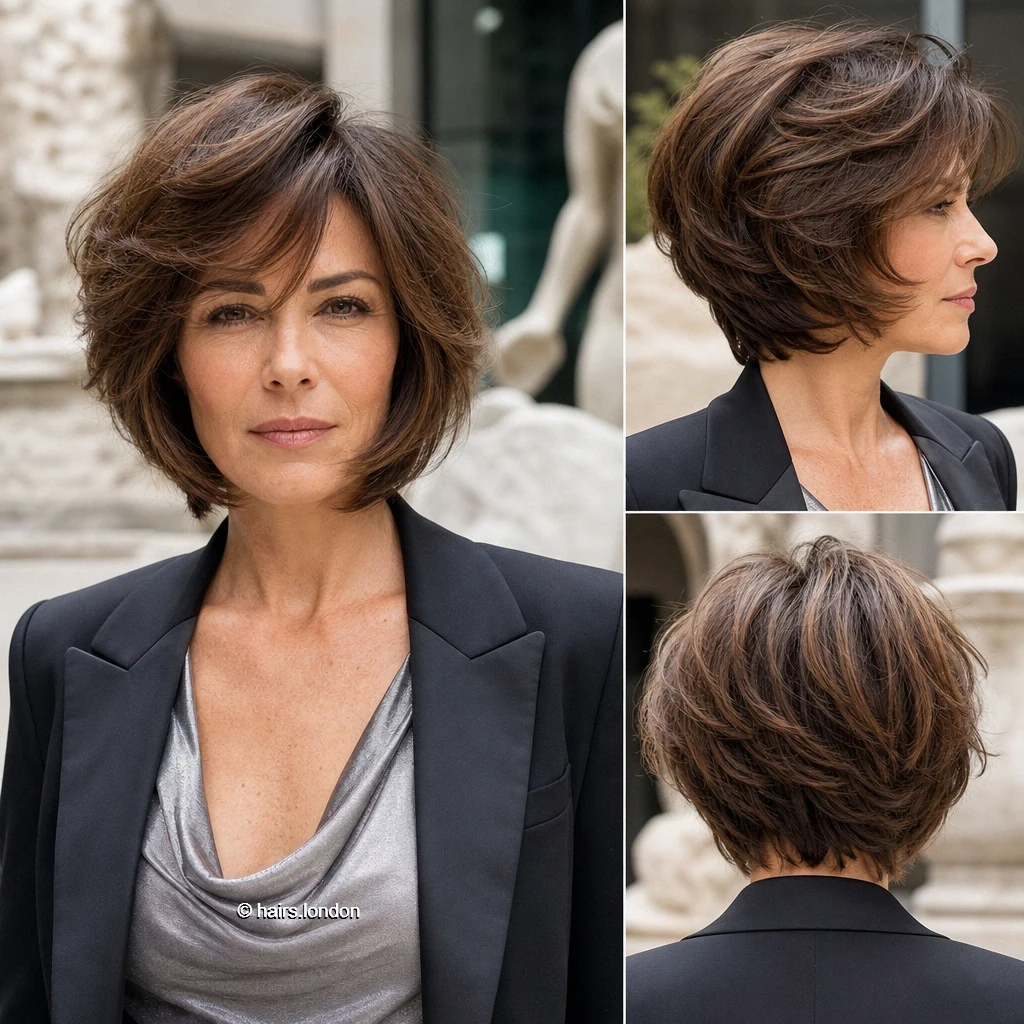
This brunette bob has a side swept fringe, prominent upper layers with clear separation between sections, and a shorter neckline visible beneath its rounded volume. Its textured back shows distinct pieces and graduation, making the shape more layered than a single length jaw bob. Lift the roots while drying, then use a light cream to define the ends without making the crown rigid. The shorter layers may give dense hair movement, although finer hair might need a gentler version for adequate fullness. Ask your stylist to check the nape shape at trims, since growth can soften the graduated outline quickly.
17. Full Brown Bob with Face-Framing Layers
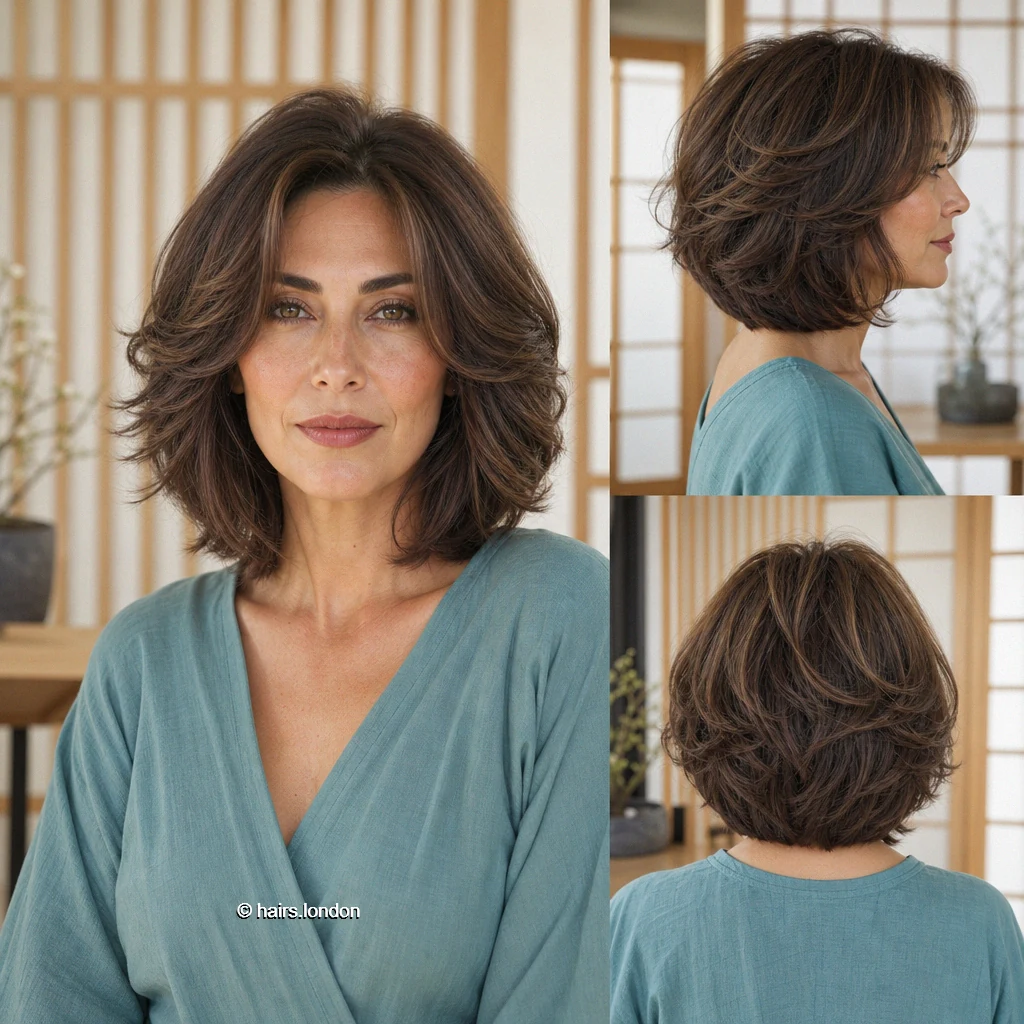
Rich brown hair falls around the jaw and upper neck, with sweeping face framing layers and fullness through the back. The visible outline is rounded and softly feathered with movement through the ends, without a sharp diagonal perimeter or an obviously stacked nape area. Use a brush to lift the front away from the face, then smooth only the lower edge for balance. If your hair is thick, discuss reducing bulk within the shape; finer hair may suit longer, less pronounced layers. Trim when the ends lose their curved outline, and keep styling products light enough to preserve natural movement.
18. Dark Brunette Shaggy Bob with Face-Framing Pieces
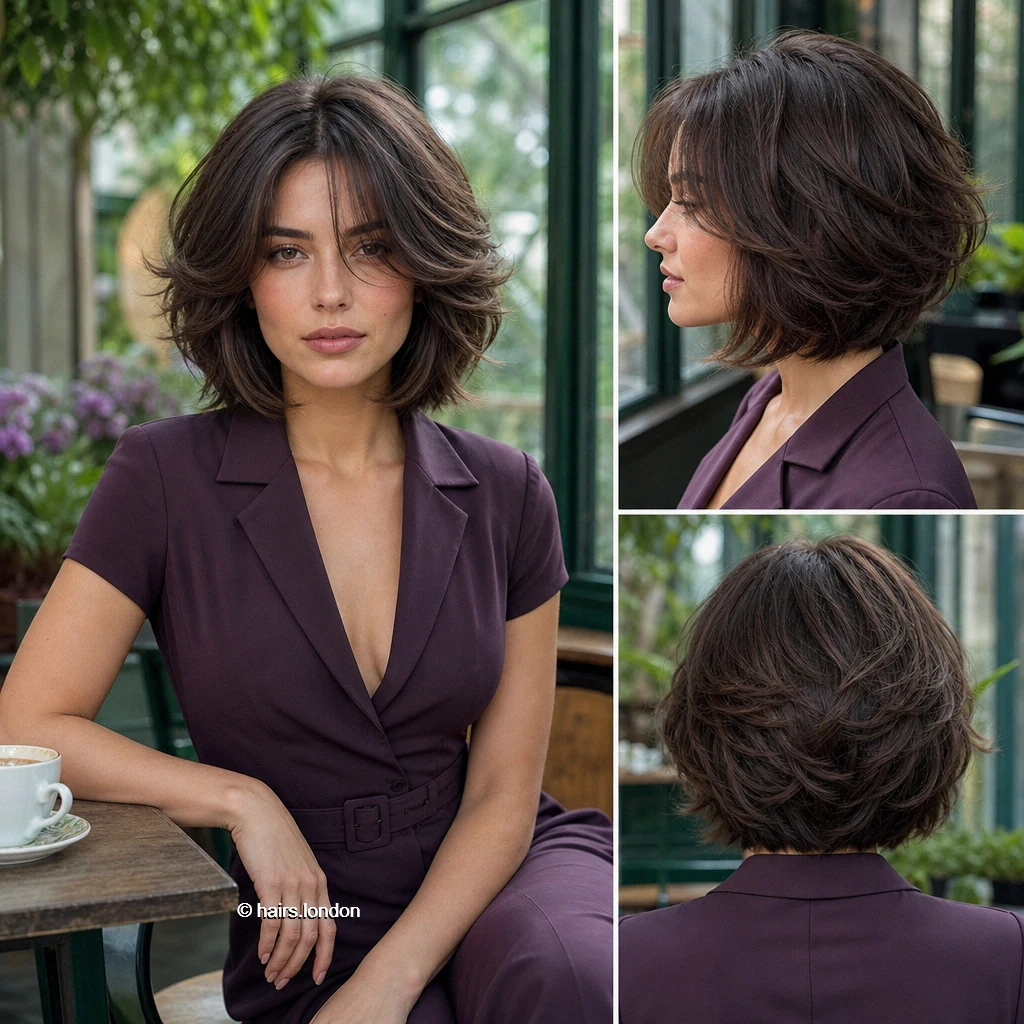
Dark brunette hair forms a shaggy bob around the jaw, with open face framing pieces and visibly feathered ends particularly across the lower sides. Layers continue through the side and back, creating a loose outline instead of the firm perimeter seen on blunt bobs. Enhance existing waves with a small amount of mousse, then diffuse gently or air dry without repeatedly disturbing the shape. This much layering depends on density and texture; ask for a softer interpretation if your ends become thin. Maintenance can follow the movement you prefer, with trims when the fringe or lower layers lose their placement.
19. Soft Brown Layered Bob Near Lob Length
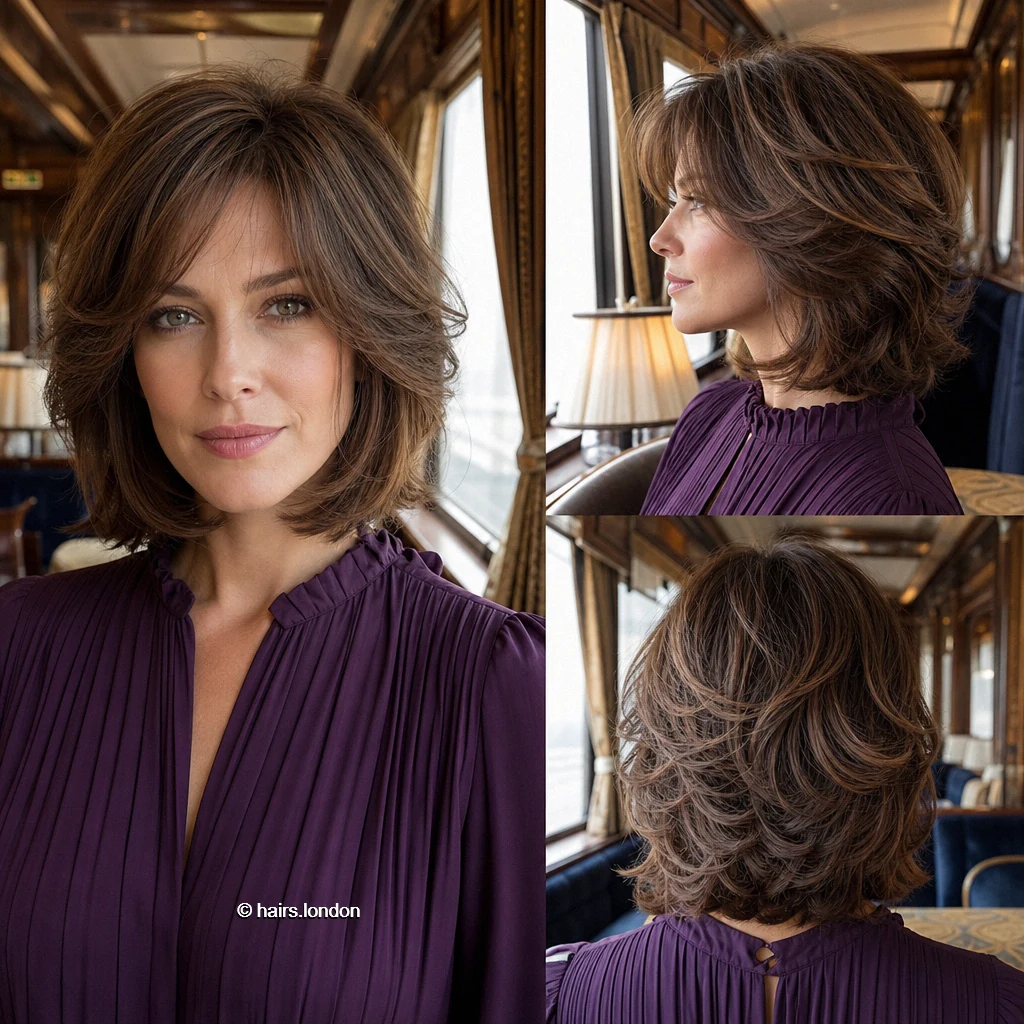
Soft brown hair extends below the jaw toward the neck, making this layered shape a longer bob rather than a cropped cut. Side swept front pieces and feathered layers create width around the face, while the back falls into a loose perimeter at rest. Use a brush to guide the front outward, leaving the lower lengths free to move instead of curling everything under. Dense hair may benefit from considered weight removal, but fine hair might need longer layers for a fuller baseline. Trim when the back loses balance, and discuss whether you want to preserve or shorten this length.
20. Chestnut Feathered Lob with Sweeping Layers
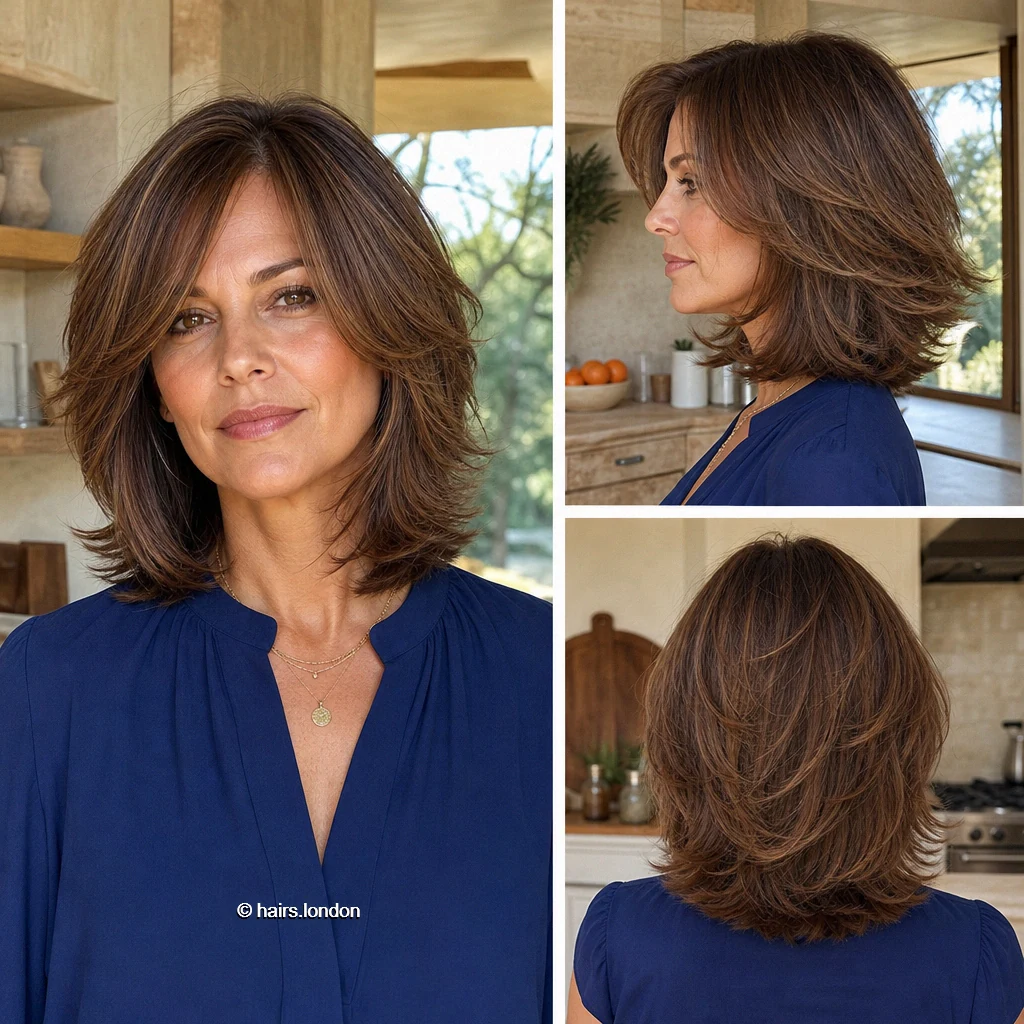
Chestnut brown hair reaches the shoulders in this longer, layered bob, with sweeping front sections and visibly feathered lower ends with visible separation at the ends. The side and back views show movement throughout, rather than a compact neckline or a sharply defined bob perimeter. Dry the front away from the face, then use a brush or diffuser to encourage lift through the layers. If your hair is dense, ask how to prevent bulk at shoulder level; finer hair may need restrained layering. Maintain the ends when they lose their feathered shape, and choose color refreshes according to visible fading.
How to Choose Your Bob Length and Shape
Decide where you want the perimeter to sit when your hair is dry: at the jaw, against the neck or nearer the shoulders. A rounded bob keeps fullness through the sides, while a layered version releases more movement. An A-line bob has a visibly longer front; a stacked or graduated bob needs visible buildup at the back. Bring views of both the front and neckline to your consultation, and consider how your natural texture changes the finished length.
Styling Fine, Thick, Wavy and Curly Textures
Fine hair often benefits from a weightier lower edge, root lift and restrained product. For thick hair, ask about internal weight removal that leaves the visible perimeter intact. Encourage waves with mousse, gentle scrunching or a diffuser instead of brushing out their shape. For curls, agree on the bob length in its dry state and leave room for shrinkage. Style a fringe first if it tends to split, and avoid coating short layers with heavy creams.
Keeping Brown Bob Color Fresh
The images range from deep brunette to warmer chestnut and copper-brown tones. Use a color-safe wash if your hair is colored, protect it when heat styling and ask your colorist whether a gloss would address fading or dullness. Highlighted pieces may need a different refresh schedule from a single all-over shade; the visible change, not the haircut alone, should guide timing.
Maintaining the Bob Perimeter and Graduation
A compact, smooth neckline usually shows growth sooner than a deliberately tousled edge. Check whether the bob still curves as intended and whether both sides sit where you want them. Short fringes may require attention before the main cut. Where the back has visible graduation, ask the stylist to preserve that buildup during trims; longer layered bobs can often tolerate a looser schedule.
What to Discuss with Your Stylist
Show the specific image and point to the fringe, weight line, front length and back shape you want. Explain your density, usual part, cowlicks, natural waves or curls, and how much time you will spend styling. Ask which details are achievable on your hair and how the cut will look without a blowout. Agree on where weight can be removed without leaving the ends sparse.
Frequently Asked Questions
What is the difference between a bob and a lob?
A bob generally sits around the jaw or neck; a lob is a longer bob that approaches or reaches the shoulders. The last two images show that longer transition.
Is an A-line bob the same as a stacked bob?
No. A-line describes a front that is longer than the back. Stacked describes visible graduation that builds shape at the back; a cut may have one feature, both or neither.
Which bob shape helps fine hair look fuller?
A relatively solid lower edge and restrained layering can preserve fullness. Ask your stylist to assess your density and growth patterns before removing weight.
How can thick hair avoid a bulky bob?
Consider selective internal weight removal and layers placed for your texture. Keep enough hair at the perimeter for the outline you want.
Can naturally curly hair wear a jaw-length bob?
Yes, if the length and shape are planned around curl pattern and shrinkage. Discuss the desired dry outline rather than relying on wet length alone.
Will a fringe work with my natural part?
That depends on growth direction, cowlicks and how much daily styling you prefer. A stylist can suggest a straight, piecey or longer sweeping fringe accordingly.
How do I style a rounded bob each morning?
Lift the roots as needed, then direct airflow along the hair and guide the ends inward with a brush. Use just enough product to control flyaways without flattening the shape.
How do I keep a textured bob from looking messy?
Keep the perimeter intentional, define a few pieces with lightweight product and avoid disturbing the hair repeatedly as it dries.
How often should a short bob be trimmed?
Trim when the neckline, fringe or weight line no longer sits as intended. A precise short edge may need attention sooner than a loose, longer layered shape.
What happens when a graduated bob grows out?
The compact back and built-up weight can lose definition. Your stylist can restore the shape or gradually even out the lengths if you want to grow it longer.
Can I grow a jaw-length bob into a lob?
Yes. Ask for small perimeter adjustments and selective layer trims while preserving length. The transition may require changes to how you style the ends.
Do warm brown bobs need special color upkeep?
If the color is treated, color-safe washing, heat protection and occasional glossing may help. Base refreshes on your colorist’s advice and visible fading.
Conclusion
The most useful bob reference is the one whose shape you can picture on your own hair: where its edge falls, how its layers move and what its fringe asks of your routine. Save the front and back views you like, then work with your stylist to adapt the cut to your texture, density and preferred upkeep.


