

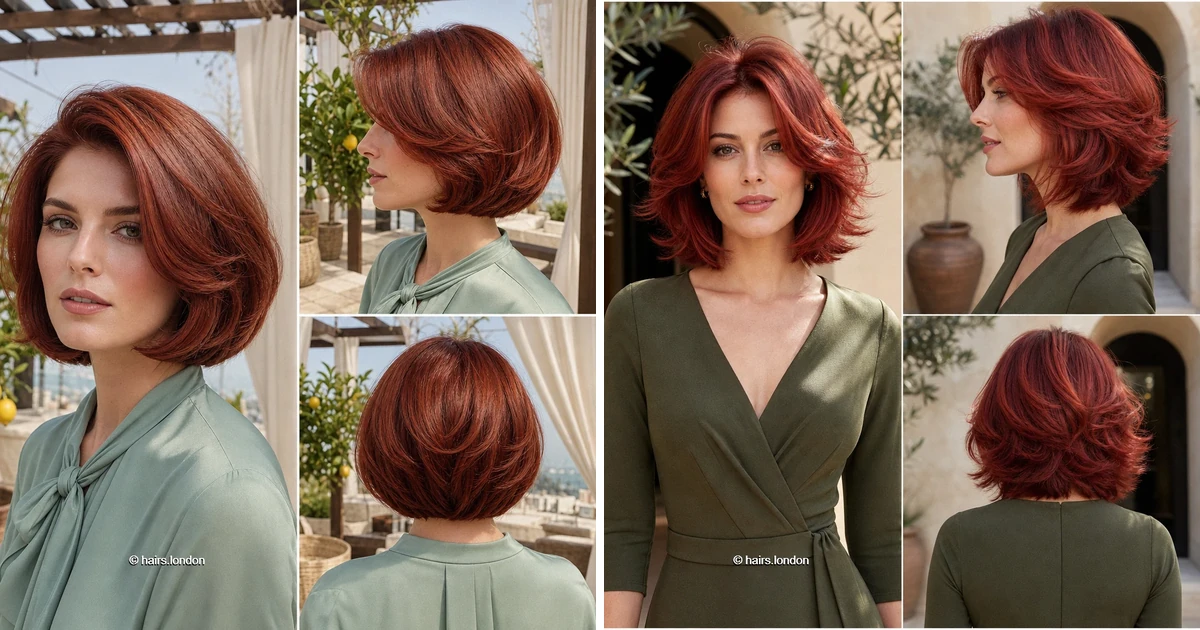
11. Feathered Copper Bob with Side-Swept Front
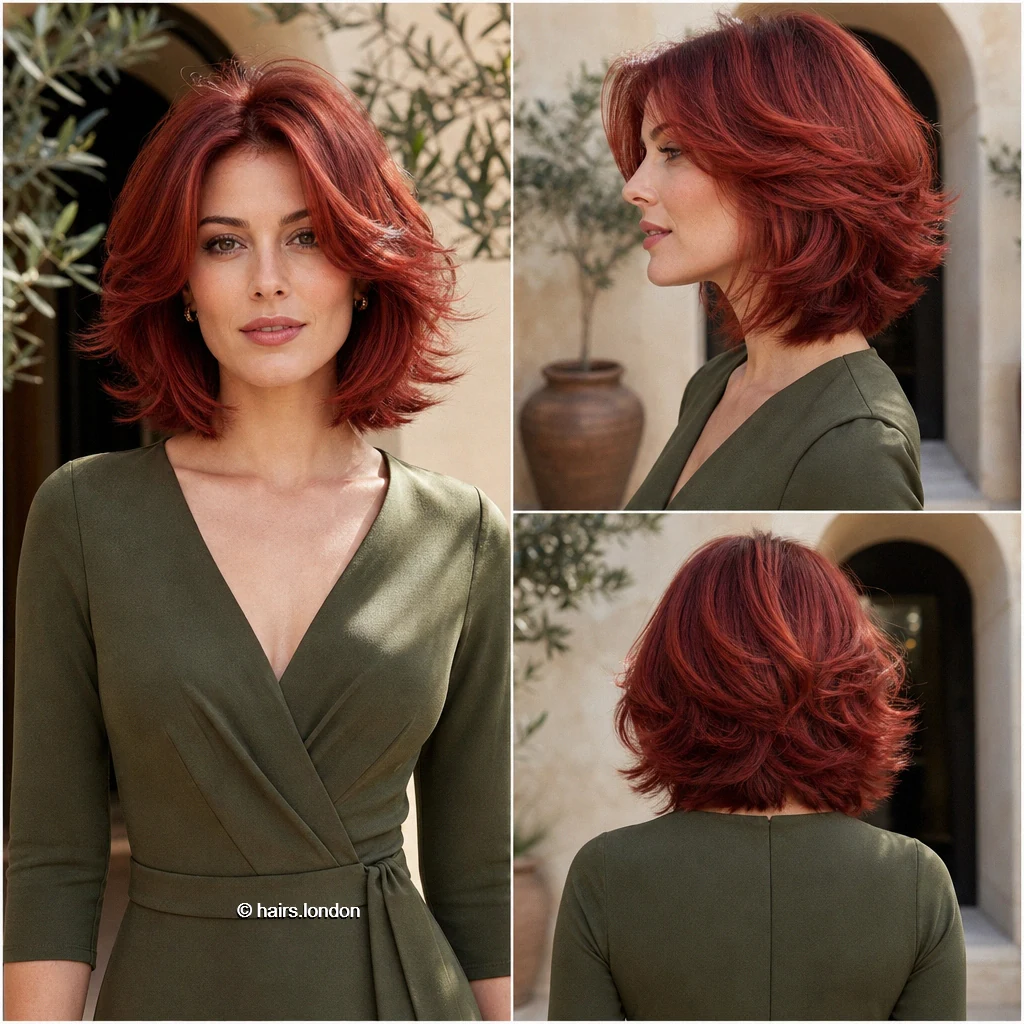
Long, side-swept front pieces introduce this feathered copper bob. Layered sides flick outward around the jaw and upper neck. The back shows similarly loose, separated movement rather than graduation. Its soft outline offers more airiness than a solid perimeter. Blow-dry away from the face using a medium brush. Touch only selected ends with a styling tool afterward. Natural waves may supply movement with less heat. Fine hair could need fewer layers to keep fullness below. Ask your stylist how much daily shaping the flicks require. Trim when the layered ends begin losing their distinct direction. Keep styling products especially lightweight.
12. Bright Copper Shaggy Bob with Flipped Ends
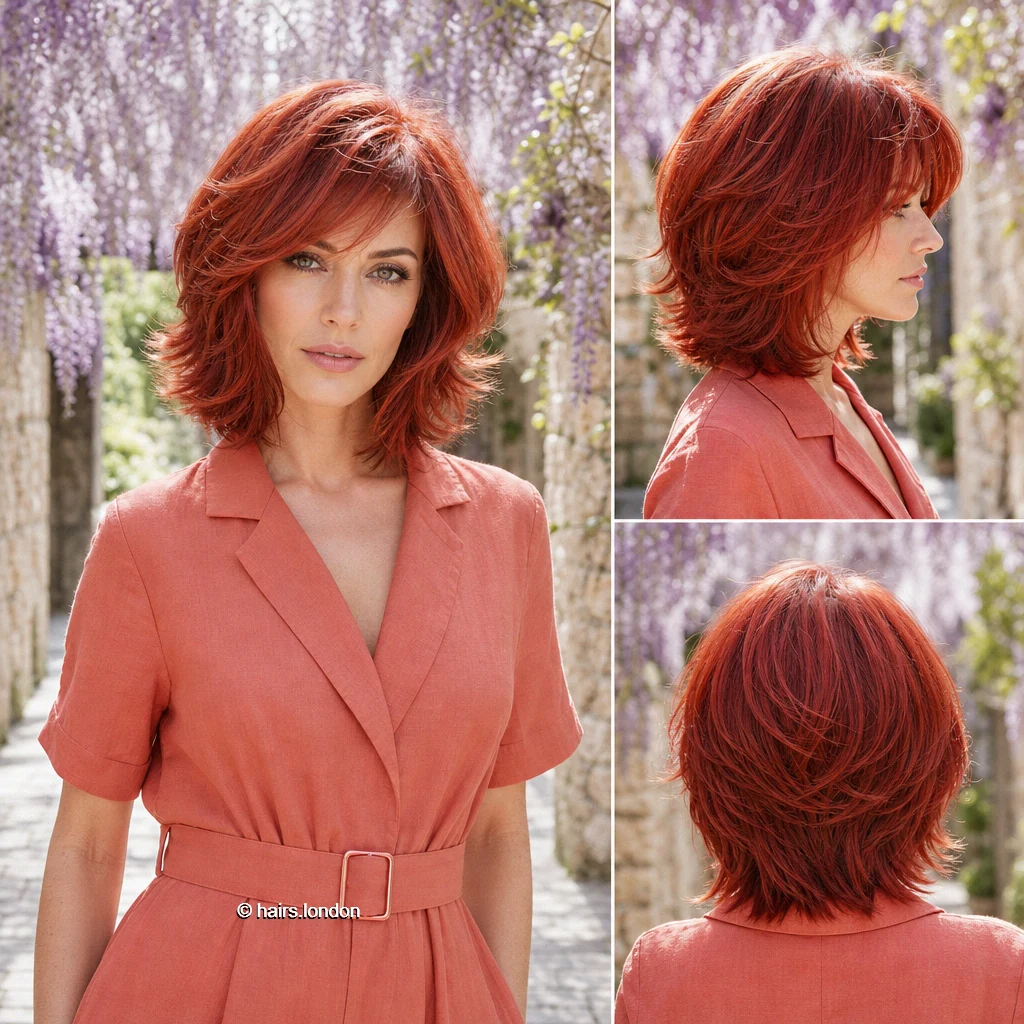
Bright copper intensifies the movement in this shaggy bob. Side-swept fringe blends into heavily feathered, neck-length sides. The ends flip outward, especially near the lower edge. From behind, visible layers create a loose, textured finish. Scrunch damp hair with lightweight mousse for easy separation. Diffuse gently if your texture needs help holding shape. Straight hair might require selective bends with a brush. Dense hair can support layering, provided the perimeter remains balanced. Discuss your natural wave pattern before requesting this much texture. Refresh the cut when the outward tips lose their shape. Let your stylist see how your hair air-dries.
13. Ginger Layered Bob with Airy Side Fringe
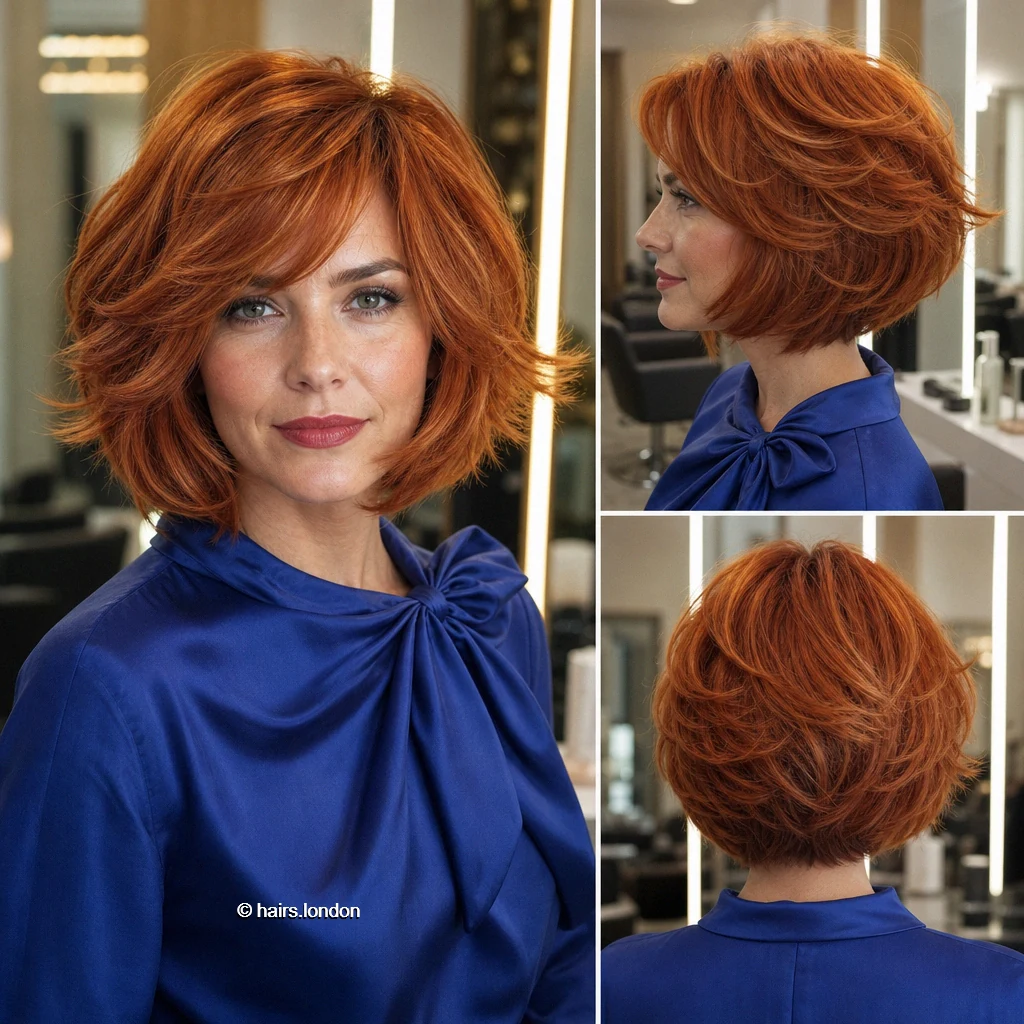
Ginger color and airy layers give this bob noticeable lift. A long side fringe sweeps across the forehead toward one cheek. The sides skim the jaw, ending in small outward flicks. Behind, layered pieces form a rounded but visibly textured shape. Direct the fringe while damp to establish its preferred sweep. Then lift the roots and leave the ends flexible. A light cream can tame flyaways without hiding separation. This cut may suit hair with dependable natural volume. If yours is thick, discuss controlling width around the ears. Recheck the outline as its short layers grow out between salon visits.
14. Plum-Burgundy Layered Lob with Curtain Pieces
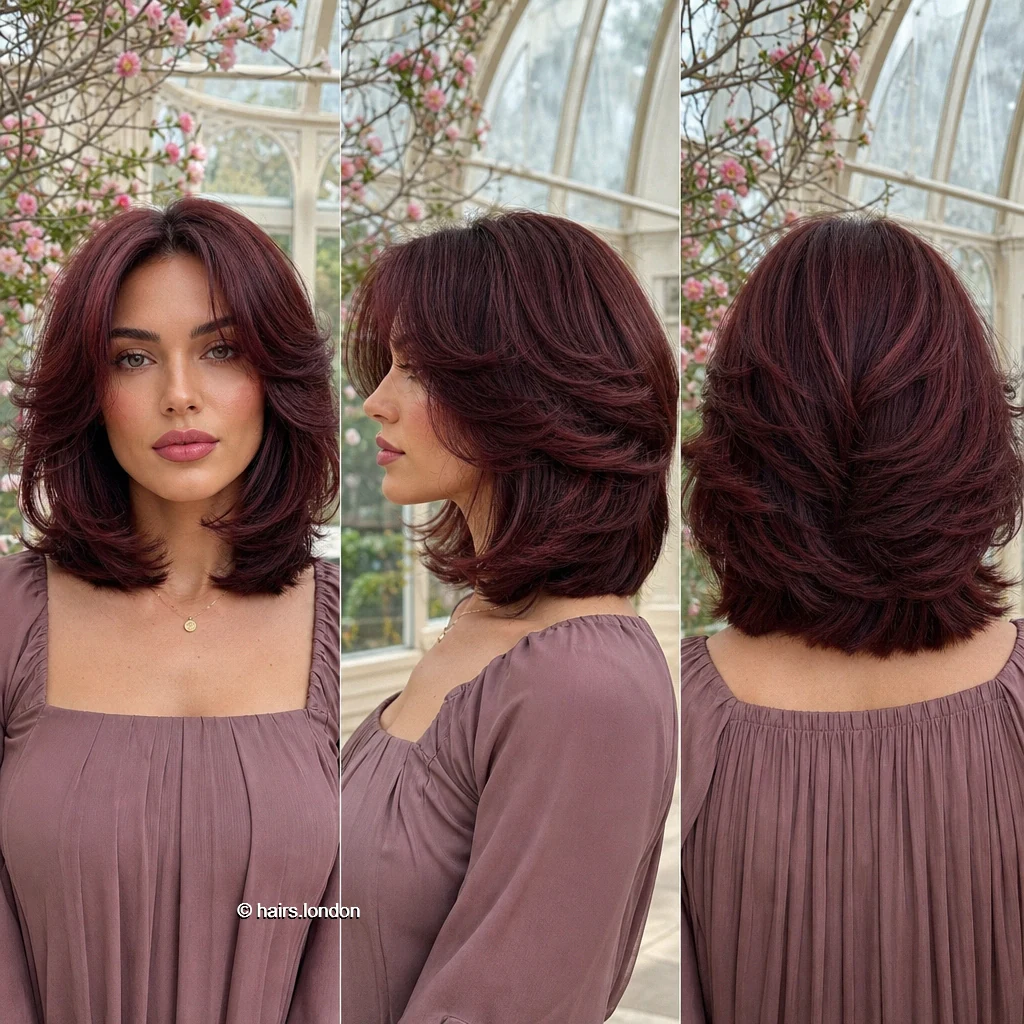
This plum-burgundy cut falls around the shoulders, making it a lob. Its center-parted front pieces open softly around the face. Layered lengths create movement through the sides and visible back. The lower edge looks light rather than sharply blunt. Style with a round brush for a gentle outward turn. Alternatively, enhance existing waves while keeping the roots flexible. Thick hair may need shaping to prevent a broad silhouette. Finer hair could benefit from fewer layers near the bottom. Discuss how the front pieces should sit when tucked. Trim before the layers lose definition or their ends thin. Avoid excessive heat.
15. Raspberry Bob with Sweeping, Piecey Layers
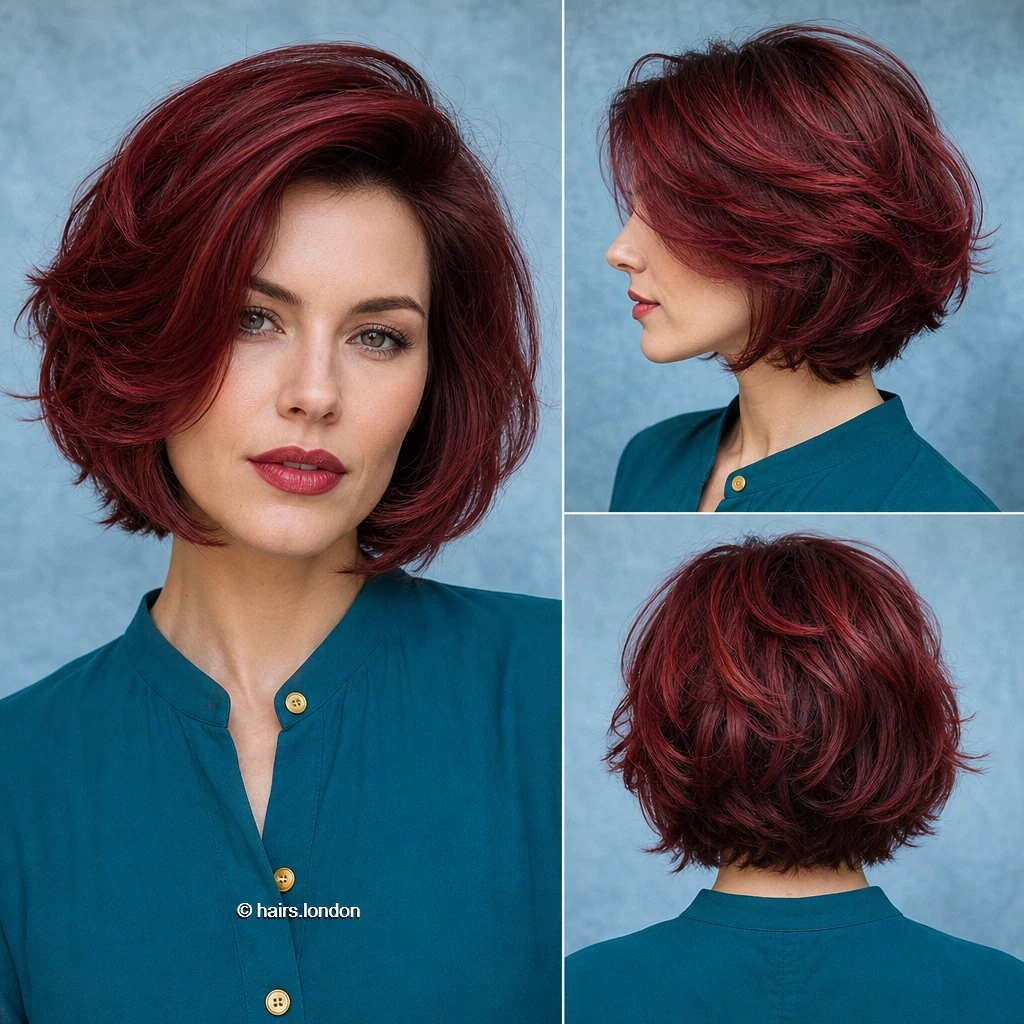
Raspberry-red tones accent the sweeping layers in this jaw-length bob. A deep side part creates a broad, face-framing front section. Shorter pieces break up the sides and textured back. The perimeter remains visible despite its deliberately piecey finish. Lift the roots, then direct the longest section across. Use minimal wax on selected ends to encourage separation. This shape may favor density that supports layered volume. Discuss careful weight removal if your hair expands easily. Check the front’s behavior before committing to its dramatic sweep. Maintain the outline when the shorter pieces begin losing contrast. Let natural texture guide daily styling.
16. Polished Auburn Bob with a Side Sweep
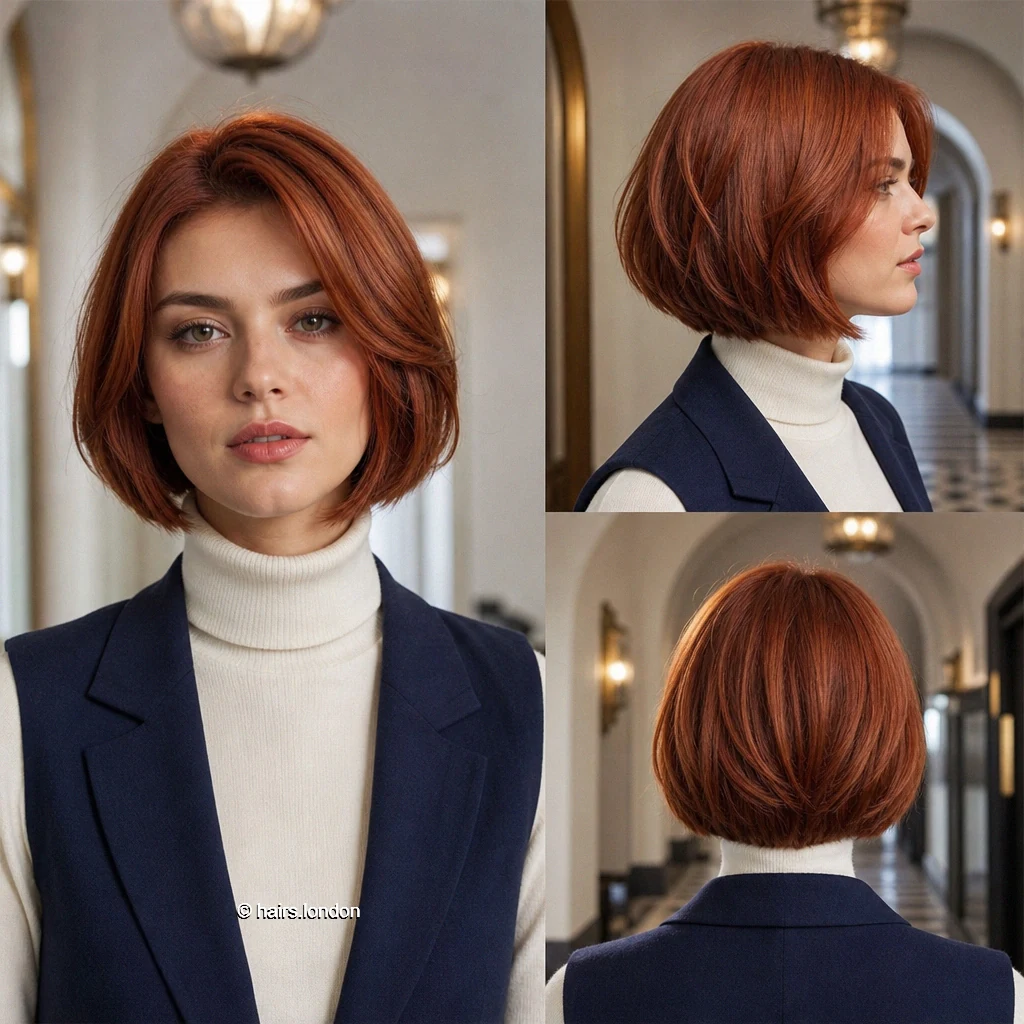
This polished auburn bob curves neatly around the jaw. A side part gives the front a soft, open sweep. From behind, the rounded shape narrows into a clean perimeter. Subtle layering supports movement without making the ends appear thin. Blow-dry downward, then bend the bottom gently with a brush. Add a little shine product only through the lengths. Hair that smooths easily may need less daily work. Natural waves could require a different finishing routine for precision. Ask your stylist to account for neck growth patterns. Keep trims consistent to preserve the close, curved outline. Avoid excessive heat during styling.
17. Soft Copper Bob with a Short Side Fringe
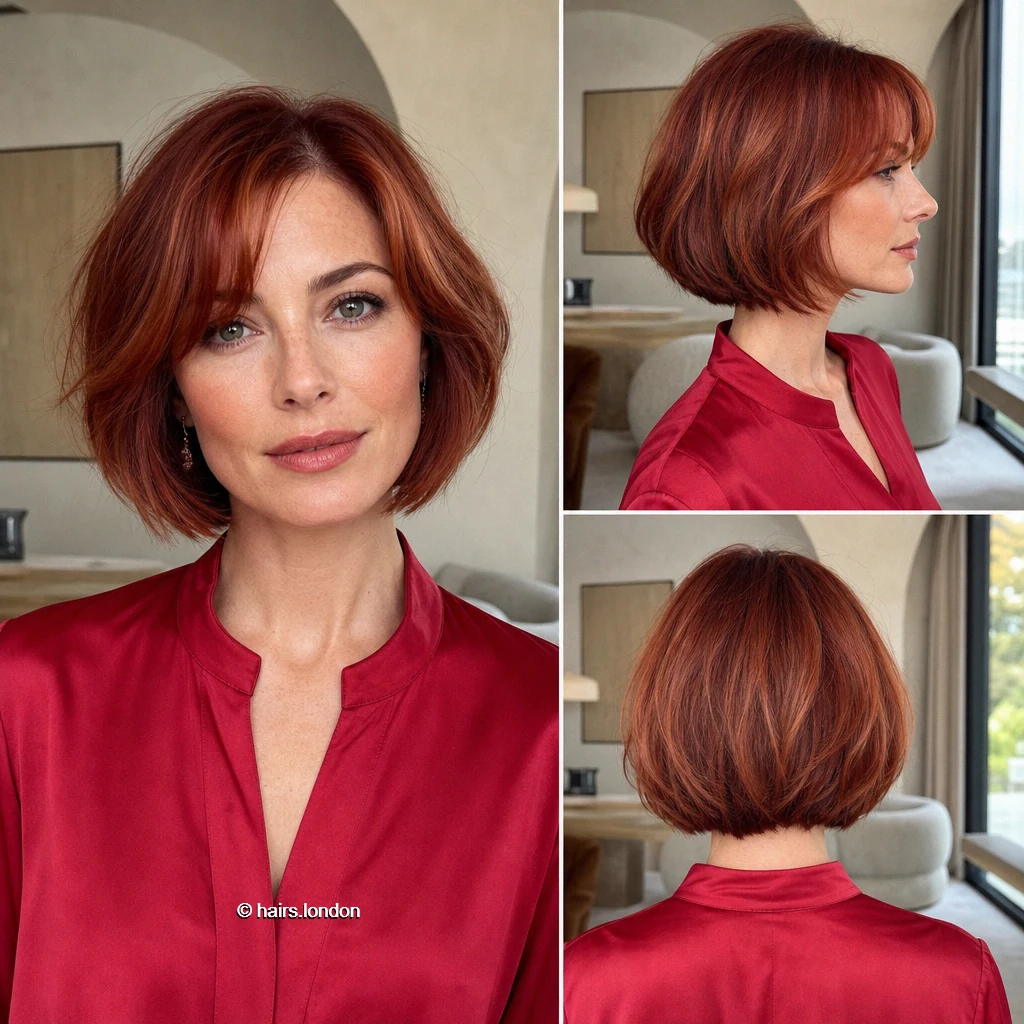
Soft copper coloring brightens this rounded, jaw-skimming bob. Its short side fringe blends into longer cheek-framing sections. The back looks full above a compact lower edge. Light layers give the sides movement while preserving substance. Dry the fringe first if it tends to separate. Then guide the ends inward without overworking the crown. A flexible hold product can maintain the gentle curve. This shape may suit hair that naturally retains volume. Ask whether your growth patterns support the short fringe. Refresh both fringe and perimeter before they obscure the original proportions. Show your stylist how the fringe falls when dry.
18. Textured Ginger Bob with a Relaxed Side Part
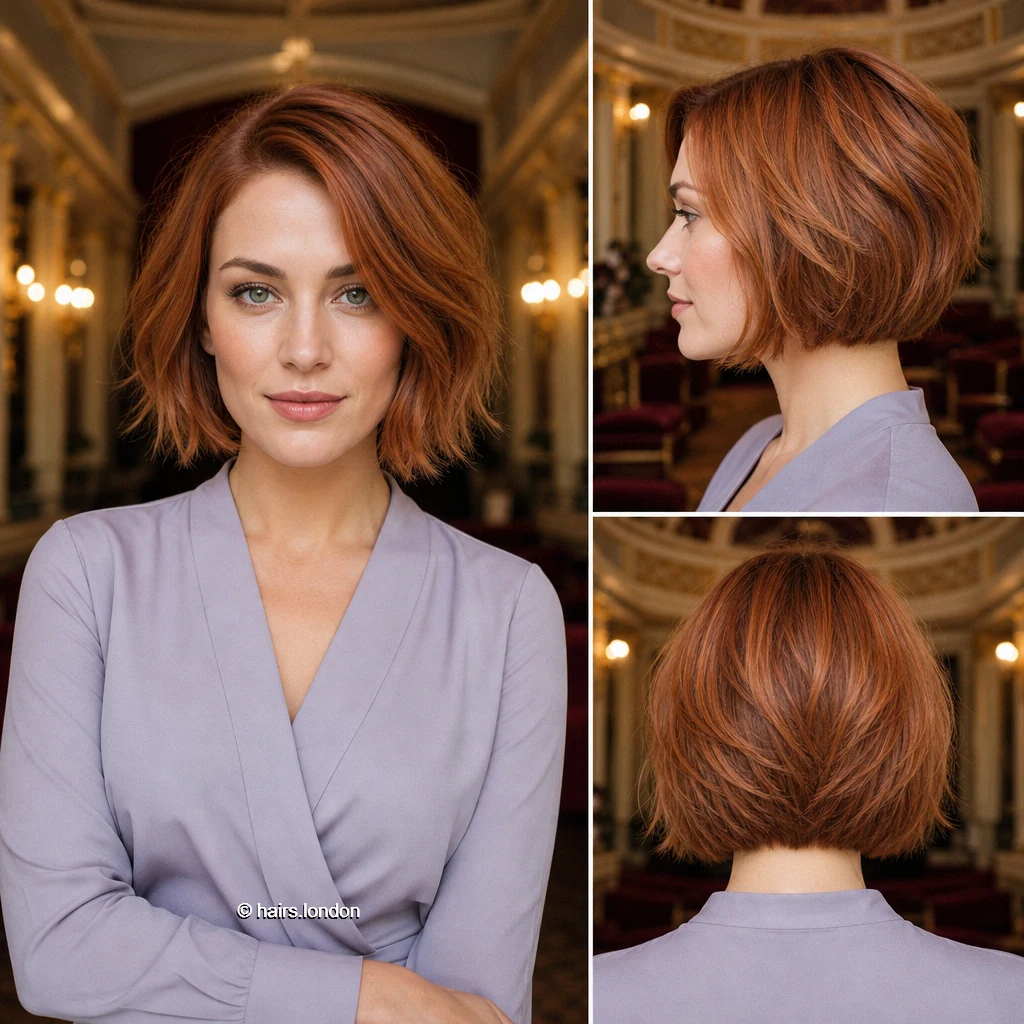
Ginger strands form a relaxed bob with an irregular jawline. The side part adds lift without producing a distinct fringe. Wispy ends and visible layers soften the rounded back. Some front pieces fall slightly longer toward the neck. Encourage natural bends using mousse and gentle scrunching. Smooth only sections that disrupt the overall outline. Heavy oils could make the airy ends look stringy. This shape may work particularly well with subtle waves. Fine hair needs thoughtful layering to protect perimeter density. Revisit the cut when its separated ends start looking shapeless. Ask your stylist to check its shape when dry.
19. Plum-Red Bob with a Smooth Curved Perimeter
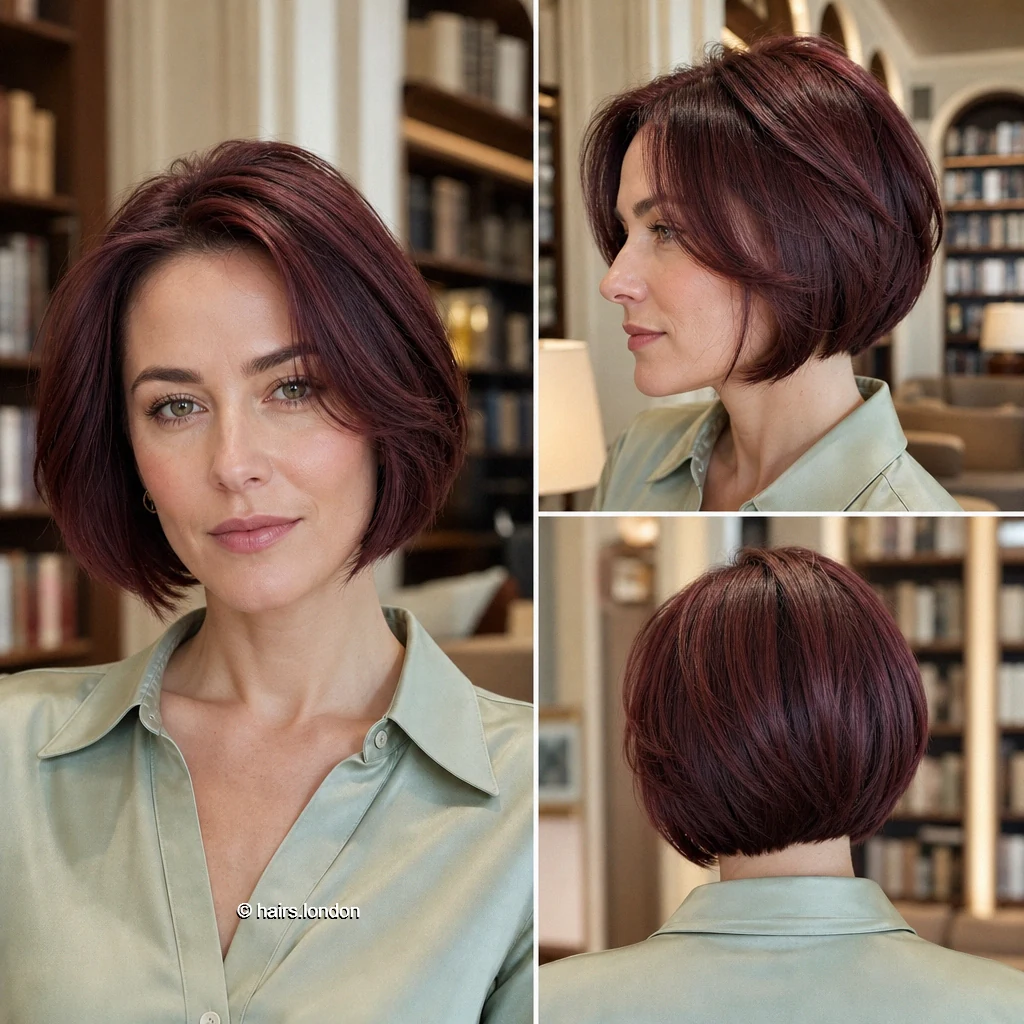
Plum-red color lends depth to this softly curved bob. The side part lifts a long section over the forehead. Front pieces skim the jaw while the back clears the neck. The visible outline is rounded, not dramatically longer toward front. Gentle layers create surface movement above a tidy perimeter. Brush from roots to ends for a smooth finish. Keep cream away from the roots if volume matters. This may suit hair that maintains shape without extensive heat. Discuss the desired weight around your jaw before cutting. Trim when growth disrupts the compact back and front balance. Consider your styling preferences.
20. Angled Burgundy Bob with a Shorter Back
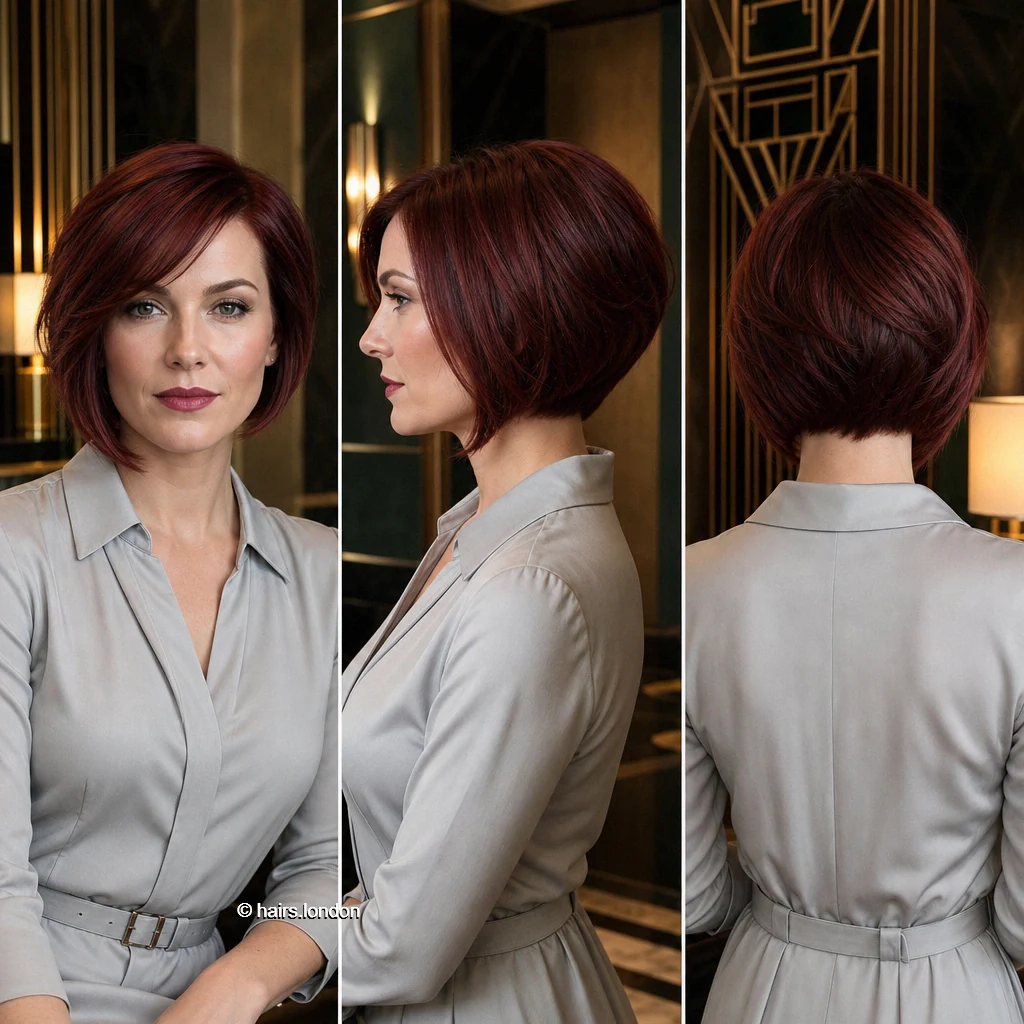
A visible front-to-back difference defines this burgundy bob’s silhouette. The front reaches near the jaw; the back sits higher. Its rounded rear shape narrows into a short perimeter. A long side-swept front keeps the angle soft. The views do not show a strongly exposed stacked nape. Smooth the lower edge to make the length change clear. Lift the crown lightly rather than building excessive bulk. This cut may require frequent reshaping as the back grows. Discuss how much contrast suits your density and neckline. Protect the red finish with a color-conscious washing routine. Check how this outline looks when dry.
How to Choose Your Bob Length and Shape
Start with where you want the perimeter to fall: near the jaw for a compact bob, lower on the neck for more coverage, or around the shoulders for a lob. Compare the front, side and back views rather than judging volume from a portrait alone. A rounded bob keeps fullness through the sides; a more textured cut lets individual ends move. If you want a longer front, show your stylist the amount of visible length difference you mean. Your density, natural texture and preferred drying routine should guide the final shape.
Styling Fine, Thick, Wavy and Curly Textures
Fine hair often benefits from a substantial lower edge and light products; too many short layers can make the perimeter look sparse. Thick hair may need selective internal weight removal while retaining enough hair to form the intended outline. For waves, scrunch or diffuse first, then smooth only the pieces that interrupt the shape. If you have curls, choose length with dry shrinkage in mind and ask how the proposed layers will sit when worn naturally. Dry a fringe early, following its growth pattern, and avoid coating the entire bob with heavy product.
Keeping Red Bob Color Fresh
The images show copper, auburn, ginger, ruby and deeper burgundy tones, each of which may change in appearance between appointments. Ask your colorist which upkeep is appropriate for your starting color and chosen shade. Wash as often as your scalp needs rather than following a rigid schedule, use products recommended for colored hair, and limit unnecessary high heat. Bring a photograph of the particular red you like; a warm copper and a deep plum-red should not be treated as interchangeable.
Maintaining the Bob Perimeter and Graduation
A smooth jaw-length bob shows changes in its lower edge sooner than a loose, feathered style. Check whether the sides still meet the back neatly and whether tucked-under ends retain their intended curve. Shorter backs and visible graduation can lose their proportions as the nape grows, so arrange trims according to the shape you want to preserve. Textured bobs may tolerate a softer grow-out, but they still need attention when layers merge or the ends look thin. A fringe can need a small adjustment before the rest of the cut does.
What to Discuss with Your Stylist
Bring images that show the front and back of your preferred bob. Point out the exact features you want, such as a rounded weight line, an airy fringe or separated ends, as well as anything you want to avoid. Discuss your parting, cowlicks, density, natural wave or curl pattern, and how much time you will spend styling. Ask where the cut will land when dry, whether internal weight removal is useful, and how often its perimeter or shorter back is likely to need reshaping.
Frequently Asked Questions
What is the difference between a bob and a lob?
A bob generally ends around the jaw or neck; a lob is a longer bob that approaches the shoulders. The shoulder-length layered cut in image 14 is a lob.
How is an A-line bob different from a stacked bob?
A-line describes a perimeter that becomes longer toward the front. Stacked refers to visible short graduation building shape at the back. A cut can show a length difference without having a clearly stacked nape.
Will a layered bob make fine hair look thinner?
It can if too much weight is removed from the ends. Ask for restrained layers and a substantial perimeter if maintaining the appearance of fullness is your priority.
How can thick hair avoid becoming too wide in a bob?
A stylist can assess where internal weight removal might help while preserving the intended outline. The right approach depends on density, texture and where the hair naturally expands.
Can I wear a bob with natural curls?
Yes, provided the length and layers are planned around your curl pattern and dry shrinkage. Discuss the finished dry shape and your preferred styling method before cutting.
Should I choose bangs with my bob?
Choose bangs if you like their appearance and are comfortable styling them. Their length and placement should account for cowlicks, parting and any wave or curl at the hairline.
What is the quickest way to style a smooth bob daily?
Direct the roots into place, dry the lengths downward and smooth the perimeter with a brush. Use a small amount of finishing product rather than weighing down the entire cut.
How do I keep a textured bob from looking bulky?
Style for separation instead of uniform volume. Apply lightweight product sparingly, and ask your stylist to assess where layers or internal weight adjustment would help.
How often does a precise bob need trimming?
Trim timing depends on growth rate and how exact you want the outline to remain. A close, smooth perimeter or shorter back will usually reveal growth sooner than a loose, layered edge.
Do shorter backs need special maintenance?
They may need regular reshaping to keep the relationship between the back and front intact. Ask your stylist to show you the outline from behind so you can monitor it as it grows.
How can I grow out a short bob?
Keep the lower edge tidy while allowing the shortest areas to catch up. Your stylist can gradually rebalance layers and any front-to-back difference as the cut approaches lob length.
Which red shade should I bring to my color appointment?
Bring a clear image of the specific copper, auburn or burgundy tone you prefer. Your colorist can explain what is achievable from your current color and what upkeep it may require.
Conclusion
The strongest choice among these red bob haircuts is the one whose length and outline fit your own hair, not simply the one with the most striking color. Save views that show the back as well as the front, decide how polished or textured you want the finish, and use those details to plan a cut and color you can comfortably maintain.