

11. Layered Red Lob with a Sweeping Front
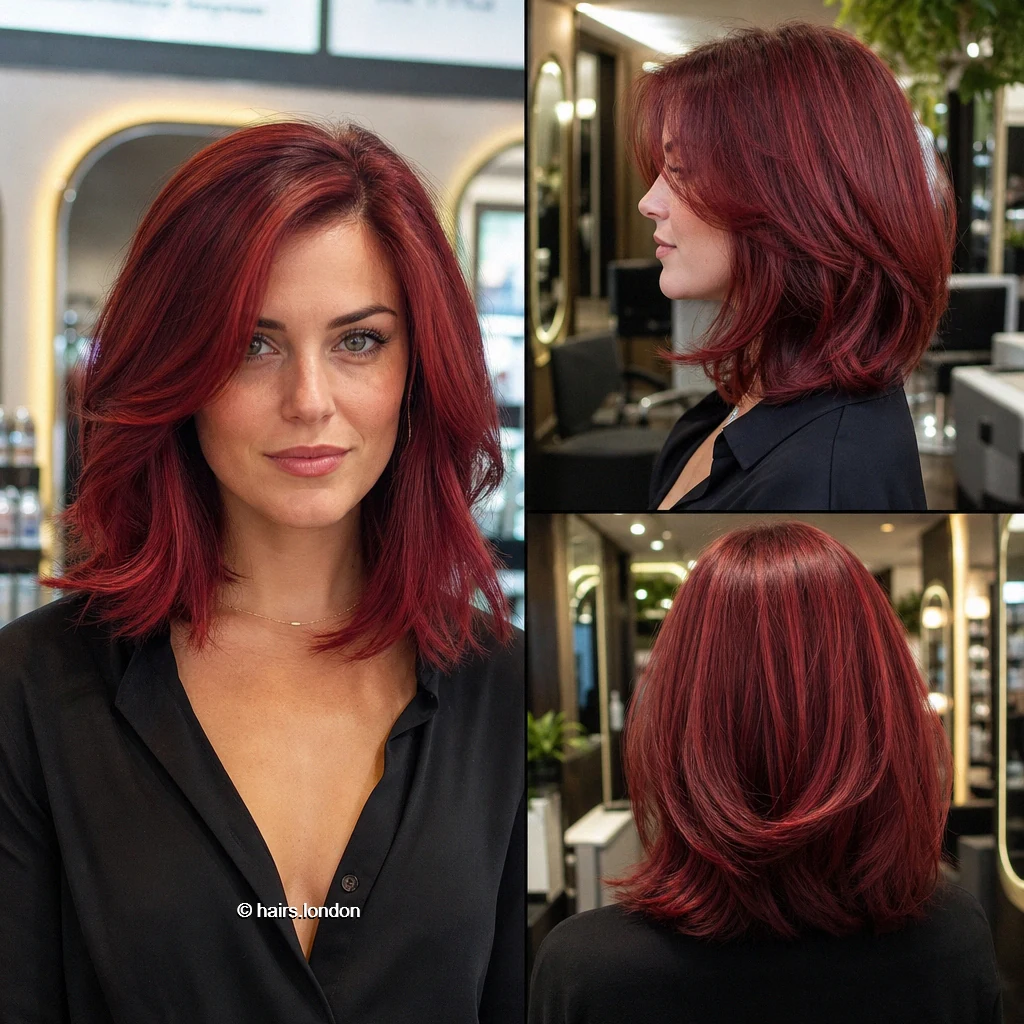
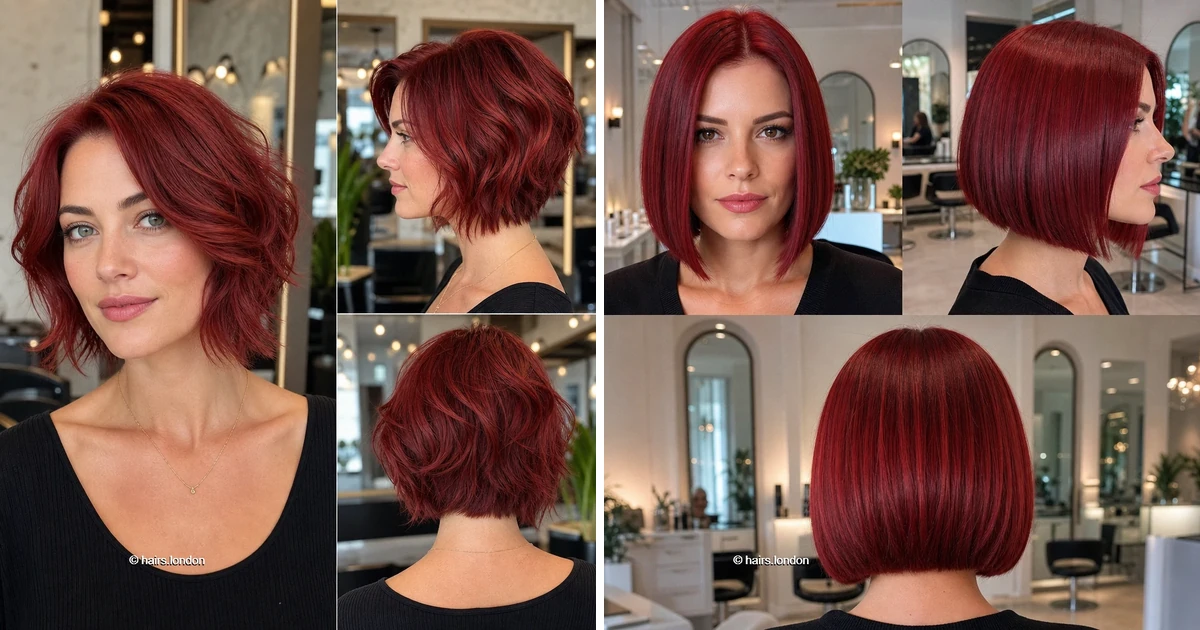
This layered red lob reaches toward the shoulders. A side sweep falls across the forehead. Feathered lower sections curve outward around the neck. The back shows layers rather than a single blunt line. Ask for face-framing movement while retaining enough end weight. Blow-dry the front away from the face for lift. Turn the lower ends gently, avoiding an overly set finish. Thick hair may find the longer length easier to control. Preserve the red with gentle cleansing and timely color appointments. Trim when layers stop moving or ends look thin. It suits anyone preferring more length than a compact bob.
12. Copper Layered Lob with Soft Curtain Pieces
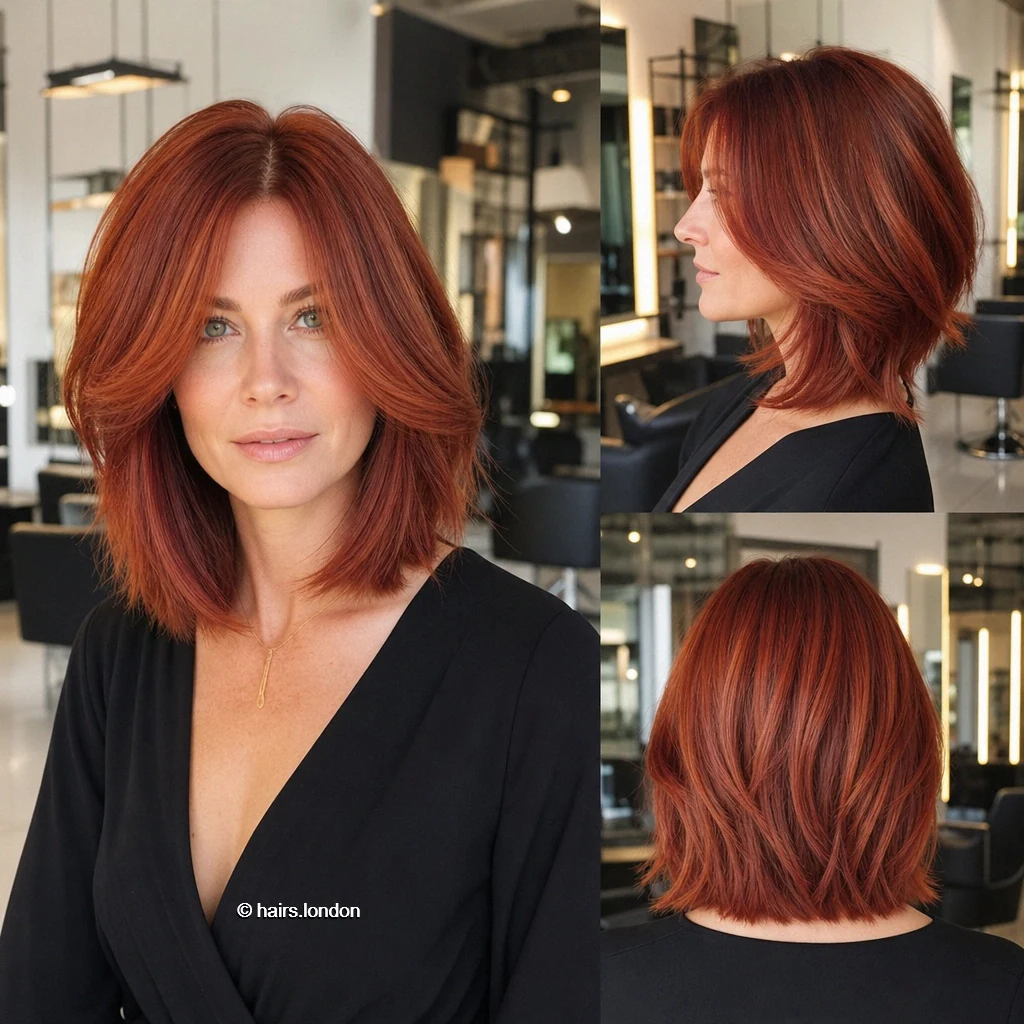
Copper tones bring warmth to this layered lob. Long curtain pieces open around a near-center part. The sides and back sit around the shoulder line. Visible layers give the ends movement without a severe edge. Ask your stylist to place framing around your preferred length. Blow-dry front sections backward, then let them fall. A light cream can calm flyaways while preserving separation. Finer hair may need fewer layers for stronger ends. Discuss copper refreshes according to your starting color and fading. Remove dry tips before the shoulder-length outline becomes wispy. This length offers styling flexibility if you prefer softer structure.
13. Auburn Shoulder-Skimming Lob with Feathered Ends
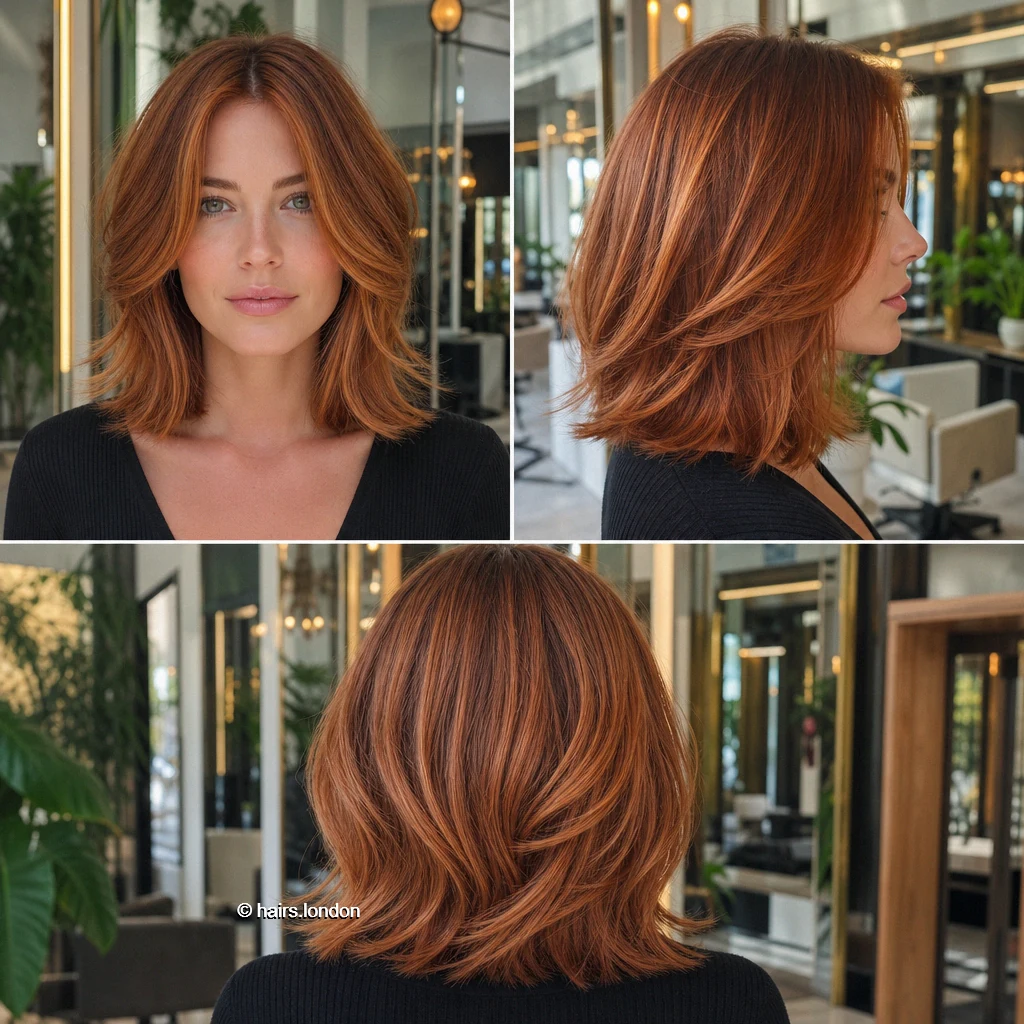
Soft auburn color runs through this shoulder-skimming layered lob. A center part creates broad, outward-opening front sections. The lower layers flip gently away from the neck. Back views show a feathered outline rather than precision bluntness. Ask for movement while keeping the bottom substantial enough. Style with a brush, turning selected ends slightly outward. Leave some pieces straighter to avoid excessive width. Thick hair may appreciate selective layering through the lower half. Maintain warm color with care suited to your shade. Trim when feathered ends become dry or lose their shape. It suits those happy to style a sweeping front.
14. Dark Burgundy Layered Bob with Face-Framing Ends
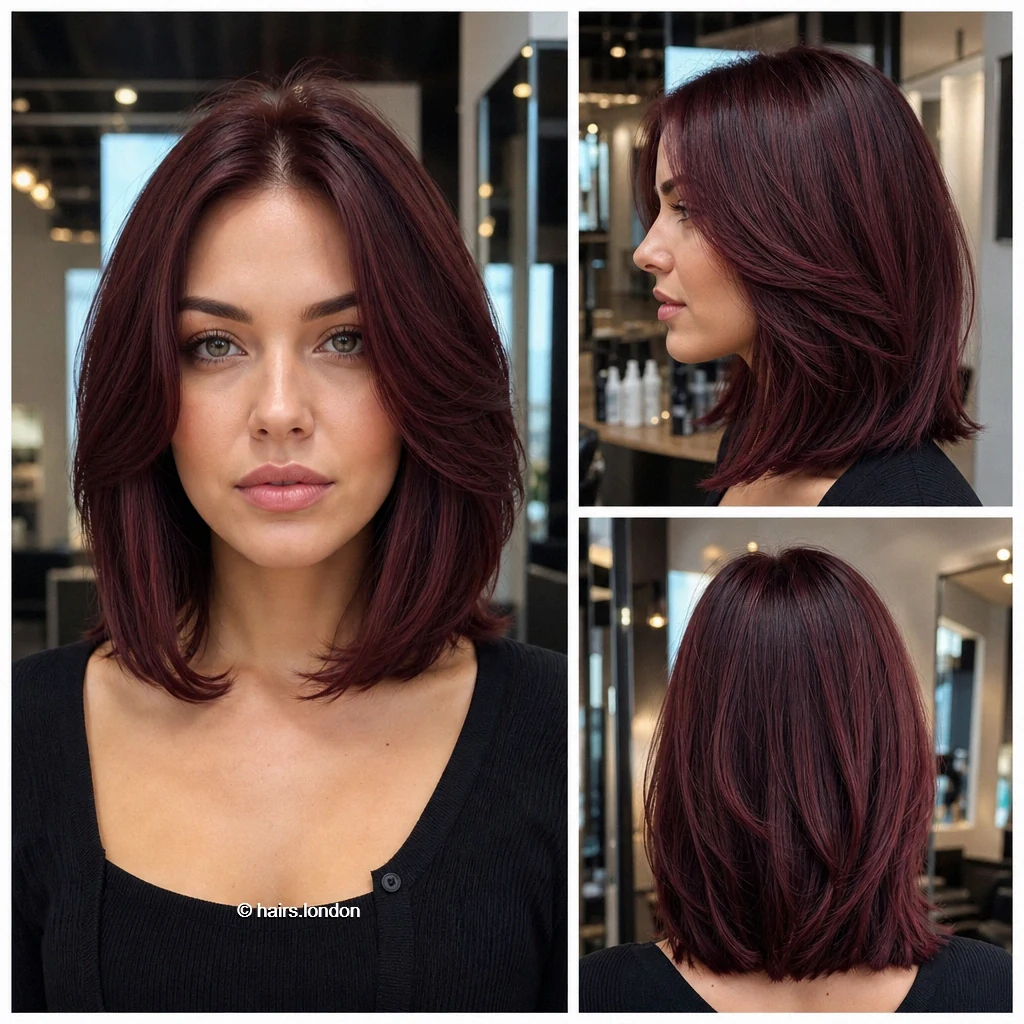
Dark burgundy gives this longer bob a glossy appearance. A center part opens into subtle sweeping face-framing sections. The ends fall around the neck, above the shoulders. Layers soften the outline, especially around the lower front. Ask for framing that still joins the overall perimeter. Blow-dry away from the face and loosen the ends. Keep lightweight finishing products light so the layers continue moving. Fine hair may need a less layered version for density. Discuss glosses if the burgundy starts looking dull. Trim when the lower sections lose their intended connection. This shape suits a soft finish over strict precision.
15. Wine-Red Lob with Flipped Layered Ends
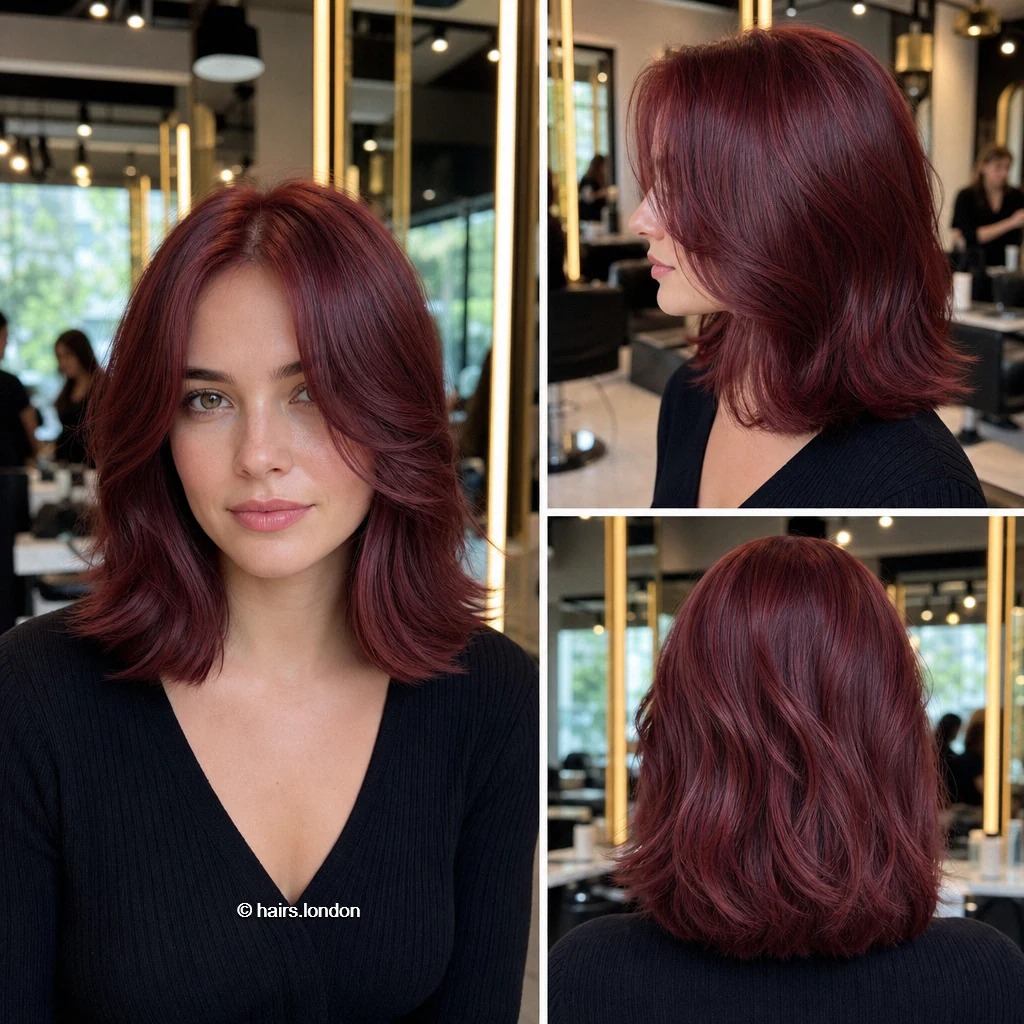
Wine-red tones complement this loose, layered shoulder-length lob. Front sections sweep outward from a soft center part. The ends flip, giving the outline visible movement. Back views show layered texture rather than a compact weight line. Ask your stylist to avoid making the bottom sparse. Blow-dry face-framing pieces backward with a medium brush. Use a little styling cream to control fuzzy ends. Dense hair may benefit from carefully distributed internal layers. Color-safe products and occasional glosses can maintain the wine tone. Trim when the flip becomes uneven or the ends split. It favors relaxed styling over a perfectly straight edge.
16. Auburn Graduated Bob with Crown Volume
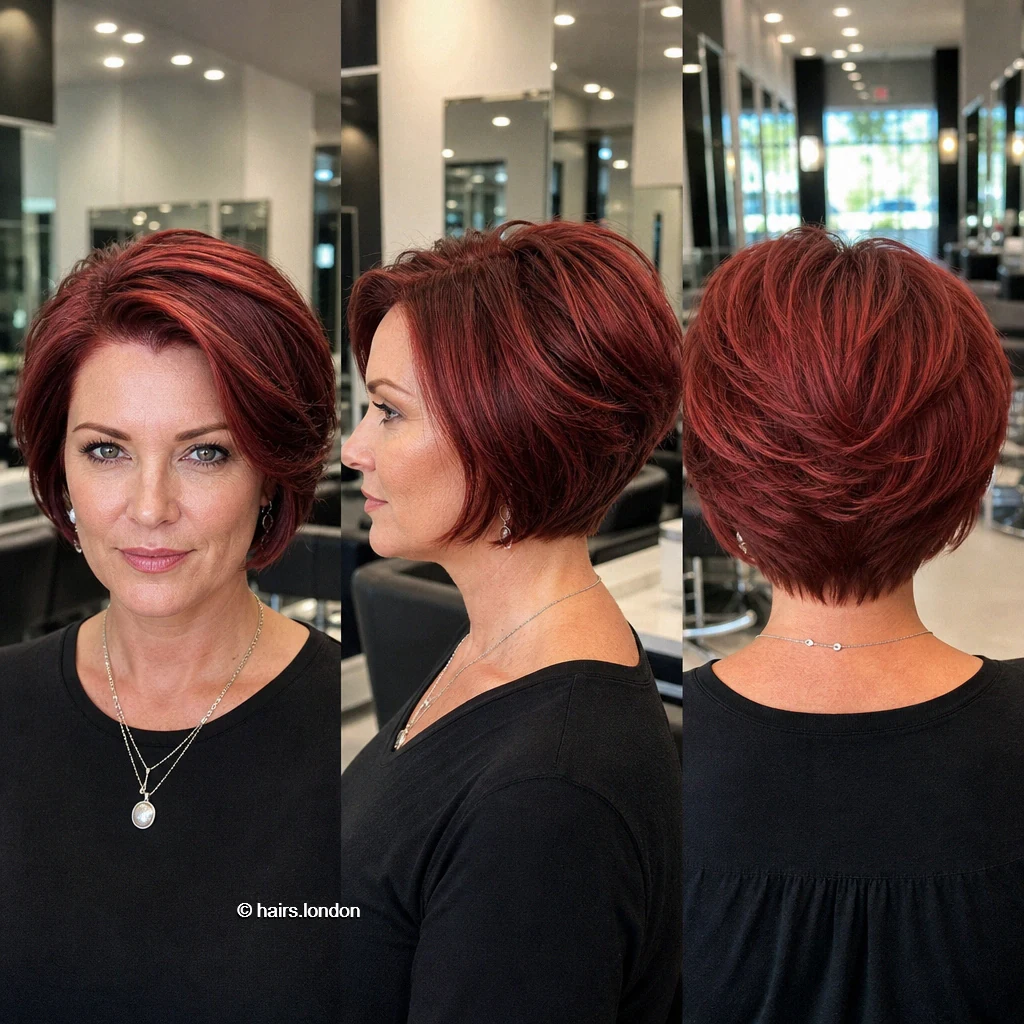
This short auburn bob has a visibly graduated back. Visible layered crown sections build volume above a tapered nape. A sweeping front section reaches toward the jaw. The profile shows more height behind than at the ends. Ask whether your density can support this rounded silhouette. Blow-dry the crown upward while directing the nape down. Use modest mousse so short layers stay touchable. Usual growth patterns at the nape may affect daily styling. Refresh auburn when the warmth loses its preferred vibrancy. Trim the graduation before grown-out layers collapse into bulk. This shape suits those comfortable maintaining a short back.
17. Copper-Red Stacked Bob with a Longer Front
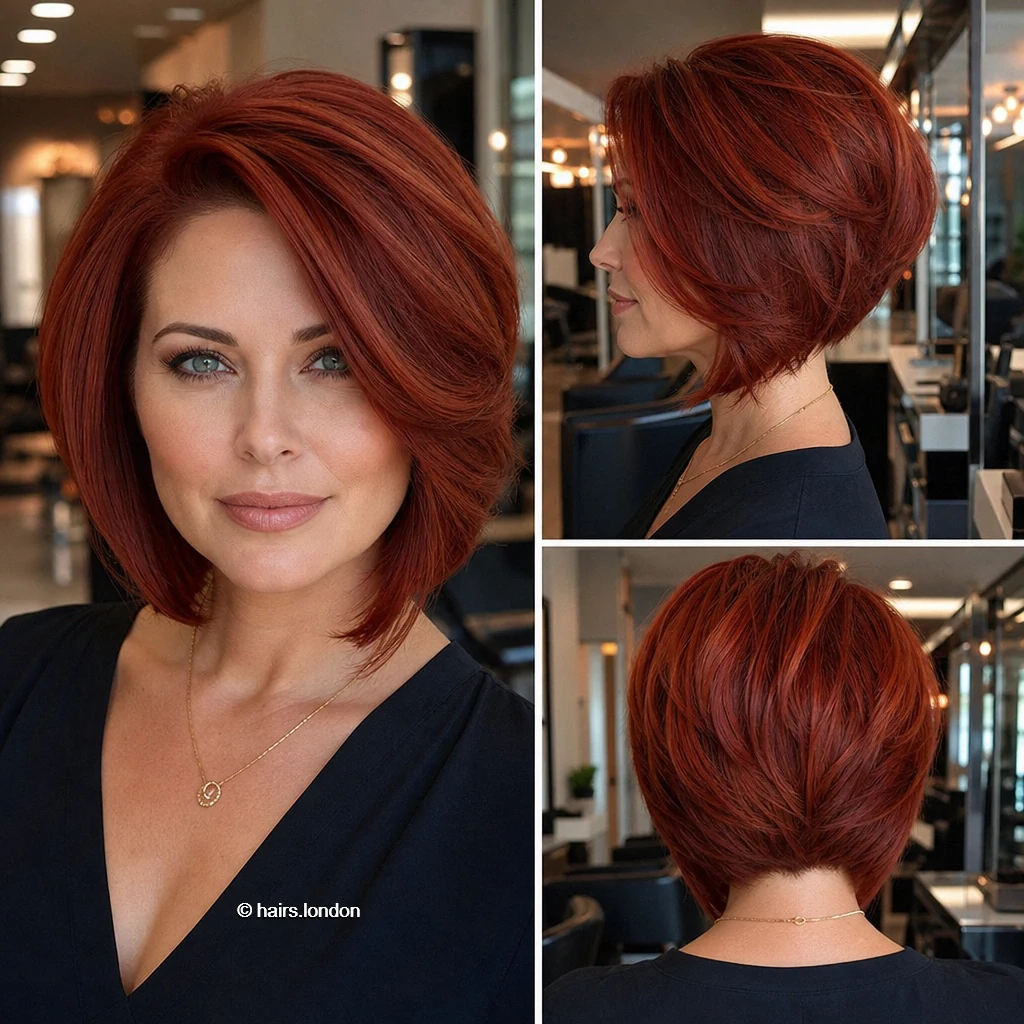
Copper-red color highlights the layers in this short bob. The front sweeps toward the jaw from a side part. Behind, visible graduation creates a fuller, rounded upper shape. A tapered nape keeps the lower back close. Ask for a front length compatible with your usual styling. Lift the crown while blow-drying, then smooth the sides. Avoid heavy wax that can merge the layered sections. Dense hair needs thoughtful graduation to prevent excess width. Maintain copper with gentle washing and suitable color refreshes. Recut when the nape grows out or crown loses lift. It suits someone prepared for frequent shape maintenance.
18. Cinnamon Bob with a Rounded Graduated Back
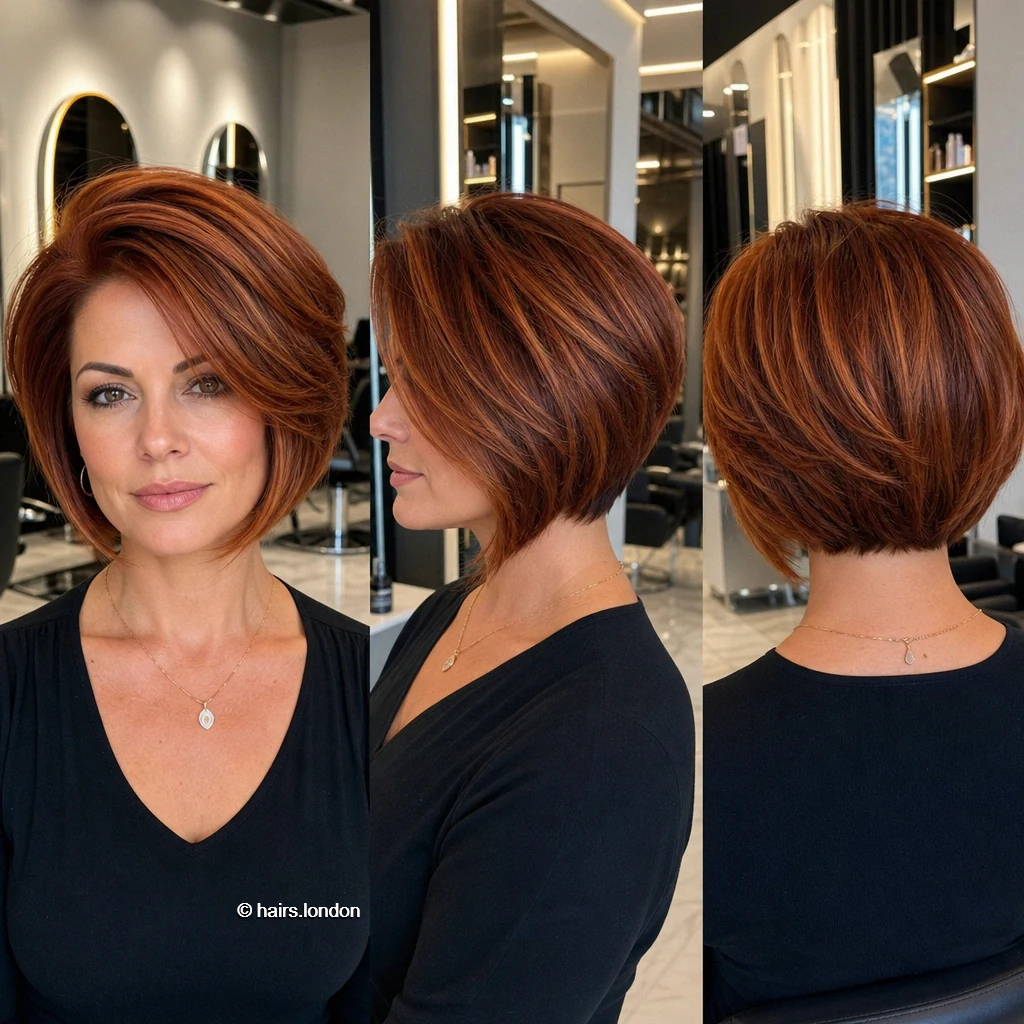
Cinnamon tones add dimension to this rounded short bob. A long side sweep curves toward the chin. The side view shows fullness behind the ear. Back layers narrow into a short, visibly graduated nape. Ask your stylist to balance crown fullness against natural hair density. Brush the top smooth while lifting it gently at roots. Tuck flyaways into the shape without flattening the crown. Fine hair may need restrained layering to preserve coverage. Discuss warm-color upkeep if your shade fades between visits. Trim before the nape loses its close, tidy finish. This cut rewards quick styling but regular salon shaping.
19. Plum Graduated Bob with a Side-Swept Front
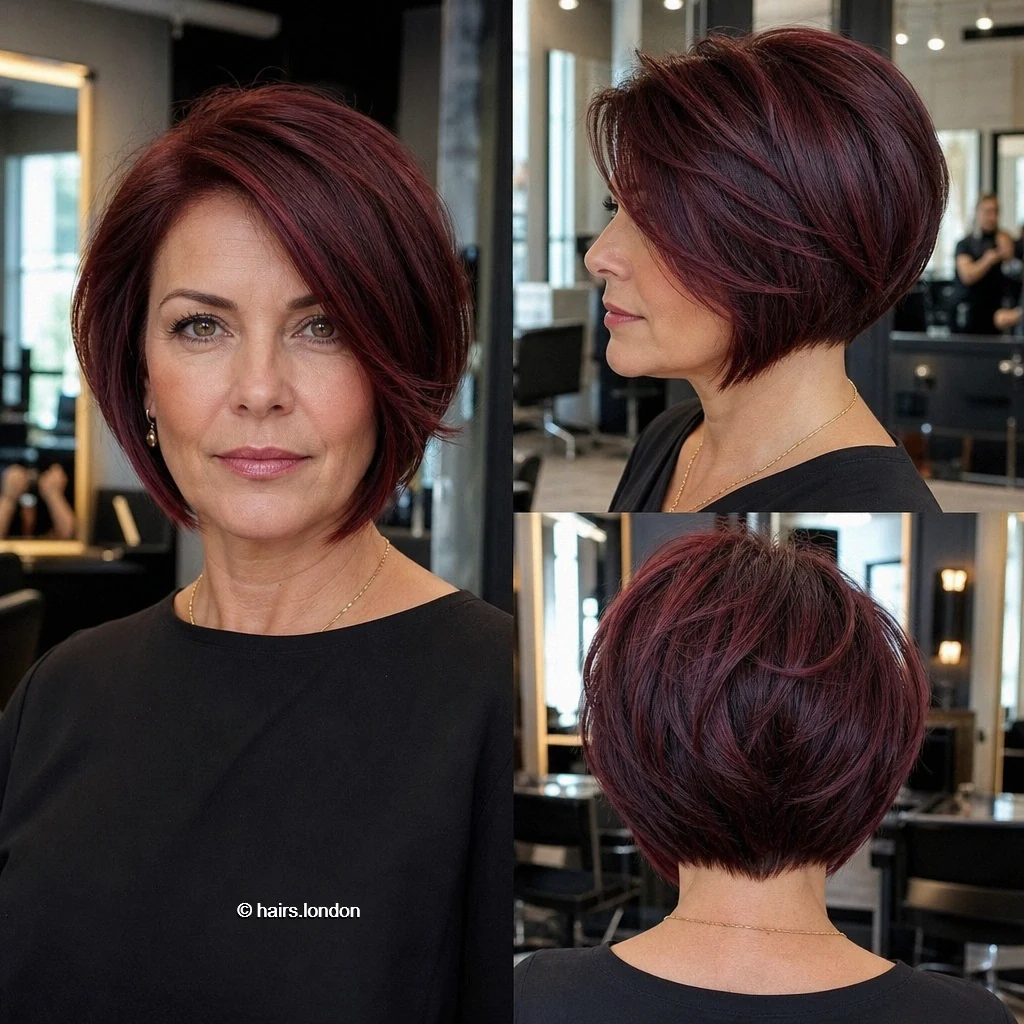
Rich plum-red color deepens the shadow between these short layers. A side-swept front softens the compact, rounded shape. The longer front reaches near the jaw. Profile and back views reveal graduation above a tapered nape. Ask your stylist to adapt that taper to growth patterns. Blow-dry the front across and lift the upper back. Keep product light enough for the layers to separate. Thick hair may require targeted weight removal near the crown. Refresh the plum tone when its red reflects fade. Maintain the short nape before the silhouette becomes bottom-heavy. This option suits those willing to style the sweep.
20. Burgundy Stacked Bob with a Tapered Nape
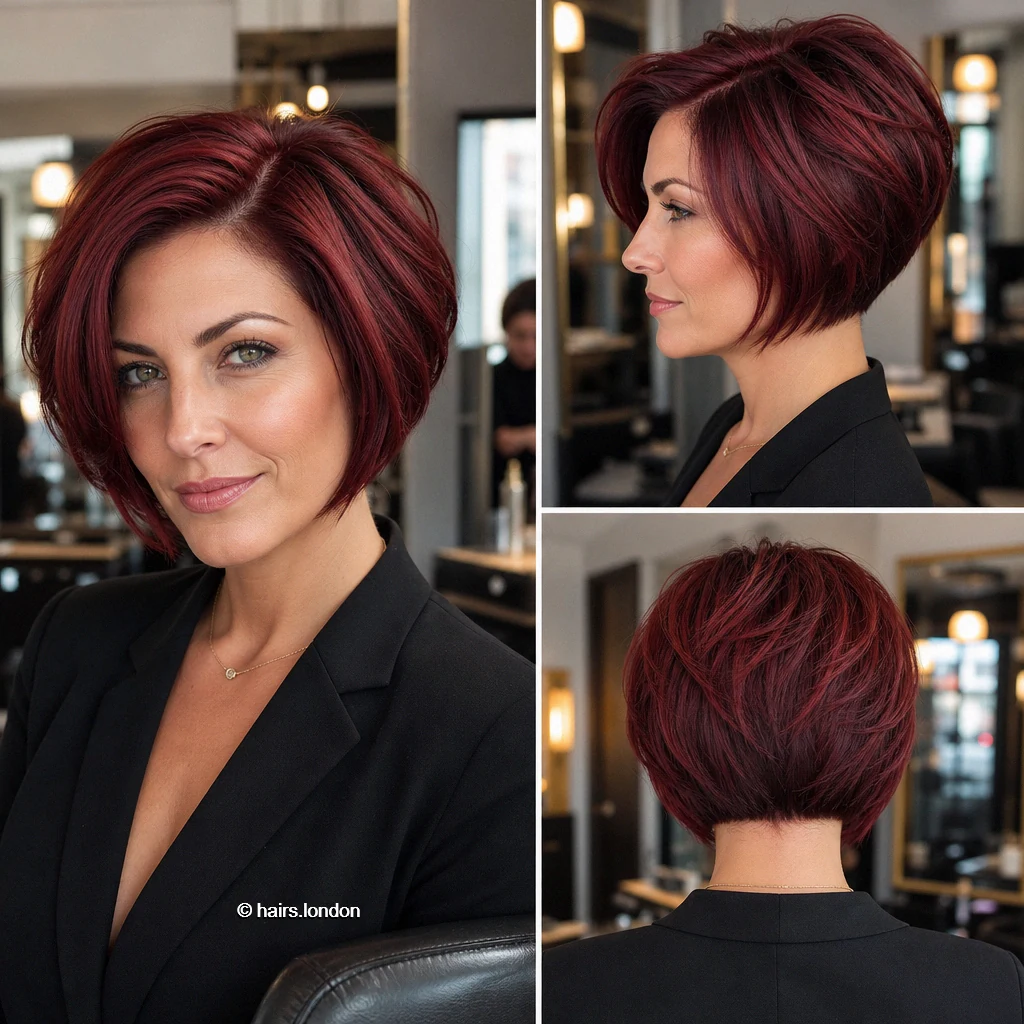
This burgundy bob combines a full crown with short graduation. A deep side part creates a sweeping front panel. The front tapers toward the jaw beside the cheek. Back views show layered volume narrowing into the nape. Ask for a silhouette that accommodates your crown direction. Blow-dry upward through the back, then smooth the front. Apply a small amount of cream to settle flyaways. Fine hair may prefer less layering through the top. Protect burgundy vibrancy with suitable washing and refreshes. Recut when the tapered nape grows beyond its intended line. Choose it if frequent shape upkeep fits your schedule.
How to Choose Your Red Bob Length and Shape
Start with the point where you want the front to fall: near the jaw for a compact bob, below it for a longer-front shape, or toward the shoulders for a lob. Check the side and back views before choosing a name. An A-line bob has a longer front; a stacked or graduated bob also shows shorter layers building shape at the back. Consider how your hair behaves at the jaw, neck and shoulders, since a small change in length can change how the ends sit.
Styling Fine, Thick, Wavy and Curly Textures
Fine hair often benefits from a substantial perimeter and fewer layers; apply lightweight mousse at the roots rather than heavy cream at the ends. For thick hair, ask about selective internal weight removal while keeping the outside line intact. Scrunch wavy bobs with a light product and diffuse gently to preserve their bends. If your hair is curly, discuss the cut at its natural, dry length so shrinkage and curl patterns inform the shape. Smooth only the sections that need it, and keep fringe styling separate from the rest of the bob.
Keeping Red Bob Color Fresh
The copper, auburn, cherry, wine and burgundy shades shown here will not fade in exactly the same way. Ask your colorist what upkeep is realistic for your starting color and chosen shade. Gentle, color-safe cleansing, moderate heat and heat protection can help limit dullness; a gloss or color refresh may be useful when the tone changes. Pay particular attention to a sleek bob’s surface, where fading and dryness can be more noticeable.
Maintaining the Bob Perimeter and Graduation
A blunt or smooth bob needs trims before its lower edge becomes uneven, especially if its front-to-back difference is part of the look. Textured bobs can tolerate a softer outline but still need shaping when ends become sparse or the silhouette grows wide. Short graduated bobs usually require closer attention: as the nape and crown layers grow, the rounded weight can shift downward. Set your trim schedule by how quickly your own shape changes, rather than one fixed rule.
What to Discuss with Your Stylist
Bring front, side and back reference views of the red bob you prefer. Point out the desired front length, whether the back should be blunt or graduated, how much forehead coverage you want and where you normally part your hair. Discuss density, waves or curls, nape growth patterns, daily styling time and whether your color budget allows regular refreshes. Ask how the proposed cut will look without salon styling and how it can be adjusted as it grows.
Frequently Asked Questions
What is the difference between a bob and a lob?
A bob generally ends around the jaw or neck, while a lob extends closer to the shoulders. The exact boundary is less useful than showing your stylist where you want the perimeter to sit.
How is an A-line bob different from a stacked bob?
An A-line bob is longer in front than in back. A stacked bob has visible graduation at the back that builds fullness above a shorter nape. A cut can show both features.
Will a layered bob work with fine hair?
It can, but too many layers may make the perimeter look sparse. Ask about restrained layering that adds movement while leaving enough weight at the ends.
How can thick hair avoid a bulky bob shape?
Length, perimeter placement and selective internal weight removal all matter. Ask your stylist to assess where your hair expands before removing bulk.
Can naturally curly hair be cut into a bob?
Yes, provided the shape accounts for curl pattern and shrinkage. Discuss the desired dry length and ask how the perimeter will behave when you wear your curls naturally.
Should I choose a side-swept fringe or an open forehead?
Consider your growth pattern and willingness to style the front daily. A long side sweep offers coverage but usually needs more attention than an open, center-parted front.
What is the quickest way to style a wavy bob?
Apply a lightweight product to damp hair, scrunch, then air-dry or diffuse gently. Refine only the front and any ends that disrupt the outline.
Do sleek bobs require daily heat styling?
Not always. It depends on your natural texture and the finish you want. A directed blow-dry may be enough; if you use hot tools, apply heat protection.
How often should I trim a graduated bob?
Trim it when the nape grows untidy or the rounded weight starts dropping. Short graduation usually shows growth sooner than a loose, shoulder-length lob.
How can I maintain a precise bob perimeter?
Keep the ends conditioned, dry them in the direction of the cut and arrange a trim when the lower line becomes uneven. Avoid removing too much weight from the edge.
What should I expect when growing out a stacked bob?
The short back will need time to catch up with the front. Interim trims can reduce excess bulk and gradually move the shape toward a more even bob.
How do I choose between copper and burgundy red?
Compare the shades against your existing color and discuss upkeep with a colorist. The copper looks here are warmer and brighter; the burgundy examples read deeper.
Conclusion
The strongest choice is the red bob whose shape works with your hair when it is not freshly styled. Decide first on length, perimeter and back graduation, then choose the amount of movement and the red shade you are willing to maintain. Bring the views that show those details clearly to your consultation.