

11. Chestnut-Auburn Bob With a Sweeping Side Part
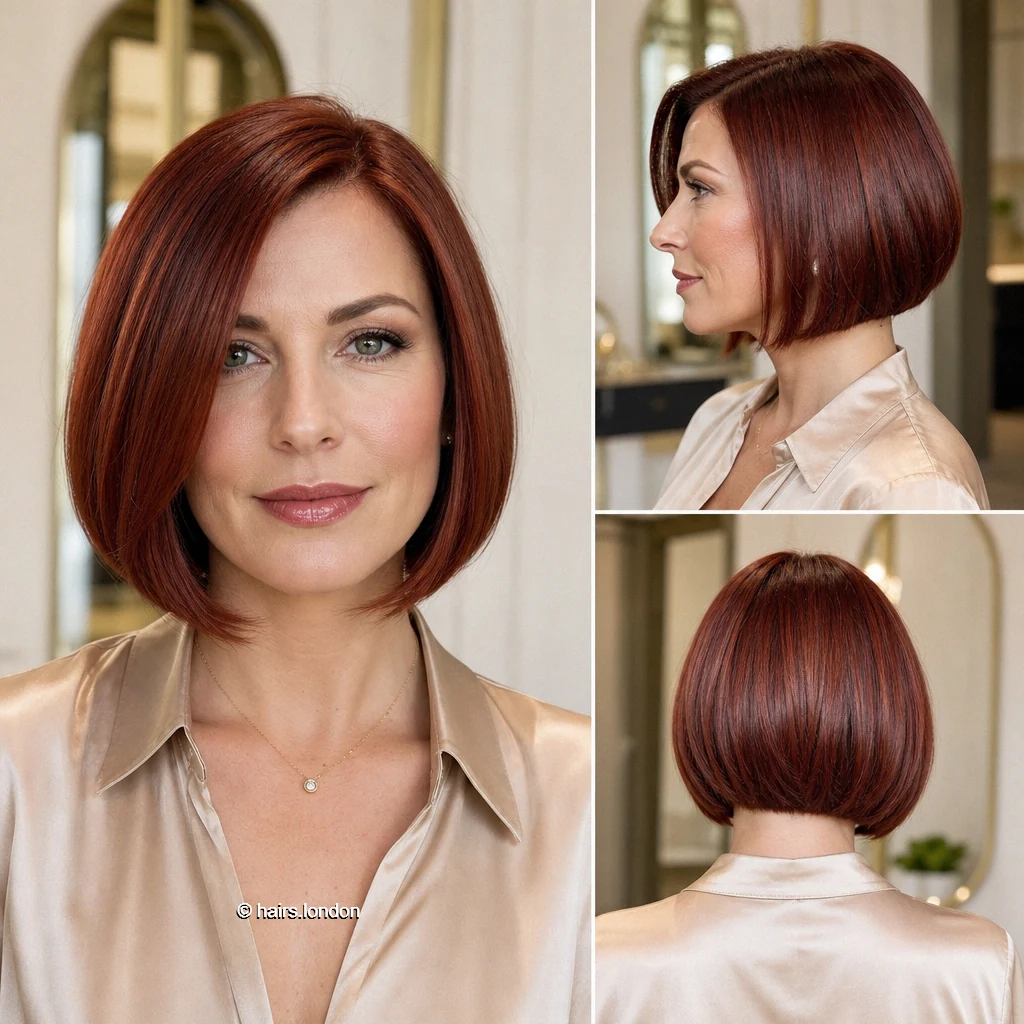
Chestnut-auburn color appears glossy across this smooth, rounded bob. A deep side part creates a long sweep over one brow. Face-framing ends reach the jaw, while the back meets neck. From behind, the perimeter forms a neat, compact curved line. Request controlled shaping if you want this tucked-under appearance. Dry the front in its chosen direction before smoothing ends. Dense hair may require discreet interior adjustment to avoid puffiness. Fine hair could keep the lower outline relatively full. Gentle cleansing helps preserve the warm red tone between appointments. Refresh the neck edge whenever its shape begins spreading outward with growth.
12. Crimson Bob With a Sleek Jawline
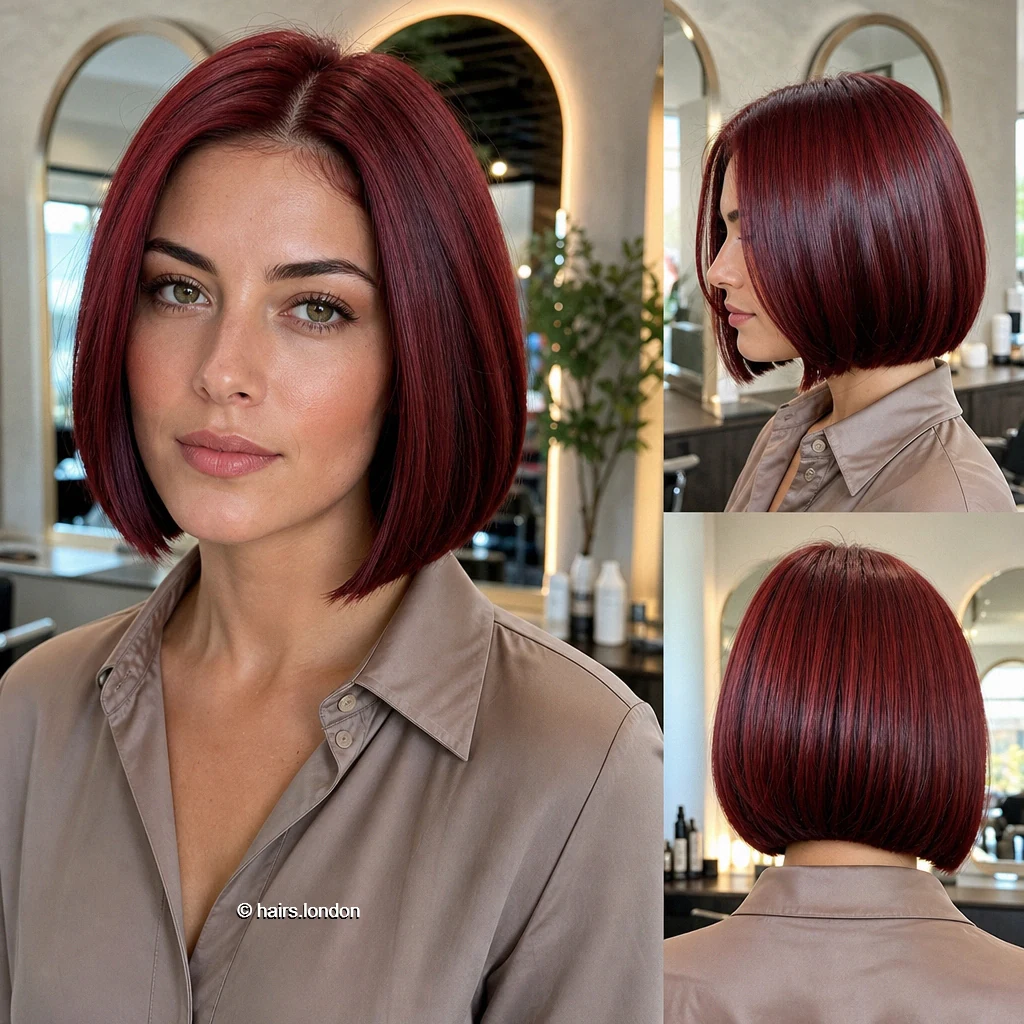
Crimson color adds depth to this smooth, jaw-length bob. The near-center part leaves two substantial front sections free. A side view shows gentle rounding toward the neck. Its back has a clean, full edge without obvious stacking. Ask for balanced sides if your natural part shifts often. Glide a brush downward, finishing with a slight inward bend. Skip heavy styling creams if your hair collapses easily. Thick hair may benefit from subtle internal bulk removal. Preserve color with heat protection and a gentler wash routine. Trim as the perimeter loses the precision visible here. Check front corners for uneven growth.
13. Amber Bob With a Rounded Back
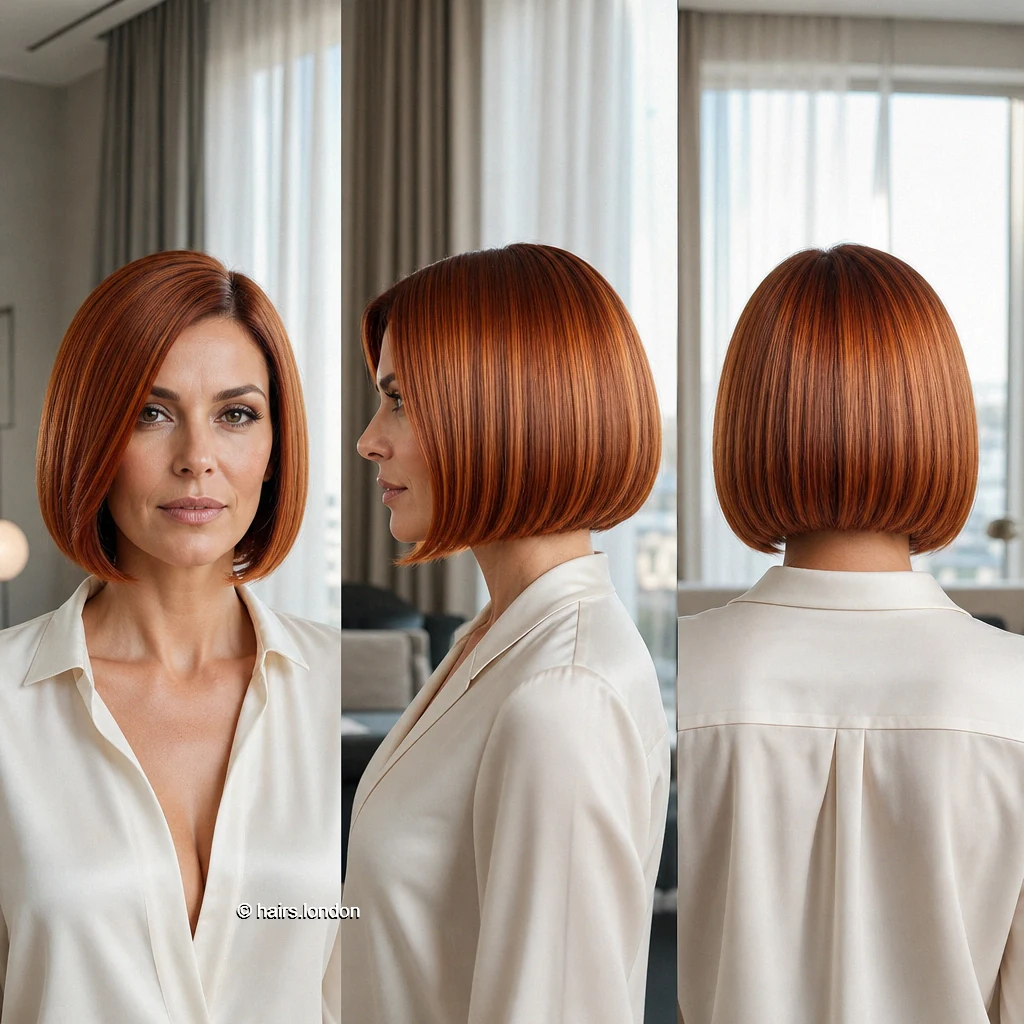
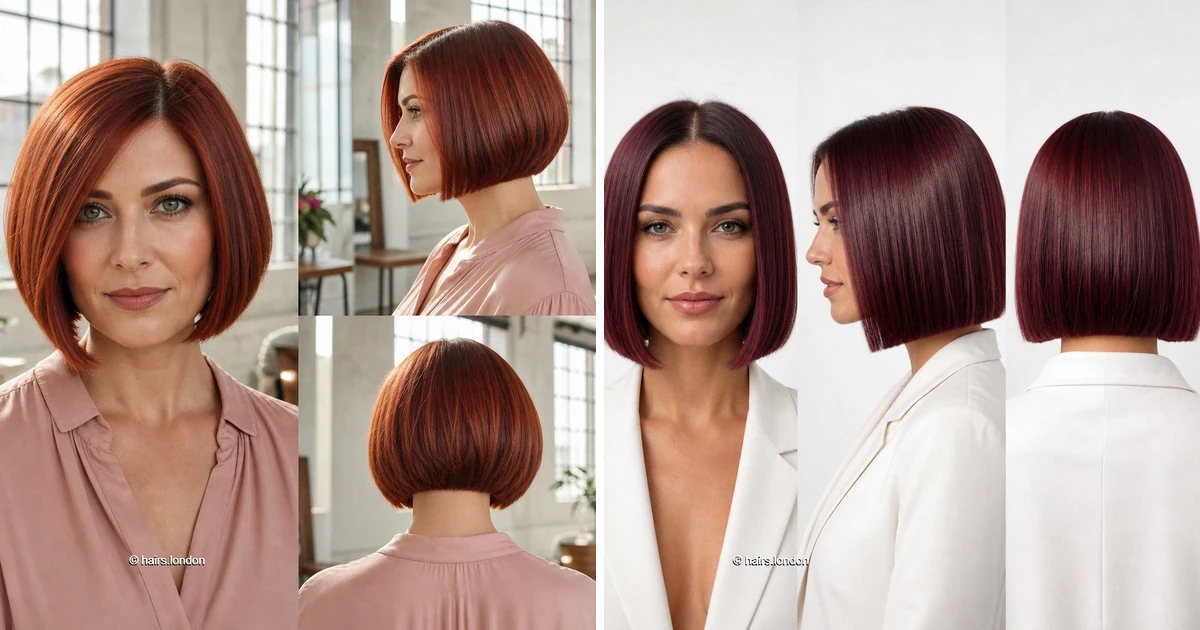
Amber-copper color catches light across this carefully smoothed bob. A side part creates longer face-framing pieces near the jaw. From profile, the rear sits higher against the neck. The back is rounded and full above its short edge. It shows no clearly exposed stack of graduated layers. Ask whether your density needs internal shaping for that curve. Round-brush the back gently, keeping the sides smooth afterward. Fine hair may favor an intact perimeter for weight. Dense hair might require lighter interior sections without thinning ends. Schedule neckline trims when growth starts flattening the rounded silhouette, especially around the front corners.
14. Merlot Blunt Bob With a Subtle Forward Angle
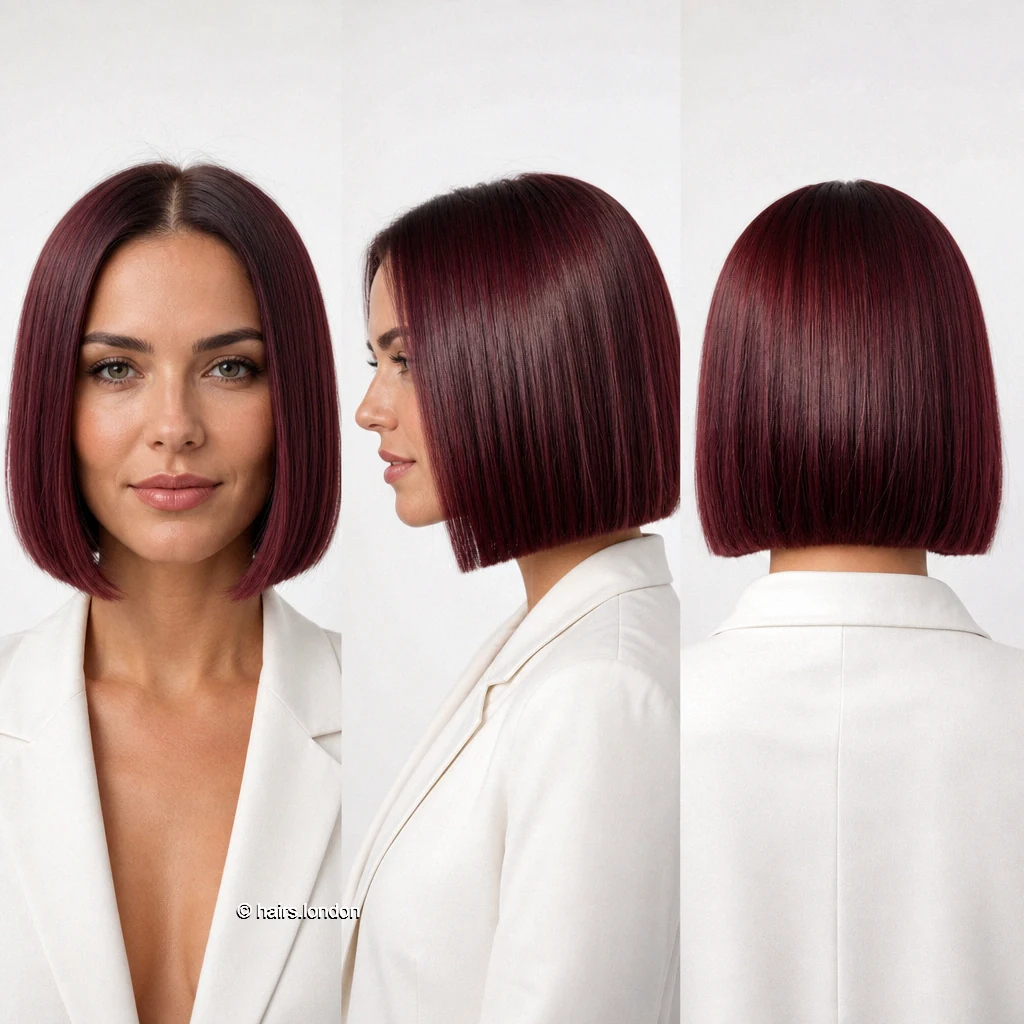
Merlot coloring frames a sleek bob with a strong perimeter. Its center part divides straight lengths falling beside the jaw. The side view reveals a modestly longer front than back. Across the neck, the rear line looks blunt and level. This is a forward-angled shape, not visibly stacked graduation. Ask for precision if you like its graphic lower edge. Smooth the lengths downward without curling away the front angle. Thick hair may need careful internal weight control only. Fine hair can retain impact through that solid baseline. Keep regular trims so uneven ends do not blur its line between visits.
15. Cinnamon Bob With Tucked-Under Ends
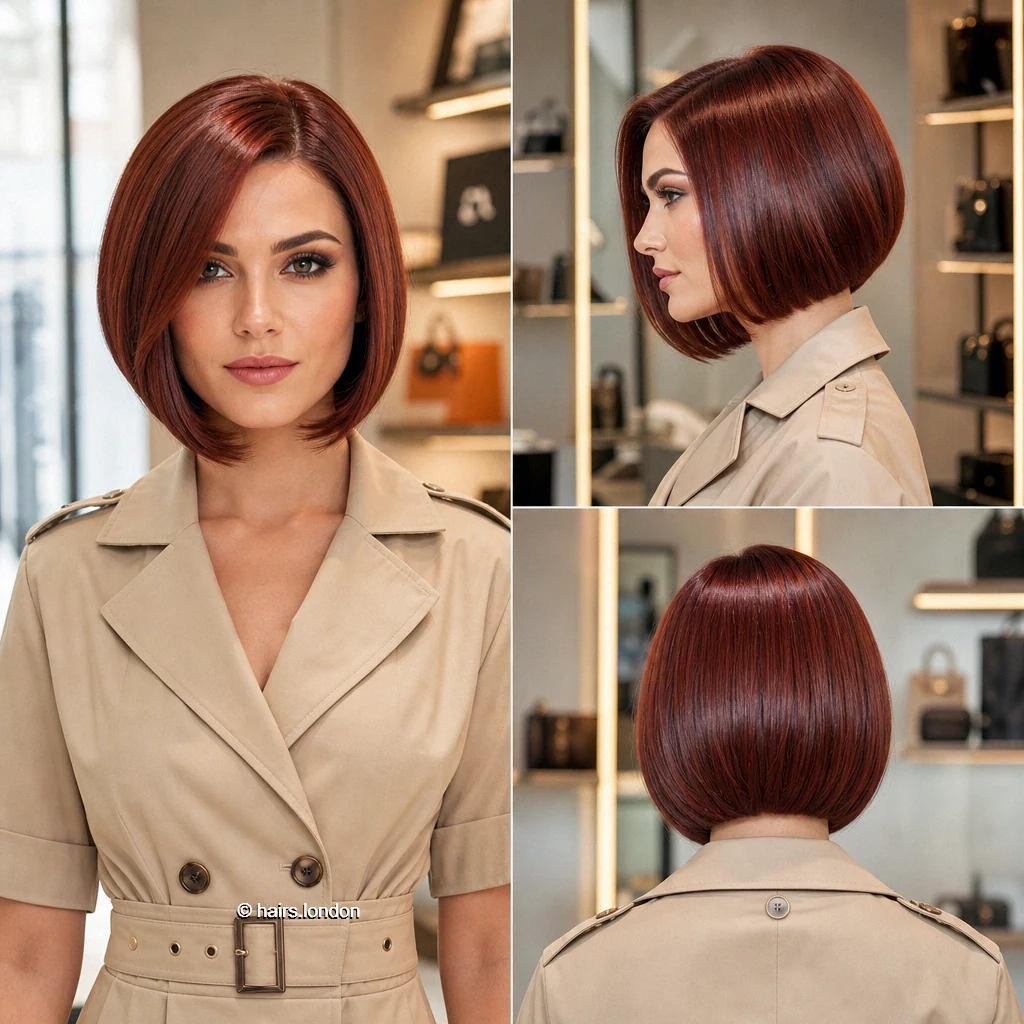
Cinnamon-red tones give this glossy bob a warm finish. A side part sets long front pieces beside the jaw. The side profile curves inward above a shorter neck edge. Its rear view shows fullness gathered into a compact outline. Rather than strong visible layers, the surface appears smoothly controlled. Ask whether light internal shaping would help your density. Brush ends inward while leaving some movement through the front. Heavy products could make this rounded form look stiff. Fine hair may prefer fewer layers around the baseline. Trim before the short rear edge begins touching the collar as the silhouette grows.
16. Scarlet A-Line Bob With a Tidy Neckline
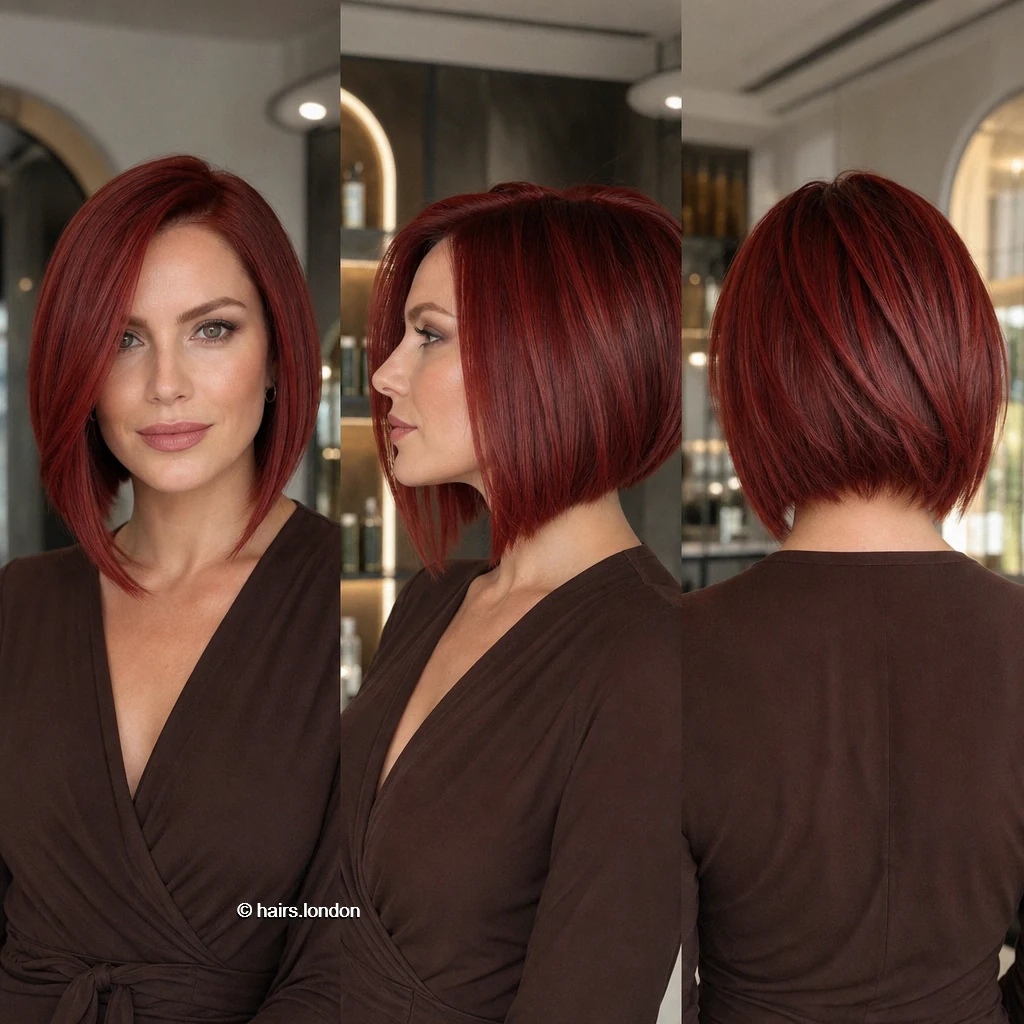
Scarlet-red color emphasizes this bob’s forward-sloping side profile. Long front points pass the jaw, contrasting with neck-length back hair. The rear shows a tidy, rounded edge with visible layering. That front-to-back difference supports an A-line description more than asymmetry. Ask to preserve enough front weight for the pointed finish. Smooth those longer pieces straight while softly curving the back. Dense hair may need selective interior removal behind the ears. Fine hair might need the front ends left comparatively solid. Keep the color protected during repeated heat styling sessions. Check the neckline regularly between salon visits to retain its short contrast.
17. Auburn Layered Bob With an Extended Front
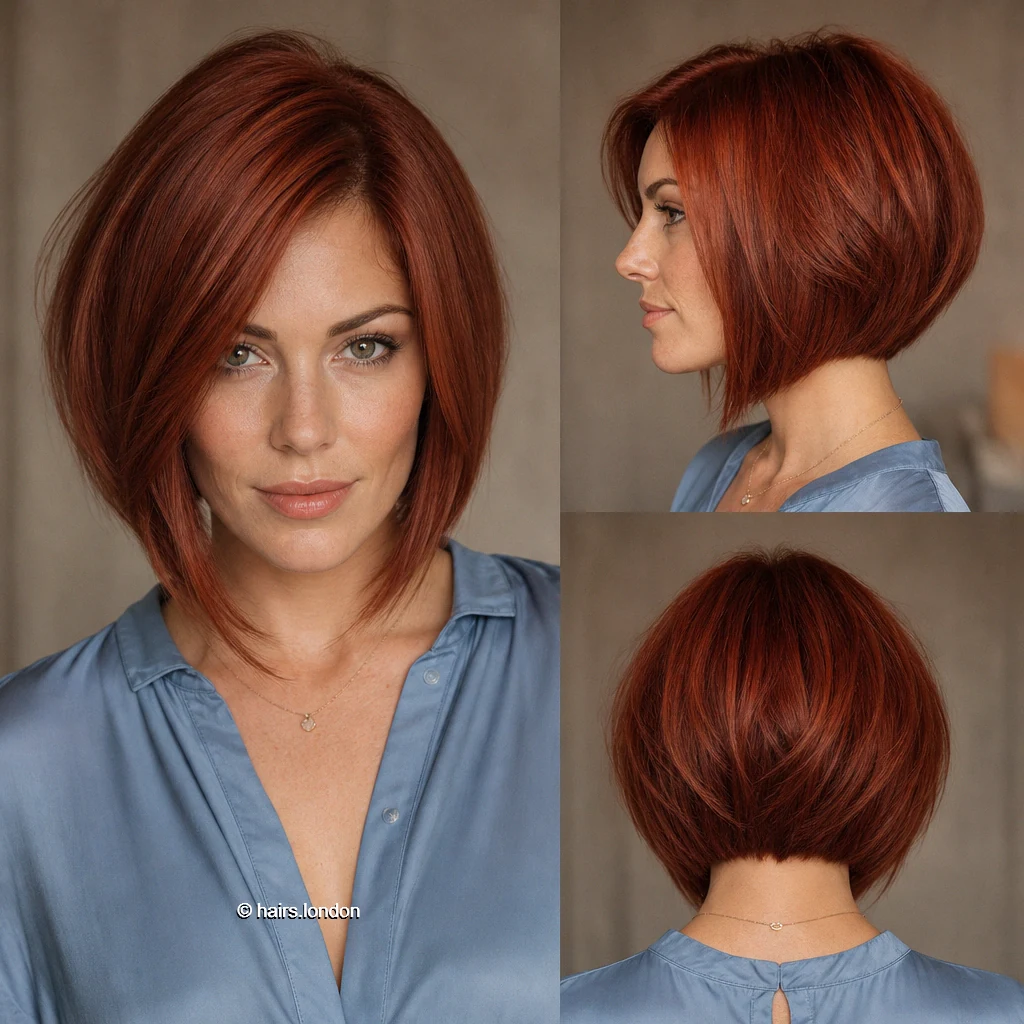
Warm auburn strands form a rounded, softly layered bob. A sweeping front section reaches below the jaw on one side. The side view shows shorter hair curving around the neck. Back layers create visible movement above a compact lower edge. Discuss balancing that longer front against your usual part. Blow-dry with a brush for lift, then loosen ends. Thick hair can benefit from layers that avoid excess bulk. Fine hair may require fewer layers to retain fullness. Color-safe products help maintain warmth between scheduled salon visits. Retouch the neckline when its short outline begins losing definition as the back grows.
18. Terracotta Bob With Dramatic Front Length
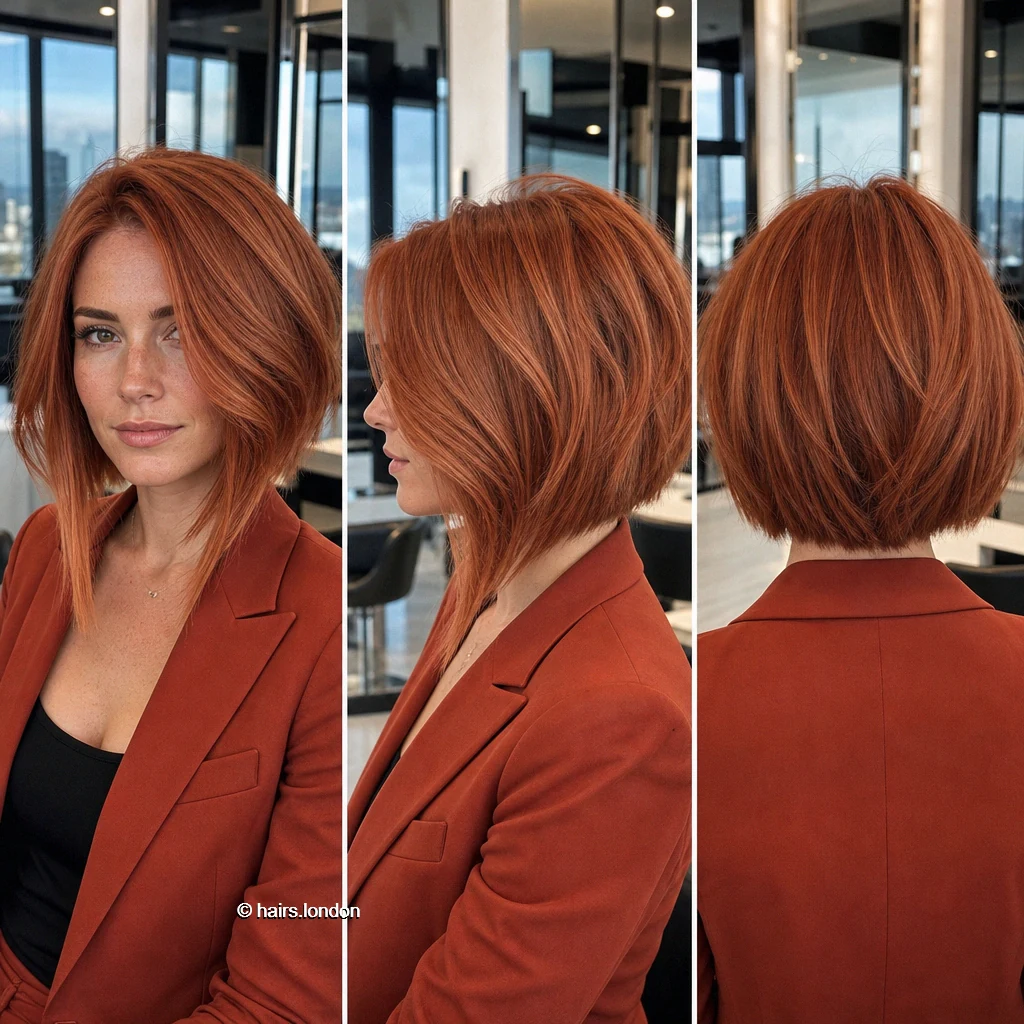
Terracotta color brings warmth to this visibly angled, layered bob. Long front strands descend past the jaw toward the neck. Behind them, shorter layers create a rounded, textured back. The nape has a soft edge rather than blunt weight. Ask how much front length feels practical for everyday wear. Smooth the long pieces while lifting the shorter crown lightly. Thick hair may need careful debulking behind the front. Fine hair benefits from protecting fullness in those long ends. Avoid excessive heat to help the copper warmth last. Trim the back separately when its shorter silhouette loses shape between regular appointments.
19. Blackberry Bob With Layered Back Volume
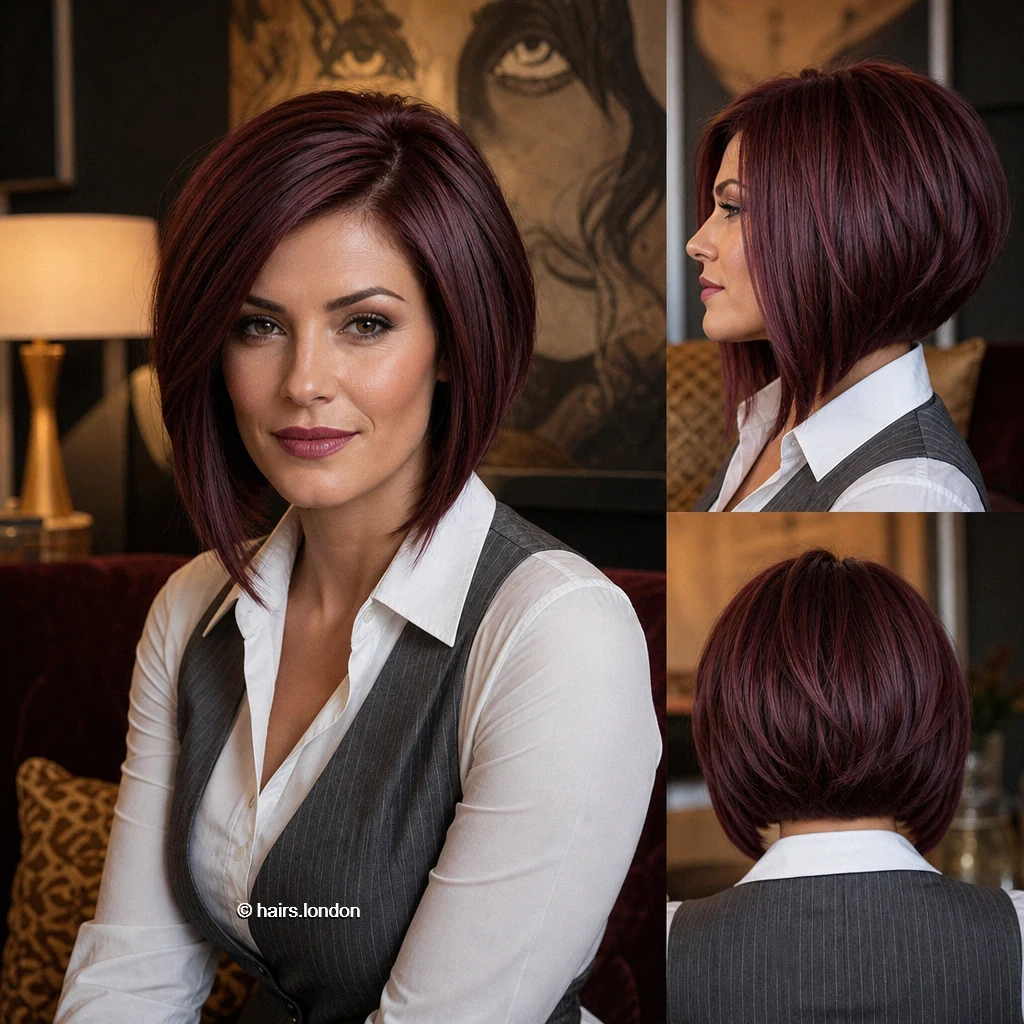
Blackberry-red tones deepen this full, side-parted bob shape. Long front sections angle toward the jaw beneath sweeping hair. The side view shows a shorter back supporting rounded volume. Layered rear strands taper toward the neck without appearing blunt. Ask whether your density can support this pronounced back fullness. Direct airflow underneath the crown, then smooth the front. Dense hair may need weight removed without hollowing the shape. Fine hair might require gentler layering and lightweight volumizing products. Protect the darker red finish from repeated hot-tool exposure. Book shaping when the back begins sitting too low beneath the longer front pieces.
20. Mahogany Bob With a Swept, Longer Front
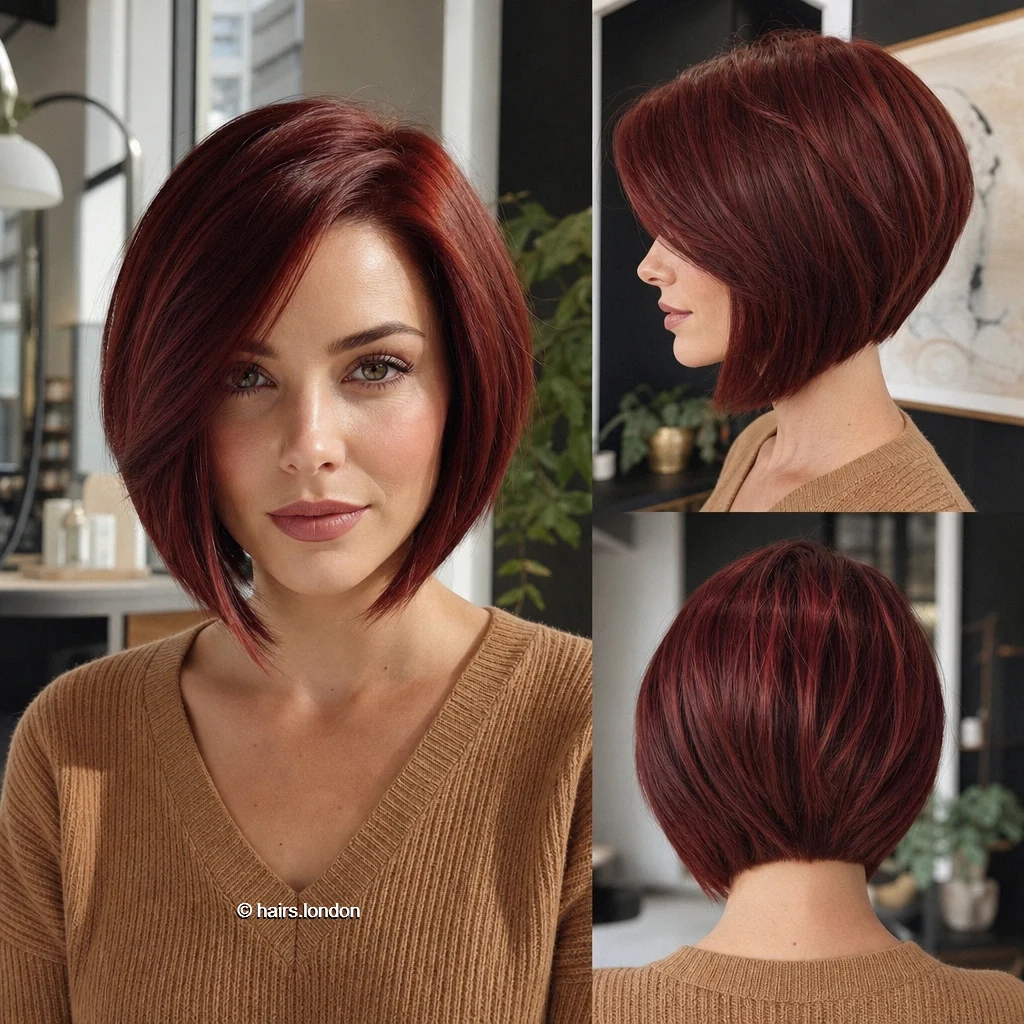
Mahogany-red color runs through this short, softly layered bob. A deep side sweep partly covers the forehead and temple. Longer front pieces reach toward the jaw below the back. Rear layers create a rounded crown and closely shaped neckline. Ask for a front length that clears your face comfortably. Dry the sweep in place before defining the shorter layers. Thick hair could need discreet removal around its bulky areas. Fine hair may prefer lighter layering beneath the side sweep. Gentle washing and heat protection help maintain its red depth. Refresh the neckline as soon as its tapered finish noticeably lengthens.
How to Choose Your Bob Length and Shape
Start with where you want the front to fall: above the jaw, at the jaw or below it. Then check the side and back views, not just the portrait. A solid, rounded perimeter creates a different effect from a tapered, layered neckline; an A-line bob has longer front pieces, while a stacked or graduated bob needs visible buildup at the back. Consider whether your hair springs upward as it dries, where it naturally parts and how often you are willing to reshape a short nape.
Styling Fine, Thick, Wavy and Curly Textures
For fine hair, keep product light and ask whether a fuller lower edge would help preserve body. Thick hair may need selective internal weight removal, but thinning the perimeter too aggressively can make a bob look sparse. If your hair waves, apply a small amount of styling cream and diffuse or air-dry before deciding which pieces need smoothing. For curls, choose the shape at its dry, natural length and discuss shrinkage; define curls gently instead of brushing away their pattern. Direct a side fringe while it is damp, and use heat protection whenever you smooth the perimeter.
Keeping Red Bob Color Fresh
These images include copper, auburn, crimson and deeper burgundy tones, so the right upkeep depends on your chosen shade and starting color. Use a gentle color-safe cleanser, avoid unnecessarily hot water and protect hair before heat styling. Ask your colorist how often your particular tone may need refreshing and whether a gloss is appropriate. If you change shades, bring a picture showing the red you want in natural-looking light rather than relying on a color name alone.
Maintaining the Bob Perimeter and Graduation
A blunt or smoothly rounded bob shows small changes in its baseline quickly, especially at the front corners and neckline. Short tapered and visibly layered backs can lose their proportions as the nape grows, even while the longer front still looks right. At each trim, check the cut from the front, both sides and back. Ask your stylist to refine the perimeter without automatically shortening the face-framing pieces, and to adjust any graduation only where the existing shape calls for it.
What to Discuss With Your Stylist
Show the views that matter most to you and point out specific details: front length, parting, fringe, how much of the ear shows, back fullness and neckline finish. Explain how you normally dry your hair, whether you wear it natural and how much daily styling you will do. Your stylist can assess density, curl or wave pattern and growth directions before recommending layers or weight removal. Agree on the shortest acceptable length before cutting, particularly for a cropped back or sweeping fringe.
Frequently Asked Questions
What is the difference between a bob and a lob?
A bob generally finishes around the jaw or neck; a lob, or long bob, extends toward the shoulders. The exact label matters less than agreeing on where your front and back will land.
Is an A-line bob the same as a stacked bob?
No. An A-line bob is longer in front than in back. A stacked bob has visible graduation that builds weight at the back. A cut can have both features, but one does not automatically imply the other.
Which bob shape can help fine hair look fuller?
A relatively solid lower edge can preserve the appearance of fullness. Ask your stylist to assess your density before adding layers or removing weight.
How can thick hair avoid looking bulky in a rounded bob?
Discuss selective internal weight removal while keeping enough perimeter weight to hold the shape. The placement should reflect where your hair naturally expands.
Can naturally curly hair be cut into one of these bob shapes?
Yes, but the finished outline will depend on curl pattern and shrinkage. Ask for a consultation based on how you normally wear your curls, rather than copying a smooth finish exactly.
Should I choose a fringe with a short layered bob?
A sweeping fringe can blend with short layers, but its length should account for your hairline, growth patterns and willingness to style it each morning.
How much daily styling does a sleek bob need?
That depends on your natural texture and the precision of the cut. Some hair needs only directed drying; other hair may need a brush or hot tool to maintain a smooth perimeter.
How often should I trim a precise bob?
Book a trim when its baseline or neckline starts losing the shape you chose. A short tapered back will usually show growth sooner than a longer, softer perimeter.
What should I ask for when growing out a short bob?
Ask your stylist to tidy the neckline and rebalance the sides while preserving front length where possible. This can help the shape transition without repeatedly cutting it back.
Will a side part change how my bob sits?
It can shift volume and make one front section appear longer. Have your stylist check the perimeter with the part you normally wear.
How do I keep copper or burgundy bob color looking fresh?
Use gentle color-safe care, protect hair from heat and discuss shade-specific refresh appointments with your colorist. Upkeep varies with your starting color and chosen red.
What pictures should I bring to a bob consultation?
Bring front, side and back views when available. Point out the length, perimeter and neckline you like, as well as any details you do not want.
Conclusion
The best reference is the bob whose shape you like from every visible angle, not just its color or front view. Save a few examples, identify the details worth keeping and let your stylist adapt them to your hair’s density, texture and growth patterns.