


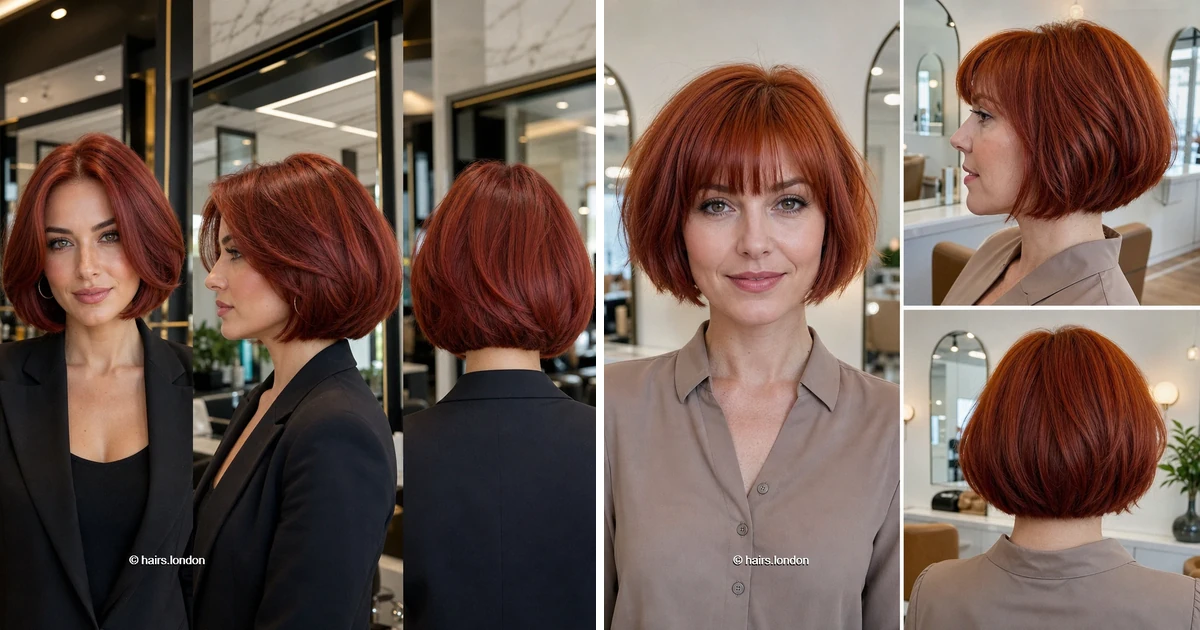
11. Auburn Layered Bob with Feathered Sides
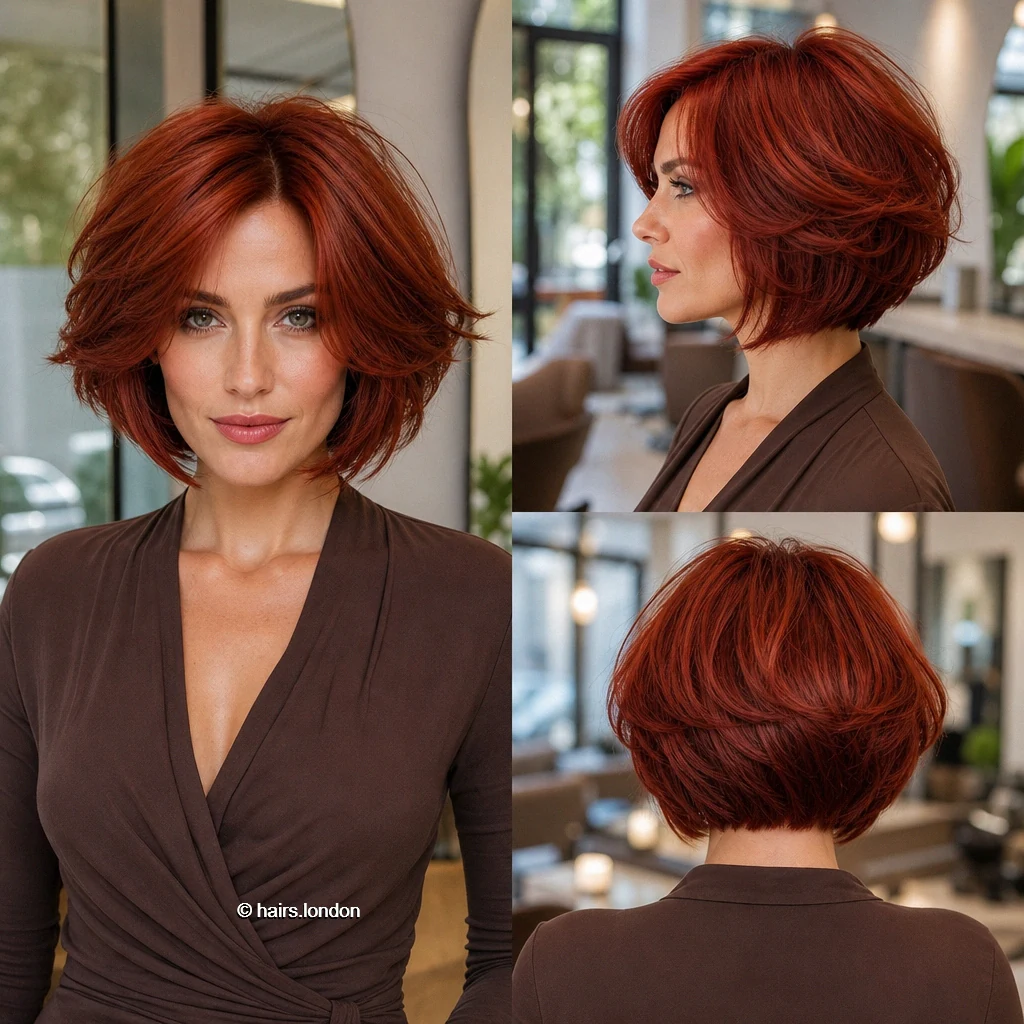
Feathered sides give this vivid auburn bob an open silhouette. The front sweeps away from the face without a fringe. Layered ends frame the jaw, while the back stays short. Visible movement through the rear prevents a solid rounded block. Discuss how much layering your density can support comfortably. Lift the roots while drying and direct sides outward gently. Use flexible spray rather than heavy wax for airy separation. Trim the short back when its shape begins to collapse. Color protection helps the vivid auburn maintain its warm appearance. This cut favors hair that holds volume without excessive daily styling.
12. Copper Shaggy Bob with Flicked Ends
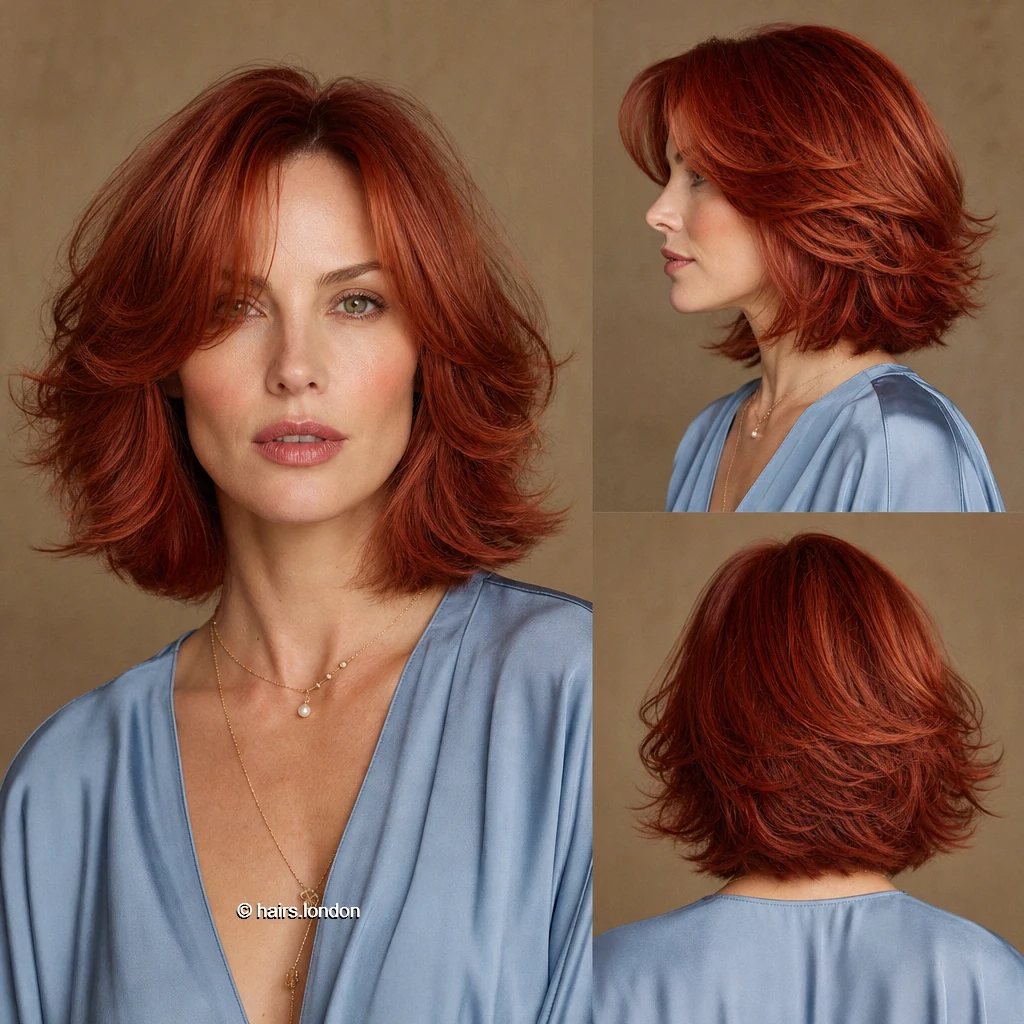
Flicked ends give this copper bob a shaggy finish. Its front falls below the jaw toward the upper neck. Long, parted face pieces blend into shorter, airy side layers. The back view shows natural movement rather than a precise baseline. Ask whether your density can handle layers without stringy ends. Work mousse through damp hair, then dry with loose direction. Turn selected ends outward instead of curling every section identically. Maintain the shape when its layers stop lifting and separating. Protect the bright copper shade with heat care during styling. This approach suits people comfortable with a less controlled perimeter.
13. Bright Copper Layered Bob
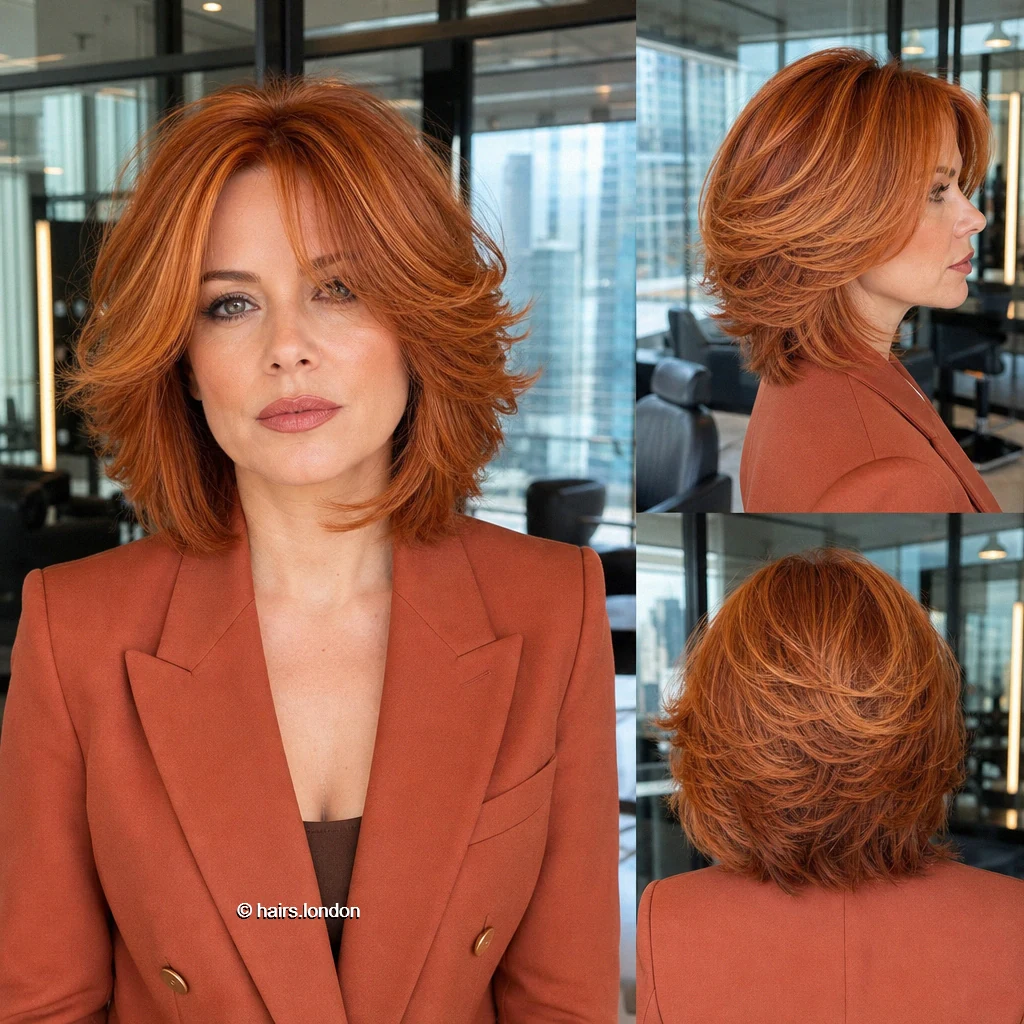
Bright copper color highlights every airy layer in this bob. Its longer front pieces approach the upper neck and shoulders. Shorter side layers lift outward around the cheek and jaw. The back looks feathered, with no strong blunt weight line. Discuss keeping enough length underneath for your preferred fullness. Blow dry with fingers before shaping selected ends using a brush. Lightweight texture spray can emphasize separation without adding sticky bulk. Plan trims around the layers, not just the longest ends. Gentle washing and heat protection help preserve this bright shade. It suits thicker hair when layers can release unwanted weight.
14. Plum Layered Bob with Sweeping Fringe
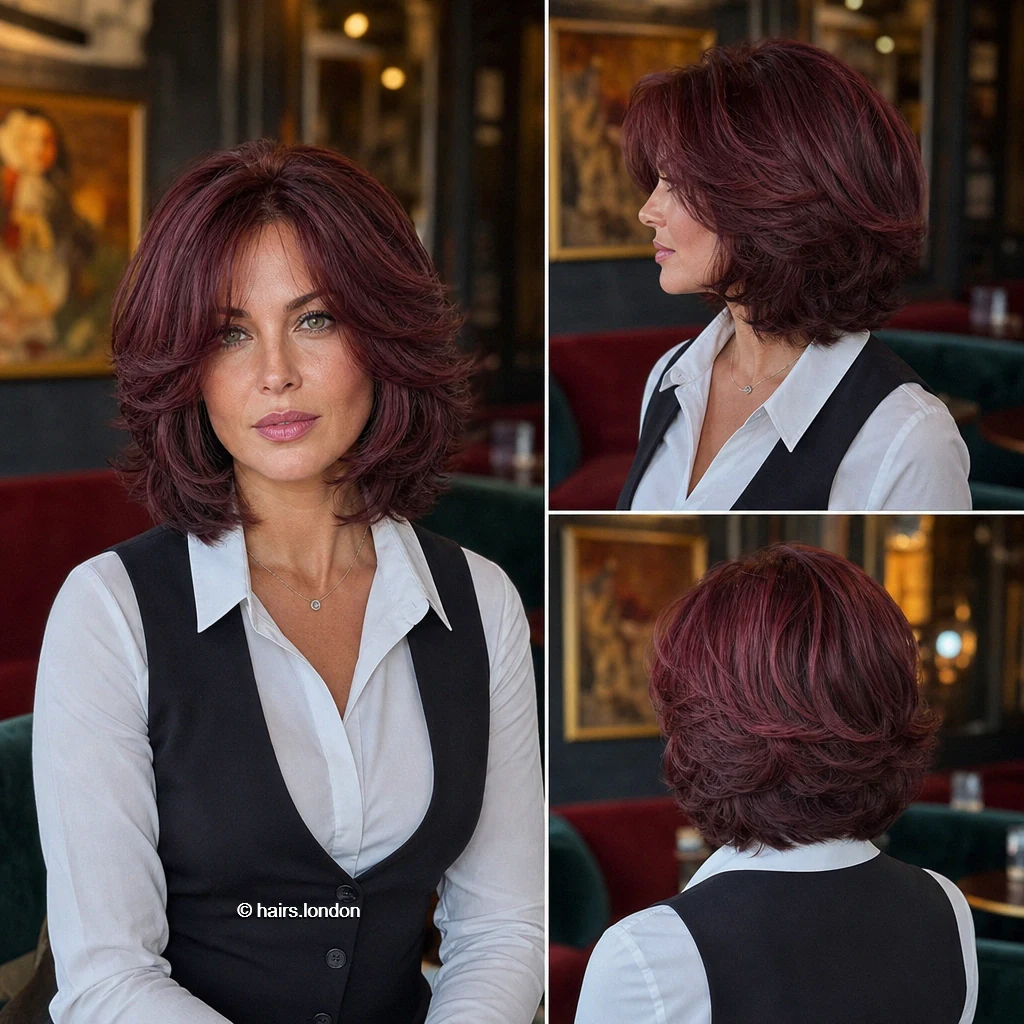
A softly sweeping fringe introduces this layered plum bob. The front rests around the upper neck rather than chin. Its sides and back show abundant, visibly feathered, outward turning ends. The overall silhouette stays rounded despite its distinctly textured finish. Ask how the fringe will connect with your side layers. Dry it across the forehead, then encourage gentle movement underneath. A light cream separates ends without compressing the layered shape. Trim when the fringe or lower layers lose their direction. Color safe care helps retain the deep, rich plum tone. This shape suits enough density to support its many layers.
15. Berry Bob with Soft Face-Framing Layers
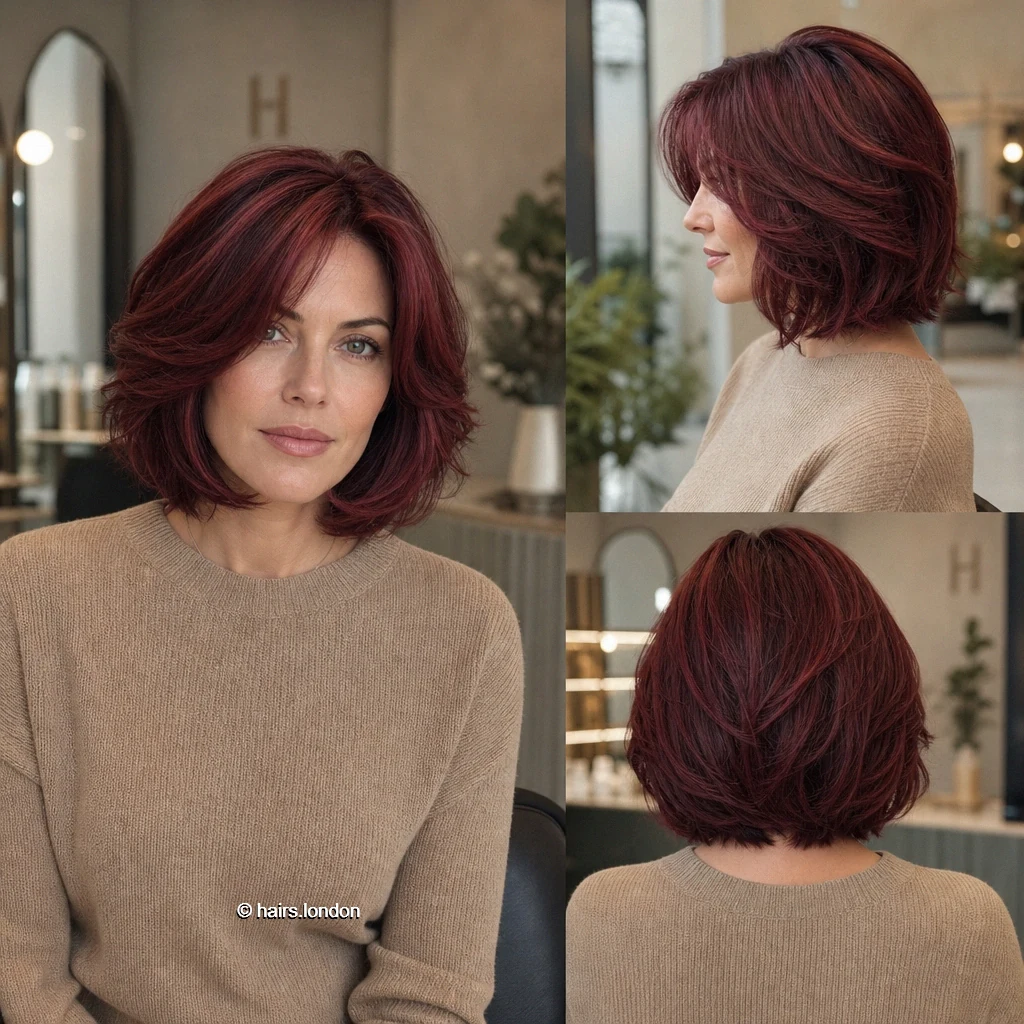
Soft, layered face framing gives this berry toned bob movement. A deep side part sends longer pieces across the forehead. The longer front sits near the jaw, with lighter layered ends. Behind, soft overlapping layers form a full but flexible outline. Ask for restraint if your hair becomes wispy when layered. Brush the front across while lifting the roots gently. Shape only a few selected ends outward to preserve softness. Perimeter trims matter when the lower edge starts spreading. Protect the berry tone with color safe, low heat styling. This bob works best when your density supports layers and fullness.
16. Copper A-Line Bob with a Rounded Back
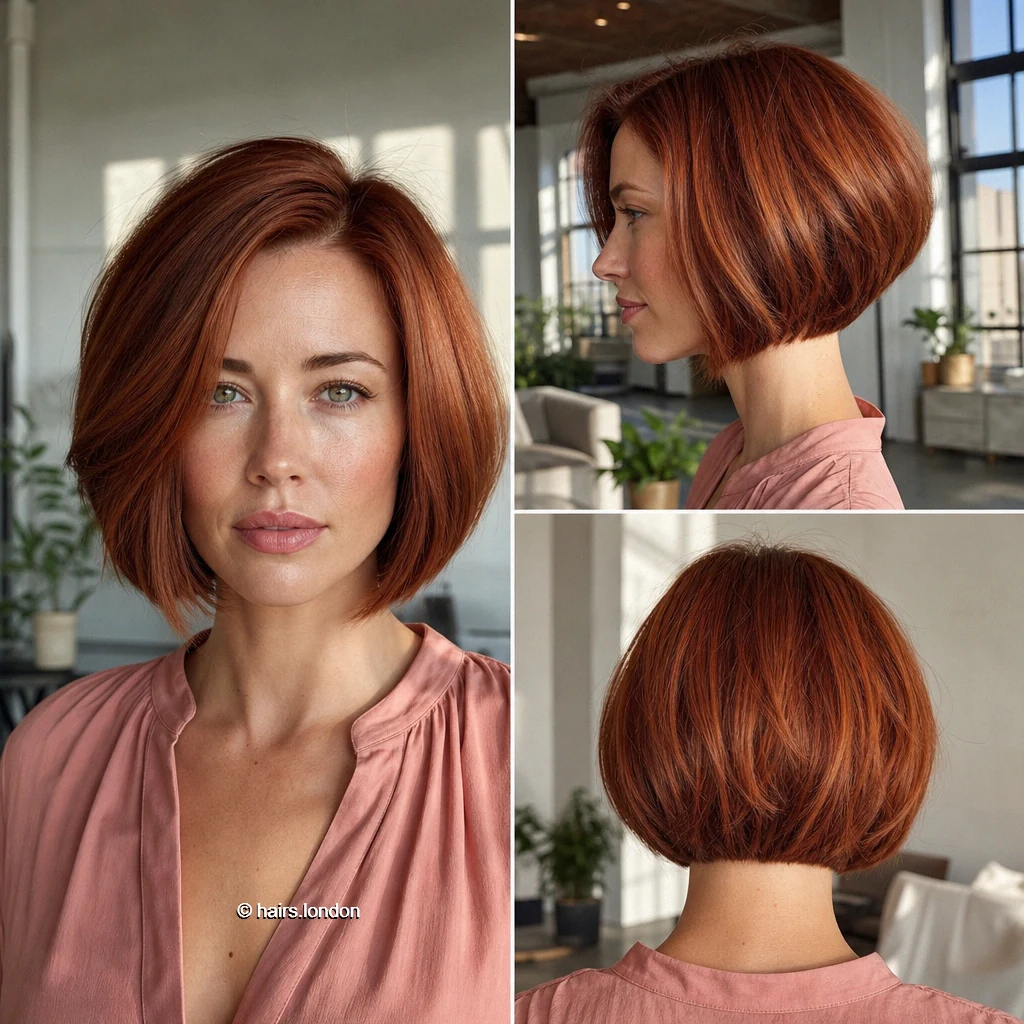
This polished, warm copper bob has visibly longer front sections. Its side view slopes toward a shorter, softly rounded back. That front to back difference supports an A-line description here. The back appears full, with a tidy neck length edge. Ask your stylist to preserve the visible forward length contrast carefully. Smooth each side downward, turning only the ends inward. A shine serum can emphasize the clean, copper colored surface. Trim the back before growth weakens the forward sloping outline. Protect warm color with gentle washing and careful heat use. This shape suits hair that naturally holds a controlled perimeter.
17. Cinnamon Bob with a Rounded Finish
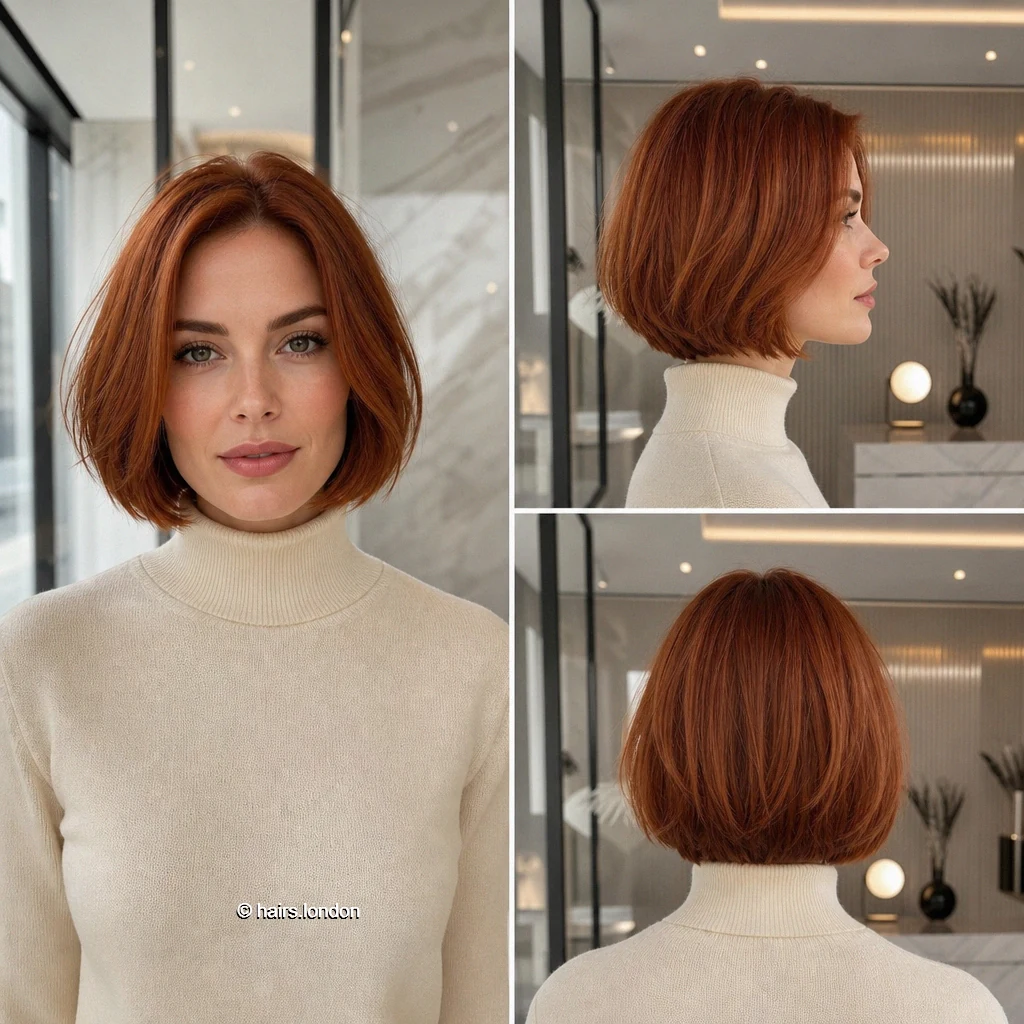
A rich cinnamon red tone warms this compact, rounded bob. The center parted front falls around the jawline on both sides. Side and back views show fullness over a shorter edge. The perimeter curves inward instead of extending sharply toward the front. Request a balanced outline that follows your natural growth patterns. Blow dry downward, then use a brush for gentle curvature. Keep styling products light to avoid flattening the soft crown. Regular trims help retain the rounded shape above the neck. Color safe shampoo can support the warm cinnamon appearance. Choose it if smoothing your natural texture seems manageable.
18. Ginger Wavy Bob with a Center Part
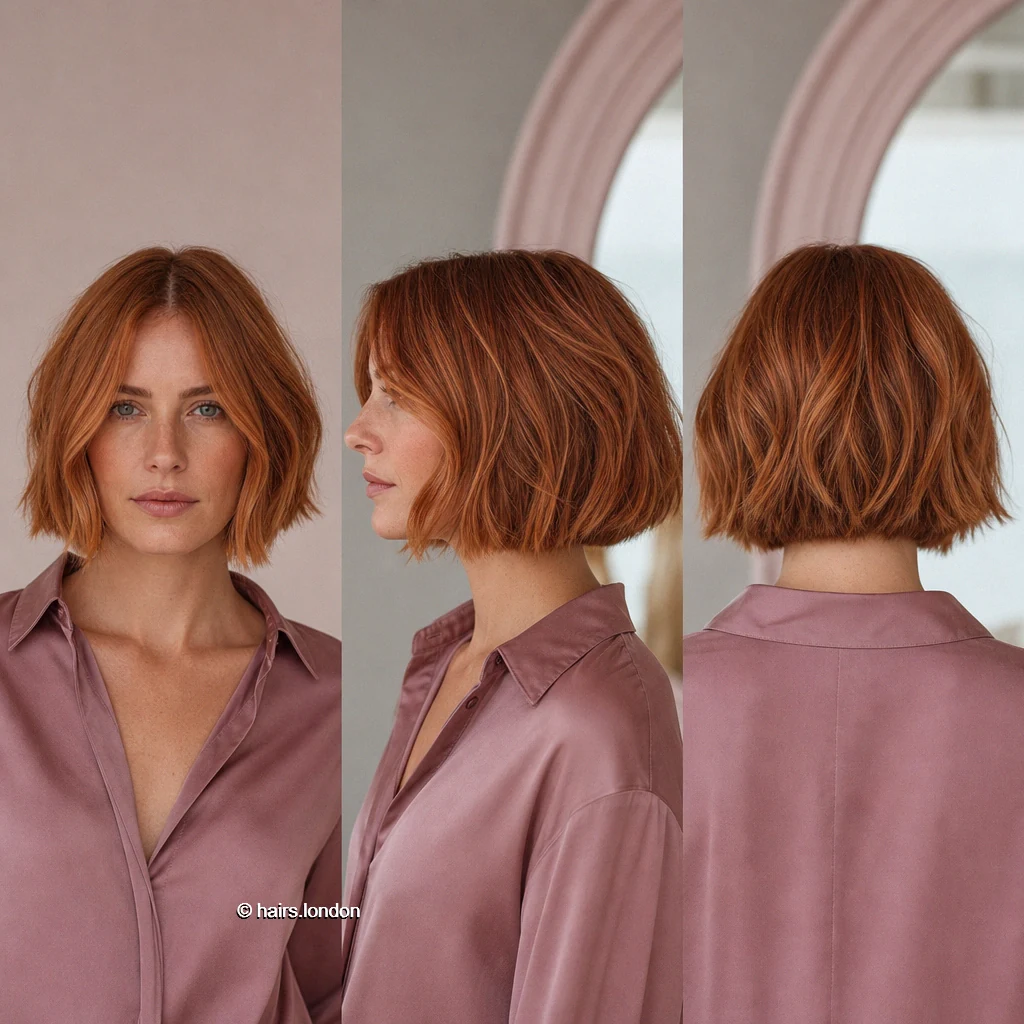
A center part divides this ginger bob into loose, wavy sides. Soft, irregular bends reach the jaw and continue across the back. The lower outline looks textured, not sharply cut or stacked. Its side view shows modest fullness without dramatic front length. Ask for an edge that stays substantial when waves shrink. Scrunch damp sections, then diffuse to keep bends together. Skip heavy oils that could pull the airy texture down. Trim when uneven growth disrupts the relaxed, textured lower perimeter. Gentle color care helps the ginger tone stay luminous. This option suits hair with natural wave and manageable density.
19. Burgundy A-Line Bob
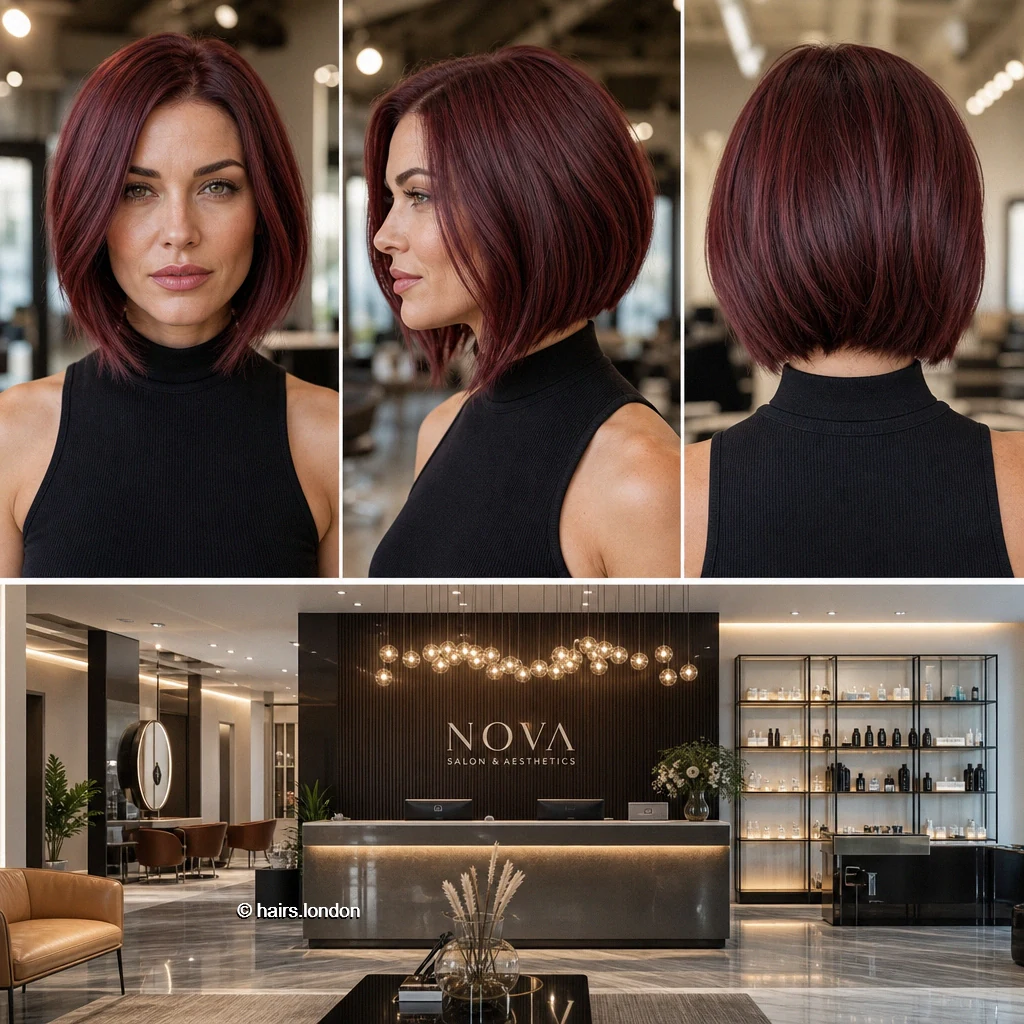
Longer front pieces distinguish this sleek burgundy A-line bob. The side view shows them extending below the shorter back. Its back perimeter sits neatly at the upper neck, appearing compact. A deep side part introduces movement without obscuring the angled outline. Ask for enough front length to preserve that visible difference. Smooth hair downward and polish the ends with minimal product. Avoid overcurling, which can hide the strong forward shape. Check the back edge as growth softens its clean line. Color safe care helps maintain the deep burgundy finish. This suits hair that holds a sleek outline with manageable effort.
20. Burgundy Bob with Textured Ends
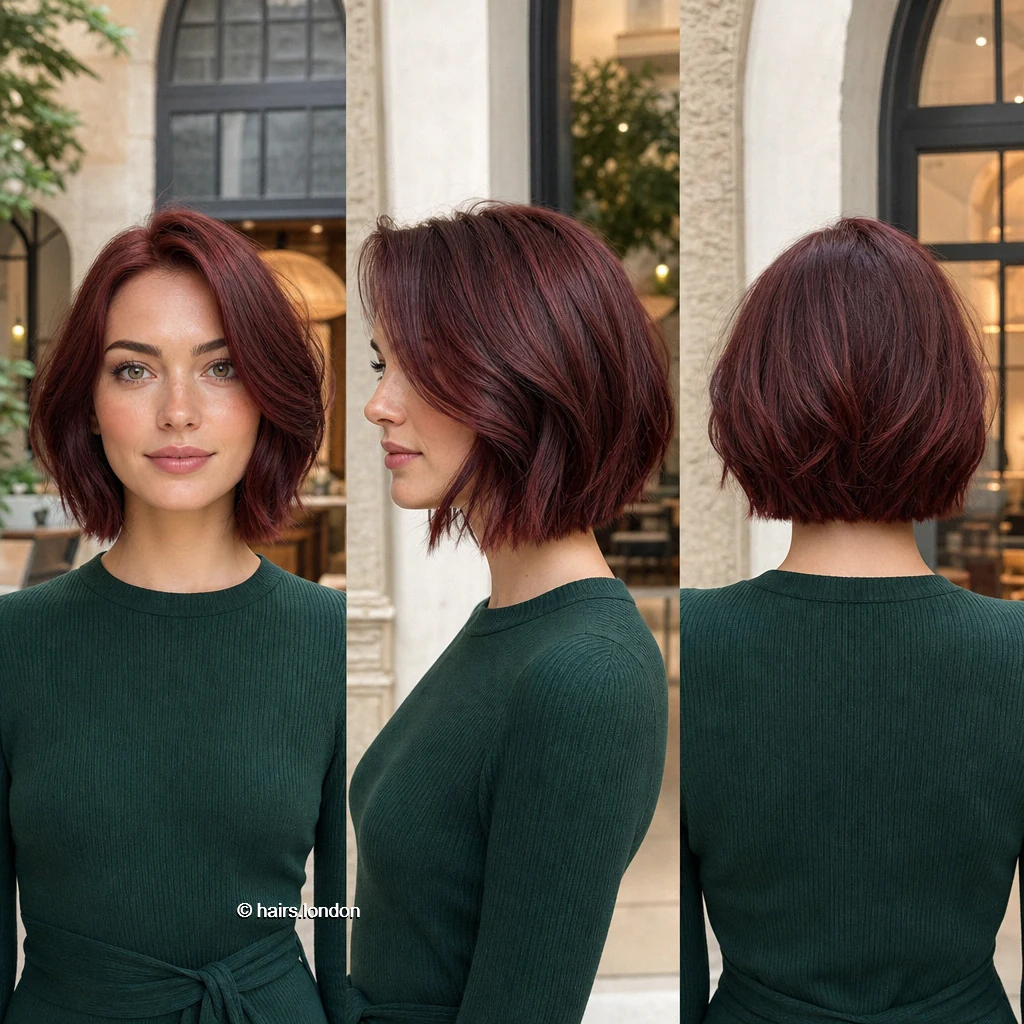
This burgundy bob pairs a side part with textured ends. The front sits near the jaw, and the back stays short. Soft side layers sweep backward, creating movement through the outer shape. Its back view shows a soft edge rather than stacking. Ask for surface movement while retaining weight through the perimeter. Dry the roots for gentle lift, then separate ends sparingly. Lightweight cream can control flyaways without erasing the texture. Trim when the lower outline loses its original compact shape. Limit unnecessary heat to help preserve the burgundy color. It suits hair that balances natural body with controlled separation.
How to Choose Your Bob Length and Shape
Start with the point where you want the front to sit: at the jaw, below it or toward the upper neck. Then compare the side and back views. A rounded bob retains a curved, substantial outline; an A-line bob has visibly longer front sections. Visible graduation builds shape at the back, but a rounded back alone does not mean a cut is stacked. Consider how your hair shrinks, bends or expands when choosing the finished length.
Styling Fine, Thick, Wavy and Curly Textures
Fine hair may benefit from a weightier perimeter and lightweight root lift rather than extensive layers. Thick hair can sometimes use selective internal weight removal, provided the ends remain full. For waves, scrunch damp hair and diffuse gently so the bob’s outline does not become puffy. Curly hair needs its shape assessed at its natural curl pattern and dry length; keep the lower edge substantial enough to avoid a thin finish. Smooth only the sections that need it, and use light products to preserve movement.
Keeping Red Bob Color Fresh
Copper, auburn, plum and burgundy can show fading differently, so ask your colorist what upkeep your chosen shade needs. Use a color-safe cleanser, avoid unnecessarily hot water and apply heat protection before blow-drying. A suitable color-depositing product may refresh tone between salon visits, but choose one with your colorist’s guidance. The smoother bobs in these images also benefit from conditioning that adds shine without weighing down the perimeter.
Maintaining the Bob Perimeter and Graduation
A compact jaw-length bob can lose its intended outline as the back grows, while a longer layered bob may need attention when its ends stop moving separately. Check a blunt or curved perimeter from the front, side and back rather than judging the front alone. If the back has visible graduation, ask for trims that preserve its shape without taking unwanted length from the front. Fringe may need an earlier adjustment than the rest of the cut.
What to Discuss with Your Stylist
Bring the front, side and back views of the shape you prefer. Point out the exact perimeter, amount of layering, parting and fringe you want, as well as any angle between the front and back. Discuss density, natural texture, cowlicks and how much daily drying you are willing to do. If you want red color too, ask about fading, root upkeep and whether your preferred shade fits your maintenance budget.
Frequently Asked Questions
What is the difference between a bob and a lob?
A bob generally ends around the jaw or neck; a lob is longer and typically approaches the shoulders. The boundary is less important than agreeing on the finished length with your stylist.
How is an A-line bob different from a stacked bob?
An A-line bob has visibly longer front sections than its back. A stacked bob relies on visible graduation at the back. A cut can have both features, but one does not establish the other.
Will a layered bob work on fine hair?
It can, but extensive layering may make fine ends look sparse. Ask whether a fuller perimeter with limited internal movement would better support your density.
How can thick hair avoid a bulky bob shape?
Discuss selective weight removal and the placement of layers. Removing too much from the ends can leave a thin perimeter while bulk remains higher up.
Can I wear a bob with natural curls?
Yes, if the length and shape are planned around curl shrinkage and your natural pattern. Ask to see where the perimeter will sit when your curls are dry.
Which fringe is easiest to manage with a bob?
That depends on your hairline and growth patterns. A lighter or longer fringe may offer more styling flexibility, while a straight brow-length fringe needs regular attention.
Do I need to blow-dry a bob every day?
Not necessarily. A polished rounded perimeter may need smoothing, but a textured bob can often be refreshed with water, a light styling product and gentle scrunching.
How often should a short bob be trimmed?
Trim it when growth changes the intended perimeter or back shape. Compact, precise cuts often need attention sooner than relaxed, layered shapes.
How do I grow out a graduated bob?
Ask your stylist to gradually balance the shorter back with the longer front while retaining a wearable outline between appointments.
Will a side part change how my bob sits?
It can shift volume and alter how the front sections fall. Show your stylist the part you normally wear so the cut is assessed in its everyday position.
How can I keep red bob color from looking dull?
Use color-safe care, protect hair before heat styling and ask your colorist whether a gloss or appropriate color-depositing product would suit your shade.
What should I bring to a bob consultation?
Bring images showing the front, side and back, and explain which details you want to keep. Mention your natural texture, styling time, fringe preferences and color-upkeep budget.
Conclusion
The most useful red bob inspiration is the image that matches both your preferred outline and your realistic routine. Compare the length, back shape, layers and fringe before choosing a shade, then ask your stylist to adapt those details to your hair’s density, texture and growth patterns.


