

11. Soft Wavy Brown Bob with Airy Fringe
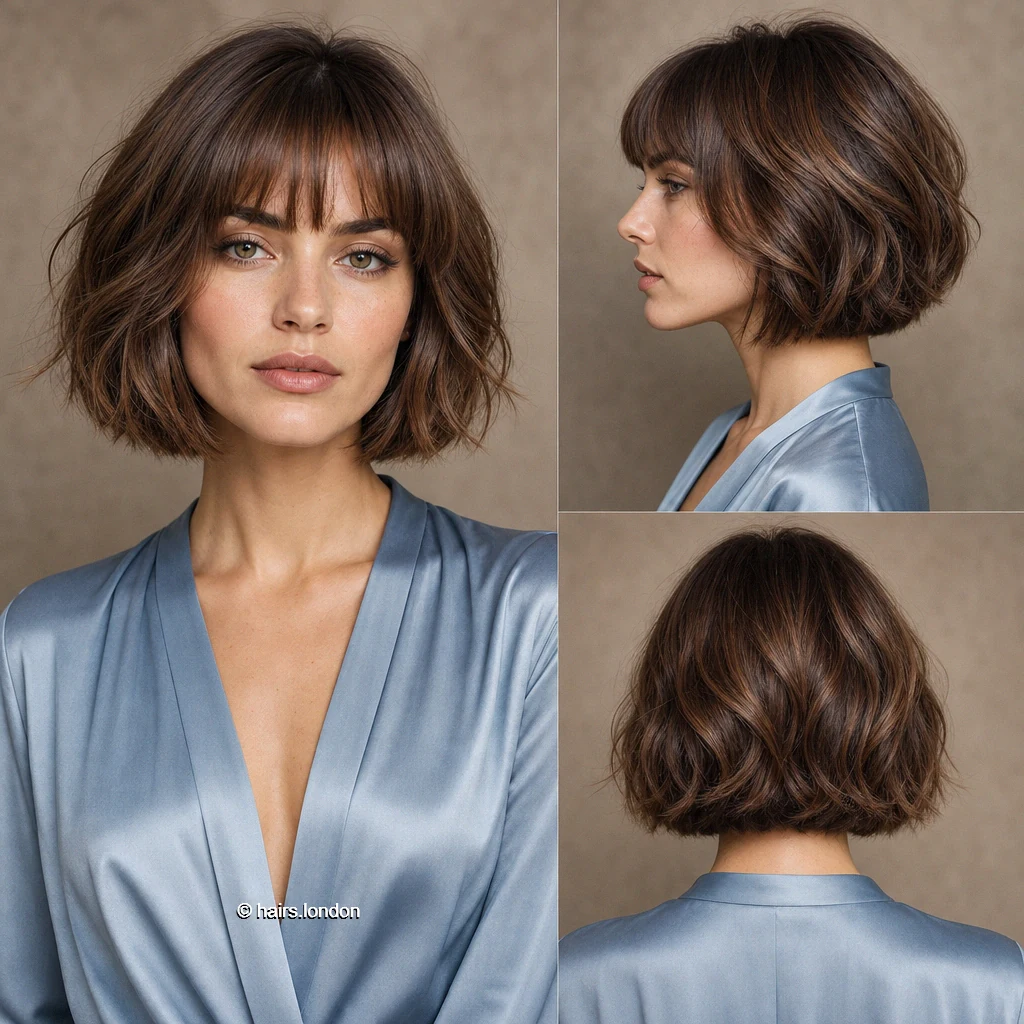
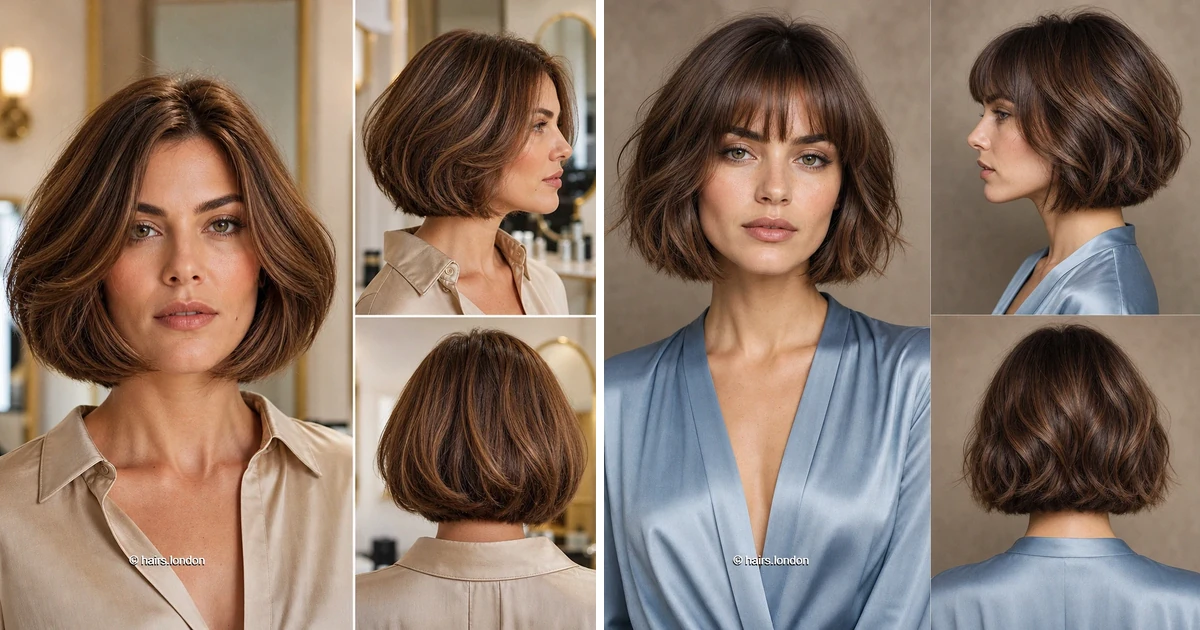
Soft waves loosen the outline of this brown, chin length bob. An airy fringe falls between the brows and shorter sides. Back views show separated, loose waves above a gently rounded neckline. The visible layers release bulk while leaving the bottom substantial. Ask your stylist to cut for your wave pattern. Scrunch in light foam and allow the bends to form. Refine only stray ends with a brush or small iron. Wavy hair may shrink, so agree on the dry finish. Trim the fringe when it begins obscuring your eyes. Keep the outer edge neat without cutting away its movement.
12. Copper Brown Bob with a Softly Rounded Back
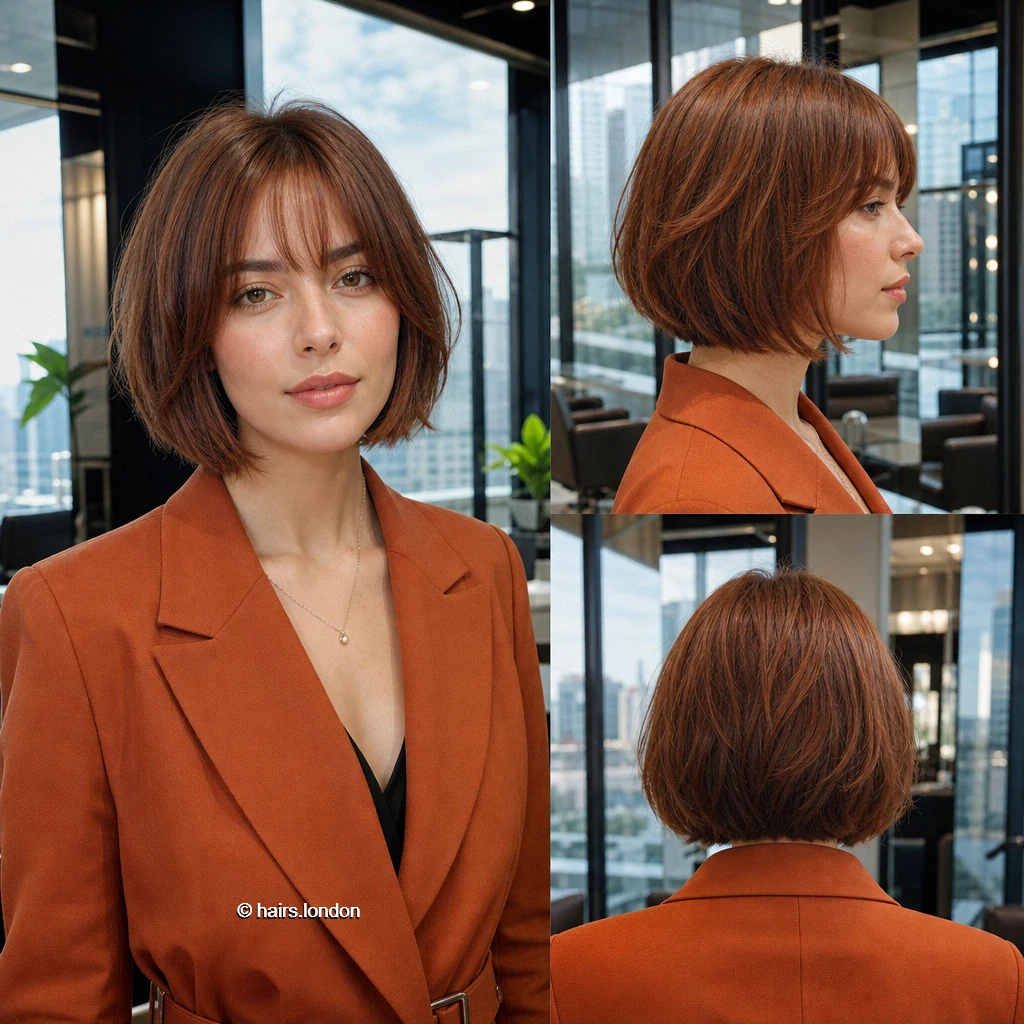
Copper brown warms this jaw length bob and its soft fringe. The open front blends into sides that curve beneath the chin. Back views show rounded fullness above a compact neck length edge. Fine surface separation keeps the shape from appearing helmetlike. Request gentle movement while retaining enough weight around the perimeter. Blowdry with moderate heat, directing the ends under as needed. Color protective washing helps the warm tone look fresh. This shape may suit hair that holds a light bend. Check the fringe and neckline between full shape appointments. Ask whether your texture needs extra room around the ears.
13. Dark Chestnut Bob with a Fine Brow Fringe
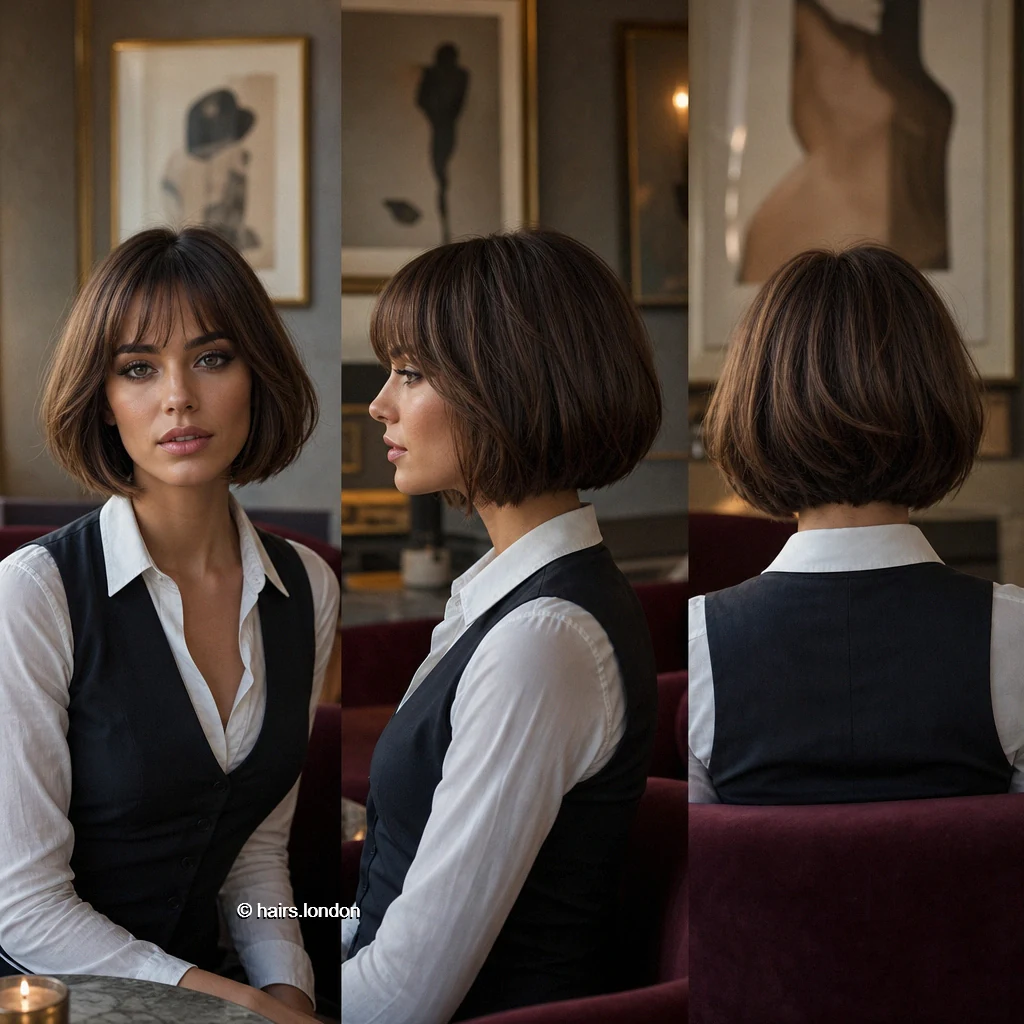
Dark chestnut hair forms a tidy bob with airy bangs. The sides sit around the jaw, while the back curves inward. Fine highlights follow the surface and reveal gentle layered movement. Its lower edge retains weight rather than looking sharply stacked. Ask for controlled layering if your ends become overly wide. Dry the bangs forward, then brush the sides into place. A light finishing spray can hold shape without stiffening it. This cut may require more smoothing on strongly textured hair. Keep the fringe clear and the neckline evenly shaped. Discuss whether the cheek framing sections should reach your jaw.
14. Feathered Brown Bob with Curtain Fringe
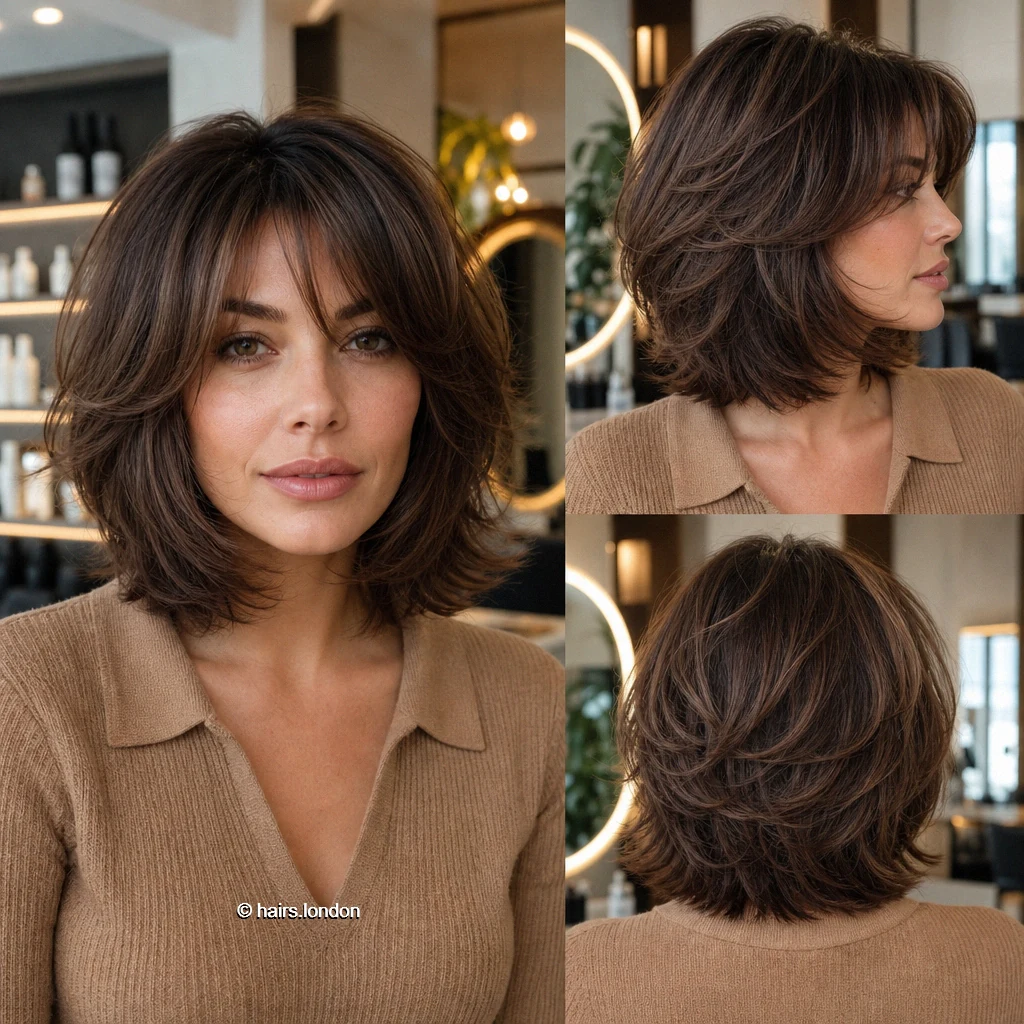
Feathered layers give this brown bob a soft, expansive outline. A divided fringe opens at the forehead and meets face framing pieces. The ends reach the neck, flicking outward along the sides. From behind, separated layers create movement across the lower shape. Ask for restraint if fine hair needs a stronger baseline. Blowdry the fringe away from the face using gentle tension. Lift the layers with fingers instead of coating them heavily. Fuller hair may need weight balanced through the interior. Refresh the shape when outward ends begin losing their direction. Discuss how much width you want around the jaw.
15. Ash Brown Layered Bob with Flicked Ends
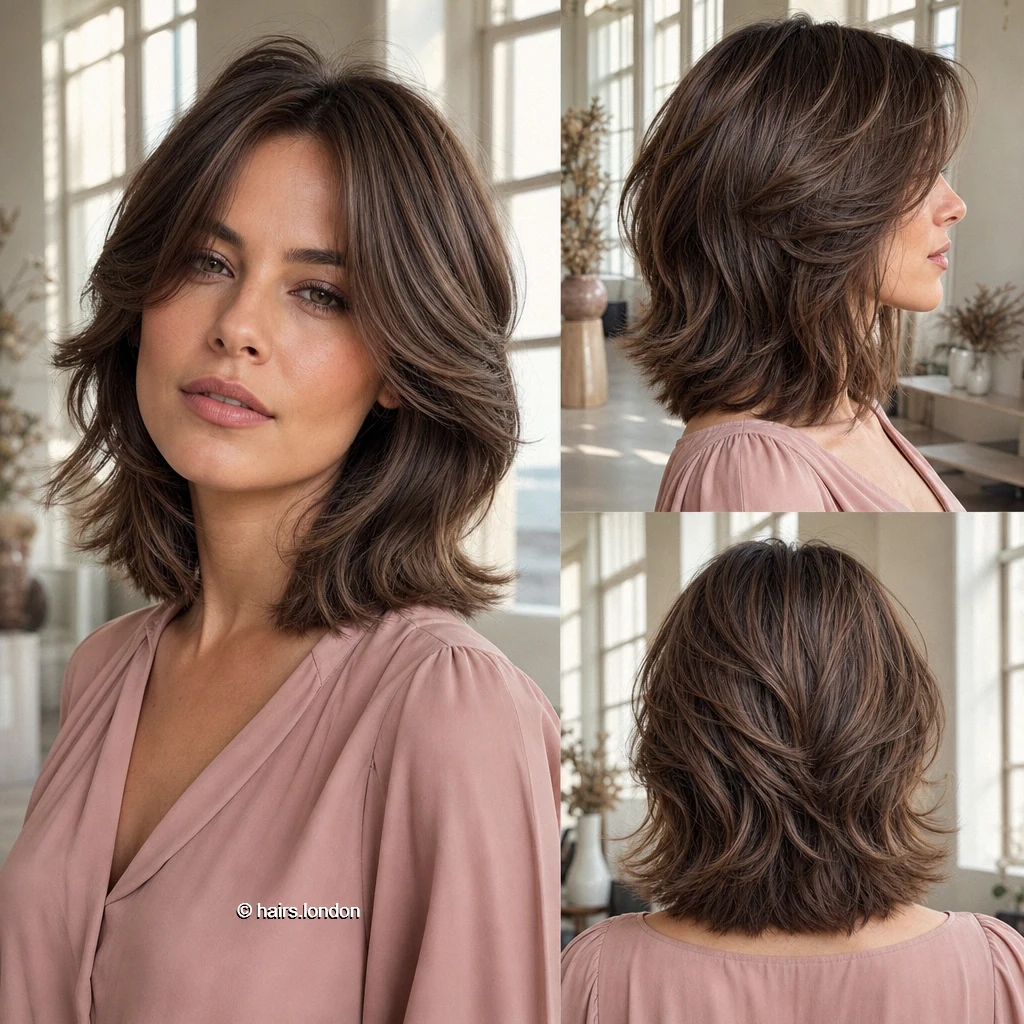
Ash brown highlights trace the layers of this longer bob. Its curtain front opens around the eyes without a short fringe. Sides pass the jaw, with flicked ends near the shoulders. The back shows feathered movement instead of a firm baseline. Ask for long layers if you want flowing separation. Direct a round brush outward at the ends while drying. Use flexible hold to keep the flick without creating stiffness. Thick hair may need balancing; fine hair may need restraint. Trim when the longest pieces begin looking thin or uneven. Compare your preferred dry length with your stylist before cutting.
16. Chestnut Layered Lob with a Sweeping Front
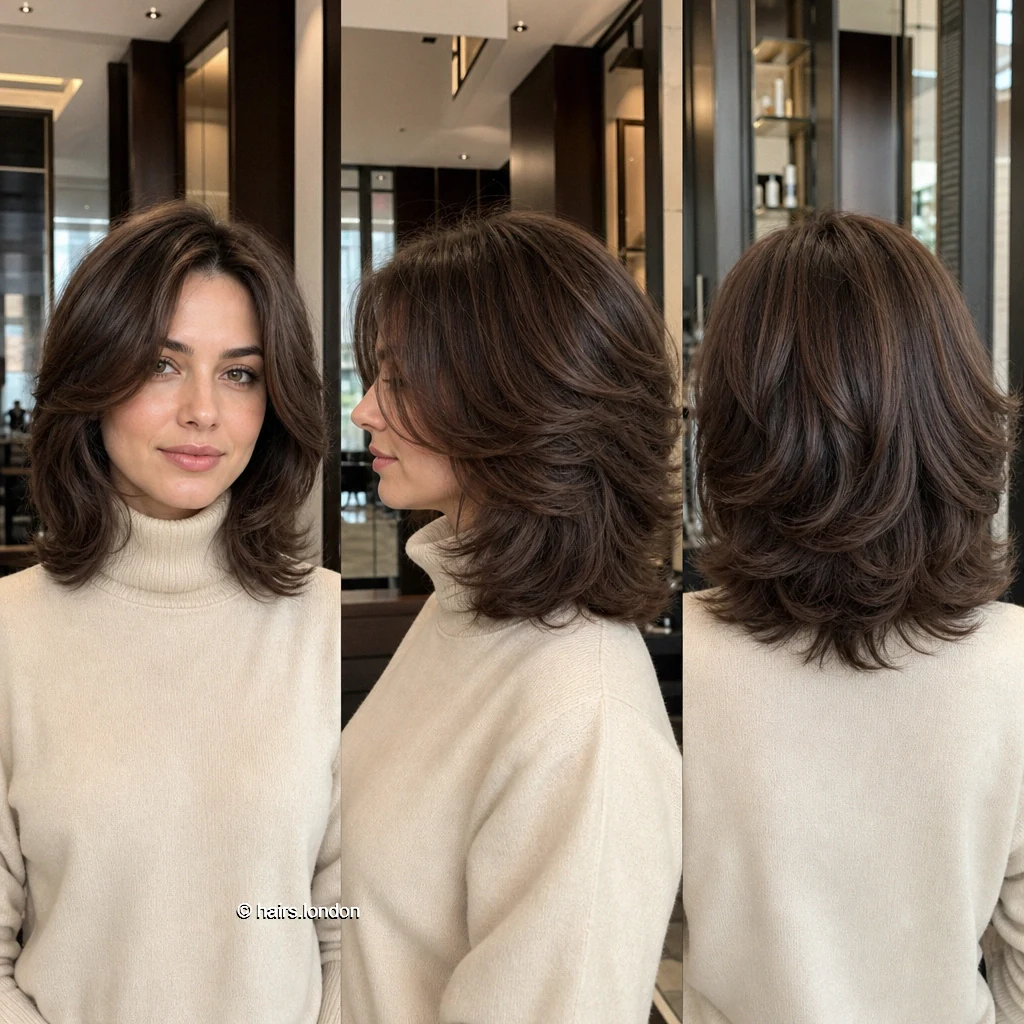
Deep chestnut tones run through this layered, shoulder skimming lob. A loose center opening lets longer front pieces sweep outward. Feathered ends sit around the shoulders, with abundant back movement. Its silhouette differs from a compact bob through added length. Request connected layers that preserve some strength at the bottom. Lift roots while drying, then shape the ends away gently. Avoid dense creams that could merge the airy layers together. This fullness depends on density, natural bend, and styling preference. Tidy the longest ends as their outline begins to fray. Discuss whether you want a bob shape or longer lob.
17. Deep Brown Layered Lob with Face Framing Wings
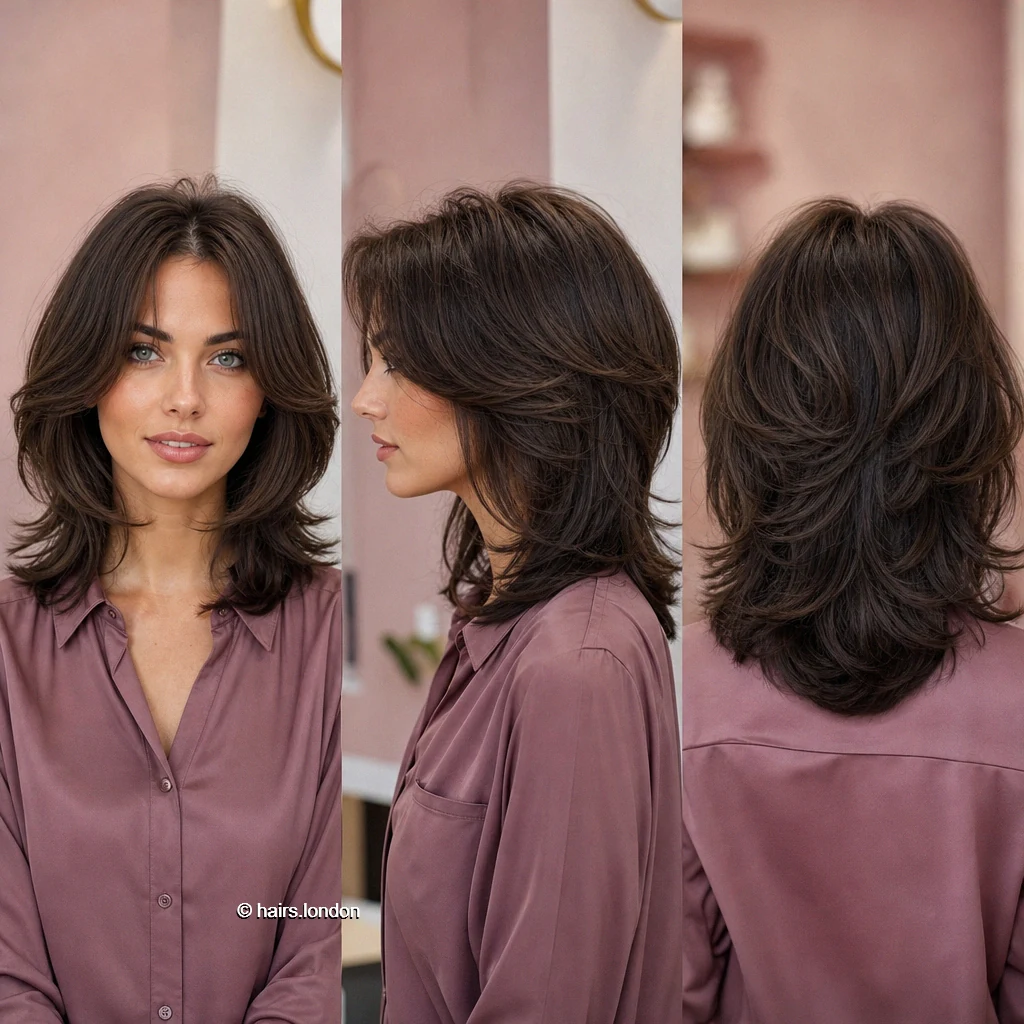
Deep brown color gives this layered lob a rich backdrop. Long face framing sections open away from the central part. The ends approach the shoulders, feathering around the neck. Back layers create a broad, softly moving outline throughout. Ask where the shortest front layer should begin for comfort. Blowdry those front sections backward with a medium brush. Keep product light so the lower layers remain distinct. Naturally dense hair may support this generous layered shape. Plan trims when the shoulder level ends stop sitting neatly. Discuss how your usual part changes the front framing effect. Keep the perimeter clearly defined.
18. Caramel Brown Lob with Rounded Crown Movement
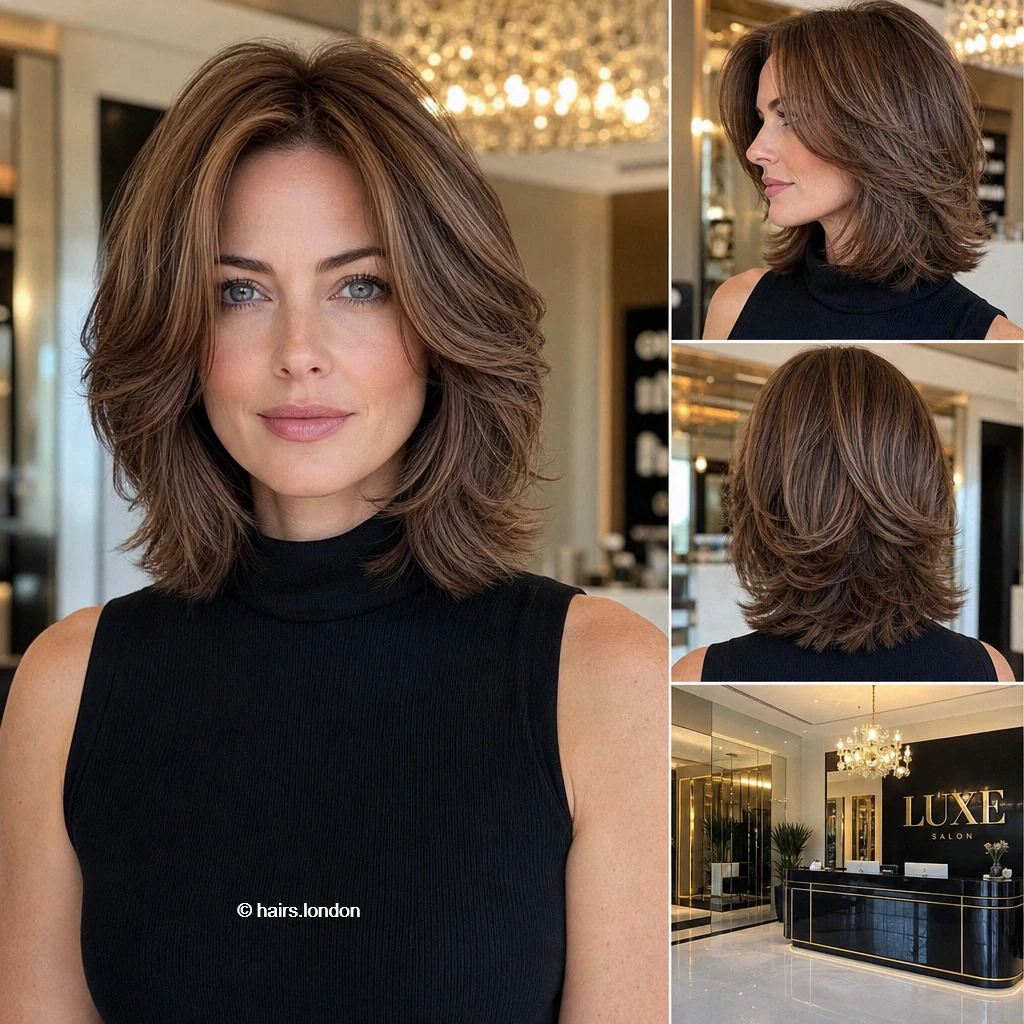
Caramel brown highlights emphasize this lob’s flowing, separated layers. The front opens around the face without visible short bangs. Length reaches near the shoulders, while the crown appears rounded. Feathered back pieces create movement through the lower outline. Ask for layers that connect rather than isolated short pieces. Style with a round brush, turning ends outward sparingly. Finish with flexible spray to keep the surface moving. Finer hair may prefer fewer layers near the perimeter. Maintain both color brightness and the shape of longer ends. Bring photos showing where you want the front to land. Adjust product to your density.
19. Warm Chestnut Shaggy Bob with Outward Ends
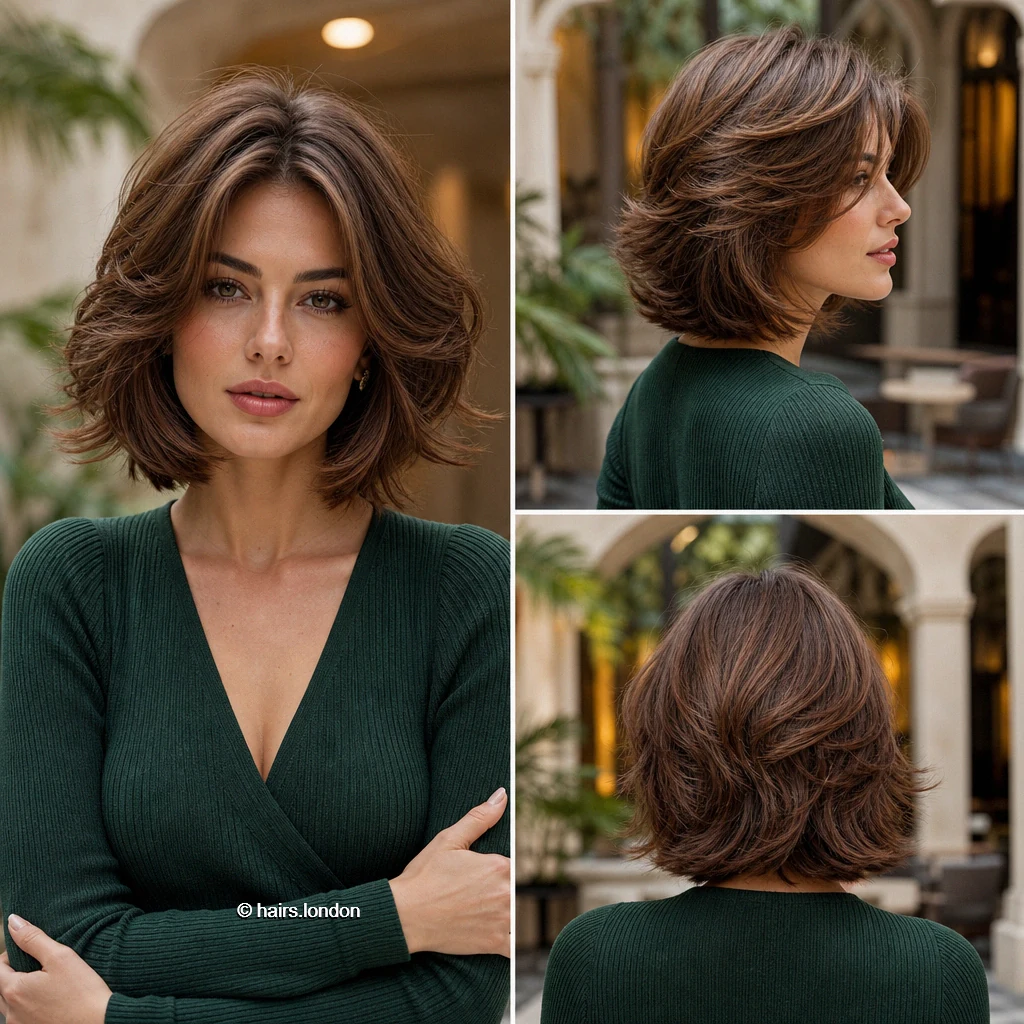
Warm chestnut brown enhances the movement of this shaggy bob. Its center opening falls into cheek framing, layered side pieces. The ends hover around the neck, flicking away from it. Visible back layers produce a loose, full silhouette without stacking. Ask for softness that still leaves enough perimeter definition. Encourage natural bends with mousse, then separate ends using fingers. Smooth only the pieces that turn in an unwanted direction. Medium density and a natural wave may ease daily styling. Trim when the flicked pieces lose their balanced, defined lower outline. Discuss how much side width feels comfortable around your face.
20. Espresso Bob with a Sculpted Side Sweep
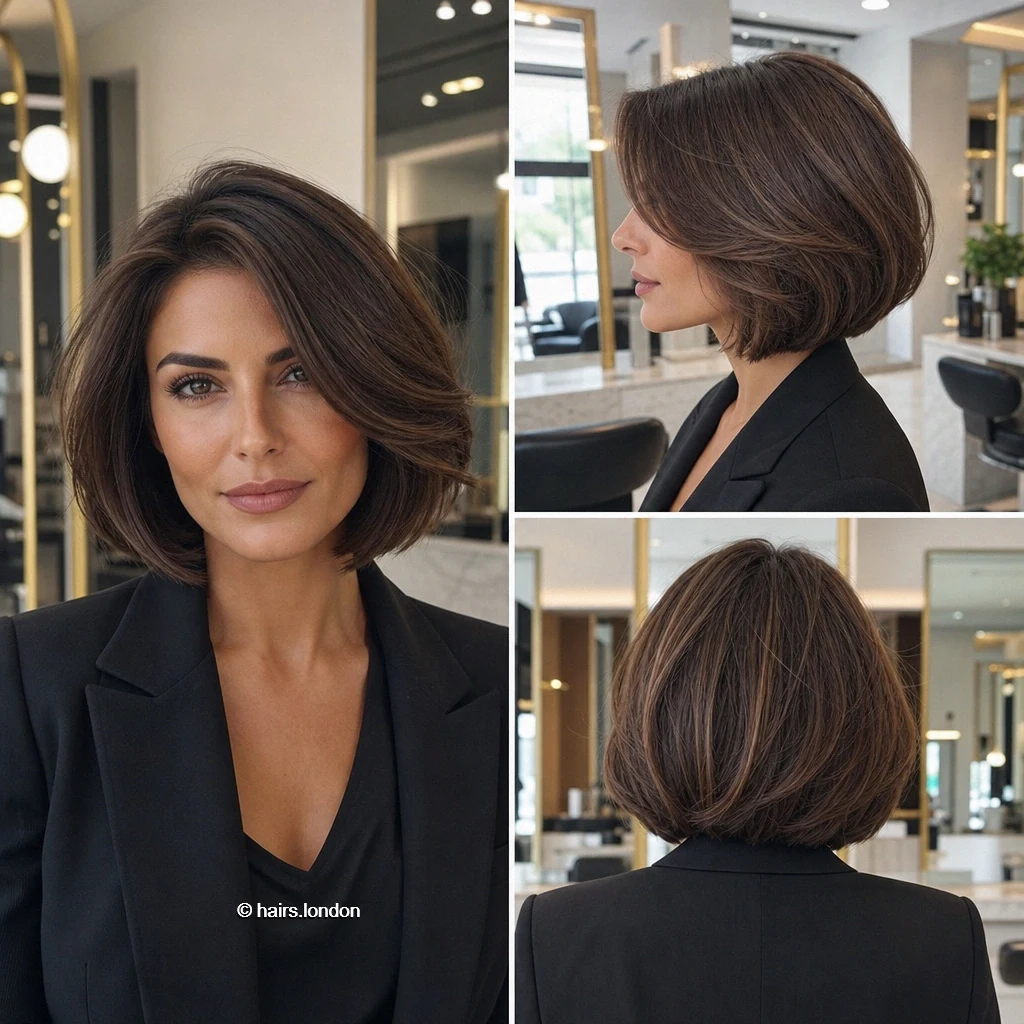
Espresso brown gives this short, side swept bob definition. The longer front crosses the forehead and curves toward the jaw. Its profile shows rounded fullness above a compact neckline. From behind, subtle layers follow a smooth, curved outline. Ask for a substantial baseline if you want polished ends. Blowdry the front across its part using a round brush. Smooth the perimeter afterward without pressing all volume flat. Dense hair may require internal adjustment to avoid excessive bulk. Keep neckline appointments regular while preserving the soft back curve. Discuss whether your natural part supports this sweeping front shape during daily styling.
How to Choose Your Bob Length and Shape
Start with where you want the perimeter to sit: near the jaw for a compact bob, at the neck for a softer outline, or closer to the shoulders for a lob. Rounded shapes keep visual weight near the lower edge; layered shapes release some of that weight and create movement. Check the side and back views before requesting a front-to-back angle. An A-line bob has a visibly longer front, while a stacked or graduated bob needs visible shortening and buildup at the back. Do not assume one shape from a full front view alone.
Styling Fine, Thick, Wavy, and Curly Textures
Fine hair often benefits from a stronger perimeter and fewer short layers; use lightweight root lift rather than heavy cream. Thick hair may need carefully placed internal weight removal so a rounded bob moves without expanding at the sides. For waves, apply light foam or curl product, scrunch, and refine only the ends that disrupt the outline. For curls, agree on the finished dry length before cutting and shape around the curl pattern. Dry a fringe first if you wear one, and smooth the perimeter selectively instead of brushing away all natural texture.
Keeping Bob Color Fresh
These cuts range from deep brunette to warm copper brown, with some visible caramel or ash-toned highlights. Choose color upkeep for the result you actually have: color-safe washing and heat protection help preserve shine, while highlighted pieces may need a separate refresh as contrast changes. Ask your colorist how often your chosen tone or placement needs attention. On shorter bobs, even modest growth can shift where highlighted strands fall around the face and curved edge.
Maintaining the Perimeter and Rounded Shape
A compact jaw-length bob shows growth sooner than a shoulder-skimming lob, particularly at the neckline and around the ears. Arrange trims according to when your edge loses its intended position, not a fixed schedule that ignores your growth rate. Fringe may need a smaller adjustment between full cuts. If your bob has visible back graduation, ask your stylist to maintain that buildup as well as the perimeter; do not remove weight from the ends indiscriminately. Longer layered versions can generally tolerate more growth, but their feathered ends still need occasional reshaping.
What to Discuss with Your Stylist
Bring the front, profile, and back views of the shape you prefer, and point to the exact features you want: fringe, parting, side width, neckline length, and how much movement remains at the ends. Explain your usual styling time, natural texture, density, cowlicks, and where your hair falls when it dries without tension. Ask how proposed layers or weight removal will affect your perimeter. If you are growing out a shorter cut, discuss an interim length that still looks deliberate.
Frequently Asked Questions
What is the difference between a bob and a lob?
A bob generally finishes around the jaw or neck, while a lob is a longer bob that reaches toward the shoulders. The transition is gradual, so the finished position matters more than a rigid label.
Is an A-line bob the same as a stacked bob?
No. A-line describes a front that is visibly longer than the back. Stacking or graduation describes shorter sections building weight at the back. A cut can combine those features, but one does not automatically imply the other.
Will layers make a fine-haired bob look fuller?
They can add movement, but too many short layers may thin the perimeter. Ask your stylist to assess your density and preserve enough weight at the ends.
How can thick hair avoid a bulky rounded bob?
Discuss targeted internal weight removal and where you want the fullest point to sit. Removing too much from the visible edge can make the shape less controlled.
Can naturally curly hair wear a rounded bob?
Yes, provided the shape is planned around your curl pattern, shrinkage, density, and desired dry length. A curly bob will not fall exactly like a blowdried version.
Should I add fringe to a jaw-length bob?
Choose fringe if its length and daily styling suit your hairline and growth patterns. Wispy bangs and a sweeping front create different effects and require different upkeep.
How do I style a rounded bob each morning?
Reset the front or fringe first, then direct airflow down the sides and lightly smooth the perimeter. Use just enough product to control flyaways without flattening the shape.
How often should I trim a short bob?
Trim when the neckline, side length, or weight line stops sitting where you want it. A precise short outline usually needs attention sooner than a longer, loosely layered lob.
How do I keep a wavy bob from looking triangular?
Discuss where the cut holds weight and whether selective layering would release excess width. Style waves in their natural pattern, then refine the perimeter rather than brushing everything outward.
Can I grow a rounded bob into a lob?
Yes. Your stylist can periodically tidy the neckline and adjust layers while allowing the sides and overall length to grow.
Do highlighted bobs need different maintenance?
The cut still needs shape upkeep, while the color may need separate refreshes depending on tone, contrast, and placement. Heat protection also helps preserve the appearance of highlighted ends.
What photos should I bring to a bob consultation?
Bring front, side, and back views if possible. Explain which length, fringe, perimeter, and amount of back fullness you like, rather than asking your stylist to copy the entire image.
Conclusion
The most useful bob inspiration is specific: a neckline you like, a perimeter your hair can support, and layers that serve your preferred finish. Whether you choose a compact rounded bob, a fringe-led shape, or a feathered lob, use these views to plan both the cut and the styling it will take to keep it looking like yours.