


11. Pearl Lilac Rounded Pixie
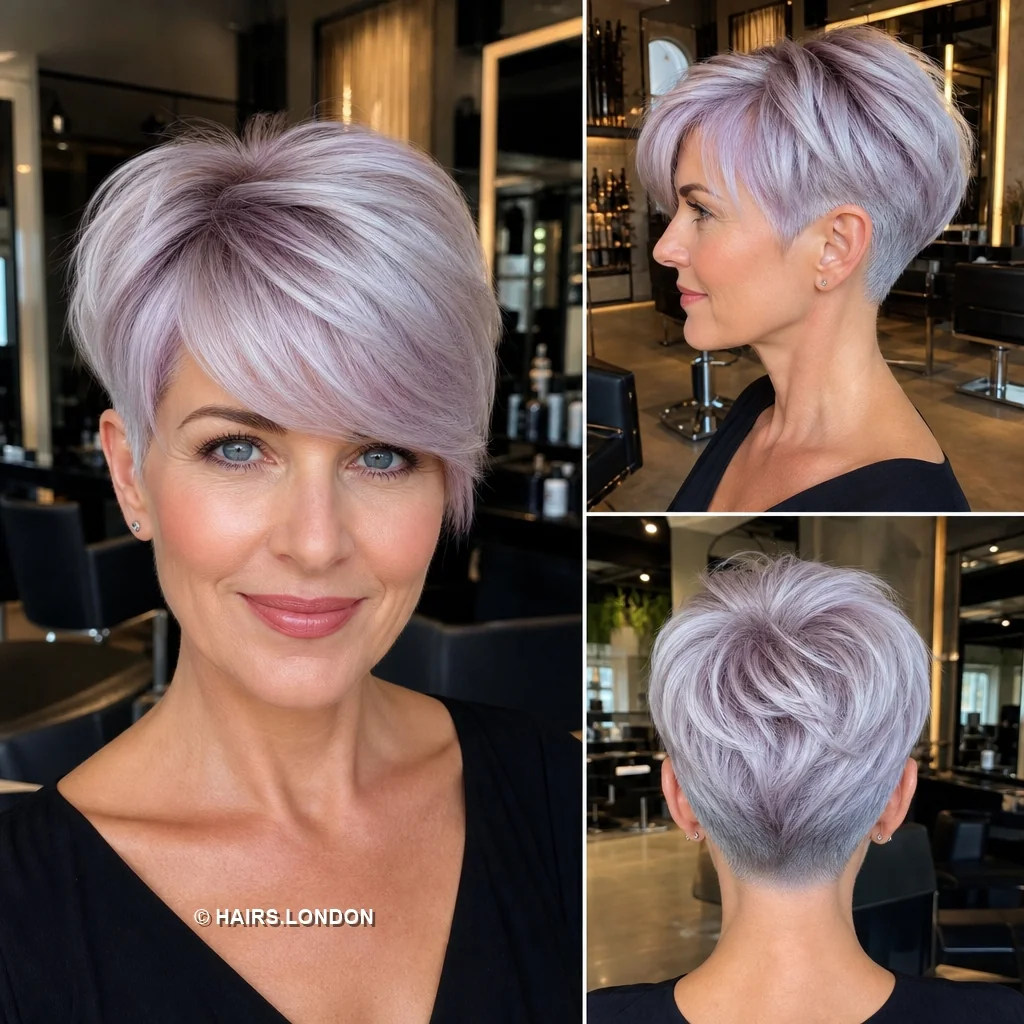
This sculpted pixie features a curved side fringe beneath a soft rounded crown, while short tapered sides keep the silhouette crisp and compact. The graduated nape finishes the back cleanly, and the visible pearl lilac silver emphasizes separation between the short layers. The shape can translate well to fine or medium hair, although density and natural growth patterns should guide how much weight is removed. For daily styling, direct the roots while blow-drying, then use a small amount of light smoothing serum through selected ends rather than coating the whole cut. Ask the stylist to adjust fringe length, crown height.
12. Burgundy Side Fringe Pixie
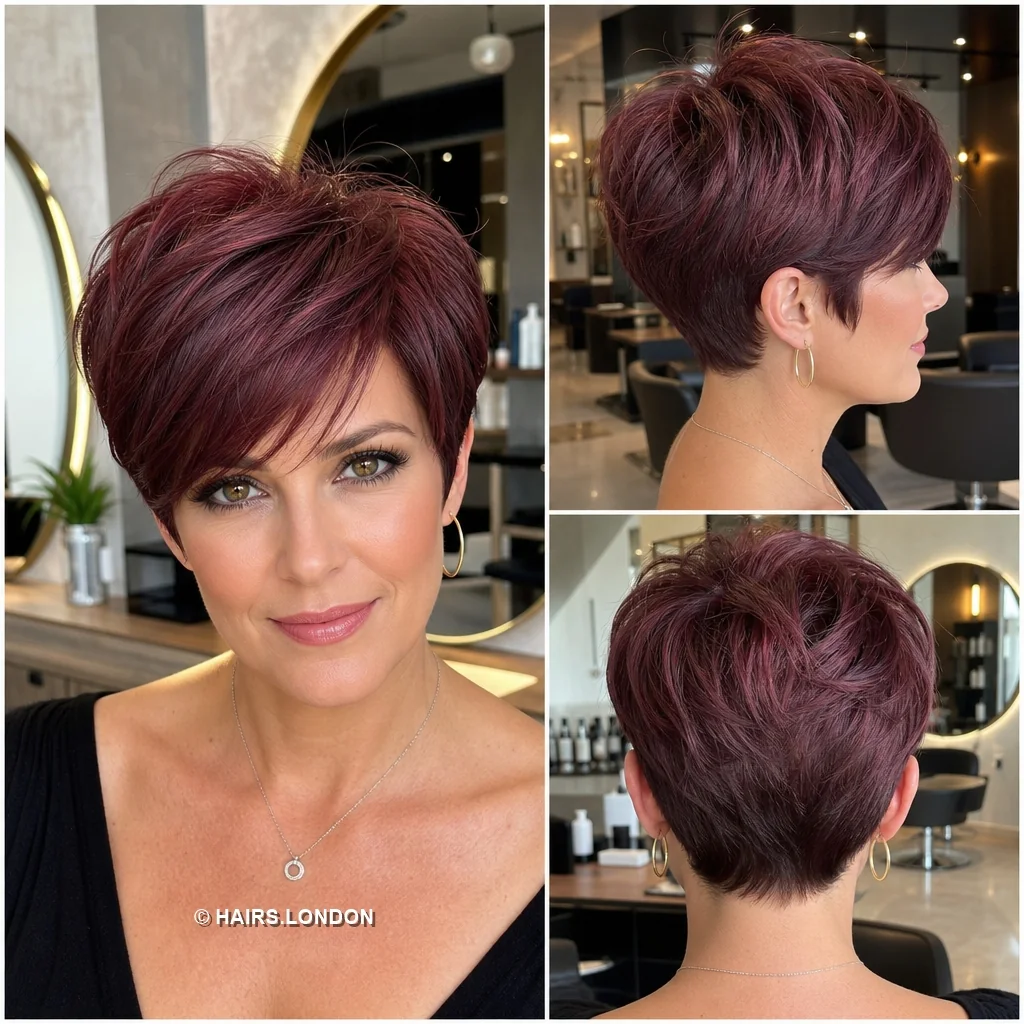
This sculpted pixie features a long side fringe beneath a controlled layered crown, while short tapered sides keep the silhouette crisp and compact. The soft compact nape finishes the back cleanly, and the visible dark burgundy emphasizes separation between the short layers. The shape can translate well to straight or softly wavy hair, although density and natural growth patterns should guide how much weight is removed. For daily styling, direct the roots while blow-drying, then use a small amount of light styling cream through selected ends rather than coating the whole cut. Ask the stylist to adjust fringe length, crown.
13. Raspberry Textured Crop Pixie
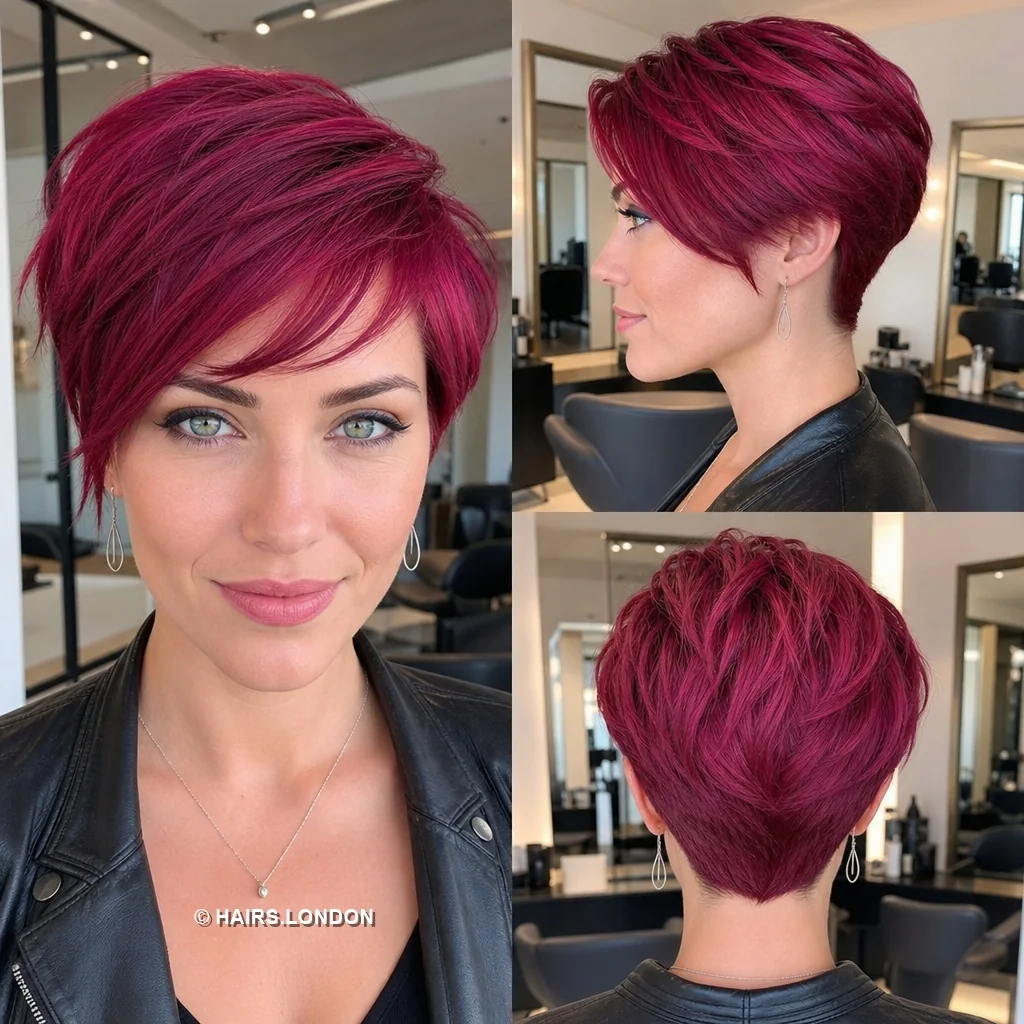
This sculpted pixie features a sweeping broken fringe beneath a textured lifted crown, while close tapered sides keep the silhouette crisp and compact. The rounded nape finishes the back cleanly, and the visible raspberry magenta emphasizes separation between the short layers. The shape can translate well to straight or wavy hair, although density and natural growth patterns should guide how much weight is removed. For daily styling, direct the roots while blow-drying, then use a small amount of dry texture paste through selected ends rather than coating the whole cut. Ask the stylist to adjust fringe length, crown height, and.
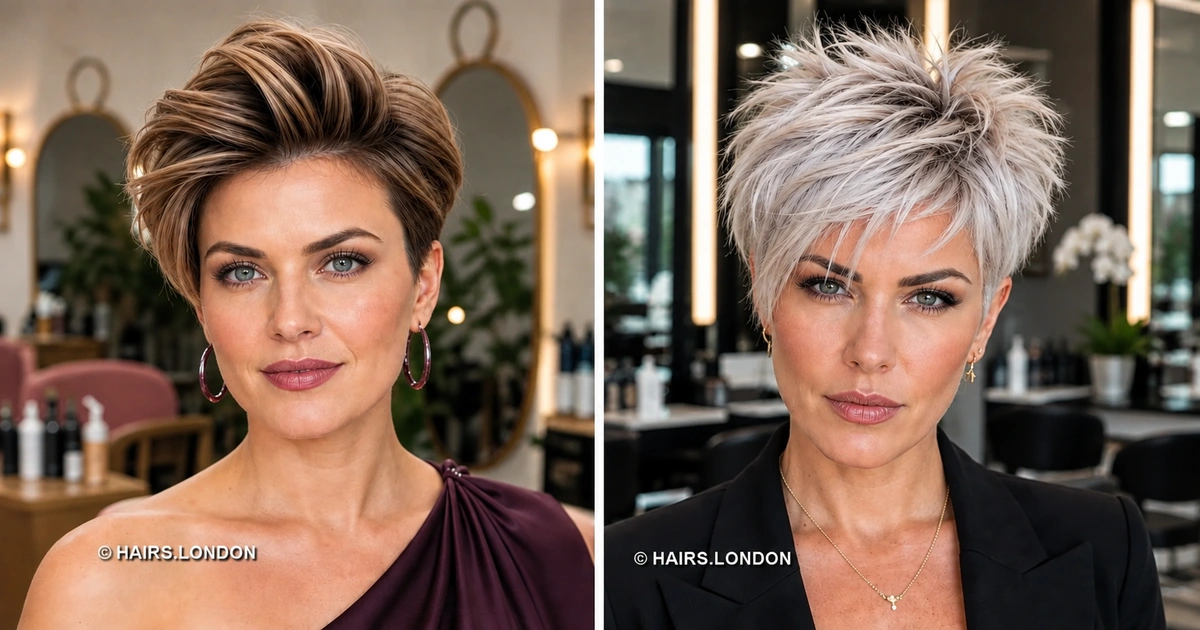
14. Beige Blonde Razor Pixie
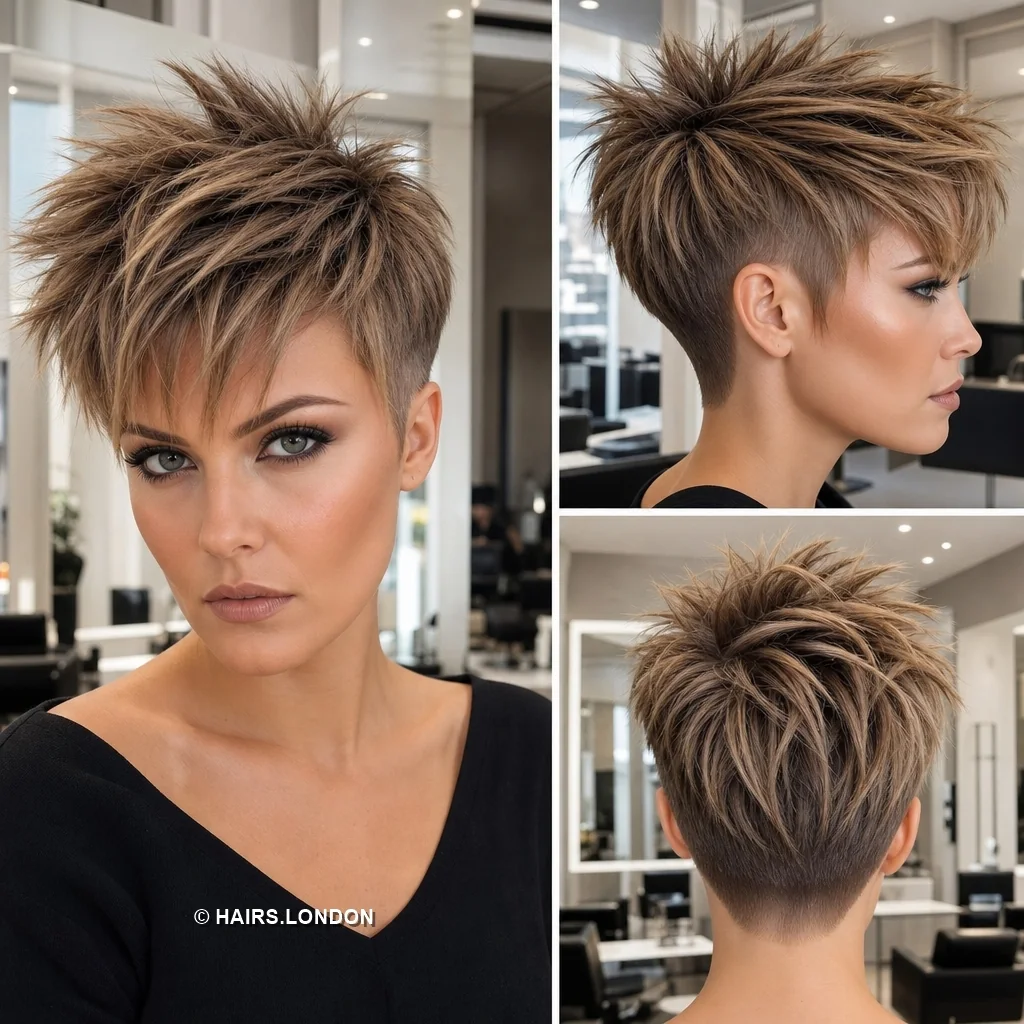
This sculpted pixie features a short razored fringe beneath a dramatic spiked crown, while undercut sides keep the silhouette crisp and compact. The clean tapered nape finishes the back cleanly, and the visible beige blonde with darker roots emphasizes separation between the short layers. The shape can translate well to medium or thick straight hair, although density and natural growth patterns should guide how much weight is removed. For daily styling, direct the roots while blow-drying, then use a small amount of matte molding paste through selected ends rather than coating the whole cut. Ask the stylist to adjust fringe.
15. Silver Platinum Tousled Pixie
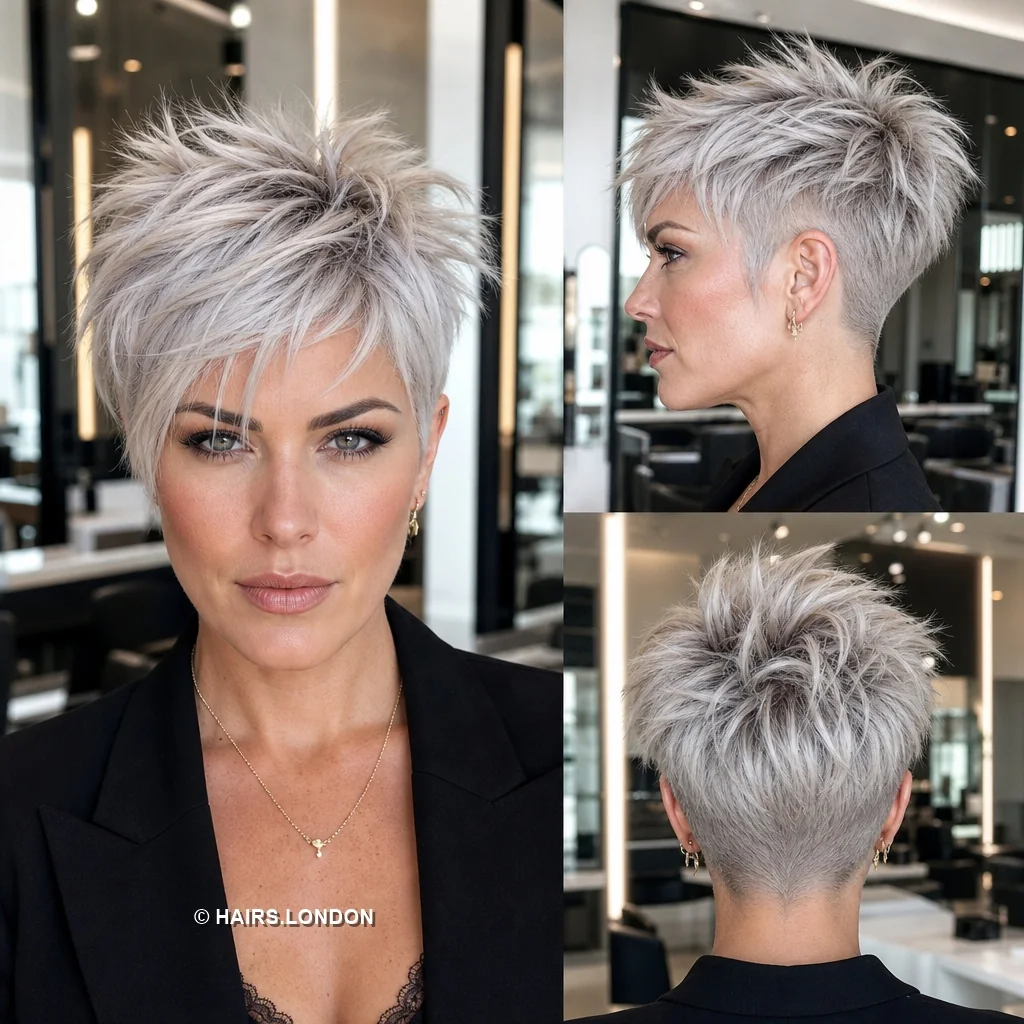
This sculpted pixie features a short wispy fringe beneath a high tousled crown, while close tapered sides keep the silhouette crisp and compact. The soft graduated nape finishes the back cleanly, and the visible silver platinum emphasizes separation between the short layers. The shape can translate well to fine to medium straight hair, although density and natural growth patterns should guide how much weight is removed. For daily styling, direct the roots while blow-drying, then use a small amount of volumizing powder through selected ends rather than coating the whole cut. Ask the stylist to adjust fringe length, crown height.
16. Auburn Compact Layered Pixie
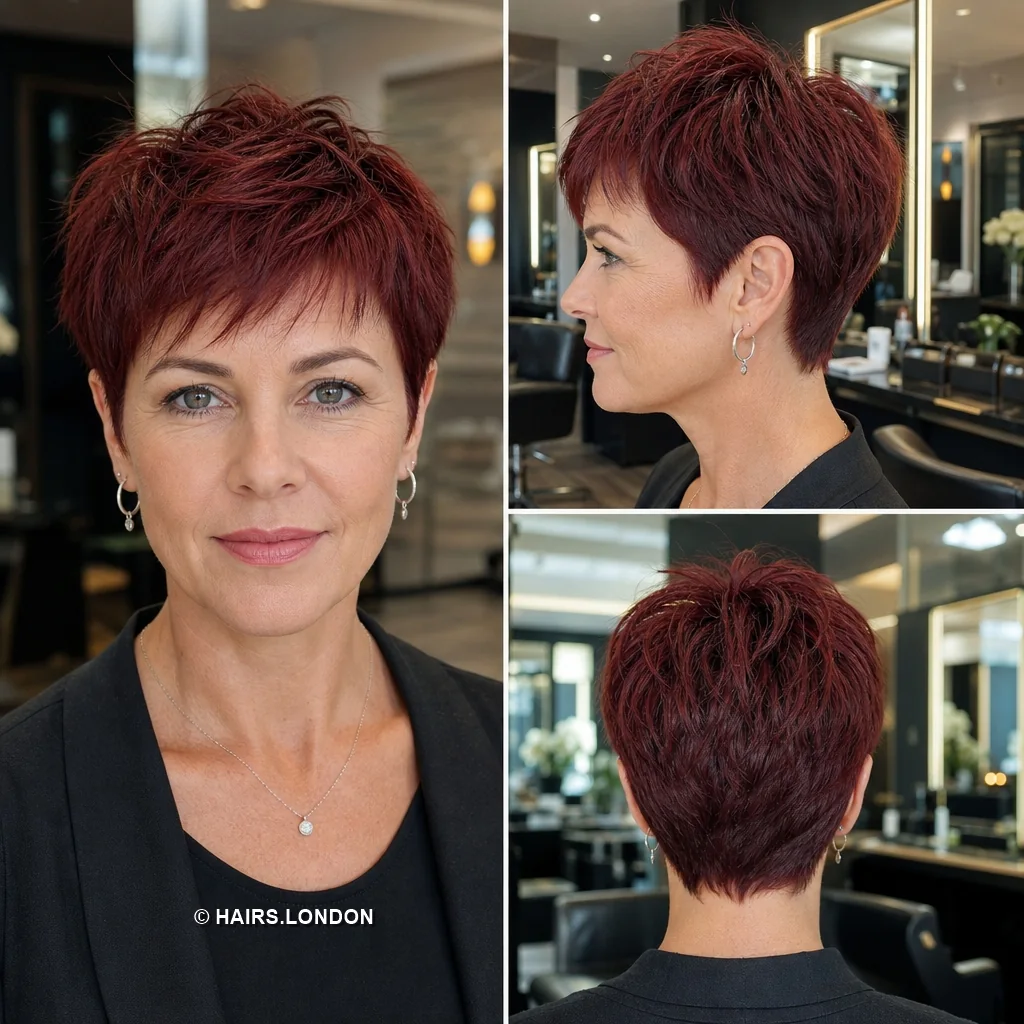
This sculpted pixie features a short side fringe beneath a compact piecey crown, while neat tapered sides keep the silhouette crisp and compact. The rounded nape finishes the back cleanly, and the visible deep auburn emphasizes separation between the short layers. The shape can translate well to straight or gently wavy hair, although density and natural growth patterns should guide how much weight is removed. For daily styling, direct the roots while blow-drying, then use a small amount of soft texture cream through selected ends rather than coating the whole cut. Ask the stylist to adjust fringe length, crown height.
17. Honey Blonde Undercut Pixie
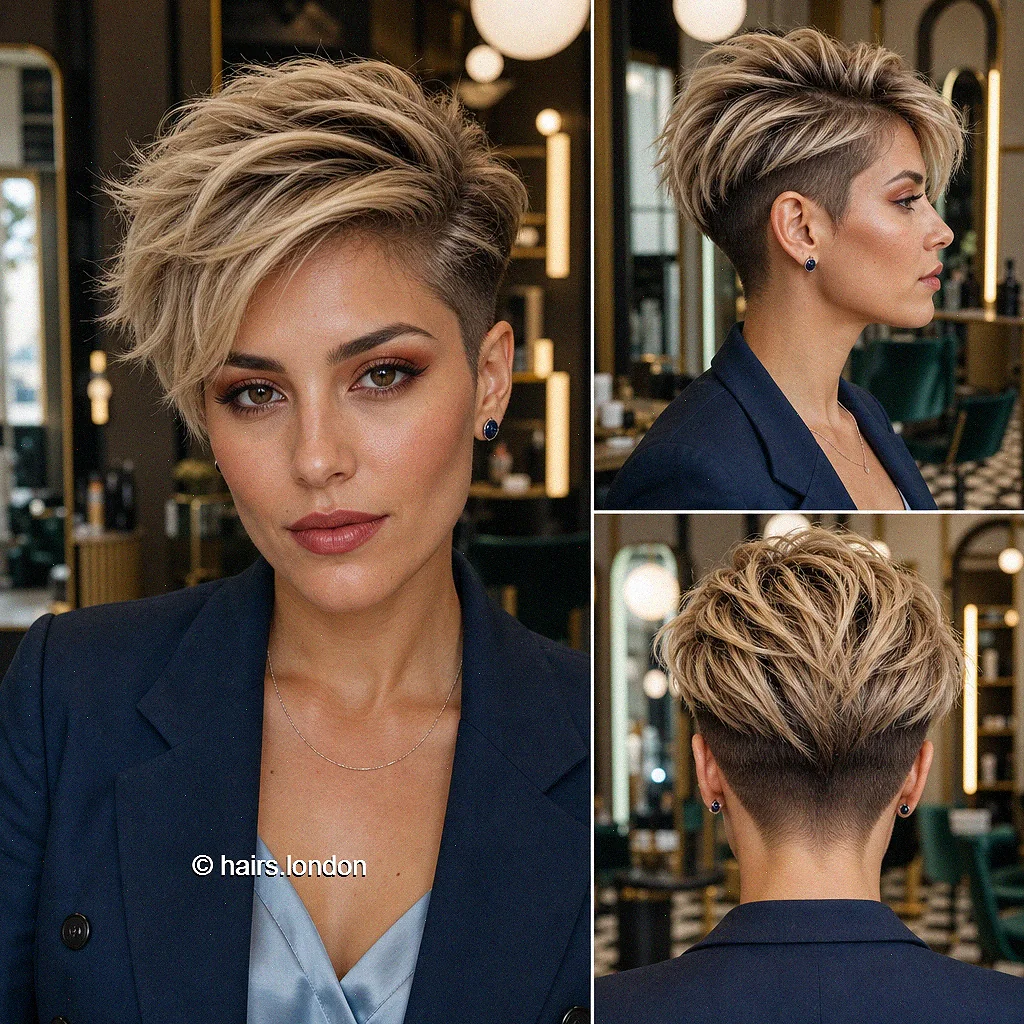
This sculpted pixie features a long swept fringe beneath a sculpted lifted crown, while closely undercut sides keep the silhouette crisp and compact. The tight tapered nape finishes the back cleanly, and the visible honey beige blonde with brunette lowlights emphasizes separation between the short layers. The shape can translate well to medium or thick hair, although density and natural growth patterns should guide how much weight is removed. For daily styling, direct the roots while blow-drying, then use a small amount of lightweight pomade through selected ends rather than coating the whole cut. Ask the stylist to adjust fringe.
18. Lavender Pompadour Pixie
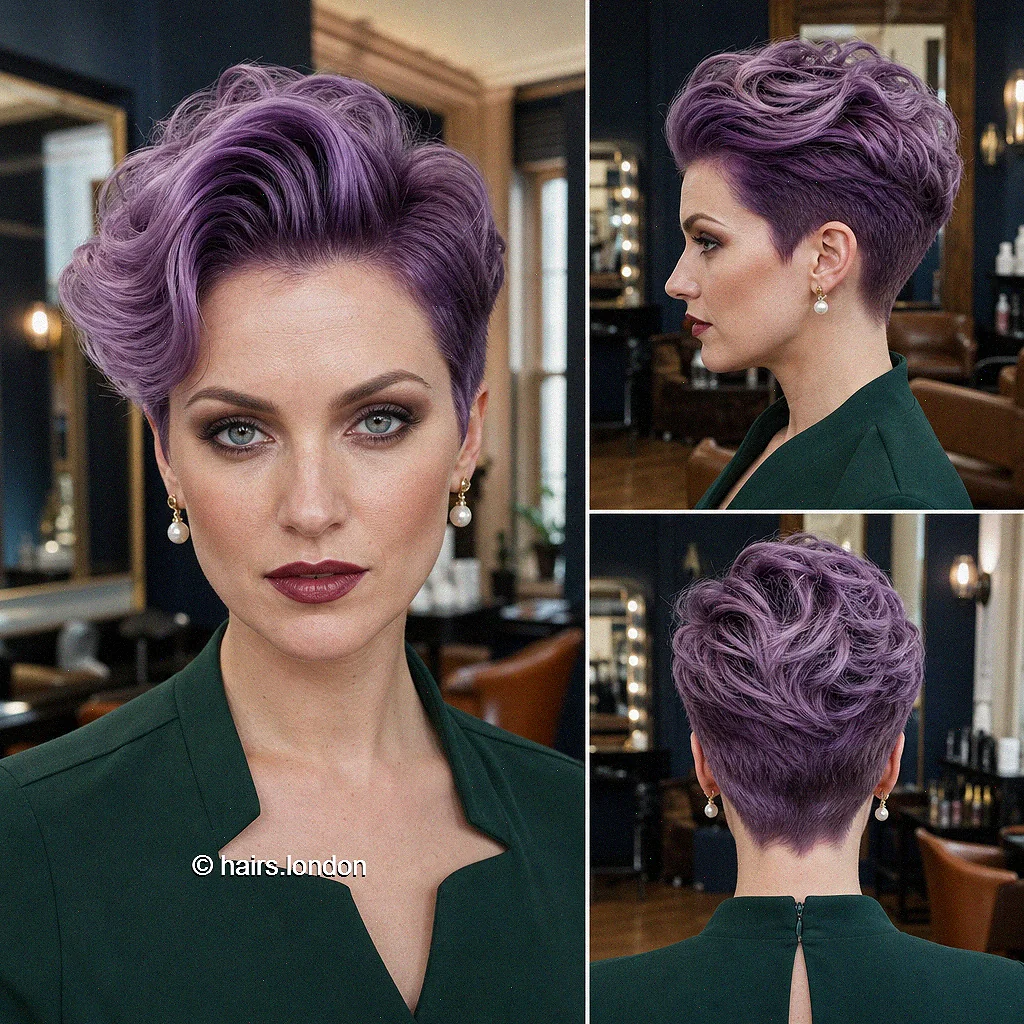
This sculpted pixie features a swept-back front beneath a voluminous pompadour crown, while short tapered sides keep the silhouette crisp and compact. The compact nape finishes the back cleanly, and the visible soft lavender purple emphasizes separation between the short layers. The shape can translate well to medium-density straight or wavy hair, although density and natural growth patterns should guide how much weight is removed. For daily styling, direct the roots while blow-drying, then use a small amount of volumizing mousse through selected ends rather than coating the whole cut. Ask the stylist to adjust fringe length, crown height, and.
19. Silver Lilac Feathered Pixie
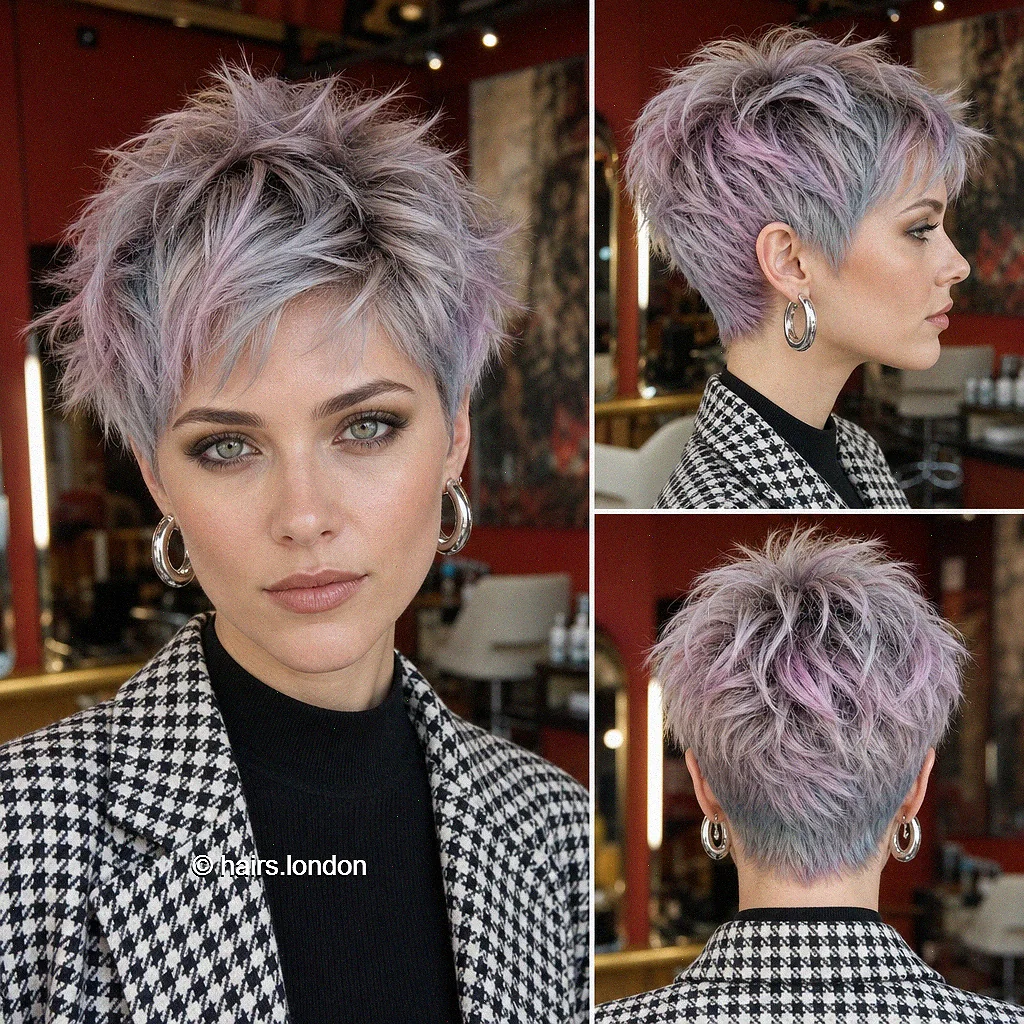
This sculpted pixie features a wispy side fringe beneath a feathered airy crown, while short tapered sides keep the silhouette crisp and compact. The soft tapered nape finishes the back cleanly, and the visible silver with lilac-pink accents emphasizes separation between the short layers. The shape can translate well to fine or medium hair, although density and natural growth patterns should guide how much weight is removed. For daily styling, direct the roots while blow-drying, then use a small amount of light texture spray through selected ends rather than coating the whole cut. Ask the stylist to adjust fringe length.
20. Caramel Brunette Sculpted Pixie
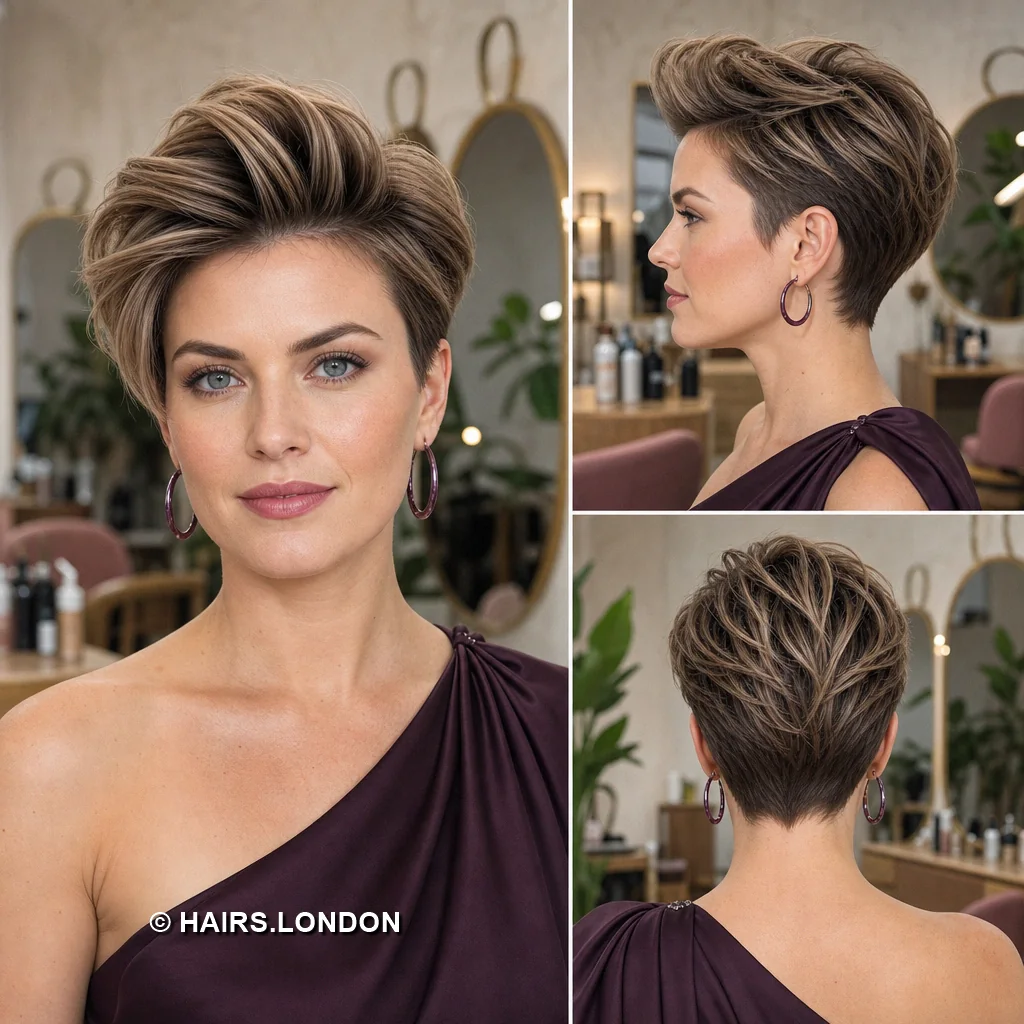
This sculpted pixie features a swept-back fringe beneath a smooth sculpted crown, while short tapered sides keep the silhouette crisp and compact. The neatly graduated nape finishes the back cleanly, and the visible caramel brunette with beige highlights emphasizes separation between the short layers. The shape can translate well to medium-density straight or wavy hair, although density and natural growth patterns should guide how much weight is removed. For daily styling, direct the roots while blow-drying, then use a small amount of flexible styling cream through selected ends rather than coating the whole cut. Ask the stylist to adjust fringe.
Choosing Between Swept, Rounded, and Spiky Pixies
Swept shapes
Longer diagonal fronts give the most freedom to move the fringe across the forehead or lift it away from the face. They also need enough length at the front to hold the intended direction without falling flat.
Rounded and feathered shapes
Softer crowns rely on blended layering and controlled movement rather than obvious spikes. They can be useful when you prefer a touchable finish, but the amount of layering should still respect density and natural growth.
Spiky and undercut shapes
Strong spikes look clearest when the top retains enough length for separation and the sides stay compact. If you do not want daily product use, ask for a less extreme height and a softer transition.
Texture and Density Considerations
Fine hair
Avoid automatically removing large amounts of interior weight. A lighter mousse or root-lifting spray can help the crown appear airy while preserving enough hair to keep the outline substantial.
Thick hair
Dense crowns can widen quickly in a short cut. Internal weight removal may help, but excessive surface thinning can create unwanted short pieces. Discuss where bulk is concentrated before cutting.
Naturally wavy hair
Existing bend can soften a sharp pixie and make separated layers look more organic. Fringe length should account for shrinkage, humidity, and the direction in which the wave naturally wants to sit.
Styling Crown Lift and Swept Fringes
Creating lift
Direct the roots upward or against their natural fall while blow-drying, then let the hair cool before manipulating the ends. Product should support the structure created during drying rather than replace it.
Keeping a swept fringe controlled
Dry the fringe from the root in the desired direction. A small amount of flexible cream or paste can keep the ends together without making the front rigid. If the fringe repeatedly drops into the eyes, consider a modest length adjustment.
Separating spikes
Warm a small amount of paste between the fingers and work on selected ends. Pinching every section can make the finish look overly uniform; leaving some softer pieces between stronger spikes usually creates more natural dimension.
Color Care for Blonde, Red, Purple, and Silver Pixies
Blonde and silver
Pale tones can reveal warmth as toning fades. Gentle color-safe cleansing, moderate heat, and professional advice about toning can help maintain the intended appearance without assuming every silver shade needs the same routine.
Copper, burgundy, and raspberry
Red-based shades can lose visible intensity with frequent washing and repeated high heat. Ask how the chosen shade is expected to fade and whether occasional color refreshes fit your preferred maintenance schedule.
Purple and lilac
Violet shades can shift noticeably as they fade, especially over lightened hair. A realistic consultation should cover starting color, lightening requirements, condition, and how often you are comfortable returning for color maintenance.
Growing Out and Maintaining a Pixie
Shaping appointments
Close sides and tight napes lose their crisp proportion sooner than longer layered outlines. Book according to how quickly your own cut stops sitting as intended rather than following one universal interval.
Growing toward a bixie
Preserve useful length through the crown and fringe while tidying bulk at the nape and lower sides. Small strategic adjustments can keep the shape intentional without repeatedly cutting away the length you are trying to gain.
Salon consultation checklist
Bring several views of the same haircut when possible. Discuss fringe comfort, ear coverage, crown height, cowlicks, natural partings, glasses, humidity, styling time, previous color services, and how much regrowth you are comfortable seeing.
Frequently Asked Questions
Which featured pixies are most manageable for fine hair?
The feathered platinum, silver, and softer brunette shapes may be easier to support without heavy product. Fine hair generally benefits from keeping enough interior density and creating lift at the roots rather than over-thinning the crown.
Can thick hair wear the dramatic beige blonde undercut?
Yes, but the crown may need internal weight removal so the top can separate without becoming bulky. The amount removed should be adapted to density, growth pattern, and the desired height.
Can naturally wavy hair wear a swept purple pixie?
Often, yes. Existing bend can add movement, but the stylist should account for shrinkage and the way the fringe changes as it dries. A longer front may need different layering than a straight-hair reference.
Will a pixie cut create the curls or waves shown in a reference?
No. Cutting can reveal or encourage existing movement, but it does not create a natural curl pattern. Styling tools or techniques may be needed if your texture is straighter than the reference.
How can I keep the crown lifted without making it stiff?
Create most of the lift during blow-drying, let the roots cool in position, and then add a small amount of lightweight product only where separation is needed. Avoid saturating the crown with wax.
What helps a long diagonal fringe stay out of the eyes?
Root direction matters. Dry the front toward the intended side, then use flexible cream or paste sparingly. If it constantly falls forward, ask whether the fringe can be shortened slightly without changing the overall shape.
How often do the close-sided pixies need reshaping?
There is no single interval for everyone. Tight tapers and undercuts show growth quickly, so schedule a trim when the side-to-top contrast or nape outline no longer looks the way you want.
Which products work for the sharper spiky examples?
A matte paste, molding cream, or pliable wax can help separate selected ends. Start with very little product and add more only if needed, because excess can make short layers clump or collapse.
How do burgundy, raspberry, and purple shades usually change with washing?
Their visible intensity can soften over time, with the exact fade depending on the color service, starting base, cleansing routine, heat, and exposure. Ask the colorist what fade path to expect before committing.
Does naturally silver hair need to be colored to copy the silver pixies?
Not necessarily. Natural silver can be shaped into the same haircut without coloring. If you want a different tone or more uniform appearance, discuss whether toning is appropriate for your hair.
Which of these cuts can grow toward a longer bixie most smoothly?
The styles with longer swept fronts and fuller crowns already preserve useful length. During grow-out, keeping the nape controlled while allowing the crown and upper sides to gain length can help maintain balance.
What should I point out when showing one of these photos to a stylist?
Identify the exact fringe length, crown height, side coverage, taper, nape shape, surface texture, and color placement you like. A front, side, and back view gives much more useful information than a haircut name alone.
Conclusion
These sculpted pixie haircuts show how much a short cut can change through fringe direction, crown volume, side coverage, tapering, and surface texture. A sharp spiky undercut asks for a different styling routine and grow-out plan than a rounded lilac crop or a softly swept brunette pixie. Choose the structural details that suit your hair texture and the amount of daily styling you want to do, then consider color as a separate maintenance decision. During a salon consultation, use the front, side, and back views to explain the proportions you prefer and where you are comfortable keeping more or less length.