


11. Dusty Teal Bob with Swept Layers
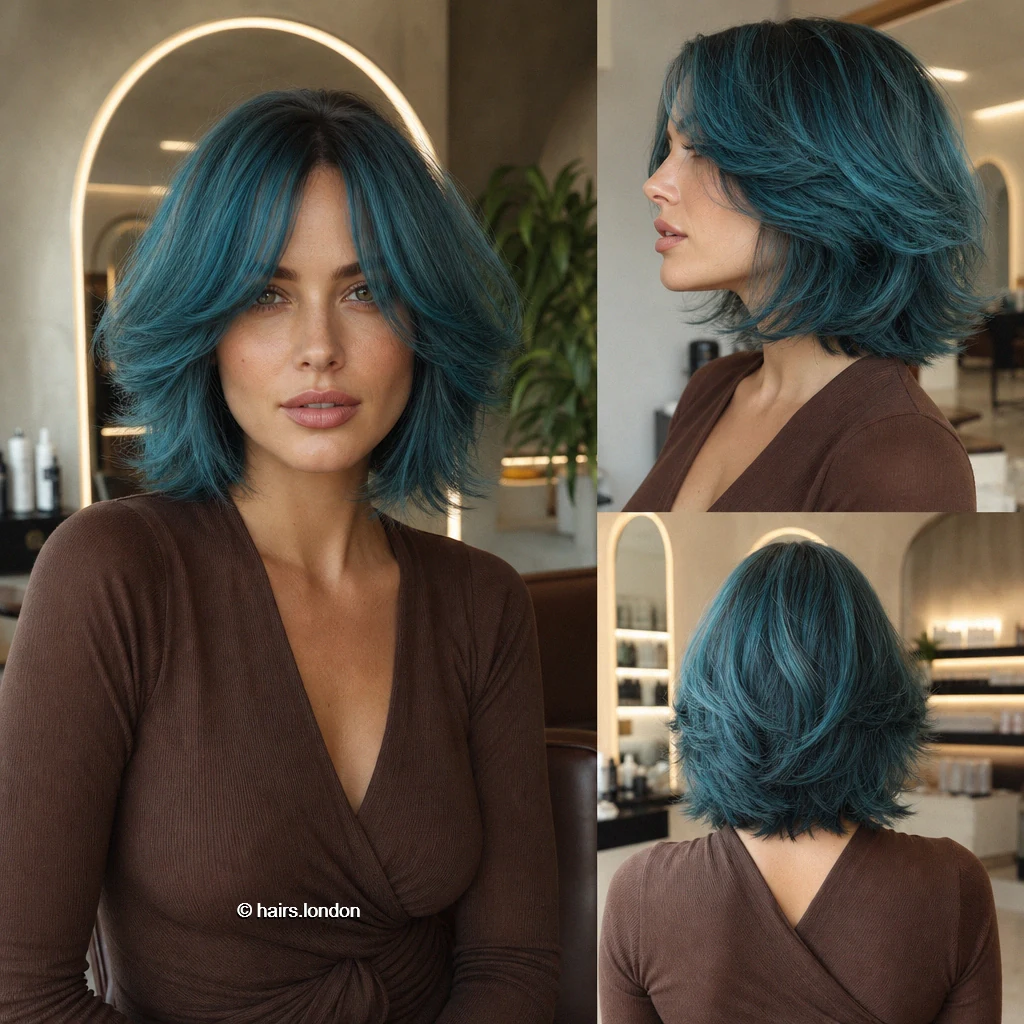
Dusty teal brings dimension to this loose, layered short bob. Long pieces sweep outward from a near-center part. The sides reach the jaw, while textured ends brush the neck. Back layers overlap visibly, creating movement rather than a hard line. Wavy or thick hair may support this airy silhouette. Ask your stylist where layering will prevent unwanted side bulk. Apply a light styling cream before drying with your fingers. Encourage the front sweep without forcing every piece into place. Monitor the teal for fading and adjust your care accordingly. Tidy the neckline promptly when its layered ends become overly long.
12. Pine Green Bob with Flicked Ends
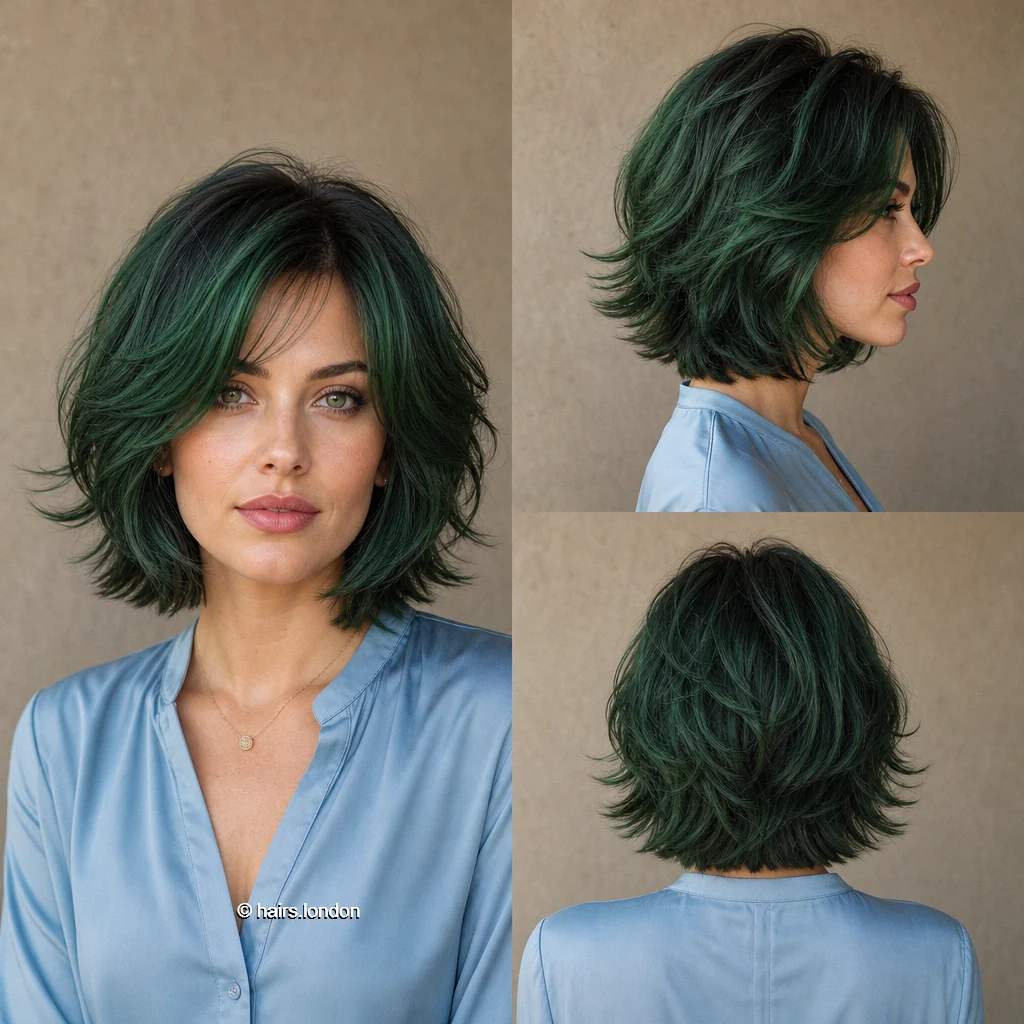
Pine green appears throughout this textured, jaw-to-neck-length layered bob. A loose side part sends soft pieces across the forehead. Shorter layers flick outward around the cheeks and neck. The rear view shows feathered ends without a blunt baseline. Ask whether your natural texture will hold these outward bends. Dense hair may need selective weight removal to prevent bulk. Scrunch damp hair, then diffuse while preserving its uneven movement. Touch up individual ends instead of curling the entire perimeter. Choose color care that helps the deep green stay clear. Trim when the feathered edges begin looking stringy or lose their bounce.
13. Cobalt Bob with a Side-Swept Front
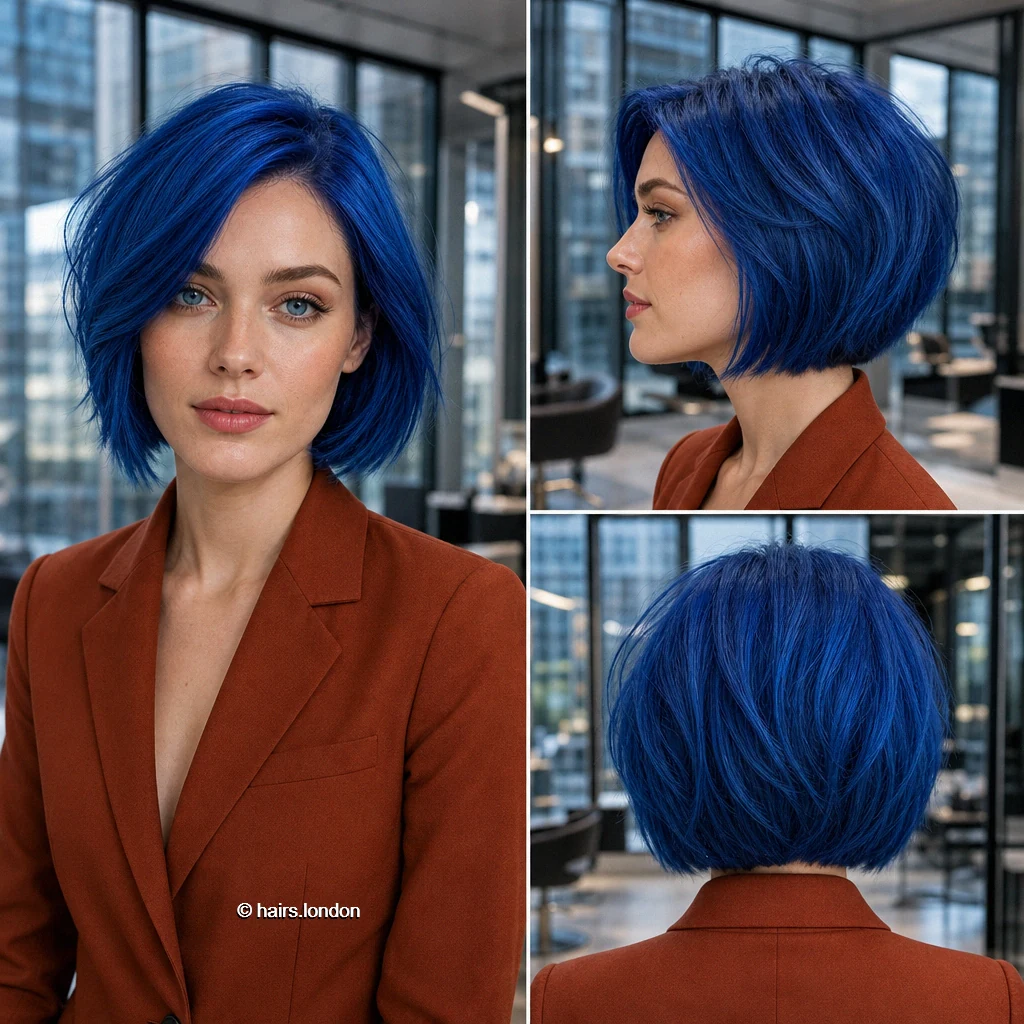
Saturated cobalt covers this compact bob with a side-swept front. The ends sit around the jaw and curve toward the neckline. Visible surface layers add lift above its relatively solid edge. The back retains rounded volume without pronounced stacked steps. Ask for restrained layering if you want similarly strong ends. Direct the front across your forehead while blow-drying the roots. Smooth the lower edge gently, keeping movement through the crown. Vivid blue may need regular refreshes as its brightness fades. Check the neckline between appointments for changes in its outline. Discuss your preferred fullness before any interior weight is removed.
14. Blue-Black Textured Bob with a Center Part
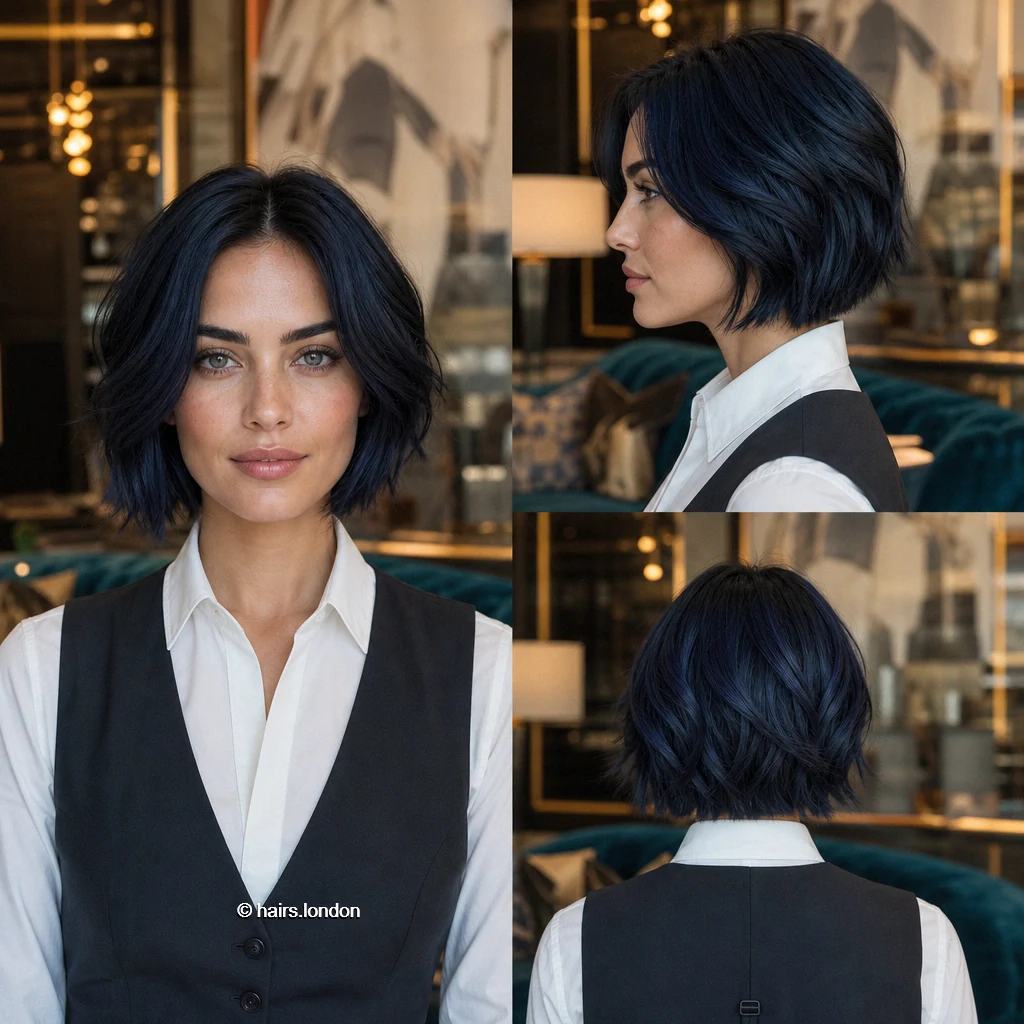
Blue-black color gives this jaw-length bob an understated sheen. A center part opens the face without adding a fringe. Soft layers and uneven ends loosen its otherwise compact silhouette. The back sits short, with texture visible along the edge. Ask your stylist to retain sufficient weight for your density. Use a light cream to define bends without clumping them. Dry the roots in your usual part, then tousle gently. Avoid over-smoothing if the irregular ends are your favorite feature. Refresh the dark tone when its blue cast becomes less visible. Trim when the short back loses its soft, easy outline.
15. Petrol Blue Bob with a Smooth Side Sweep
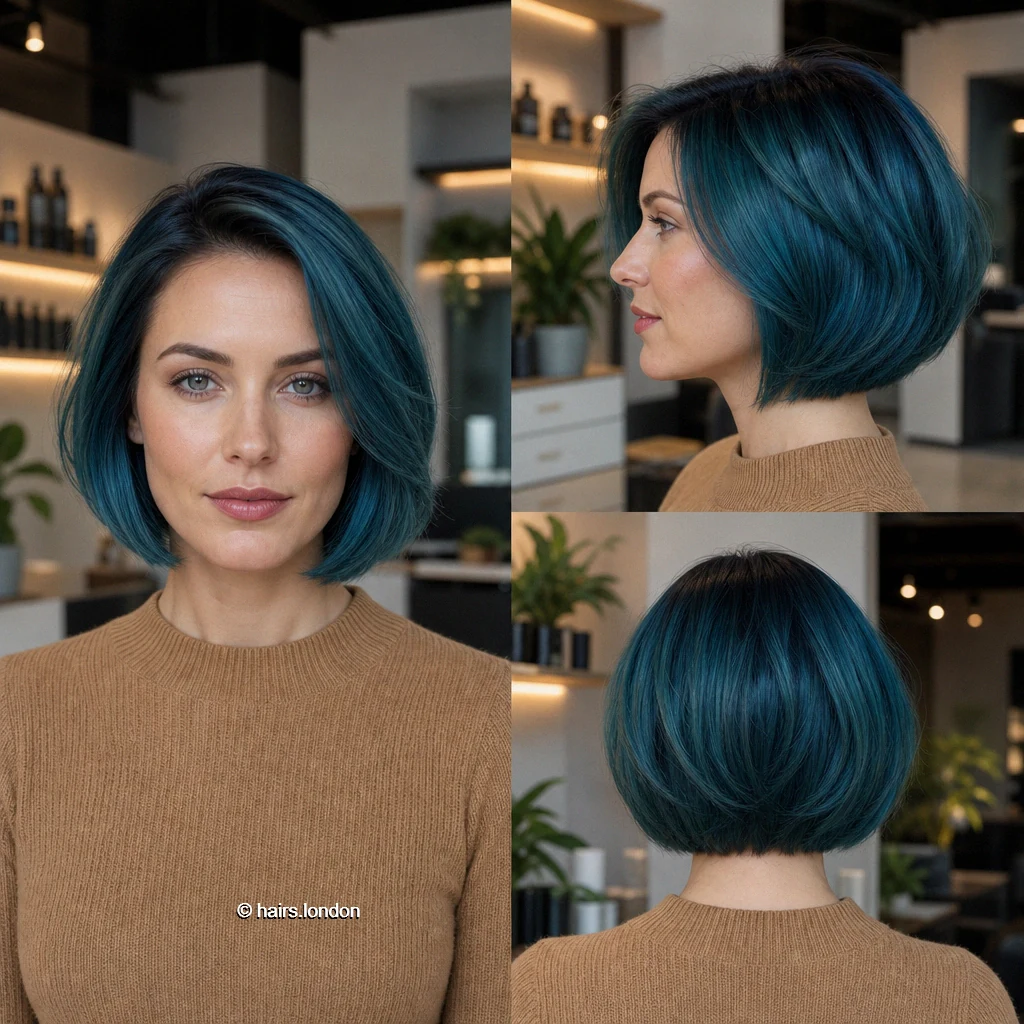
Petrol blue adds depth to this smooth, rounded short bob. A side part sends one long section across the forehead. The front reaches the jaw while the back sits higher. Its rear view shows fullness above a neat, precise neckline. That shape needs careful balance between lift and perimeter weight. Ask your stylist to consider density before removing interior bulk. Blow-dry the sweeping front first, then guide ends inward. A small amount of serum can add shine without flattening. Maintain the back edge when growth starts changing its curve. Discuss whether the side sweep and fringe fit your daily routine.
16. Dark Green Bob with a Curved Perimeter
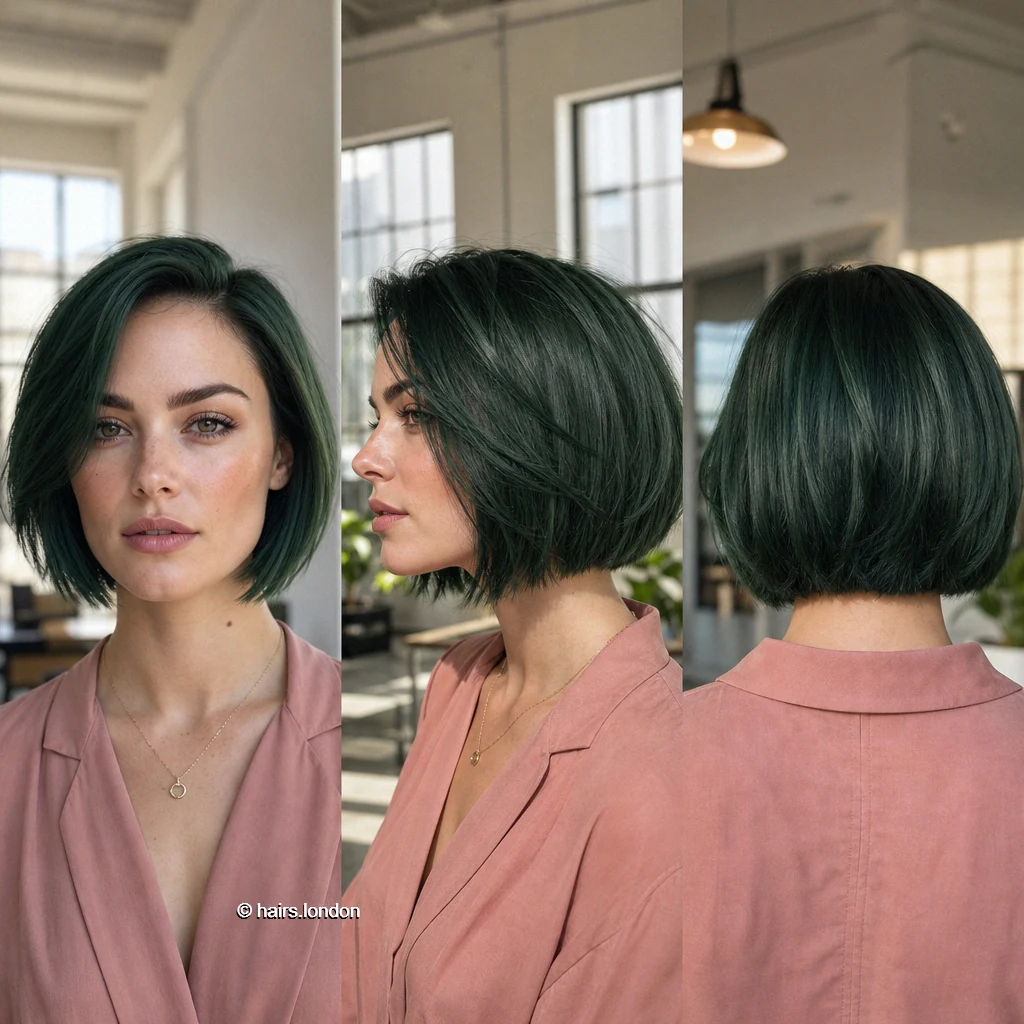
Dark green lends subtle color to this sleek, jaw-length bob. Its side part creates one longer sweep across the front. The ends curve inward, forming a smooth outline around the head. Behind, the neckline looks short and evenly rounded. Ask for a perimeter that works with your natural growth. Thick hair may need internal control without losing its edge. Dry downward with a brush to emphasize the curved finish. Use heat protection when smoothing the green lengths with tools. Watch for uneven ends as the precise outline grows. Discuss the color commitment alongside the regular shaping trims and color refreshes.
17. Bright Blue Sleek Bob
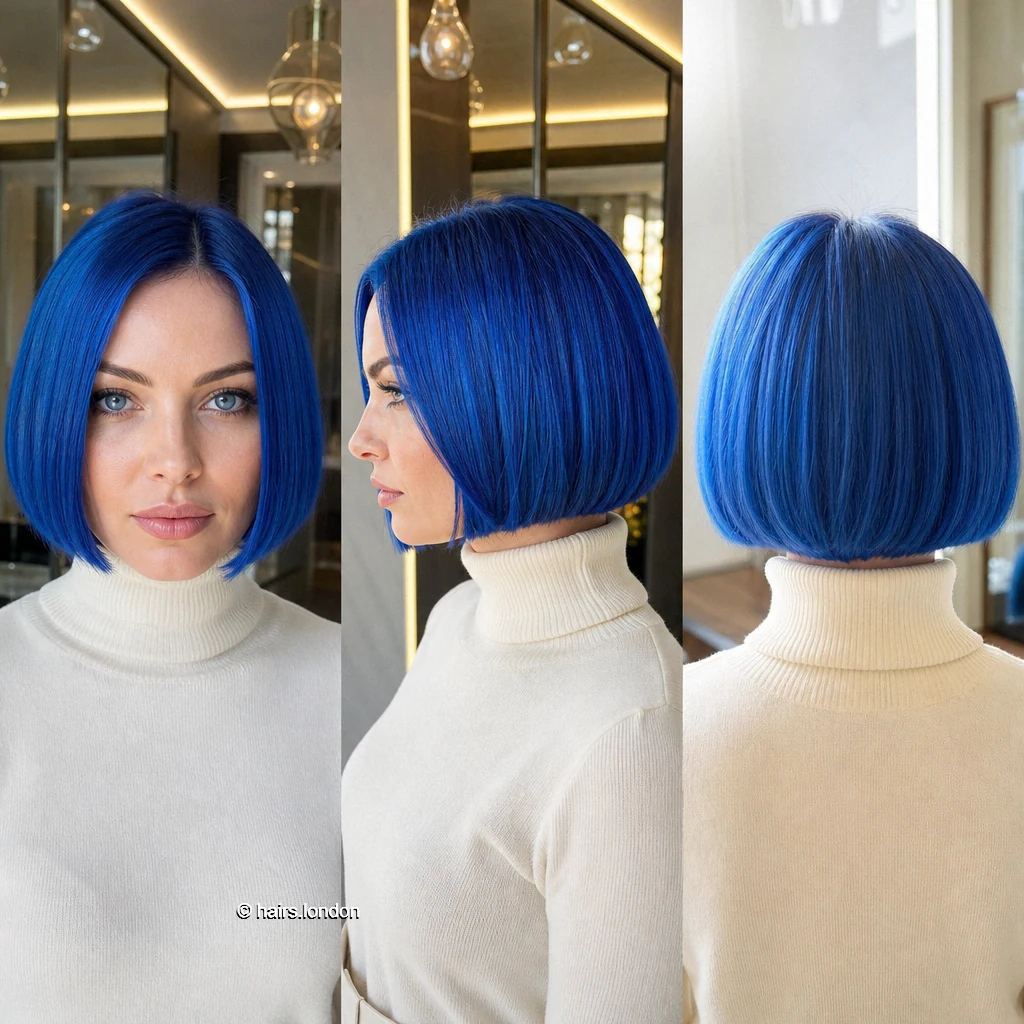
Bright blue makes every line of this sleek bob visible. A center part divides smooth front sections evenly. The front falls near the jaw, slightly below the back. Its rear edge appears tidy and gently curved. Ask for minimal layering if you want similar perimeter strength. Fine hair may benefit from that retained weight at the ends. Blow-dry downward, then polish only sections that need smoothing. Apply heat protection before using a flat iron sparingly. Color refreshes and precise trims both matter for this finish. Discuss how much daily styling your natural texture would require in your everyday styling routine.
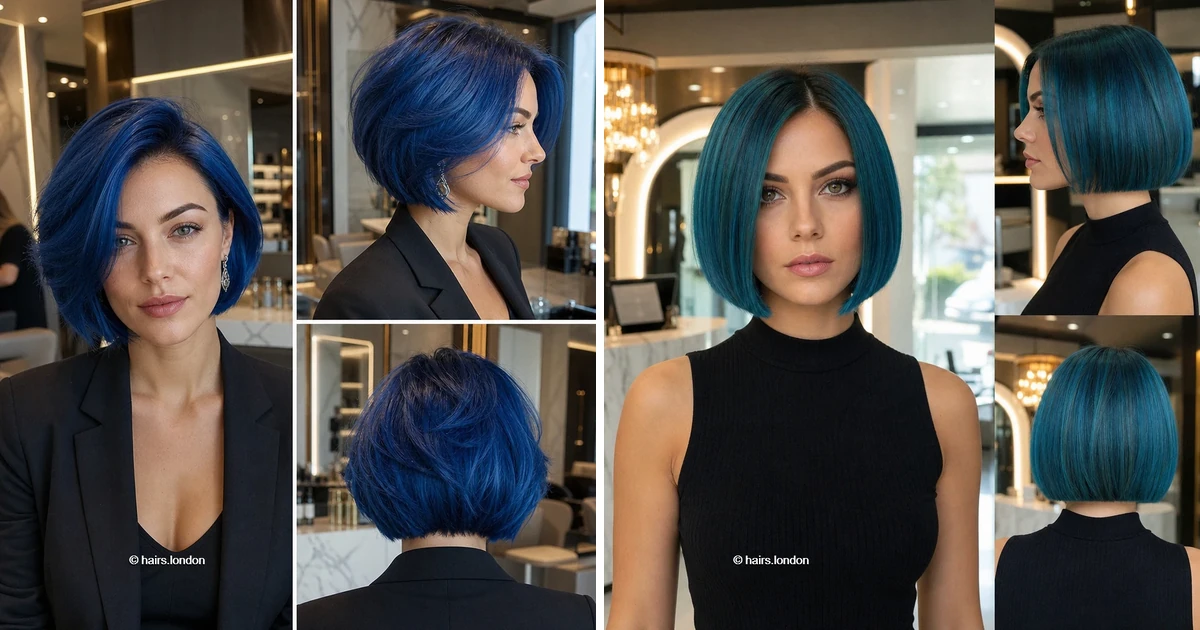
18. Midnight A-Line Bob with a Blunt Edge
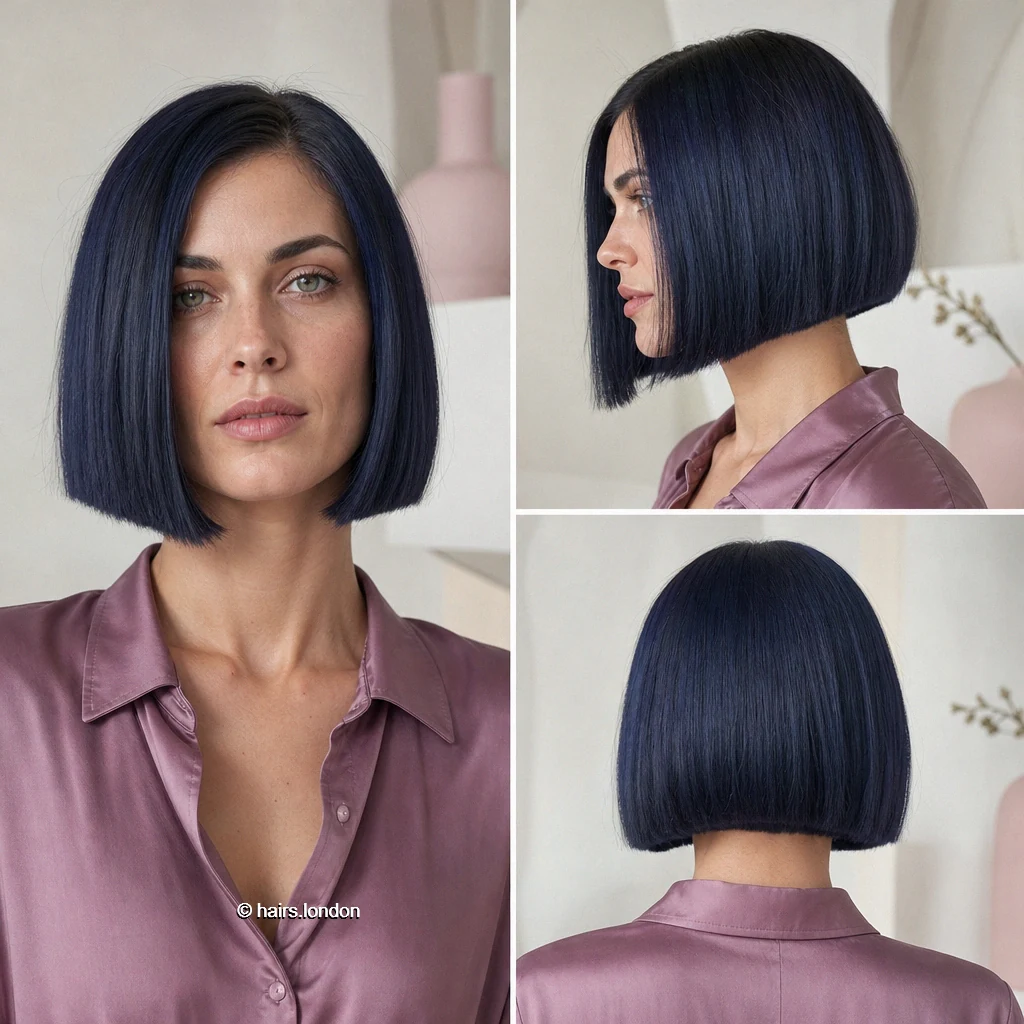
Midnight blue defines the clean perimeter of this A-line bob. Its side view shows front lengths extending below the back. The front approaches the chin, while the rear clears the neck. A side part leaves the forehead open without fringe. The shape looks smooth, with little visible surface layering. Ask whether your density can maintain this solid edge. Direct dryer airflow downward and smooth the ends with tension. Keep heavy oils away from fine hair near the perimeter. Trim when uneven growth weakens the front-to-back line. Discuss your preferred angle without requesting an exact measurement as the cut grows out.
19. Turquoise Blunt Bob with a Center Part
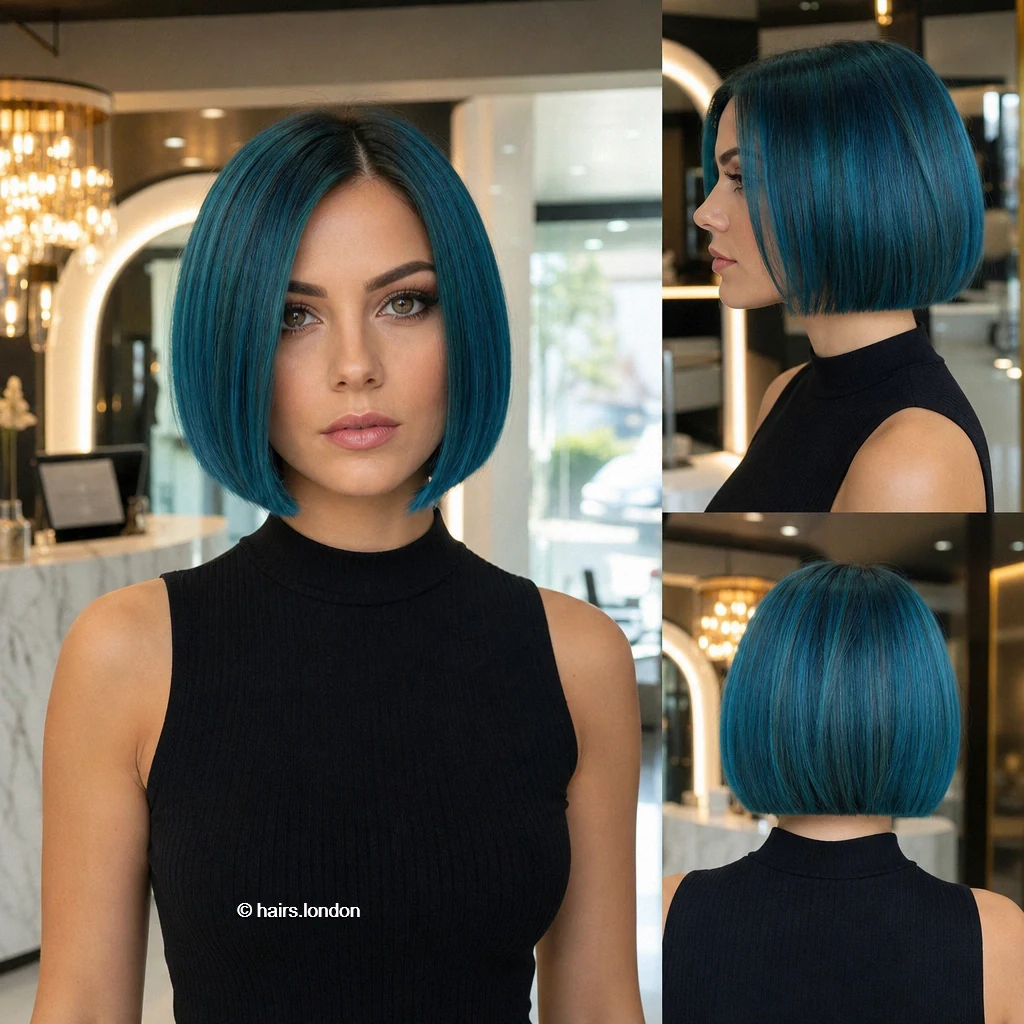
Turquoise blue brightens this center-parted bob with smooth sides. The jaw-length front meets a clean, compact lower edge. From behind, the perimeter looks full and neatly finished. Its side profile suggests little front-to-back length difference. Ask for a strong outline if your density allows it. Blow-dry the roots flat before smoothing the outer lengths. Keep products light so the crisp edge retains movement. Protect the vivid tone by limiting unnecessary high heat. Schedule trims when the lower line begins to look uneven. Discuss how your natural wave might alter the finished outline and ask about the upkeep of vivid turquoise.
20. Emerald Center-Parted Bob with a Clean Line
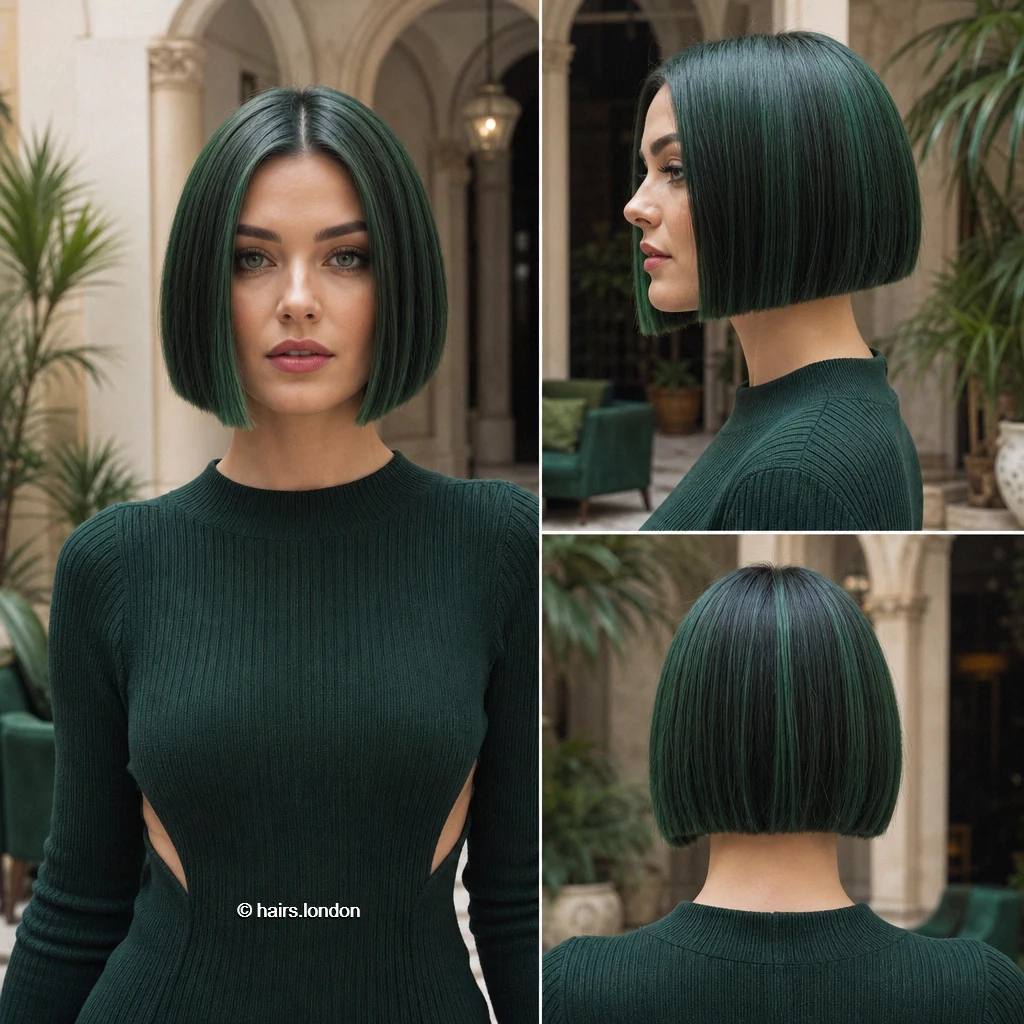
Emerald green gives this smooth bob a deep, glossy appearance. A center part frames the face with even front sections. The jaw-length sides meet a strong, nearly level perimeter. The back appears compact, with a clean edge above the neck. Little surface layering is visible in this polished shape. Ask whether your hair density supports its substantial lower line. Smooth with downward airflow while keeping the roots comfortable. Use heat protection before refining any sections with hot tools. Check the edge regularly, since uneven growth becomes noticeable. Discuss your color maintenance plan and its fading pattern before choosing this green.
How to Choose Your Bob Length and Shape
Compare where the front ends land against the chin or jaw, then check the side and back views for the neckline and weight line. A longer front indicates an A-line shape; visible graduation or a built-up back is a separate feature. A blunt edge preserves visual weight, while layers create movement. Choose a length that works with your density, natural texture, growth patterns, and willingness to style.
Styling Fine, Thick, Wavy, and Curly Textures
Fine hair often benefits from a strong perimeter and lightweight products rather than extensive layering. On thick hair, ask for selective interior weight removal so the bob moves without losing its outline. Encourage waves with mousse or light cream and gentle diffusing; smooth only the sections that need it. For natural curls, plan the length around shrinkage and have the shape assessed in its usual worn state. Dry a fringe first if it tends to split or change direction.
Keeping Blue and Green Bob Color Fresh
The vivid blues and greens shown here may change noticeably as they fade, while darker shades can lose their visible blue or green cast. Ask your colorist what refresh schedule makes sense for your starting hair and chosen shade. Color-safe washing, moderate water temperature, heat protection, and fewer unnecessary hot-tool passes can help preserve the finish. A color consultation should also cover the commitment involved in changing shades later.
Maintaining the Bob Perimeter and Graduation
A crisp blunt edge or clear A-line difference becomes noticeable when growth makes it uneven. Short rounded backs and necklines may need attention before longer front pieces do. Where graduation is visible, ask your stylist to check whether the built-up shape still sits where you want it; do not assume every rounded bob is stacked. Layered and shaggy versions can grow more softly, but need trimming when their ends lose movement or balance.
What to Discuss with Your Stylist
Bring the image views that show the details you like, and point to the preferred front length, back edge, parting, fringe, and amount of fullness. Ask how your density, natural texture, hairline, and growth patterns may change the result. Clarify which pieces you are prepared to blow-dry or smooth each day, whether the color is practical to maintain, and how often the shape is likely to need a trim.
Frequently Asked Questions
What makes a haircut a bob rather than a lob?
A bob generally sits around the jaw or neck; a lob is a longer bob that typically reaches toward the shoulders. The visible length matters more than the label.
How is an A-line bob different from a stacked bob?
An A-line bob has a front that is visibly longer than the back. A stacked bob has visible graduation that builds shape at the back. A cut can show both features, but they are not interchangeable.
Does a rounded back always mean the bob is stacked?
No. A bob can look rounded because of its layering, density, or styling. Call it stacked only when graduation at the back is visibly supported.
Which bob shape can help fine hair look fuller?
A reasonably strong perimeter can give fine ends more visual weight. Ask your stylist to assess your density before adding layers or a fringe that could thin the outline.
How can thick hair avoid a bulky short bob?
Discuss selective internal weight removal and a length that leaves room for the hair to move. Excessive thinning at the perimeter can make the edge look weak.
Can a short bob work with natural curls?
It can, depending on curl pattern, density, shrinkage, and the shape you want. Discuss the finished length when dry and how the curls will sit around the sides and neckline.
Should I add a fringe to my bob?
Consider your hairline, growth patterns, density, and willingness to style it. A fine or separated fringe needs a different amount of hair than a fuller one.
What is a quick way to style a layered bob daily?
Start with the parting and fringe, then dry the roots in the direction you want them to sit. Define a few visible bends or ends instead of restyling every layer.
How do I keep a blunt bob edge smooth?
Direct dryer airflow downward, use heat protection, and smooth the outer lengths without loading the ends with heavy product. Regular trims preserve the visible line.
How often should a short bob be trimmed?
It depends on growth and the shape. A precise blunt edge, short neckline, or visible graduation usually needs attention sooner than a loose, layered perimeter.
What should I expect when growing out a short bob?
The neckline and side lengths may lose balance at different times. Ask for transition trims that tidy the outline while preserving enough length for your next shape.
How much upkeep do vivid blue and green bobs need?
That depends on the starting hair, shade, washing habits, and desired brightness. Discuss fading, refresh appointments, and home care with your colorist before committing.
Conclusion
The most useful inspiration is the detail you can point to: a solid jaw-length line, a longer front, a compact back, soft layers, or a fringe. Choose a bob whose shape works with your hair and routine, then plan color and trims around the finish you want to keep.


