

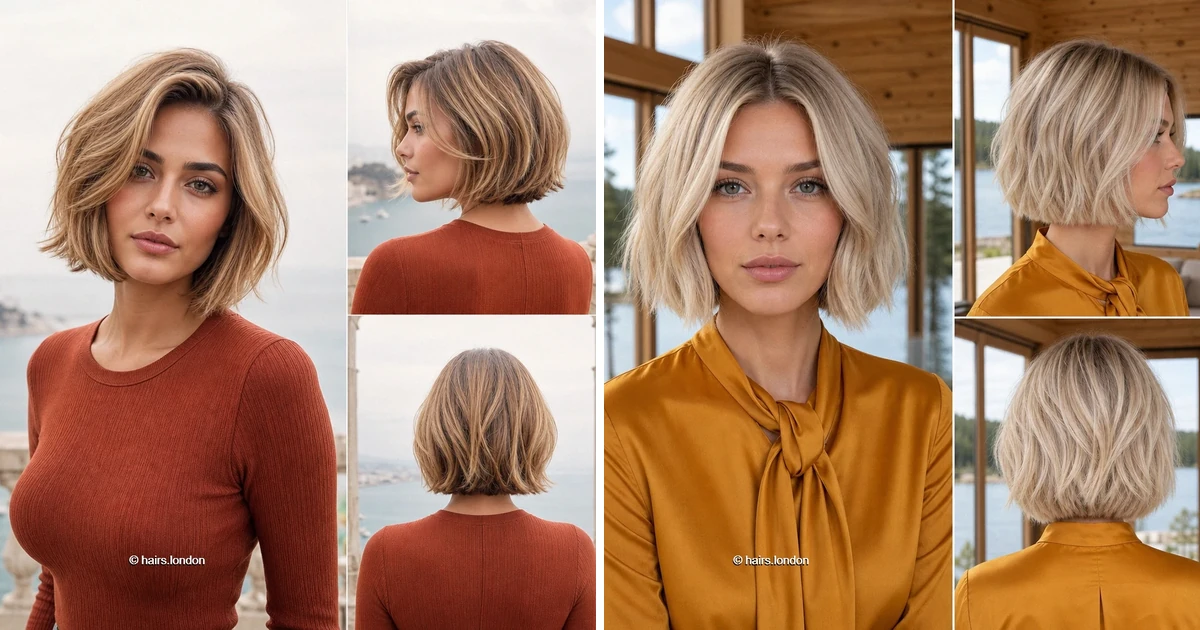
11. Swept Blonde Bob with Feathered Layers
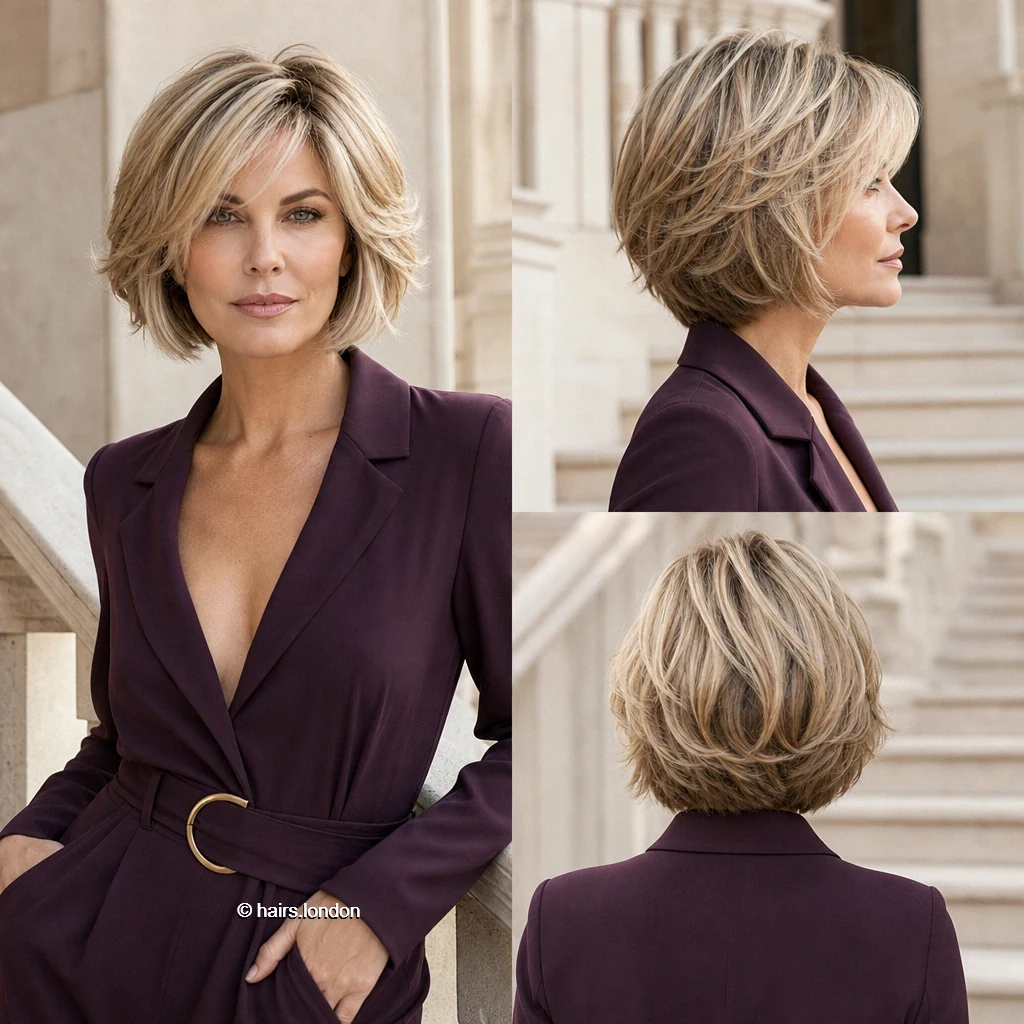
Blonde highlights trace the lifted layers of this short bob. Its side-swept front crosses the forehead and opens one cheek. Feathered sides and back create movement above the neckline. The outline remains rounded rather than showing a strong angle. Ask your stylist to keep face-framing pieces long enough. Blow-dry roots upward, then direct the front sideways gently. Use flexible hold to maintain lift without stiffening layers. Thicker hair may need internal refinement around the sides. Finer hair should retain enough weight through the bottom. Trim when the front falls flat or the back widens, especially if your part shifts naturally.
12. Airy Champagne Blonde Layered Bob
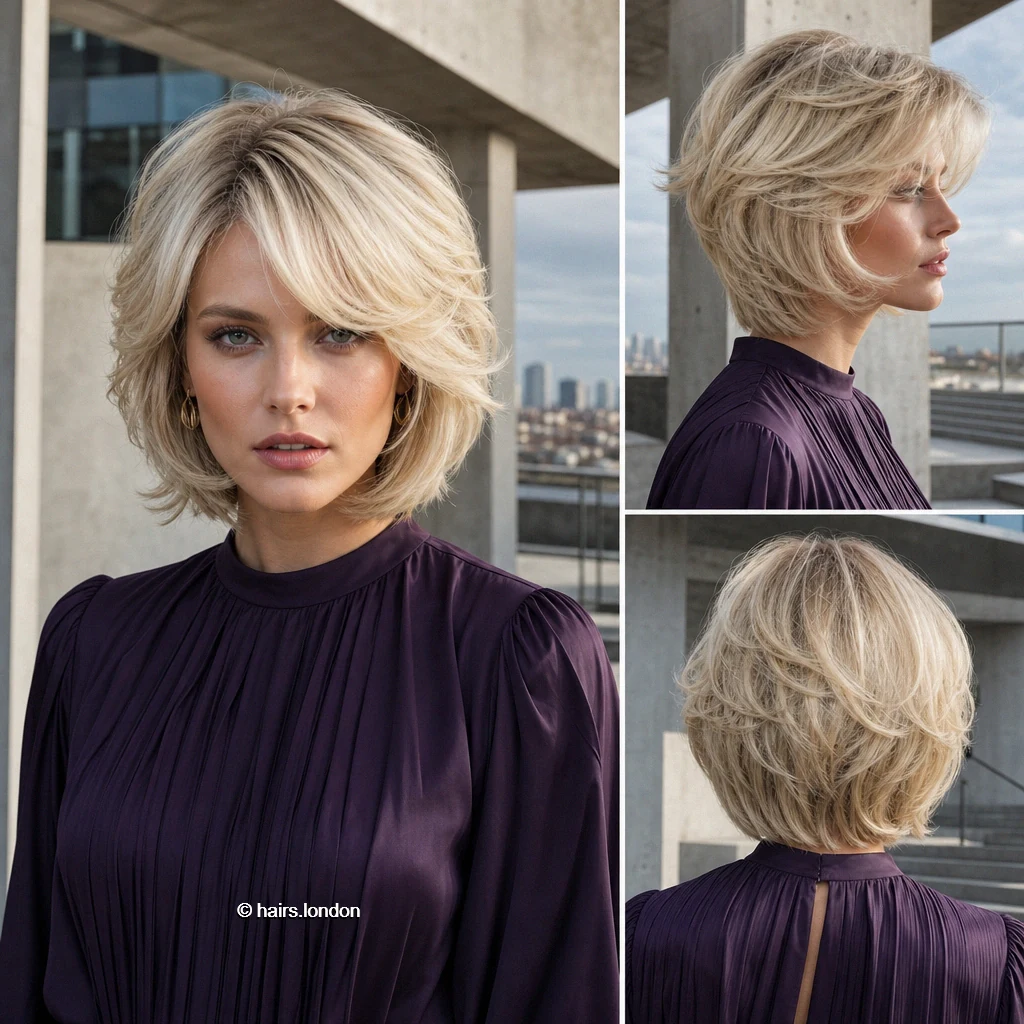
Champagne blonde layers give this jaw-skimming bob noticeable airiness. A long sweeping front moves across the forehead toward one side. Feathered pieces surround the cheeks, while the back stays rounded. The textured lower edge sits above the neck, not shoulders. Discuss how much face-framing movement your density can support. Use a medium brush for lift without making ends rigid. Finish by separating selected pieces with a small amount of cream. Dense hair can accommodate layering, provided the perimeter stays balanced. Fine hair may prefer fewer short pieces near its ends. Trim when layers lose their shape and protect lightened strands.
13. Honey Blonde Bob with Curtain-Like Front Layers
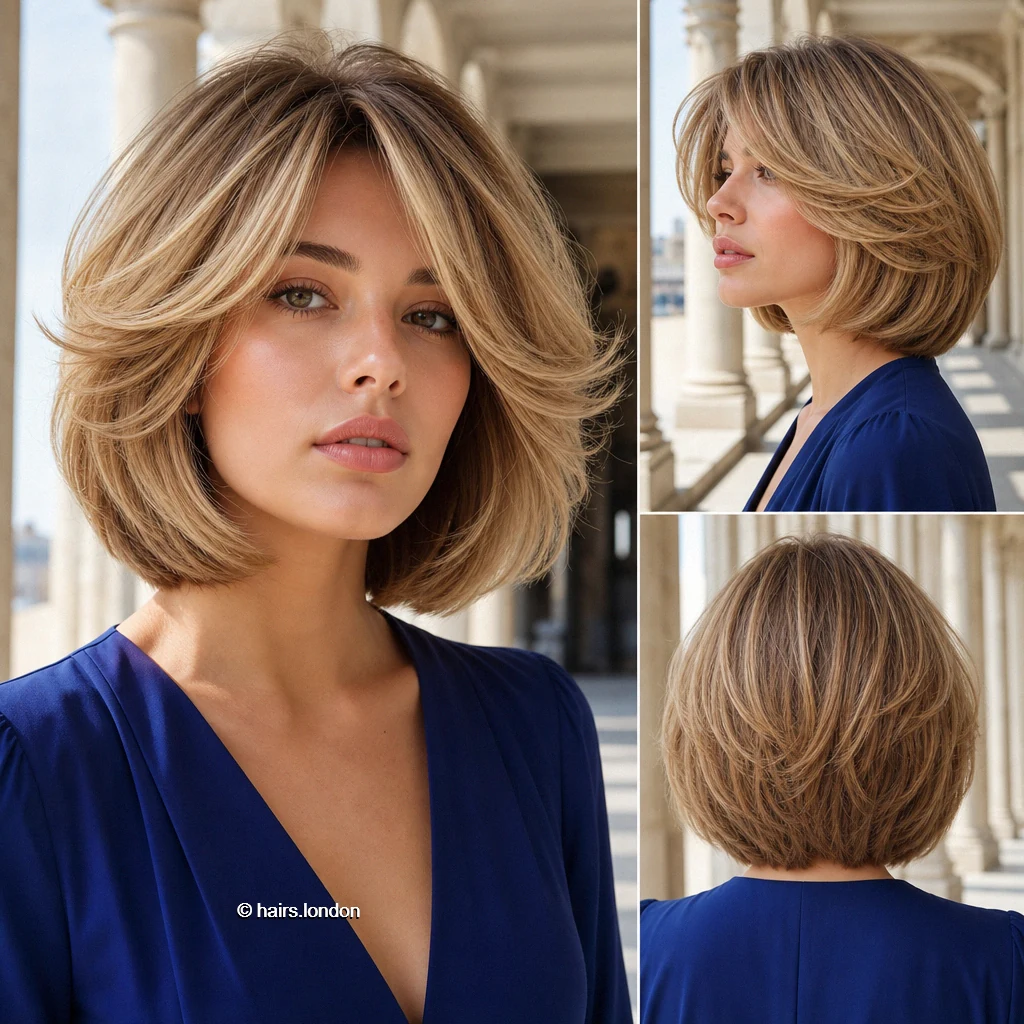
Honey blonde highlights brighten this rounded bob’s flowing front layers. The center-adjacent part lets both sides sweep away naturally. Ends sit around the jaw, with gentle layering above them. Back views show a full curve and a tidy neckline. Ask for face-framing pieces that still reach your chosen perimeter. Blow-dry the front outward, then brush the lower edge inward. A light finishing spray helps movement survive without making bulk. Fine hair may favor restrained layers for a fuller outline. Dense hair might need selective shaping beneath the surface. Maintain the neckline and condition highlighted sections between color appointments as needed.
14. Textured Ash Blonde Bob with Side-Swept Front
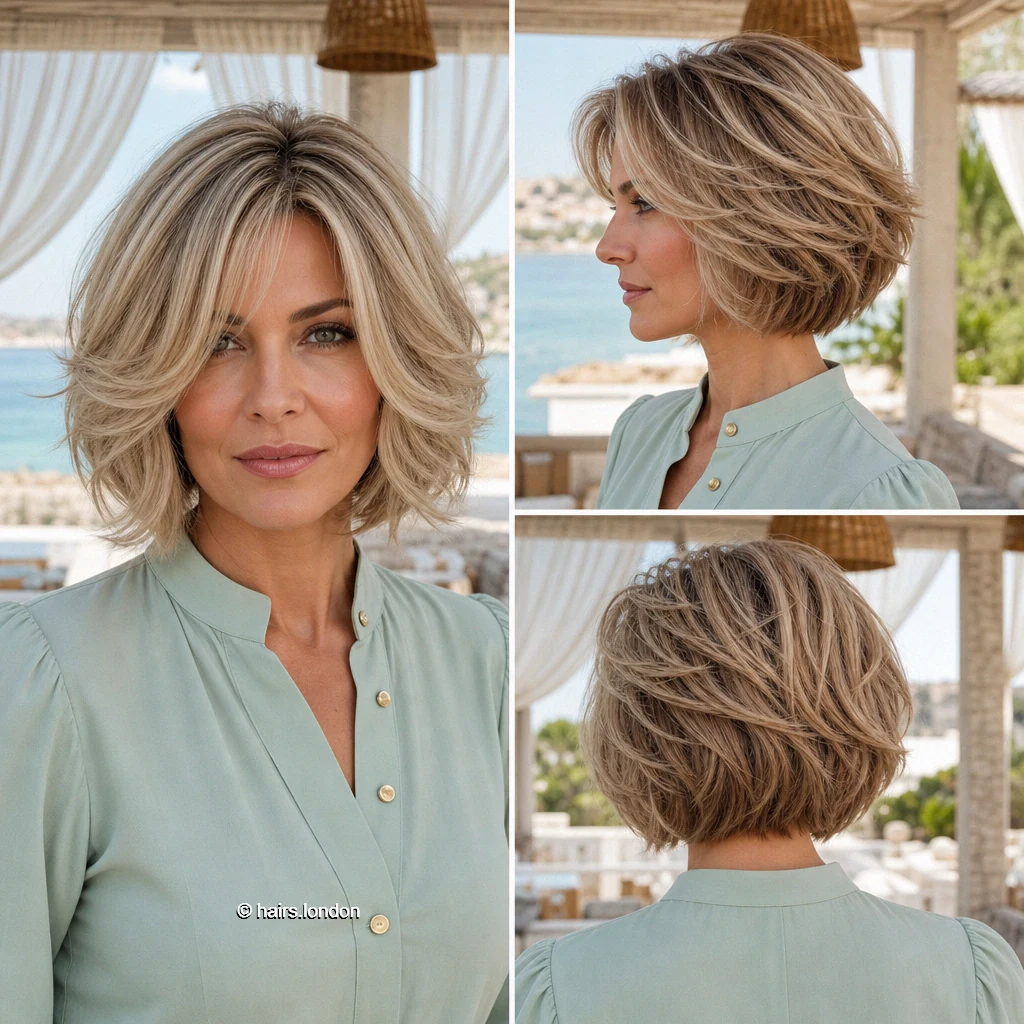
Ash blonde ribbons make this short bob’s texture more visible. The side-swept front blends into layered, slightly flicked side pieces. A softly rounded back finishes close to the neck. There is movement throughout, but no sharply angled front. Ask your stylist to assess whether your waves need layering. Scrunch a light foam into damp hair for separation. Smooth the front selectively when you want a calmer finish. Thick hair may need balanced weight removal below the crown. Fine hair could lose fullness if the ends become overworked. Trim to preserve the compact outline and protect highlighted sections between salon visits.
15. Voluminous Vanilla Blonde Layered Bob
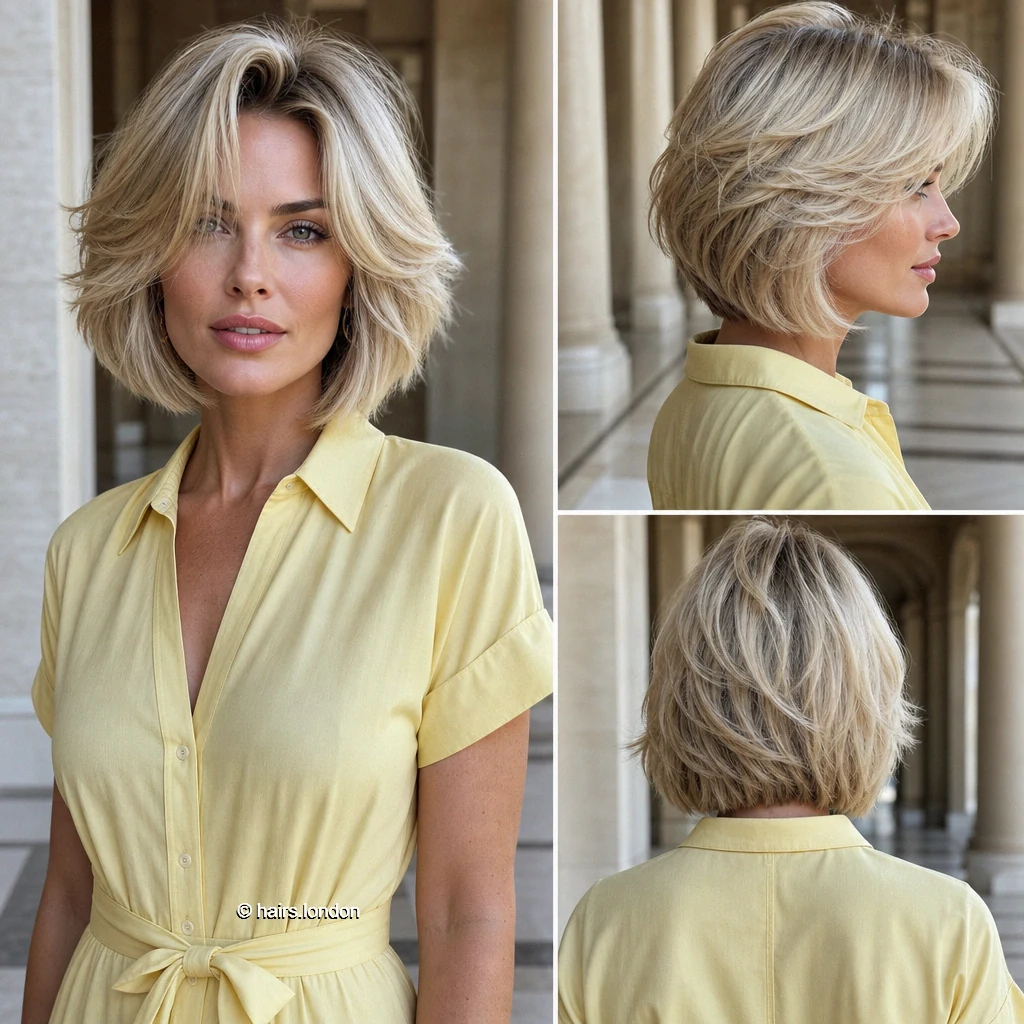
Vanilla blonde layers give this jaw-length bob abundant movement. A broad, parted front sweeps across each side of the face. The profile reveals feathery lengths above a shorter back edge. Back layers form a rounded shape without a hard perimeter. Ask to retain enough bottom weight beneath the airy surface. Lift roots with a brush, then direct front sections away. Finish with a light spray rather than heavy wax. Dense hair may support these layers with thoughtful internal shaping. Fine hair might need a less fragmented version instead. Trim when the back loses definition and condition blonde ends between visits.
16. Smooth Golden Blonde Jaw-Length Bob
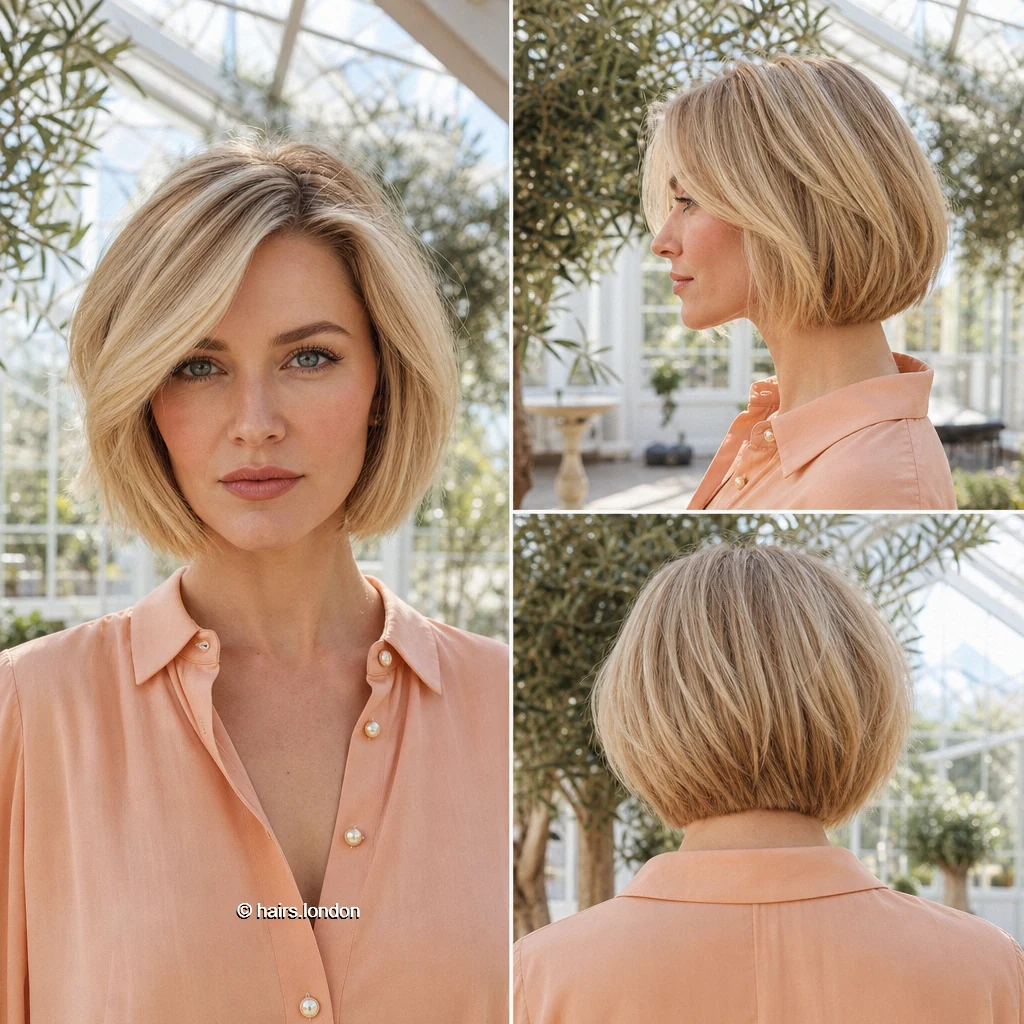
Golden blonde tones warm this smooth, softly rounded bob. A deep side part creates a long, face-sweeping front. The jaw-length sides flow into a neat, neck-hugging back. Visible layers soften the surface without making ends choppy. Ask for a smooth perimeter that accommodates your natural part. Blow-dry downward, using a brush to guide the curve. Keep finishing oil minimal so the shape stays light. Fine hair may appreciate its relatively full lower outline. Dense hair could need subtle internal reduction for easier styling. Refresh the neckline when it grows wide and protect colored strands if the front loses its sweep.
17. Piecey Pale Blonde Bob with Middle Part
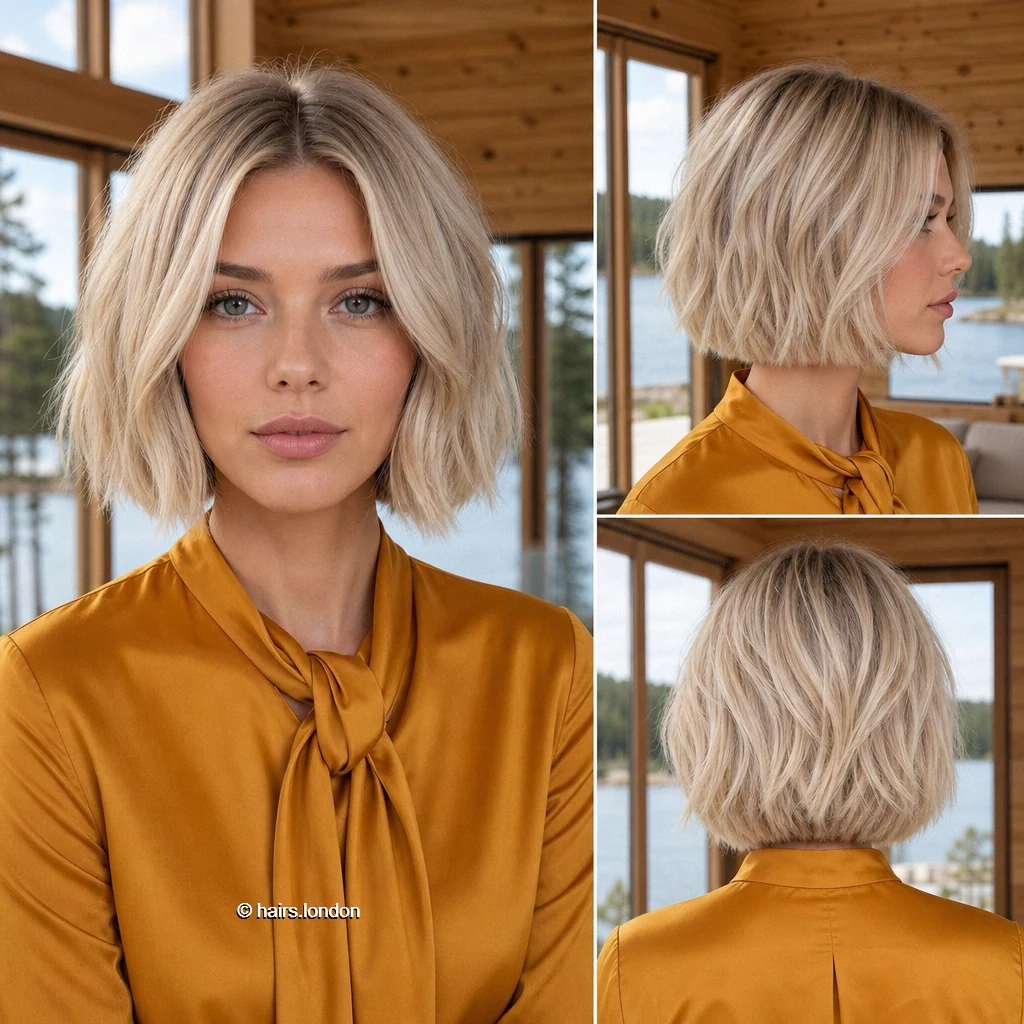
Pale blonde lengths make this jaw-skimming bob look airy. Its middle part creates balanced, fringe-free framing around the face. Slightly irregular ends bring softness to the otherwise level outline. The back retains fullness without clearly defined stacked graduation. Ask for gentle texture only where your hair needs movement. Work mousse through damp lengths, then dry with minimal handling. Add a few loose bends if natural texture lies flat. Fine hair may need more perimeter weight than pictured. Thick hair might benefit from discreet shaping below the surface. Trim when the outline looks uneven and condition lightened ends between salon visits.
18. Caramel Blonde Bob with a Sweeping Side Part
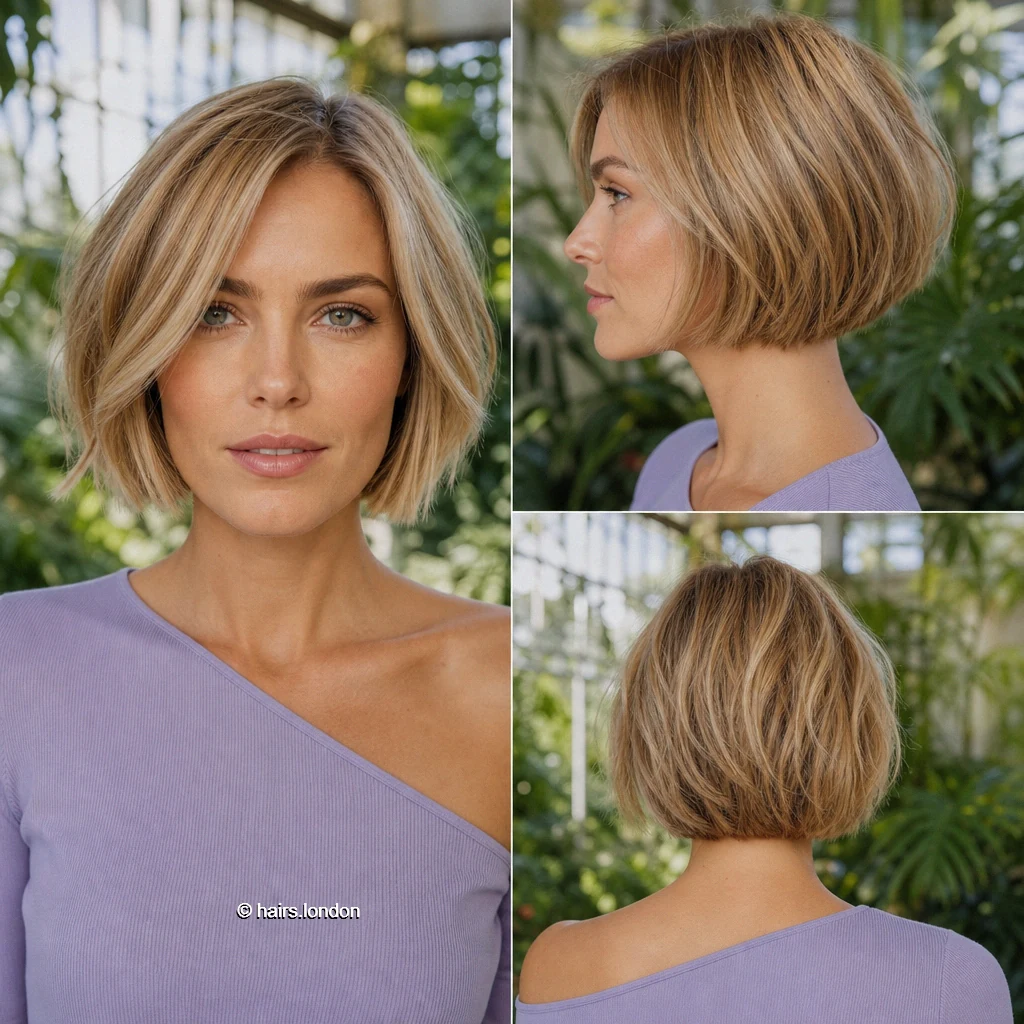
Caramel blonde highlights accent this polished, softly graduated bob. A deep side part sends the front across one cheek. Rounded sides meet a shorter back close to the neck. The back view shows fullness above a tapered lower edge. Ask your stylist to adjust graduation to your density. Smooth the front first, then curve the sides inward. Avoid excessive root product that exaggerates crown height. Fine hair may welcome the lifted shape and concentrated perimeter. Thick hair may need careful balancing through the interior. Maintain the neckline regularly and keep highlighted lengths conditioned between appointments, especially around the face frame.
19. Soft Honey Blonde Bob with Loose Ends
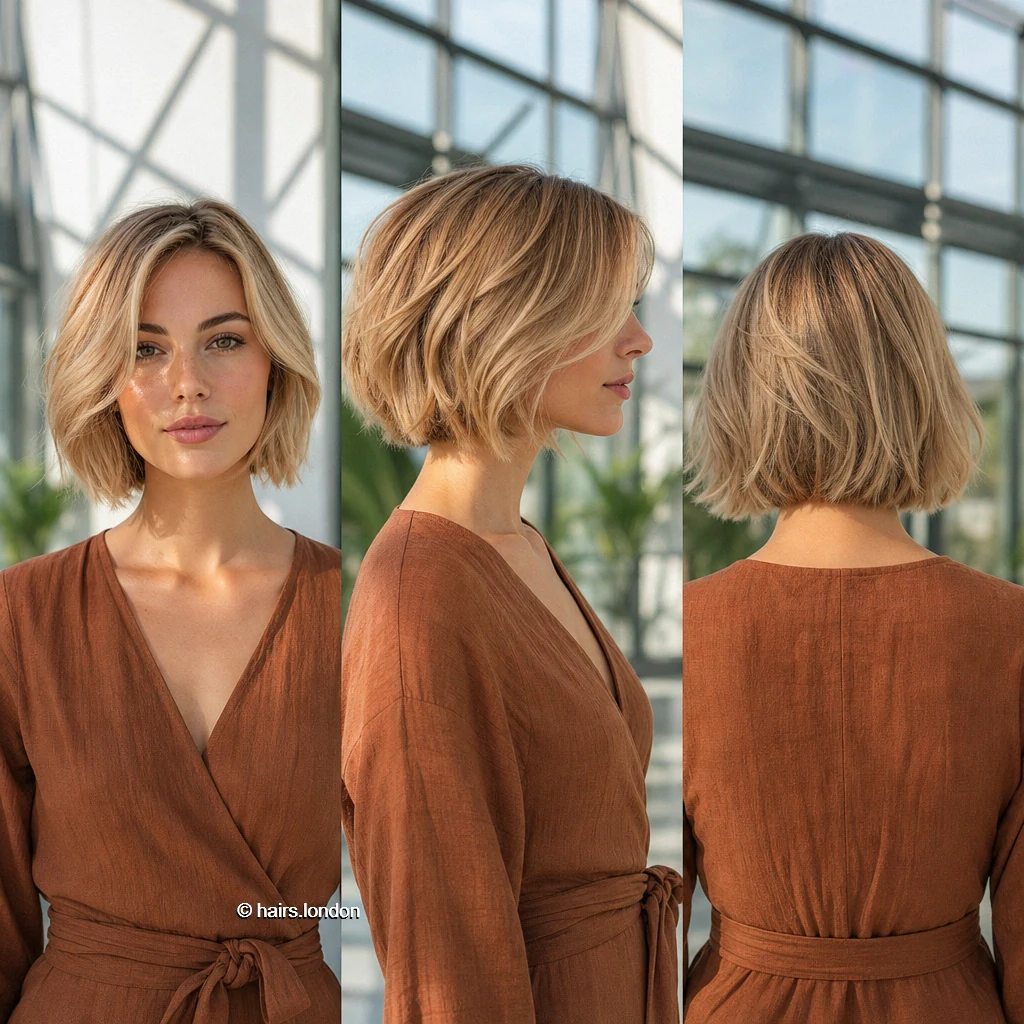
Soft honey blonde brightens this relaxed bob around the jaw. A loose side part creates an easy, sweeping front section. Lightly textured ends loosen its shape without hiding the perimeter. The back sits above the neck with gentle surface movement. Ask for a length that works with your natural bends. Air-dry with light cream, or add a few relaxed waves. Keep products away from the roots if volume collapses easily. Fine hair may need a firmer lower line. Dense hair might benefit from modest, well-placed interior shaping. Trim when the outline spreads and condition the highlighted ends between salon visits.
20. Neat Beige Blonde Bob with Center Part
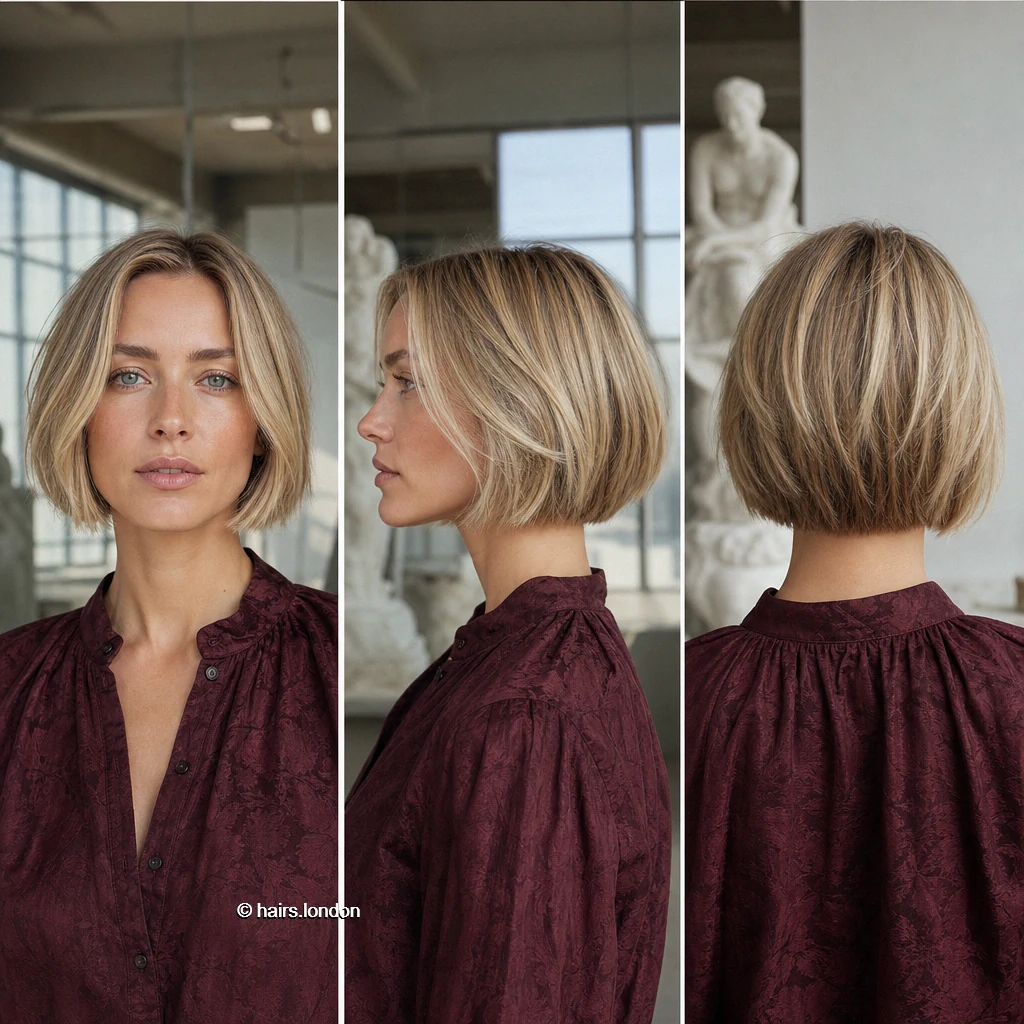
Beige blonde highlights define this neatly rounded, jaw-length bob. A near-center part creates balanced framing without a fringe. The profile shows a gently tucked edge near the neck. Back views reveal fullness above a clean, compact lower outline. Ask your stylist to preserve the smooth curve while refining weight. Blow-dry downward, guiding ends under with a medium brush. Finish lightly so the perimeter remains defined, not stiff. Fine hair may enjoy its full silhouette and controlled layers. Thick hair may require discreet interior reduction for comfort. Refresh the neckline before growth changes the rounded shape noticeably, and condition highlighted ends.
How to Choose Your Bob Length and Shape
Start with where you want the perimeter to sit: near the jaw, below the chin or close to the neck. Check that length with your hair dry, especially if it waves or curls. A fuller lower edge can make fine hair appear more substantial, while selective interior shaping can help dense hair move without making the outside look thin. If you like a longer-looking front, compare profile views; a rounded bob is not automatically an A-line cut.
Styling Fine, Thick, Wavy and Curly Textures
For fine hair, use lightweight lift at the roots and avoid over-texturizing the ends. With thick hair, ask for deliberate internal weight removal rather than thinning the entire perimeter. Scrunch waves with mousse or light cream and dry with minimal disturbance. Natural curls need a length chosen around their dry shape and shrinkage; discuss curl-by-curl refinement if appropriate. Smooth a fringe separately when needed, and keep finishing products light enough to preserve movement.
Keeping Highlighted Bob Color Fresh
These images show several blonde tones and visible darker roots, not one shared color formula. Ask your colorist what level of lightening and appointment schedule suits your starting color and hair condition. Use gentle cleansing, regular conditioning and heat protection, paying particular attention to exposed ends. If a cool blonde becomes warm, discuss whether occasional toning is appropriate rather than guessing at a product routine.
Maintaining the Bob Perimeter and Graduation
A clean jaw-level edge is most noticeable when it starts to grow unevenly; a rounded, graduated back can also lose its lift as the neckline lengthens. Arrange trims according to how quickly your particular shape changes, with fringe adjustments between full appointments if necessary. Bring front, profile and back references so your stylist can preserve the intended weight line without automatically adding more layers.
What to Discuss with Your Stylist
Show the views that matter most to you and specify the front length, fringe coverage, neckline and amount of roundness you want. Explain how your hair behaves when air-dried, where it parts naturally and how much time you will spend styling. Ask which photographed details depend on density, texture or blow-drying, and agree on a cut and color plan that works beyond the salon finish.
Frequently Asked Questions
What is the difference between a bob and a lob?
A bob generally sits around the jaw or neck, while a lob is a longer bob that approaches or reaches the shoulders. The exact distinction can vary, so show your preferred endpoint.
How is an A-line bob different from a stacked bob?
An A-line bob has a visibly longer front than back. A stacked bob relies on short, graduated sections at the back to build shape; a cut can have both features, but one does not imply the other.
Can fine hair wear a layered bob?
Yes, if the layering leaves enough weight at the perimeter. Ask for movement in selected areas rather than automatically removing bulk throughout.
How can a bob avoid looking too wide on thick hair?
Discuss the shape at its widest point and whether selective interior weight removal will help. Keeping the exterior controlled is often more useful than heavily thinning every end.
Will these short bobs work with natural curls?
A bob can be adapted to curls, but the finished length and outline will differ from these predominantly smooth or softly waved examples. Assess shrinkage and dry curl placement with your stylist.
Should I choose bangs or a side-swept front?
Consider your growth pattern and willingness to style the front daily. Bangs require more frequent adjustments; a longer sweep offers more flexibility as it grows.
Do short bob haircuts require daily blow-drying?
Not necessarily. A textured bob may air-dry well if it follows your natural pattern, while a precisely rounded finish usually takes more smoothing and shaping.
How often should I trim a short bob?
Book a trim when the perimeter loses its intended position or a graduated back begins to spread. A precise neckline or fringe may need attention sooner than a loose, textured edge.
Can I keep a blunt-looking perimeter with some layers?
Yes. Ask your stylist to preserve the outer line while placing any layers where they add movement without making the ends look sparse.
What happens when a graduated bob grows out?
As the lower sections lengthen, the back can lose its compact shape and the weight line may sit lower. Regular reshaping helps maintain the original silhouette.
How do I grow a short bob into a lob?
Keep the perimeter tidy while gradually allowing the front and back to gain length. Your stylist can adjust layers and fringe so the intermediate stages remain balanced.
What should I bring to a bob consultation?
Bring front, side and back images, including examples of details you dislike. Share photos of your own hair air-dried and explain your styling time, color history and maintenance preferences.
Conclusion
The best short bob is the one whose perimeter, layering and front pieces work with your hair as it actually behaves. Choose a reference for its visible shape rather than its label, and use a consultation to translate that shape into a cut you can maintain.