


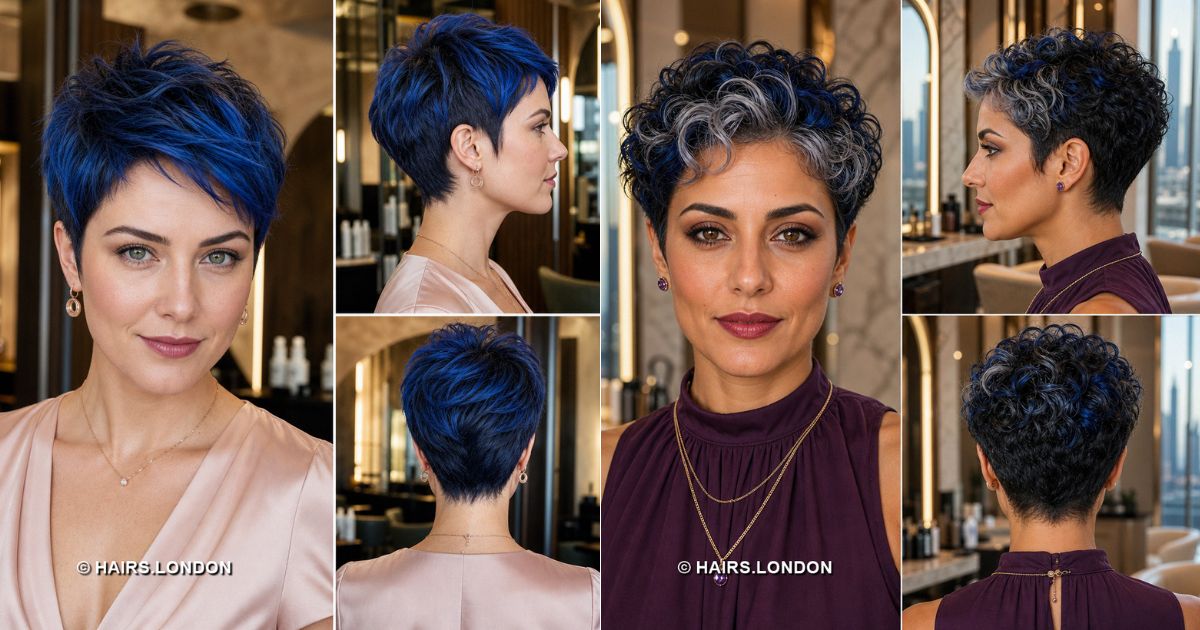
11. Teal Streaked Pixie
This teal streaked pixie features a sweeping fringe and softly layered crown over a precise, tapered base. Teal ribbons are concentrated near the face and across the top, creating a cool contrast against the almost-black foundation. The longer fringe makes the haircut adaptable because it can be worn forward, side-swept, or lifted for more volume. Ask for a compact nape, graduated sides, and controlled texturizing through the top rather than aggressive thinning. Use a lightweight heat protectant before blow-drying, then shape the fringe with a small brush or fingers. A color-depositing teal conditioner can help refresh brightness between salon visits.
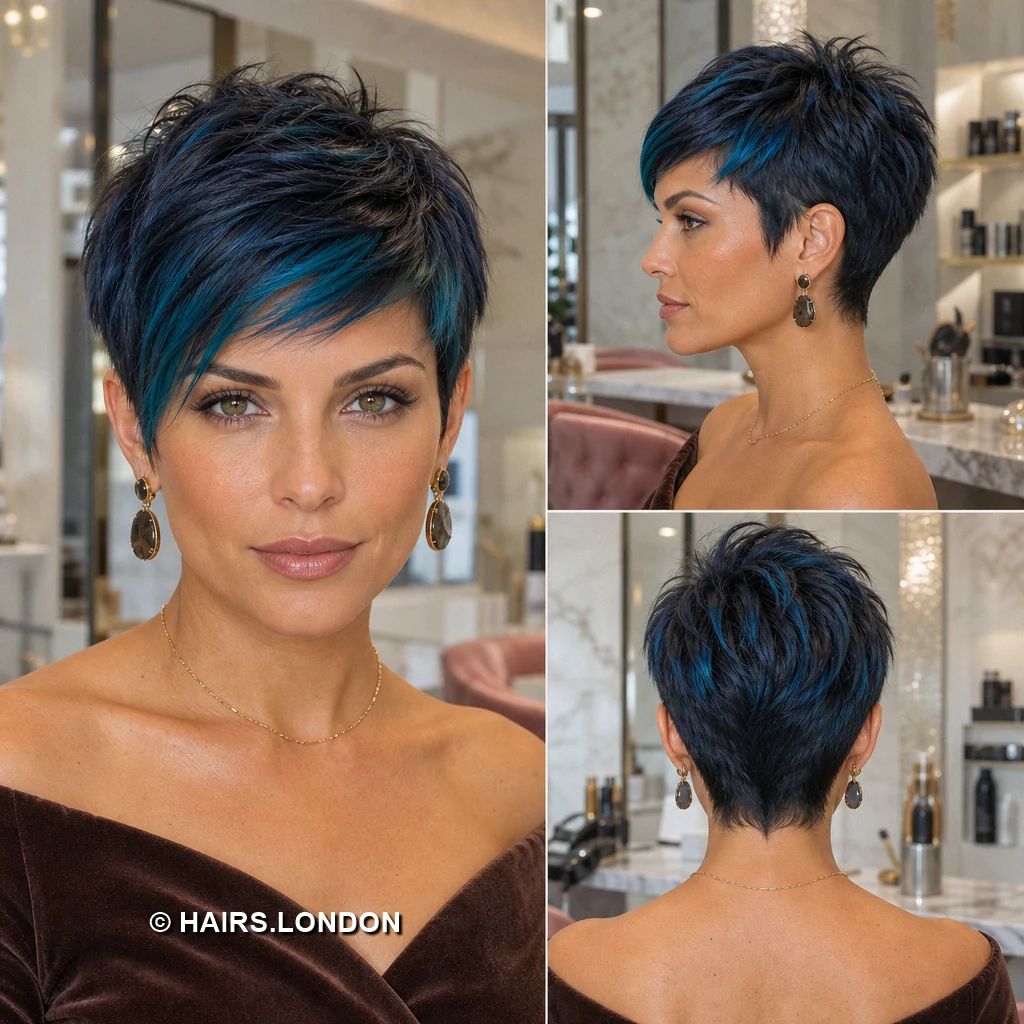
12. Teal Sapphire Pixie
This teal sapphire pixie uses broad ribbons of turquoise, teal, and deep blue across a dark layered base. The haircut is longer through the front and crown, producing a smooth side sweep with enough texture to avoid looking heavy. A tapered nape keeps the overall silhouette crisp and makes the colorful top appear fuller. Ask for soft internal layers and a fringe length that can cross the forehead without falling into the eyes. Straight or gently wavy hair showcases the color placement clearly. Blow-dry with a paddle or vent brush, finish with lightweight serum on the ends, and protect vivid
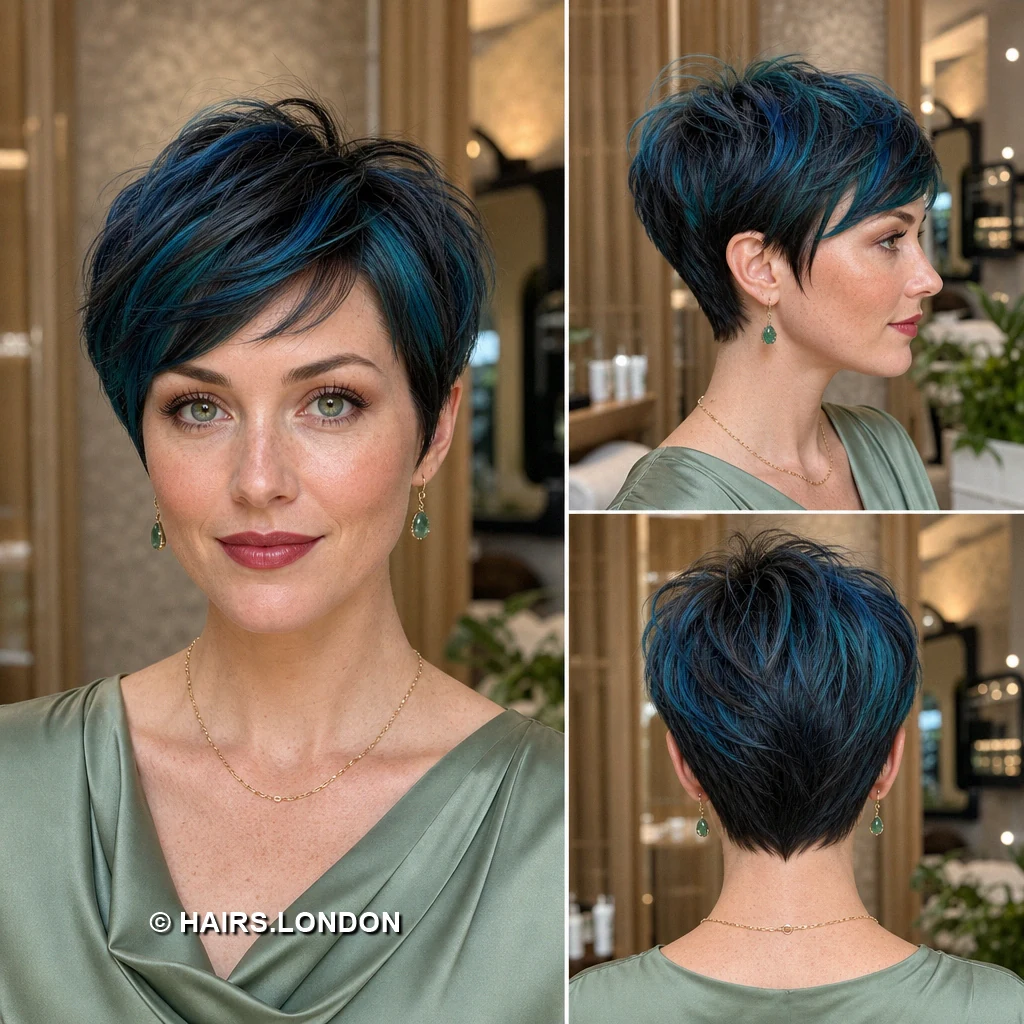
13. Silver Blue Curly Pixie
The silver blue curly pixie combines cool gray curls with saturated blue sections for a high-contrast, multidimensional finish. Close sides expose the shape of the head, while generous length on top allows curls to coil and overlap naturally. The silver placement around the front brightens the face and separates individual curl patterns. Ask for a tapered understructure with curl-preserving length above, and discuss whether lightening is suitable for your hair condition before adding silver. Style with leave-in conditioner and curl cream, then diffuse without disturbing the set. Regular moisture treatments are important because pre-lightened hair can feel drier, especially when
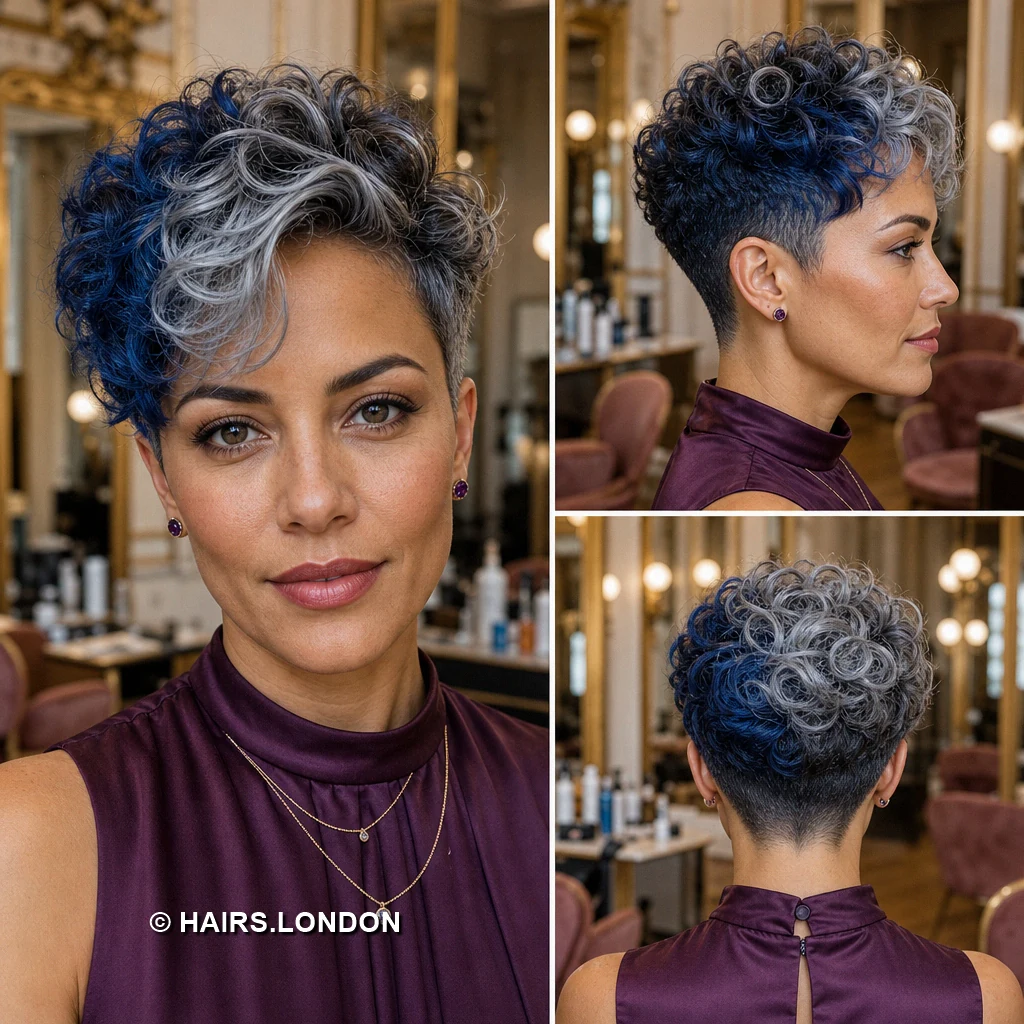
14. Blue Teal Tousled Pixie
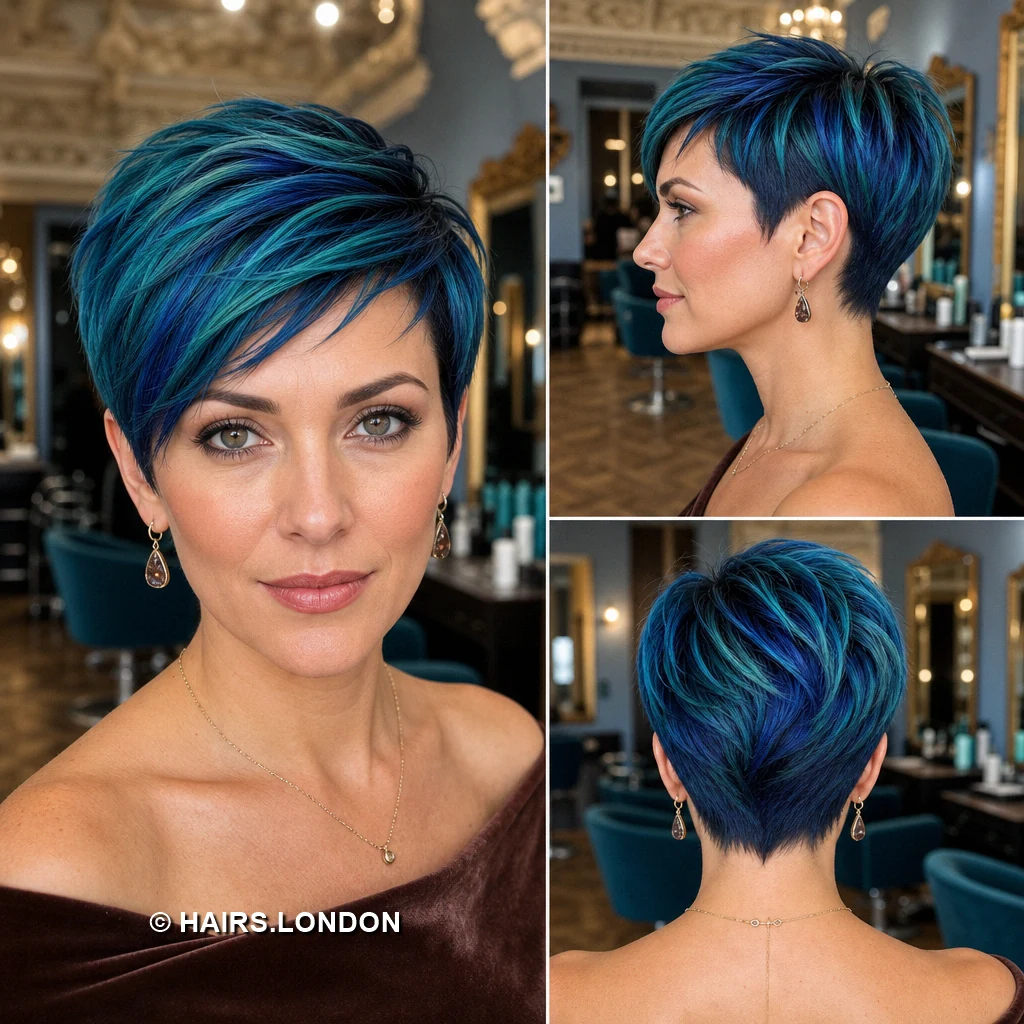
Blue and teal accents give this tousled pixie a lively surface while the dark underlayer provides strong contrast. The top is left noticeably longer than the sides, allowing sections to twist, sweep, and overlap for a relaxed finish. The nape remains short and narrow, which keeps the cut balanced despite the fullness above. Ask your stylist for point-cutting and selective debulking rather than uniform thinning, especially if your hair is dense. Apply texture spray to damp hair, rough-dry while lifting the roots, and define a few pieces with flexible wax. Refresh the teal and blue with salon glosses before they
15. Ocean Blue Swept Pixie
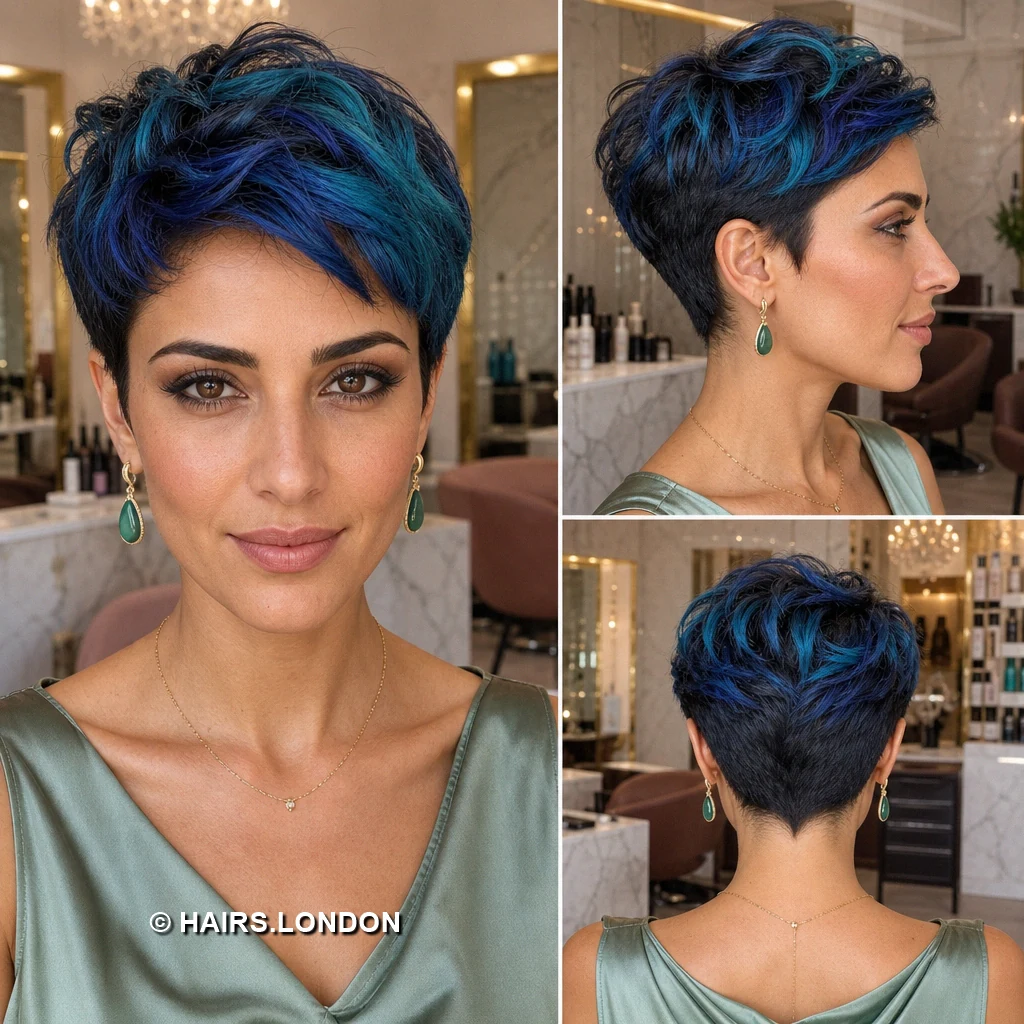
The ocean blue swept pixie blends turquoise, cobalt, and navy ribbons through a longer, side-directed top. The color placement follows the haircut’s movement, so each layer becomes visible as it crosses the forehead and crown. Shorter sides and a tapered back keep the silhouette close while preserving softness around the face. Ask for a long fringe, graduated underlayers, and subtle texturizing that encourages the hair to sweep rather than separate into stiff spikes. Medium straight hair is especially suitable, though slight waves add extra movement. Use heat protectant, blow-dry diagonally, and finish with flexible cream. Wash vivid color less frequently
16. Turquoise Spiky Pixie
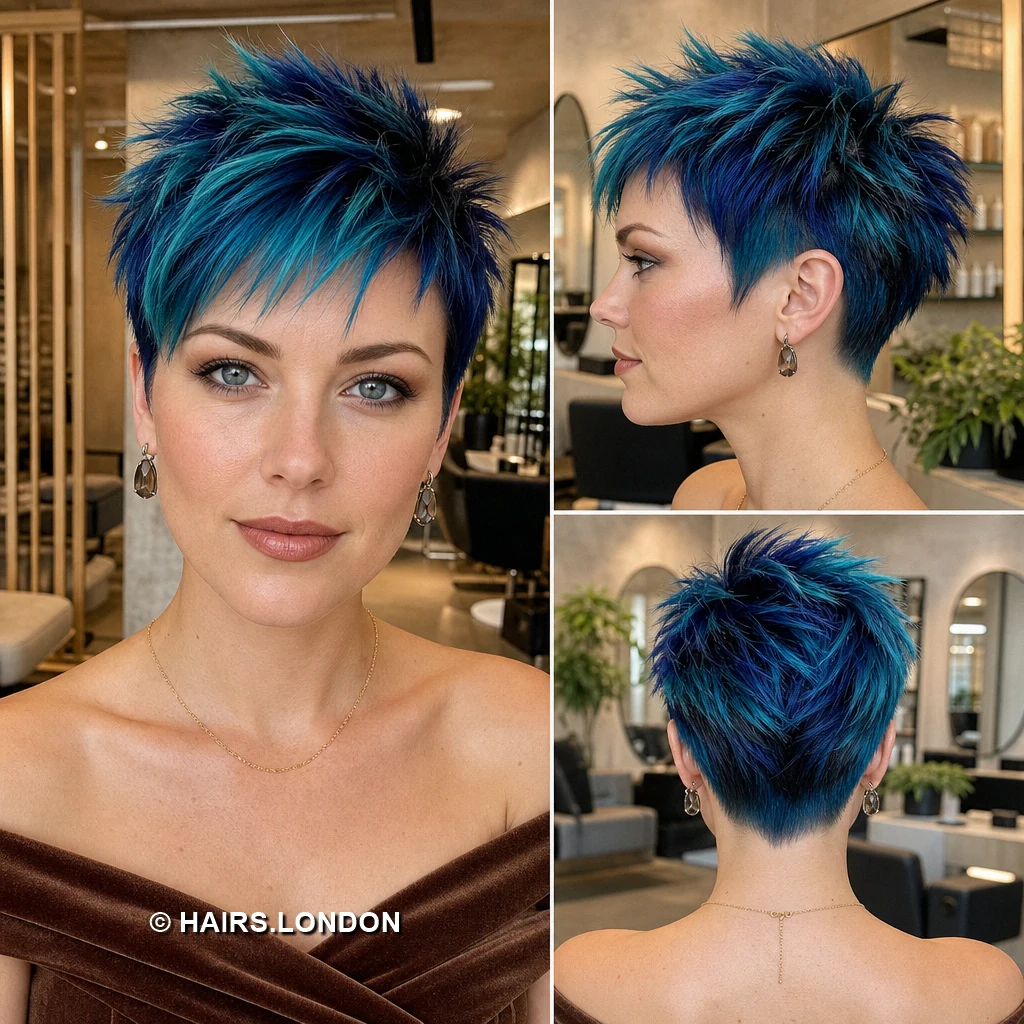
The turquoise spiky pixie is cut for pronounced separation, with short tapered sides supporting longer, pointed layers across the crown. Turquoise and deep blue tones alternate through the top, making each spike and textured section more visible. This finish is easiest on straight hair with enough density to hold shape, although fine hair can gain support from styling powder. Ask for razor or point-cut texture only if your hair condition can tolerate it, and keep the nape clean. Blow-dry upward with fingers, rub a small amount of matte paste between your palms, and pinch individual ends. Avoid heavy oils that
17. Icy Blue Textured Pixie
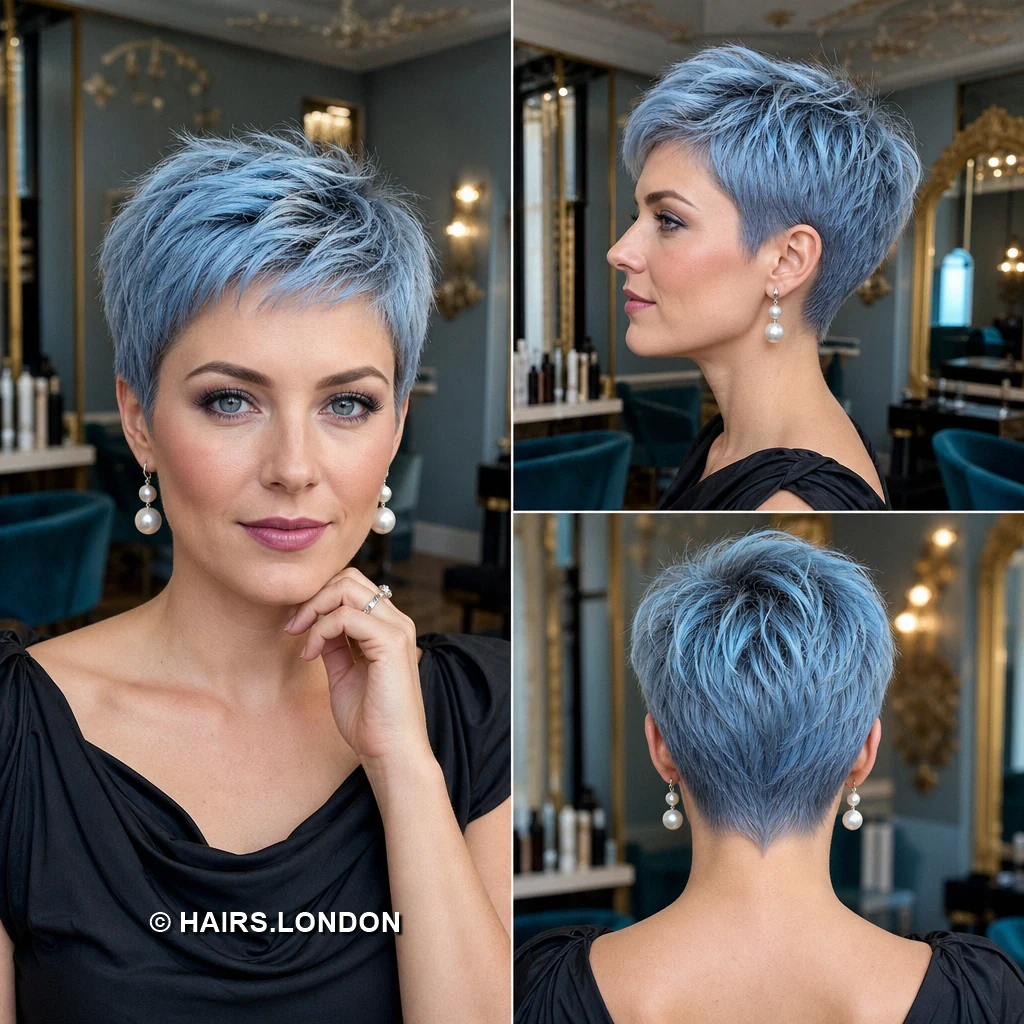
This icy blue textured pixie replaces the dark vivid palette with a softer, cool-toned finish that highlights every short layer. The cut is neatly tapered around the ears and neckline, then gradually lengthens toward the crown and fringe. Fine, airy pieces create movement without requiring dramatic height. Ask for soft point cutting and a rounded crown that follows your natural growth pattern. Lightened hair needs careful conditioning, so discuss bond-supporting services if bleaching is required to reach this pale blue. Style with a lightweight volumizing mist and gentle blow-drying, then add dry texture spray. Purple-blue toning products can reduce unwanted
How to Choose Blue Pixie Haircuts
Start with the haircut rather than the color. Decide whether you prefer a close crop, a longer side-swept fringe, a lifted quiff, or curl-preserving length on top. Then consider density and growth patterns. Fine hair usually benefits from lighter layering and root lift, while dense hair may need careful internal weight removal. Bring front, side, and back references to your stylist so the desired neckline, ear area, crown shape, and fringe length are clear.
Styling Different Hair Textures
Straight hair shows sharp layers and color ribbons clearly, while wavy hair naturally adds separation and softness. Curly hair needs enough length for complete curl formation, especially across the crown and fringe. Use lightweight products first: mousse or root spray for lift, curl cream for definition, and matte paste or flexible wax for piecey texture. Apply heavier products sparingly because short hair can lose volume quickly when the roots become coated.
Keeping Blue and Teal Color Fresh
Blue, teal, and turquoise shades can lose intensity faster than natural-looking tones, particularly on pre-lightened hair. Wash with cool or lukewarm water, choose a color-safe cleanser, and reduce unnecessary shampooing when practical. Heat protection matters because frequent hot-tool use can affect both condition and color appearance. Ask your colorist whether a blue or teal depositing conditioner is appropriate for your formula, and schedule gloss or refresh services according to how quickly your chosen shade changes.
Pixie Cut Maintenance
Short shapes reveal growth quickly around the ears and neckline. Many pixies look most controlled with trims about every four to six weeks, although softer or longer versions can sometimes stretch further. Between appointments, avoid cutting the fringe or nape impulsively unless you are comfortable maintaining the shape yourself. Conditioning remains important even on short hair, especially after lightening. Keep styling buildup under control so the crown stays airy and the color retains visible dimension.
What to Discuss at a Salon Consultation
Show the stylist which image best represents the front, side, and back you want. Discuss how short you are comfortable going around the ears and nape, how much forehead coverage you prefer, and whether you want soft movement or stronger spikes. For vivid color, ask about the lightening process, maintenance schedule, fading pattern, and home-care products. If your hair is curly, fine, coarse, previously colored, or fragile, mention that before the cutting and color plan is finalized.
Frequently Asked Questions
Are blue pixie haircuts suitable for fine hair?
Yes. Fine hair can wear a blue pixie successfully when the cut preserves enough density through the crown. Root-lift spray, styling powder, and lightweight paste can add separation without making the hair heavy.
Do blue pixie cuts require bleaching?
Often, vivid or pale blue shades need some degree of pre-lightening, especially on dark hair. The exact level depends on the starting color, target shade, and hair condition, so a professional strand assessment is useful.
How often should a pixie haircut be trimmed?
A four-to-six-week schedule is common for maintaining a crisp neckline and tidy sides. Longer, softer pixies may remain wearable for a little longer depending on growth rate and preferred shape.
How can I keep blue hair from fading quickly?
Use cooler water, color-safe cleansing products, heat protection, and fewer unnecessary washes. Your colorist may also recommend a compatible color-depositing conditioner or periodic gloss service.
Can curly hair wear a short blue pixie?
Yes. The top should retain enough length for curls to form properly, while the sides can be tapered for shape. Curl cream and low-heat diffusing help preserve definition.
What styling product works for a spiky pixie?
A small amount of matte paste, clay, or flexible wax works well for separation. Apply gradually so the hair stays textured rather than stiff or greasy.
What should I ask for if I want a side-swept pixie?
Ask for extra length through the fringe, graduated shorter sides, and soft internal layering. Show your stylist the direction you want the fringe to fall and how much forehead coverage you prefer.
Are blue highlights easier to maintain than all-over blue?
They can be, because the natural or dark base remains visible as the vivid pieces fade. Maintenance still depends on how light the highlighted sections were lifted and how saturated the blue formula is.
How do I add volume to a short pixie?
Apply mousse or root-lift spray to damp hair, blow-dry against the natural growth direction, and let the roots cool in a lifted position. Finish with a small amount of dry texture product.
Can mature hair wear vivid blue pixie color?
Hair color is not limited by age. The practical considerations are hair condition, maintenance preference, and whether the chosen blue complements the haircut and desired level of contrast.
How do I protect pre-lightened pixie hair?
Use gentle cleansing, regular conditioning, heat protection, and avoid overlapping strong lightener onto already fragile areas. Ask your stylist whether bond-supporting treatments suit your hair.
Should I bring these pictures to my stylist?
Yes. Reference images make it easier to discuss fringe length, crown volume, tapering, texture, and color placement. Point out the specific front, side, and back details you want rather than requesting the image generally.
Conclusion
These blue pixie haircuts show how much variety can come from changing just a few elements: fringe direction, crown length, tapering, curl pattern, and the placement of cobalt, teal, turquoise, sapphire, or silver-blue color. Choose the silhouette that fits your texture and daily styling habits first, then work with your stylist on a color plan that respects your starting shade and hair condition. A clear consultation, realistic maintenance schedule, and lightweight styling routine will make the finished pixie easier to wear between appointments.