


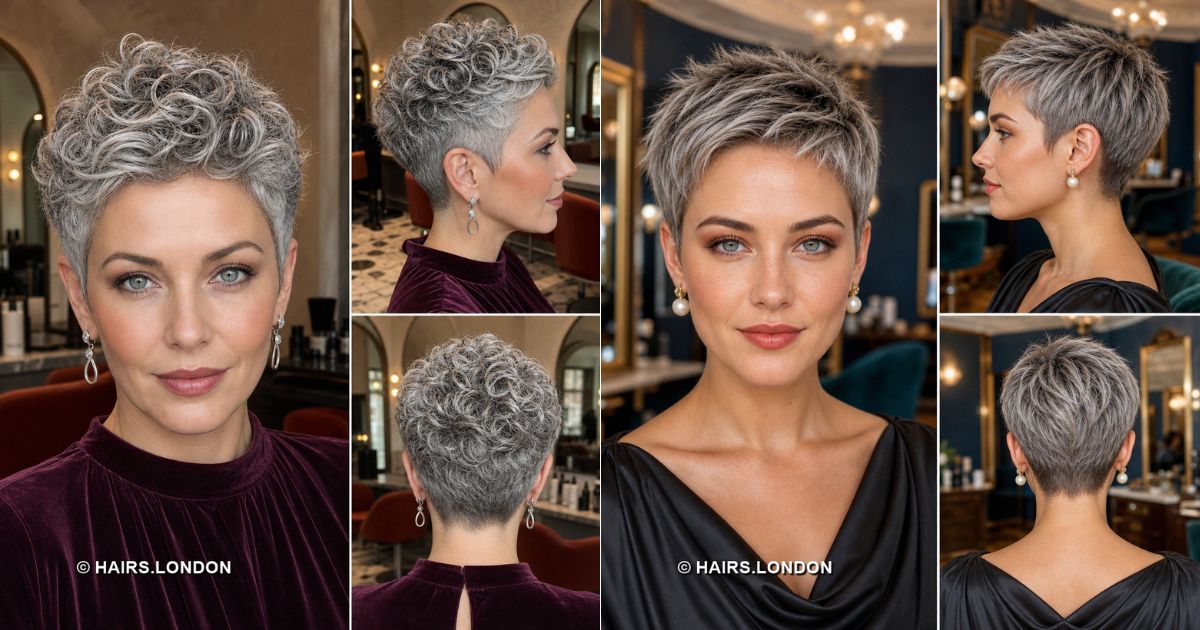
11. Pewter Quiff Pixie with a Closely Fitted Nape
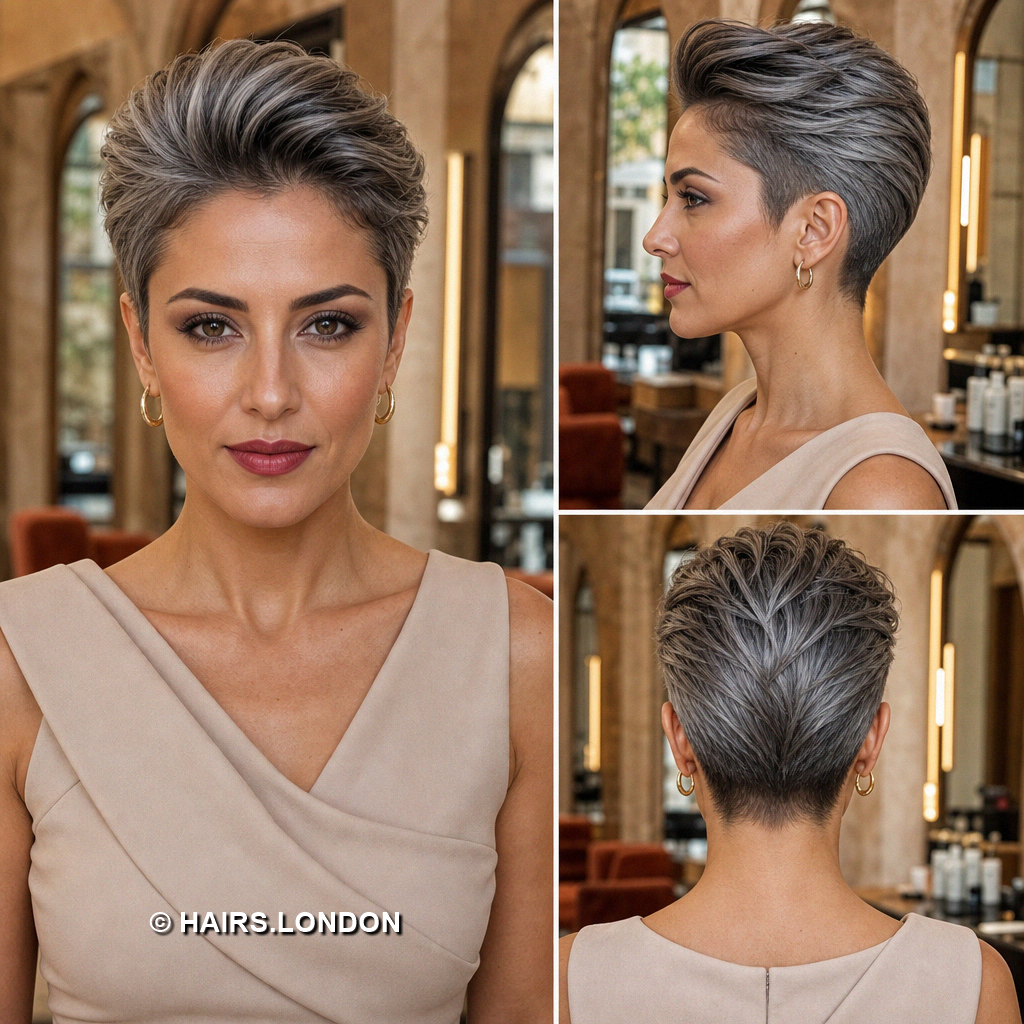
Pewter strands brush upward and backward from an open forehead, creating a smooth quiff above deeper roots. The sides sit close around the ears, and the back tapers below connected crown layers. Request enough hairline length to form the raised curve and careful blending through the upper sides. Medium straight hair can provide support, while finer hair may need root foam. Use a vent brush to lift the front, then cool it before releasing the shape. Finish with flexible spray rather than heavy wax. Discuss the shortest nape length and how much contrast should remain between gray and darker strands.
12. Charcoal Wavy Pixie with Soft Silver Crown Ribbons
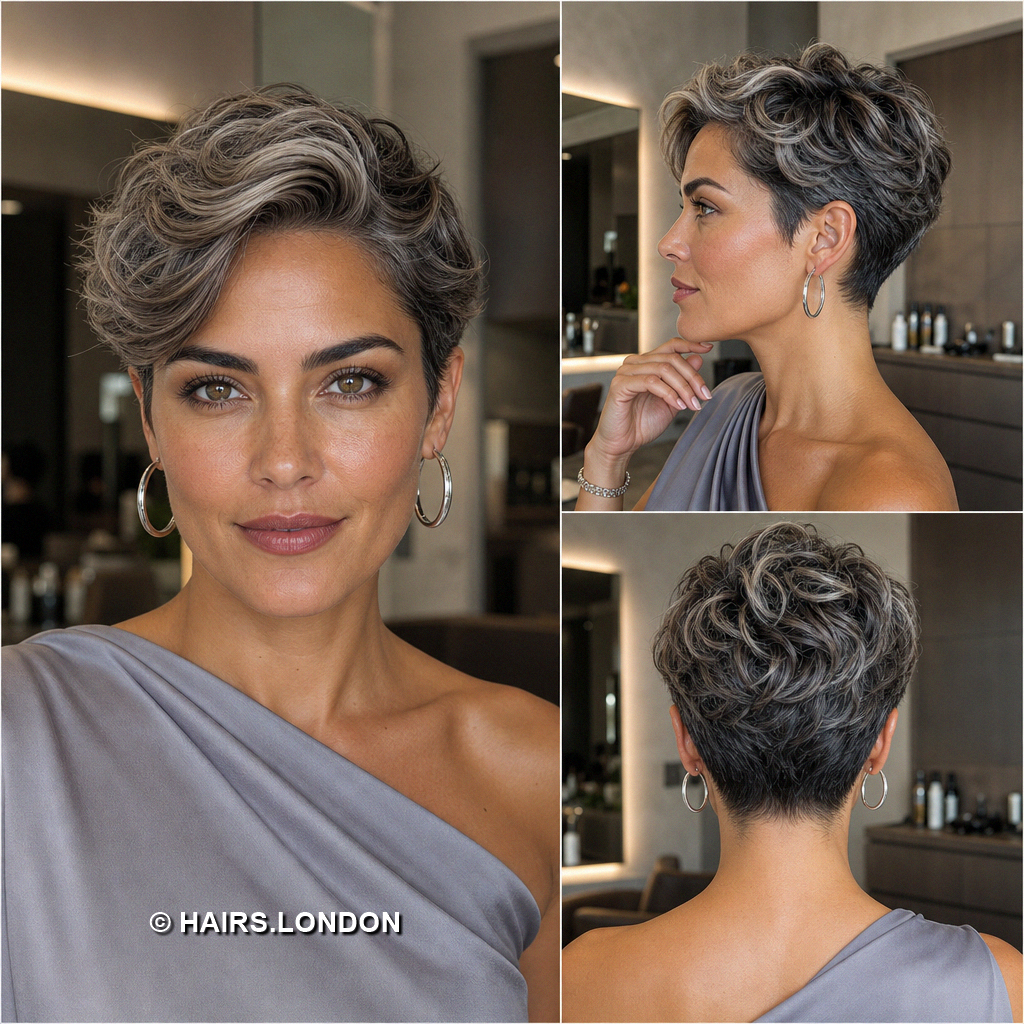
Soft silver ribbons follow waves above a charcoal foundation, giving the rounded crown visible depth. The front curves away from the face, while short sides and a tapered back keep the shape compact. Ask for enough upper length to preserve the broad bends and selective shaping underneath if your hair is dense. Naturally wavy hair can contribute much of the movement with defining cream and gentle diffusing. Straight hair may need additional brush styling. Discuss the amount of fullness you want from the back view, and condition any lighter strands without loading the roots with heavy oils or styling cream.
13. Silver Feathered Pixie with a Long Light Fringe
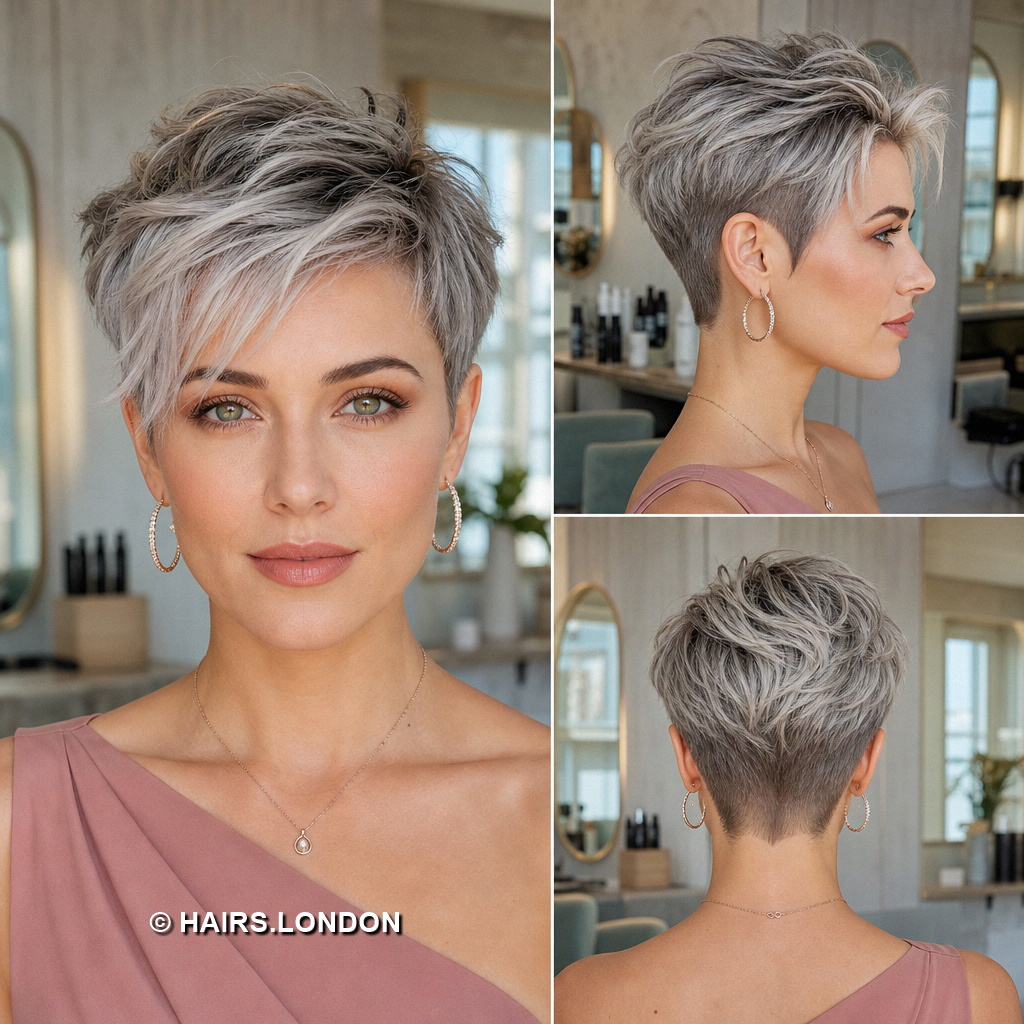
Silver layers cross the forehead in a long feathered fringe, with deeper roots defining the airy surface. The sides are shorter, and the nape narrows beneath a softly rounded crown. Request slender separated ends while retaining enough fringe weight to avoid gaps near the hairline. Fine straight hair can suit this structure when texturizing is restrained. Dry the front diagonally using light mousse and a small brush, then loosen the tips with fingers. Discuss where the fringe should finish in its natural dry fall. If the pale silver needs lightening, assess existing highlights before deciding how to refresh delicate ends.
14. Ash Cropped Pixie with Short Broken Front Pieces
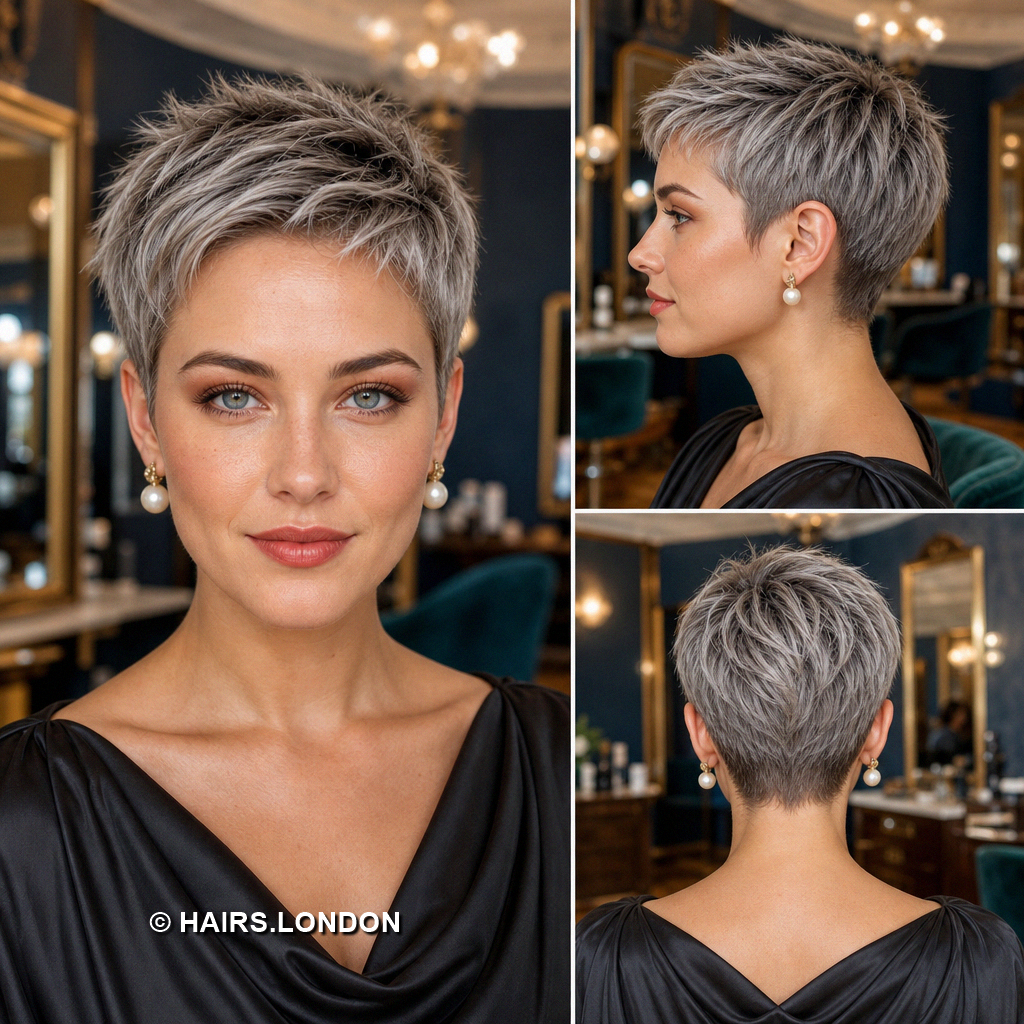
Ash gray strands form short broken front pieces above a compact textured crown. Slightly deeper roots add definition, while the ear area and nape are closely shaped. Ask for short graduation that follows the head and controlled point cutting through the upper ends. Straight hair with fine or medium density can wear this finish with a small amount of matte cream. Finger dry forward, then lift selected crown pieces to soften the outline. Discuss cowlicks before setting the shortest fringe length. Maintain the close perimeter as it grows, and use lightweight conditioning where the highlighted tips feel less flexible afterward.
15. Pewter Layered Pixie with a Draped Side Fringe
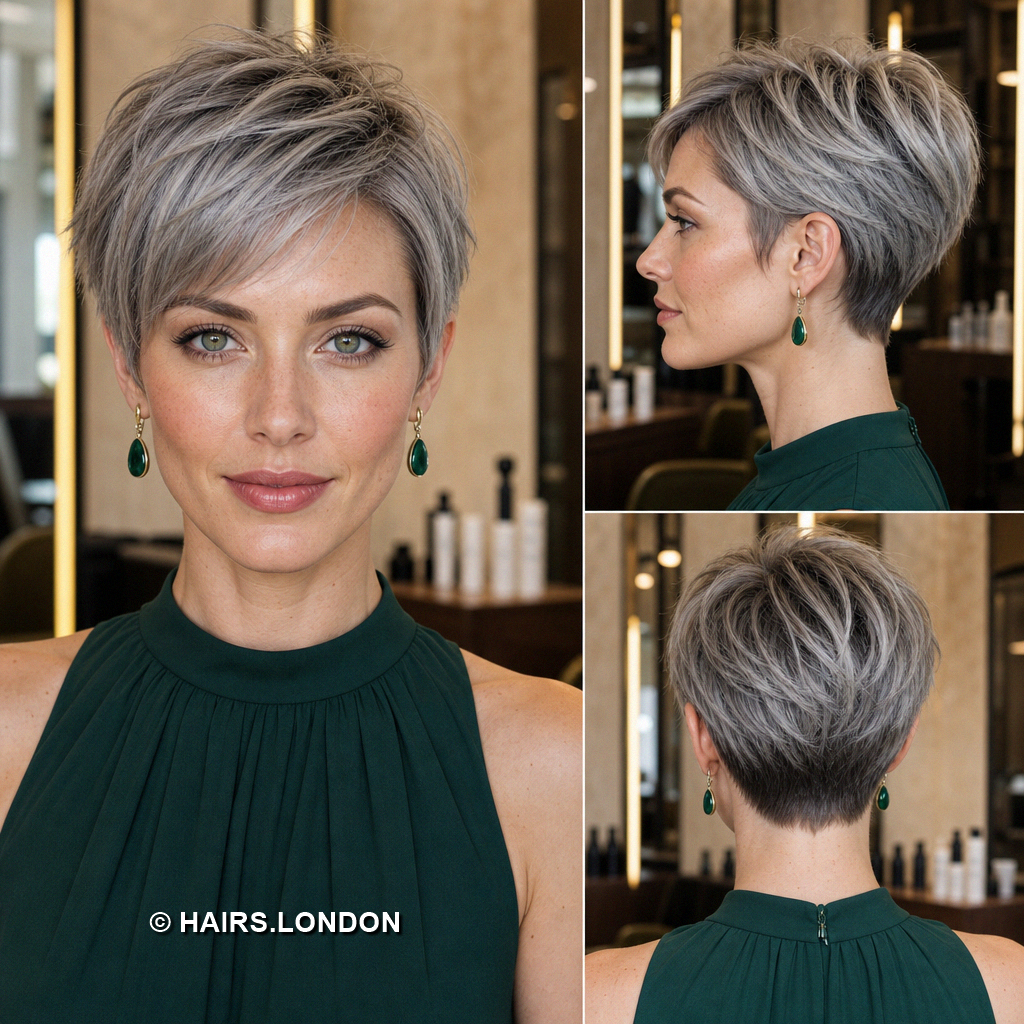
Pewter gray ribbons overlap across a draped side fringe above darker roots. The upper layers remain softly rounded, while the short ear area and tapered nape keep the silhouette compact. Ask for connected lengths that let the front fall diagonally without excessive separation. Straight or gently wavy hair can recreate this sweep using light brush tension and styling lotion. Establish the part while damp, guide the fringe sideways, and smooth only the ends. Discuss the amount of forehead coverage you want throughout the day. Refresh lighter strands selectively and avoid thinning the fringe so heavily that it loses comfortable coverage.
16. Silver Coiled Pixie with an Open Curly Front
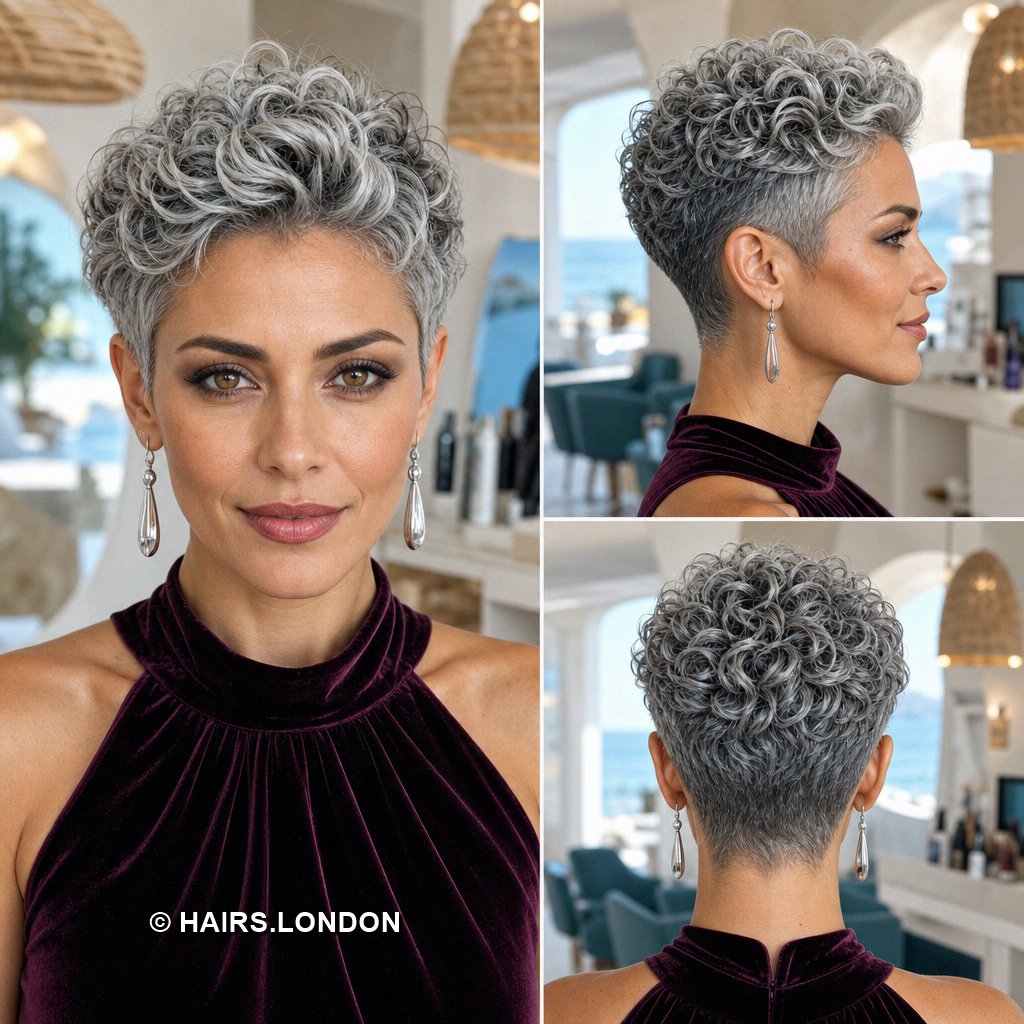
Silver coils build rounded volume above a closely shaped side area, with darker strands defining the curl pattern. The front is lifted rather than draped, and the nape narrows below the fuller curly crown. Request curl preserving length on top and evaluate shrinkage before setting the shortest perimeter. Dense curls may need selective shaping beneath the surface. Work light gel through wet hair, scrunch, and diffuse without repeatedly disturbing the curl groups. Separate only after drying if you want more fullness. Discuss how the silver will sit within existing natural gray or highlighted sections, and condition according to their needs.
17. Gray Draped Pixie with Fine Highlighted Front Layers
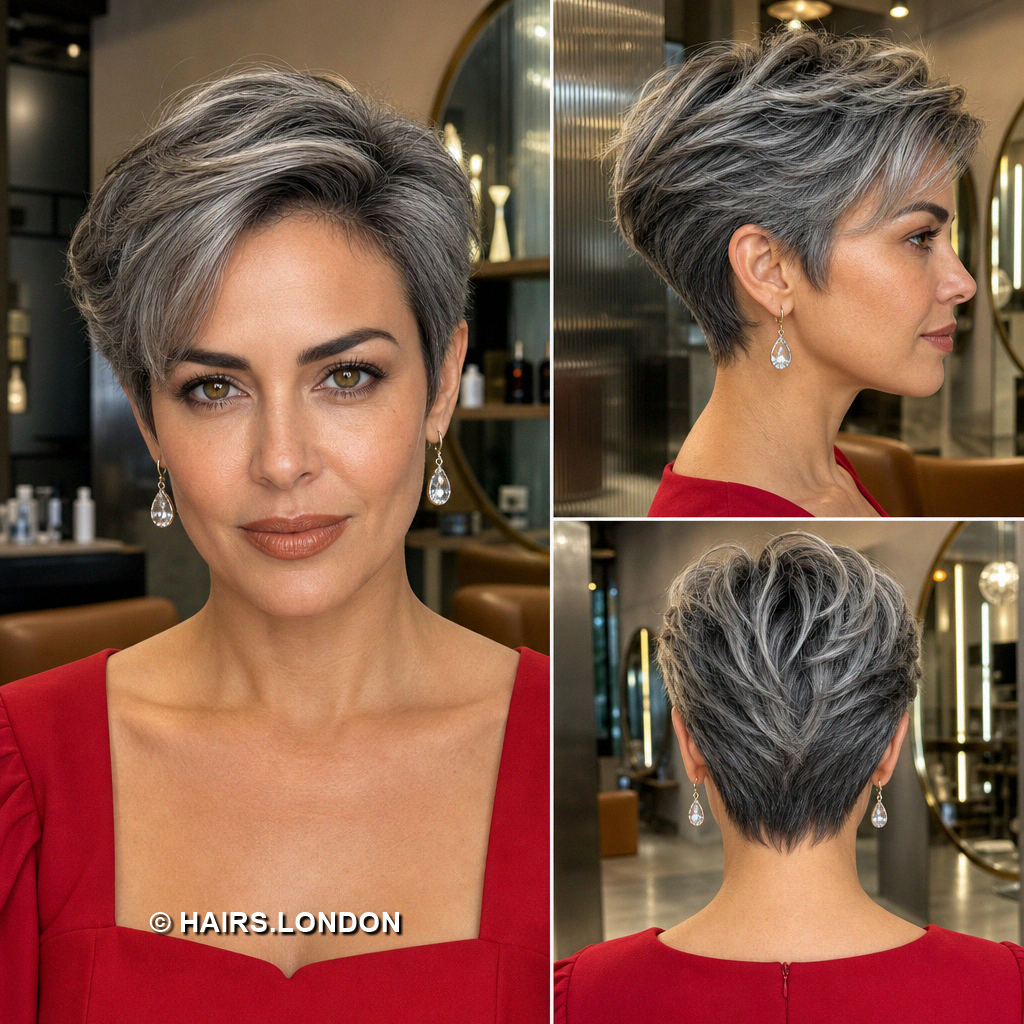
Fine highlighted layers drape across a gray fringe over deeper roots, with smooth overlapping sections through the crown. The front has generous diagonal length, while the sides and back remain closely fitted. Ask for enough surface weight to preserve the sweep and selective layering underneath where the hair feels bulky. Straight hair can show the fine ribbons clearly with controlled brush tension. Apply heat protectant, dry from roots to ends, and finish with a little smoothing cream. Discuss whether the fringe should reveal or cover the eyebrow. Maintain the lighter sections carefully so their softness remains compatible with regular styling.
18. Taupe Layered Pixie with Soft Silver Highlight Ribbons
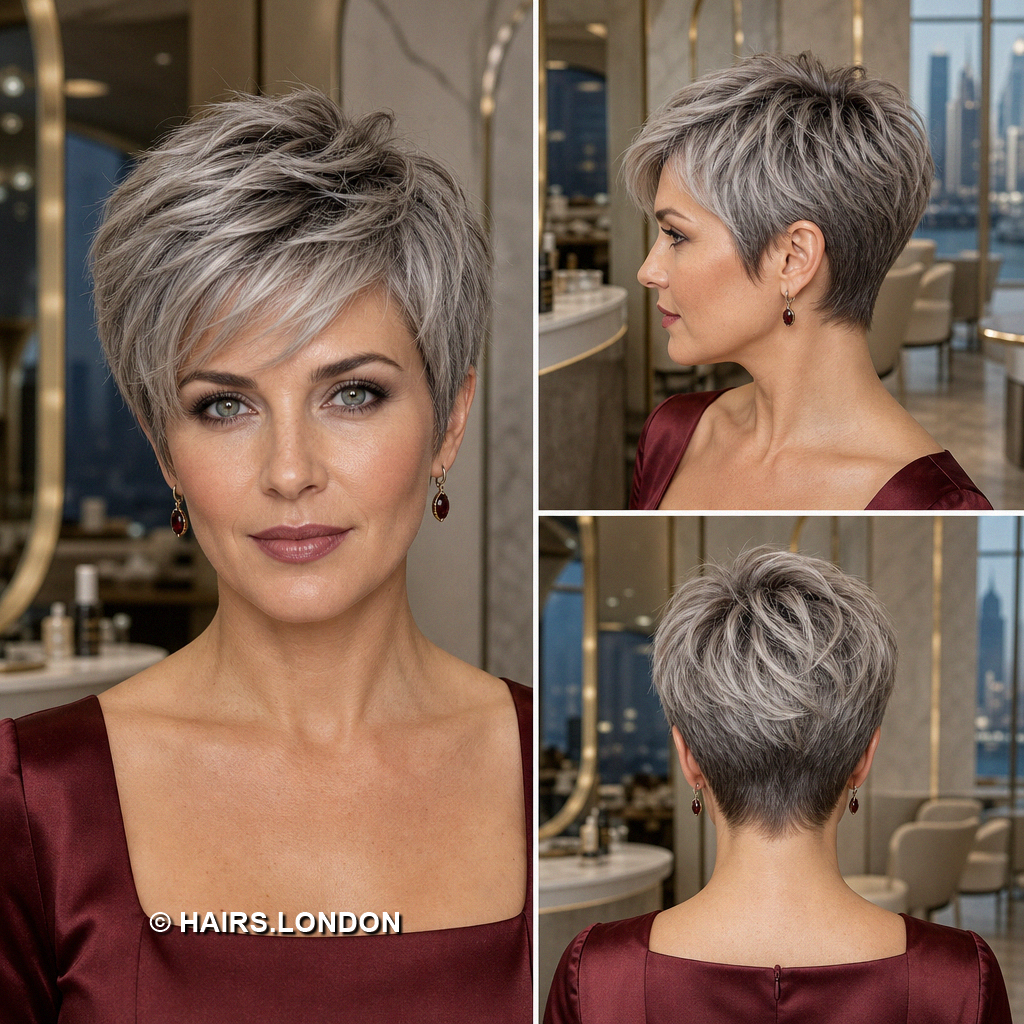
Soft silver ribbons blend through taupe gray layers, with a diagonal fringe and lightly rounded crown. The ear area is neatly shaped, and the back tapers below the overlapping upper sections. Request connected layering that keeps the fringe substantial enough to sweep smoothly. Fine or medium straight hair can style this finish with lightweight mousse and a small brush. Guide the front sideways, then loosen the ends using fingers once dry. Discuss whether you prefer the slightly warmer taupe base or a cooler silver result. Choose maintenance products for that actual tone rather than treating every gray shade the same.
19. Gray Piecey Pixie with a Soft Textured Fringe
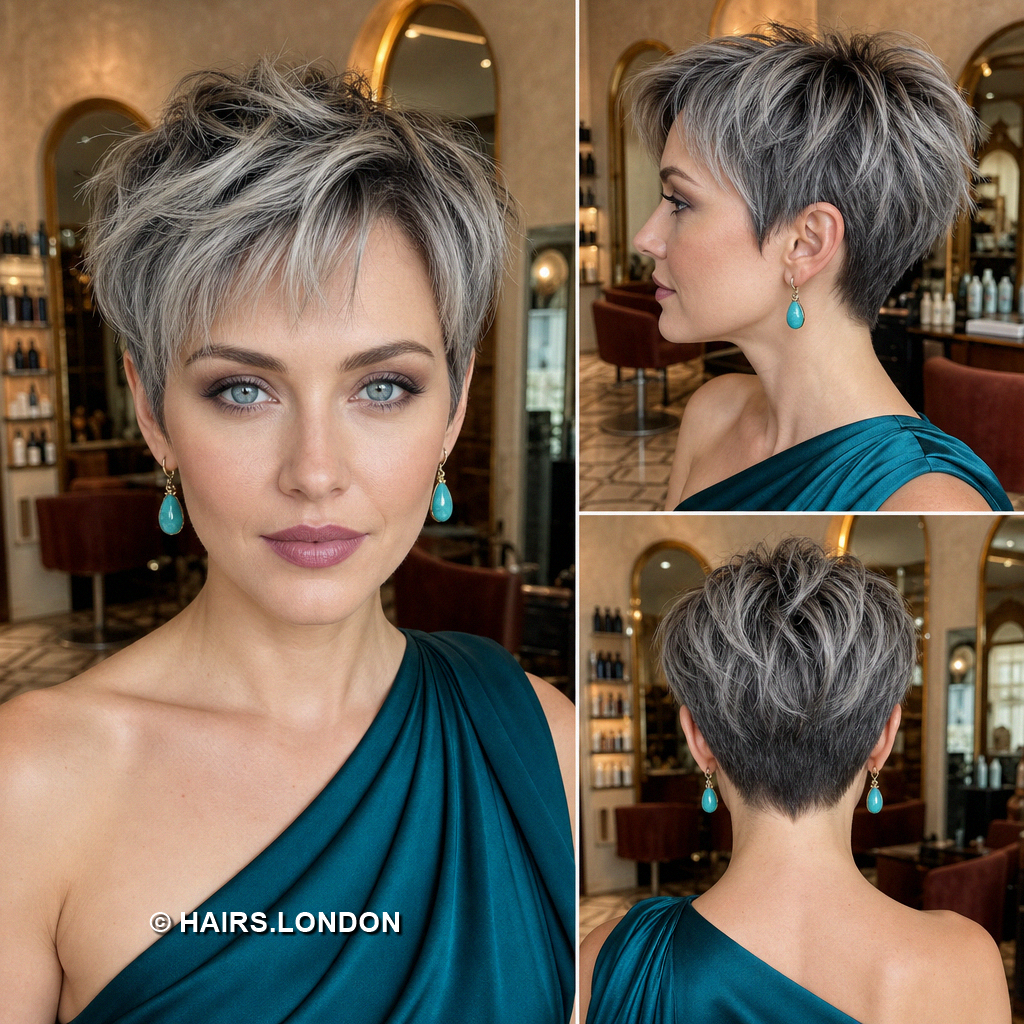
Gray pieces break into a soft textured fringe above darker roots, with short sides and a tapered back supporting the rounded crown. The front has irregular ends that leave parts of the forehead visible. Ask for restrained point cutting and enough top length to arrange the pieces without stiff spikes. Straight or lightly wavy hair can create this finish using light styling cream and finger drying. Set the fringe forward first, then guide selected strands sideways. Discuss how much crown fullness suits your growth pattern. Keep conditioning targeted to lighter ends and maintain the perimeter before the outline becomes bulky.
Choosing Silver Pixie Haircuts for Your Texture
Look first at the length needed to create the movement you want. Defined coils require enough hair to complete their curl pattern, while broad waves need room to bend. A smooth quiff needs a front section that can rise and curve backward. Diagonal fringes rely on connected lengths and a suitable root direction. Compare the amount of hair left around the ears and nape, particularly if you prefer a softer grow out. Ask your stylist to preserve useful density on fine hair and control excess weight selectively on denser hair.
Styling Curly Tops and Sweeping Fringes
Apply curl products through wet hair so the strands form consistent groups, then diffuse gently and wait until dry before separating them. For a smooth fringe, establish the part early and use light brush tension to guide the roots in the desired direction. A raised front benefits from mousse and a cooling period after drying. Add finishing cream or paste only where definition is needed. Start with small quantities, especially on a short crown that can flatten easily. Use heat protectant with heated tools and adjust the routine to your own texture.
Keeping Silver and Taupe Tones Balanced
Silver and taupe gray need different color decisions. A cooler silver may require toning after lightening, while a warmer taupe blend can intentionally retain beige depth. Natural gray also varies in tone and distribution, so the photograph cannot establish the process needed for your hair. Share previous coloring and lightening history before planning a refresh. Condition drier strands and cleanse according to your scalp needs. Ask your colorist which toning or depositing product suits the actual formula. Avoid automatically using strong violet products when the goal is to preserve subtle warmth.
Maintaining Short Sides and Longer Crowns
The longer top and shorter perimeter grow at different visual rates, which can change the balance of the haircut. A closely fitted nape may need attention before the fringe requires much shortening. Many compact pixies benefit from trims around every four to six weeks, although softer outlines may last longer. Ask whether a perimeter adjustment can help between full reshaping appointments. Keep conditioning where it is needed and remove styling buildup gently. Watch for a fringe that interrupts vision or crown layers that no longer lift comfortably rather than following a schedule alone.
Taking Complete References to the Salon
Show the entire collage and point to the exact curl size, fringe direction, crown fullness, and neckline you want. Explain how you normally dry your hair and whether you want the shape to work with minimal styling. For curls, discuss shrinkage and how the cut will settle without a blow dry. For color, explain whether your priority is blending natural gray, brightening selected pieces, or achieving pale silver. Ask about strand assessment, achievable lightness, likely fading, and upkeep costs. Agree on the shortest ear and nape lengths before the cutting begins.
Frequently Asked Questions
Which silver pixie is easiest to style with natural curls?
A shape that keeps enough crown length for your own curl pattern is a useful starting point. Ask for curl aware shaping, allow for shrinkage, and choose a short perimeter that balances the resulting volume.
Can straight hair recreate the curly references?
It may require additional styling or a separate texture service. Discuss the time, maintenance, and condition of your hair before making that choice. A swept or piecey reference may work more easily with naturally straight strands.
What helps a long side fringe stay in place?
Establish its root direction while damp and dry it across the forehead with gentle brush tension. Ask for a length that follows your natural part and remains clear of your eyes.
How do I add volume without heavy product?
Begin with a little root mousse and dry the crown against its usual direction. Let it cool in position, then use finishing product only on selected ends. Heavy oils near the scalp can reduce lift.
Does every silver color require bleaching?
No. Existing natural gray may provide some of the appearance, while colored pale silver often needs a light base. Your starting shade, previous dye, and hair condition determine the appropriate process.
What is a taupe gray blend?
It combines a muted gray appearance with beige or brown depth. It can look warmer than cool silver, so discuss the tone you want to retain before choosing toning products or a refresh formula.
Should I use a violet shampoo every wash?
Use it according to advice from your colorist and the product directions for your specific shade. It may not be needed at every wash, and too much toning can change the intended silver or taupe balance.
How often should the short sides be trimmed?
Closely shaped sides often need attention around every four to six weeks. Growth rate and your preferred outline determine the interval. A brief perimeter appointment may help when the longer top still sits well.
Can fine hair wear a longer silver fringe?
Yes, if enough density is retained through the front. Ask for controlled layering and avoid excessive thinning. Lightweight styling lotion can guide the sweep without making the strands appear overly separated.
How do I protect previously lightened silver ends?
Condition the affected lengths, reduce unnecessary heat, and use heat protectant when styling. Share the lightening history with your colorist so a refresh can avoid repeatedly processing fragile sections.
Can these pixies be worn with air drying?
Some natural curls, waves, and soft crops may settle with air drying and a light defining product. Smooth quiffs or precise diagonal fringes may need directional drying to resemble the reference more closely.
What should I ask if the crown looks bulky?
Ask your stylist to assess the internal weight, growth pattern, and relationship to the shorter sides. Selective shaping may help, but removing too much surface length can disrupt the movement you want to keep.
Conclusion
These silver pixie haircuts show how a short neckline can support very different crowns and fringes. Choose the curl pattern, sweep, or lifted front that fits your own texture before deciding how light or cool the color should appear. Natural gray blending, pale silver, and warmer taupe effects need individual plans rather than one toning routine. Complete reference views and clear conversations about length, styling time, and color history will help you maintain a balanced pixie between salon visits.