


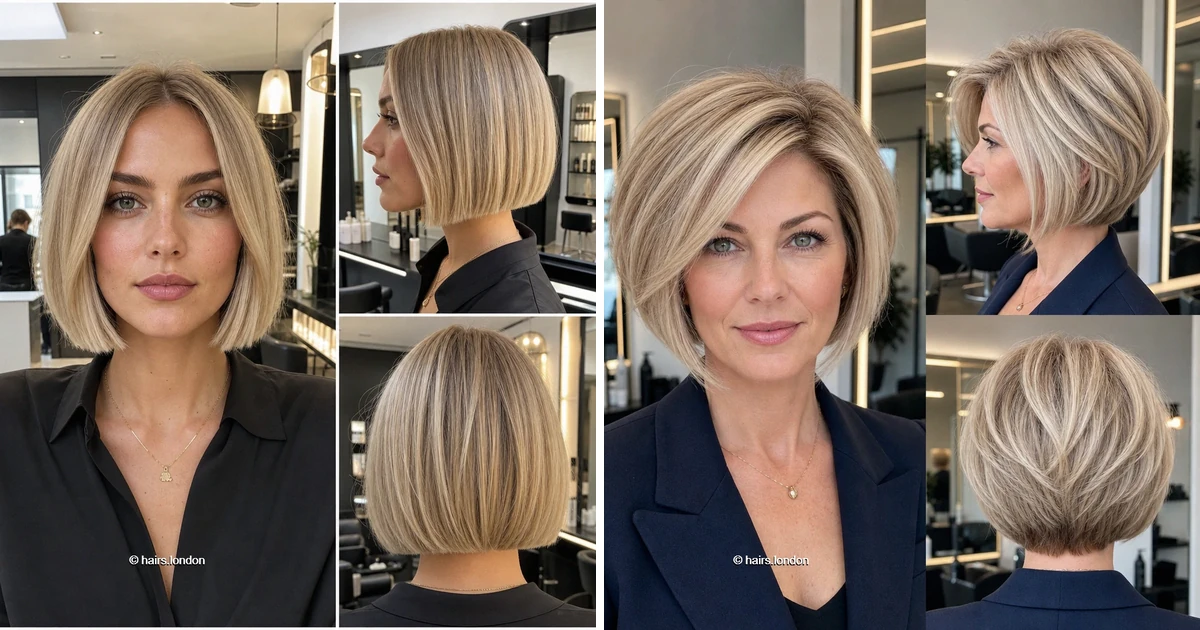
Blonde bob haircuts can look remarkably different at similar lengths. A crisp perimeter gives one cut its structure; soft layers, waves or a graduated back give another its movement. These 20 examples show how shape, parting and finish change the result, with multiple views to help you decide what to discuss at the salon.
1. Creamy Blonde Bob with Loose, Separated Waves
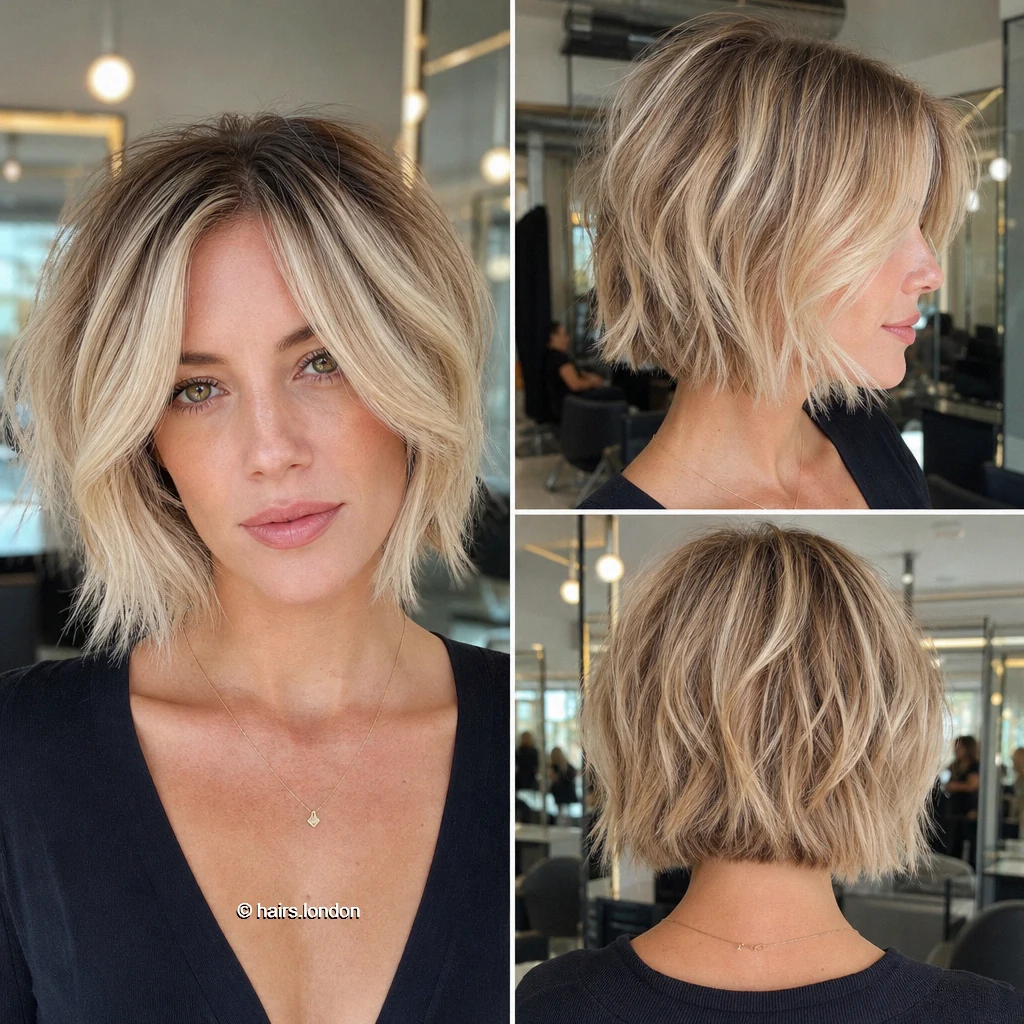
Dark roots soften this creamy blonde bob, whose airy, jaw-skimming sides frame a center part and softly separated fringe effect. The rear view shows a lightly broken neckline rather than a rigid, blunt edge, with loose bends throughout the shape. Ask for restrained internal texture if your hair is dense; finer strands may need more solidity through the perimeter instead. Scrunch a light mousse into damp lengths, then diffuse gently or bend selected pieces with a low heat setting only. Refresh the ends when they lose definition, and discuss root blending during color appointments to keep regrowth intentional and soft.
2. Rooted Blonde Bob with Lifted, Tousled Layers
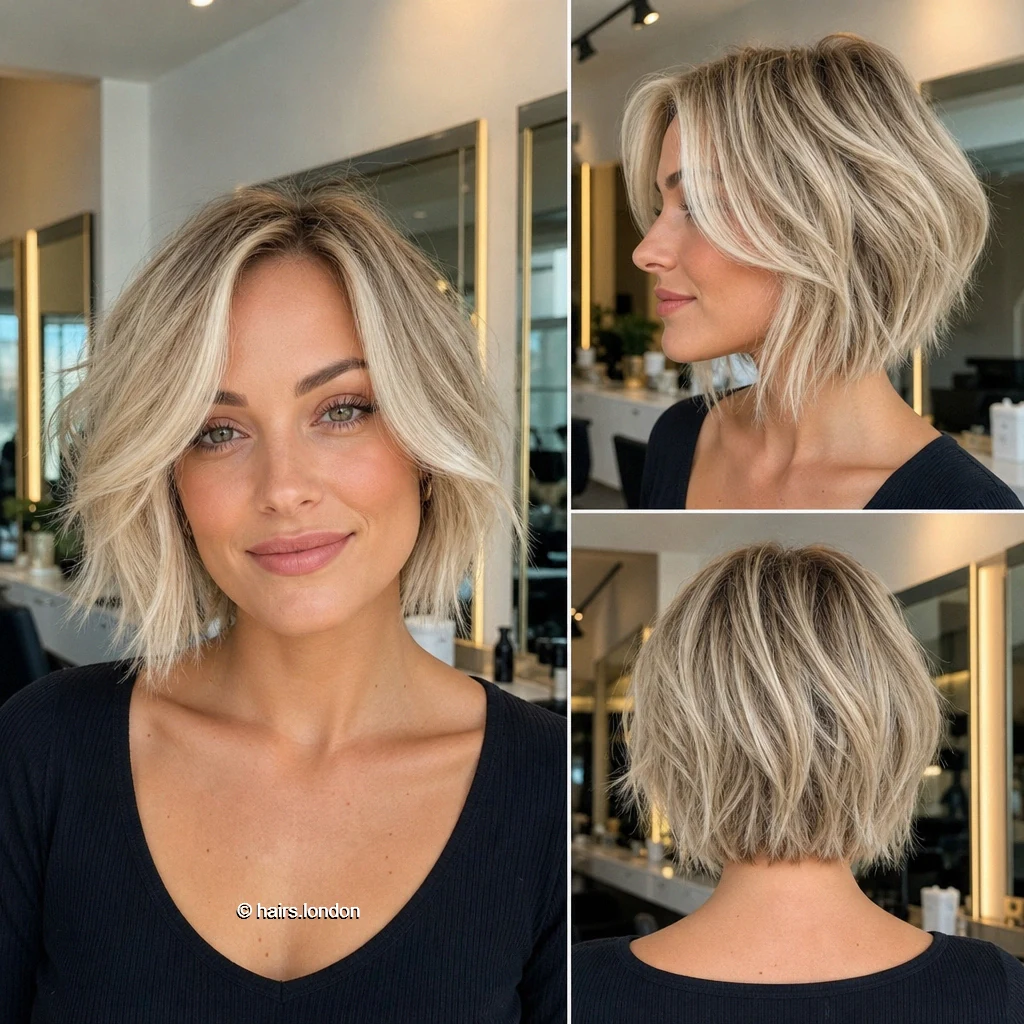
This rooted blonde bob sits around the jaw, with bright face-framing pieces, a loose center part and visibly tousled layers. Side and back views reveal a compact outline softened by separated ends, not a sharply stacked or heavily angled shape. If your hair has natural body, ask whether light layering will release movement without leaving the lower edge too thin. Work a small amount of foam through damp hair, lifting the roots while keeping the ends relaxed and touchable. Trim when the silhouette starts spreading outward, and ask your colorist how frequently the lighter front pieces need refreshing. Avoid overstyling.
3. Caramel-Blonde Textured Bob with Curtain Pieces
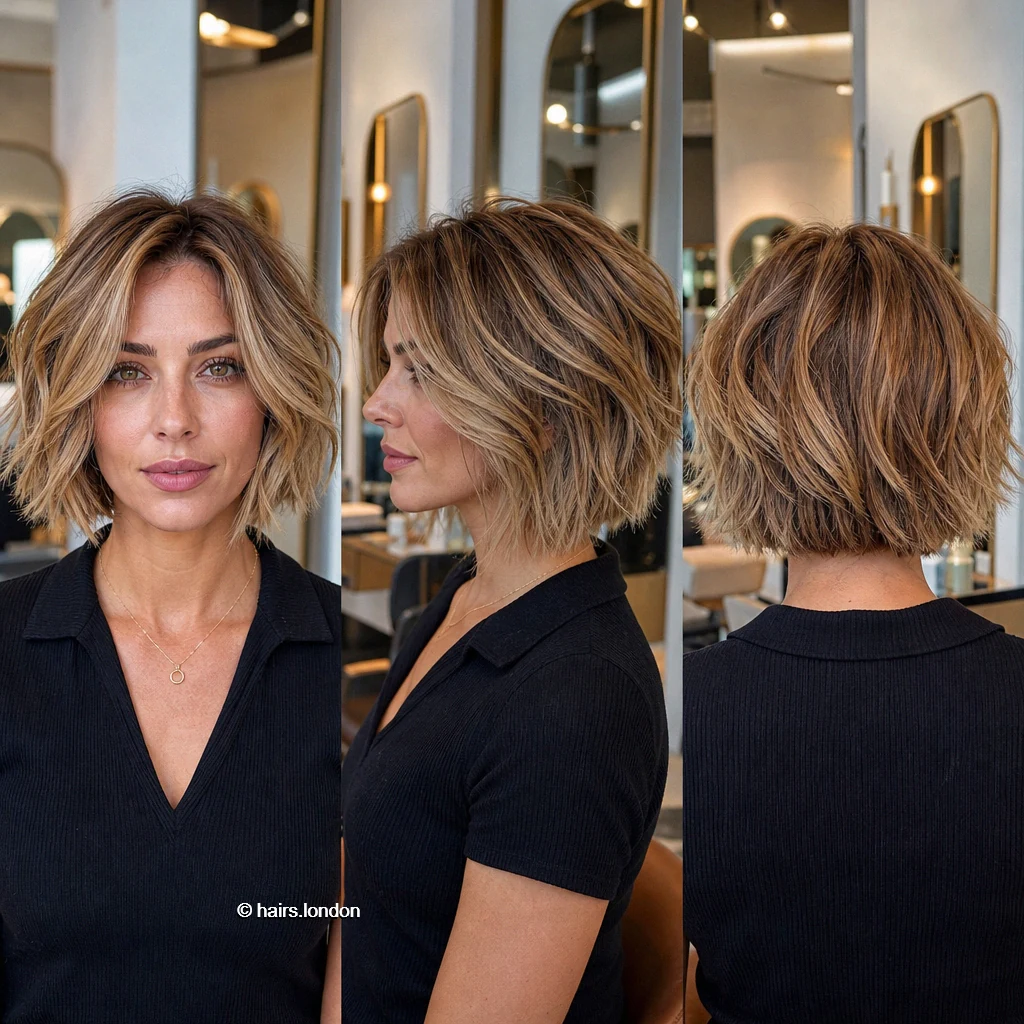
Caramel and blonde ribbons give this short bob depth, while long curtain pieces open around the center part. The sides skim the jaw, and the back has a choppy, neck-level perimeter beneath softly layered, wavy lengths. A stylist could preserve enough weight at the bottom if your hair is fine, or remove selective bulk if dense. Enhance existing bends with a lightweight cream, then separate only a few pieces after drying to avoid a fuzzy finish. Schedule a shape check when the ends lose their distinct outline, and discuss whether the brighter strands need toning. Avoid heavy oils near roots.
4. Sandy Blonde Bob with Soft, Piecey Ends
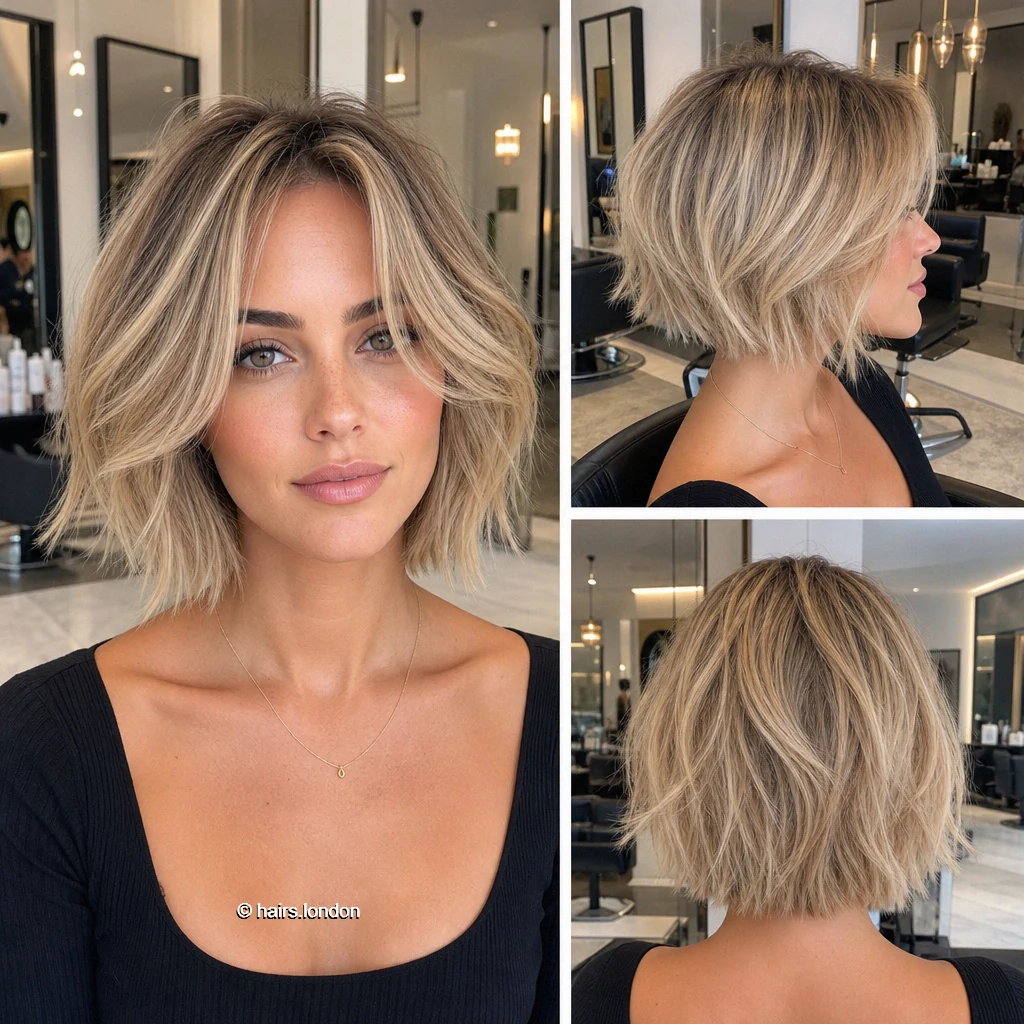
A sandy blonde blend and darker roots make the movement in this bob easy to see from every angle. Center-parted front sections sweep outward, while the sides reach the jaw and the back finishes above the collar. Its edge is deliberately soft rather than precision blunt, with visible separation through the outer layers and ends. Ask for texture that suits your density; too much removal could make fine ends look sparse or thick ends expand. Dry with a diffuser for gentle bends, then use minimal finishing product and trim once the neckline loses its shape. Avoid overly heavy finishing products.
5. Ash-Beige Wavy Bob with a Soft Side Sweep
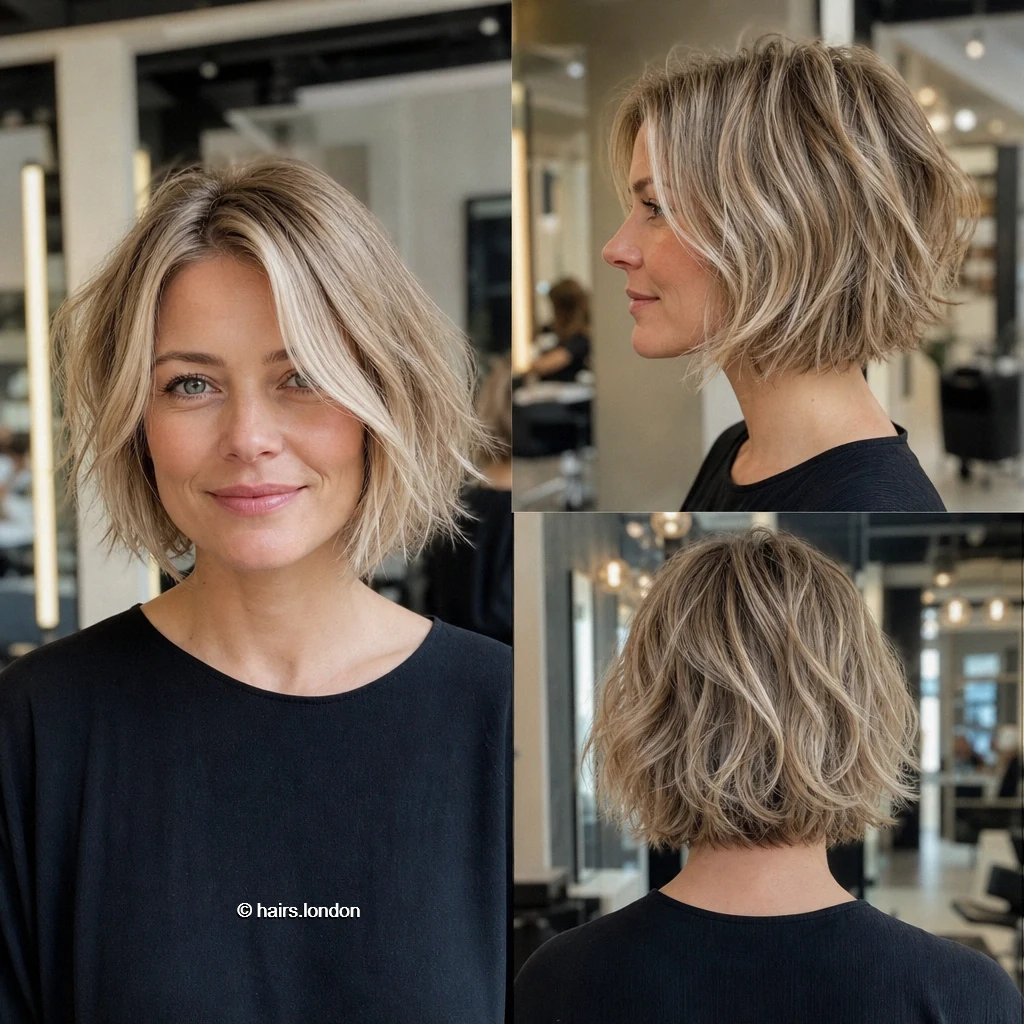
Cool beige and blonde strands brighten this jaw-length bob, and a side-swept front piece creates an easy, asymmetric finish. The back looks softly rounded with a textured lower edge; visible waves supply fullness without a severe graduation. If your natural texture bends, ask your stylist to judge the perimeter after drying so the sides remain balanced. Scrunch in a light wave product, diffuse on low airflow and smooth only the pieces that become unruly. Keep trims tied to how the jawline shape grows out, and review tonal upkeep if cooler blonde shades turn warm. Keep the front lightly swept aside.
6. Straight Blonde Bob with a Clean Jaw-Length Edge
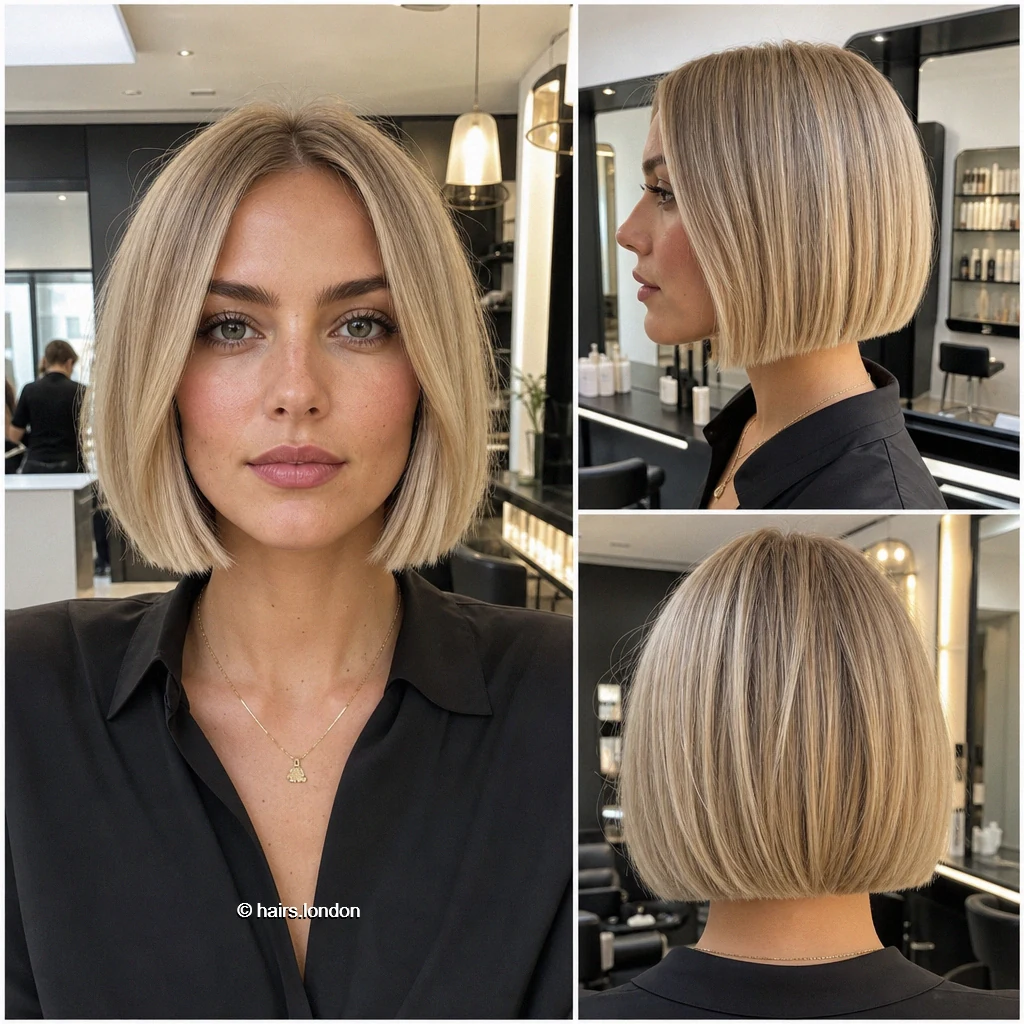
This straight blonde bob places its strongest line near the jaw, with a center part and uninterrupted front panels. The side and back views show a smooth, substantial perimeter with a slight inward curve rather than obvious surface layers. It could work well for hair that holds a sleek finish, provided the length accommodates your natural growth patterns. Apply heat protectant, blow-dry downward and pass a flat iron over stubborn sections without repeatedly pressing the ends. Book regular perimeter trims because uneven growth shows quickly here, and discuss toning whenever the pale blonde loses clarity. Avoid heavy, waxy finishing products.
7. Pale Blonde Bob with a Tucked Side
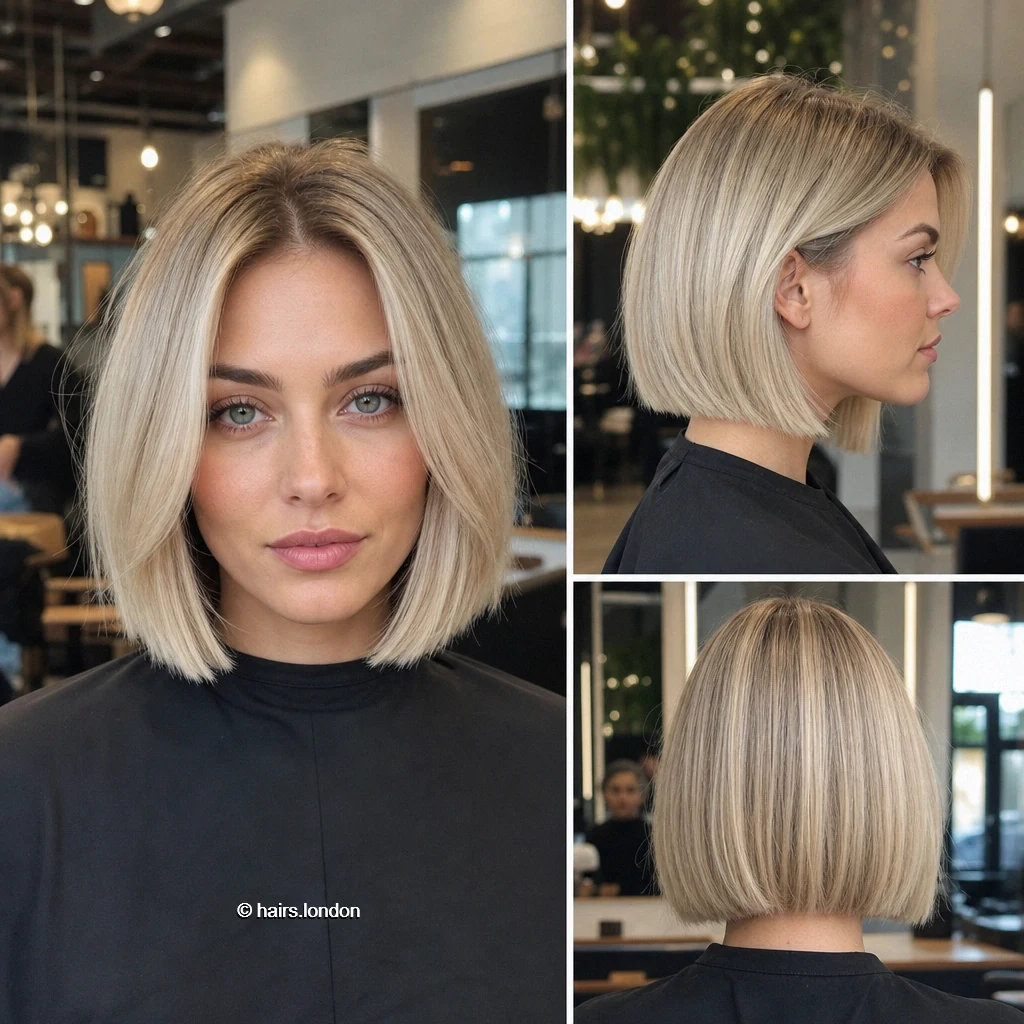
Pale blonde lengths fall just below the jaw in this center-parted bob, with one side tucked neatly behind the ear. The rear edge is fairly even and softly rounded, while fine separation at the ends keeps it from appearing rigid. For finer hair, ask about retaining a full perimeter; denser hair may benefit from subtle internal weight reduction instead. Blow-dry with a paddle brush for smoothness, then tuck one side without flattening the crown or coating it in product. Trim as the front starts resting awkwardly on the neck, and use color care suited to your blonde. Avoid heavy serums.
8. Honey-Blonde Bob with a Rounded Perimeter
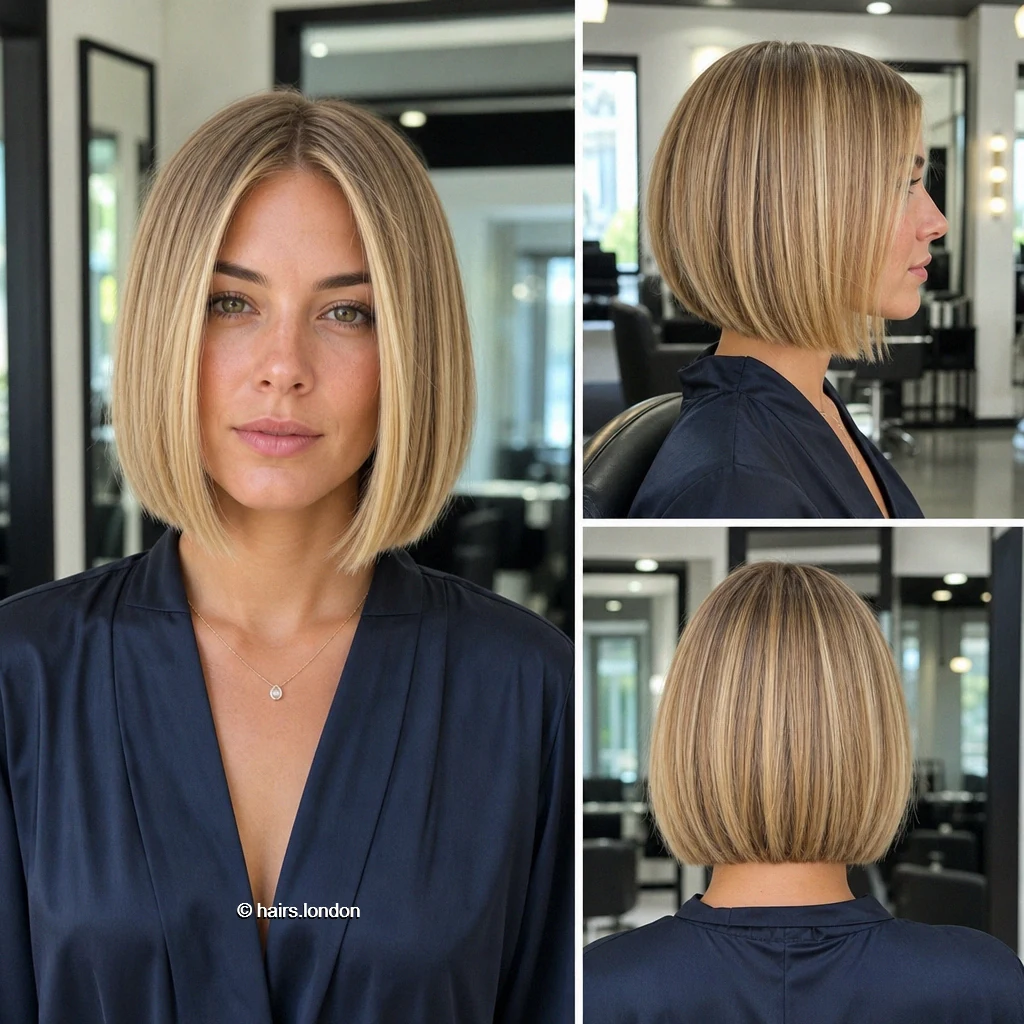
Honey-blonde and beige strands run through this smooth bob, which frames the face with long, center-parted front sections. Its jaw-level sides and neck-skimming back form a rounded outline, with only subtle movement visible across the surface. Ask your stylist to balance that lower weight against your density; excessive layering would change the clean, compact effect. Direct the dryer downward with a brush, then lightly bevel the ends inward if your hair needs help holding shape. Inspect the back between appointments, since growth can make its tidy edge look uneven before the front feels long. Keep styling products off the roots.
9. Neutral Blonde Bob with a Crisp, Smooth Finish
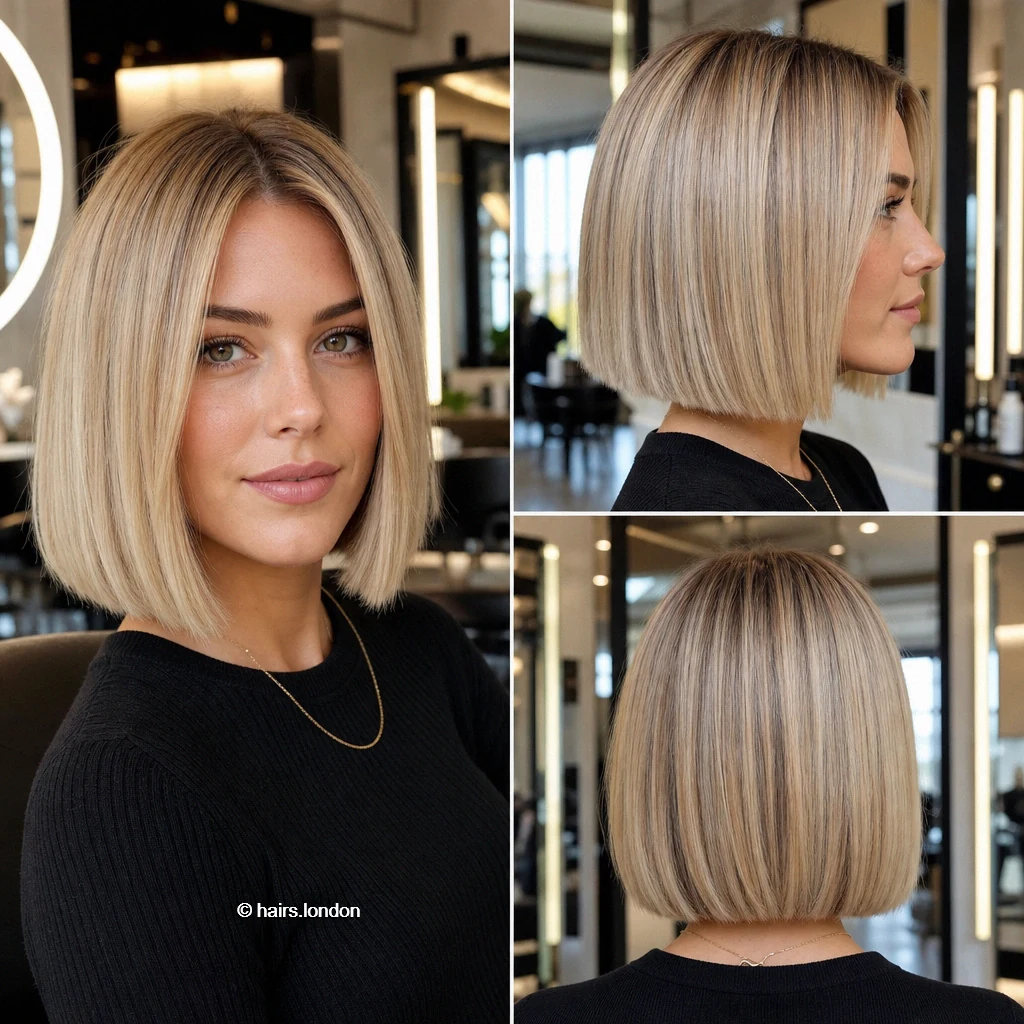
A neutral blonde finish with deeper roots gives this polished bob dimension without distracting from its strong lower edge. The front reaches around the jaw, and the back shows a straight, full perimeter sitting close to the neck. There is no visible heavy graduation; the shape relies more on an even line and controlled surface. If you prefer low daily styling, discuss whether your natural texture will stay this smooth or require heat. Use a nozzle for precise drying, protect the ends from hot tools and schedule trims before small irregularities become noticeable. Keep product light along the clean edge.
10. Beige-Blonde Bob with Curved Face Framing
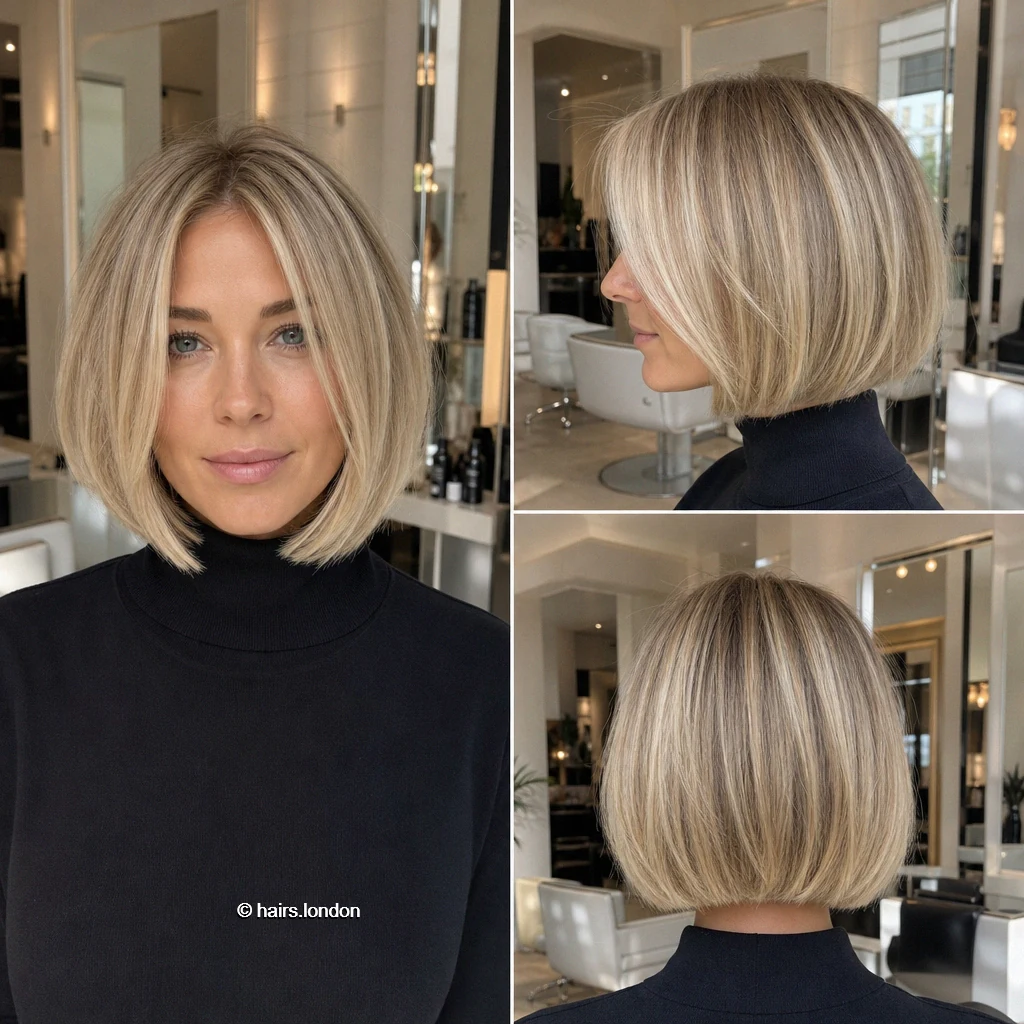
Soft beige-blonde panels curve toward the face in this center-parted bob, with darker roots adding quiet contrast. The sides skim the jaw, while the back remains compact and gently rounded instead of visibly stacked. Its light surface movement makes the outline softer than a sharply blunt cut, although the ends retain useful weight. Ask for face framing that respects your growth patterns, particularly if the front naturally flips away. Smooth with a round brush, using only a small bend at the ends, and refresh the perimeter when that balanced curve starts dropping. Avoid excessive oil that separates the front panels.


