


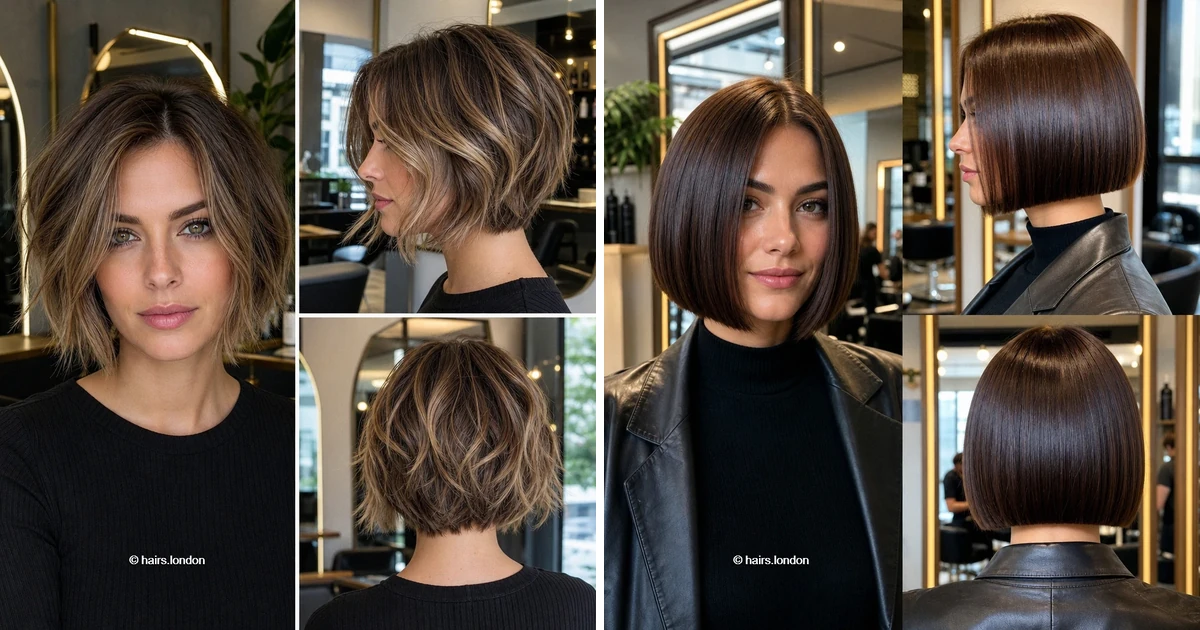
A short bob can feel entirely different depending on where its front pieces fall, how much weight sits at the back, and whether the perimeter is crisp or softly broken up. These 20 short bob haircuts show those differences from multiple views, making it easier to compare tousled layers, smooth jaw-length lines and visibly graduated shapes before your next salon visit.
1. Caramel Ribbon Textured Bob
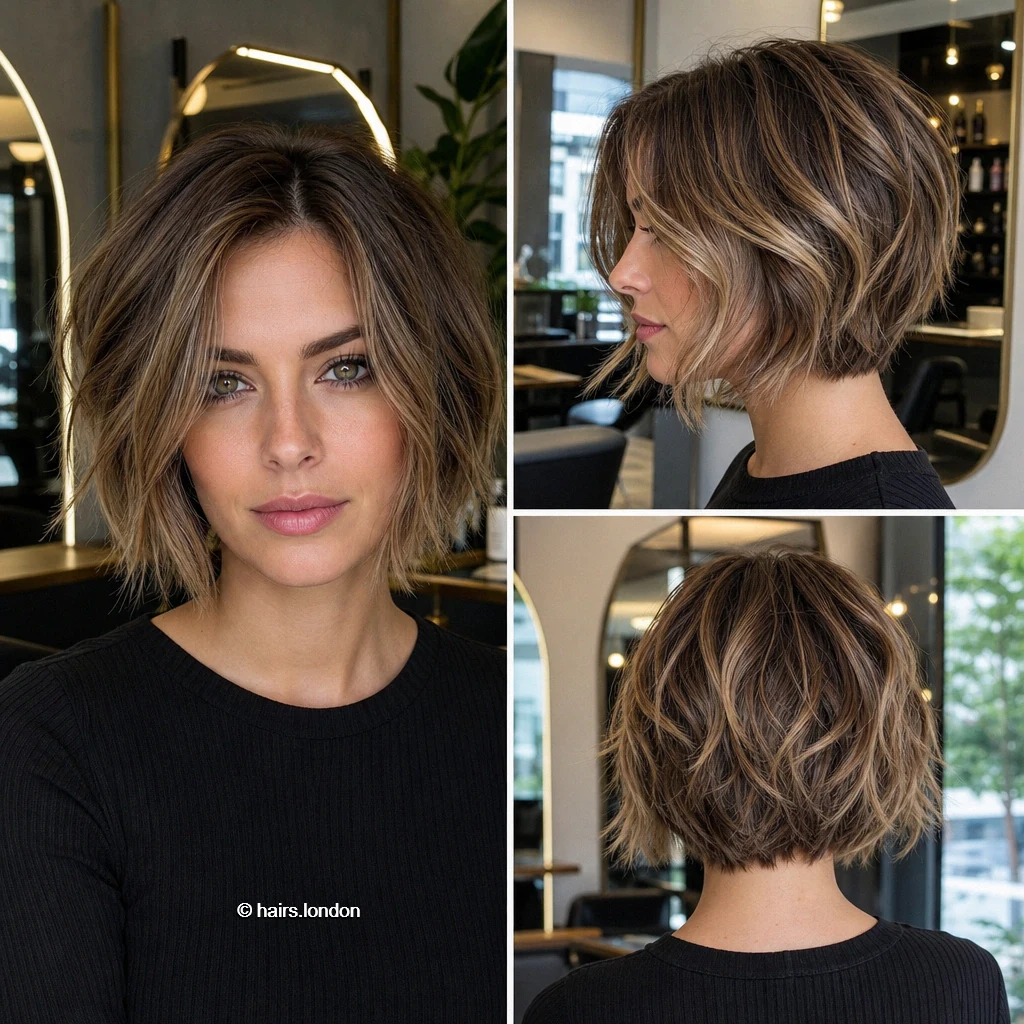
Warm brunette hair carries caramel ribbons through tousled waves everywhere. Front pieces skim the jaw while the back clears neck. An off center part lets loose sections frame the face. Viewed behind, the textured perimeter looks soft rather than blunt. Ask for restrained layering to keep the ends comfortably substantial. Scrunch damp hair with mousse to encourage its natural bends. Diffuse gently or air dry before separating a few strands. Fine density may need lighter product; thick hair needs balance. Refresh shape when neck growth starts obscuring its airy outline. Protect highlighted sections with conditioning care and sensible heat settings.
2. Chestnut Side-Swept Layered Bob
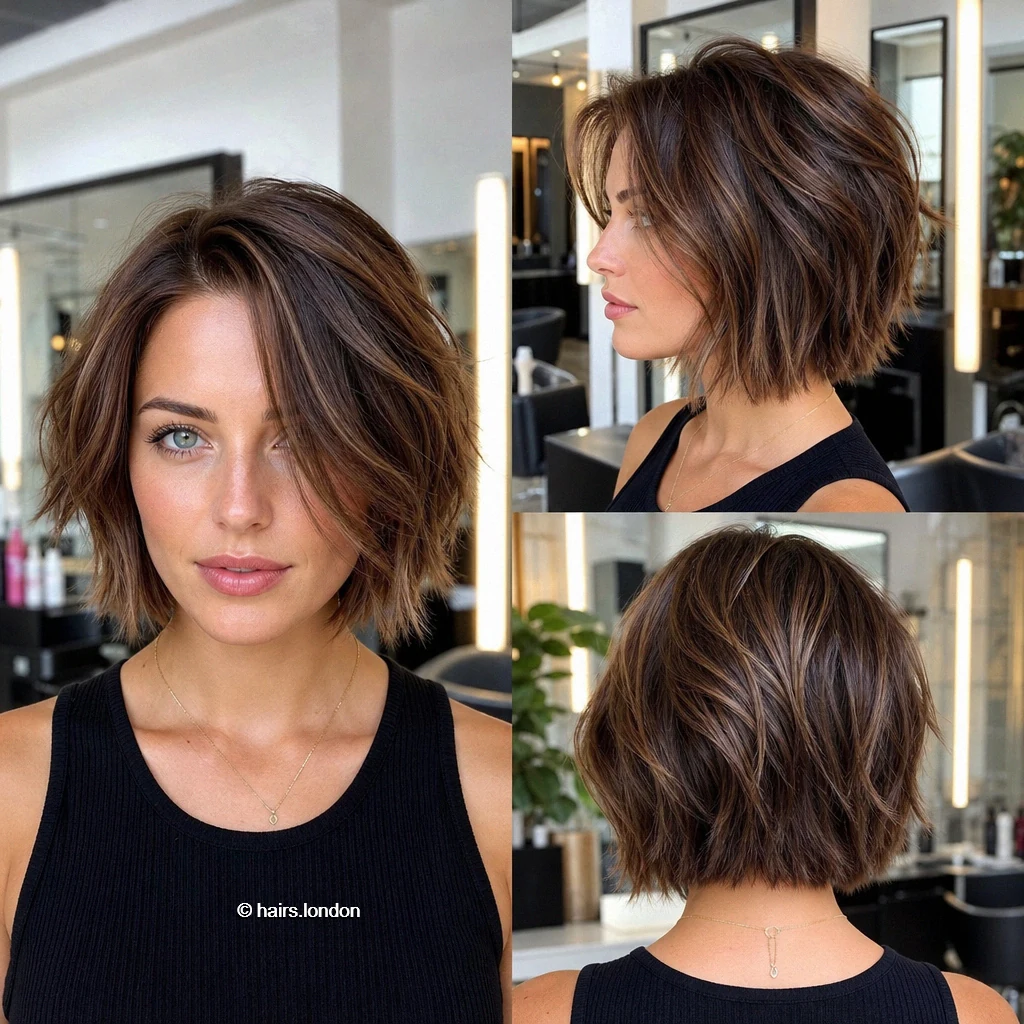
Chestnut brown hair shows subtle lighter threads across feathery layers. Side swept front pieces fall near the jawline without bangs. Behind, a neck grazing edge supports the fuller textured crown. Soft movement makes the outline less exact than blunt cuts. Ask your stylist to preserve weight beneath any added layers. Try a lightweight mist before loosely twisting damp front sections. Direct airflow upward at roots, then settle the ends downward. Natural wave could simplify styling, depending on density and growth. Trim when the back loses separation or sides become heavy. Keep lighter accents glossy with conditioner and moderate heat exposure.
3. Asymmetrical Bob With a Longer Sweeping Front
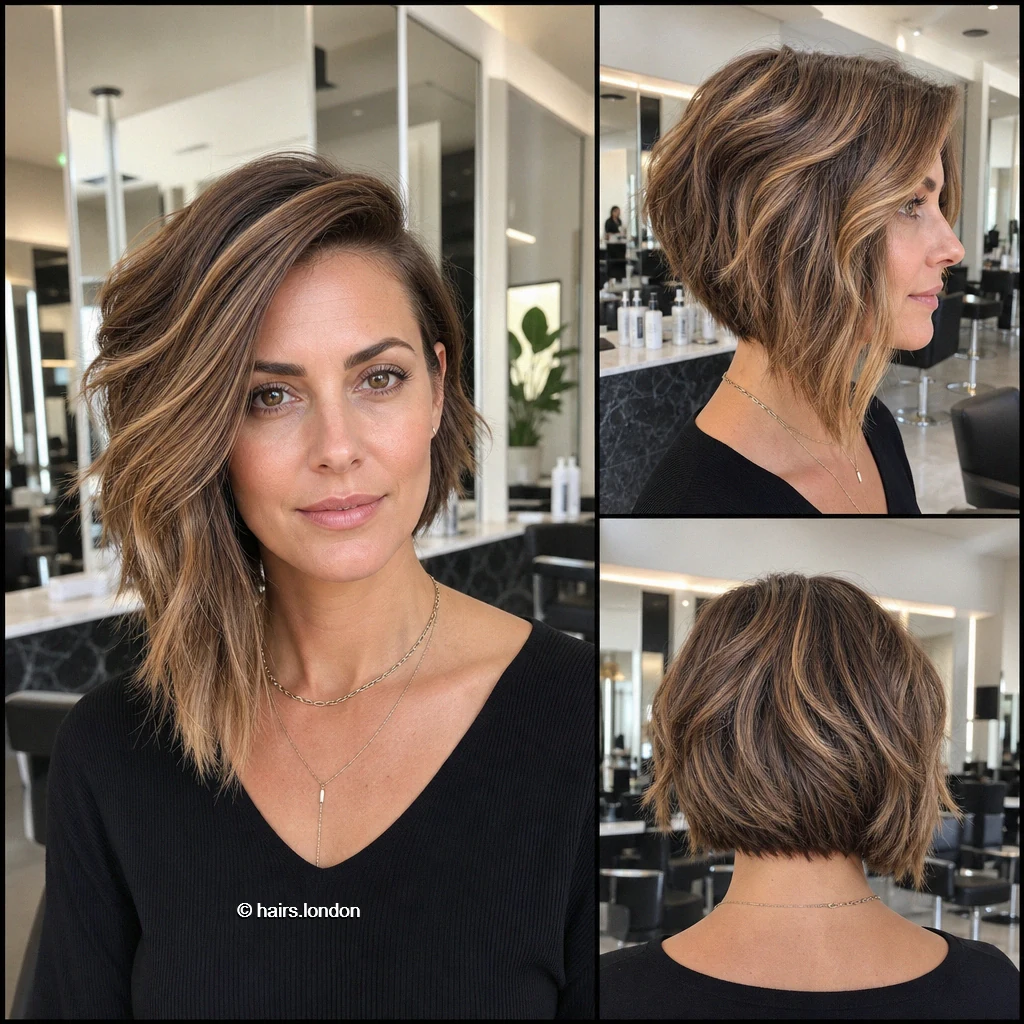
Light brown hair carries golden highlights through uneven lengths. One sweeping front section reaches toward the collarbone; others sit shorter. The visible back finishes around the upper neck with texture. A deep side part emphasizes the longer, face framing sweep. Ask whether that dramatic difference works with your preferred parting. Gentle bends can reveal layers without making the ends puffy. Smooth the longest piece with a brush for clearer contrast. This shape needs willingness to style its directional front section. Recheck the shorter perimeter before the imbalance loses its intention. Condition highlighted lengths, especially where the longest ends feel dry.
4. Honey Blonde Graduated Bob With a Long Fringe
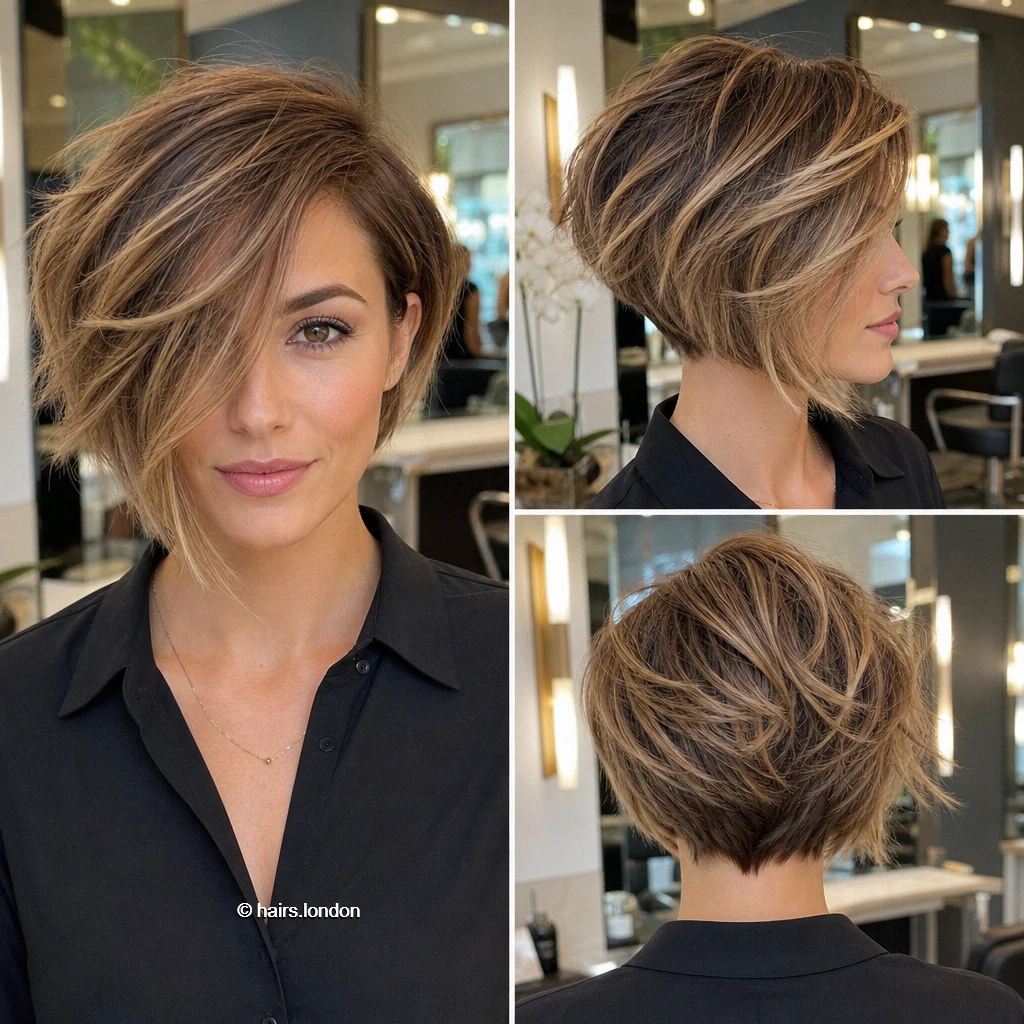
Honey blonde highlights streak through a full, side swept crown. The long fringe crosses one eye and tapers toward chin. In profile, shorter back lengths visibly build beneath fuller layers. That graduation leaves the nape exposed without flattening the silhouette. Ask for enough weight above the shorter area to move. Blow dry the fringe across its part using controlled airflow. Lift crown sections gently, then smooth their surfaces with fingers. Dense hair may need selective debulking; finer hair needs restraint. Schedule shaping when the nape becomes heavy or uneven again. Keep bright pieces conditioned and shielded from frequent hot styling.
5. Sleek Brunette Bob With a Graduated Back
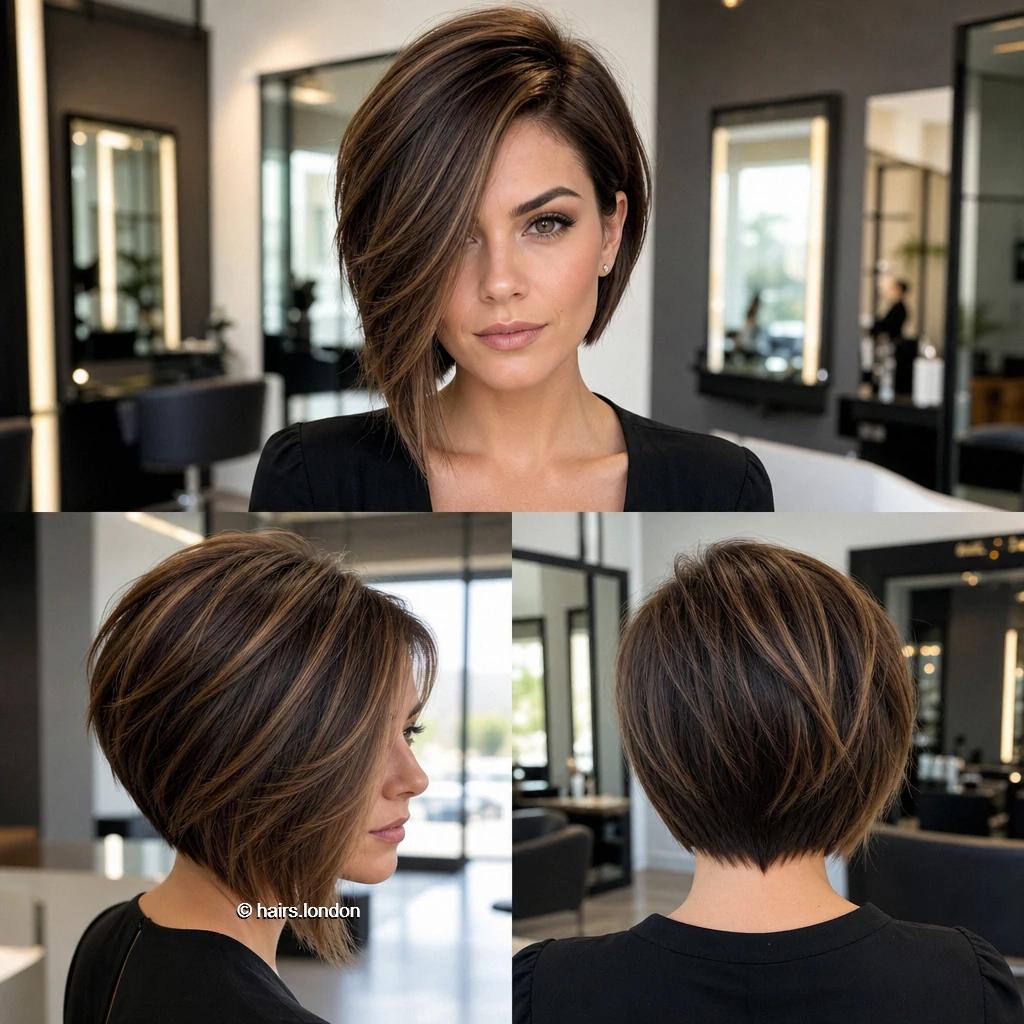
Deep brunette hair looks smooth with faint warm lighter strands. A side part sends one long front section below jaw. The side view shows volume curving into a shorter nape. Behind, the tapered edge sits very neatly above the neck. Ask for graduation that supports fullness without excessive crown bulk. Blow dry downward, directing the front toward its intended line. Finish with minimal serum to maintain shine without flattening roots. This outline works best when daily smoothing suits your routine. Trim the back before its compact taper starts looking grown. Discuss whether your natural growth pattern affects that nape finish.
6. Copper Brown Short Graduated Bob
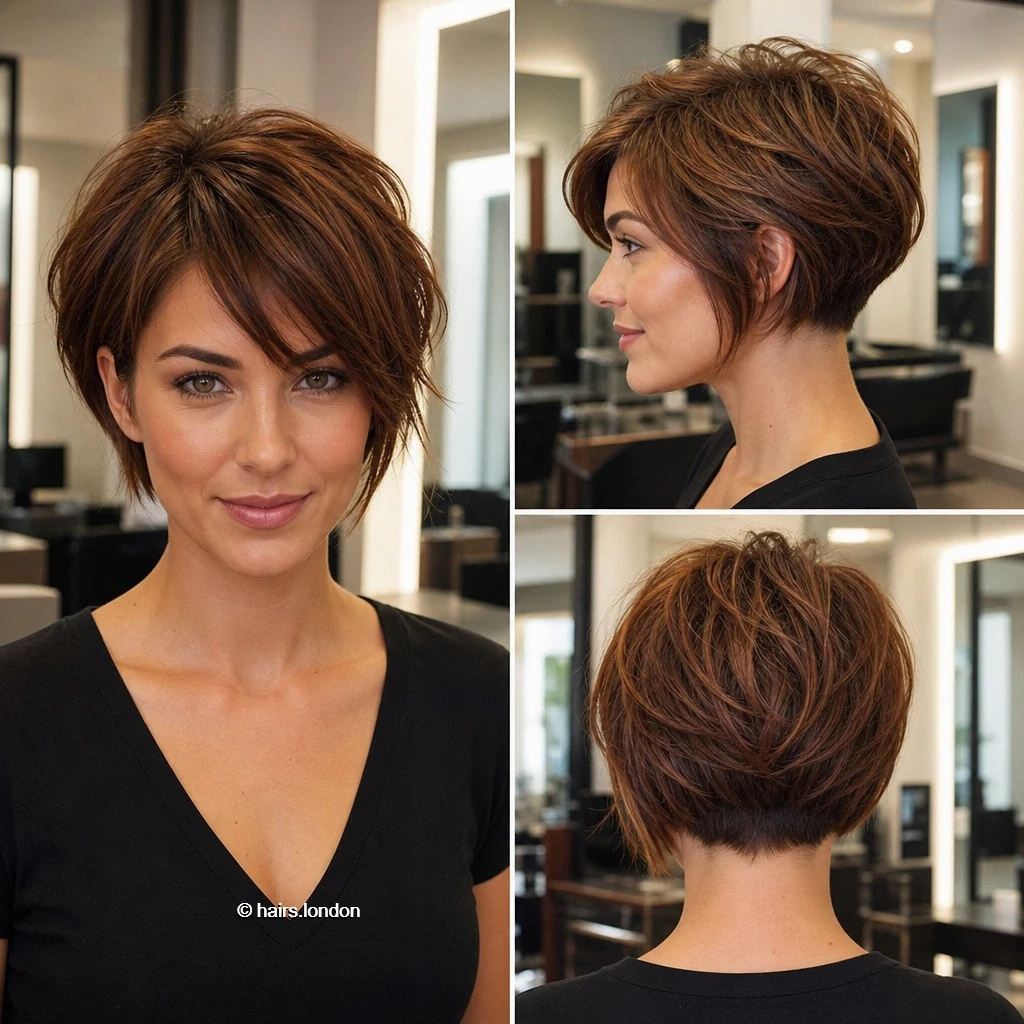
Copper brown tones warm this short bob with airy layers. A side swept fringe skims the forehead and meets cheek. The back narrows visibly beneath a rounded, textured upper shape. Its neck revealing finish makes the graduation especially easy to see. Ask how much layering your density can support without gaps. Use a small brush to guide the fringe sideways gently. Work lightweight paste through the crown for separated movement afterward. A strong nape growth pattern may need more frequent shaping. Refresh the shorter back as soon as its outline spreads. Color care can help preserve warmth between salon visits.
7. Feathered Brown Bob With a Tapered Nape
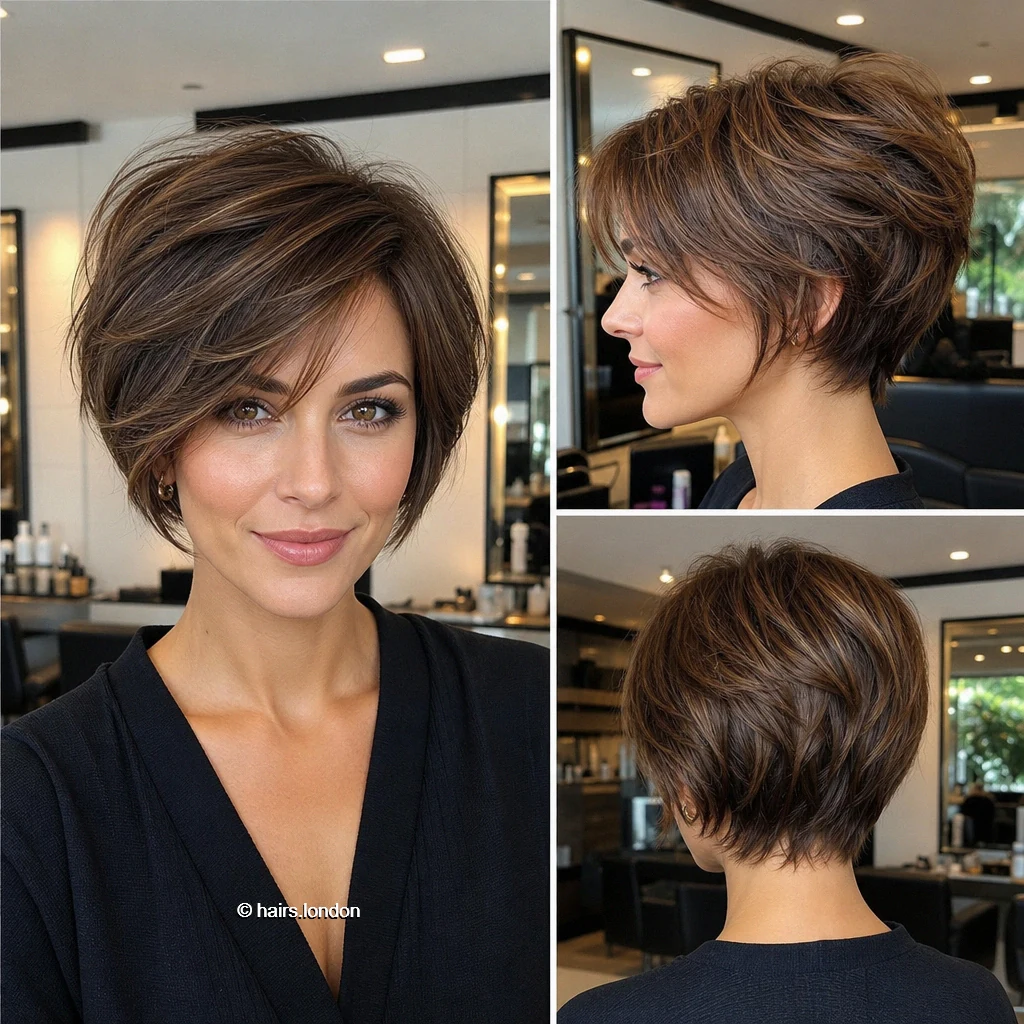
Medium brown hair has lighter threads across its swept layers. The long side fringe crosses the forehead without forming bangs. From behind, feathered lengths narrow toward a short exposed nape. The side view shows lift above that closely shaped area. Request soft separation while keeping enough hair for crown coverage. Brush the fringe forward first, then redirect it across gently. A little texture cream can define layers without stiffening them. Consider crown growth patterns before choosing this much controlled lift. Maintain the nape when its tapered line loses visible definition. Lighter strands benefit from conditioning and protection during frequent blowouts.
8. Smooth Brown Bob With a Rounded Perimeter
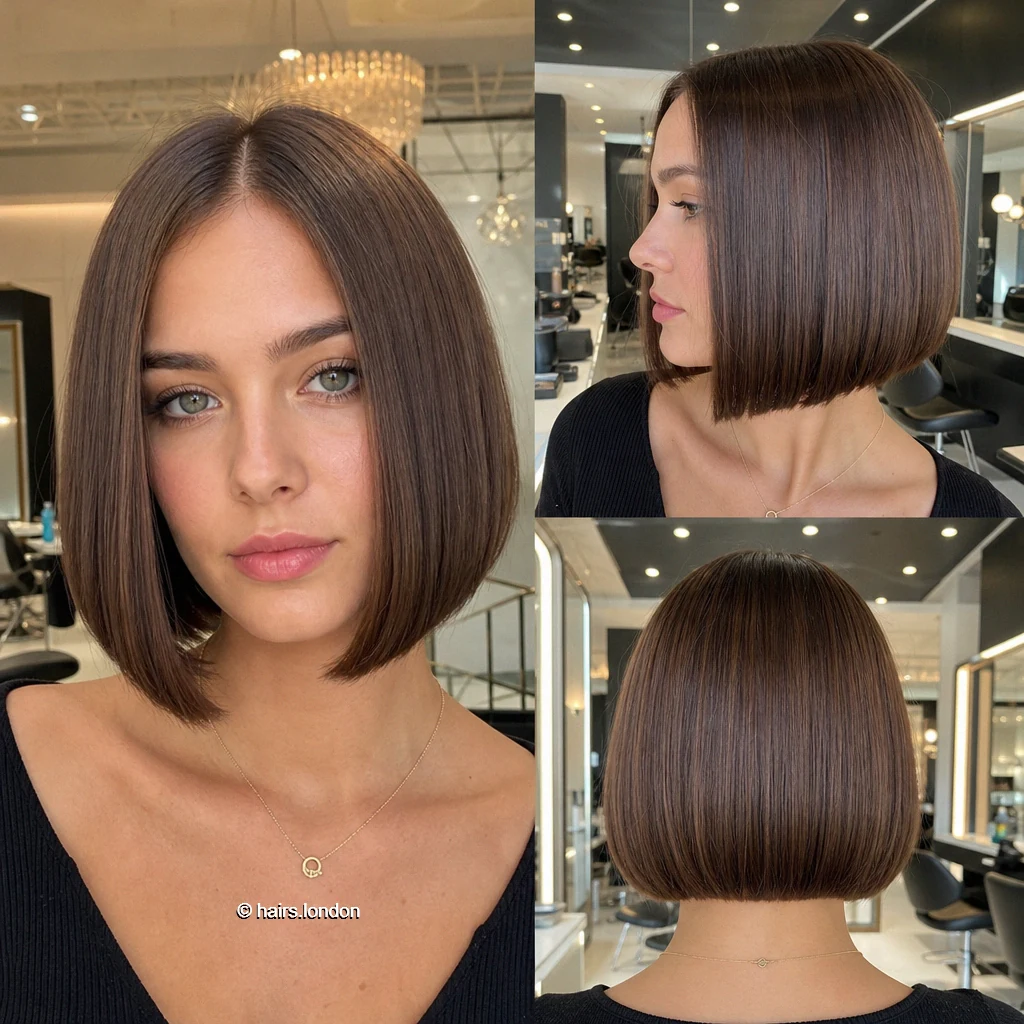
Cool brown hair falls sleekly from a center part. Both front sides reach just below the jaw and curve inward. The back forms an even, rounded line above the neck. Little visible layering interrupts the smooth surface or solid perimeter. Ask whether your density will hold this compact bob shape. Blow dry downward with a brush, polishing only the ends. Fine hair may prefer less serum to keep natural movement. If your hair waves, expect additional smoothing for this finish. Trim when the back line begins to look uneven or heavy. Use heat protection whenever recreating the glossy, straight surface.
9. Chocolate A-Line Bob With a Rounded Back
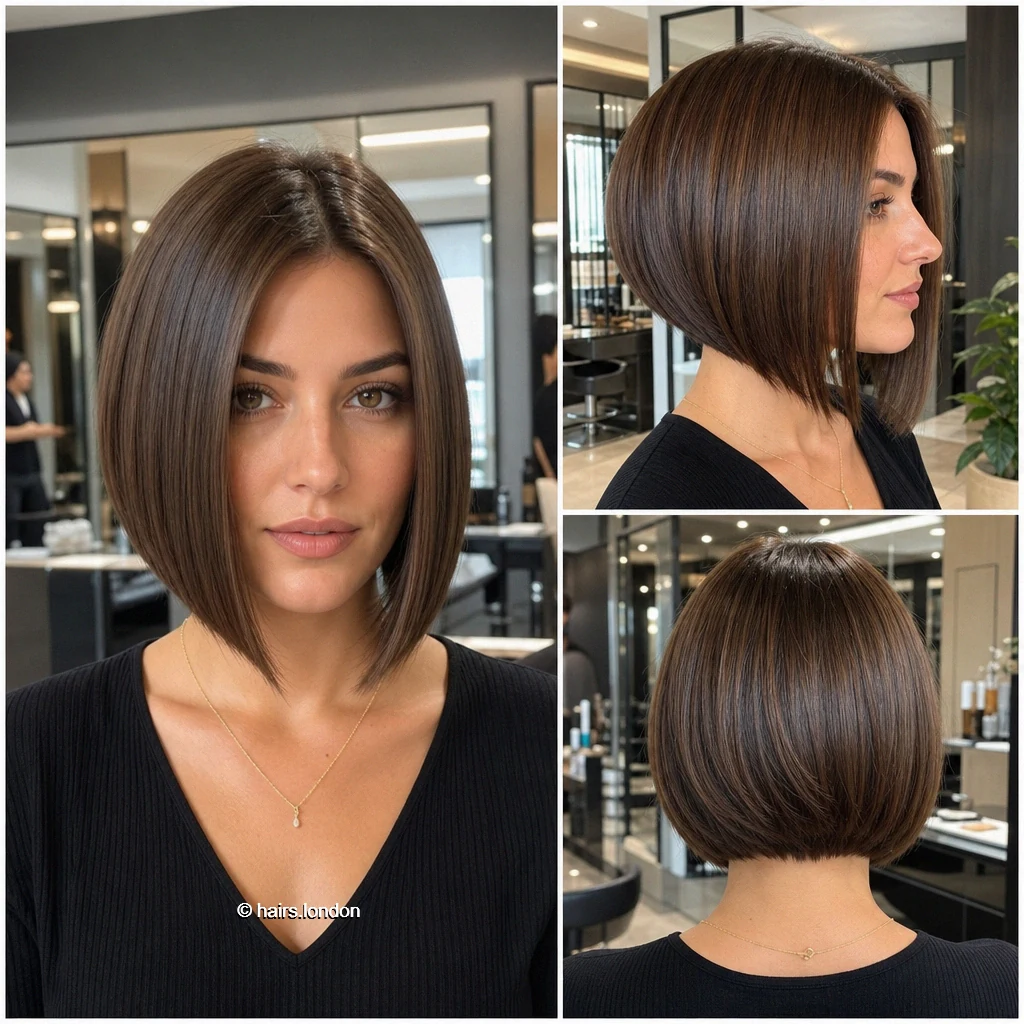
Chocolate brown hair looks polished around a near center part. Longer front points reach below the jaw, extending beyond back. The side view clearly shows that subtle frontward length increase. Behind, the outline stays rounded and compact at the neck. Ask for an A-line perimeter without automatically adding stacked layers. Smooth each side downward so the longer points remain distinct. Avoid heavy oils that make this controlled shape appear flat. Straight styling is easier when your natural texture cooperates willingly. Maintain front points and back edge before their angle disappears. Discuss your preferred part since shifting it changes perceived symmetry.
10. Glossy Chestnut Blunt Bob
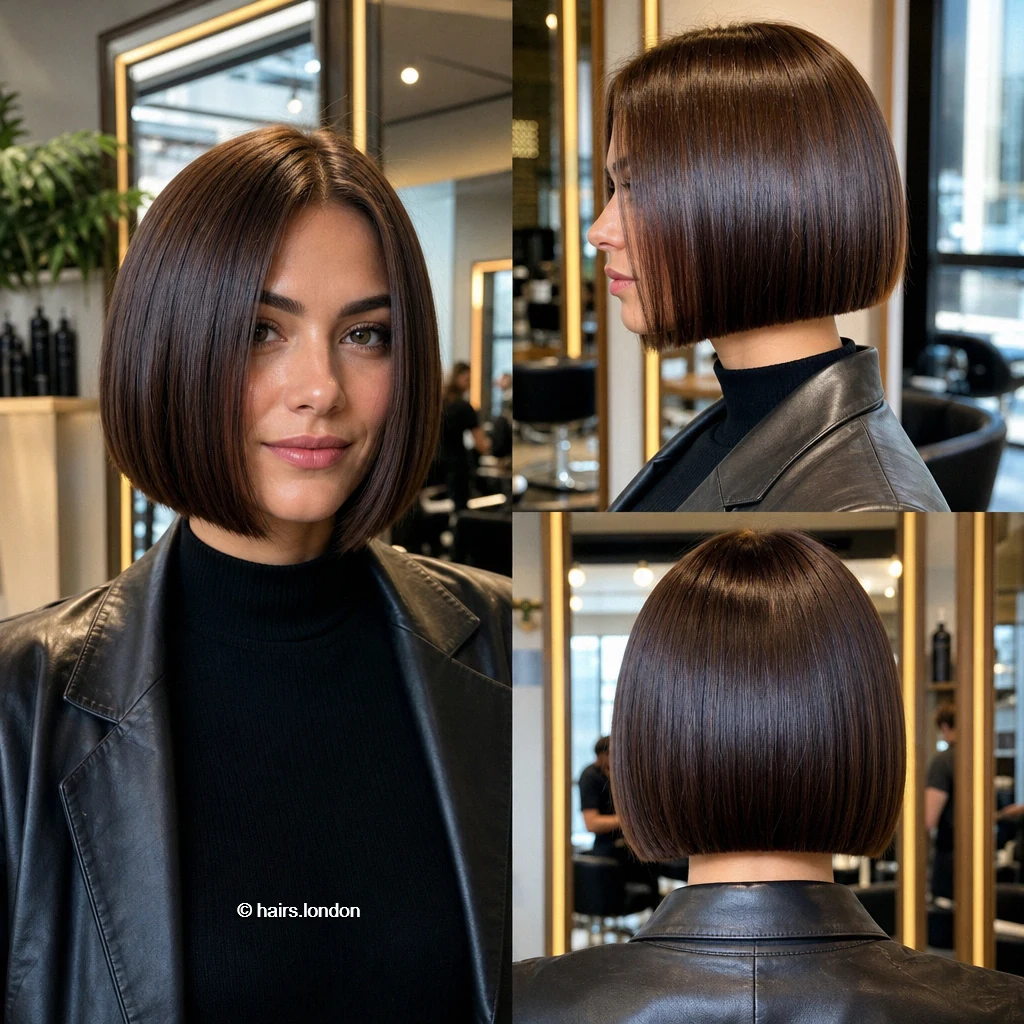
Glossy chestnut hair sits around the jaw with minimal layering. A center part divides the smooth sides into balanced panels. The back has a strong, level edge above neck. Its solid perimeter gives this bob a distinctly blunt impression. Ask your stylist to check the line while hair falls. Brush downward during drying, then refine bends only where needed. Thick hair may require internal adjustment without visibly thinning ends. Fine hair can keep more fullness when the edge stays solid. Plan regular trims because small irregularities show on this finish. Protect the shine with gentle washing and considered heat use.


