

11. Soft Blonde Lob with Loose, Flipped Ends
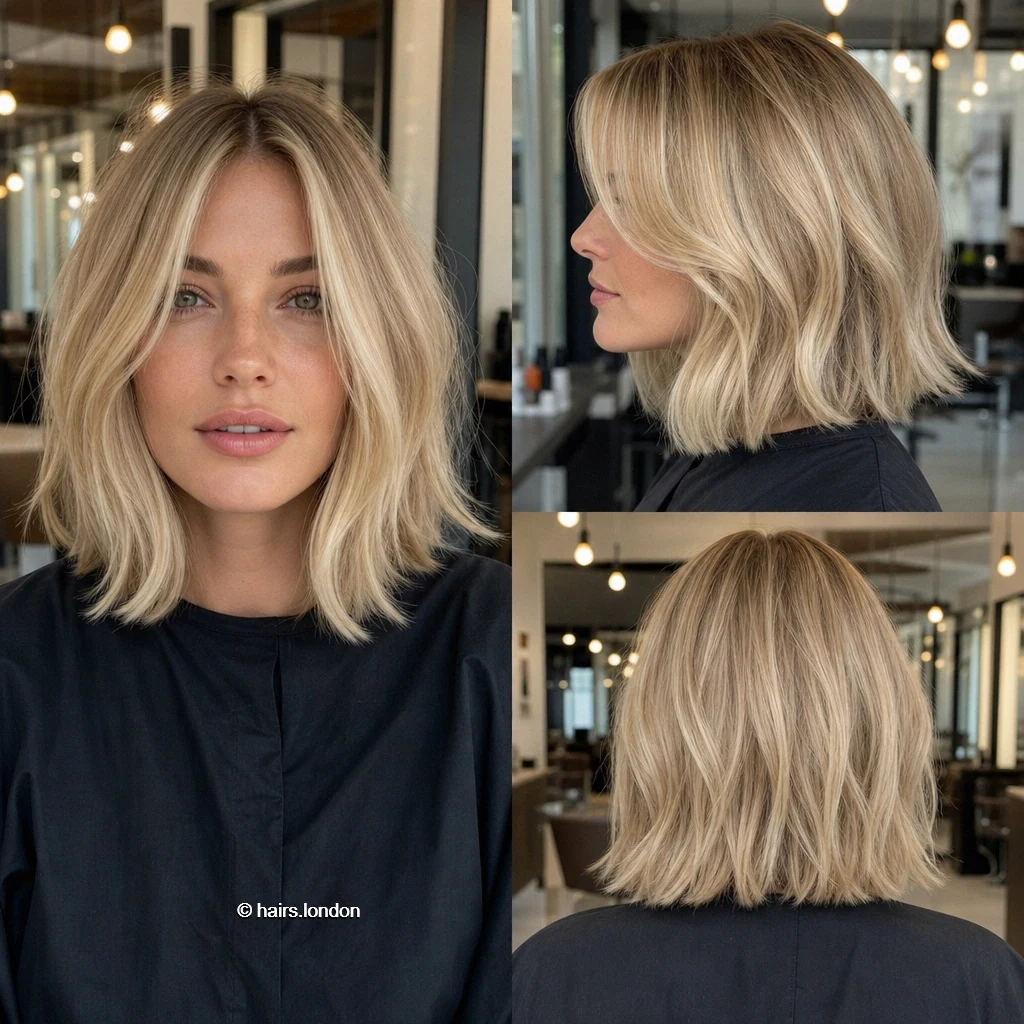
This longer blonde bob falls toward the shoulders, with a center part, relaxed face framing and softly flipped ends. The back remains similarly long and shows gentle separation rather than a compact jaw-length line or pronounced graduation. It offers more room for waves if your hair needs length to form a bend or resist excess volume. Apply a lightweight styling cream, dry the roots first and turn a few ends outward for movement. Have the lower edge dusted when it becomes stringy, and discuss root maintenance separately from any brightening through the lengths. Keep the flipped ends loose, not stiff.
12. Ash-Blonde Layered Bob with Sweeping Front Sections
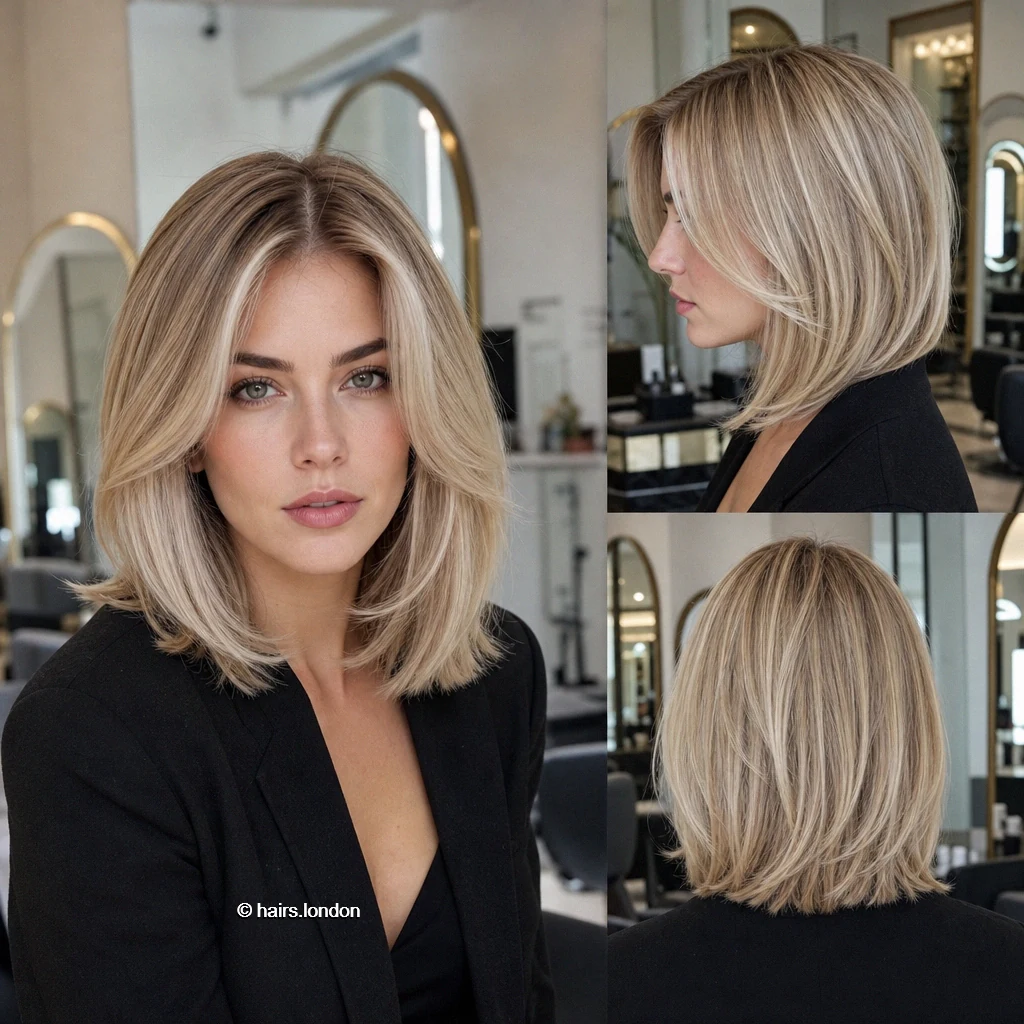
Ash-blonde lengths sweep away from a center part, revealing face-framing layers around this neck-length bob. Its side view shows a longer front and a shorter-looking rear outline, but not a clearly stacked nape. The back carries soft layers and a light perimeter that moves freely instead of forming one solid line. If your hair is thick, ask for targeted weight removal without hollowing out the ends; fine hair may need fewer layers. Blow-dry the front away from your face, keep the back lightly brushed and trim whenever the layered outline becomes uneven. Keep product light to avoid flattening those layers.
13. Golden-Beige Bob with Relaxed Face-Framing Layers
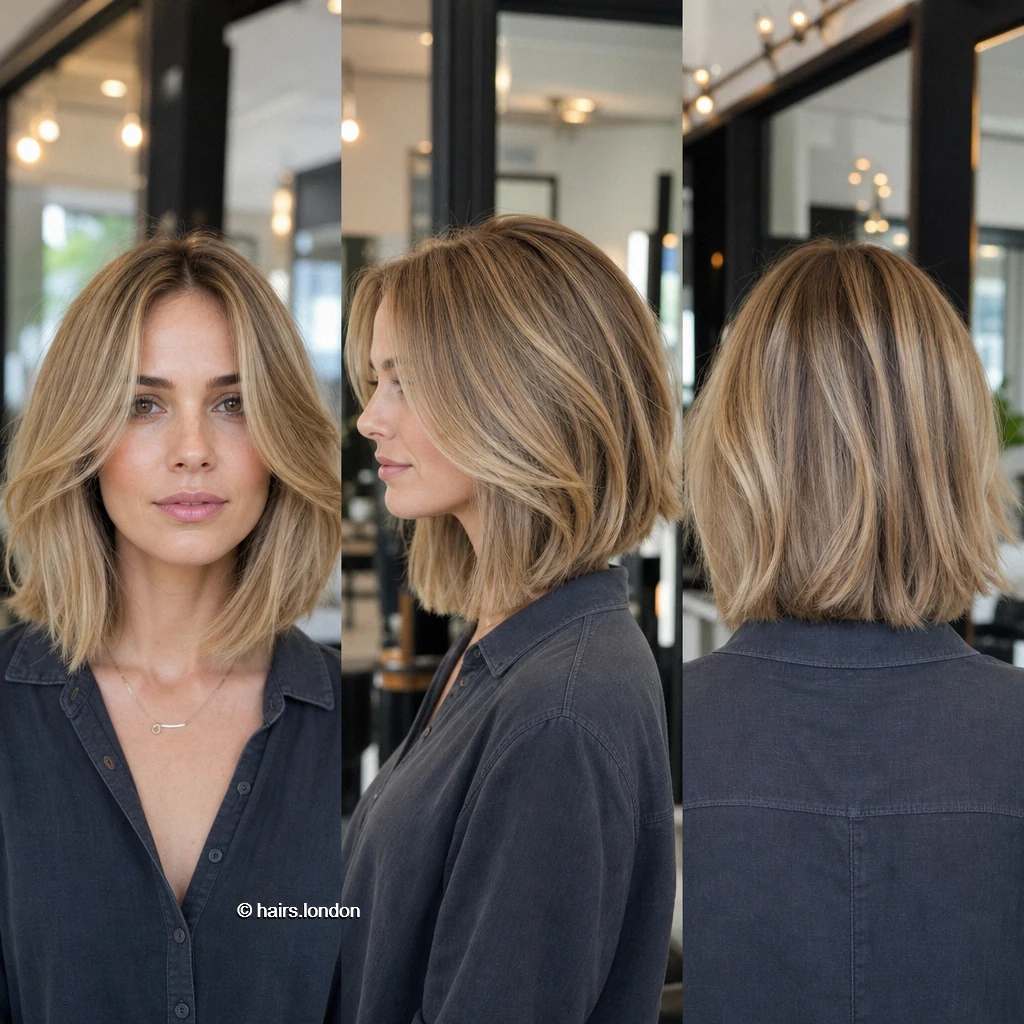
Golden-beige highlights trace the long front sections of this softly layered bob, which finishes around the lower neck. A center part and loose outward bends frame the face, while the back has a lightly textured, fairly even edge. The shape is fuller than a wispy shag yet less rigid than a blunt bob. Ask your stylist to place layers according to your density and the way your hair naturally bends. Use a medium brush or gentle waves for lift, leave the ends touchable and maintain the outline before it slips into shoulder length. Avoid weighing down the face-framing front sections.
14. Cool Blonde Lob with Airy, Separated Ends
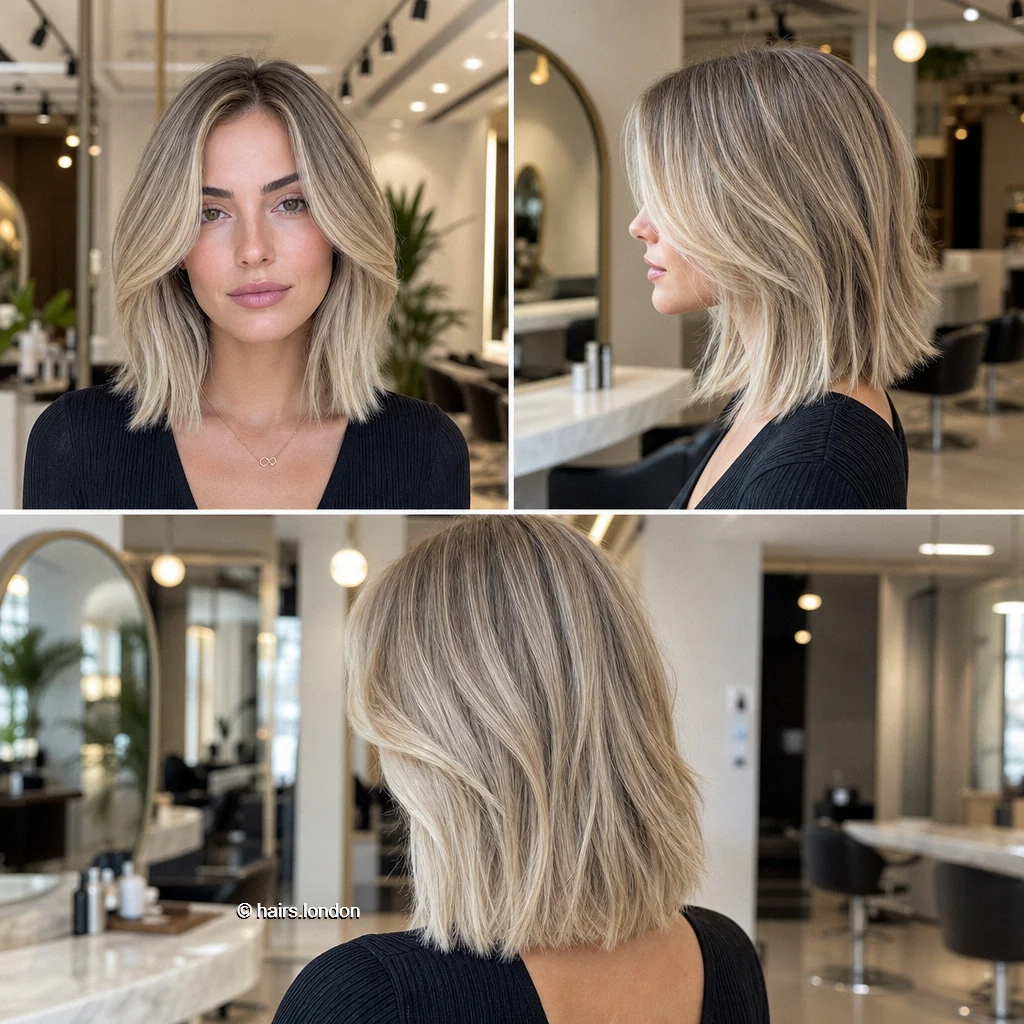
Cool blonde and darker root tones define this longer bob, whose center-parted front pieces fall toward the shoulders. The side and back views show airy layering, with a soft neckline and ends that separate rather than forming a blunt shelf. This length may be useful if your hair needs weight to settle, although dense hair can still require careful shaping. Rough-dry gently, smooth the front pieces with a brush and add a small amount of texture spray through the midlengths. Trim when the lower layers lose their shape, and discuss toning if the cool color shifts. Avoid heavy finishing wax.
15. Rooted Blonde Bob with Defined Loose Waves
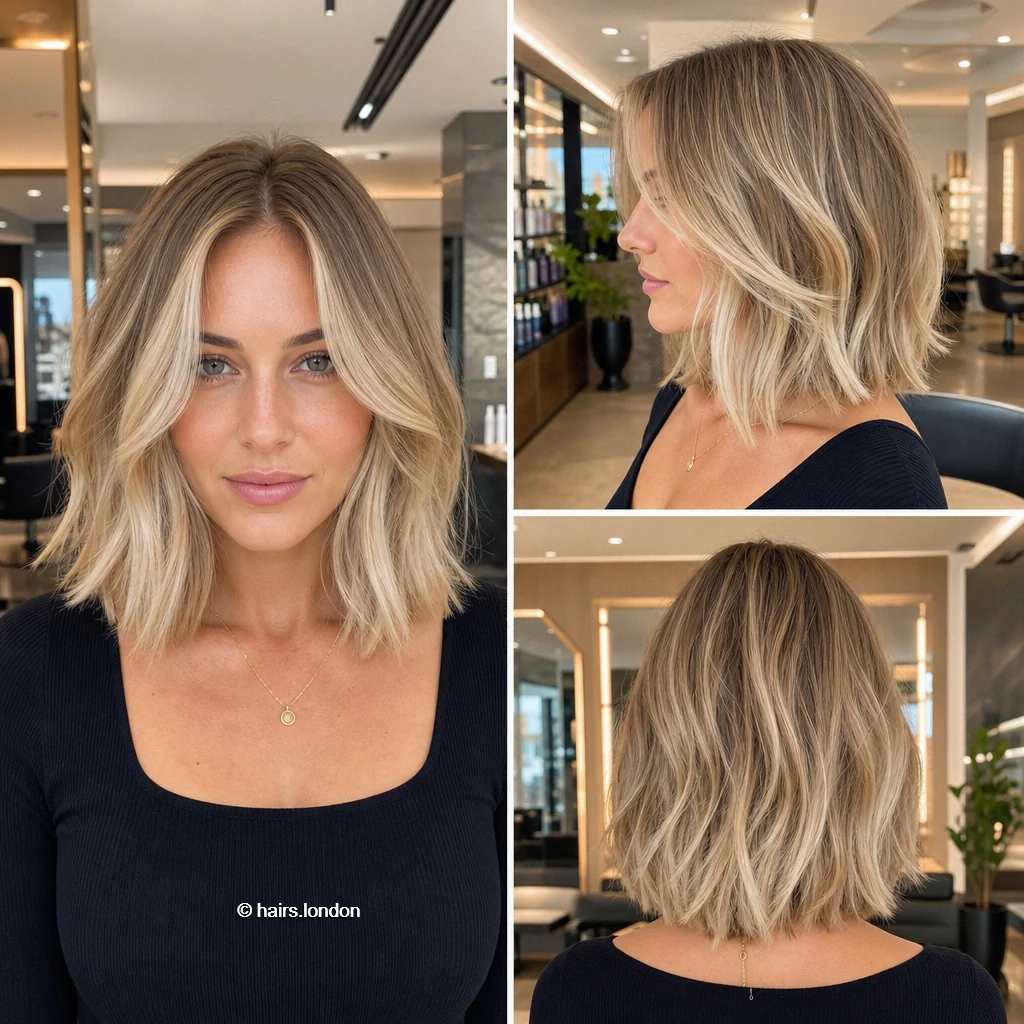
A darker root melts into blonde through this neck-length bob, making its loose, separated waves especially visible. The center-parted front falls past the jaw, while the back ends in a textured line above the shoulders. There is movement through the lengths, but no sharply graduated nape or severe front-to-back angle. If you have natural waves, ask for a shape assessed at your usual dry texture to avoid unexpected shrinkage. Scrunch in mousse, diffuse without overhandling and refresh individual bends between washes; trim the ends when they begin losing definition. Avoid brushing dry waves excessively, which can widen the lower outline.
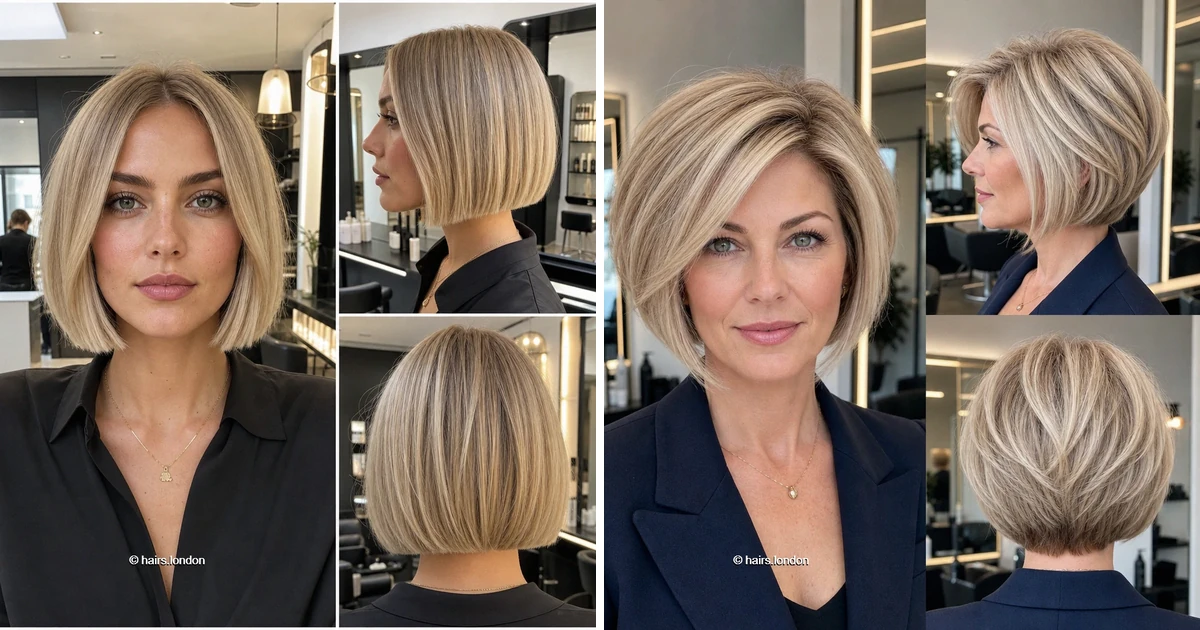
16. Side-Swept Blonde Bob with Visible Back Graduation
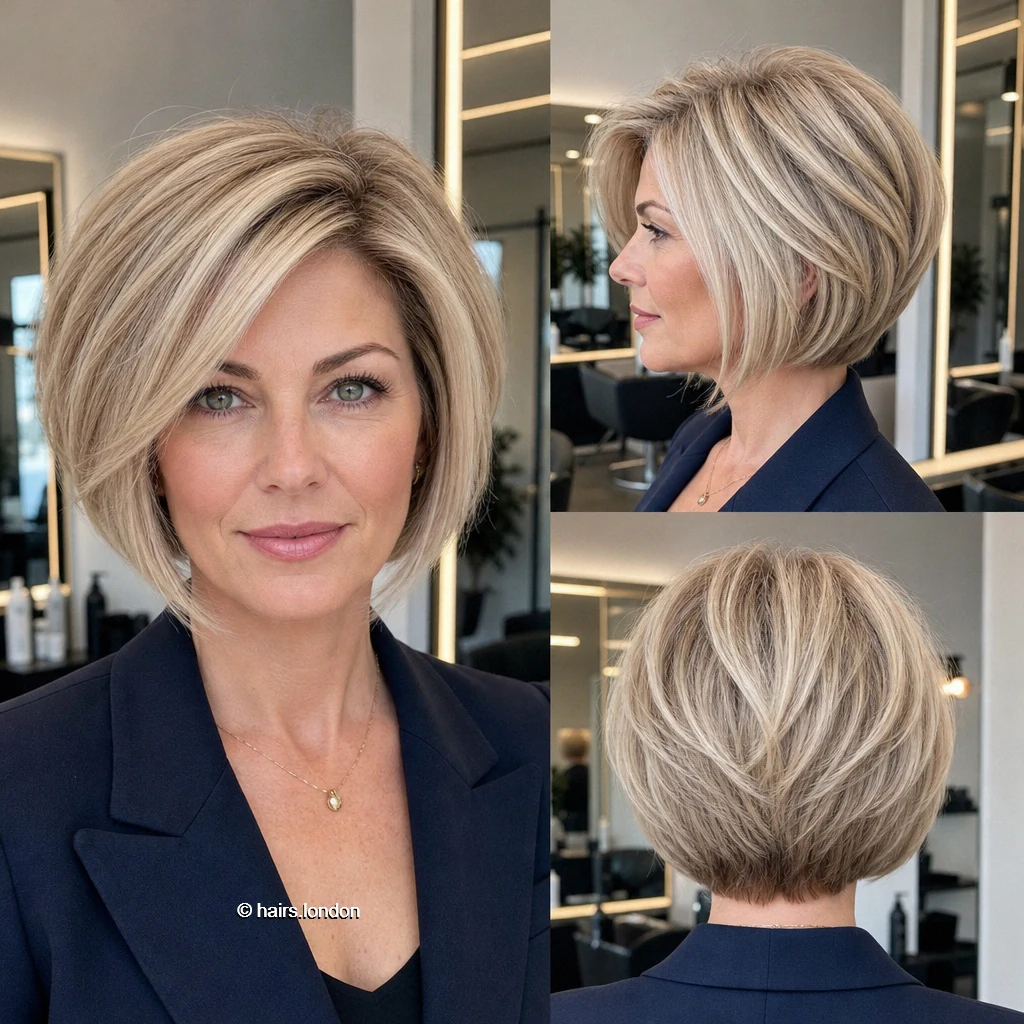
This blonde bob combines a sweeping side part with fuller crown layers and a neatly tapered back. The rear view shows visible graduation toward the nape, while longer front sections curve along the jaw. Light and darker blonde strands emphasize the layered shape without making the perimeter appear sharply blunt. Ask whether this shorter back suits your growth patterns and the time you want to spend styling the crown. Lift the roots while blow-drying, smooth the front with a brush and schedule trims when the graduated back begins losing its contour. Check crown volume from the side before leaving home.
17. Feathered Blonde Bob with a Compact Nape
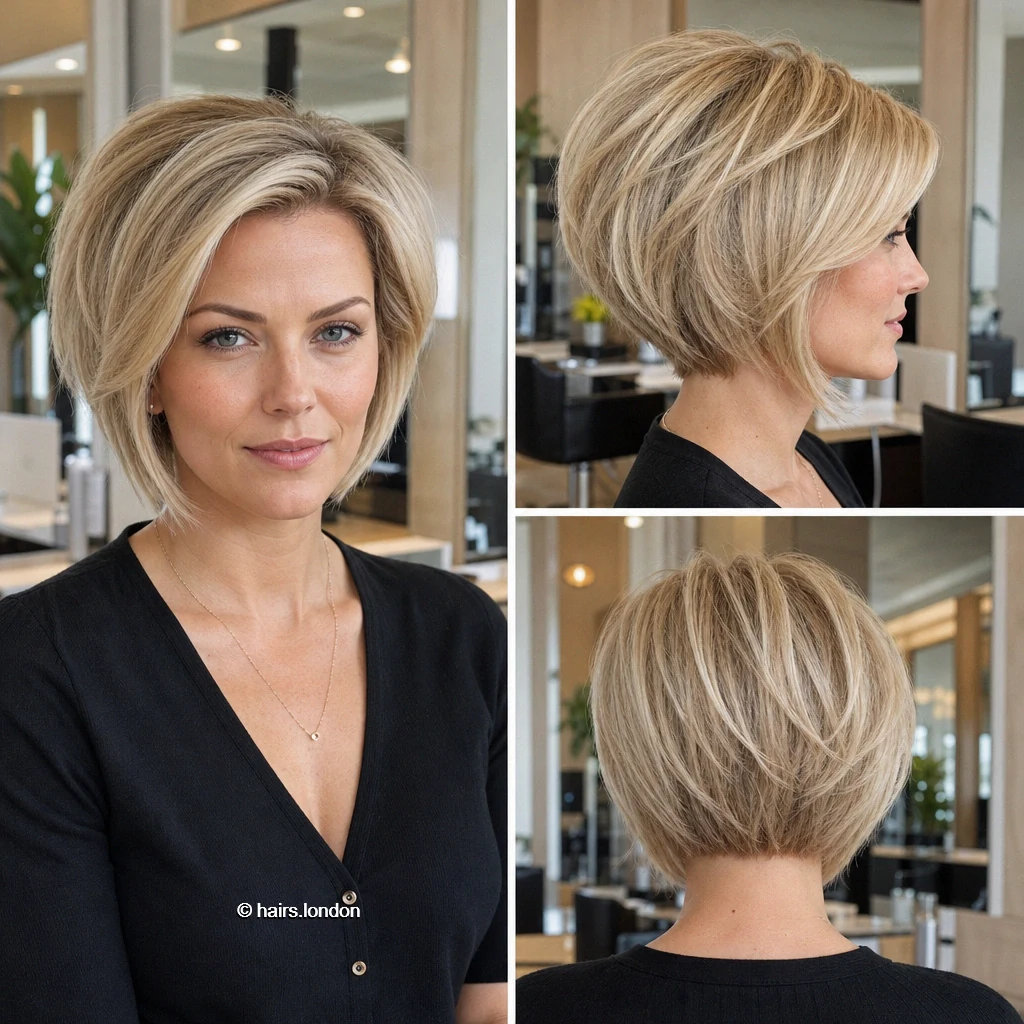
Feathered blonde layers build fullness above a shorter, compact nape in this graduated bob. A deep side sweep creates a long front section that extends toward the jaw, contrasting with the lifted back. The rear view confirms the tapered shape, while darker roots add depth between the pale strands. If your hair is dense, discuss how much internal weight can be removed without exposing the graduation too starkly. Blow-dry the crown upward, guide the front diagonally across the face and return for trims when the nape starts looking heavy. Keep heavier styling creams away from the short neckline and crown.
18. Warm Blonde Graduated Bob with a Long Side Sweep
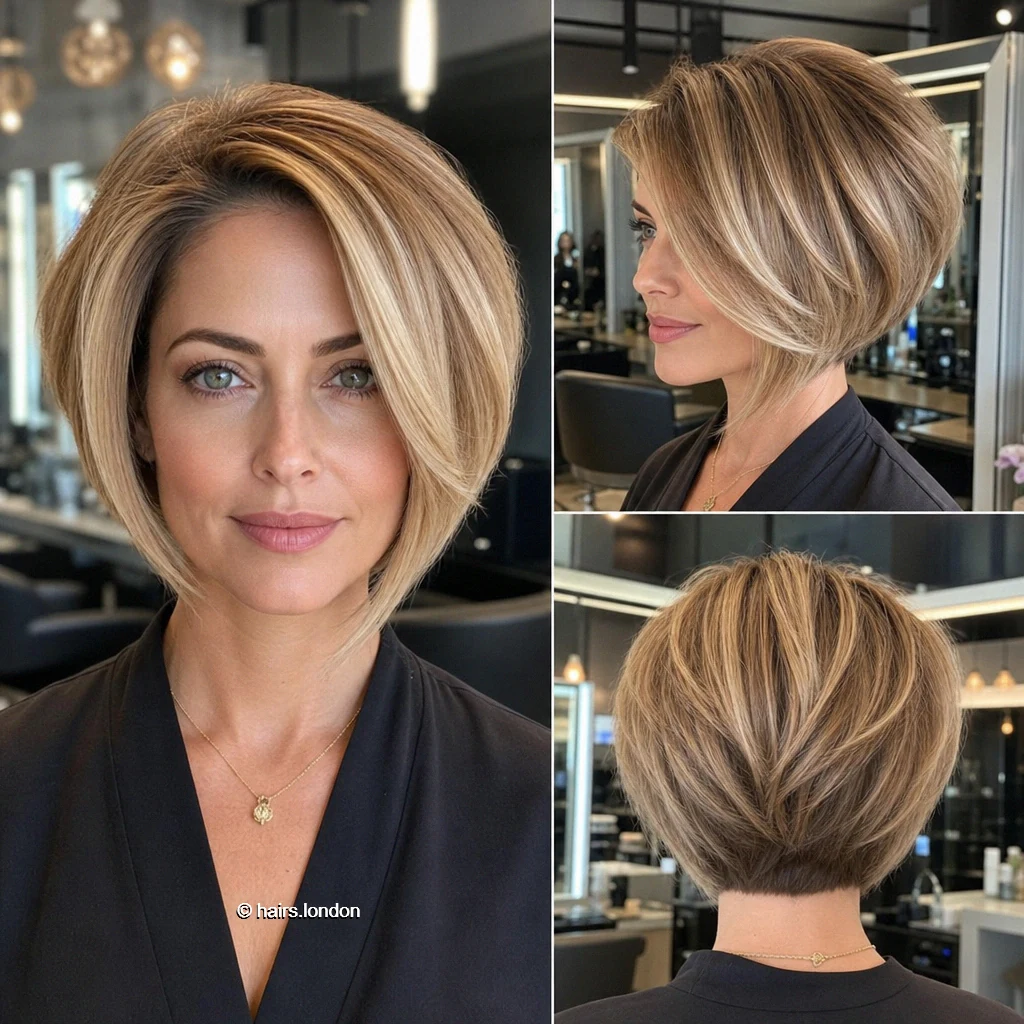
Warm blonde ribbons run through this side-parted bob, whose long front sweep curves across the cheek. The profile and back show a rounded, graduated shape narrowing into a short neckline beneath fuller upper layers. Its strongest volume sits above the nape rather than along a single blunt lower edge. Ask your stylist to check whether your crown naturally supports that lift; otherwise, daily blow-drying may be necessary. Use root mousse sparingly, direct the front smoothly to one side and maintain the shortened back before its silhouette grows boxy. Check the back in a mirror to assess the shape between appointments.
19. Beige-Blonde Graduated Bob with Rounded Volume
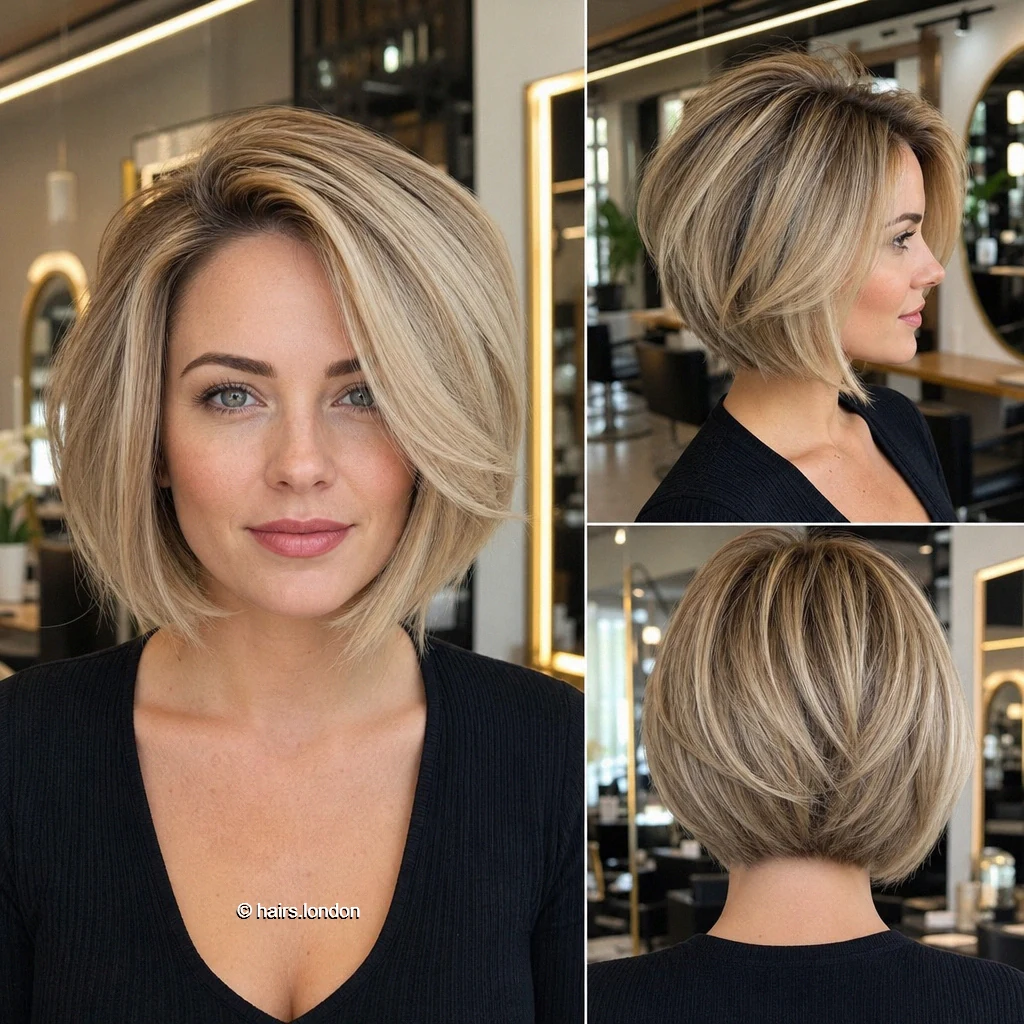
Beige-blonde highlights brighten this rounded bob, with a deep side part and longer pieces sweeping across the face. Both the profile and rear view show graduation into a close neckline, balanced by fuller layers above it. The front reaches approximately jaw level, giving the short back a clear contrast without a dramatically pointed tip. If your hair is fine, discuss keeping enough surface weight to avoid exposing sparse sections around the crown. Dry with controlled root lift, smooth the sweeping front and plan trims around the back, which will lose precision first. Avoid excess product that flattens the rounded crown.
20. Light Blonde Graduated Bob with a Smooth Side Fringe
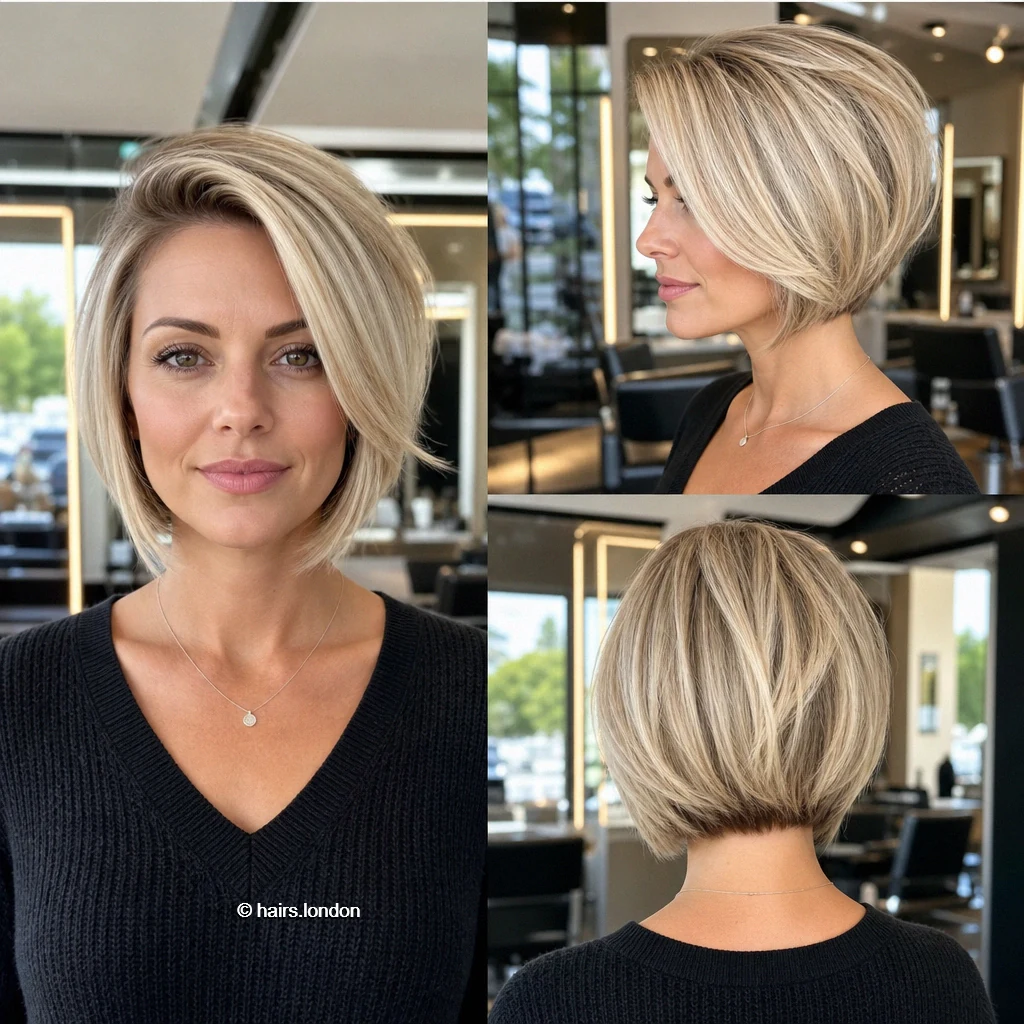
Light blonde strands and darker roots add dimension to this side-parted bob, particularly through its rounded crown. A long, smooth side fringe reaches toward the jaw, while the profile and back reveal a distinctly shorter, graduated nape. The outer layers lie neatly rather than separating into pronounced waves, making the silhouette the main feature. Ask how the shorter neckline will behave with your growth patterns and whether your density can support its fullness. Blow-dry the fringe across first, lift the crown gently and refresh the back as soon as its taper softens. Keep the fringe light enough to move freely.
How to Choose Your Bob Length and Shape
Start with where you want the front to land: around the jaw for a compact bob, below it for more framing, or toward the shoulders for a lob. Then consider the back independently. A full, nearly even perimeter looks different from a graduated back that narrows toward the nape. Check how your hair falls when dry, especially around the neck and ears, before committing to a shorter outline.
Styling Fine, Thick, Wavy and Curly Textures
Fine hair often benefits from a substantial lower edge and lightweight root lift rather than extensive thinning. Thick hair may need selective internal weight removal so the bob moves without widening. For waves, apply a light product and diffuse with minimal handling; smooth only the perimeter if you want a tidier finish. With curls, discuss the dry shape and shrinkage before cutting, and preserve enough length for the curl pattern to settle as intended.
Keeping Blonde Bob Color Fresh
These looks range from warmer honey tones to cooler pale blonde, often with visible darker roots. Ask your colorist which parts need regular brightening and whether a root blend would suit your preferred regrowth. Use color-safe care, protect hair from excessive heat and seek a professional toner when the shade shifts. Keep conditioning products light enough that a short bob retains its movement.
Maintaining the Bob Perimeter and Graduation
A straight, full bob can show uneven growth quickly, so arrange trims according to how sharply you want its line defined. Textured edges can grow more softly, though they still need reshaping when the ends look thin or spread outward. Graduated bobs need particular attention at the back: as the nape grows, the rounded contour can become heavy. Your ideal interval depends on growth rate, texture and the precision you want to keep.
What to Discuss with Your Stylist
Bring front, side and back references, and identify what you like in each rather than relying on a subtype name alone. Discuss your density, natural texture, parting, cowlicks, preferred styling time and whether you want to tuck hair behind your ears. Ask where the weight line will sit, how much layering is advisable and what the back will look like as it grows. Review color upkeep separately from cut maintenance.
Frequently Asked Questions
What is the difference between a bob and a lob?
A bob generally ends around the jaw or neck; a lob is a longer bob that reaches toward the shoulders. The boundary is flexible, so describe your preferred endpoint at the salon.
How is an A-line bob different from a stacked bob?
An A-line bob has a visible front-to-back length difference, with longer front pieces. A stacked bob has short, graduated layers building shape at the back. A cut can feature both, but one does not automatically imply the other.
Will a blunt bob work on fine hair?
A substantial perimeter can make fine ends appear fuller. Your stylist may recommend limited layering, depending on your density and how your hair falls.
Can thick hair wear a compact bob?
Yes, but it may need carefully placed internal weight removal. Ask your stylist to preserve the intended outline rather than thinning every section indiscriminately.
Should naturally wavy hair be cut differently?
Waves can change how the perimeter sits once dry. Show your stylist your usual texture and discuss where the ends should land without styling.
Can natural curls work with a bob?
Yes, provided the shape accounts for curl pattern, shrinkage and density. Agree on the desired dry length and silhouette before cutting.
Do these bobs need a fringe?
No. The images mainly show center-parted framing pieces or long side sweeps. A shorter fringe is an optional change that would bring its own styling and trim needs.
Which bob is simplest to style each morning?
That depends on your natural texture. A shape that follows your hair’s usual fall generally demands less correction than one requiring daily straightening, curling or crown lift.
How often should I trim a precise bob?
Book a trim when the lower line begins looking uneven or falls past your preferred landmark. A sharply defined perimeter typically needs attention sooner than a textured edge.
Does a graduated bob need different upkeep?
Yes. Its shorter back can lose its contour as the nape grows, even while the front still looks appropriately long.
How can I grow out a short graduated bob?
Ask your stylist to maintain the nape while allowing the front and upper layers to gain length. Over time, the shape can transition toward a more even bob.
How do I keep a blonde bob from looking brassy?
Protect the color from excess heat and follow the care plan recommended for your shade. If the tone visibly shifts, ask your colorist whether a professional gloss or toner is appropriate.
Conclusion
The most useful bob reference is one that shows both the front you want to frame your face and the back you are willing to maintain. Whether you prefer loose waves, a clean jaw-length edge or visible graduation, choose a version that works with your density, natural texture and styling routine.