

11. Golden-Blonde Layered Bob Near the Shoulders
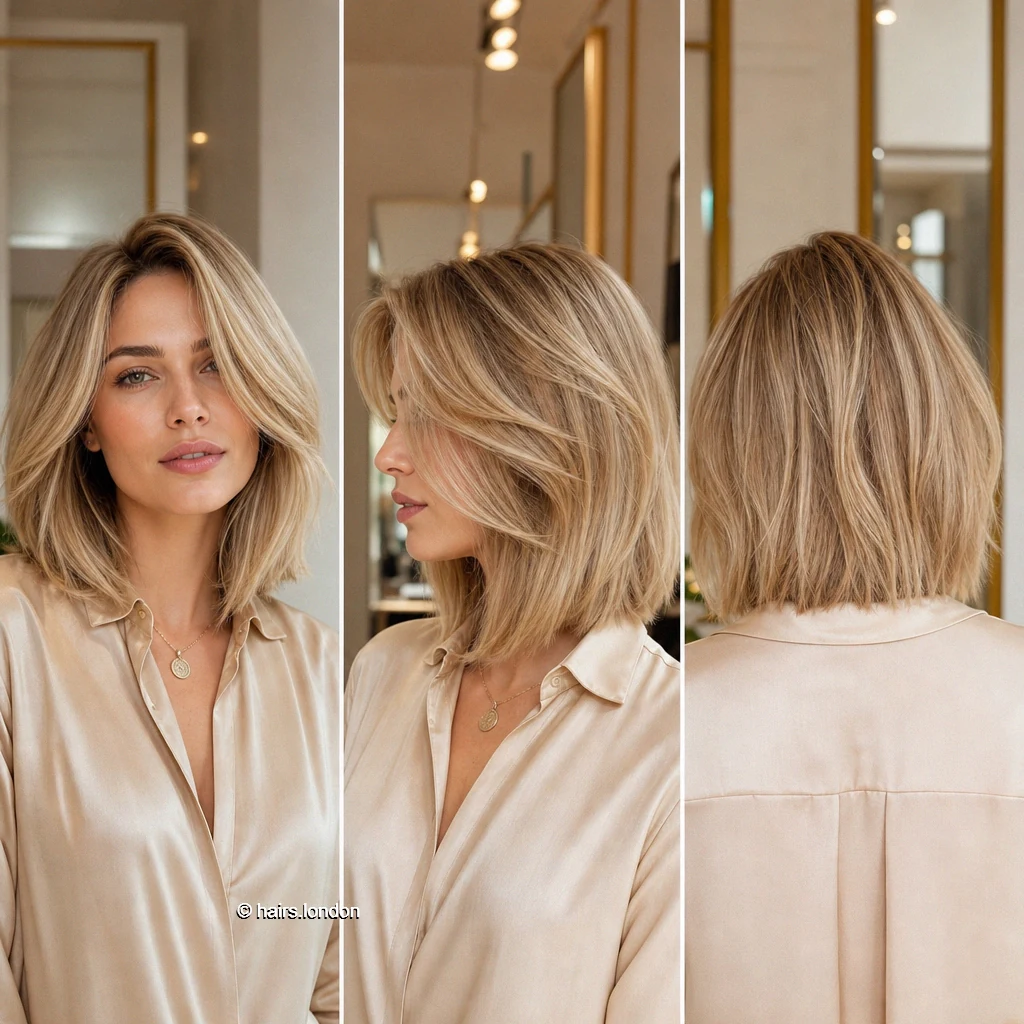
This golden blonde bob falls between the jaw and shoulders. A side sweep and face framing layers soften its outline. The back reaches the upper neck with lightly separated ends. Unlike shorter rounded cuts, its weight feels relaxed and low. Blow dry the front backward for an open, airy finish. Let the remaining lengths settle naturally instead of overcurving them. Ask how much layering your density can comfortably support here. Fine hair may need a more substantial bottom edge. Thicker hair can benefit from movement placed above that edge. Refresh the color and tidy ends when they lose their separation.
12. Light Blonde Lob with Feathered Shoulder-Skimming Ends
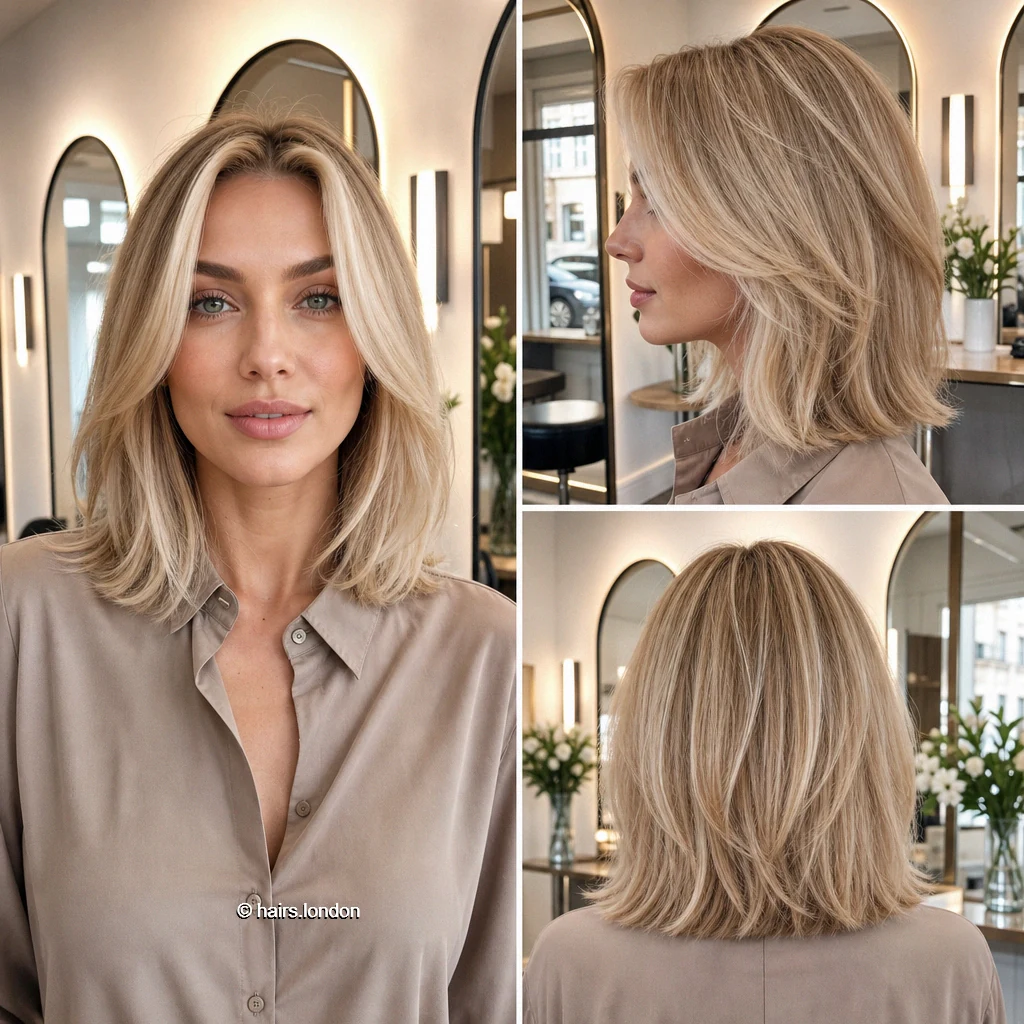
This light blonde lob extends close to the tops of the shoulders. Longer face framing sections open around a relaxed center part. Feathered ends flick outward at the sides and back. Darker roots lend depth to the pale, softly blended lengths. Ask for layers that move without making the base wispy. A round brush can encourage the visible outward flick gently. Alternatively, scrunch natural waves and leave the perimeter loose. Denser hair may need weight distributed through the middle lengths. Fine hair can keep more substance at the shoulder line. Trim split ends before the layered shape begins looking ragged.
13. Wheat-Blonde Bob with Full, Soft Layers
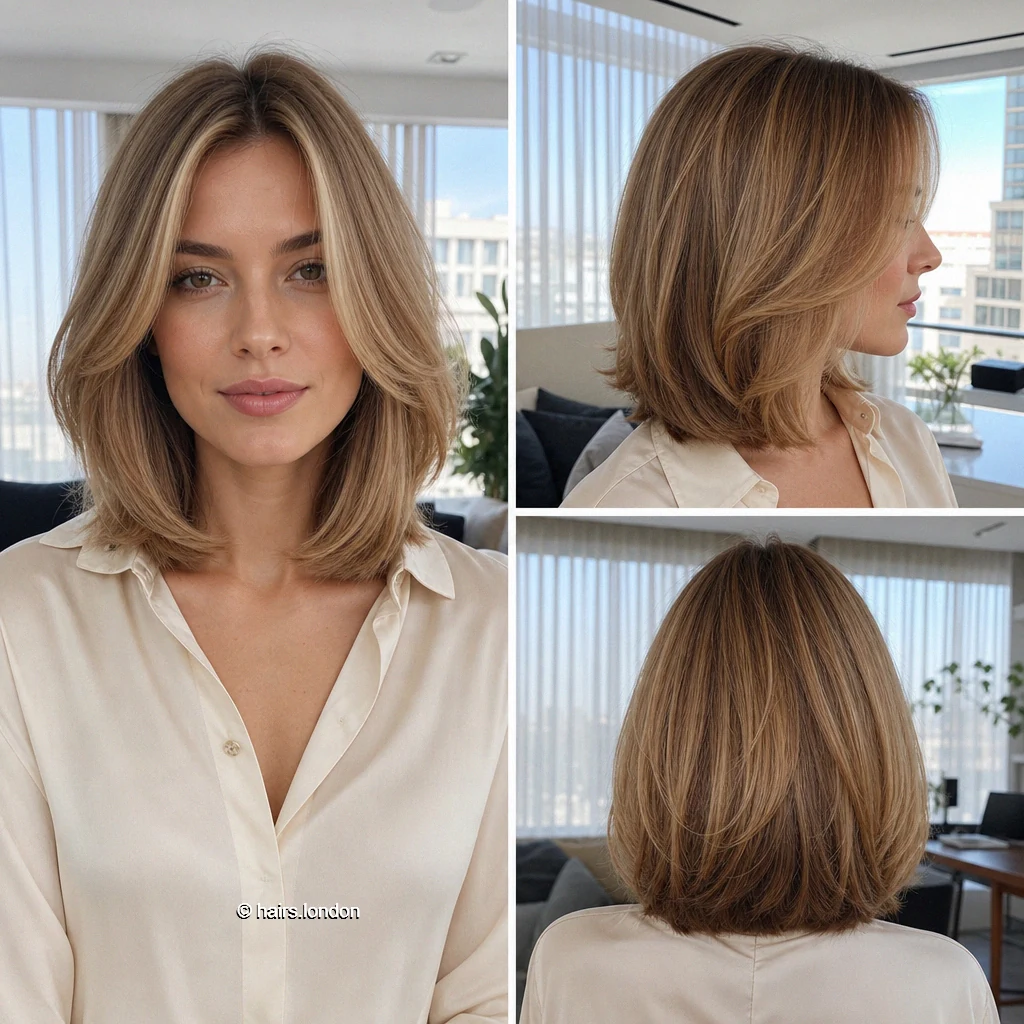
Wheat blonde color complements this full, neck grazing layered bob. Its parted front curves away before settling beside the jaw. The back appears rounded, with layers moving over its perimeter. Slightly flicked ends keep the silhouette from feeling too heavy. Ask your stylist where layering should begin for your density. Too much removal could weaken the substantial lower outline shown. Blow dry the front away, then brush through once cooled. Natural waves may create similar lift with less heat styling. A gloss can restore shine without changing the visible shape. Trim the base when its rounded edge starts losing definition.
14. Rooted Beige-Blonde Lob with Loose Bends
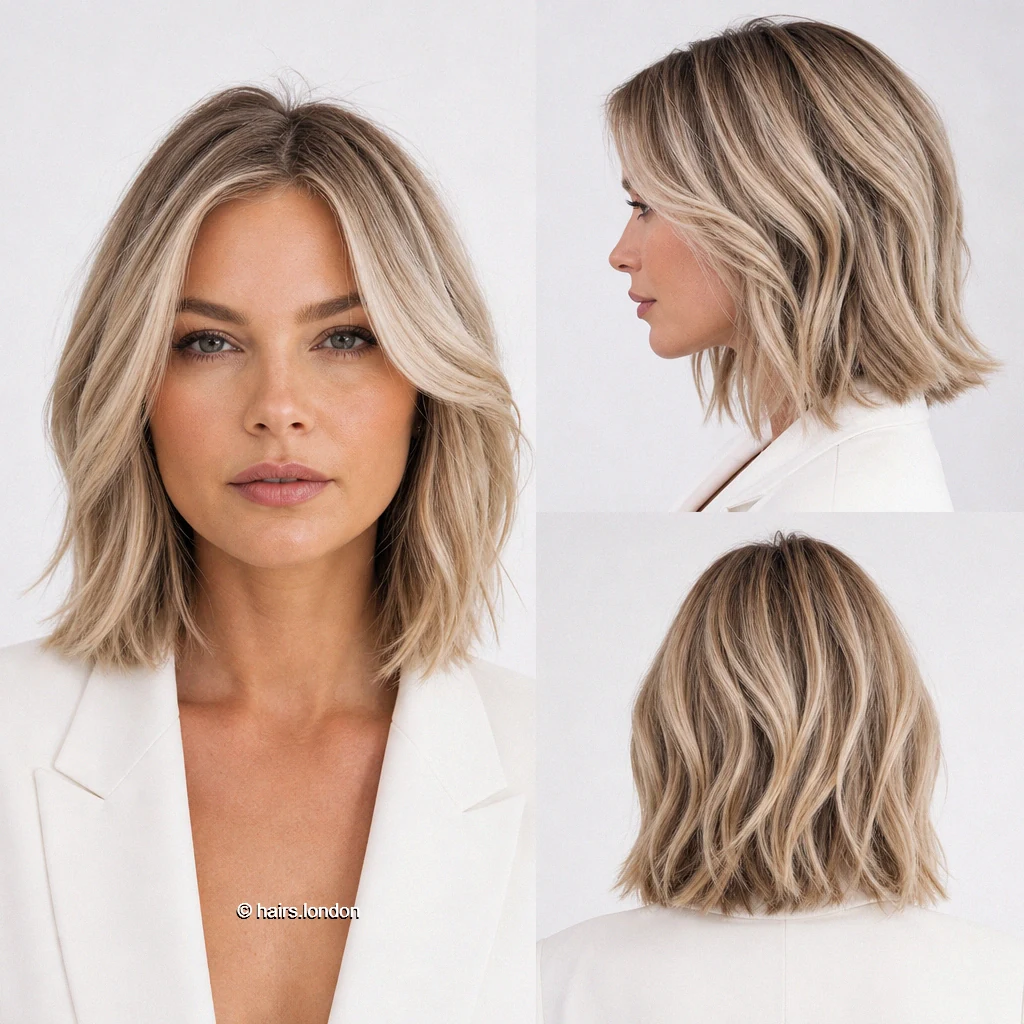
A rooted beige blonde lob falls toward the shoulders here. Its center part opens into soft, loosely waved front sections. The side view shows gentle layers above an irregular edge. Behind, gentle bends create texture without a sharply stacked silhouette. Ask for enough length to accommodate your natural wave shrinkage. Fine hair might need fewer layers through the lower third. Apply wave cream sparingly, then scrunch from underneath while drying. Avoid brushing after styling if you want separated bends maintained. Highlight placement near the face may need periodic tonal refreshing. Trim ends whenever the loose perimeter becomes noticeably uneven overall.
15. Sandy-Blonde Bob with Sweeping Face-Framing Layers
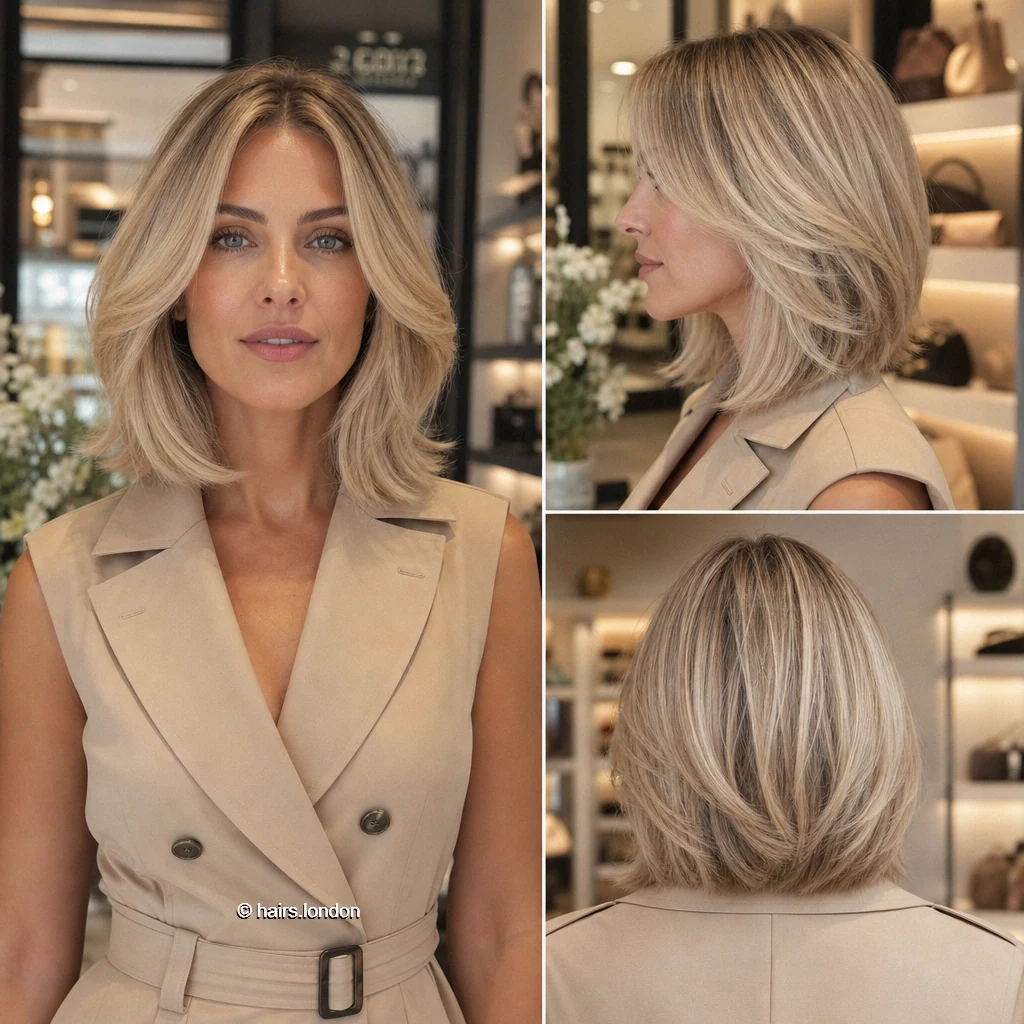
Sandy blonde layers sweep backward from this softly parted bob. The front reaches the neck, while the back looks fuller. Feathered tips break up the outline without erasing its shape. Darker lowlights add visible depth between the lighter strands here. Ask your stylist to retain movement around your face first. Dense hair may need measured removal through the interior sections. For styling, brush the front away while drying from underneath. Finish by releasing the tips instead of curling everything inward. Protect highlighted lengths from excessive heat and frequent rough brushing. Revisit the salon when layered ends lose their airy separation.
16. Side-Swept Blonde Graduated Bob
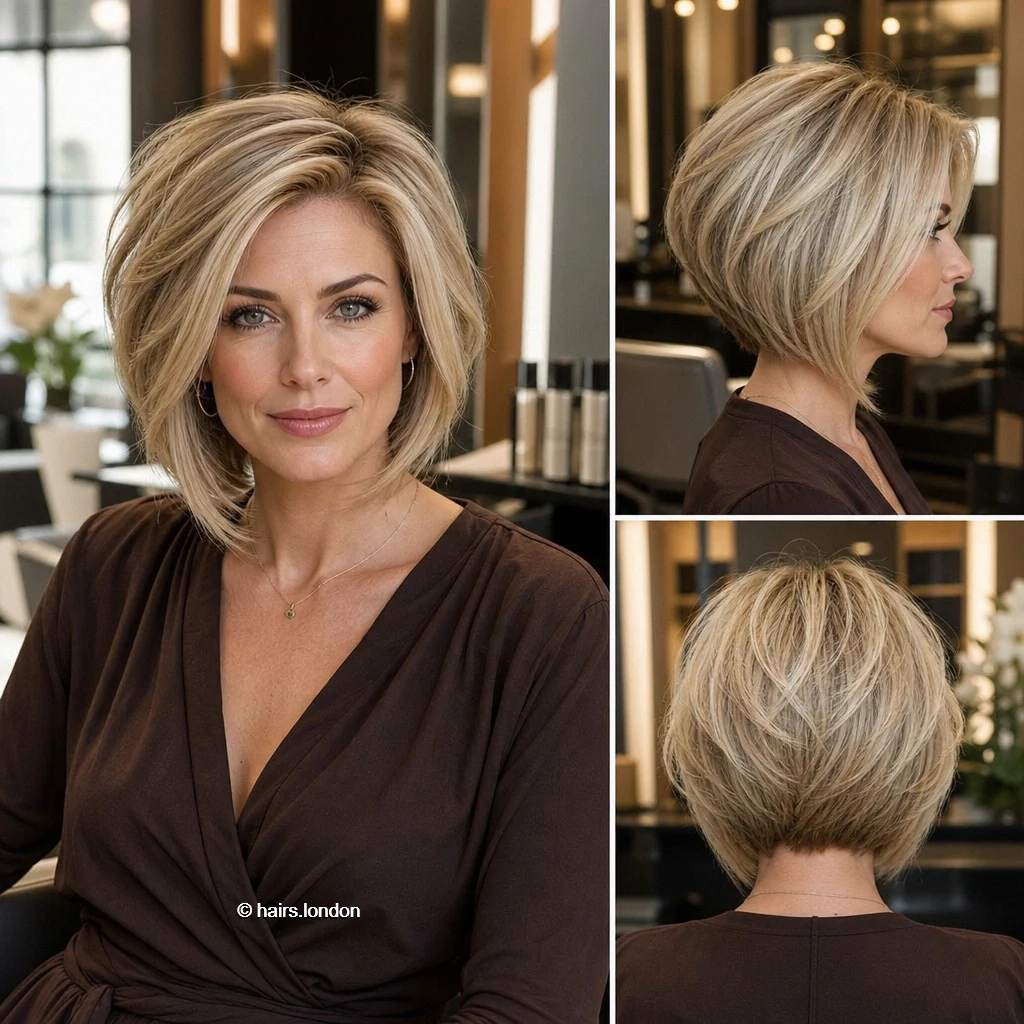
This blonde bob combines a sweeping front with noticeably shorter back. Visible layering builds fullness above its tapered, close neckline area. The longer side curves toward the chin without looking blunt. Light blonde highlights emphasize movement through the upper back sections. Ask how much graduation suits your density and growth patterns. A small brush can lift roots while smoothing the sides. Keep styling cream away from the crown to preserve volume. If your hair is very fine, request conservative texturizing. Thick hair may need hidden weight removed beneath the layers. Trim the nape regularly so the lifted silhouette remains balanced.
17. Ash-Blonde Stacked Bob with a Long Side Sweep
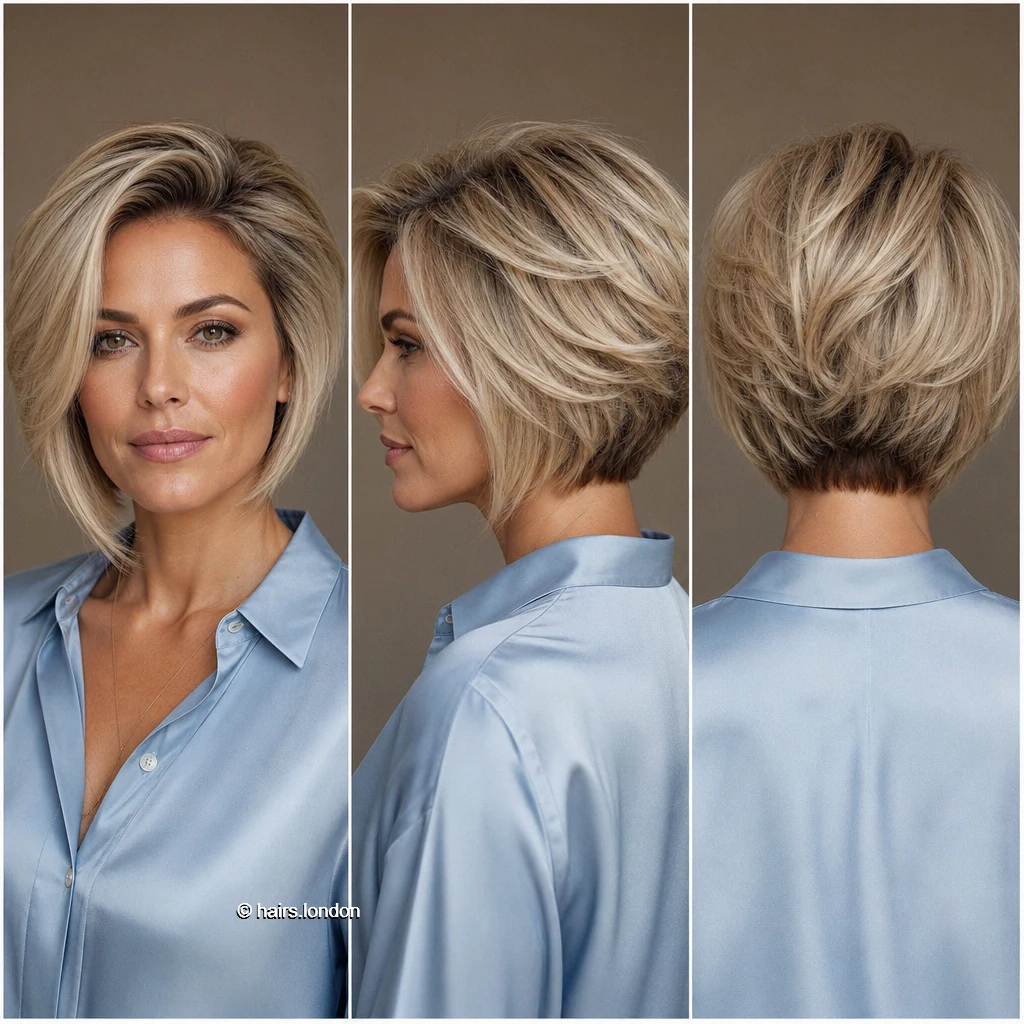
This ash blonde bob shows a distinctly shorter, neatly tapered neckline. Graduated layers rise into fuller volume across the back. A long side sweep leaves the front near chin length. Dark roots define the blonde strands crossing its layered surface. Ask your stylist to assess nape growth before choosing graduation. Brush upper layers backward while directing the lower edge downward. A lightweight spray can hold lift without fusing pieces together. Dense hair may need careful debulking beneath the rounded shape. Finer hair can benefit from preserving stronger visible outer layers. Book nape trims before the stacking begins collapsing into length.
18. Honey-Blonde Graduated Bob with a Rounded Crown
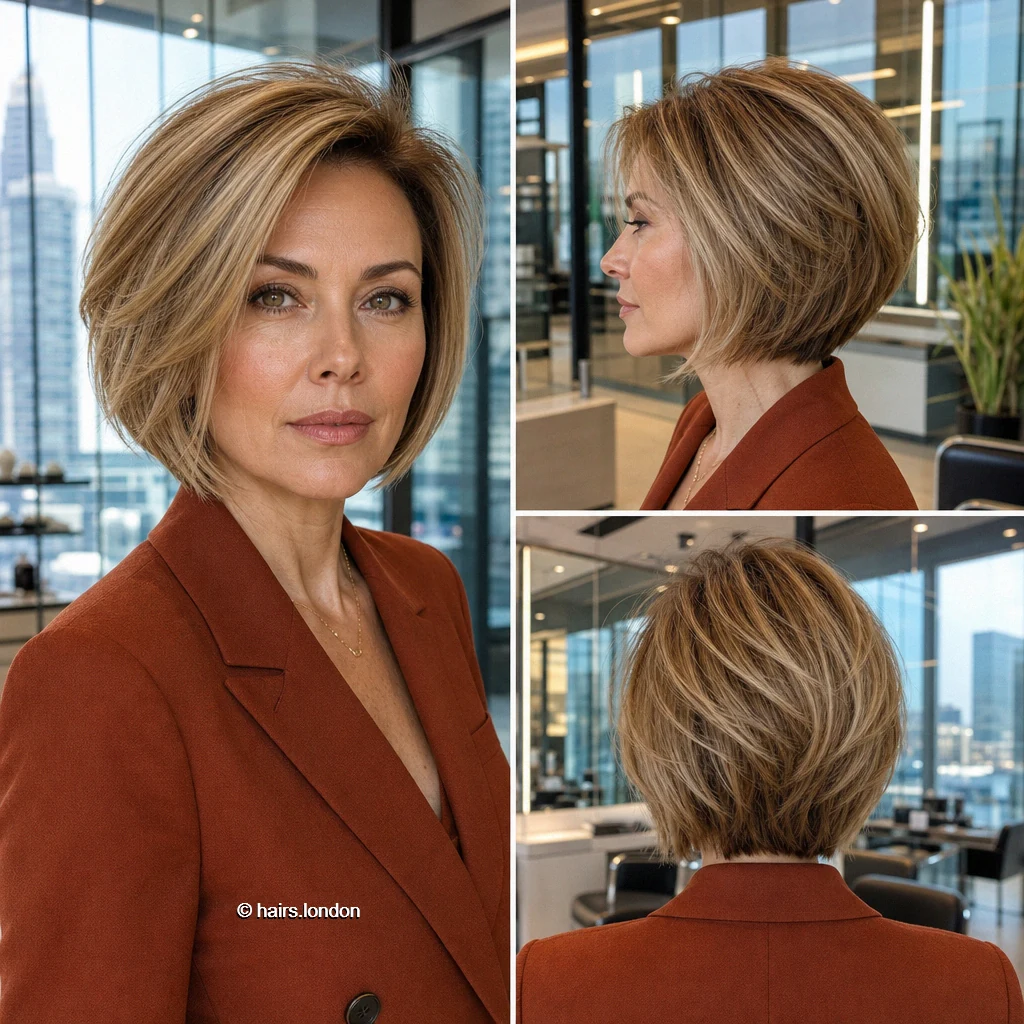
Honey blonde highlights trace the movement of this graduated bob. A side swept front falls toward the jawline here. The back narrows at the neck beneath fuller upper back layers. Its curved silhouette looks lifted rather than sharply angular overall. Ask for graduation that works with your natural crown growth. Direct airflow upward at roots, then smooth the outer surface. Avoid heavy wax, which could flatten its layered shape quickly. Thick hair may require weight control underneath the visible curve. Fine hair often needs those outer layers kept reasonably substantial. Maintain the short neckline and refresh highlights when contrast fades.
19. Beige-Blonde Bob with Soft Back Graduation
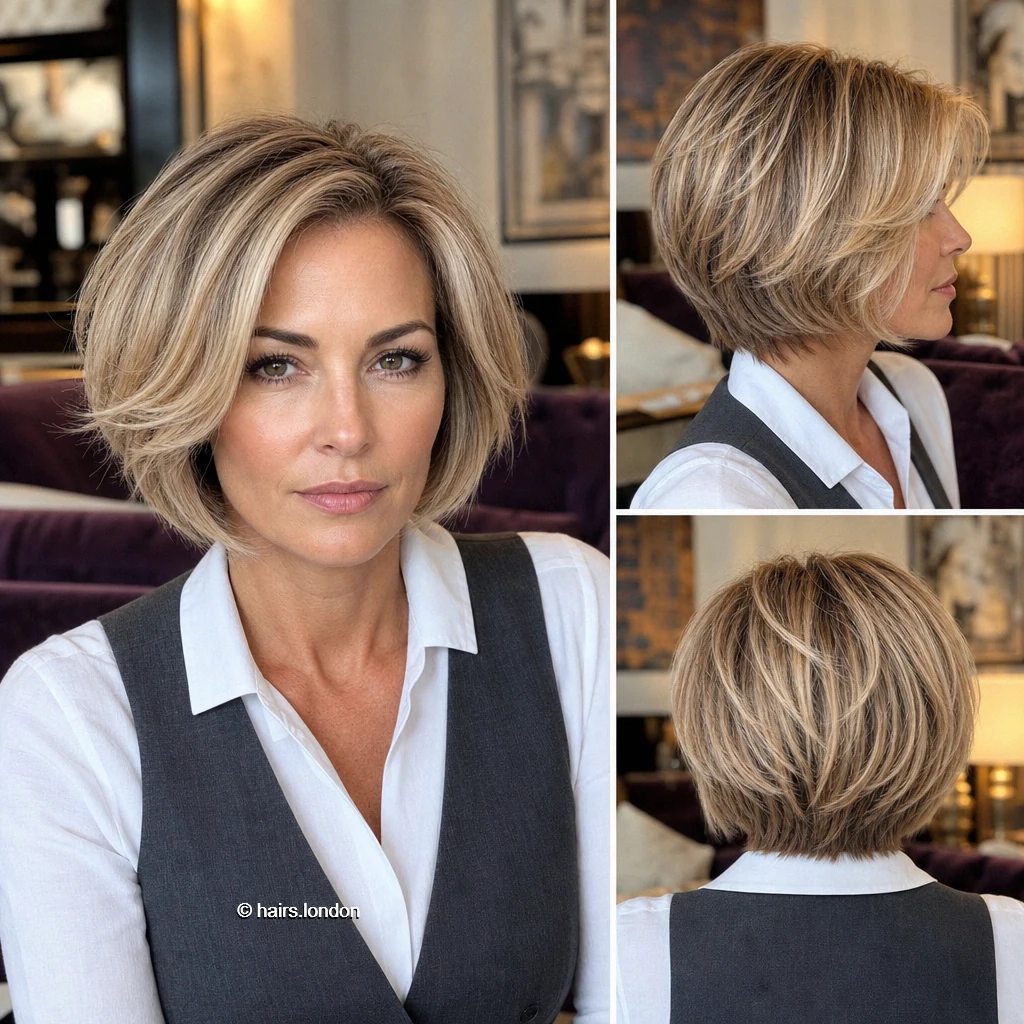
Beige blonde ribbons brighten this softly visibly graduated, jaw length bob. The side swept front frames the cheek with feathered movement. At the back, layers narrow toward a shorter neckline. Its upper shape stays rounded without a rigid, sculpted finish. Ask your stylist to adjust graduation for your hair density. Use a brush to smooth ends while lifting the crown. Light texture spray can separate highlights without adding sticky bulk. Natural waves might need gentle refinement around the shorter back. Trim the nape before it overwhelms the layered upper shape. Condition lightened ends to keep the feathered pieces looking defined.
20. Bright Blonde Stacked Bob with a Curved Front
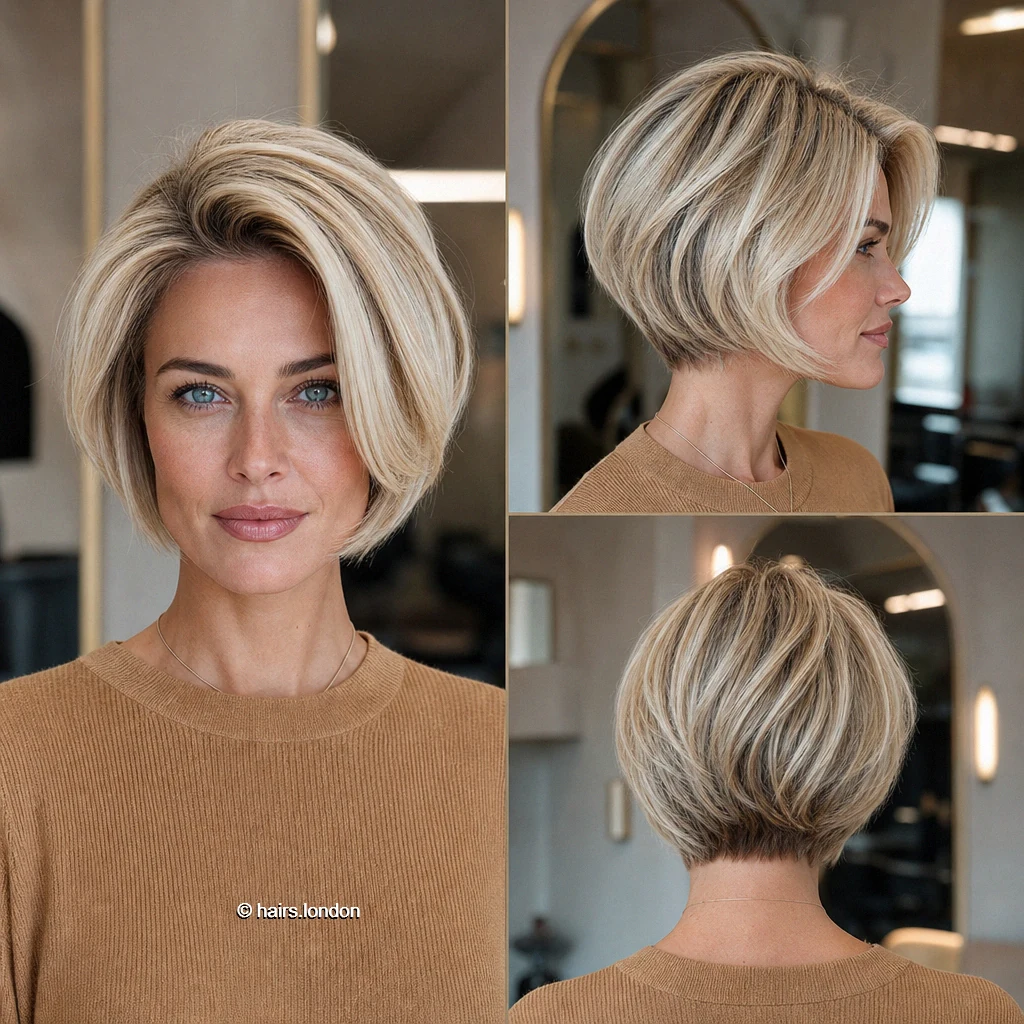
Bright blonde strands sweep gracefully across this compact, softly rounded bob. Its longer front curves beneath the cheek toward the chin. Behind, visible graduation builds volume above a narrow neckline. Darker roots reveal depth between the pale layered sections. Ask whether your crown and nape growth support this silhouette. Blow dry the front smoothly, lifting the back in sections. Use minimal finishing product to retain the cut’s airy movement. Fine hair may need gentler layering to preserve coverage below. Dense hair could need internal refinement around the widest area. Maintain the short back regularly and refresh blonde tone as needed.
How to Choose Your Bob Length and Shape
Decide where you want the perimeter to land when your hair is dry: near the jaw, below the chin, at the neck, or close to the shoulders. A compact bob makes its outline more prominent; a longer bob leaves more room for waves and an easier transition from long hair. For a fuller, rounder shape, look at where the weight sits in the side and back views. If you prefer a longer front, discuss that difference separately from back graduation: an A-line describes the front-to-back length relationship, while a stacked bob needs visible layering and buildup at the back.
Styling Fine, Thick, Wavy, and Curly Textures
Fine hair often benefits from a dependable bottom edge and modest layering; use light mousse at the roots rather than heavy cream on the ends. With thick hair, ask about removing weight inside the shape while keeping the perimeter substantial. For waves, scrunch in a small amount of styling product and diffuse or air dry before separating pieces. Natural curls need a length decision made with shrinkage in mind. Have your stylist assess the curl pattern before cutting layers, and style without brushing dry curls into excess bulk. Smooth bobs can be blow dried downward, with the ends guided into a gentle curve.
Keeping Blonde Bob Color Fresh
The images range from warmer honey and sandy blondes to cooler, paler finishes, often with visible root depth. Ask your colorist which level of contrast you want as roots grow. Use a conditioner suited to lightened hair, limit unnecessary heat, and arrange tonal refreshes when the blonde no longer looks the way you prefer. Purple products are useful only if unwanted yellow tones are the concern; they are not a substitute for a color consultation.
Maintaining the Bob Perimeter and Graduation
A smooth, compact bob relies on a clean edge, so arrange a trim when its sides stop aligning or its ends begin flipping unpredictably. A textured bob can tolerate a looser perimeter, but still needs attention when separation turns into thin, straggly tips. Short graduated backs usually show growth sooner: check whether the neckline has become wide or the volume has dropped too low. Longer layered bobs may need fewer full reshapes, though their face framing and ends still benefit from periodic checks.
What to Discuss with Your Stylist
Bring the front, profile, and back views that match the details you like. Point out your preferred dry length, parting, face framing, amount of wave, and whether you want a solid edge or visible graduation. Show your natural texture and explain how much time you will spend styling. Ask how your density and growth patterns could change the pictured silhouette, what cutting or weight-removal approach they recommend, and how often both the shape and color will need attention.
Frequently Asked Questions
What is the difference between a bob and a lob?
A lob is a longer bob, commonly approaching the shoulders. The shorter cuts here cluster around the jaw and neck, while several layered examples extend closer to the shoulders.
Is an A-line bob the same as a stacked bob?
No. A-line describes a front that is longer than the back. Stacked describes visible graduation that builds shape at the back. A cut can have both features, but one does not establish the other.
How do I choose between a blunt and a layered bob?
Choose based on the outline and movement you want, then check what your density supports. A stronger baseline can make fine ends look fuller; measured layers can release weight or encourage texture.
Can fine hair support a rounded bob?
It can, depending on its density and growth pattern. Ask for enough weight at the perimeter, and avoid removing so much hair through the interior that the ends become sparse.
How can thick hair avoid looking bulky in a bob?
A stylist can assess where internal weight needs reducing while preserving a deliberate outer shape. Styling products should add control without coating the widest sections.
Will these bob shapes work with natural curls?
Some may translate well, but curls will change the apparent length and outline. Have your stylist evaluate shrinkage and cut the shape for your curl pattern rather than expecting a straight-haired image to look identical.
Should I add a fringe to a bob?
A fringe is optional; the pictured cuts mainly use parted or swept front sections. Discuss your hairline, growth patterns, and willingness to style and trim a fringe before adding one.
How much daily styling does a smooth bob need?
That depends on your natural texture. Hair that dries relatively straight may need only perimeter smoothing, while strong waves or curls may require more time to achieve the same polished finish.
How do I style a textured bob without making it stiff?
Start with a small amount of lightweight product, encourage your natural bends or make loose ones, and separate only a few pieces once dry. Keep heavy products away from fine ends.
How often should I trim a graduated bob?
Watch the neckline and back volume rather than following a fixed interval. Arrange a trim when the short edge spreads, the graduation drops, or the front-to-back balance changes.
Can I grow out a stacked bob without an awkward shape?
Yes, though it takes planning. Ask your stylist to tidy the neckline while gradually allowing the shorter back to catch up with the front.
How can I keep blonde color manageable as a bob grows?
Discuss the root contrast you are comfortable with and choose a refresh plan accordingly. Visible root depth can make growth less abrupt, while pale, even blonde may require more frequent color appointments.
Conclusion
The best reference is not just the blonde shade or the front view. Compare the perimeter, side profile, and back shape, then choose the length and level of layering you would enjoy wearing between appointments. A stylist can adapt those details to your density, natural texture, and styling routine.