

11. Rounded Brunette Bob with Side-Swept Layers
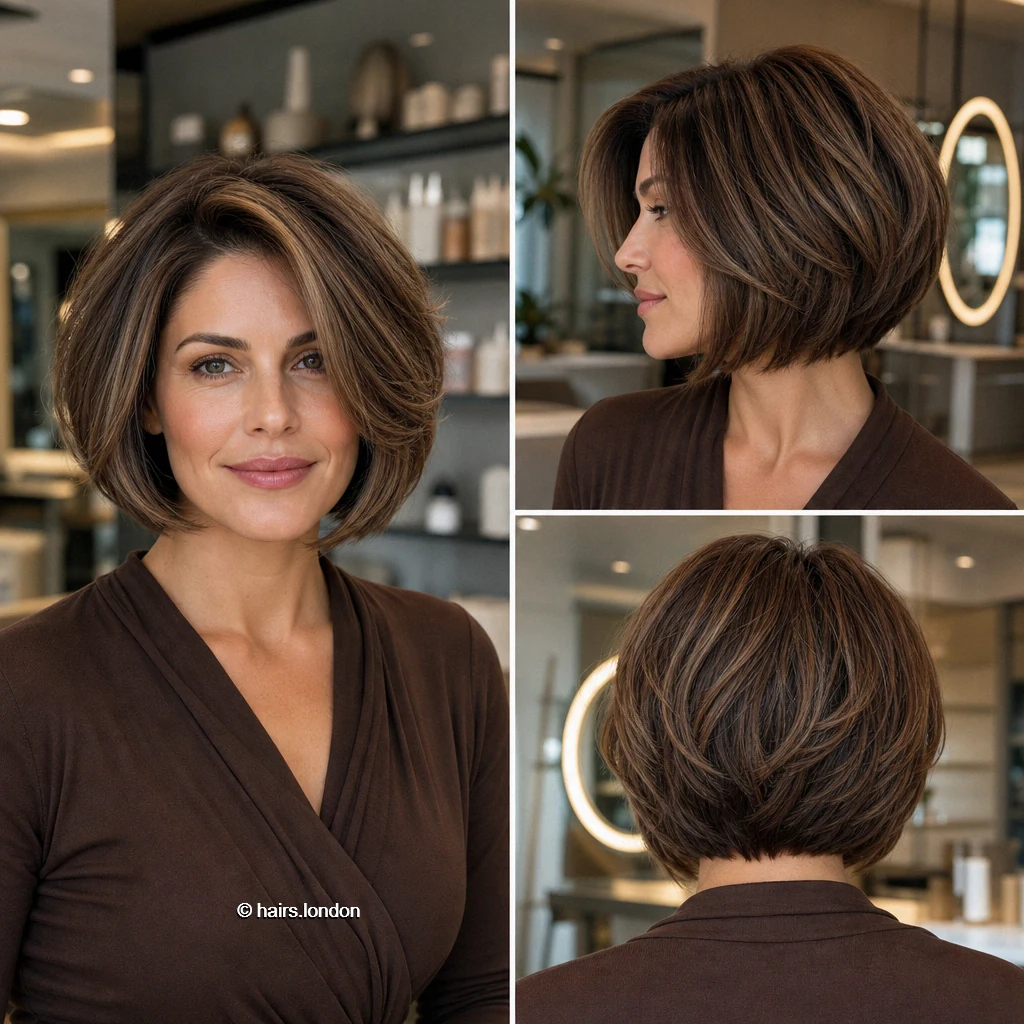
This glossy brunette bob has a rounded silhouette and side-swept front. Subtle warm highlights reveal movement within its smooth upper layers. The side view shows a softly tapering edge near the neck. Behind, the fuller shape narrows toward a tidy neckline. Ask for layers that create volume without stripping perimeter weight. Brush the front across its part while drying the roots. Tuck or release the ends according to your preferred finish. This cut may suit hair with some natural body. Strong cowlicks could require adjustments around the sweeping front section. Trim the neckline when its tapered shape begins to soften.
12. Long-Front Bob with a Graduated Back
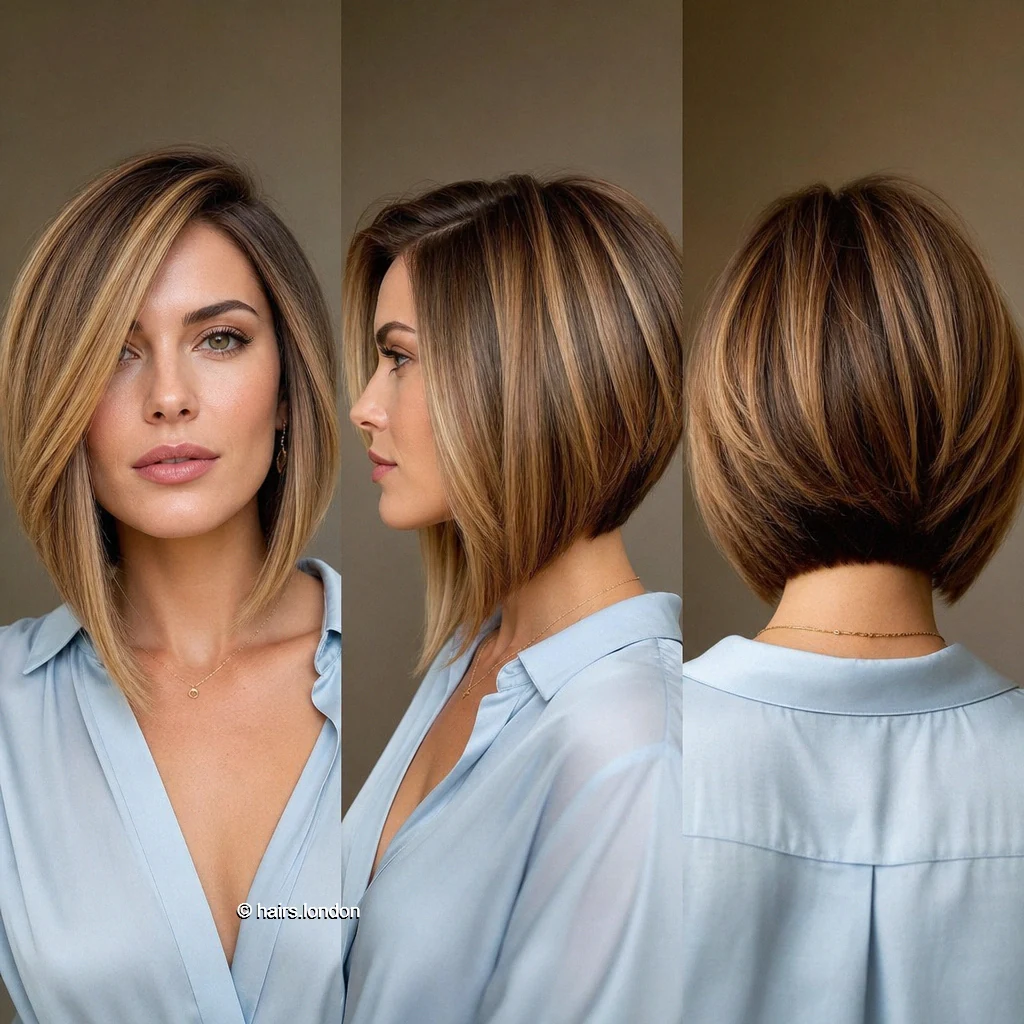
This bob makes its front-to-back contrast easy to see. Lightly blonde-highlighted front pieces fall well below the shorter neckline. The back view shows a softly rounded shape narrowing toward the neck. A side part sends the longest section across one cheek. Discuss both the desired front length and visible back graduation. Dry the front downward, keeping the angled perimeter clean. Smooth the shorter back without pressing all its volume flat. This shape may suit hair that supports a rounded crown. Dense hair could need careful internal shaping to prevent bulk. Frequent neckline checks keep the deliberate length contrast looking clear.
13. Dramatic A-Line Bob with Back Graduation
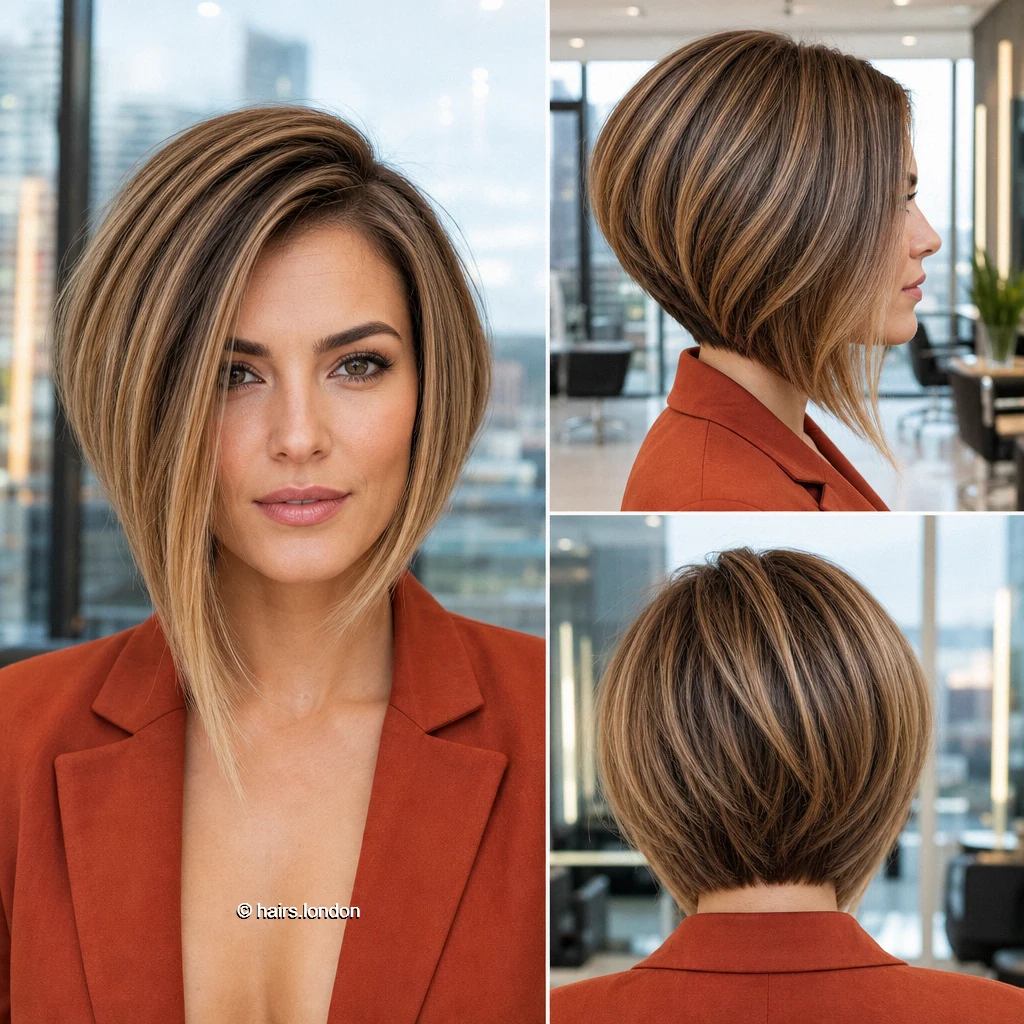
A sweeping side part introduces this strongly angled, sculptural bob. Its highlighted brown front extends far below the short back. The profile clearly shows a longer front and graduated rear. Behind, the neckline stays compact under a rounded crown. Ask your stylist how that contrast will behave when dry. Smooth the long front first to emphasize its clean line. Keep styling product light around the shorter, fuller back section. This option may suit hair willing to hold a shaped silhouette. Natural curls could change the apparent difference between front and back. Trim the back regularly to preserve its striking profile.
14. Compact Graduated Bob with a Long Front
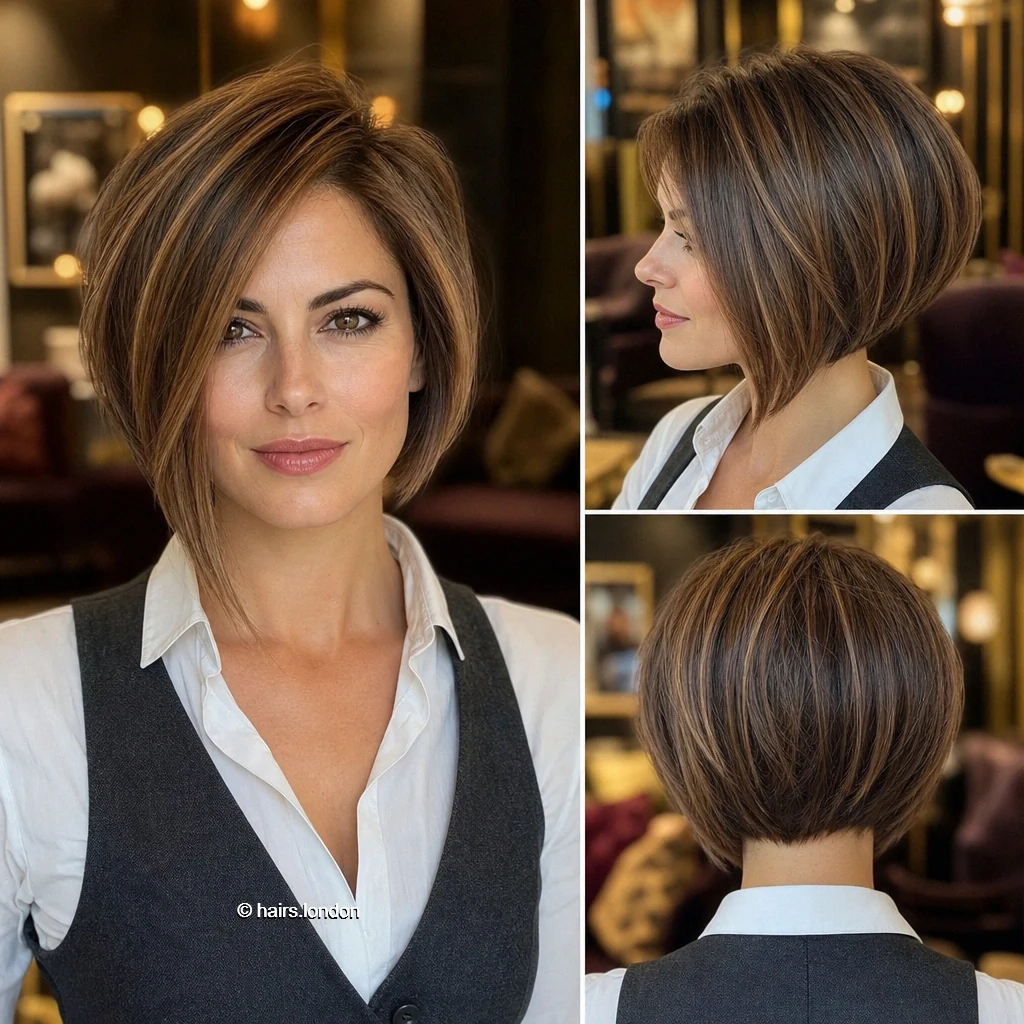
The long front of this bob meets a shorter, compact back. A side part adds lift above subtle warm brown highlights. From the profile, the neckline sits higher than the jaw-skimming front. The back appears rounded, with visible shaping toward its base. Ask for the length contrast to match your styling preferences. Blow-dry the crown for lift and smooth the front downward. Avoid overloading the short back with heavy finishing creams. This shape may work when your hair holds rounded volume. Fine hair might benefit from preserving weight around the sides. Maintain the neckline so the graduated silhouette remains intentional.
15. Shaggy Bob with Lightly Broken Ends
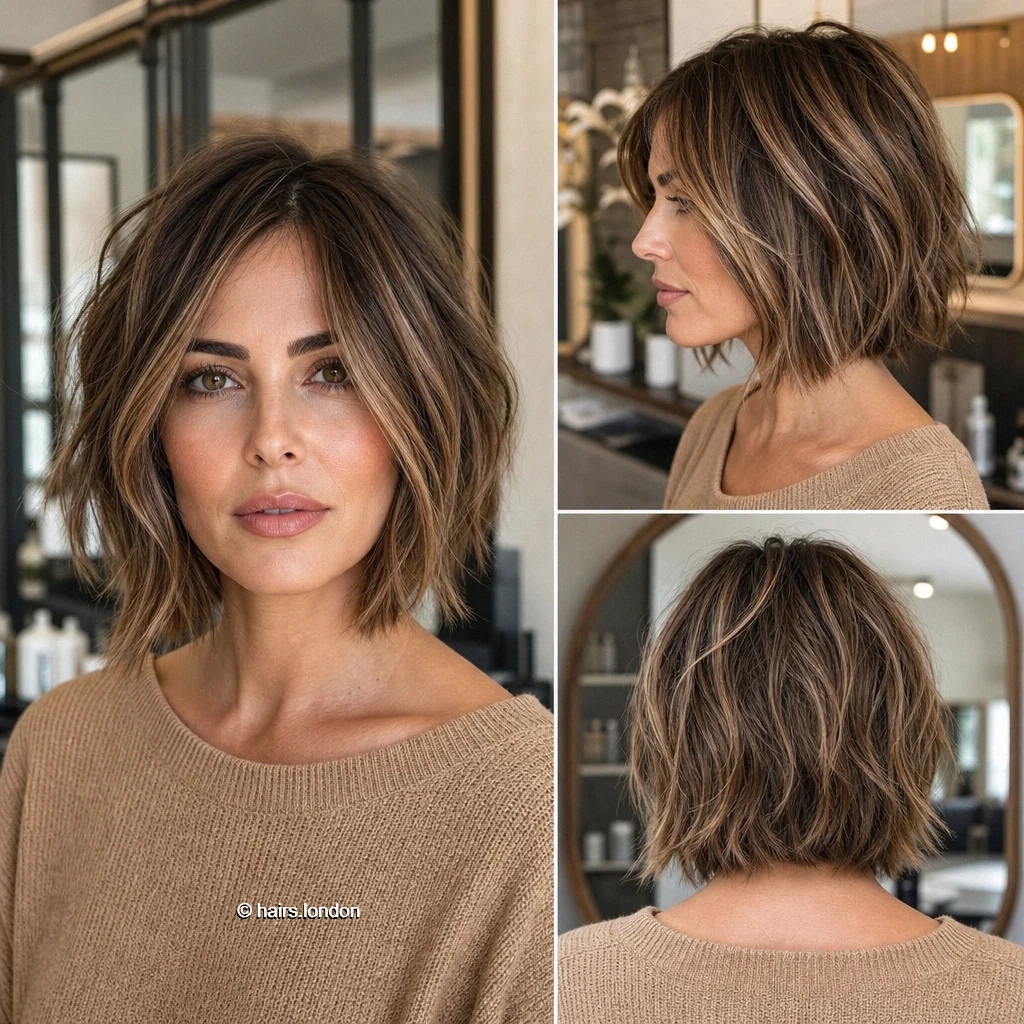
A shaggy, layered outline gives this jaw-length bob casual, airy movement through its sides and crown. Beige highlights pick out loose bends against its darker base. The off-center front falls in separated, face-framing pieces. Back layers appear textured, with a lightly broken neckline. Ask for enough remaining weight to prevent overly wispy ends. Scrunch in lightweight foam and allow natural bends to develop. Spot-style straighter pieces rather than curling the entire haircut. This option may suit hair that already forms soft waves. Very fine hair could need fewer layers for fullness. Trim when the uneven ends lose their deliberate shape.
16. Feathered Bob with a Soft Fringe
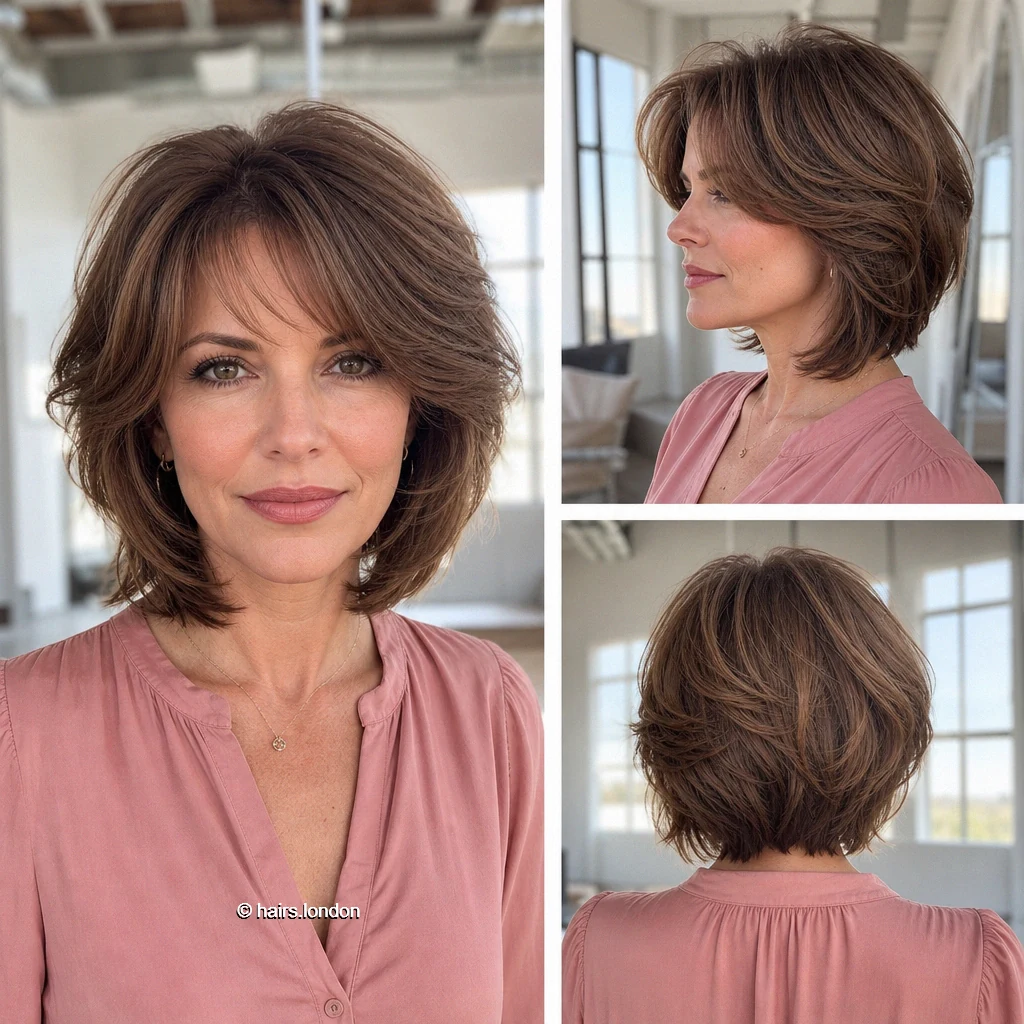
This softly layered bob sits around the jaw and neck. Rich, warm brunette color looks lighter where its layers catch light. A wispy fringe blends into longer, side-swept front pieces. The back shows soft, feathered movement rather than a blunt edge. Ask how the fringe will sit with your growth patterns. Lift the roots gently, then guide layers away from the face. Dry the fringe early before it separates into unwanted sections. This style may suit hair that holds airy, rounded volume. Thick hair could need controlled shaping to prevent excess width. Maintain the fringe separately between broader shape trims.
17. Smooth Jaw-Length Bob in Deep Brown
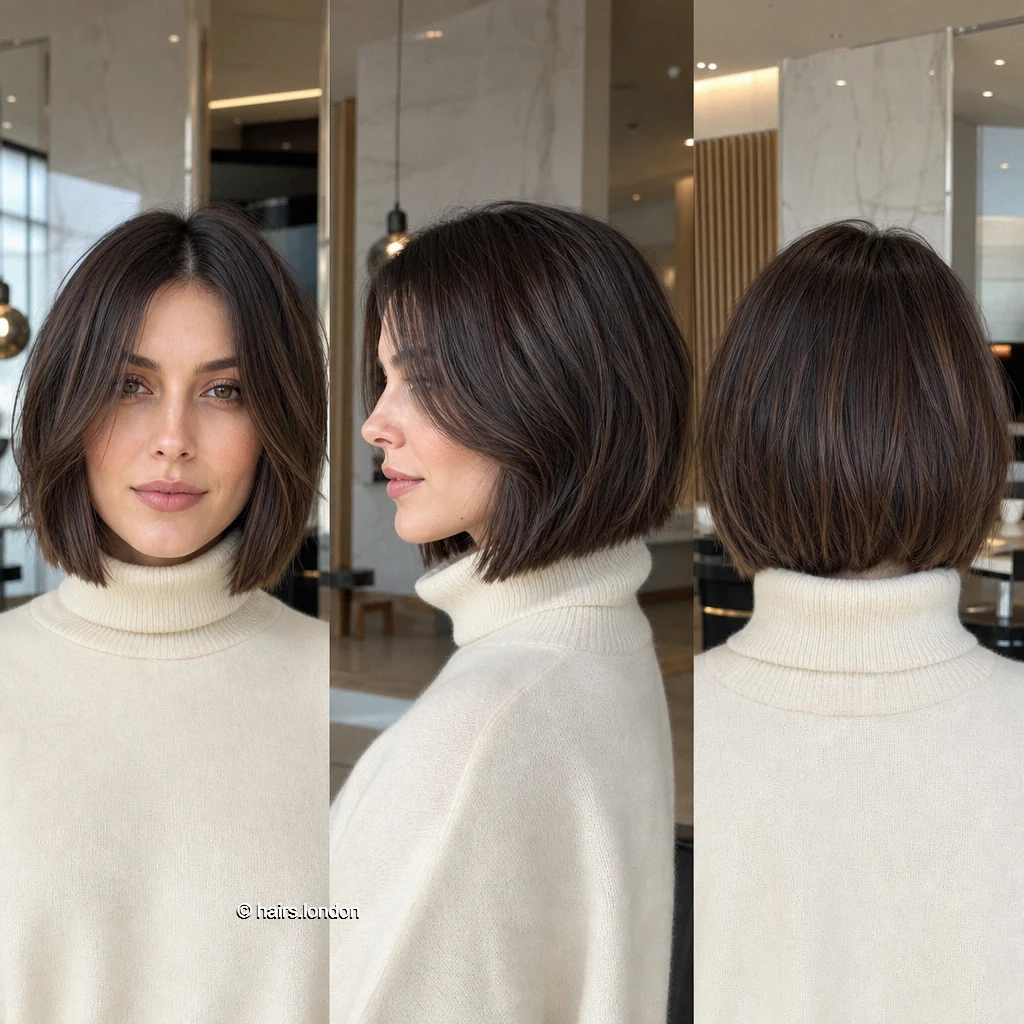
A soft, near-center part divides this glossy, dark brown bob evenly. The front reaches the jaw, framing the face without fringe. Side and back views show a neat, gently curved perimeter. Its lower edge looks full, with only restrained, natural surface movement. Ask for clean ends before considering any additional layering. Direct airflow down the hair, turning the tips slightly inward. Use a light serum sparingly to maintain its smooth finish. This shape may suit hair that naturally lies relatively straight. Dense hair might need subtle bulk control beneath the surface. Regular edge trims keep the neckline from losing precision.
18. Softly Rounded Bob with a Natural Part
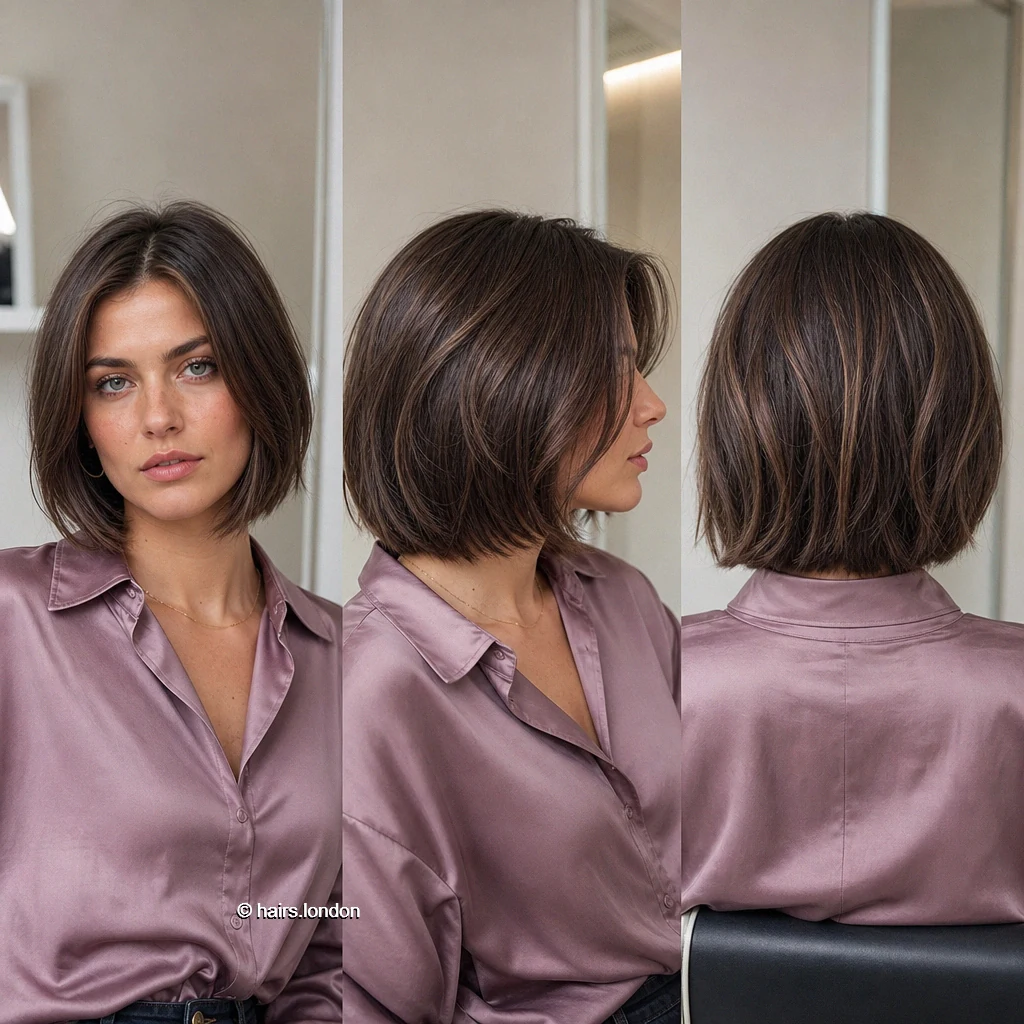
This deep, softly glossy brunette bob falls around the jawline and upper neck. Its natural-looking part allows the front to sweep gently aside. The profile reveals a softly rounded, gently layered shape with modest layering. At the back, lightly textured ends form a compact outline. Ask for a perimeter that stays full when air-dried. Smooth the ends with a brush, or encourage existing bends. A flexible cream can tame flyaways without removing movement. This option may suit hair with slight natural body. Strong waves could make the finished length appear shorter. Revisit the cut once its rounded edge becomes uneven.
19. Center-Parted Brown Bob with a Full Perimeter
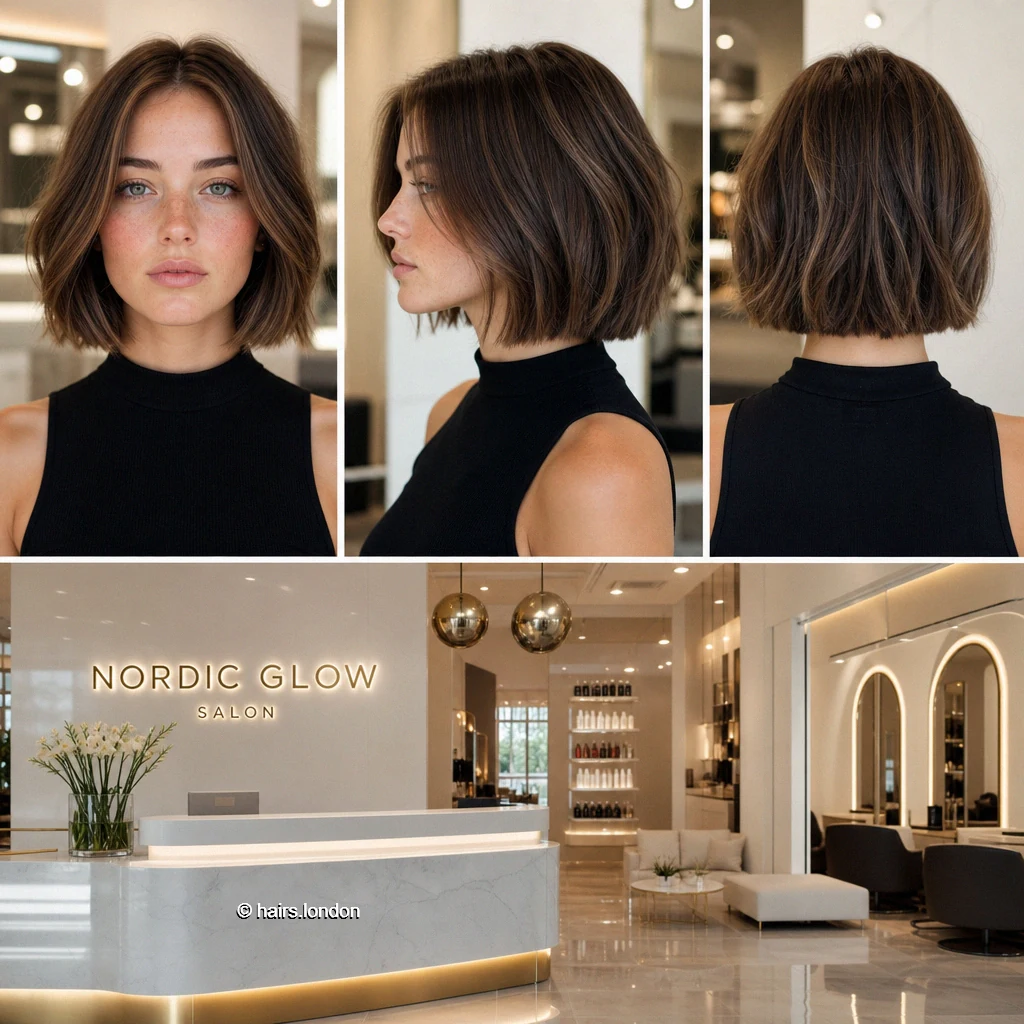
A center part gives this glossy brown bob softly balanced face framing. Its ends sit around the jaw, with slight visible bends. The profile stays fairly level rather than sharply angled forward. Behind, the full perimeter shows gentle texture at the neckline. Ask your stylist to protect density through that lower edge. Blow-dry smooth, then loosen selected pieces for natural movement. Keep product away from the roots if they flatten easily. This shape may suit hair with enough body for fullness. Very thick hair could benefit from restrained internal weight removal. Trim before the clean back edge begins looking uneven.
20. Relaxed Brunette Bob with Outward Movement
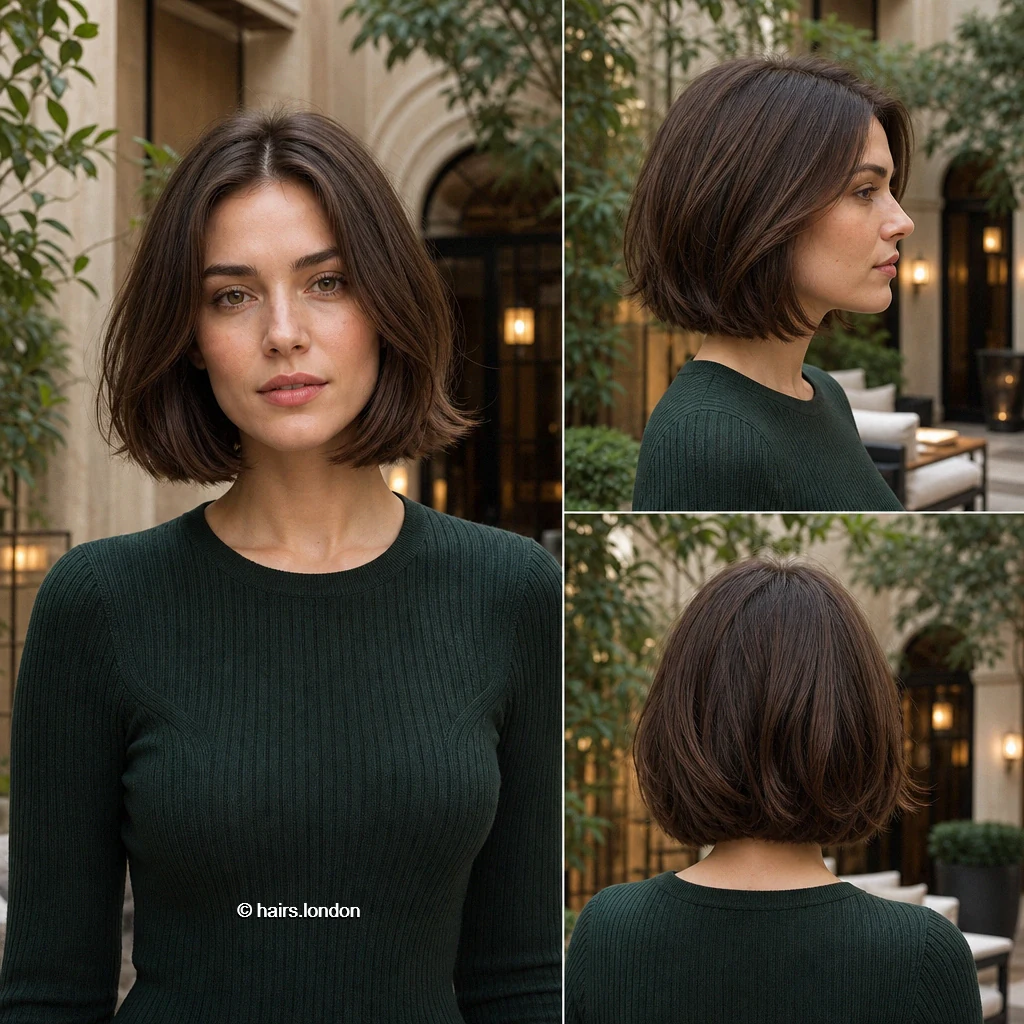
This softly shaped brunette bob sits just below the jaw in front. Its center part opens into soft, cheek-framing sections without bangs. The side view shows gently moving ends rather than precision points. Behind, a rounded outline finishes with subtle outward flicks. Ask for enough length to accommodate your natural movement. Air-dry with lightweight cream, or briefly brush the perimeter smooth. Let selected tips turn outward instead of forcing uniform ends. This shape may suit hair with a slight natural wave. Straighter hair might need minimal heat to create those flicks. Trim when the neckline stops holding its relaxed outline.
How to Choose Your Bob Length and Shape
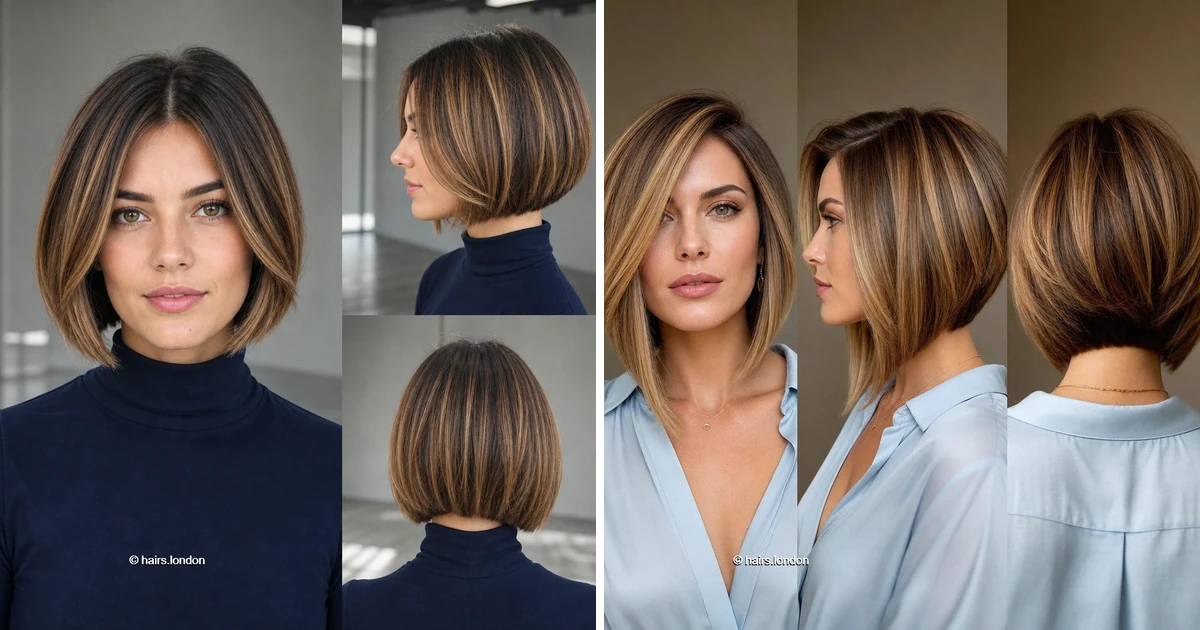
Start with the point where you want the ends to fall: near the jaw, below the chin, at the neck or toward the shoulders. A shorter perimeter puts more attention on its outline; a longer bob leaves more room for bends and layers. If you like a longer front, distinguish that A-line shape from back graduation, which adds visible lift and a shorter neckline. Consider how much your hair springs up when dry before choosing the final length.
Styling Fine, Thick, Wavy and Curly Textures
Fine hair often benefits from a substantial perimeter and lightweight styling products; too many short layers can make the ends look sparse. With thick hair, ask about discreet internal shaping rather than removing weight indiscriminately from the edge. For waves, scrunch or diffuse first and refine only the pieces that need help. For curls, plan the shape around dry shrinkage and curl patterns, then use a curl-friendly product to define movement without building a bulky, rigid outline.
Keeping Highlighted Bob Color Fresh
The images range from deep brunette to brown with beige, honey and blonde highlights. Lighter pieces near the face can become more noticeable as they grow, so discuss how often you want to refresh them. Use color-appropriate cleansing and heat protection, especially if you regularly smooth or curl your bob. A stylist can advise whether a gloss would help maintain the tone you want without changing the haircut’s shape.
Maintaining the Perimeter and Graduation
A smooth, full-edged bob shows uneven growth sooner than a deliberately textured one. Check how the ends fall after your usual wash-and-style routine, not only on salon day. Graduated bobs also depend on a clear relationship between the shorter neckline and longer sections, so back-shape trims may matter even while you keep growing the front. With a layered lob, watch for ends that turn awkwardly against your shoulders.
What to Discuss with Your Stylist
Bring front, side and back views of the bob you like. Point out the features that matter most: front length, part, fringe, perimeter fullness, visible graduation or ease of air-drying. Describe your density, natural texture, growth patterns and realistic daily styling time. Ask your stylist to show where your ends will sit when dry and to explain which details might need adapting for your hair.
Frequently Asked Questions
What is the difference between a bob and a lob?
A bob typically finishes around the jaw, chin or neck, while a lob is a longer bob that approaches or reaches the shoulders. The boundary is less important than where the ends fall on you.
How is an A-line bob different from a stacked bob?
A-line describes a perimeter that is longer in front than in back. Stacked or graduated describes shorter, built-up shaping at the back. A cut can show both features, but one does not automatically imply the other.
Which bob shape can help fine hair look fuller?
A strong perimeter with restrained layering can help fine ends appear more substantial. Your stylist can adjust the length and weight line to suit your density.
Can very thick hair wear a rounded bob?
Yes, depending on its texture and growth patterns. Thoughtful internal weight removal may control bulk while keeping the outer perimeter full.
Can a bob work with natural curls?
It can. Plan for shrinkage, curl pattern and the way the shape looks dry; a curl-conscious cut need not copy the outline of a straight-haired reference exactly.
Should I add a fringe to my bob?
A fringe changes both the front shape and daily styling. Discuss your hairline, cowlicks and willingness to dry or refresh it between cuts.
Which bob needs the least daily styling?
Usually the one that follows your natural texture and part. A smooth finish, pronounced graduation or deliberately flicked ends may take more work if your hair does not fall that way.
How often should I trim a bob?
Trim when the perimeter, neckline or layers no longer sit as intended. A precise edge or short graduated back may need attention sooner than a loose, longer bob.
Will a side part change how my bob looks?
Yes. It can shift visible volume and create a stronger sweep across the front. Check for growth patterns that affect whether the new part stays in place.
How do I keep a wavy bob from looking bulky?
Preserve a useful perimeter, but ask your stylist whether selective internal shaping would release excess width. Style with lightweight product and avoid repeatedly brushing out dried waves.
How can I grow out a graduated bob?
Tell your stylist you want to retain length. They can gradually rebalance the shorter back against the longer front and tidy the neckline without recreating the original graduation.
Do highlights change which bob shape I should choose?
Color does not dictate the cut, but highlights can draw attention to a side sweep, layers or an angled perimeter. Consider how the placement will look as both the color and haircut grow.
Conclusion
The most useful reference is not just a bob you like from the front: its side profile, back outline and everyday texture matter too. Choose the length and weight line you want to maintain, then work with your stylist to adapt the details to your hair.