

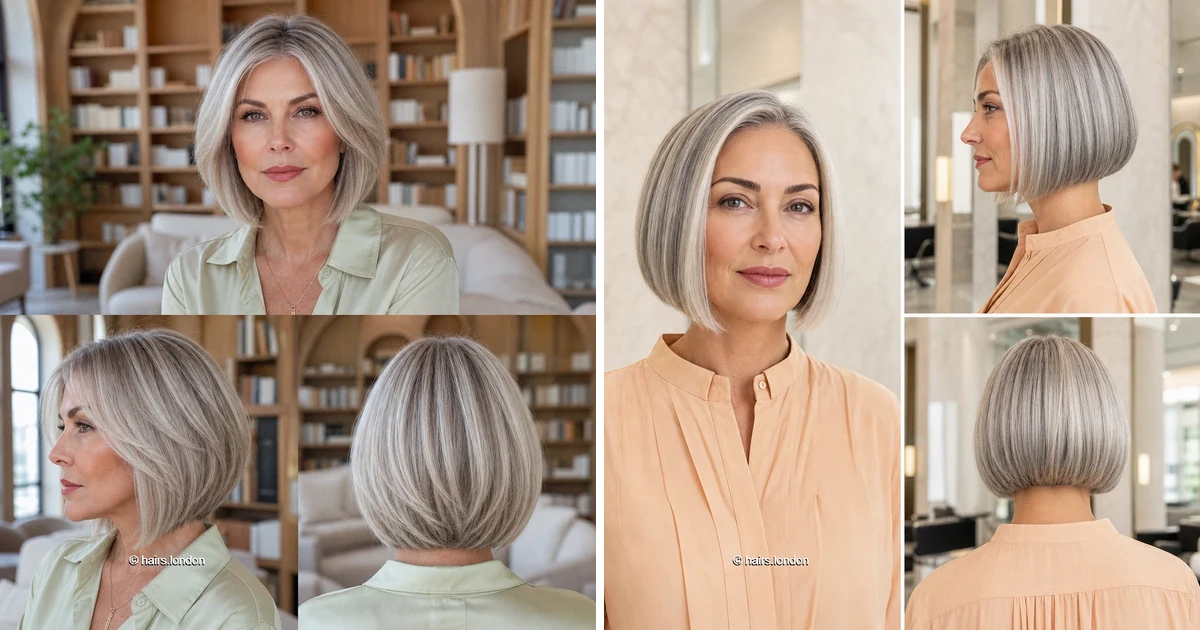
11. Airy Silver Bob with Feathered Ends
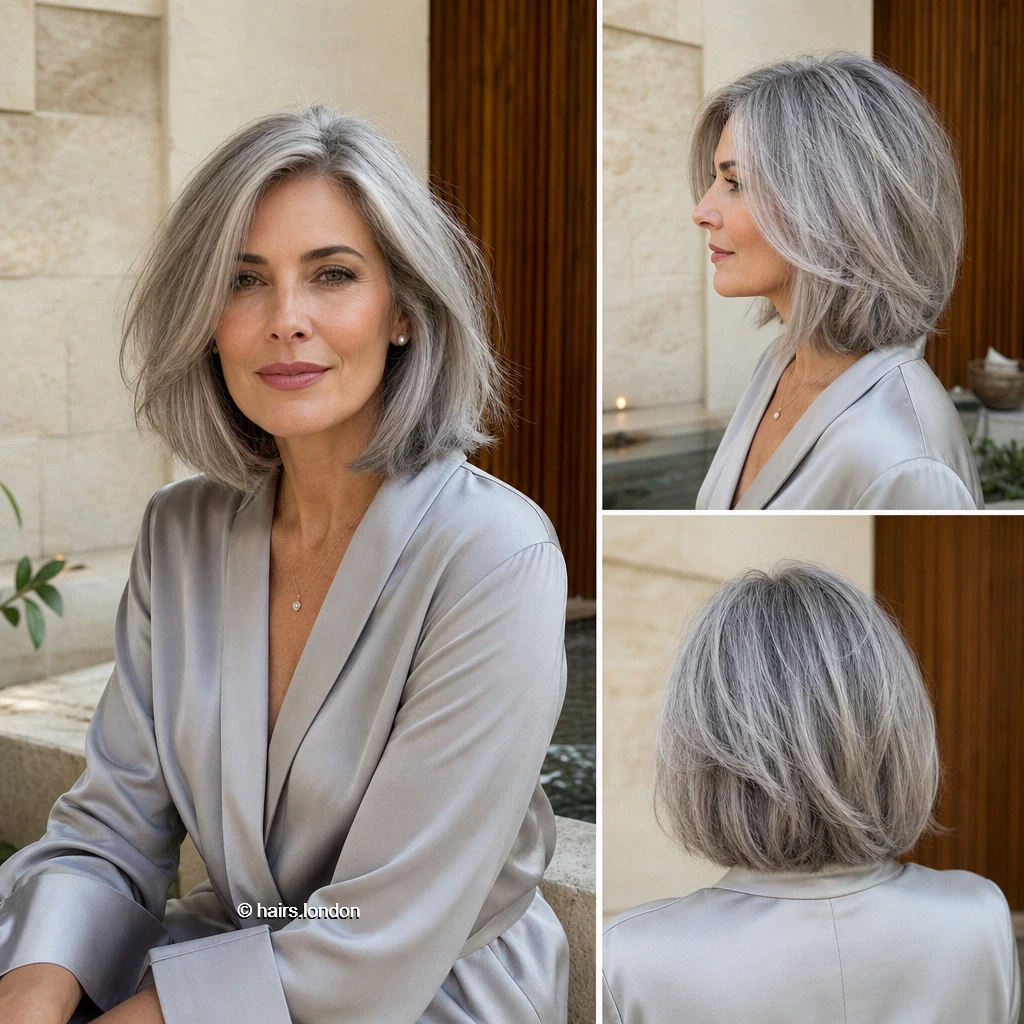
Soft silver layers make this jaw length bob airy throughout. The side part feeds a long, loose front sweep forward. Feathered ends create movement without a hard blunt line below. Back layers overlap above the neck in visible sections throughout. Cool gray at the roots deepens lighter silver lengths visually. Ask for light shaping that preserves fullness near the cheeks. Dry loosely with fingers for lift and soft separation throughout. Use minimal cream so the ends retain their swing daily. Refresh the outline once layers begin losing their shape noticeably. This works best when your density supports airy layers comfortably.
12. Silver Graduated Bob with Sweeping Lift
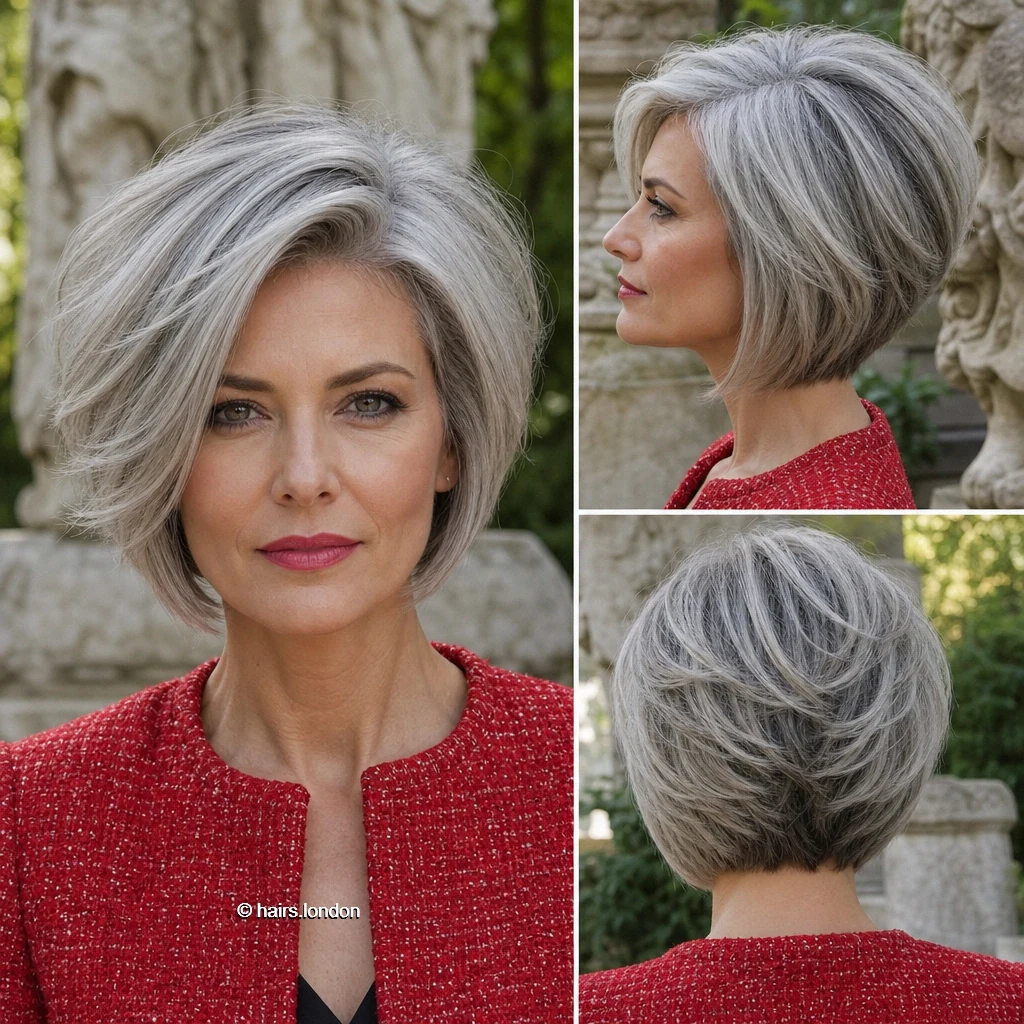
An elevated side sweep crowns this compact silver bob shape. The front curves around the jaw, above the neckline behind. Visible rear layers graduate into a closely tapered nape below. White strands brighten the gray shadows underneath the crown area. Request sufficient top length to create that sweeping lift easily. Dry roots against their growth direction for temporary volume there. Guide the fringe sideways rather than teasing it stiff daily. Shorter nape maintenance matters more than polishing every strand perfectly. Consider crown density and cowlicks before choosing this silhouette yourself. Ask how often the tapered back will need trimming again.
13. Silver Angled Bob with Rounded Graduation
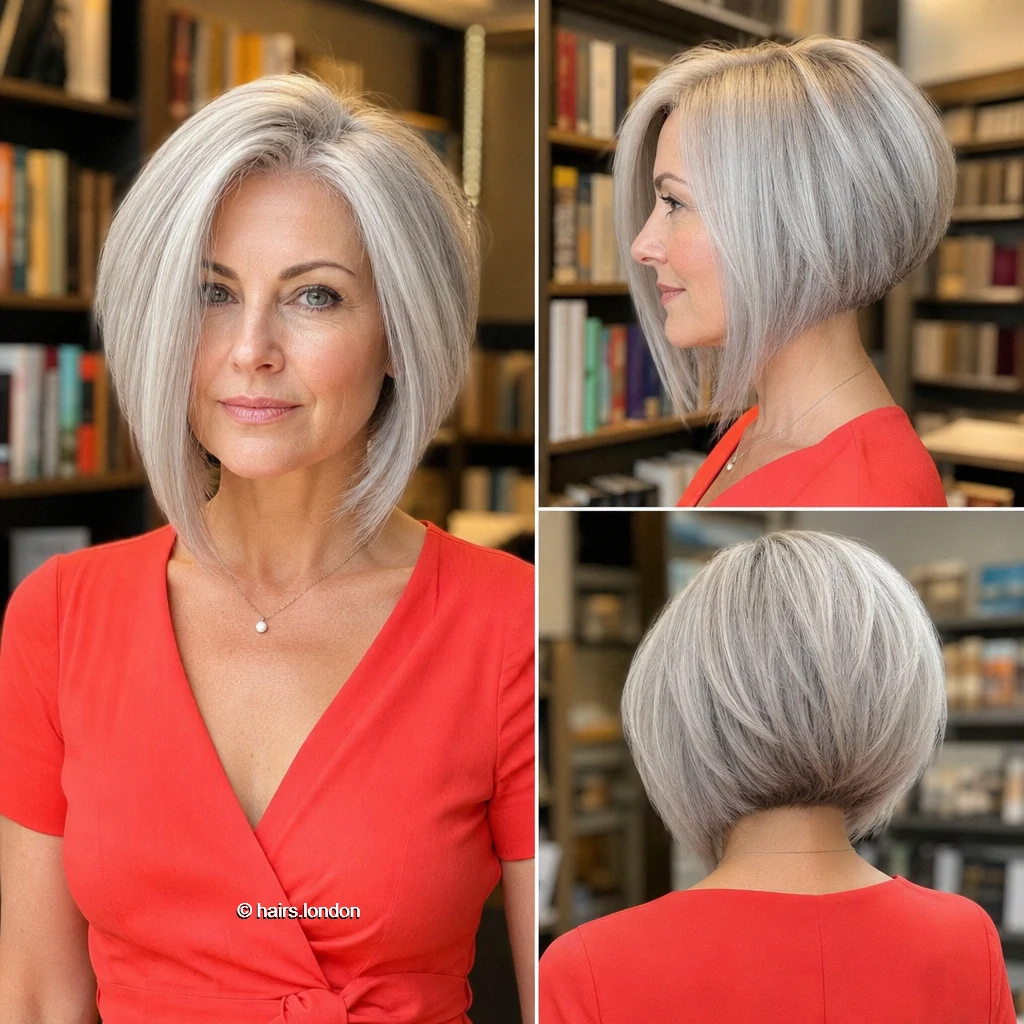
Long silver front sections give this bob forward emphasis clearly. The front extends below the chin toward the neck base. At the back, rounded graduation narrows into the nape area. A side part drapes the fuller front across one cheek. Bright white lengths contrast with smoky gray near roots underneath. Ask for clear front length without removing rear fullness entirely. Brush longer pieces downward, then lift the back gently upward. Maintain the nape before its taper grows visually heavy again. This shape requires more precision than a tousled bob daily. Discuss whether your texture holds that distinct front angle well.
14. Choppy Silver Bob with Piecey Fringe
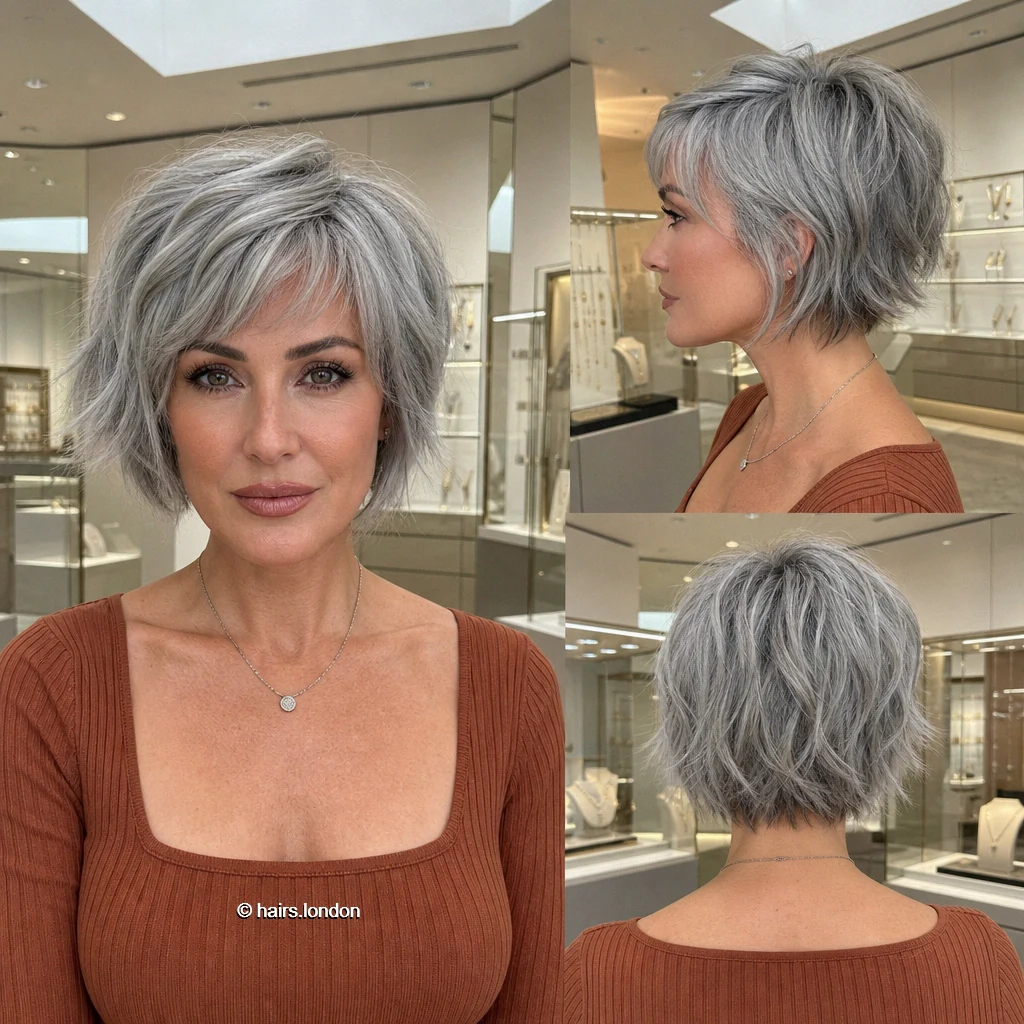
Choppy silver layers create a tousled, short bob silhouette throughout. Piecey fringe grazes the brows above wispy side sections here. The back ends around the upper neck with uneven texture. Deeper gray beneath bright silver adds visible depth at roots. Ask for movement without cutting the perimeter excessively thin overall. Work lightweight paste through dry ends for loose separation daily. Let natural bends show instead of forcing smooth symmetry throughout. Keep the fringe manageable with brief, targeted blow drying sessions. Trim when the short outline overwhelms the neck area visually. Discuss density before adding layers that remove substantial weight unnecessarily.
15. Angled Silver Bob with a Dramatic Sweep
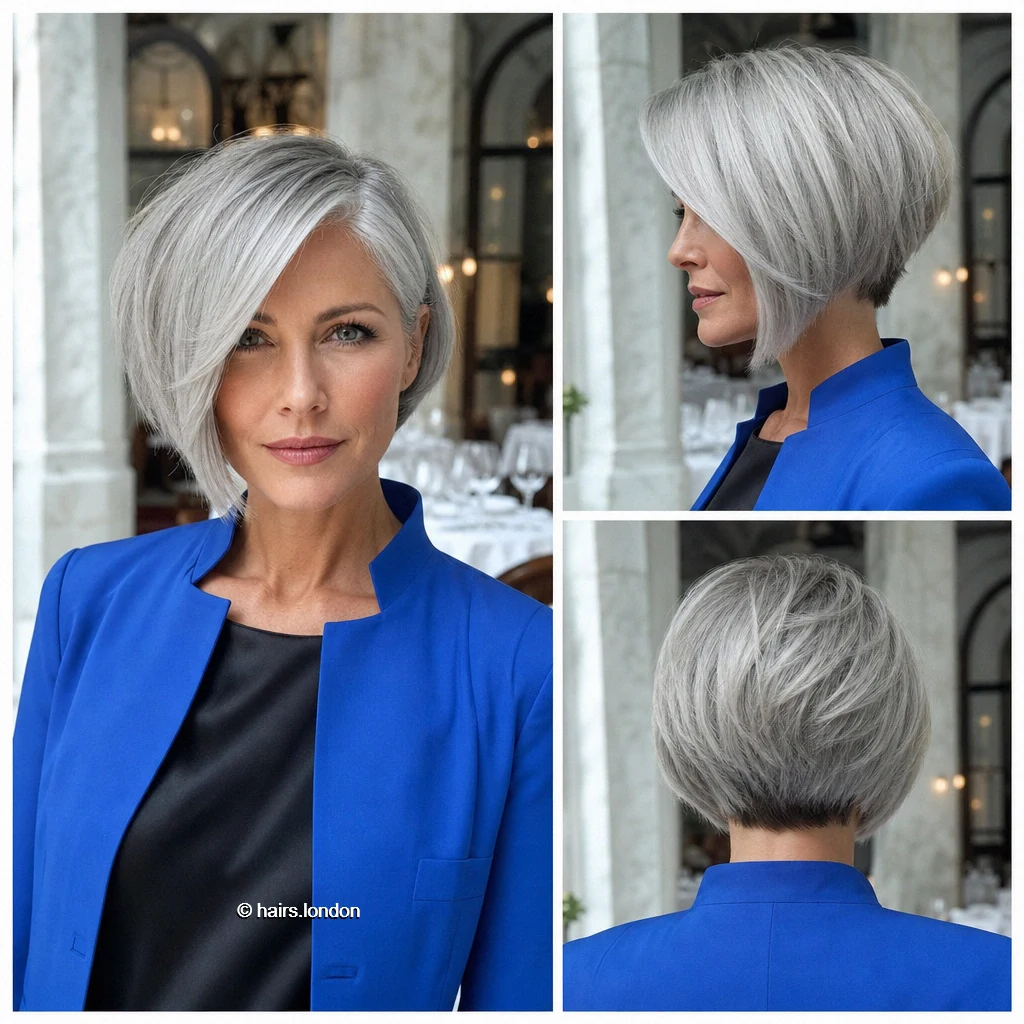
An angled silver bob combines a dramatic front sweep visibly. Longer pieces descend below the jaw against shorter sides behind. Back layers build rounded fullness above a tapered nape line. Bright silver covers deeper gray shading beneath the layers here. Ask for a defined forward angle and manageable fringe length. Blow dry the front across, smoothing its longer tips gently. Lift the crown lightly without making the back bulky looking. Trim the nape frequently enough to preserve its contrast clearly. Allow for natural growth patterns near the shorter side especially. Discuss whether your density supports such pronounced directional styling daily.
How to Choose Your Silver Bob Length and Shape
Start with the point where you want the front to land: near the jaw for a compact outline, or below it for more face-framing length. Then compare the side and back views. An A-line bob has a longer front; a stacked or graduated bob also shows shorter layers building shape at the back. Choose a fuller perimeter if your hair needs the appearance of weight, or consider gentle layers if bulk is the concern. Your growth patterns, density and willingness to style should guide the final shape.
Styling Fine, Thick, Wavy and Curly Textures
For fine hair, use a light root product and avoid overtexturizing the base of a bob. Thick hair may benefit from carefully placed internal shaping that controls bulk without leaving thin ends. Encourage natural waves with a small amount of foam and gentle diffusing; smooth only the pieces that need definition. For curls, plan the finished length around shrinkage and shape the perimeter in a way that lets curls sit together. Dry a fringe in its intended direction first, then keep finishing product light enough to preserve movement.
Keeping Silver and Gray Color Fresh
These images show varied mixes of white, silver and deeper gray, so upkeep depends on whether the color is natural, lightened or toned. If you color your hair, ask your colorist how often your particular shade needs refreshing. Use gentle cleansing and protect lightened hair from unnecessary heat. A purple product may help with unwanted warmth, but use it according to your colorist’s advice rather than assuming every silver shade needs the same routine.
Maintaining the Bob Perimeter and Graduation
A smooth, precise perimeter shows growth differently from a feathered one. Book trims when a blunt or angled line begins to lose its shape; a softly layered bob may allow more flexibility. Graduated backs and cropped napes need particular attention because extra length can change where the fullness sits. Between appointments, direct airflow down the sides to keep the outline smooth, while lifting roots lightly where the shape needs volume.
What to Discuss with Your Stylist
Bring front, side and back reference views, and point to the exact perimeter and amount of rear fullness you like. Explain how your hair falls when air-dried, where cowlicks affect your part or fringe, and how much daily blow-drying you will actually do. Ask which visible features are achievable with your density and natural texture, whether internal shaping would reduce bulk or sacrifice weight, and how often the proposed cut will need reshaping.
Frequently Asked Questions
What is the difference between a bob and a lob?
A bob generally finishes around the jaw or neck; a lob, or long bob, reaches closer to the shoulders. The exact impression also depends on the angle and where the longest front pieces fall.
Is an A-line bob the same as a stacked bob?
No. A-line describes a perimeter that is longer at the front. Stacked describes visible graduation that builds fullness at the back. A cut can have both features.
How do I choose between a rounded and an angled silver bob?
Compare how much length you want beside your face and how prominent you want the front-to-back contrast to look. A rounded shape keeps a softer outline; an angled one makes the longer front more noticeable.
Can fine hair support a layered bob?
It can, but the amount and placement of layering matter. Ask your stylist to retain enough weight at the perimeter if your ends tend to look sparse.
How can thick hair avoid a bulky bob shape?
Discuss controlled internal shaping rather than simply thinning the visible edge. The best approach depends on where your hair carries weight and how you wear it.
Can natural curls work with a bob?
Yes, provided the length and shape account for curl shrinkage and the way your curls group together. Review the intended dry outline with your stylist before cutting.
Should I add a fringe to my silver bob?
A fringe can soften a compact bob or connect to a side sweep, but its upkeep depends on your hairline and growth patterns. Decide whether you prefer drying it each day or letting it fall naturally.
What is the quickest way to style a smooth bob?
Direct the dryer downward, brush the perimeter into place and refine the front pieces. A light finishing product can control flyaways without flattening the shape.
How do I encourage movement in a layered bob?
Use a small amount of lightweight foam or styling cream, then dry with fingers or a diffuser. Separate the ends gently rather than coating them with heavy product.
How often should a bob be trimmed?
Trim when the perimeter, front angle or graduated back starts losing the shape you want. A closely tapered nape or precise line will usually call for earlier attention than a tousled outline.
Will a graduated bob be difficult to grow out?
It may need interim reshaping as the shorter back catches up with the front. Ask your stylist for a grow-out plan if you expect to move toward an even-length bob.
Does every silver bob need purple shampoo?
No. Product choice depends on whether your hair is natural gray or color-treated and whether unwanted warmth is present. Ask your colorist before adding a toning product.
Conclusion
The most useful distinction between these silver bob haircuts is their shape, not just their shade. Notice where each front section ends, whether the back is softly layered or visibly graduated, and how much styling creates the finish. Use those details to choose a reference that fits your hair and the upkeep you want.