

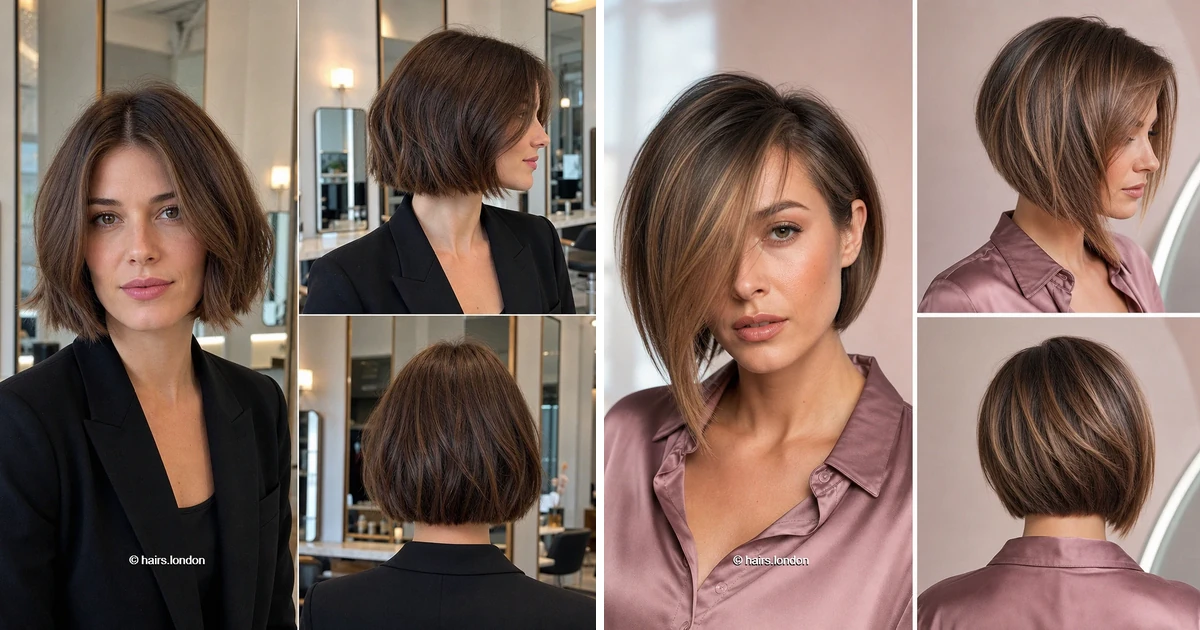
These brown bob haircuts show how much a short silhouette can change through its perimeter, layers, parting and finish. The images move from softly rounded jaw-length bobs to shorter graduated shapes, undone texture and distinctly longer fronts. Use the front, side and back views to decide which details suit your hair density, natural texture and appetite for daily styling.
1. Softly Tousled Jaw-Length Bob
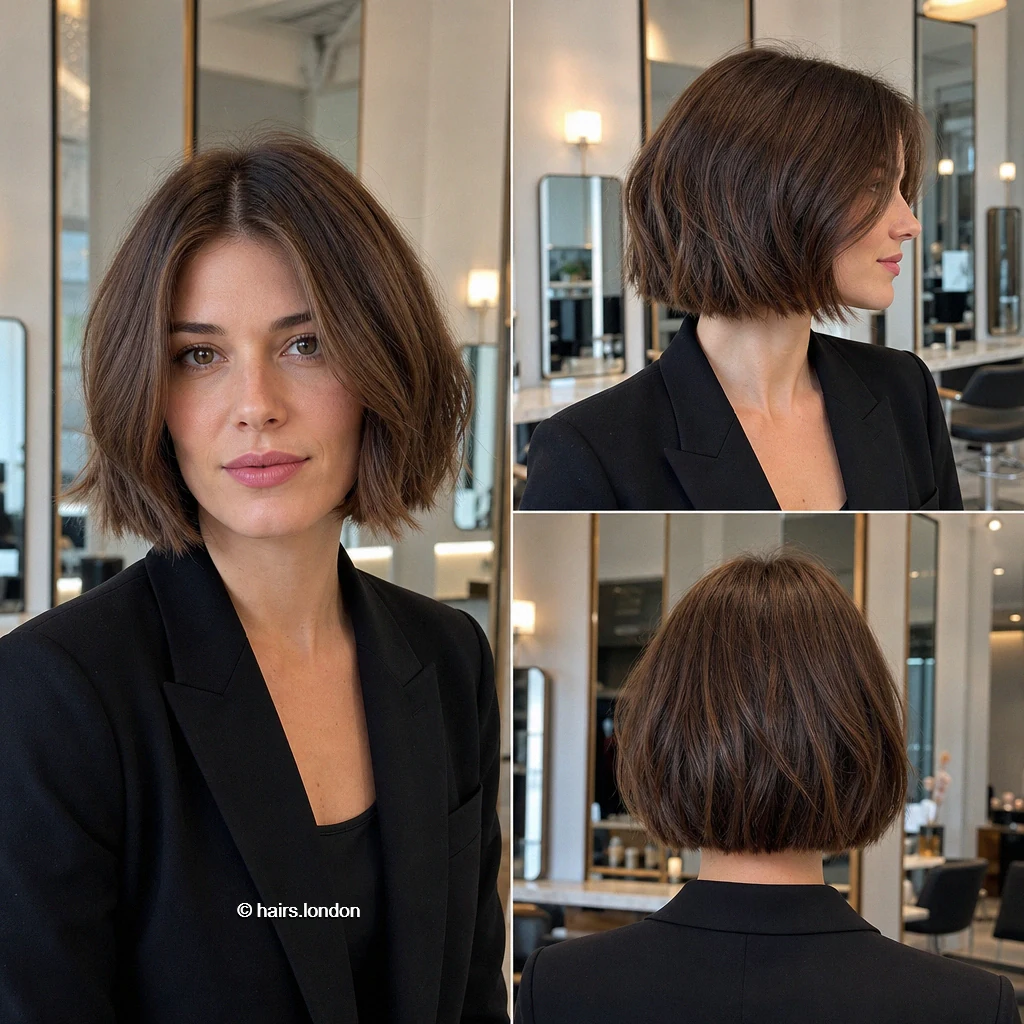
This chestnut brown bob sits around the jaw with broken ends and a relaxed middle part. The side view shows fullness rather than a sharply angled front. From behind, the perimeter looks compact and textured, with no pronounced stacked shape. Ask for subtle movement through the ends if your hair tends to expand at jaw level. A small amount of lightweight cream can define the loose bends without flattening them. Smooth the outer edge with your fingers while drying, then let pieces separate. Regular trims will keep the shape above the neck. Its easy finish depends on your natural movement.
2. Rounded Bob with Sweeping Front Pieces
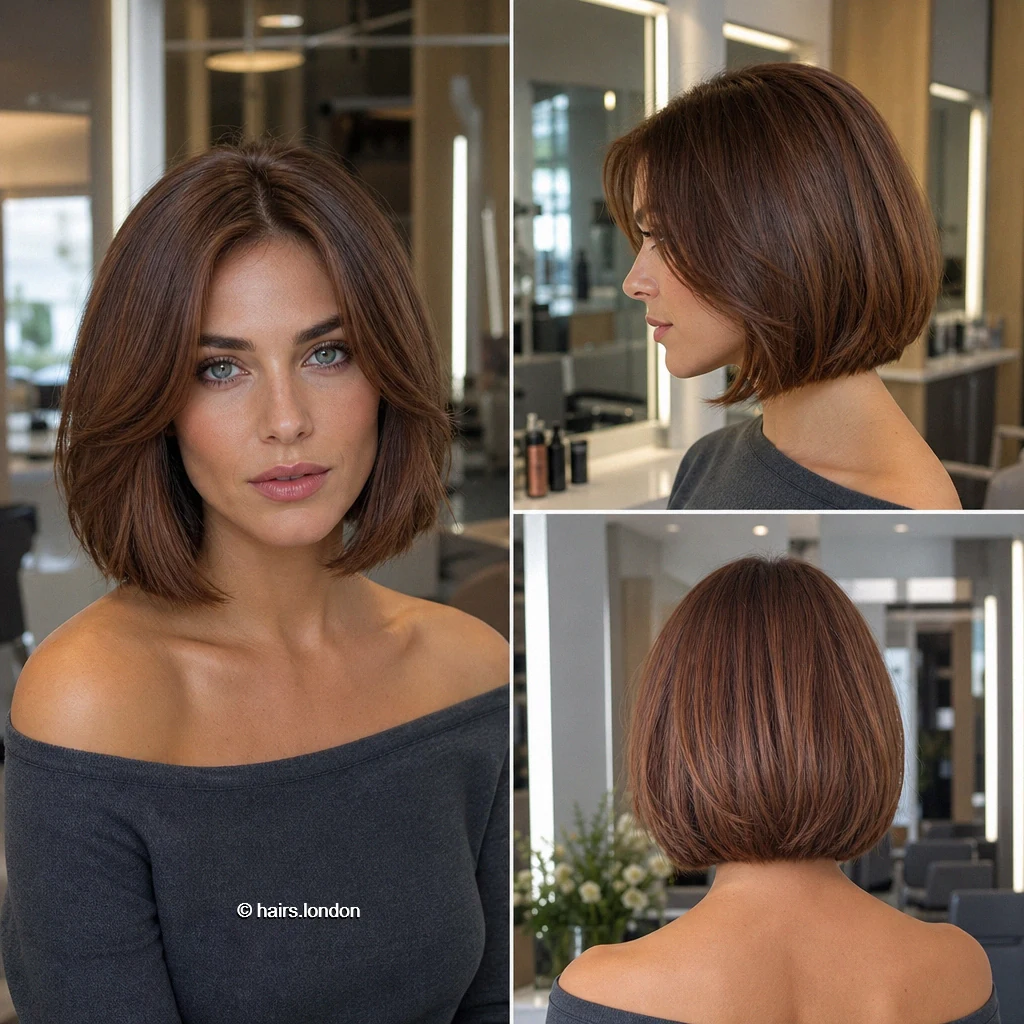
A warm brown finish emphasizes the rounded outline of this bob. Its front pieces sweep away from the face, while the ends sit near the jaw and neck. The back appears full and curved, without clearly exposed stacking. For a similar shape, ask your stylist to preserve weight along the lower edge and adjust internal layers to your density. Blow dry the front with a round brush, directing it back before allowing it to fall naturally. A little serum can tame flyaways without weighing down the perimeter. Book trims when the curve starts dropping or the front loses its swing.
3. Smooth Bob with a Tucked Under Perimeter
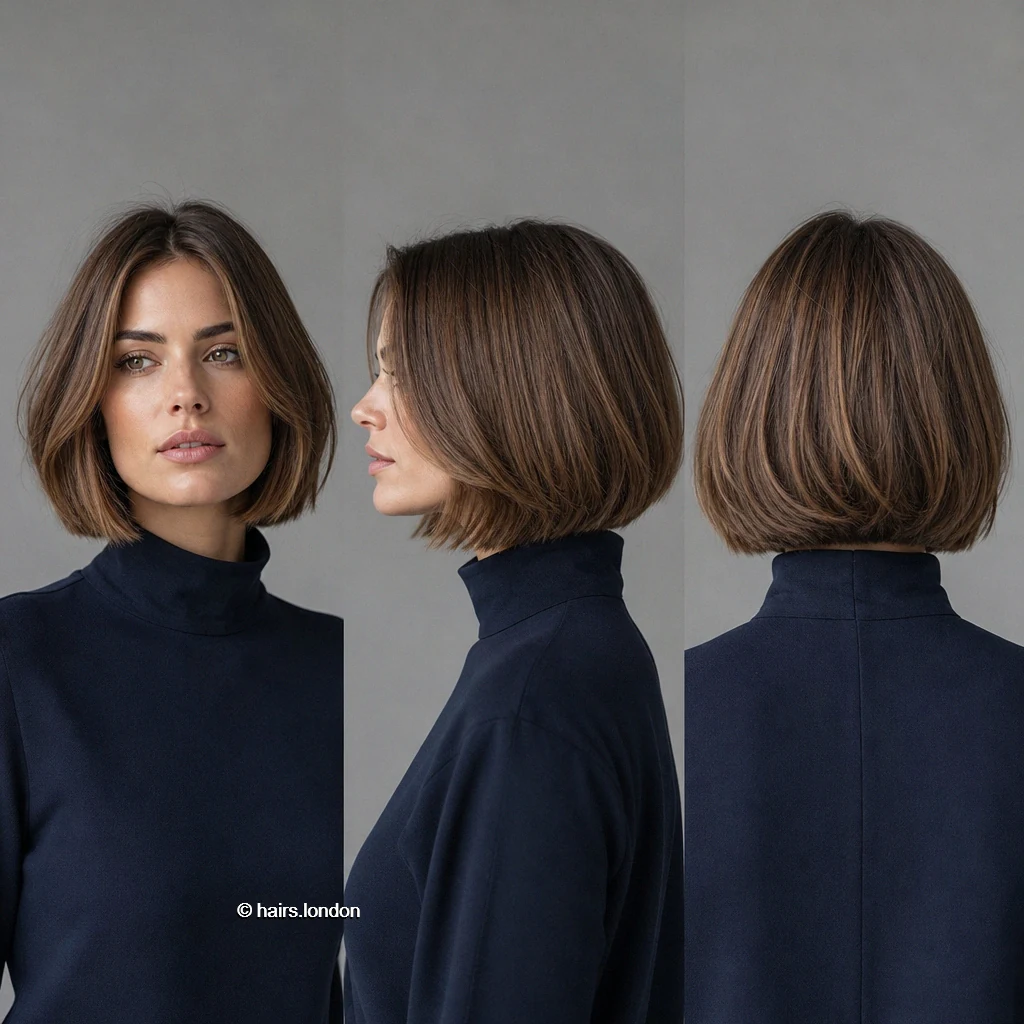
This medium brown bob has a centered part, face framing sections and a rounded lower edge. In profile, the front falls around the jaw, while the back sits close to the neck. The rear view shows a smooth, full weight line rather than obvious stacked layers. If your hair is fine, ask whether keeping the perimeter substantial will make the shape easier to maintain. For thicker hair, discreet internal weight removal may help it turn inward. Dry with a paddle brush, then bend only the tips under. Trim the ends before the tidy outline begins to spread across the shoulders.
4. Sleek Side-Parted Bob with a Rounded Back
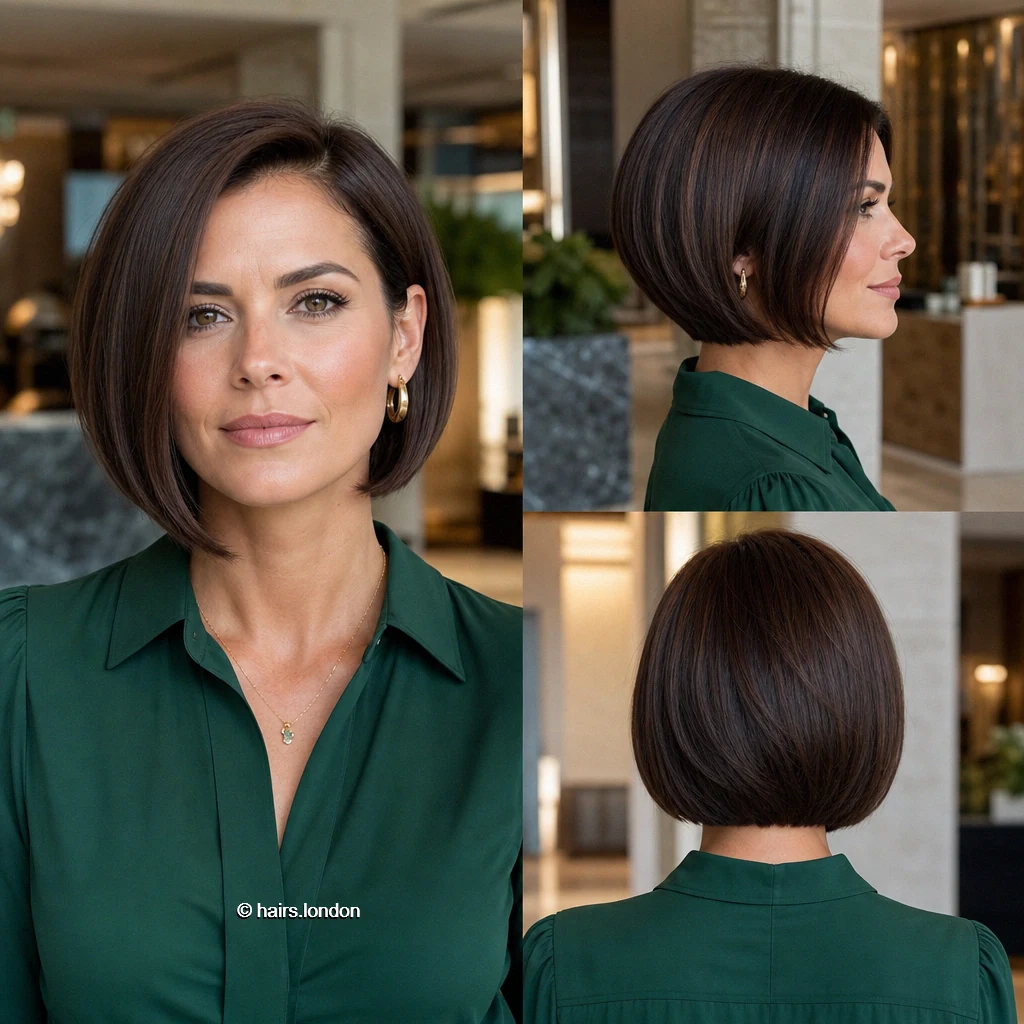
A deep brown tone and glossy finish make the rounded silhouette clear. The side part gives one front section a longer sweep, but the overall cut remains around jaw length. Its back looks close to the neck and curved; distinct stacked layers are not visible. Ask your stylist to check how your parting and ear tuck affect the finished outline. Use heat protectant and a brush to polish the surface, keeping the ends gently inward rather than rigid. This controlled shape suits a routine that allows some drying time. Trim it when the lower edge loses its clean, curved finish.
5. Full A-Line Bob with Soft Brown Dimension
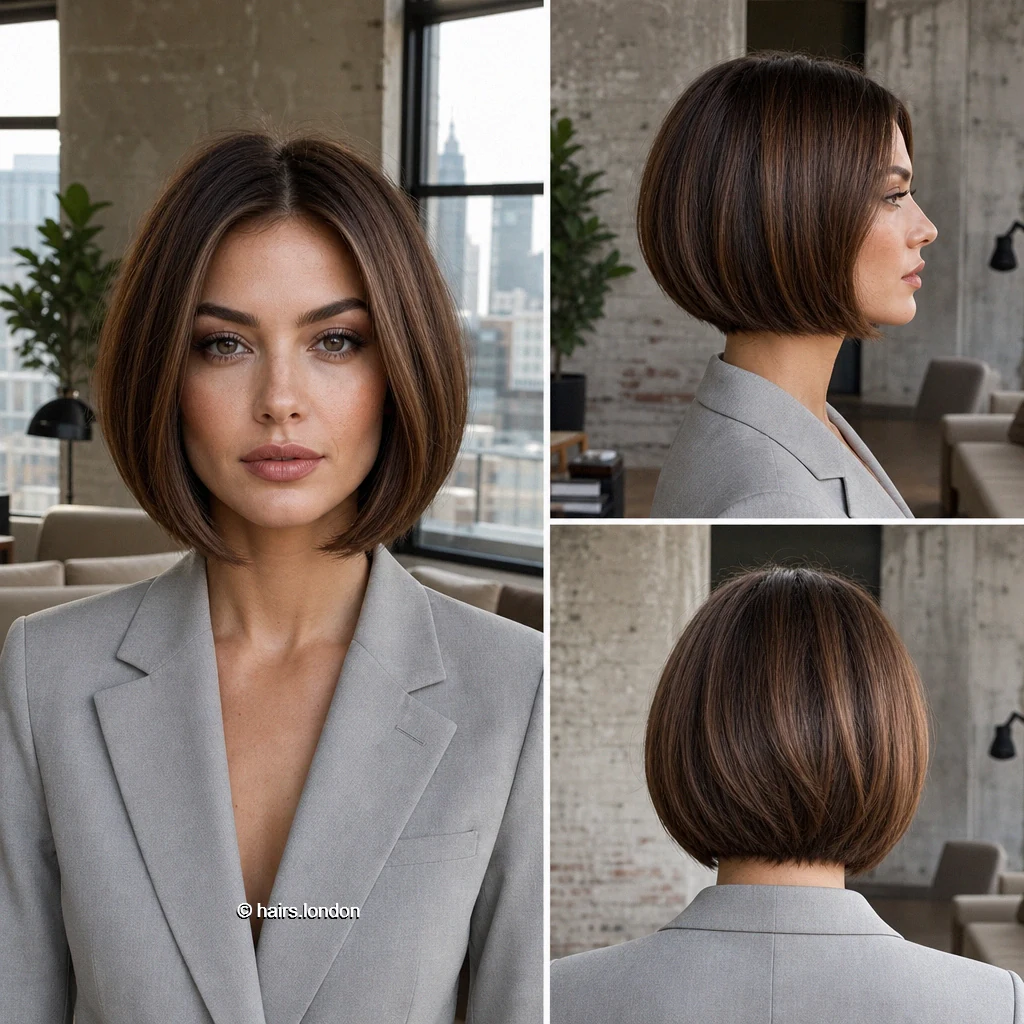
The center parted front reaches below the jaw, while the visible side and back finish higher at the neck. That longer front creates a modest A-line impression, paired with a full, rounded back. Lighter brown ribbons add dimension without overpowering the solid perimeter. Ask for a front length that works with your usual part and any hair that springs forward near the ears. Smooth the sides with a brush, directing the ends inward to show the outline. Dense hair may need placed weight removal. Maintain both the front points and back edge with trims before the angle becomes less distinct.
6. Straight Bob with a Clean Rounded Edge
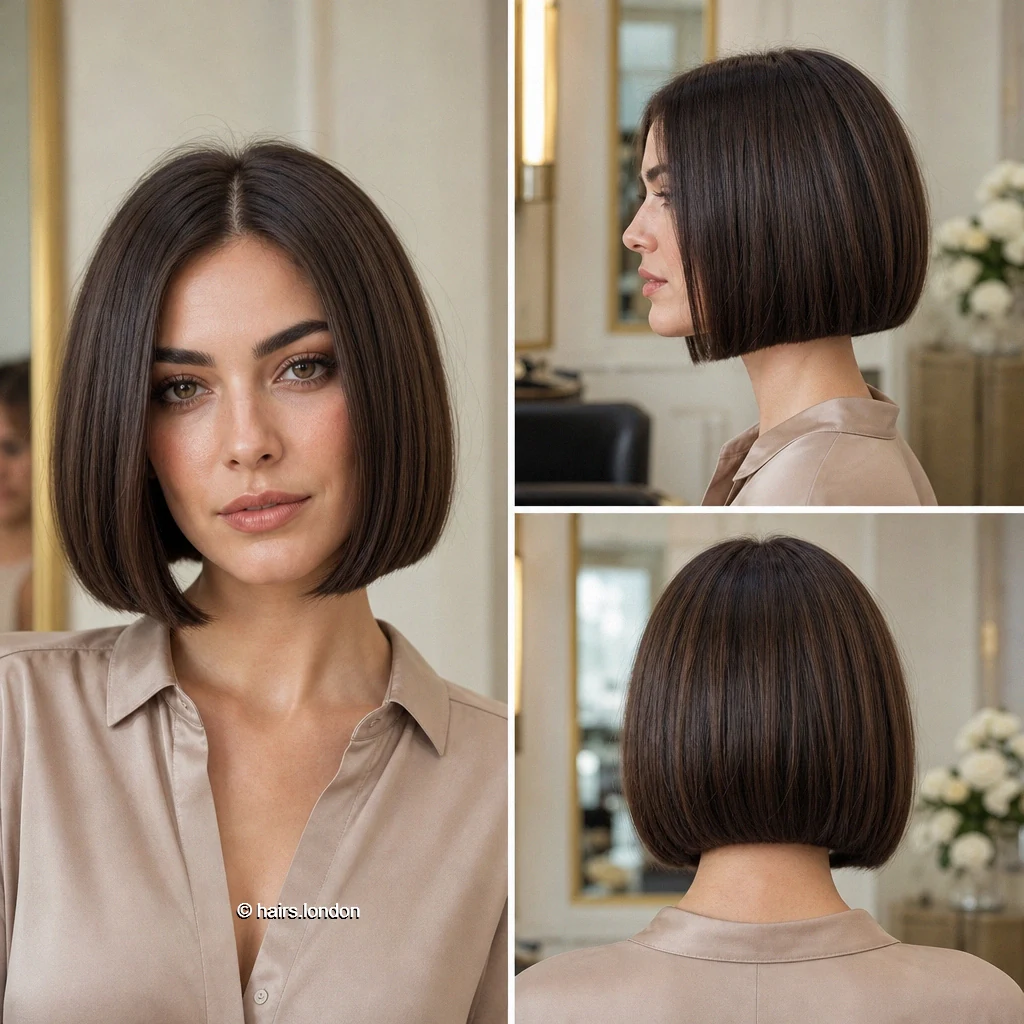
This dark brown bob has a near center part and a smooth, compact outline. The front sits around the jaw, while the visible back curves neatly above the neck. Its edge looks substantial rather than heavily layered, giving the straight surface a crisp finish. Ask whether a mostly solid perimeter will work with your density and natural wave pattern. Dry downward with a brush, then turn the last section inward instead of rolling the entire length. Keep finishing products light so the ends move freely. Schedule a trim once the bottom line starts looking uneven or the front falls awkwardly.
7. Polished Bob with Subtle Front Length
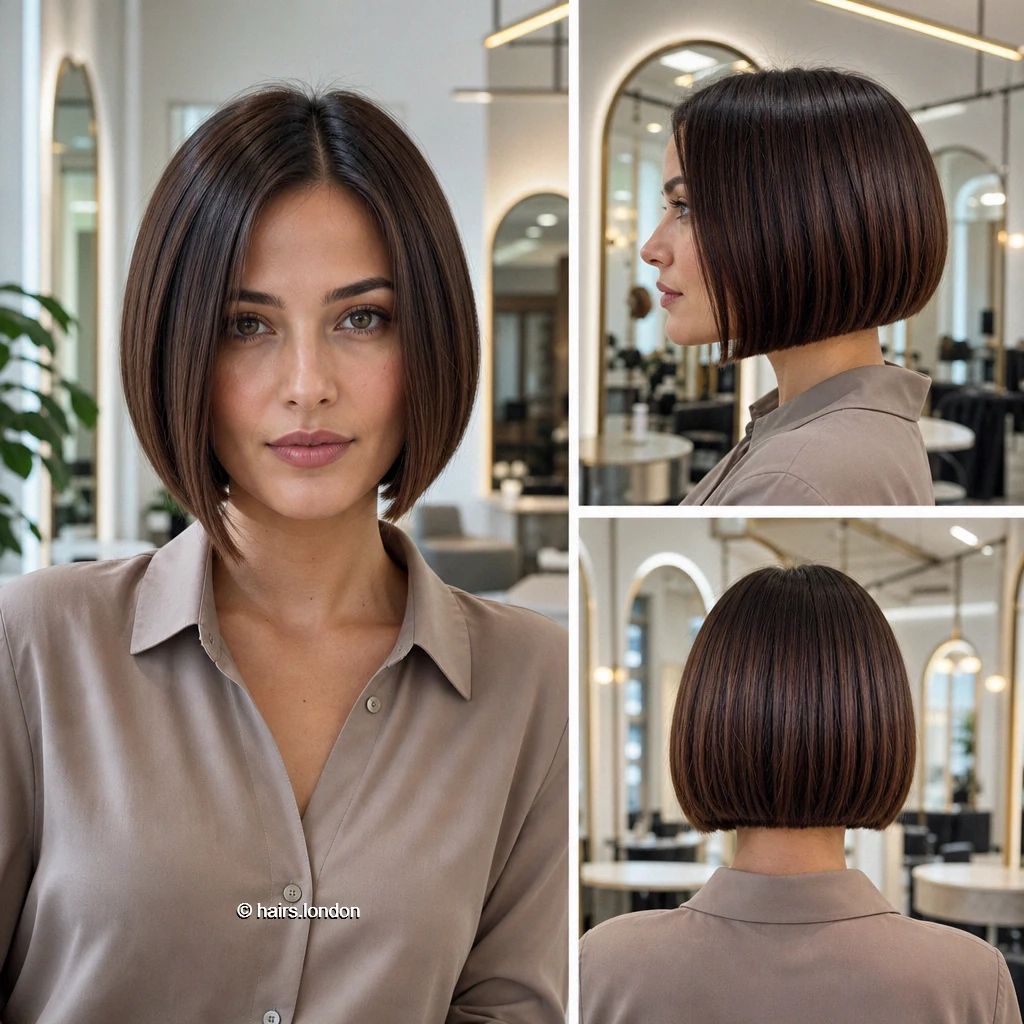
A smooth dark brown surface gives this bob a precise, composed look. The side view reveals front pieces that extend beyond the shorter back, without a dramatic angle. Its back is rounded and full, with a tidy line sitting above the neck. If you want this balance, discuss where the front should meet your jaw and how much weight to retain behind it. A paddle brush and heat protectant can refine the surface; finish by smoothing only the perimeter. Fine hair may benefit from keeping layers restrained. Check the outline regularly, since small amounts of growth soften its compact proportions.
8. Rounded Bob with a Subtle Forward Sweep
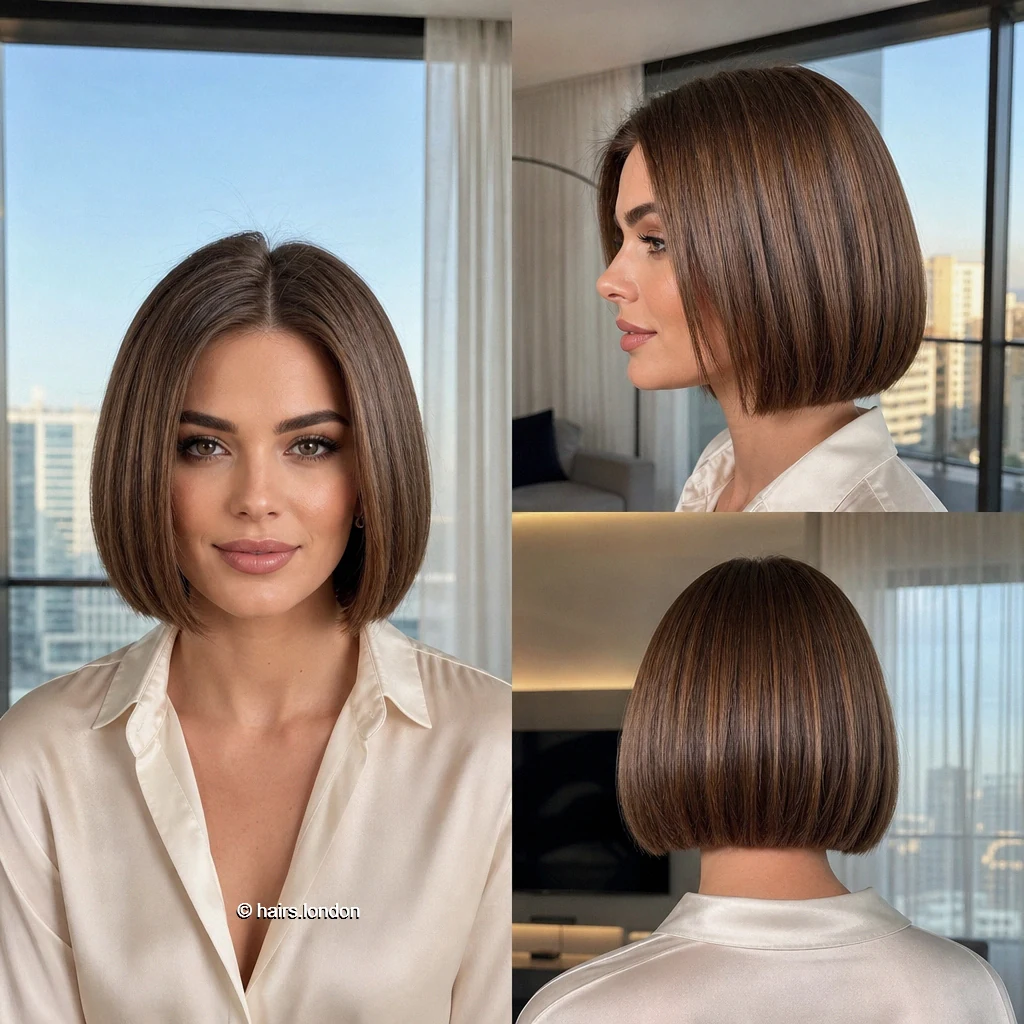
This softly highlighted brown bob combines a center part with an inward turning perimeter. The front falls around the jaw and appears slightly longer than the close, rounded back. Tonal variation catches the light across the smooth surface. For a similar finish, ask your stylist to tailor the lower weight line to your density rather than thinning every section. Blow dry from roots to ends with a brush, then tuck the tips inward with minimal heat. Heavy oils could make the outline look flat. Refresh the ends when the shape widens, and discuss gloss upkeep if the highlights lose shine.
9. Compact Bob with a Straight Lower Line
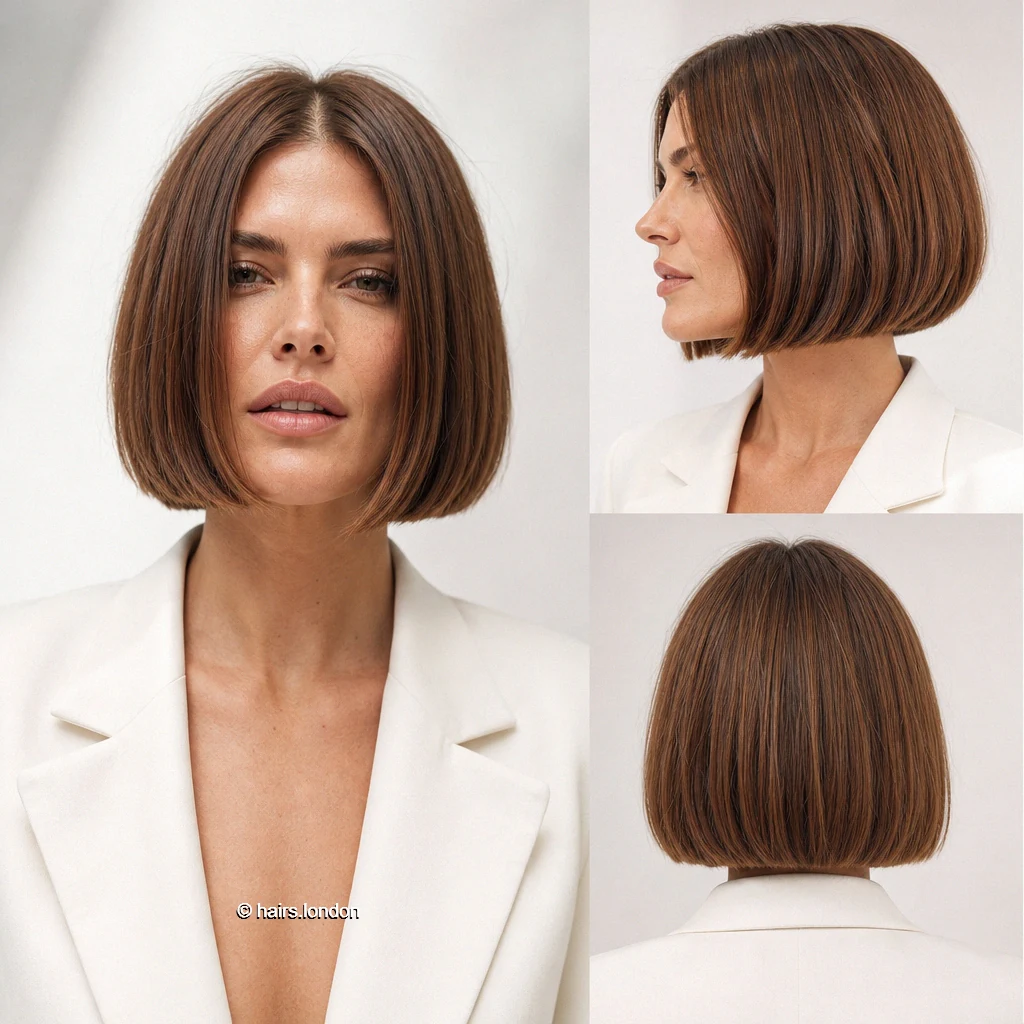
Warm brown strands and a center part give this jaw length bob a simple, balanced appearance. The visible lower edge is straight, while the sides retain enough fullness to curve toward the face. Its back sits above the neck without a clearly stacked profile. Ask for an edge that remains strong after your hair dries in its natural texture. A smoothing cream and brush can align the ends, but avoid turning them under so far that the shape becomes rounder than intended. This version works best if you enjoy a tidy finish. Small trims help preserve its clean lower line.
10. Jaw-Length Bob with Gentle Back Fullness
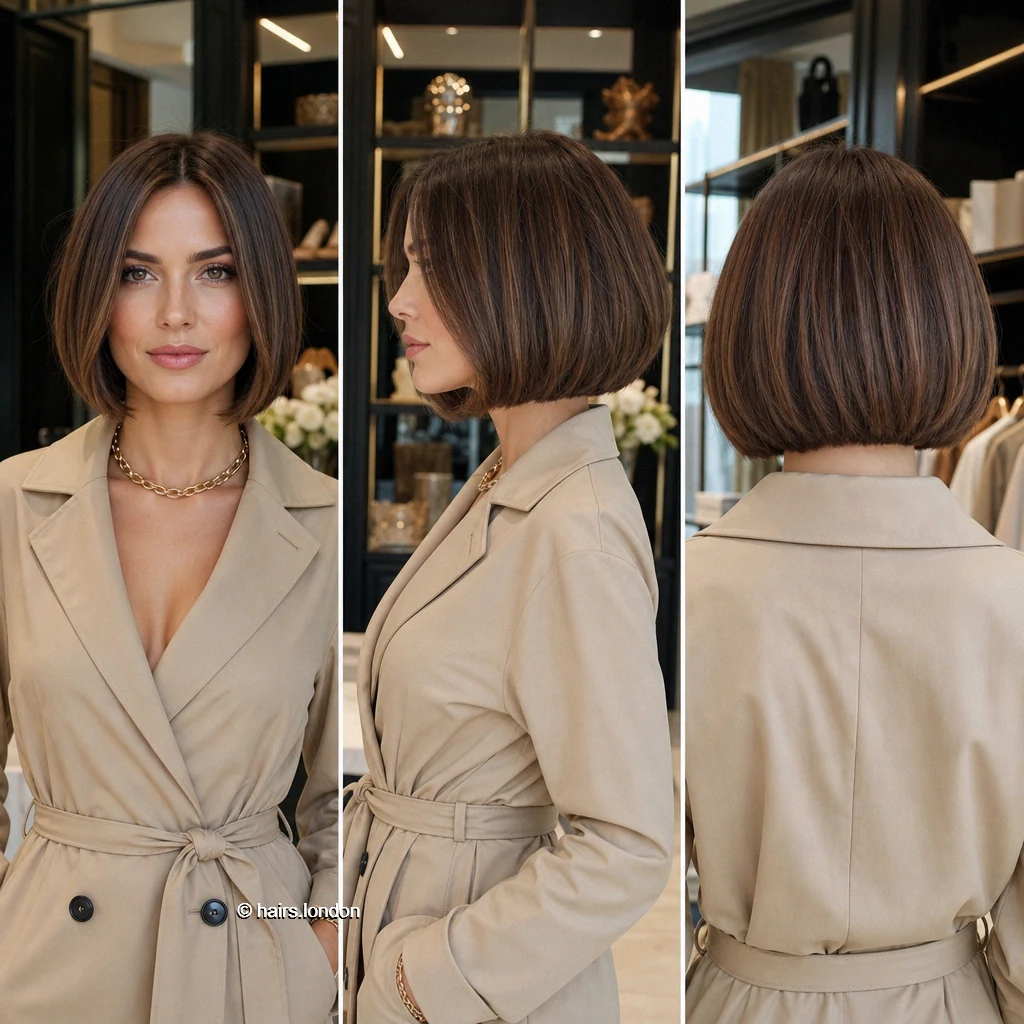
This brunette bob features a center part, softly tucked front and softly rounded volume toward the back. Its ends meet near the jaw in front and lift above the neck behind. The side view suggests a restrained forward slope, not a dramatically inverted cut. Ask your stylist to assess whether your crown naturally supports that rear fullness or needs careful internal shaping. Direct the roots upward while drying, then smooth the lower edge so it stays defined. Keep product away from the roots if your hair collapses easily. A trim restores the proportions when the back starts settling too low.