

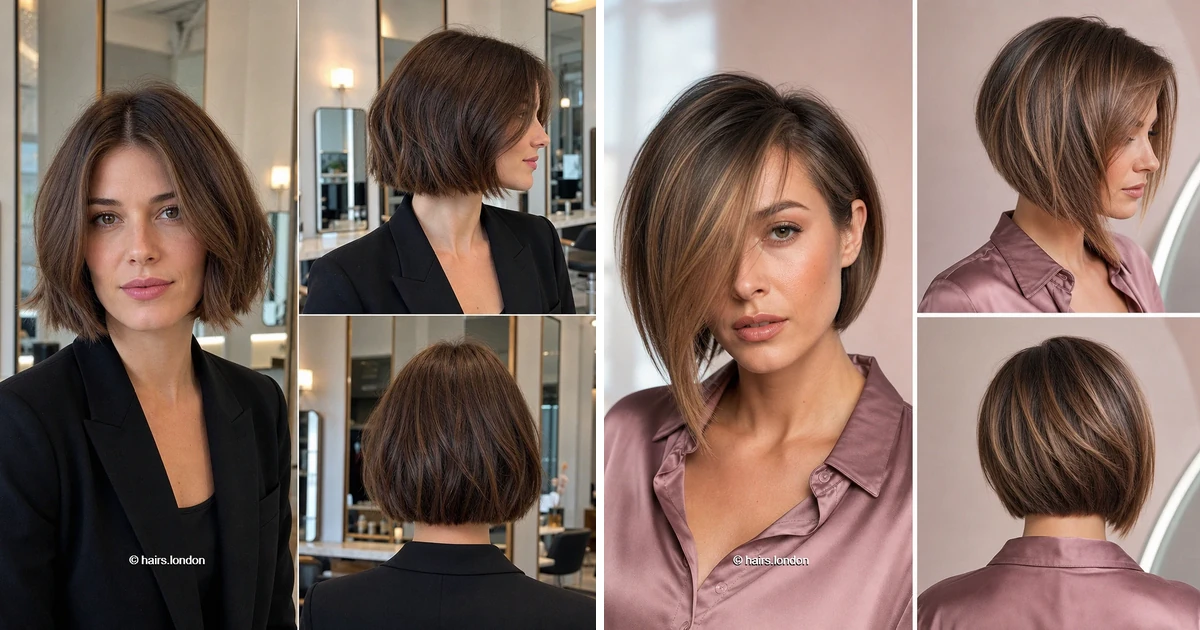
11. Layered Graduated Bob with Side Fringe
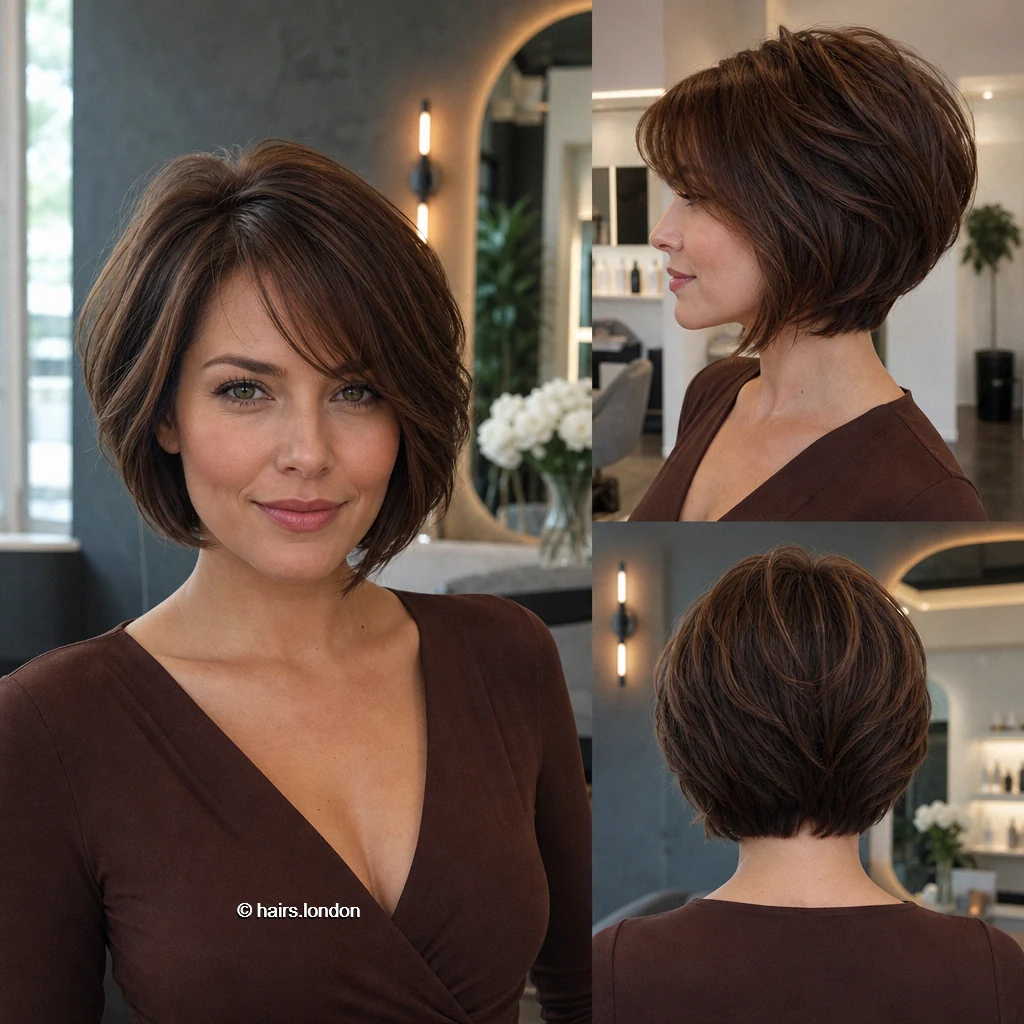
A sweeping side fringe leads into this short, layered brown bob. The side and rear views show fuller upper layers above a tapered neckline, supporting a graduated shape. Separated ends keep the volume from looking solid or bulky. Ask your stylist where the shorter back should finish against your neck, especially if you have strong growth patterns. Dry the fringe in its intended direction first, then lift the crown with your fingers and a little mousse. Avoid coating the tapered ends with heavy paste. Plan trims when the neckline grows out or the fringe begins covering more of your eyes.
12. Shaggy Bob with Wispy Fringe
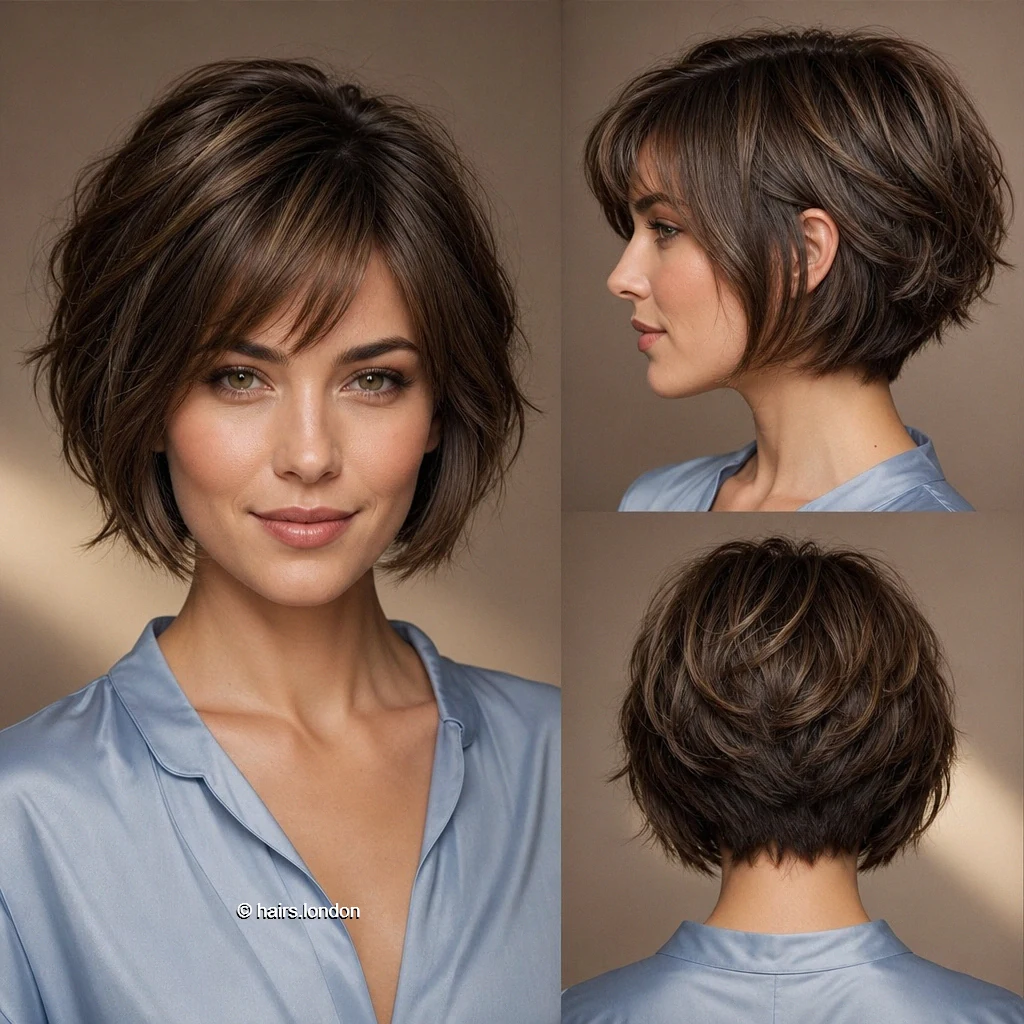
This short brunette bob has a wispy fringe, airy side pieces and visibly textured layers throughout. The back ends close to the neck, but its loose, piecey finish matters more than a strict perimeter. Lighter brown strands pick out movement across the crown. If your hair is naturally wavy, ask your stylist to account for shrinkage before setting the fringe length. Scrunch in a light styling cream and let sections dry with separation. Straight hair may need a bend from a small iron. Trim the fringe as visibility changes and reshape the back when the layers begin to lose definition.
13. Airy Layered Bob with Curtain-Like Fringe
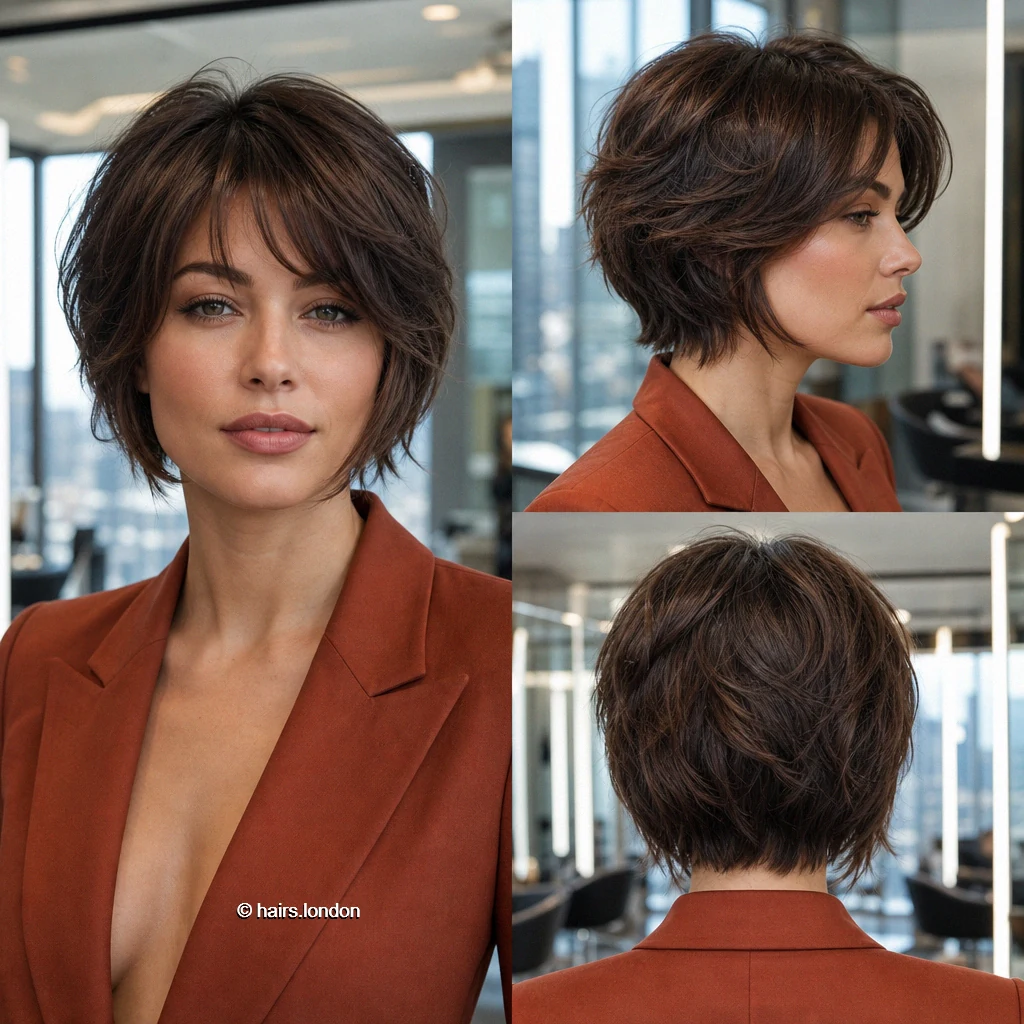
Loose brown layers surround the face, while a soft fringe parts into longer pieces near the temples. The side and back views show a short, tapered lower outline beneath fuller, tousled hair. It reads as a layered bob rather than a blunt, one length cut. Ask for movement that suits your actual density; too many short layers can leave finer ends sparse. Work a small amount of mousse through damp hair and dry with a diffuser or your fingers. Keep the fringe light instead of saturating it with product. Shape appointments can focus on the neckline and face framing pieces.
14. Short Bob with Swept Layers
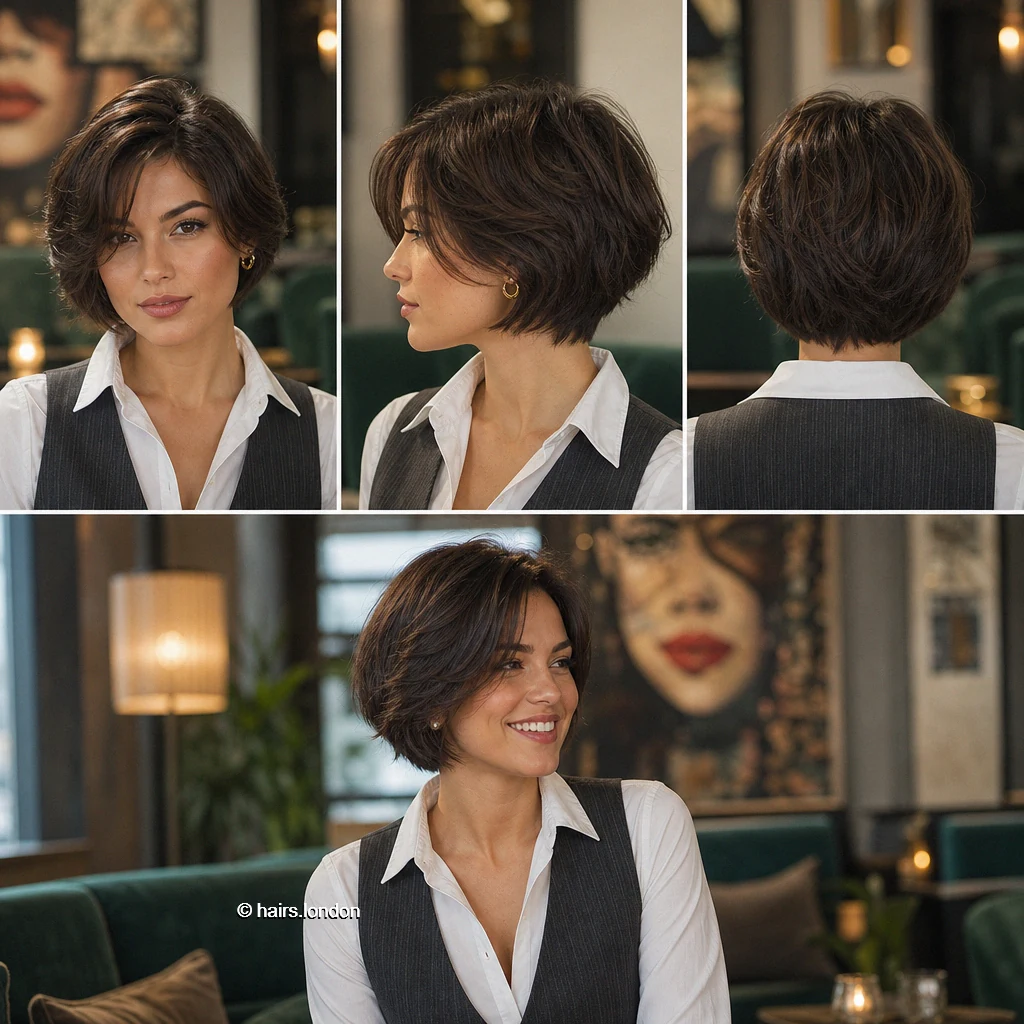
This compact dark brown bob has a side swept front and visibly layered, rounded sides. Its back narrows toward the neck, while the upper sections retain soft volume. The outline is shorter and more textured than the smooth bobs earlier in the collection. Ask your stylist to leave enough length around the ears if you prefer the option to tuck those pieces away. Lift the roots while drying, then guide the fringe across without setting it stiffly. A dab of pliable cream can separate the ends. Regular shaping will prevent the short neckline from looking heavy as it grows out.
15. Feathered Graduated Bob with Warm Highlights
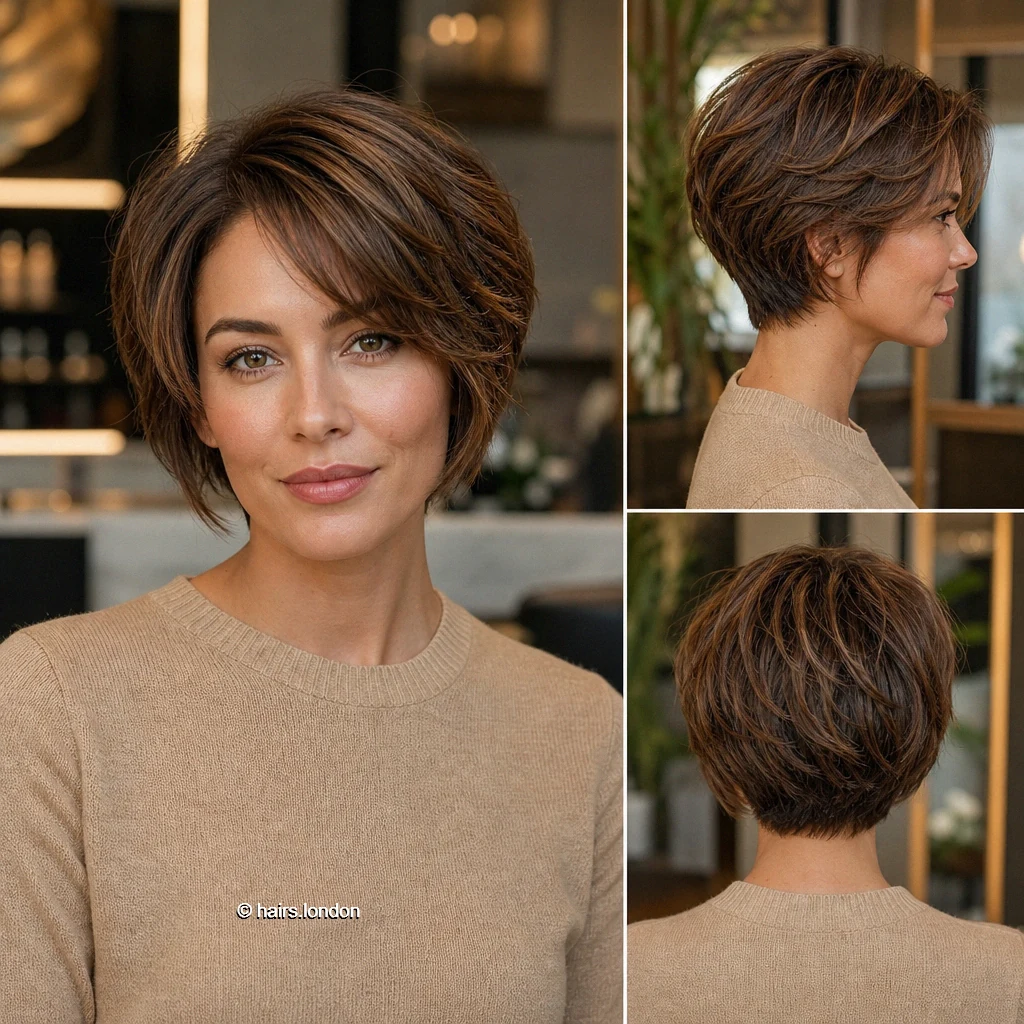
Warm brown highlights trace the sweeping fringe and feathered layers of this short bob. From the side, the longer front moves toward the cheek while the back sits closer to the neck. The rear view shows volume above a narrow, graduated lower section. Ask how much height your natural growth pattern can support before committing to this silhouette. Use a brush to direct the front across, then lift and separate the crown with light styling cream. Dense hair may need internal weight removal to avoid a bulky back. Frequent neckline checks keep the graduated shape intentional between full cutting appointments.
16. Wavy Bob with Bright Face-Framing Pieces
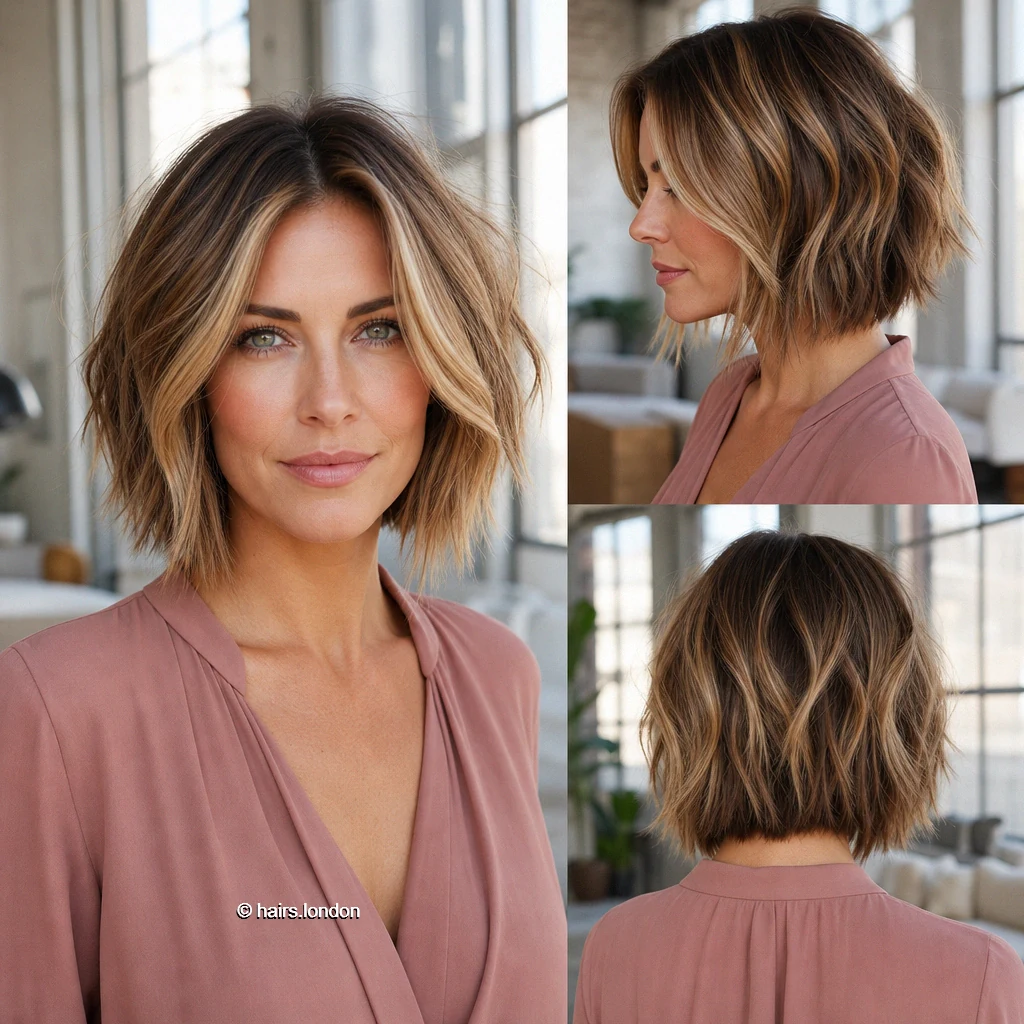
Blonde face framing pieces brighten this brown bob, while loose bends give its ends an undone finish. The front reaches toward the jaw and neck, and the back forms an irregular line above the collar. Visible movement makes the cut feel lighter than a sharply polished bob. Ask your stylist to judge the perimeter after your natural waves settle, since damp hair can conceal bounce. Scrunch in a lightweight cream and diffuse gently, leaving the brighter front sections free to move. Avoid brushing once dry. Trim when the ends lose their shape, and ask how often the blonde needs refreshing.
17. Tousled Bob with Fine Brown Highlights
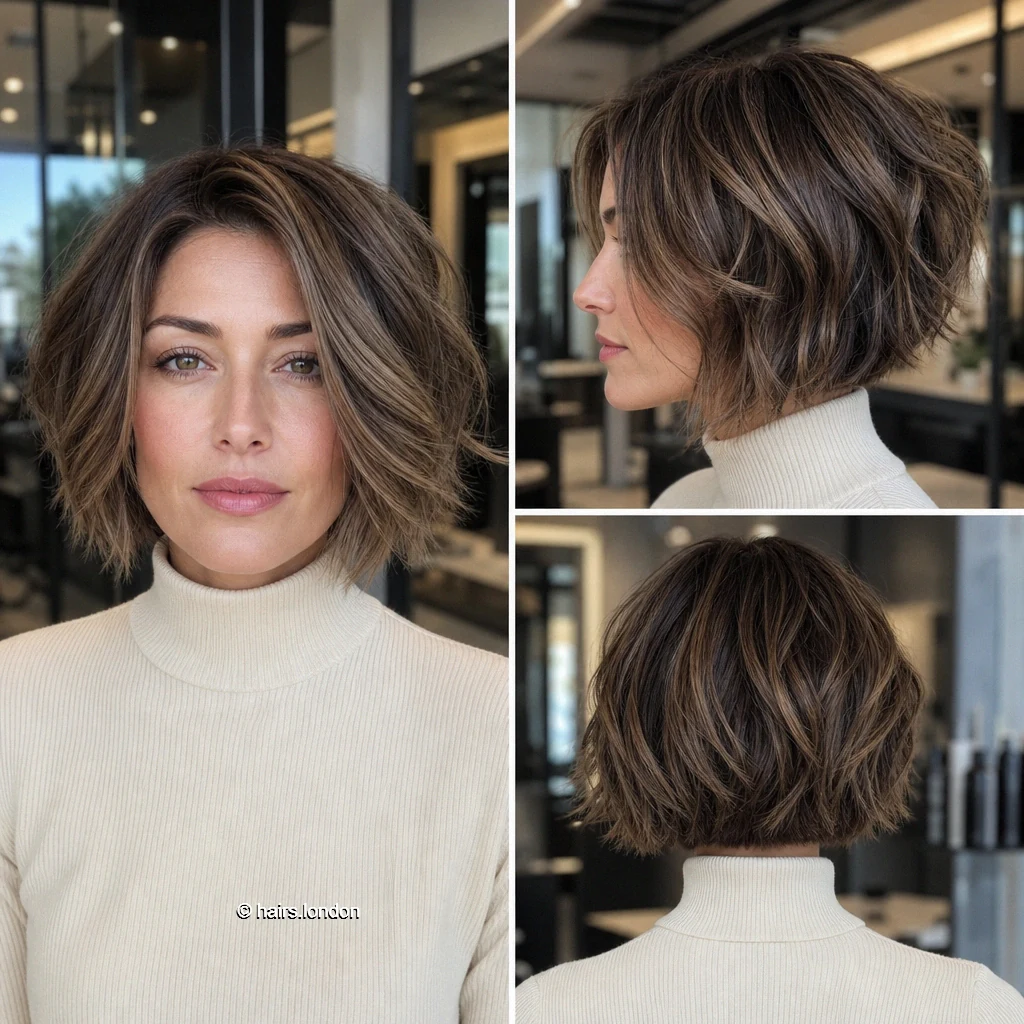
This neck skimming bob pairs a soft side part with loose, separated waves. Fine beige brown highlights follow the bends, adding visible dimension to the darker base. Its rear edge looks textured but relatively level, without obvious stacked graduation. Ask for layering that releases movement while leaving enough weight to keep the ends from appearing thin. A diffuser or gentle air drying can encourage the existing wave; use a small amount of cream to control frizz. Thicker hair may benefit from targeted weight removal. Dust the ends as needed, and discuss whether the lighter ribbons require toner between color appointments.
18. Asymmetrical Bob with a Long Side Sweep
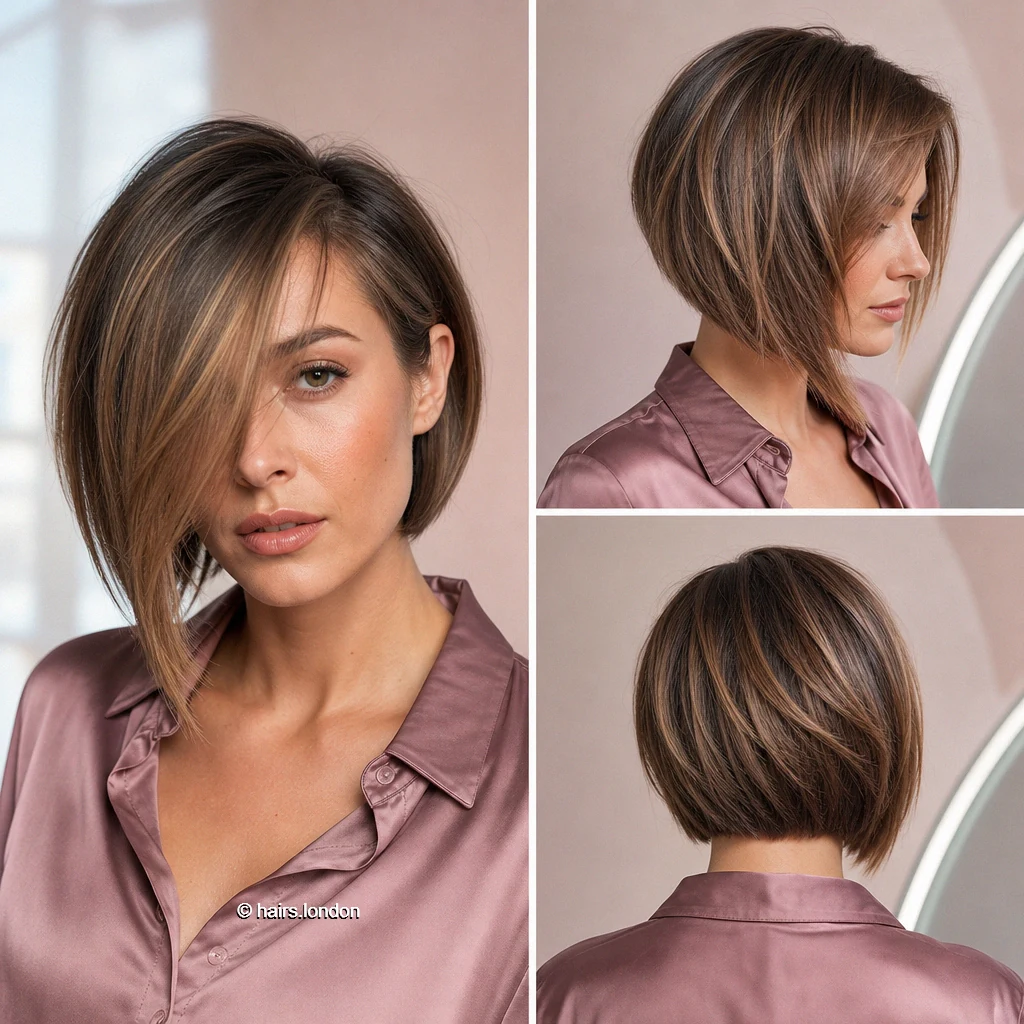
A long, highlighted front section sweeps across one side of the face, contrasting with the shorter opposite side. The back shows a rounded shape that narrows toward the neck. Together, the views support an asymmetrical bob with visible graduation behind the longer front. Ask your stylist to map the longest point with your usual parting in place. Smooth that front section with heat protectant and a brush, then let its tip move rather than pinning it flat. The shorter side may need more frequent tidying. Color appointments can target the visible sweep when its lighter strands begin to look dull.
19. Angled Bob with a Highlighted Long Front
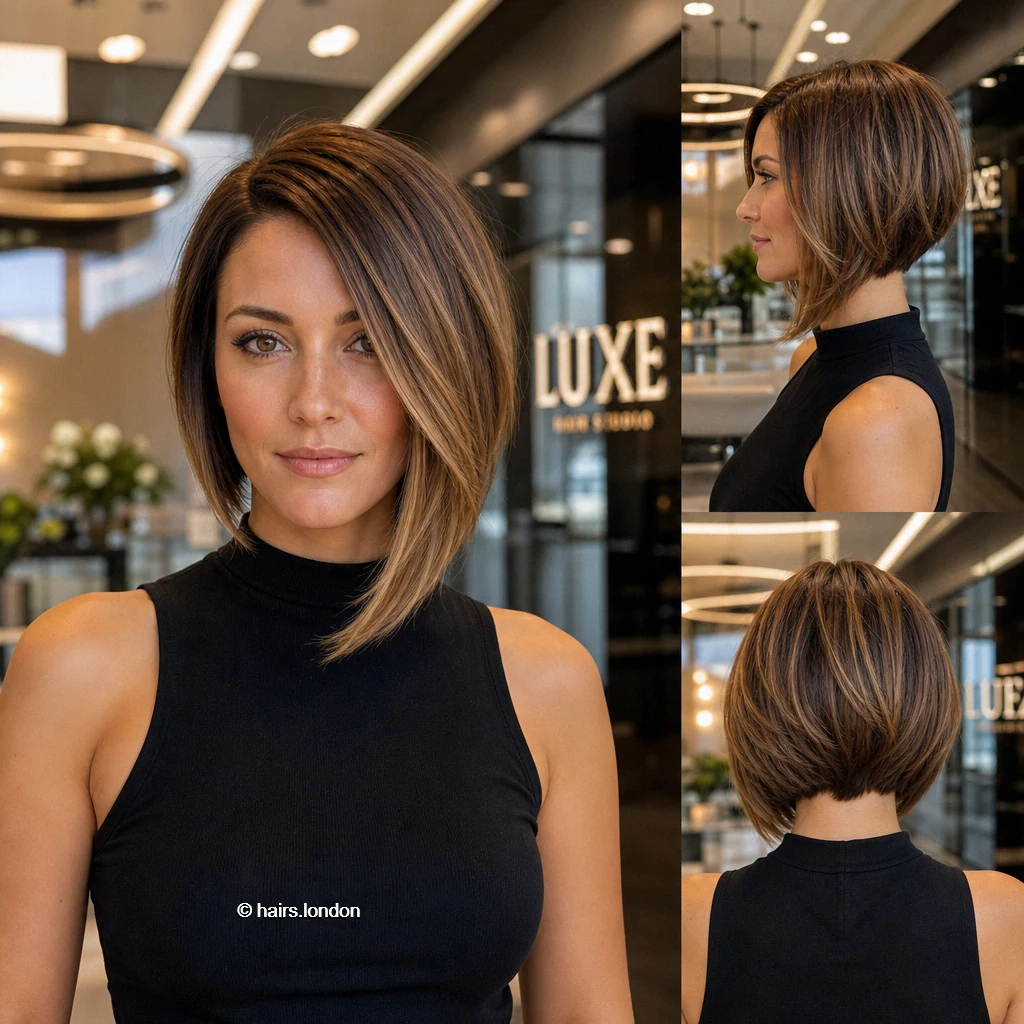
The front of this brown bob extends well below the jaw on one side, while the back sits high at the neck. Side and rear views show a rounded, graduated back beneath the longer forward sweep. Soft golden brown highlights concentrate attention along that visible length difference. Ask your stylist to set the front point according to how you normally part and wear your hair. Brush the long section downward for a defined line, keeping lift at the back without excessive bulk. Check the neckline between major trims. If the highlights are lightened, plan appropriate color upkeep alongside shape appointments.
20. Graduated Bob with an Asymmetrical Front
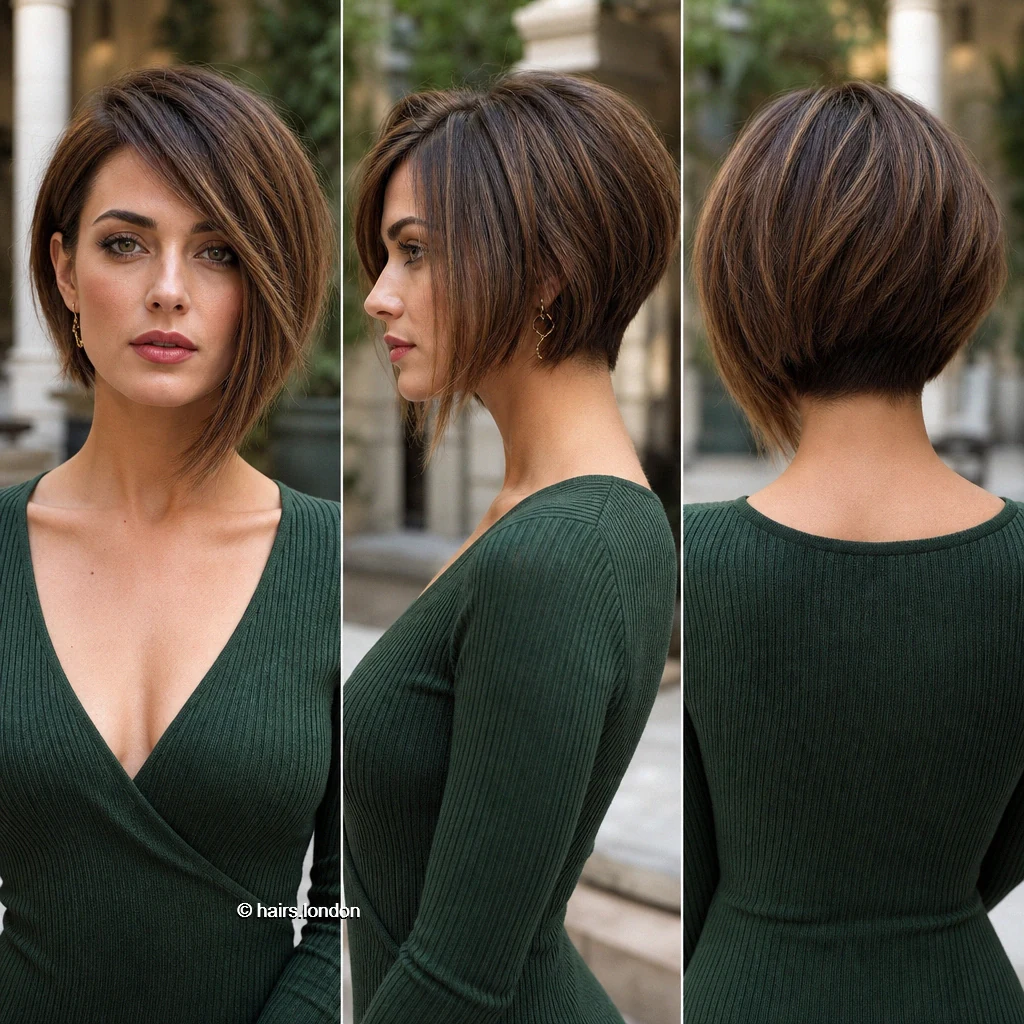
A deep side part directs this brown bob into a longer front piece on one side. The profile shows that length falling below the jaw, while the rounded back tapers into the neck. Visible layers at the rear support a graduated shape rather than a uniformly blunt edge. Ask your stylist to balance the short side, long front and your natural crown growth. Dry the back for lift, then smooth the front so its point stays clear. Heavy product can obscure the taper. Keep the neckline tidy and revisit the front length whenever its asymmetry starts feeling difficult to manage.
How to Choose Your Bob Length and Shape
Start with the point where you want the front to fall: at the jaw, just below it or farther toward the collar. Then consider the back separately. A solid, rounded perimeter retains fullness, while a shorter graduated back needs more frequent shaping. Choose a noticeable A-line when you want longer front pieces; do not assume every rounded back is stacked. Your stylist can adjust the outline for density, wave, neck growth patterns and how often you tuck your hair behind your ears.
Styling Fine, Thick, Wavy and Curly Textures
Fine hair often benefits from a substantial perimeter and lightweight root lift instead of numerous short layers. On thick hair, ask for targeted internal weight removal that preserves the visible edge. Encourage waves with a little cream and gentle diffusing, then avoid brushing out their separation. For curls, plan the length around dry spring and request a shape assessed in your natural curl pattern. Smooth only the perimeter when you want polish; leave the upper layers free to move. Dry a fringe in its intended direction before it sets.
Keeping Brown Bob Color Fresh
The images range from deep brunette to warm brown with lighter ribbons and blonde face-framing pieces. Color upkeep depends on what is actually added to your base: highlights may need tonal refreshing, while an all-over shade may need attention at the roots. Use color-appropriate cleansing and heat protection, and ask your colorist whether a gloss would restore shine without changing the depth. Because a bob exposes its ends, keeping them healthy also helps the color look even.
Maintaining the Bob Perimeter and Graduation
A precise jaw-length edge shows growth differently from a tousled, layered outline. Arrange a trim when the lower line loses its intended position, not solely by the calendar. Short graduated bobs may need neckline maintenance sooner because extra length changes their profile. Longer A-line fronts need checking alongside the back so the slope remains deliberate. Bring front, side and back reference images to each appointment, especially if you alternate between smooth and textured styling.
What to Discuss with Your Stylist
Show how you normally part and dry your hair, and explain whether you want to spend time styling it each morning. Discuss the desired front endpoint, back height, amount of visible layering and whether a fringe will cooperate with your growth patterns. Ask how the proposed cut will sit on your natural texture when air dried. If you want highlights, agree on their placement and maintenance separately from the haircut. A consultation should also cover how you plan to grow the shape out.
Frequently Asked Questions
What is the difference between a bob and a lob?
A bob typically finishes around the jaw or neck; a lob is a longer bob that generally approaches the shoulders. The exact boundary is less important than where the perimeter falls on your hair.
How is an A-line bob different from a stacked bob?
A-line describes a perimeter that is longer toward the front. Stacked describes visible shorter graduation at the back. A cut can show both features, but one does not automatically imply the other.
Will a blunt bob make fine hair look fuller?
A solid edge can make fine ends appear more substantial. Ask your stylist to assess your density and growth patterns before removing internal weight.
Can thick hair wear a rounded bob without looking bulky?
Often, yes. Carefully placed internal weight removal can reduce bulk while preserving the rounded outline. The amount needed depends on density and natural texture.
Can natural curls work with a jaw-length bob?
Yes, provided the length is planned around curl spring and the shape is checked in your natural pattern. A dry-looking jaw-length result may require more length when the hair is wet.
Should I add a fringe to a layered bob?
A fringe can connect well with layered sides, but its length and direction should account for your hairline, texture and willingness to style it.
How can I style a smooth bob each morning?
Dry the roots in the direction you wear your part, brush the perimeter smooth and gently turn only the ends inward. Use heat protectant when applying hot tools.
How do I keep a wavy bob from becoming triangular?
Discuss where your hair builds weight with your stylist. Suitable layering or targeted weight removal can release movement, while styling cream and gentle diffusing help waves stay defined.
How often does a graduated bob need trimming?
It depends on growth rate and how closely the back is cut. Book a shape check when the neckline fills in or the higher back begins to drop.
Do A-line bobs require daily heat styling?
Not necessarily. That depends on whether your natural texture keeps the longer front and shorter back distinct. Ask to see how the proposed shape will behave when air dried.
How should I grow out an asymmetrical bob?
Have the shorter side and back tidied while the longer front grows, then gradually bring the perimeter toward a more even length. Your stylist can plan intermediate shapes.
What should I bring to a bob consultation?
Bring reference views of the front, sides and back, plus an example of how you do not want the cut to sit. Explain your usual part, styling routine and trim preferences.
Conclusion
The most useful detail in these brown bob haircuts is not the color alone: it is how each edge, layer and front section behaves from every angle. Choose the silhouette you like, then work with your stylist to adapt its length, weight and maintenance to your own hair.