

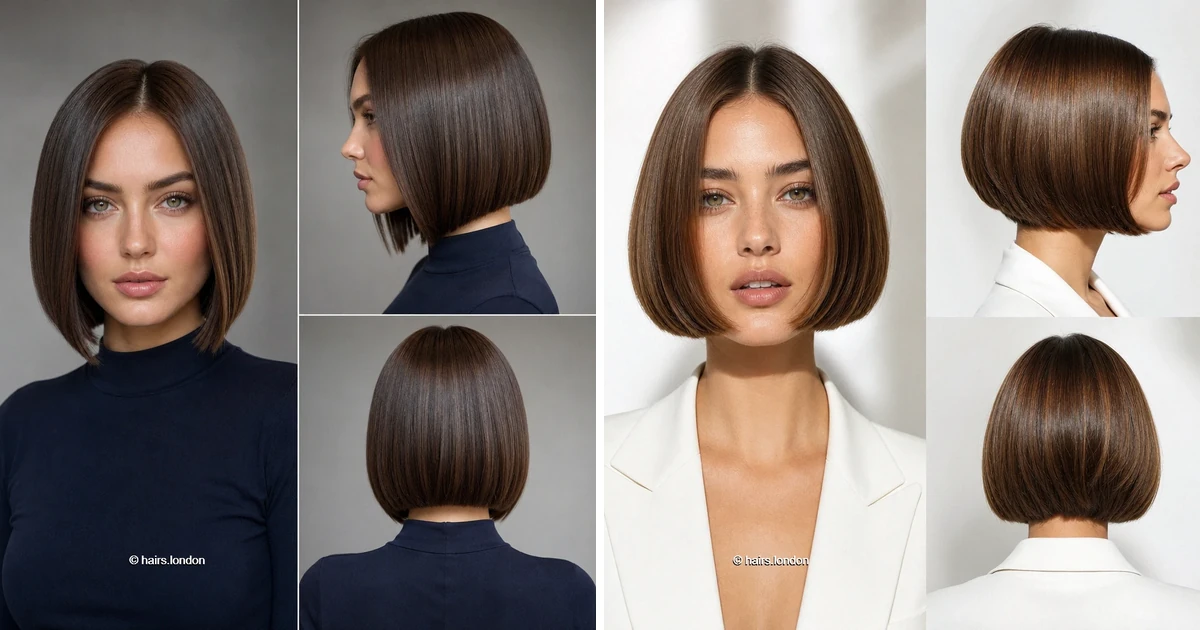
11. Voluminous Graduated Bob with Long Front Pieces
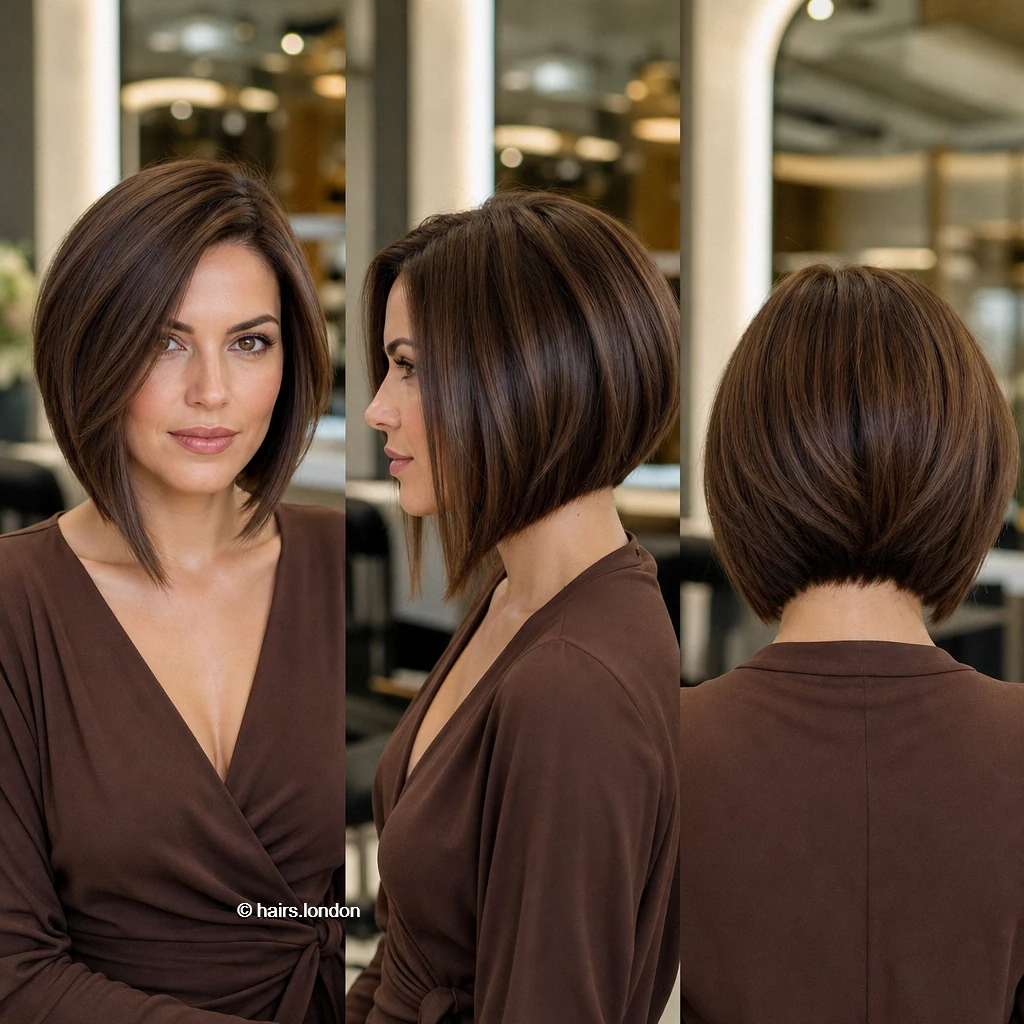
Warm brunette tones bring depth to this full, graduated bob. Longer front sections reach the upper neck beside the face. From the side, shorter back layers build a rounded profile. The nape tapers neatly beneath that visible back volume. Ask for graduation that accommodates your hair density and growth. Brush roots carefully upward, then smooth the long sides downward. Use flexible spray to retain movement around the lifted crown. Very thick hair may need internal shaping to limit bulk. Fine hair might benefit from a gentler graduation and less product. Book shape adjustments before the nape overwhelms its rounded profile.
12. Sculpted Brown Bob with a Side-Swept Front
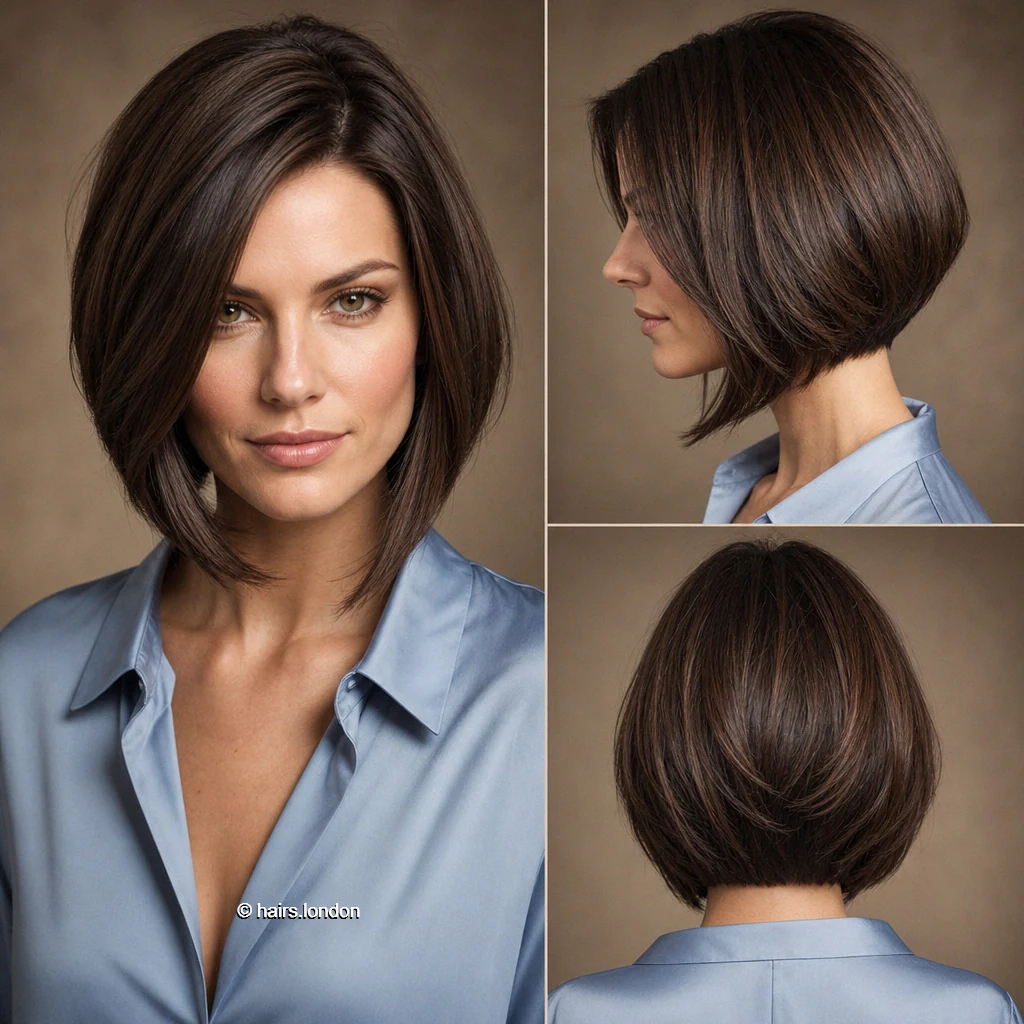
This dark brown bob combines a sweeping front with graduation. Its longer face-framing ends contrast with a close nape line. Layered back sections create visible fullness through the upper head. Preserve some weight near the jaw for a particularly defined outline. Dry the front toward your face, directing roots gently upward. A round brush can refine the curve without stiffening layers. Thick hair may require restraint to avoid excessive rear volume. Fine hair could hold shape better with minimal finishing cream. Return for nape trims when short growth disrupts its taper. Discuss whether the sweeping side follows your natural part.
13. Long-Front Bob with a Rounded Layered Back
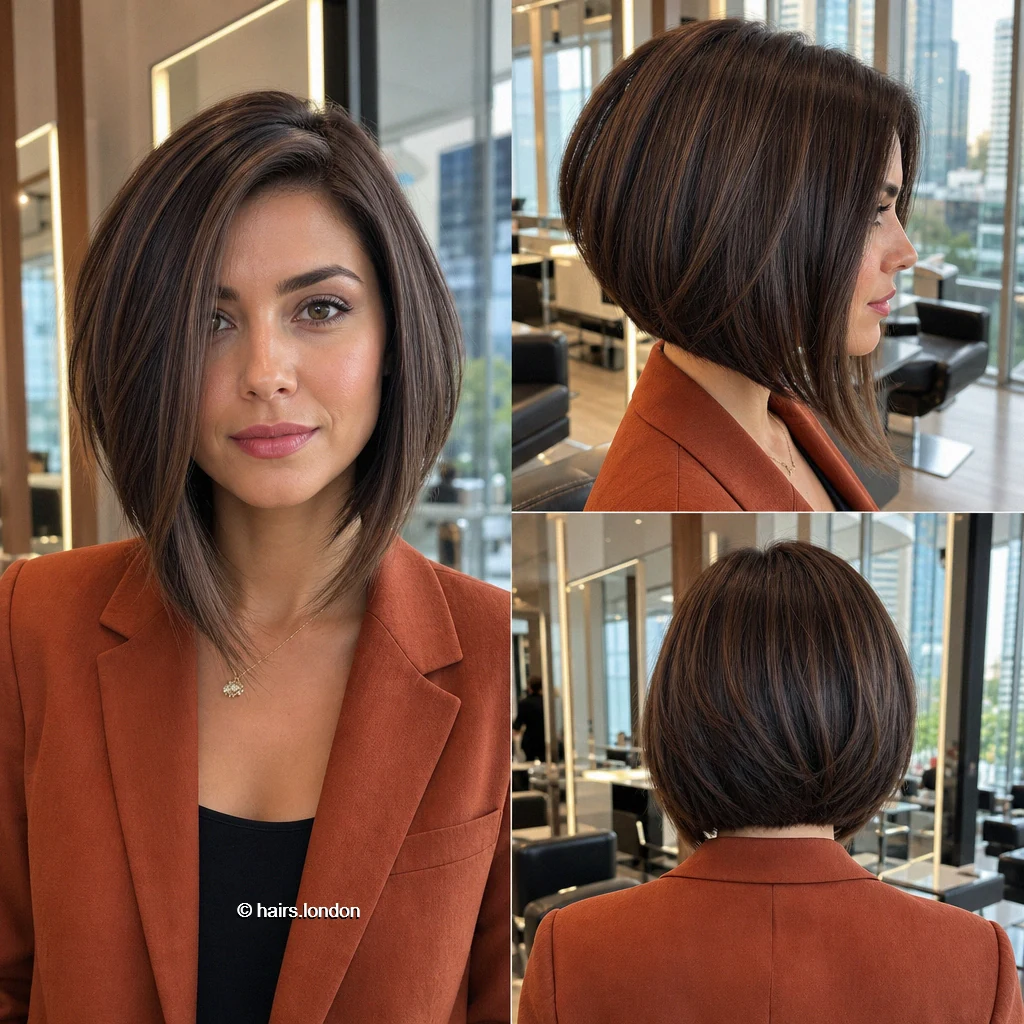
Brunette color shows subtle warmth throughout this angled bob cut. Long front pieces extend toward the collarbone above the jacket. The back is shorter, with visible layers creating rounded volume. That contrast needs considered shaping rather than simply shortening everything. Ask to keep the longest pieces substantial near the ends. Smooth those front lengths while lifting the back roots gently. A light spray maintains separation across the layered rear surface. Dense hair may need hidden bulk removal behind the crown. Finer hair might also prefer less layering to preserve its outline. Trim the nape before growth weakens the front-to-back contrast.
14. Compact Graduated Bob with Extended Sides
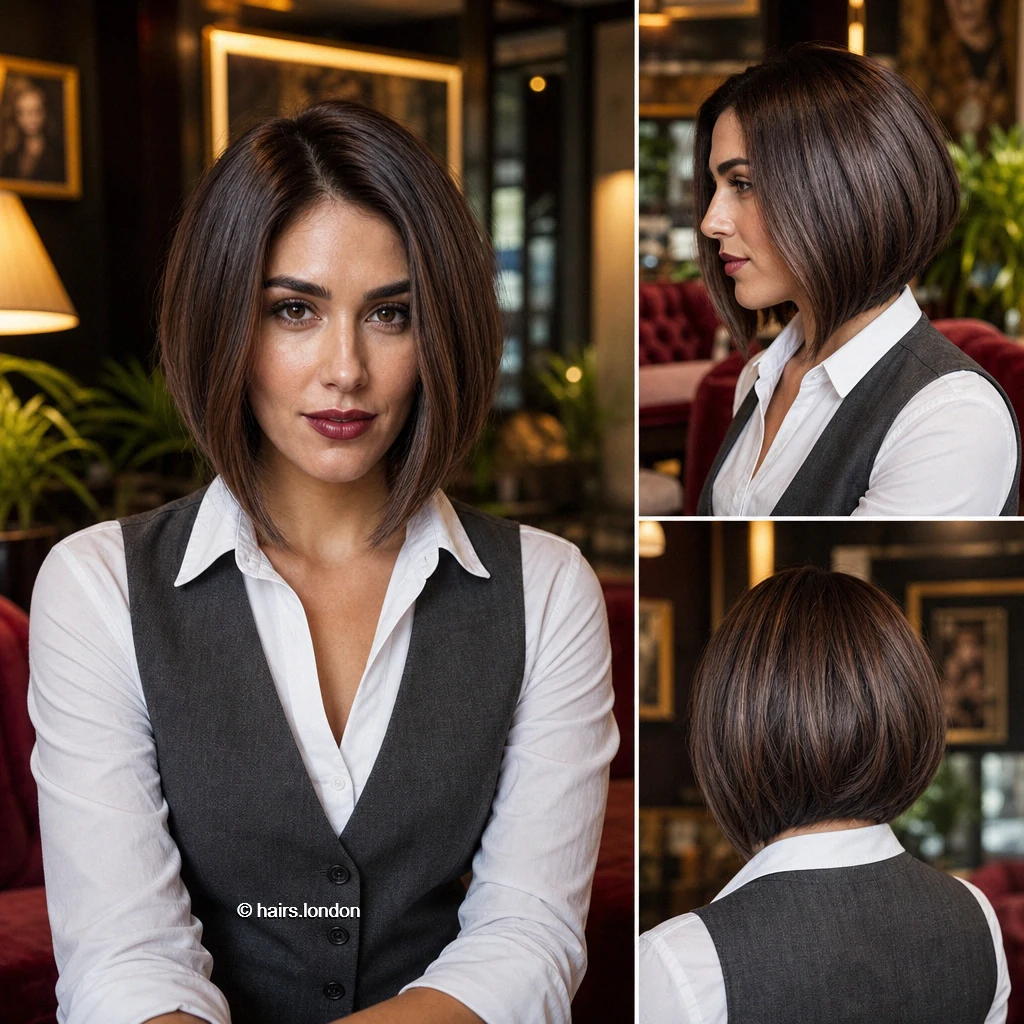
A dark brunette finish accentuates this compact, rounded graduation. Its front sections pass the jaw while the back tapers. Visible rear layers create fullness above the close nape area. A near-center part keeps both longer sides clearly in view. Ask how much back volume your natural density can support. Brush the sides smooth and lift the crown while drying. Choose flexible hold rather than heavy wax across those layers. Thick hair may need strategic debulking beneath the rounded surface. Fine hair could require less graduation for adequate visual weight. Keep nape appointments especially timely to preserve this tidy back profile.
15. Caramel-Threaded Bob with a Long Front
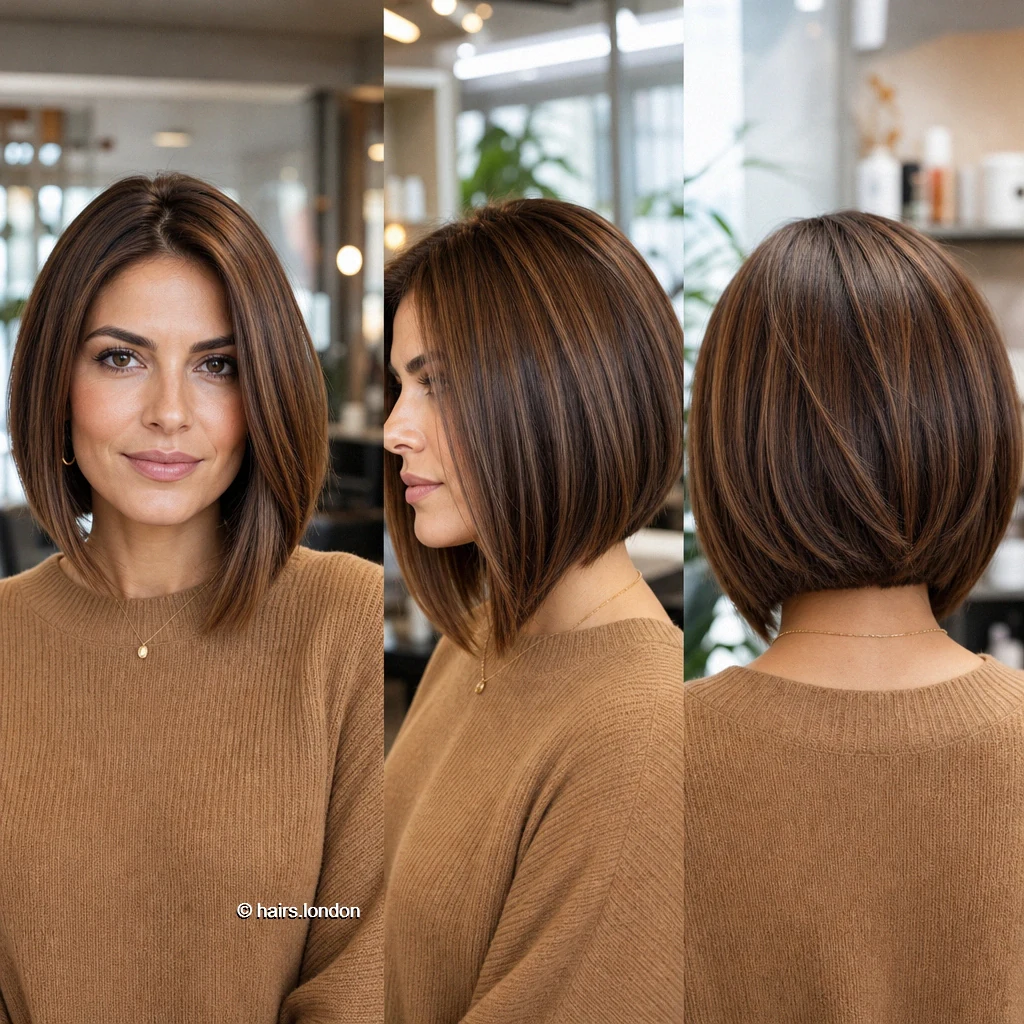
Fine caramel strands brighten this softly rounded brunette bob shape. The front reaches below the jaw against a shorter back. Layered movement appears across the rear, above its tidy nape. A slightly off-center part gives the face frame gentle lift. Request restrained layering if you prefer a smoother outer finish. Dry the front downward while shaping the back with fingers. Lightweight cream can define individual pieces without overwhelming the perimeter. Dense hair may need bulk controlled below the upper layers. Fine hair could benefit from leaving its front relatively solid. Refresh highlights and nape shaping according to their separate growth.
16. Layered A-Line Bob with Warm Highlights
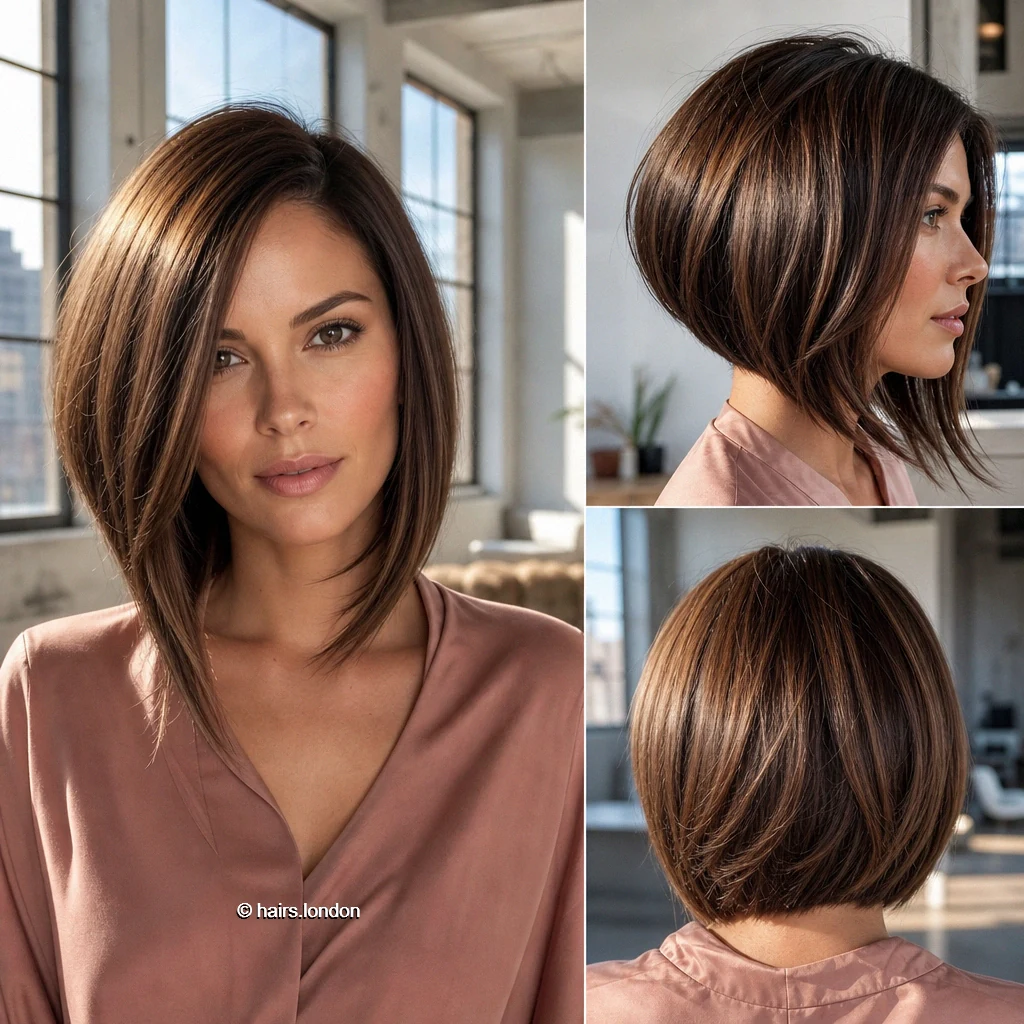
Warm highlights trace the layers of this forward-sloping brunette bob. Its long front falls toward the shoulder above the blouse. The shorter back shows rounded layers over a narrow nape. That marked length change makes front and back maintenance distinct. Ask to retain enough front weight for a smooth line. Blow-dry the longer pieces down and lift the back lightly. A small smoothing cream helps the highlighted sections stay separate. Thick hair may need controlled shaping around the fuller crown. Fine hair might prefer subtler layering through the long sides. Trim the nape before it catches up with the front.
17. Tousled Jaw-Length Bob with Soft Layers
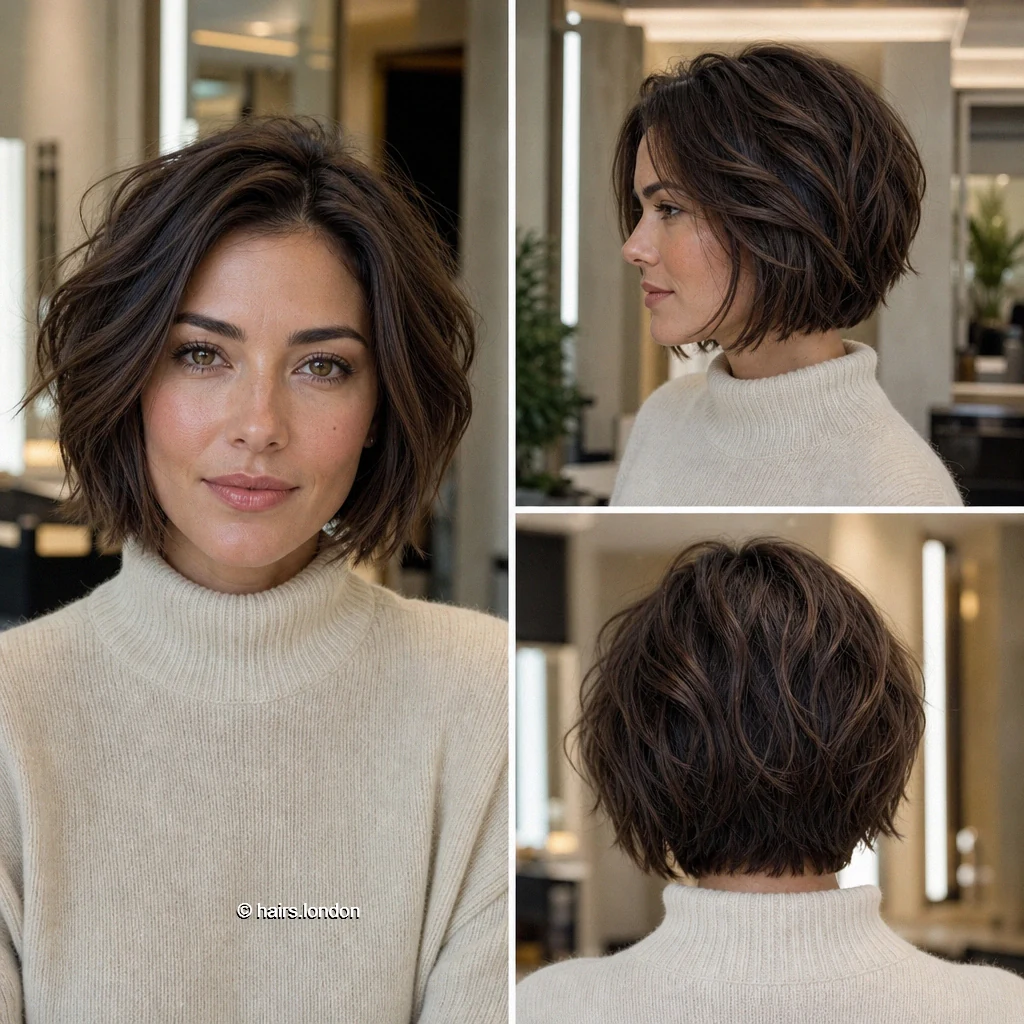
Dark brown color grounds this tousled, jaw-length layered bob. Its irregular ends create movement around the cheeks and neck. A loose side part adds height without a defined fringe. The back looks softly textured rather than sharply graduated here. Ask for enough perimeter weight to prevent feathery, thin ends. Scrunch light mousse into damp hair to encourage natural bends. Dry gently, preserving separation instead of brushing everything smooth afterward. Dense hair can carry layering, provided the sides avoid bulk. Fine hair may need fewer short pieces for balanced fullness. Trim when uneven growth changes the intended jaw-length bob outline noticeably.
18. Airy Brown Bob with Broken-Up Ends
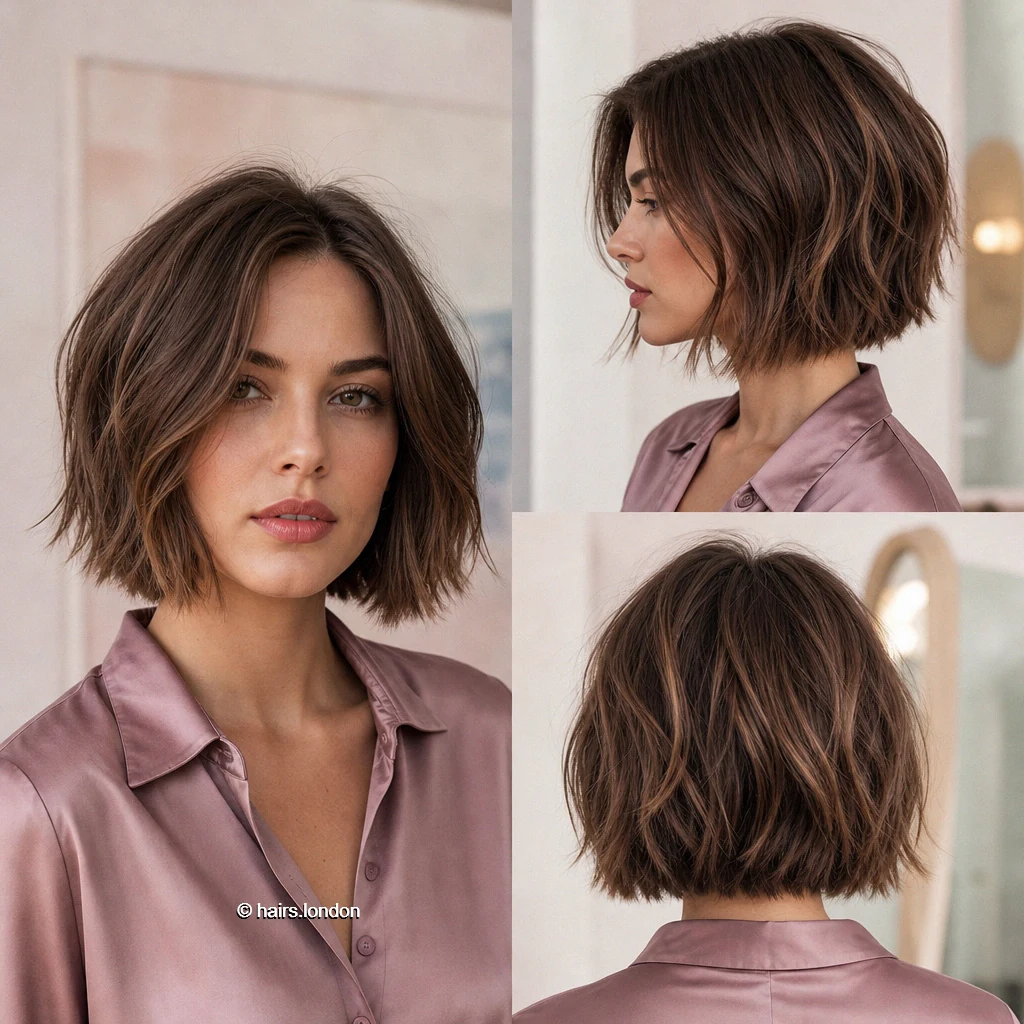
Medium brown strands show soft movement throughout this airy bob. The slightly broken perimeter sits around the jaw and neck. Loose front pieces fall from a relaxed, off-center part. The back remains full but finishes with lightly separated ends. Ask your stylist to customize texture around your natural wave. Apply mousse sparingly, then scrunch gently rather than stretching developing bends. A diffuser can limit disruption while helping the roots dry. Thick hair may benefit from subtle internal reduction near sides. Fine hair could require fewer layers to retain lower fullness. Refresh the ends when their deliberate softness becomes uneven growth.
19. Side-Swept Shaggy Bob with a Soft Perimeter
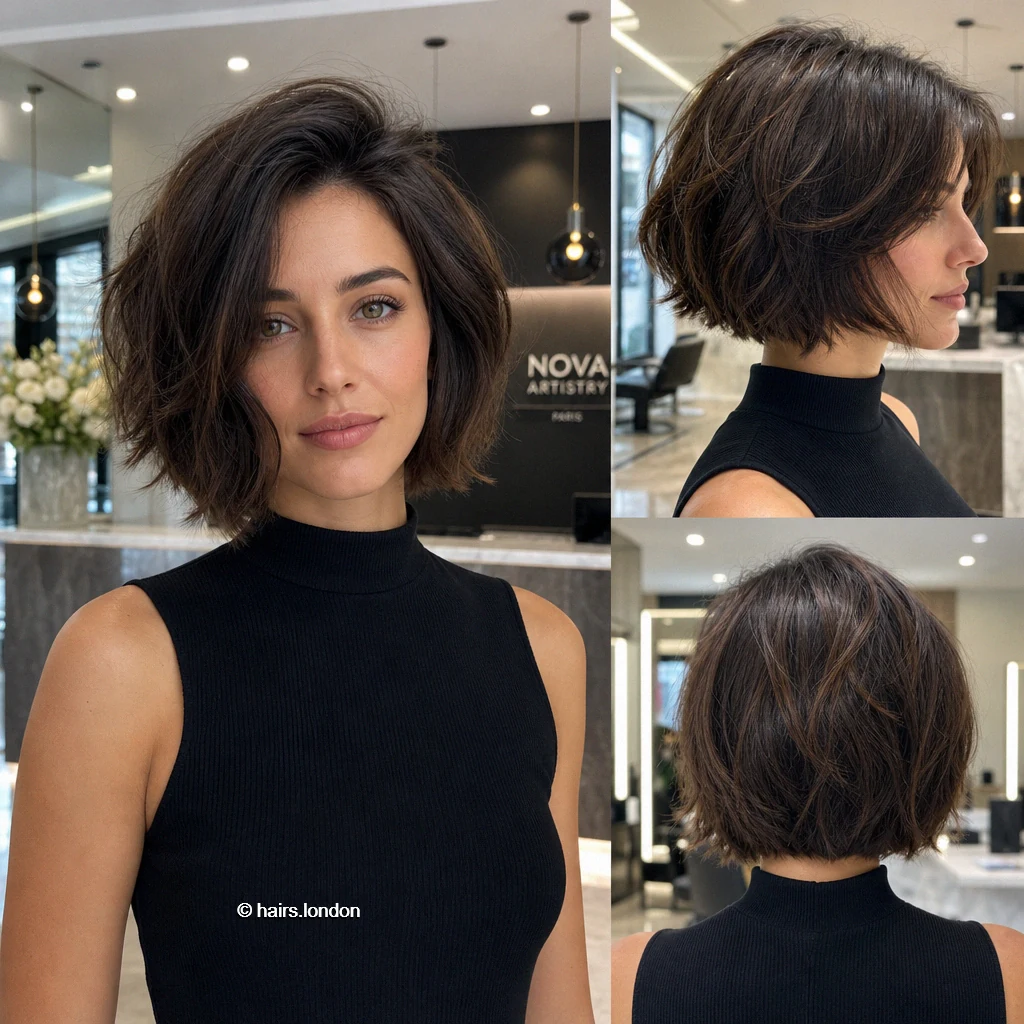
Deep brunette color gives this shaggy bob rich visual depth. Its side-swept top creates height above loosely separated ends. The perimeter hovers around the jaw with soft irregularity. Back layers add texture without showing a hard stacked line. Request movement that suits your natural bend and hair density. Work a small amount of foam through damp midlengths. Diffuse gently or air-dry before adjusting the sweeping front. Dense hair may need selective weight removal to prevent puffiness around the lower sides. Fine strands should avoid too much paste near their roots. Trim when the side sweep obscures vision or loses shape.
20. Short Wavy Bob with Crown Volume
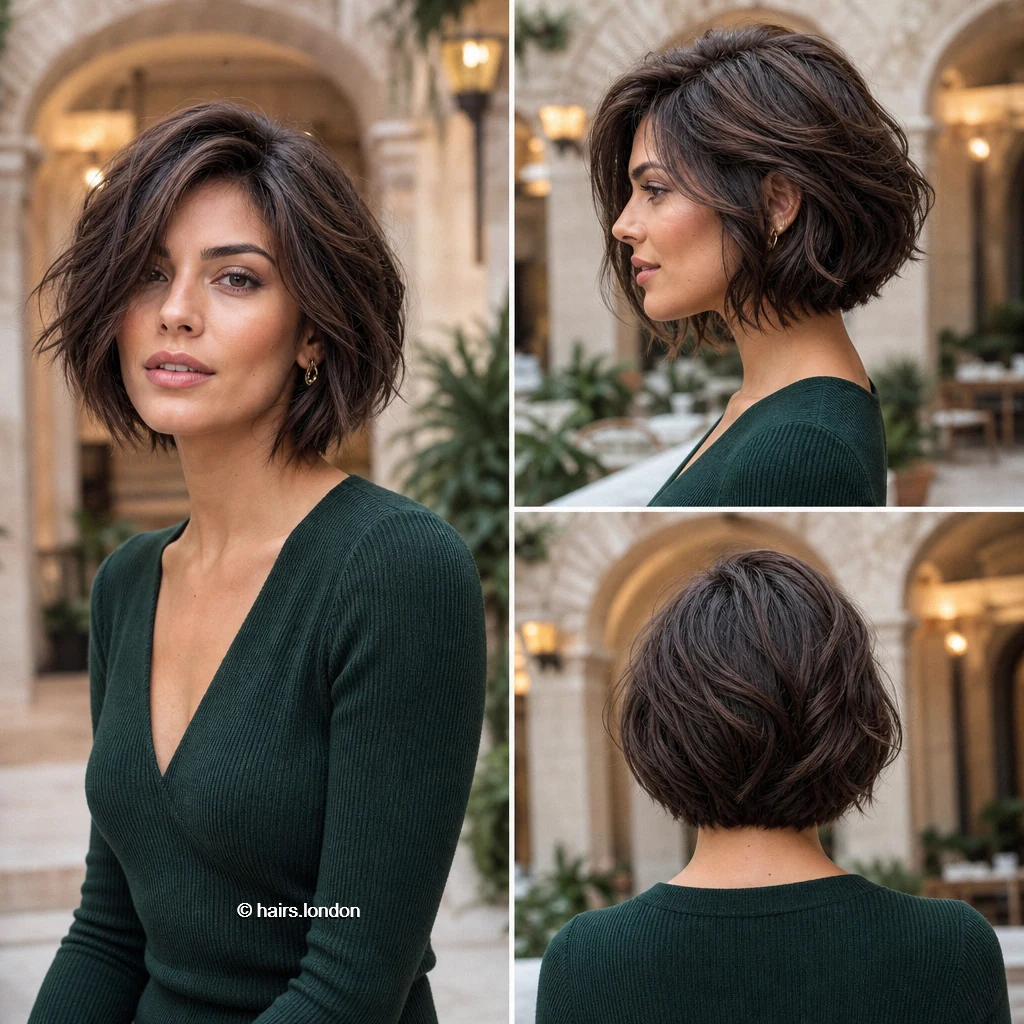
Dark brown waves give this short bob a lively silhouette. The ends sit near the jaw with softly irregular edges. A sweeping front falls across the forehead without straight bangs. Side and back views show plenty of layered, tousled volume. Ask for shaping that respects your natural wave pattern closely. Scrunch a light styling cream into damp hair before diffusing. Lift roots carefully, leaving the lower perimeter loose and mobile. Thick waves may need internal weight control without overthinning ends. Fine waves could benefit from fewer layers and lighter products. Maintain the outline when growth pulls the waves downward noticeably.
21. Short Layered Bob with a Feathered Side Fringe
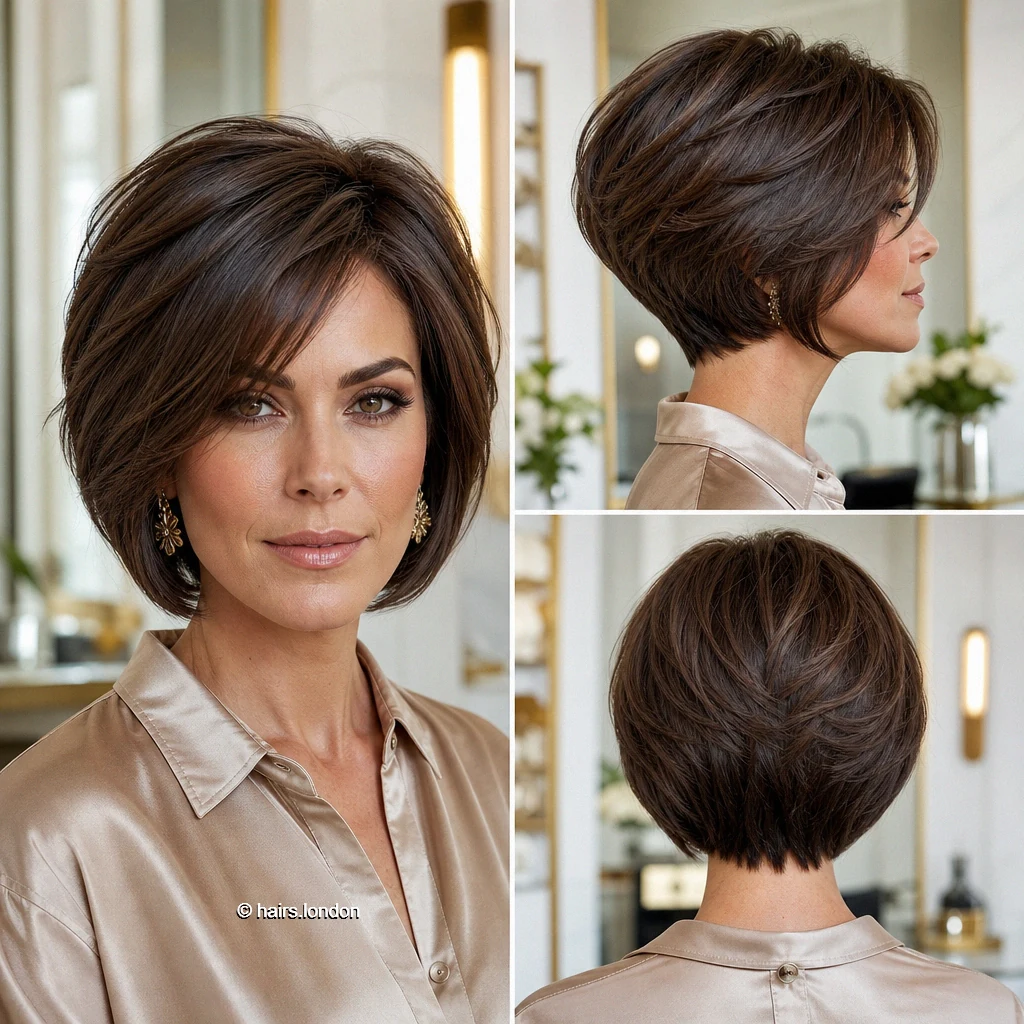
Warm brown highlights illuminate this short, softly layered bob. Its side-swept fringe crosses the forehead toward one eye. The visible back narrows into a neatly tapered nape. Rounded upper layers supply fullness without a heavy lower edge. Ask your stylist to account for fringe growth and direction. Dry the fringe first, guiding it across with gentle tension. Use lightweight texture spray through the crown, avoiding sticky buildup. Dense hair may require discreet thinning beneath the rounded shape. Fine hair could retain more weight through those upper layers. Arrange nape and fringe tidy-ups between full shape appointments as they grow out.
22. Caramel-Swept Graduated Bob
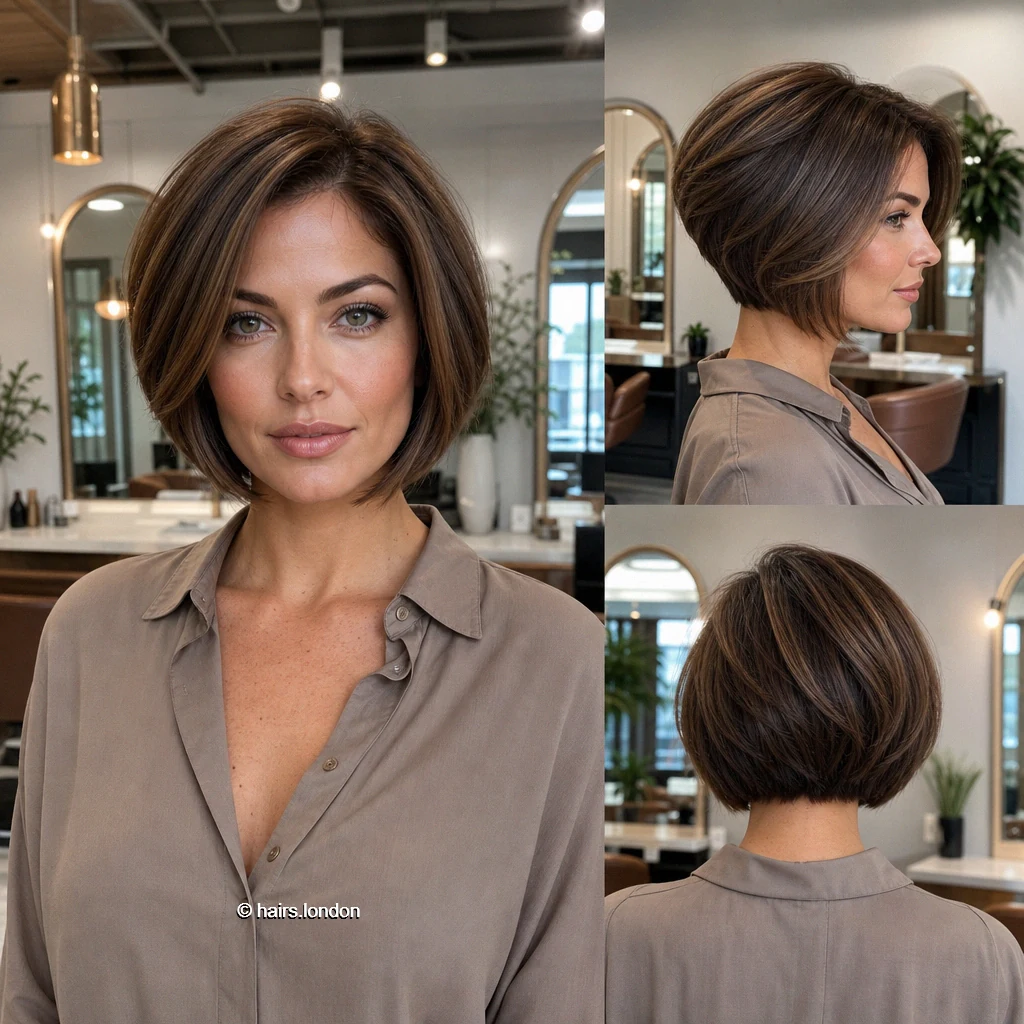
Caramel ribbons follow the sweeping layers of this rounded bob. The jaw-level front curves toward a shorter, tapered back. Visible graduation builds fullness above the clean nape outline. A deep side part sends the front smoothly across forehead. Discuss how your natural part affects that sweeping front section. Lift the crown with a brush while keeping ends controlled. Flexible spray helps preserve separation between the lighter color ribbons. Dense hair may need internal shaping beneath the fuller back. Fine hair should keep enough lower weight for definition overall. Maintain the nape as soon as its taper appears overgrown and unbalanced.
23. Rounded Bob with a Feathered Long Fringe
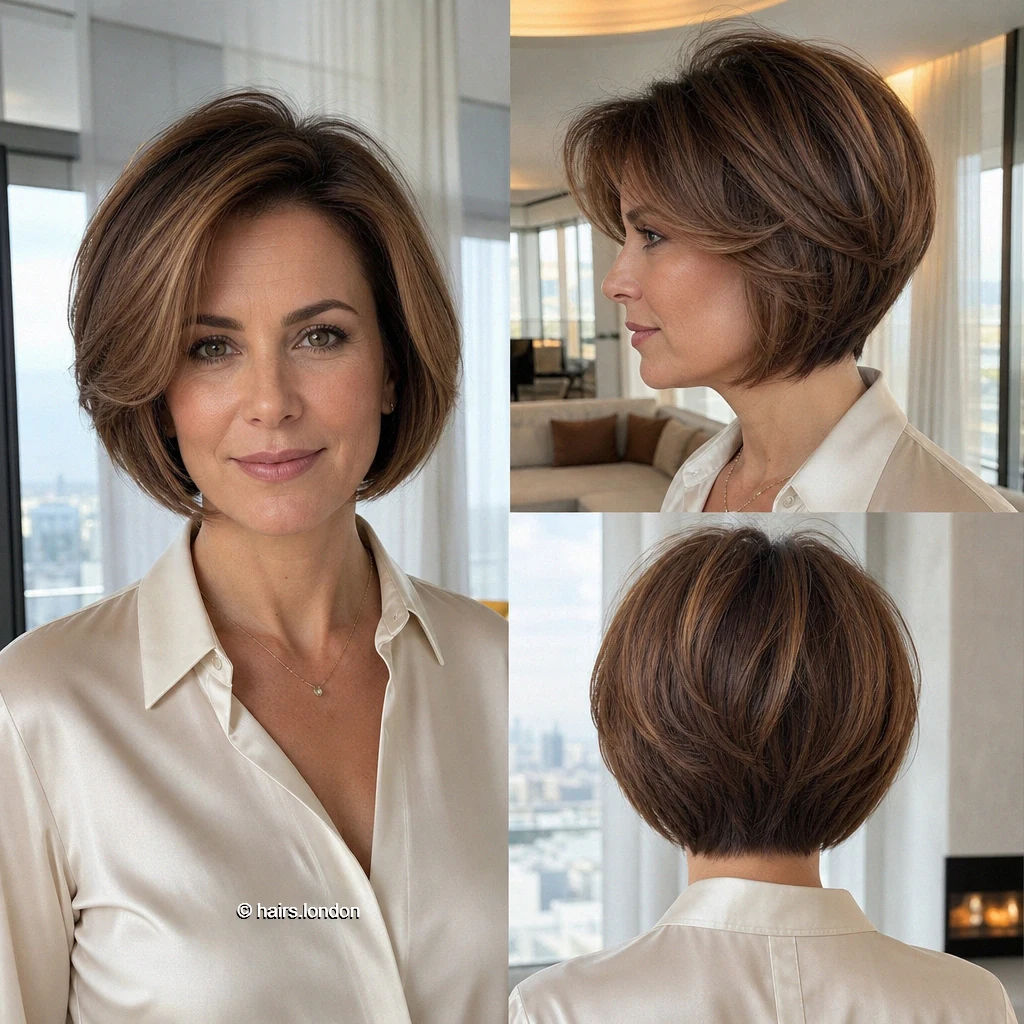
Warm chestnut highlights give this rounded, short bob dimension. A long feathered front sweeps sideways across the forehead. Side views reveal fullness through the crown and upper back. The nape finishes closer, keeping its rounded profile distinct. Ask for a fringe length compatible with your everyday part. Brush it sideways while drying, then loosen the ends gently. Light mousse can support crown lift without stiffening feathered pieces. Thick hair may need interior weight controlled below the surface. Fine hair might benefit from keeping its outer layers longer. Refresh the nape and fringe as their proportions change between your main appointments.
24. Softly Stacked Bob with a Sweeping Front
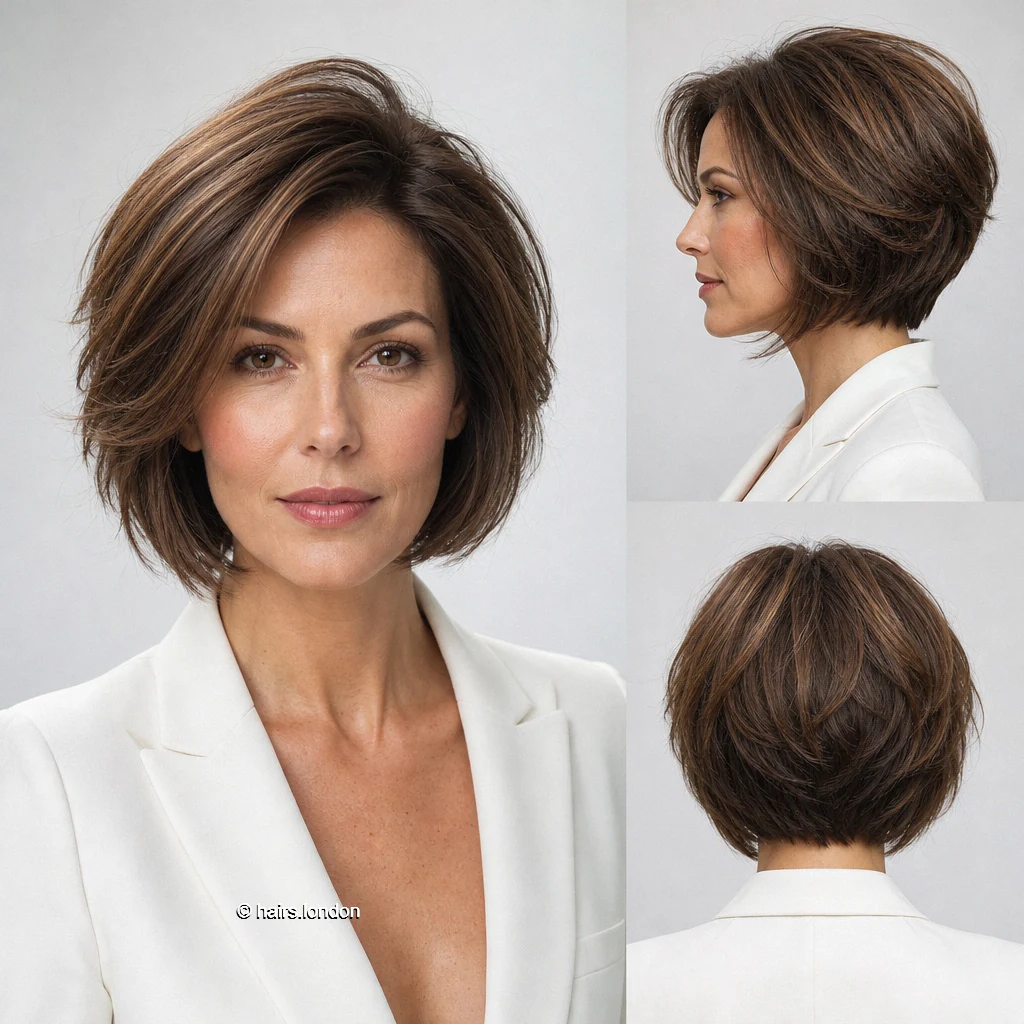
Warm brunette highlights pick out the layers of this bob. Its sweeping front curves past the cheek toward the jaw. Visible back layers build roundness above a shorter nape. The softly separated edge keeps the shape from looking rigid. Ask for graduation that respects crown growth and natural density. Blow-dry upward at roots while smoothing the fringe sideways. Add light cream only where ends need extra separation afterward. Thick hair may require concealed debulking under the rounded crown. Fine hair could benefit from a gentler, weightier back shape. Book nape trims when growth softens the visible stacked effect over time.
25. Polished Inverted Bob with a Tapered Nape
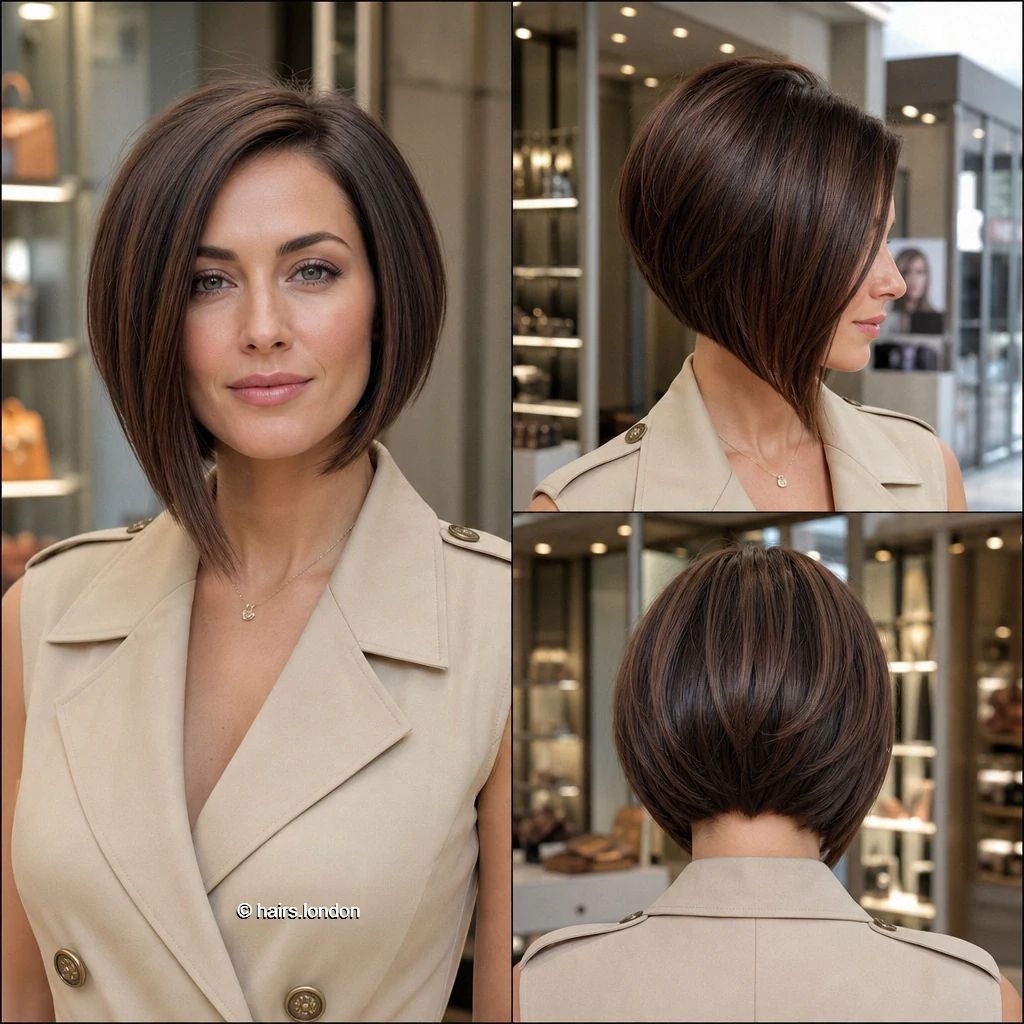
Deep brown strands form a smooth, visibly inverted bob shape. Its long front descends below the jaw beside the face. Rounded back layers narrow clearly toward the closely tapered nape. A side part helps the longer panel fall naturally forward. Ask your stylist to check the front angle when dry. Smooth the sides downward, then lift the back crown gently. Use modest finishing cream to keep the surface softly polished. Thick hair may need hidden weight removal around rear fullness. Fine hair could prefer milder graduation to protect its perimeter. Trim the nape regularly to retain the shape’s sharp contrast.
How to Choose Your Bob Length and Shape
Start with the point where you want the front to land: at the jaw, below it or nearer the shoulders. Then compare the back. A nearly level, weighty edge gives a different result from longer A-line fronts; visible graduation creates fullness above a shorter nape. Account for shrinkage, cowlicks and whether you want to tuck a side behind your ear.
Styling Fine, Thick, Wavy and Curly Textures
Fine hair often looks fuller with a substantial perimeter, modest layering and lightweight root lift. Thick hair may need carefully placed internal weight removal so a rounded bob moves without ballooning at the sides. For waves, scrunch in a light product and diffuse without repeatedly brushing the pattern apart. If your hair curls, plan the finished length around its dry shape and curl shrinkage; ask for curl-by-curl adjustments where needed.
Keeping Brunette Color Fresh
The images range from deep, even brown to chestnut and caramel dimension. Gentle cleansing and heat protection help preserve shine, while a gloss appointment can refresh a faded finish if you color your hair. Highlight upkeep depends on how noticeable the contrast is at your roots; discuss a schedule that fits both your color and your haircut.
Maintaining the Bob Perimeter and Graduation
A smooth, jaw-length line needs a check when one side or the back begins to grow unevenly. Short graduated bobs often need earlier nape attention because a little growth changes their profile. Softer layered edges allow more flexibility, although they still need reshaping when movement turns into bulk. Agree on a trim schedule based on your particular outline rather than a fixed rule for every bob.
What to Discuss with Your Stylist
Bring the image showing both your preferred front length and back view. Point out whether you want a solid line, longer front, visible back graduation, side-swept fringe or deliberately separated ends. Show your usual part and explain how much blow-drying you will do. Ask your stylist to assess density, natural texture and growth patterns before deciding how much layering or internal weight removal makes sense.
Frequently Asked Questions
What is the difference between a bob and a lob?
A bob usually finishes around the jaw or neck. A lob is a longer bob, generally reaching toward the shoulders. The transition is gradual, so describe your preferred endpoint rather than relying on the name alone.
How is an A-line bob different from a stacked bob?
A-line describes a perimeter that is longer in front than in back. Stacked describes visible graduated layers that build fullness at the back. A cut can show both features, but a longer front alone does not establish stacking.
Does a rounded bob always have graduation?
No. Hair can curve inward around a largely solid perimeter. Graduation refers to shorter lengths visibly building shape through the back.
Can fine hair wear a layered bob?
Yes, conditionally. Fewer or longer layers can add movement while protecting fullness at the edge. Ask your stylist to assess whether shorter layers would leave your ends looking sparse.
How can thick hair avoid a bulky bob?
Discuss the weight line and where bulk collects on your head. Selective internal shaping may help, but excessive thinning near the perimeter can make the ends untidy.
Will a bob work with natural curls?
It can, provided the shape and finished length account for curl pattern and shrinkage. Look at how your curls sit dry and discuss how much weight should remain at the sides and ends.
Should I add a fringe to a bob?
A side-swept fringe can blend into bob layers, but its length and direction should suit your growth pattern. Consider whether you are willing to style and trim it separately.
Which bob needs less daily smoothing?
A softly textured bob may be easier to wear with natural bends than a highly polished, precise line. Your texture, humidity and preferred finish still determine the daily effort.
How often does a short graduated bob need trimming?
Check the nape and back profile as they grow; short graduation often loses its intended shape before a longer, softer bob does. Set appointments according to how quickly your own outline changes.
Can I grow out an A-line bob evenly?
Yes. Your stylist can gradually reduce the front-to-back difference over successive trims while preserving enough length for the shape to remain intentional.
How do I keep a sleek bob from looking flat?
Use modest root lift, dry in the direction of your part and keep heavier creams away from the crown. Preserve the clean perimeter without pressing every section tightly against the head.
Do brunette highlights change bob maintenance?
They add a separate color-upkeep decision. Dimensional pieces can make layers more visible, but their refresh schedule depends on placement, contrast and how much regrowth you prefer to see.
Conclusion
The strongest choice is the bob whose front length, back shape and daily styling needs make sense for your hair. Compare the side and rear views as closely as the portrait, then work with your stylist to translate the outline you like into a cut you can maintain.