


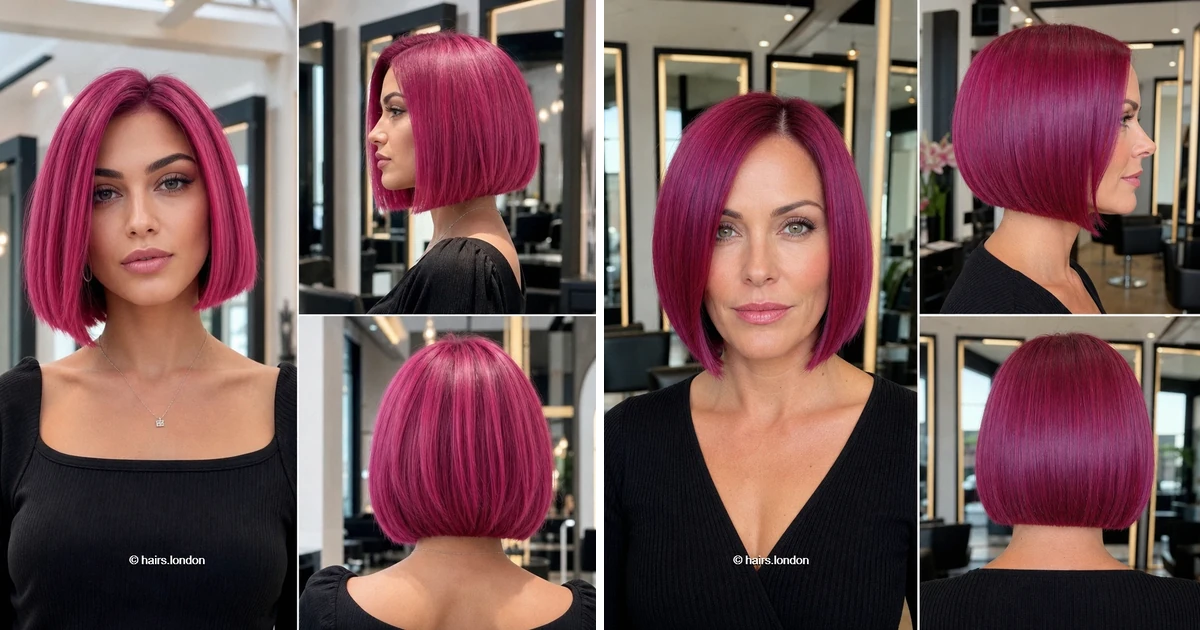
11. Burgundy Bob with a Glossy Curved Perimeter
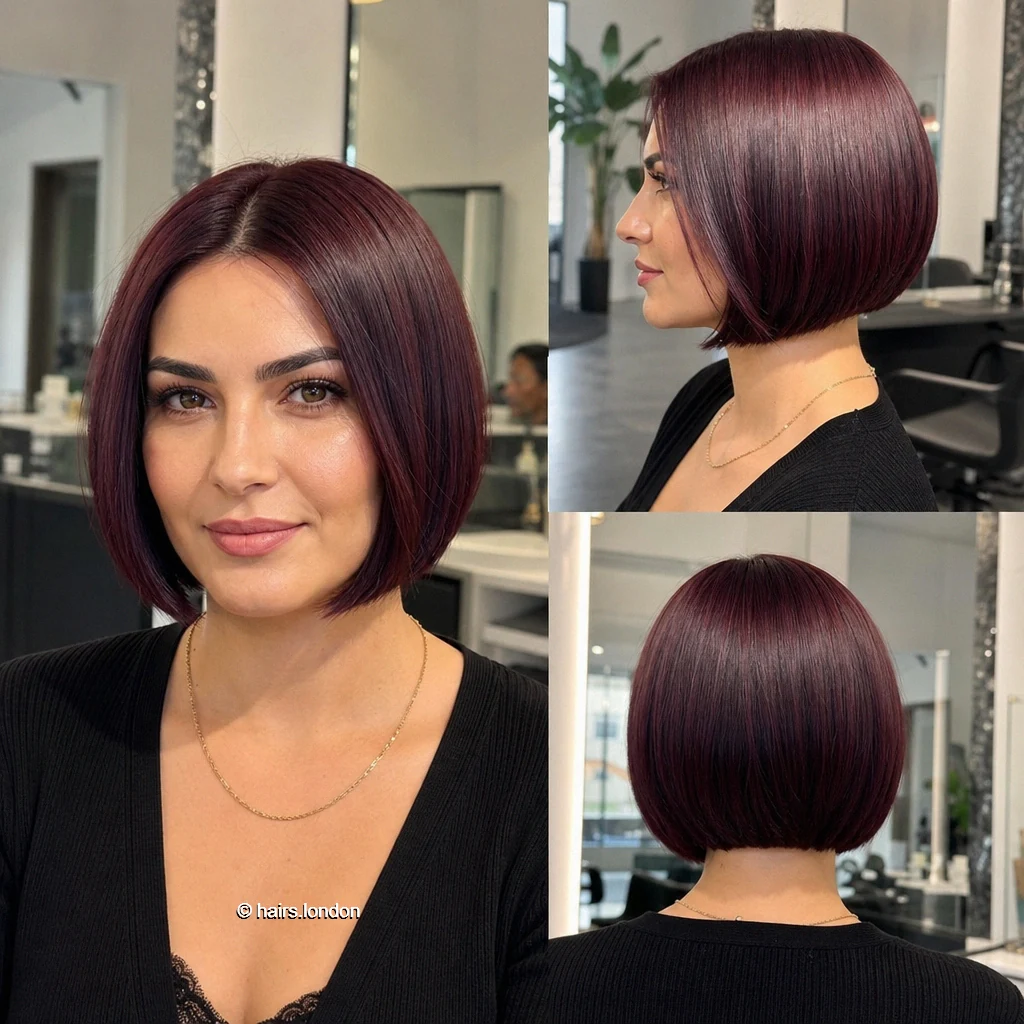
Deep burgundy color gives this smooth bob visible shine throughout. A side part sends longer pieces down toward the jaw. The back forms a rounded outline above a tidy neckline. Its lower edge stays compact rather than noticeably piecey here. Brush from roots through ends for an even, curved finish. Apply a small amount of serum to calm surface flyaways. Avoid excess product, which can obscure the crisp lower line. Trims maintain the neckline and the front framing length separately. This fullness needs adjustment according to density and natural texture. Ask how often your preferred smooth finish requires heat styling.
12. Pale Lilac Bob with an Extended Front
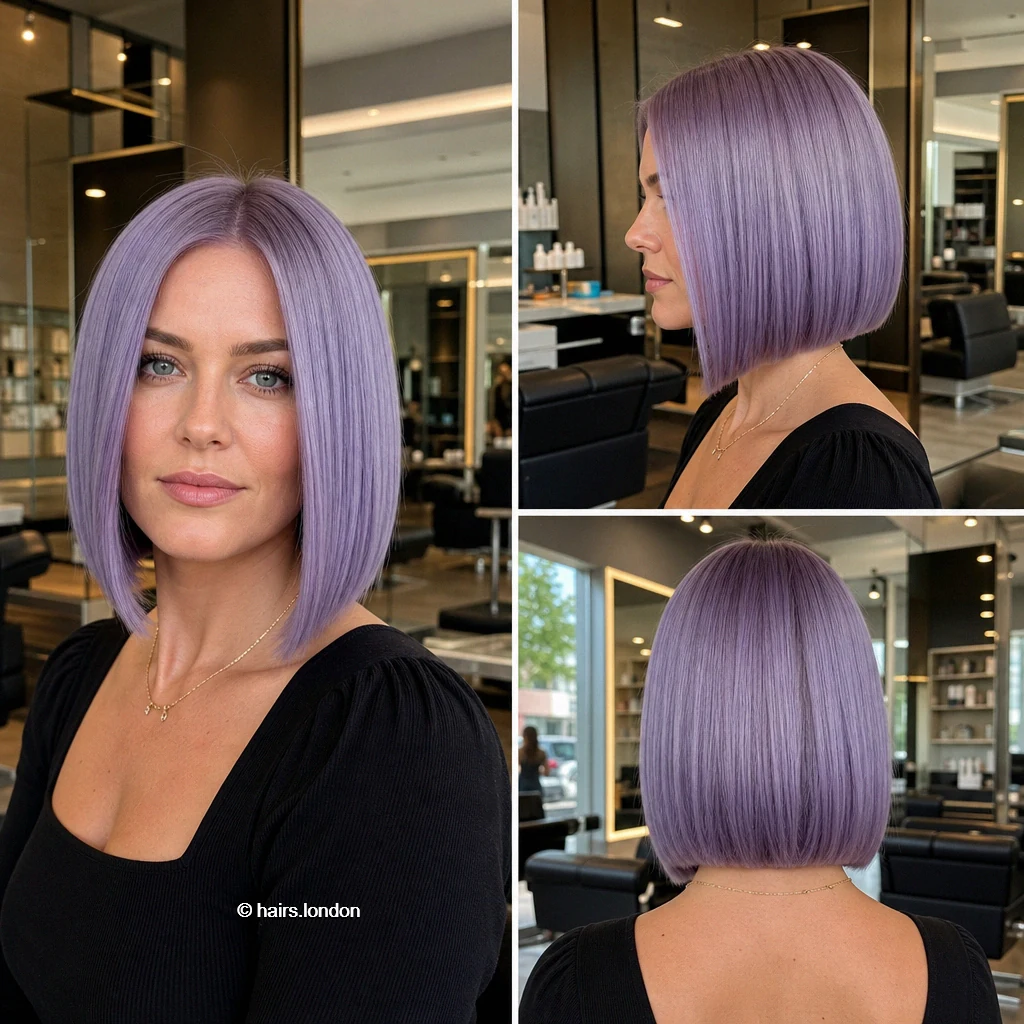
Pale lilac color highlights the smooth lines of this bob. Front sections descend below the jaw toward the upper neck. The back ends higher, with a softly rounded rear silhouette. Its side profile shows a distinct but gentle length contrast. Dry downward and refine only the ends needing extra smoothing. Keep products lightweight so the straight front pieces move freely. Trim the back and front before their relationship becomes blurred. Pale color may show fading quickly, depending on your routine. This precision shape requires consideration of density and natural wave. Discuss how your usual part affects the two front lengths.
13. Berry Pink Bob with a Rounded Neckline
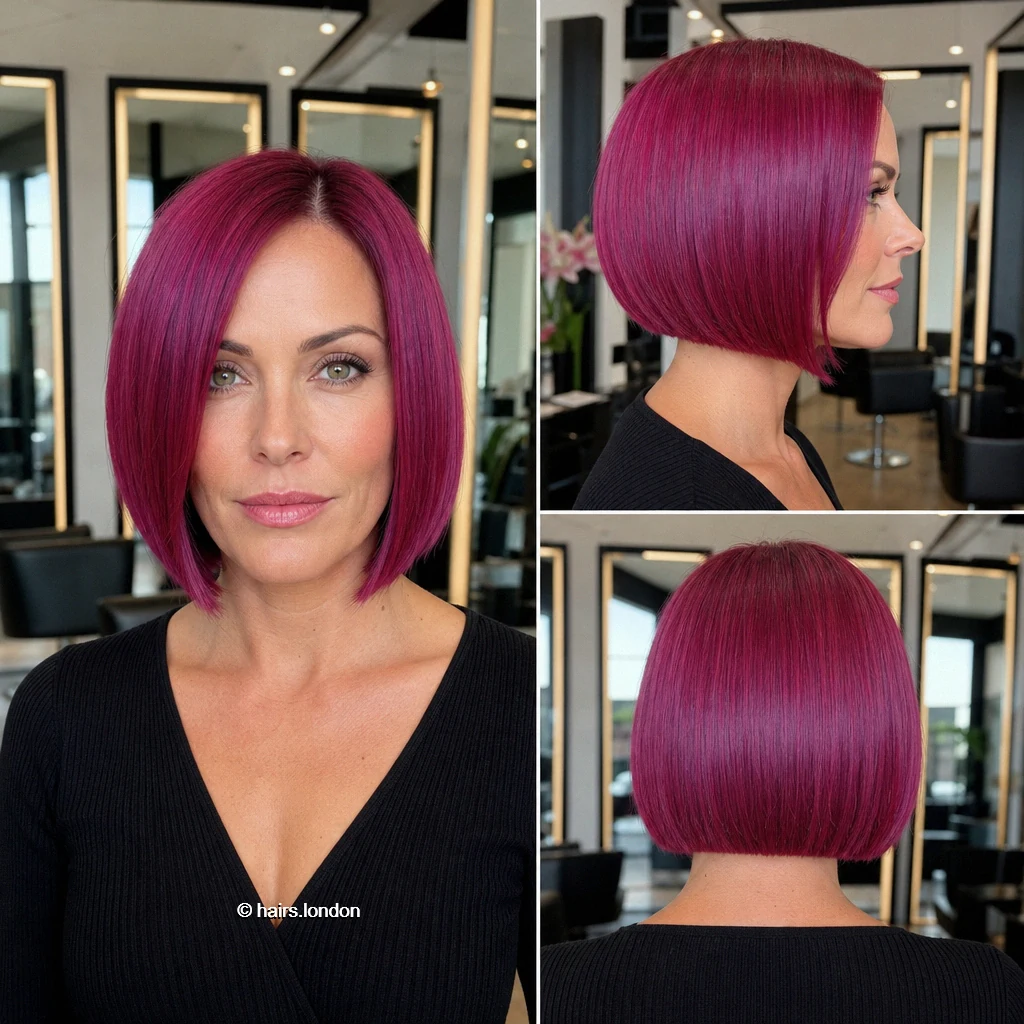
Berry pink color stands out against this smooth bob silhouette. A slightly off center part opens the face without fringe. Front pieces reach the jaw while the back sits higher. The rounded rear keeps a defined edge above the neckline. Smooth with downward airflow, taking care not to flatten roots. A light shine product can emphasize the color and perimeter. Schedule edge trims before the short back becomes noticeably uneven. Discuss color refreshes if maintaining this saturated tone matters most. Dense or wavy hair may need individualized bulk management here. Ask your stylist to preserve movement within the compact outline.
14. Hot Pink Bob with a Smooth Curved Back
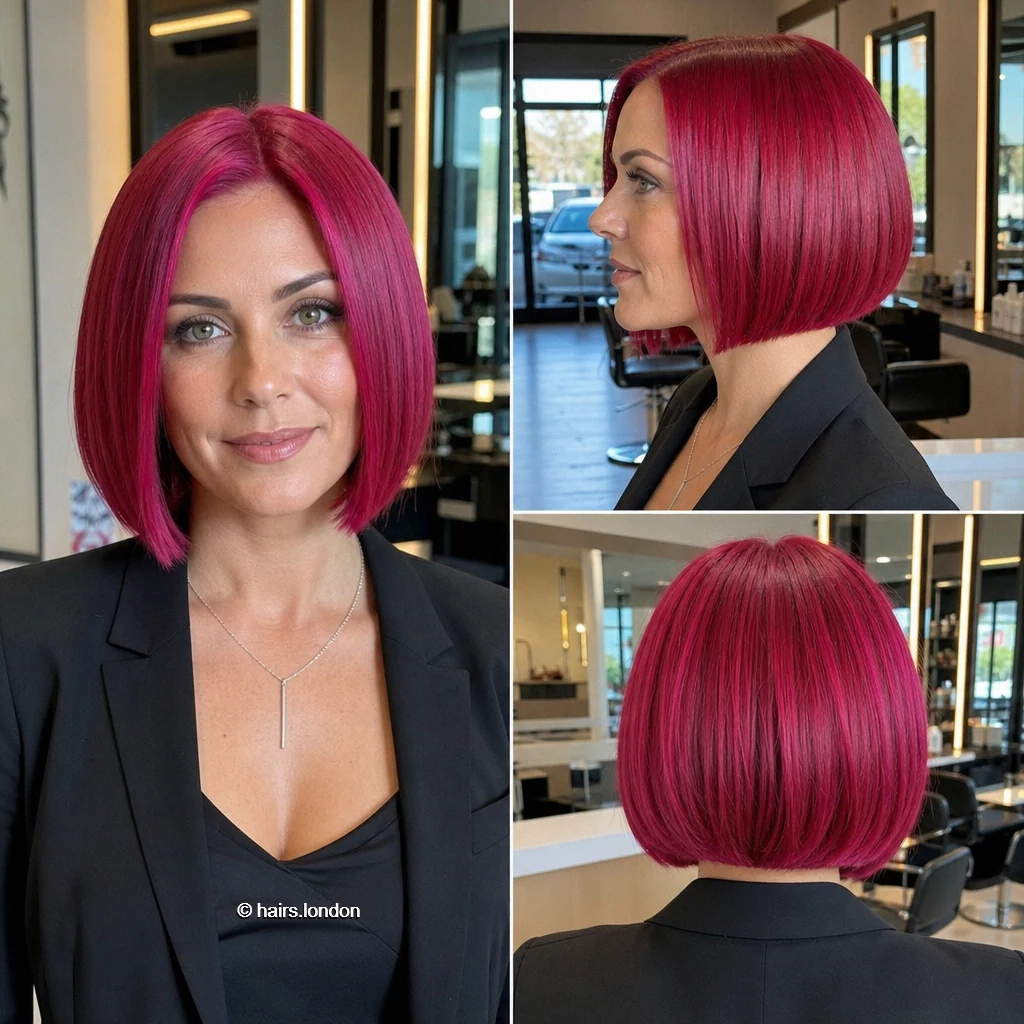
Hot pink gives this polished, jaw framing bob immediate presence. A side part introduces asymmetry without visibly unequal cut lengths. The back curves inward above a clean neckline edge neatly. Smooth lengths show little obvious separation through the outer surface. Use controlled airflow to guide both sides toward their ends. Finish with lightweight shine spray rather than a heavy cream. Check the rear edge regularly as the short length grows. Plan color maintenance around how quickly this bright pink fades. Consider your hair density before committing to the rounded fullness. Ask whether your natural part will maintain the pictured balance.
15. Peach Rose Bob with a Subtle A-Line Shape
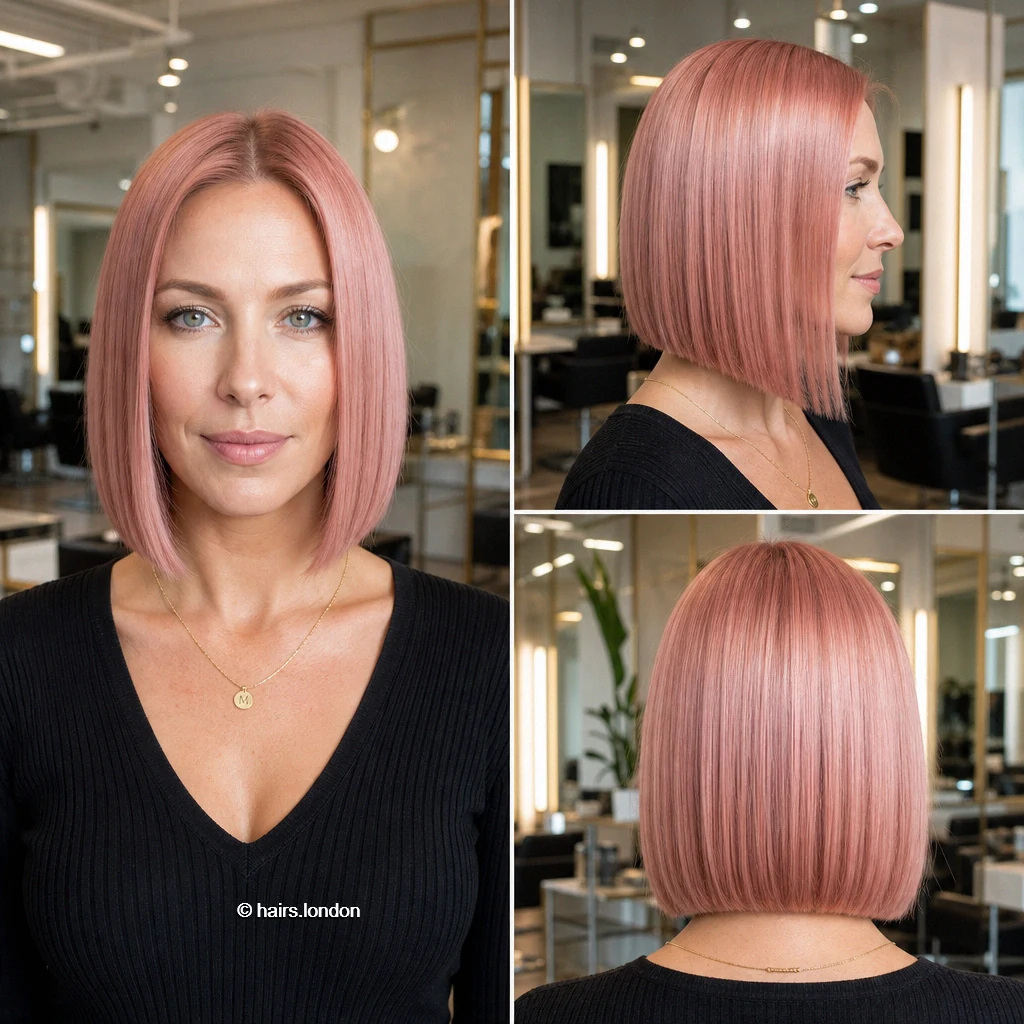
Peach rose color warms this straight, center parted bob. Front pieces fall below the jaw while the back sits higher. The side view reveals a subtle A-line shift toward front. Its back remains smooth, with a clean, level neckline edge. Dry from above to keep the long perimeter lying flat. Tuck one side occasionally without changing the underlying cut shape. Neat trims protect the visible front length and back contrast. Pastel upkeep may involve gentle washing and timely color refreshes. This look depends on manageable texture and comfortable smoothing habits. Discuss how your natural growth direction affects both front panels.
16. Dark Plum Bob with Long, Tapered Front Pieces
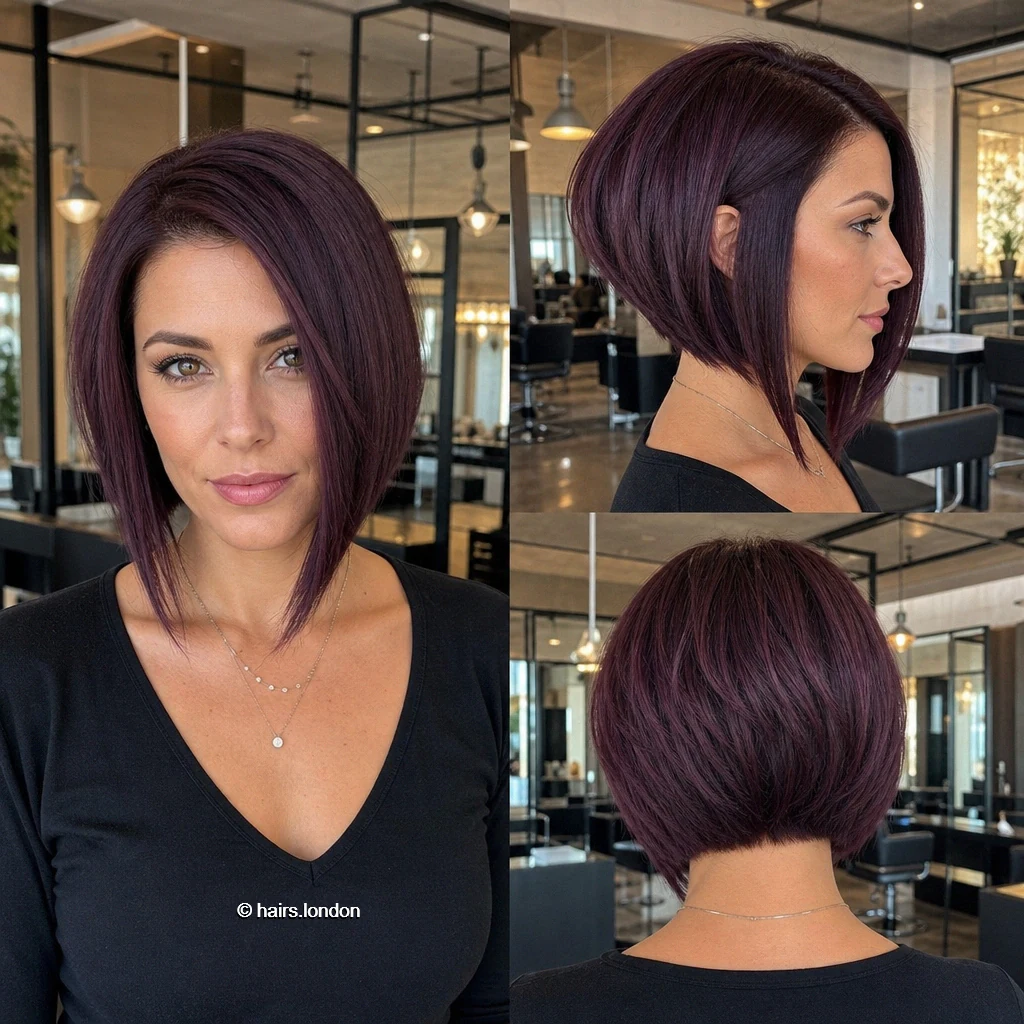
Dark plum strands define a dramatic front to back contrast. Long front pieces reach toward the collarbone on either side. Behind them, the rounded back sits close above the neckline. The visible silhouette combines forward length with a fuller rear. Smooth the front downward while lifting the back just enough. Keep finishing products light so the pointed ends retain movement. Regular back trims protect the shorter outline as fronts grow. Consider your density before requesting such concentrated rear fullness. Color maintenance depends on fading and your preferred depth of plum. Bring side photographs when discussing how pronounced that contrast feels.
17. Violet Bob with Visible Back Graduation
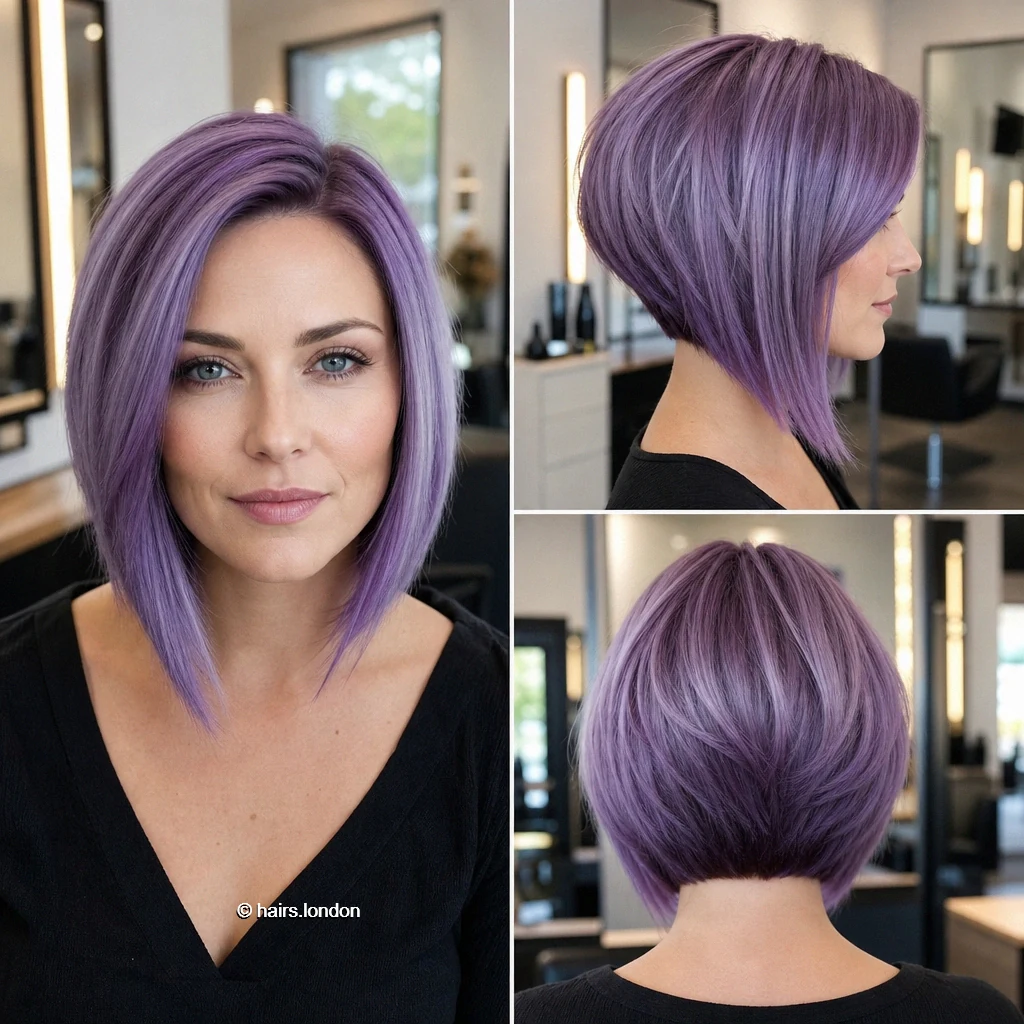
Violet color brightens this bob with distinctly longer front pieces. Its front tips extend below the jaw toward the neck. The back sits high, with visible graduation creating rounded volume. Soft surface layers break up the shape above its neckline. Smooth longer panels while allowing the crown to retain lift. Apply light cream sparingly to control separated rear ends. Reshape the graduated back before it becomes heavy or wide. Violet upkeep varies with washing frequency and your desired intensity. Consider how your density supports the contrast between front and back. Discuss how much visible layering suits your everyday styling routine.
18. Magenta Bob with a Pronounced Longer Front
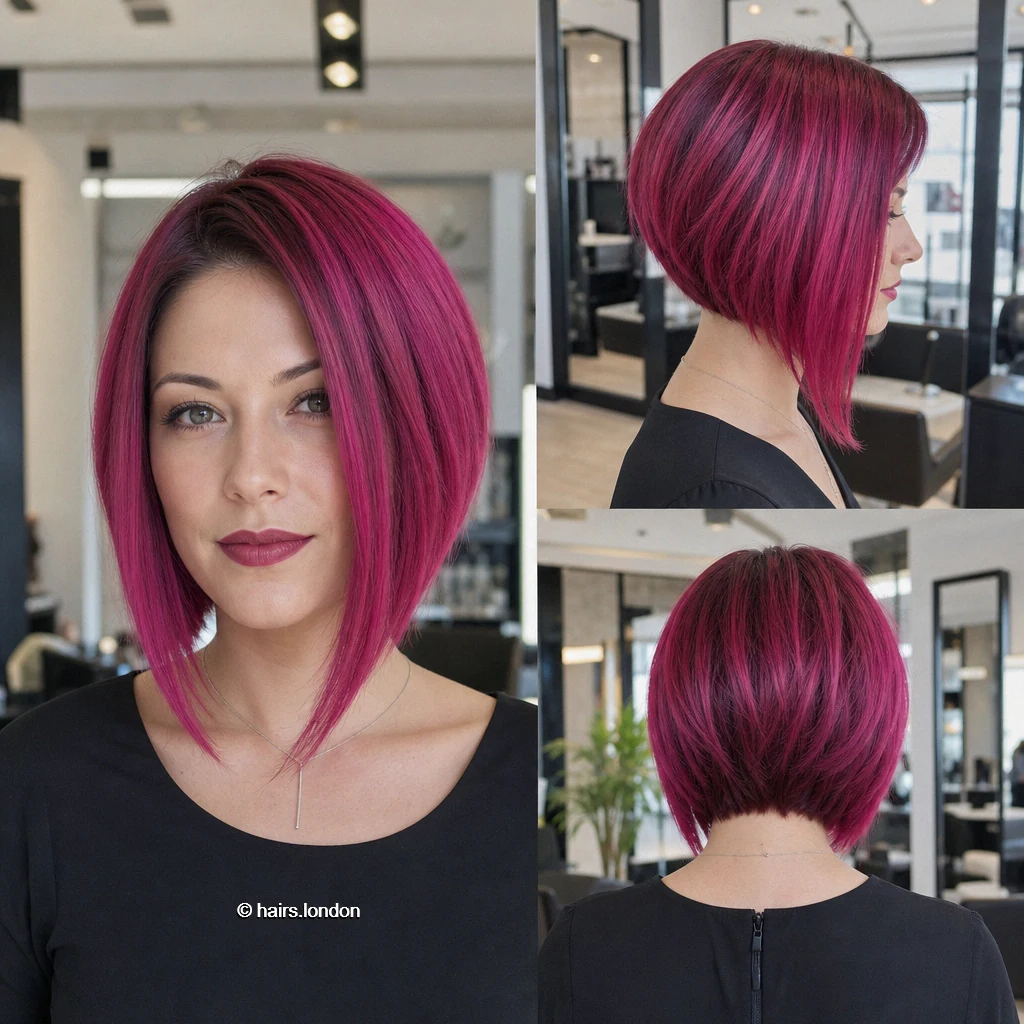
Magenta highlights run through this sharply contrasting bob shape visibly. Long front sections fall toward the collarbone beside the face. A short rounded back finishes neatly above the neckline here. Side views clearly establish the strong front to back slope. Smooth the front while keeping the rear crown gently lifted. Avoid bulky finishing cream around the narrow, pointed front pieces. Frequent back trims help preserve the contrast as hair grows. Bright color may need refreshing before the haircut needs reshaping. This silhouette depends on density, growth patterns and styling preferences. Ask your stylist to show the proposed front length first.
19. Pink Layered Bob with a Sweeping Front
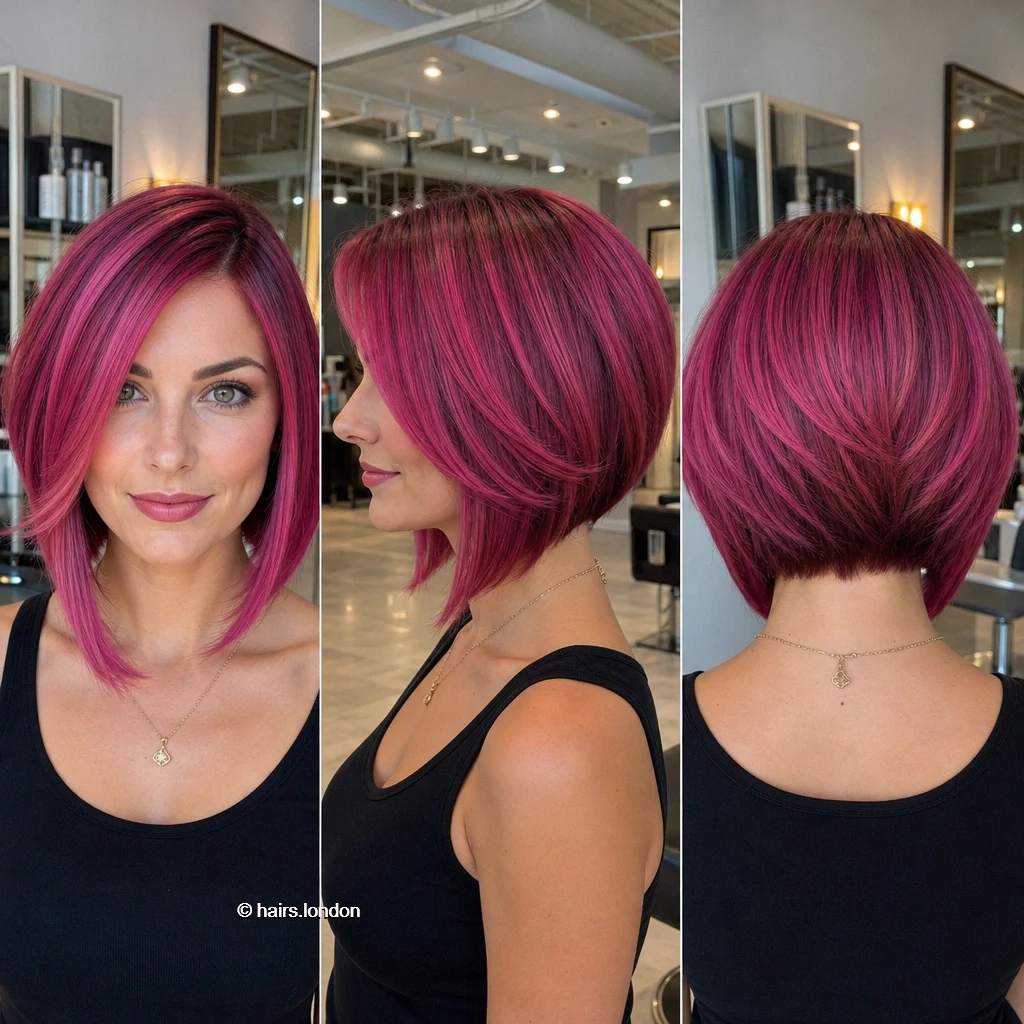
Pink lengths frame this bob with a pronounced forward sweep. Front pieces extend toward the upper chest below the jaw. The back ends close to the neckline beneath rounded layers. Visible layering adds movement through the sides and rear crown. Brush the front across your part while drying it smooth. Use light product to separate layers without inflating the silhouette. Keep the short neckline trimmed to protect its intended contrast. Discuss how vivid pink fades with your normal washing routine. Dense hair may need careful debulking without thinning front ends. Ask whether your natural part supports the long sweeping section.
20. Blush Pink Bob with Rounded, Layered Graduation
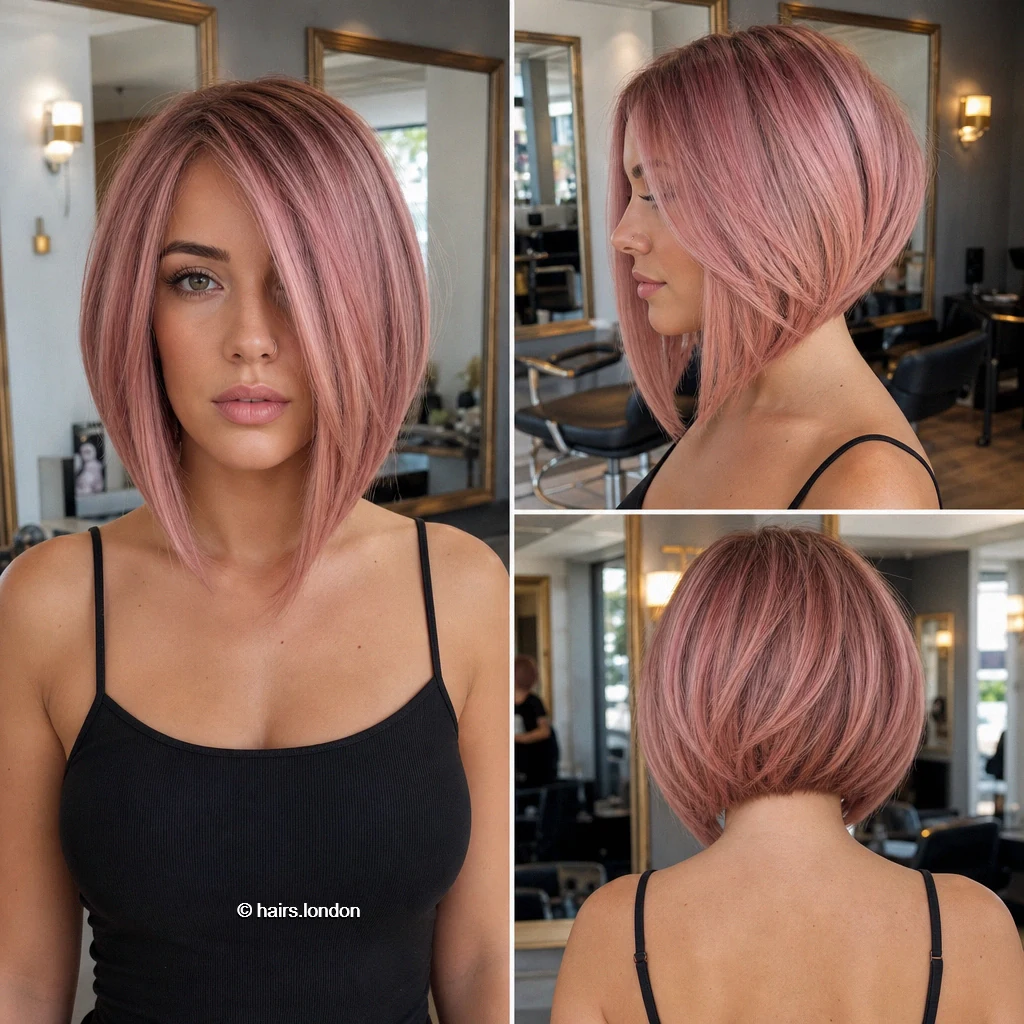
Blush pink color softens this bob with extended front pieces. The front falls below the jaw while the back rises. Rear layers sweep inward toward a short, tidy neckline edge. A deep side part lets one section cross the forehead. Blow dry the longer front downward for a fluid finish. Lift rear layers gently rather than forcing a stiff dome. Trim the graduated back when its soft taper loses definition. Pale pink upkeep depends on fading and your washing habits. Consider your density before selecting this rounded, layered rear shape. Discuss fringe placement if your natural part shifts throughout days.
How to Choose Your Bob Length and Shape
Decide where you want the front to fall first: near the jaw for a compact bob, below it for more framing, or toward the collarbone for a dramatic longer front. Then compare the side and back views. An A-line shape is longer in front; a stacked or graduated shape also has visible back graduation. A crisp, nearly level edge gives a different result from a feathered neckline. Ask how each option will sit with your density, natural texture and growth patterns.
Styling Fine, Thick, Wavy and Curly Textures
Fine hair often benefits from a strong perimeter and light products that do not collapse it. Thick hair may need carefully placed internal weight removal, especially around a rounded back, without making the ends sparse. For waves, try a diffuser or gentle air drying before deciding how much smoothing the outline needs. Natural curls require the length and shape to be assessed at their finished, dry position; these photographs do not show a curly result. Style a sweeping fringe while damp, and use only enough product to control it without sacrificing movement.
Keeping Pink, Plum and Lavender Color Fresh
Color upkeep varies across this set. Saturated magenta and pink can lose intensity, while pale rose and lilac may reveal subtle changes in tone sooner. Ask your colorist what refresh schedule suits your starting hair and chosen shade. Gentle washing, heat protection and limiting unnecessary hot-tool passes can help preserve the finish. Judge the color in more than one light before choosing it from a photograph.
Maintaining the Bob Perimeter and Graduation
A blunt jawline edge needs a trim when individual ends stop forming a clean line. Short, rounded backs can lose their balance as the neckline grows, and visible graduation needs reshaping before weight settles too low. Layered bobs can allow a softer grow-out, but their fringe and tapered nape may still need attention. Set your appointment interval with your stylist according to how precisely you want to preserve the pictured shape.
What to Discuss with Your Stylist
Bring the front, side and back views of the cut you prefer. Point out the exact features you want to keep, such as a longer front, compact neckline, visible graduation or sweeping fringe. Discuss your natural part, density, growth patterns, everyday styling time and tolerance for color refreshes. Ask how the shape will look without a salon blowout and which areas will need the most frequent trimming.
Frequently Asked Questions
What is the difference between a bob and a lob?
A bob generally finishes around the jaw or neck; a lob is a longer bob that approaches the shoulders. Some cuts here remain short at the back while their front pieces extend considerably farther.
Is an A-line bob the same as a stacked bob?
No. A-line describes a front that is longer than the back. Stacked or graduated describes visible, built-up shaping at the back. One haircut can show both features.
How do I choose between a blunt and layered perimeter?
Choose according to the finish you want and how your hair behaves. A blunt edge emphasizes a continuous line; layers introduce separation and movement but may need more styling.
Can a rounded bob work with thick hair?
It can, but the stylist may need to manage internal weight so the sides and back do not become excessively bulky. Keep enough density at the perimeter for the intended outline.
Will a graduated bob make fine hair look fuller?
Graduation can create visible shape at the back, but the result depends on your density and growth patterns. Excessive layering can leave fine ends looking sparse.
Can I wear one of these shapes with natural curls?
Possibly, although the pictured finishes are predominantly smooth or softly textured. Have a stylist assess your curl pattern and plan the finished length after shrinkage.
What should I consider before adding a sweeping fringe?
Consider your natural part, hairline growth patterns and whether you are willing to direct the fringe while it dries. Agree on how much forehead coverage you want.
Which bob needs less daily smoothing?
That depends on your natural texture. A softly layered shape may accommodate some movement, while a precise straight perimeter usually shows bends and unevenness more clearly.
How often should I trim a short graduated back?
Trim it when the neckline or built-up back shape begins to lose definition. Your stylist can suggest an interval based on your growth rate and preferred precision.
How do I keep a bright pink or lavender bob looking fresh?
Follow a colorist-approved washing and refresh plan, protect hair when heat styling, and expect the maintenance schedule to vary with the shade and your starting hair.
Can I grow out a bob with a much longer front?
Yes. Ask your stylist whether to preserve the front length while the back catches up or gradually soften the angle at each trim.
What should I bring to a bob haircut consultation?
Bring images showing the front, side and back, and explain which details matter most. Share your natural texture, parting, styling routine and color-maintenance preferences.
Conclusion
The strongest choice is the bob whose length, back shape and color you can maintain comfortably. Use these views to distinguish a smooth perimeter from visible graduation or soft layers, then work with your stylist to adapt the details to your hair.


