

11. Burgundy Layered Lob with Flicked Ends
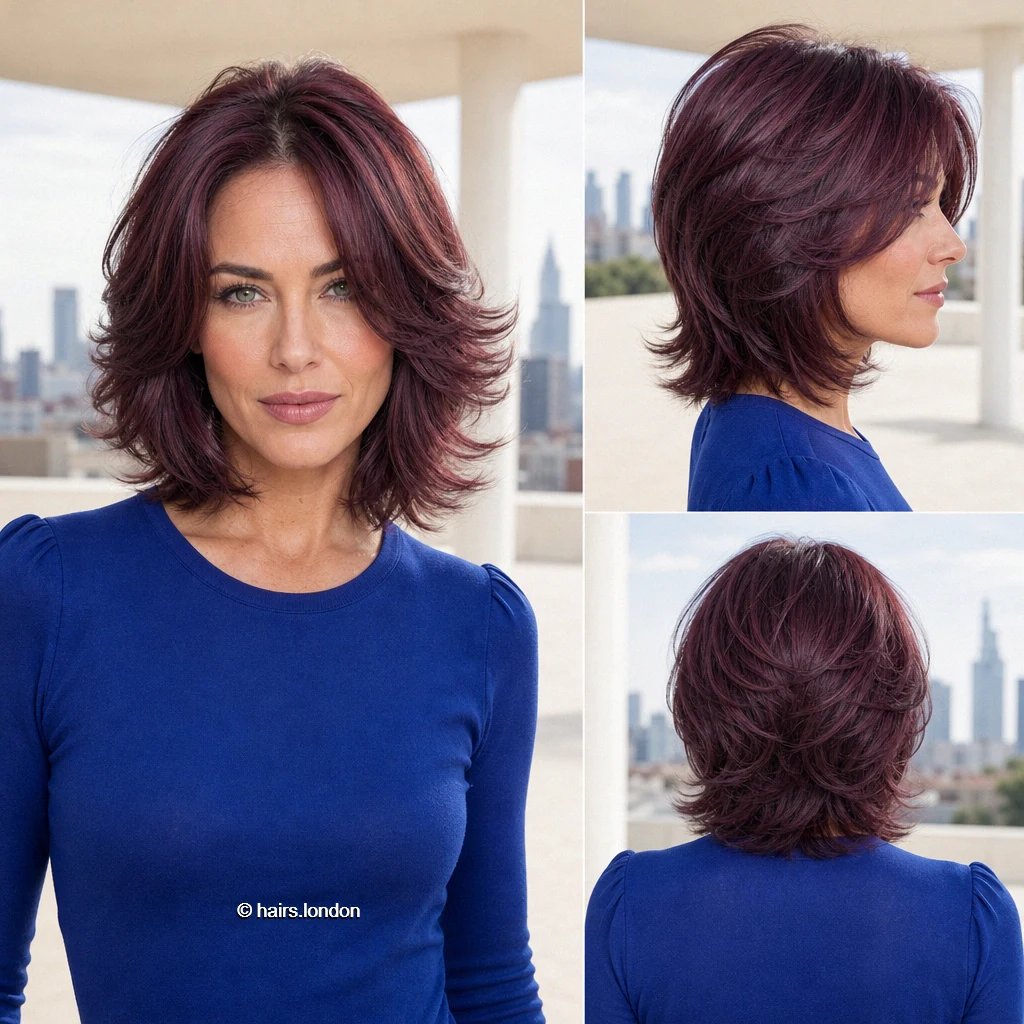
Burgundy brown hair falls below the jaw in layered sections. Its sides reach toward the shoulders while ends flick outward. A loose central part opens around soft, face framing pieces. The back shows substantial visible layers rather than a blunt weightline. Ask your stylist to keep enough length for that movement. Blow dry with a brush to direct the ends outward. Use modest hold so individual layers remain flexible throughout. This airy shape depends on density and natural texture. Longer layers may offer an easier transition when growing out. Trim damaged tips while keeping the overall length you still prefer.
12. Lavender Bob with Lifted, Feathered Layers
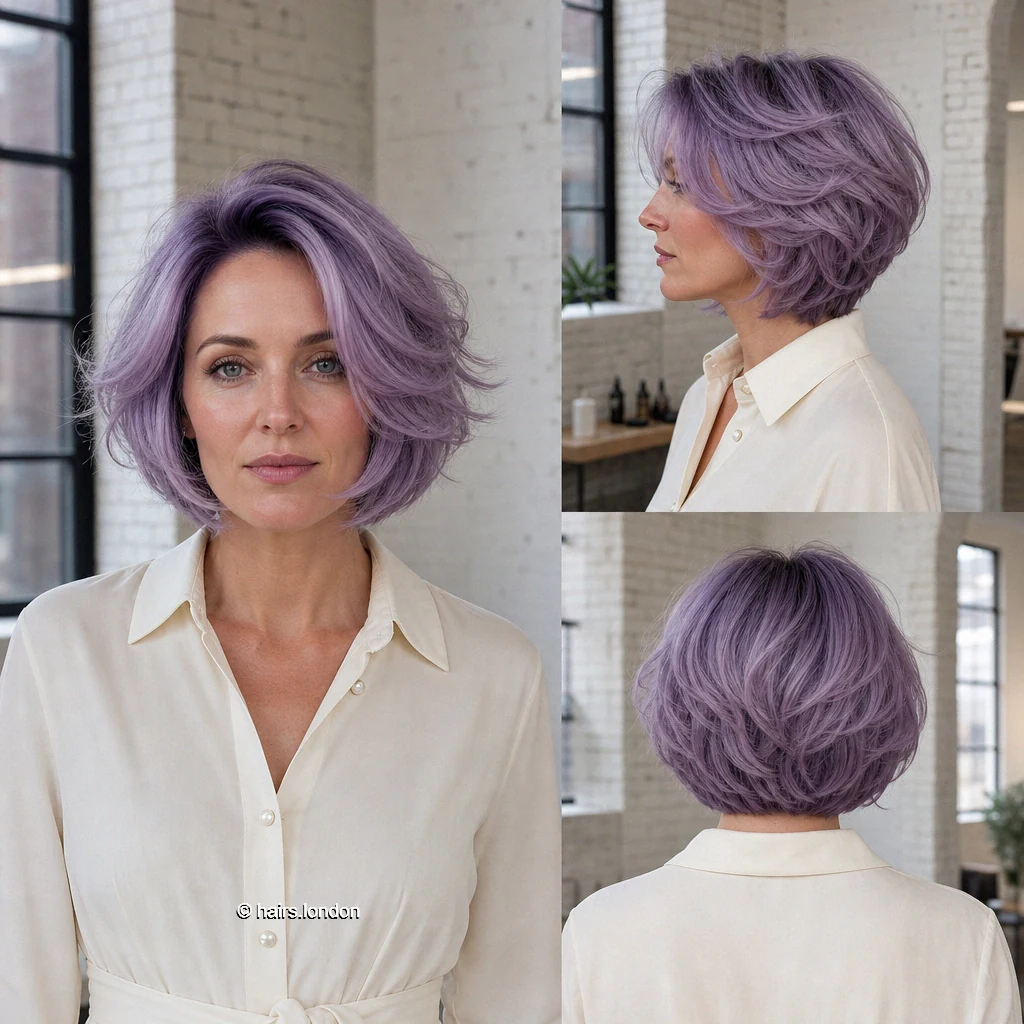
This lavender bob carries volume around its lifted upper sides. A deep side part sends long pieces across the forehead. Visible layers sweep backward over a shorter neckline. The ends appear feathered, especially near the cheek and ear. Discuss how much layering your hair can hold without frizz. Dry roots upward before guiding the sides away from face. A flexible spray can support lift without fixing every strand. Thick hair may need careful weight control beneath the crown. Lavender tones can shift, so plan color maintenance with care. Trim the shorter outline when it begins expanding untidily below the neckline.
13. Magenta Shaggy Bob with Swept Front Layers
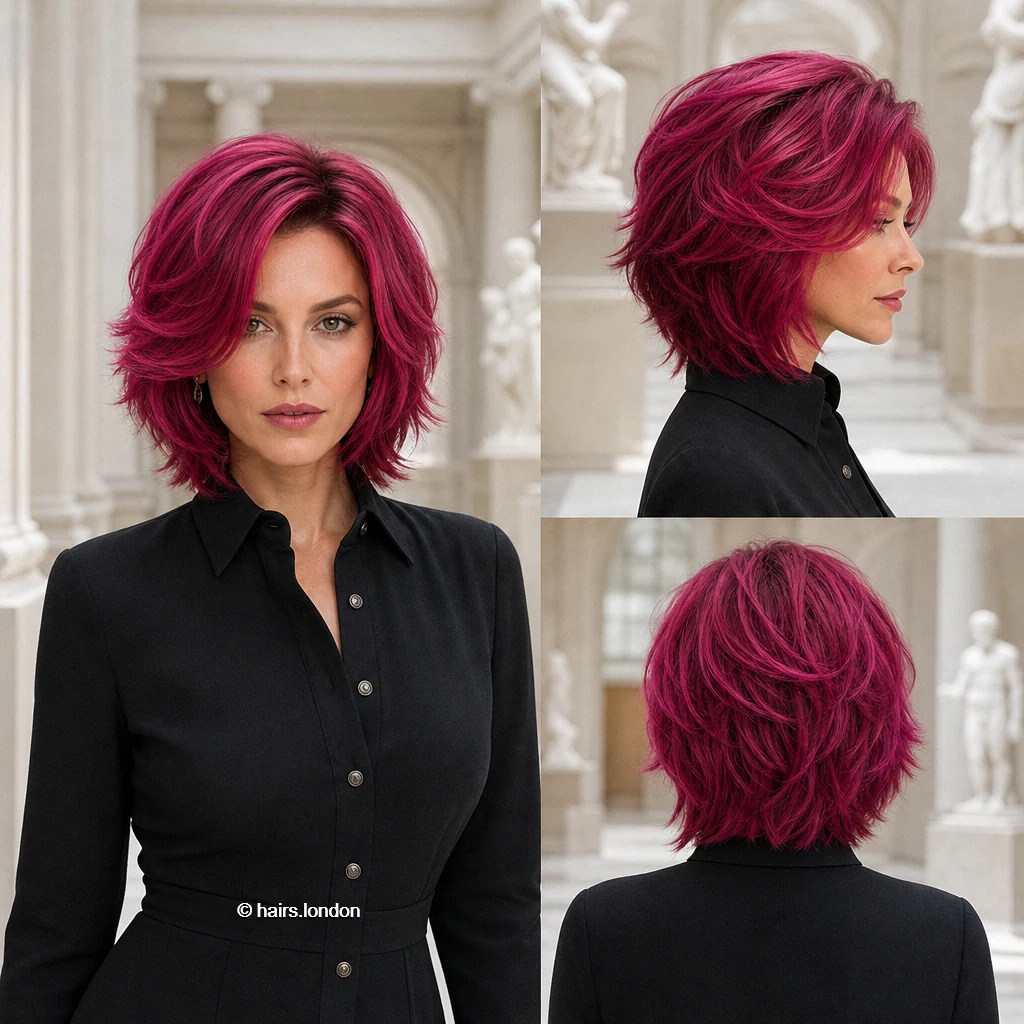
Saturated magenta highlights the distinct layers throughout this shaggy bob. A sweeping front section falls across one side of forehead. The sides and back show flicked, separated ends throughout. Length reaches below the jaw toward the upper neck. Ask for layers that suit your natural density and movement. Scrunch with light cream, then let the ends remain irregular. Direct the front away from your eyes while drying. Coarse hair might need extra moisture to avoid unwanted puffiness. Bright pink color calls for a realistic refresh plan. Trim uneven ends as needed while preserving the shaggy outline between scheduled salon visits.
14. Berry Layered Lob with Flicked Ends
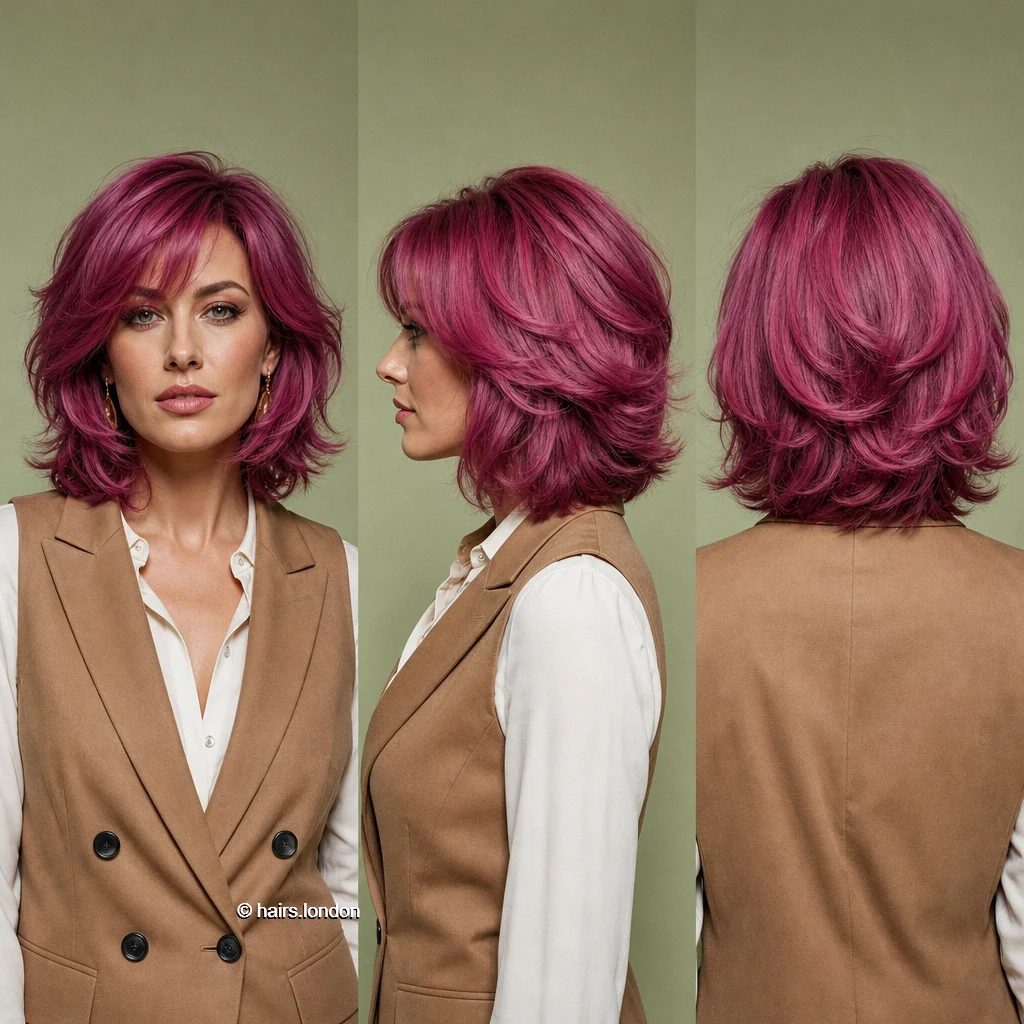
Berry pink color covers this full, heavily layered lob. The lengths sit below the jaw and approach the shoulders. Sweeping front layers open away from the face softly. Sides and back show numerous ends turning gently outward. Ask whether your density can support this much layering. Brush sections away from your face while drying for lift. Finish with flexible hold instead of heavy smoothing serum. This shape may require more styling on very straight hair. Refresh the color before faded ends lose their richness. Trim the outermost tips while retaining the longer overall silhouette, especially around the face framing pieces.
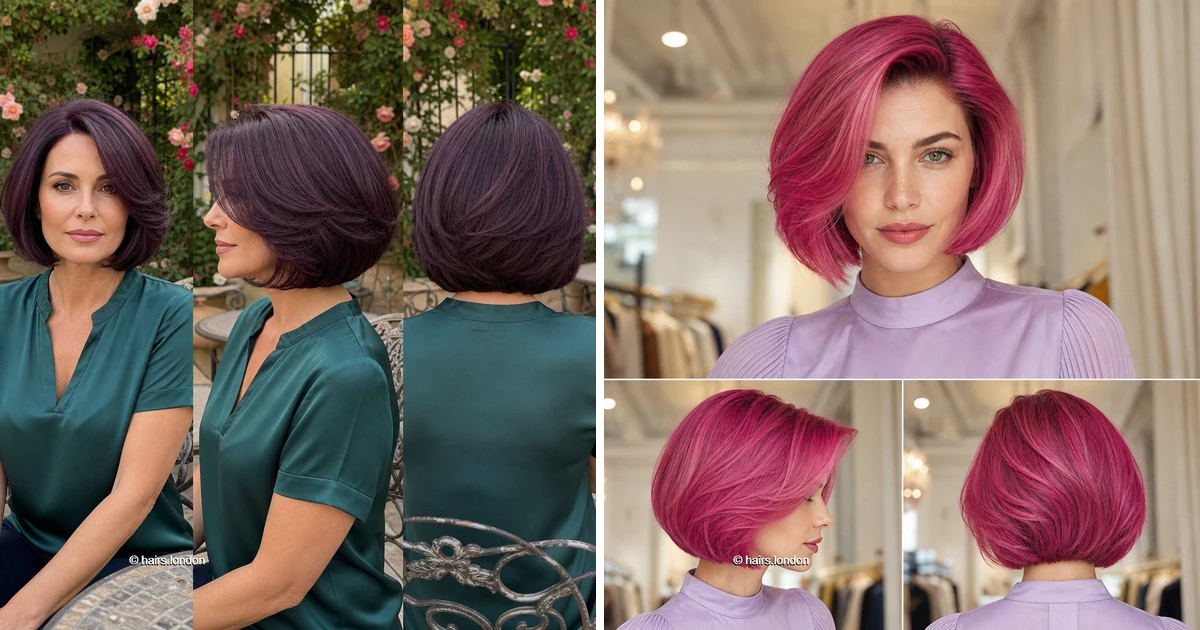
15. Mauve Bob with an Airy Side Sweep
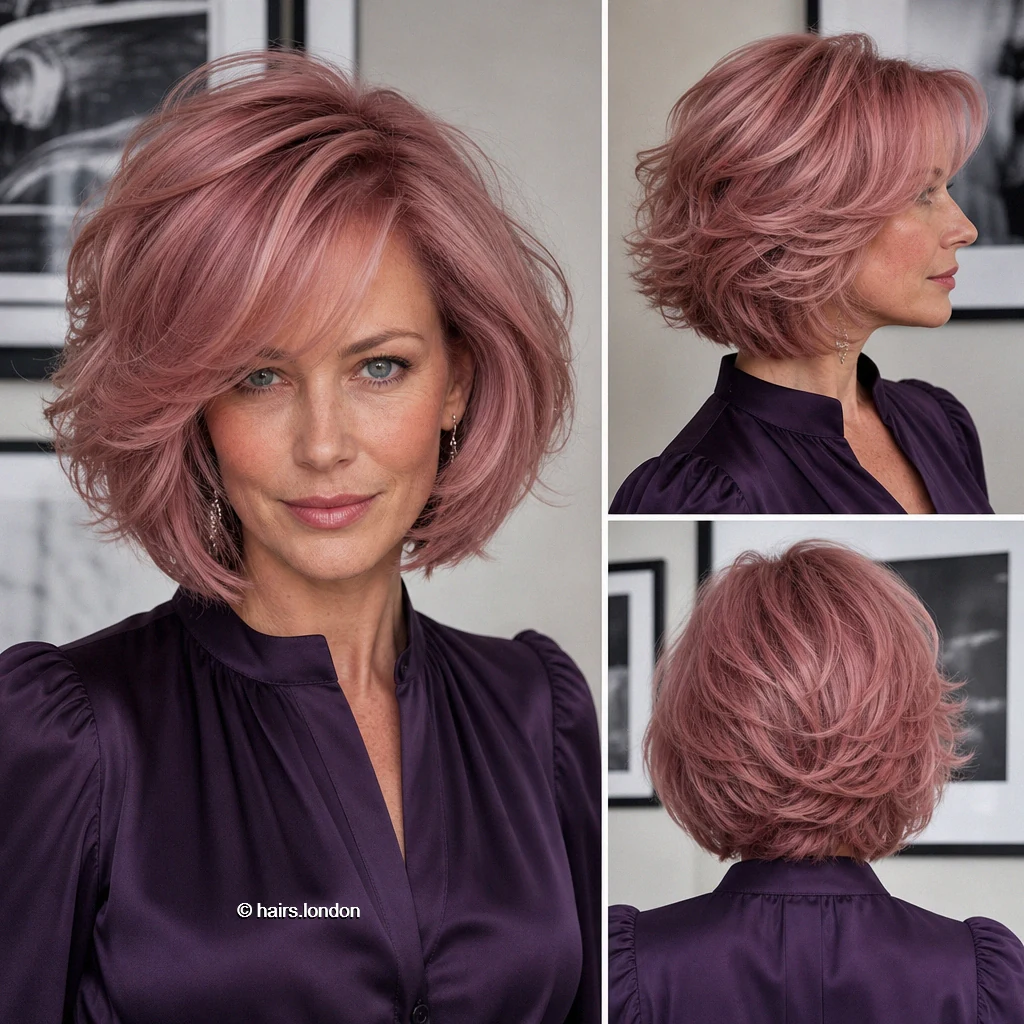
Muted mauve pink gives this rounded bob a softer appearance. A long side sweep crosses the forehead above layered sides. Loose ends sit near the jaw, with airy crown volume. The back shows movement rather than a sharply defined stack. Ask for enough lower weight to support its rounded silhouette. Lift roots with a brush, then separate selected ends lightly. Avoid heavy products that pull the sweeping front section down. This fullness may depend on your density and drying routine. Muted color can change noticeably between regular salon visits and washes. Trim the neckline when stray pieces interrupt its shape.
16. Deep Plum Bob with a Close Neckline
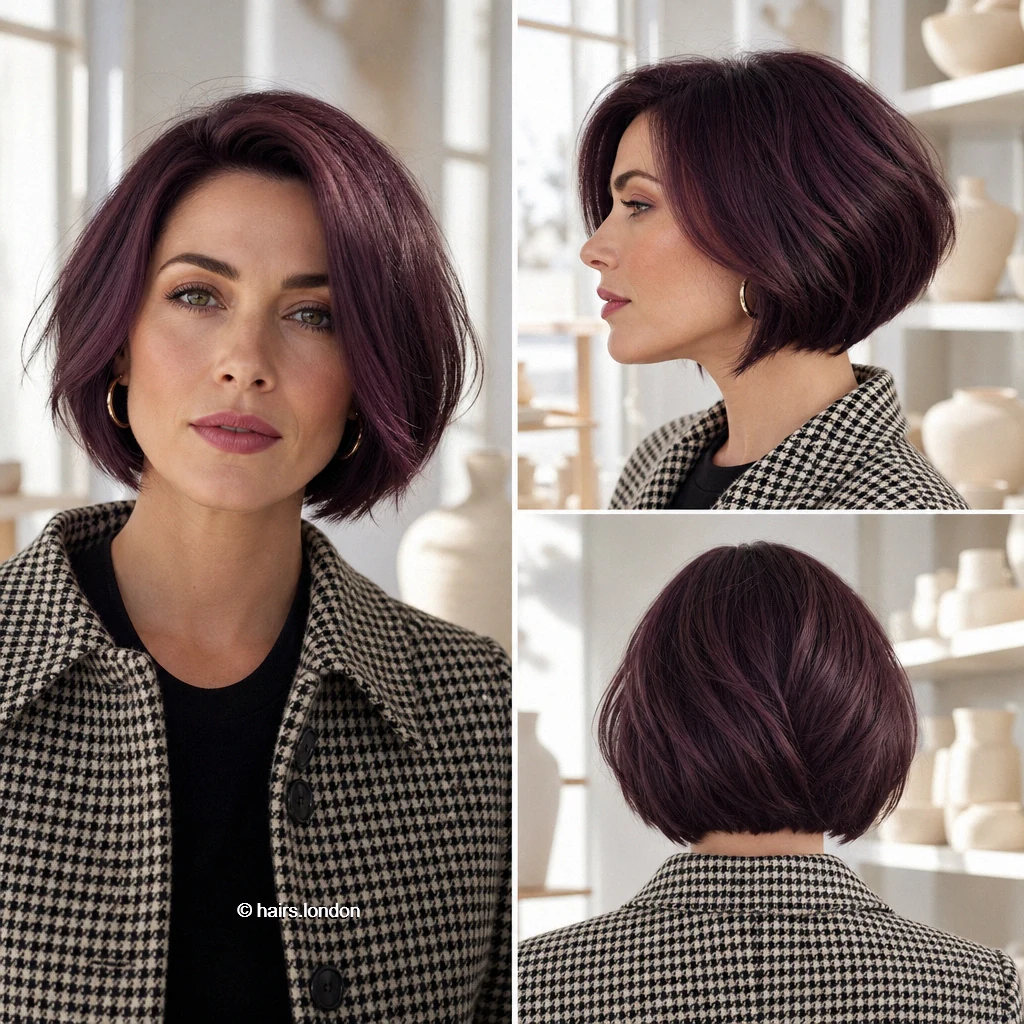
Deep plum brown lends depth to this smooth, rounded bob. A side part creates a long section beside the face. The outline reaches the jaw and stays close behind. Back and side views show fullness above a neat neckline. Discuss subtle shaping without assuming your hair needs extensive graduation. Dry downward first, then lift the roots for controlled volume. Guide the ends inward while preserving their natural movement. This polished shape may need frequent styling on coarse waves. Choose color care that maintains the visible violet cast. Refresh the neckline when its clean edge begins growing out at the nape.
17. Lilac Bob with a Long Side Sweep
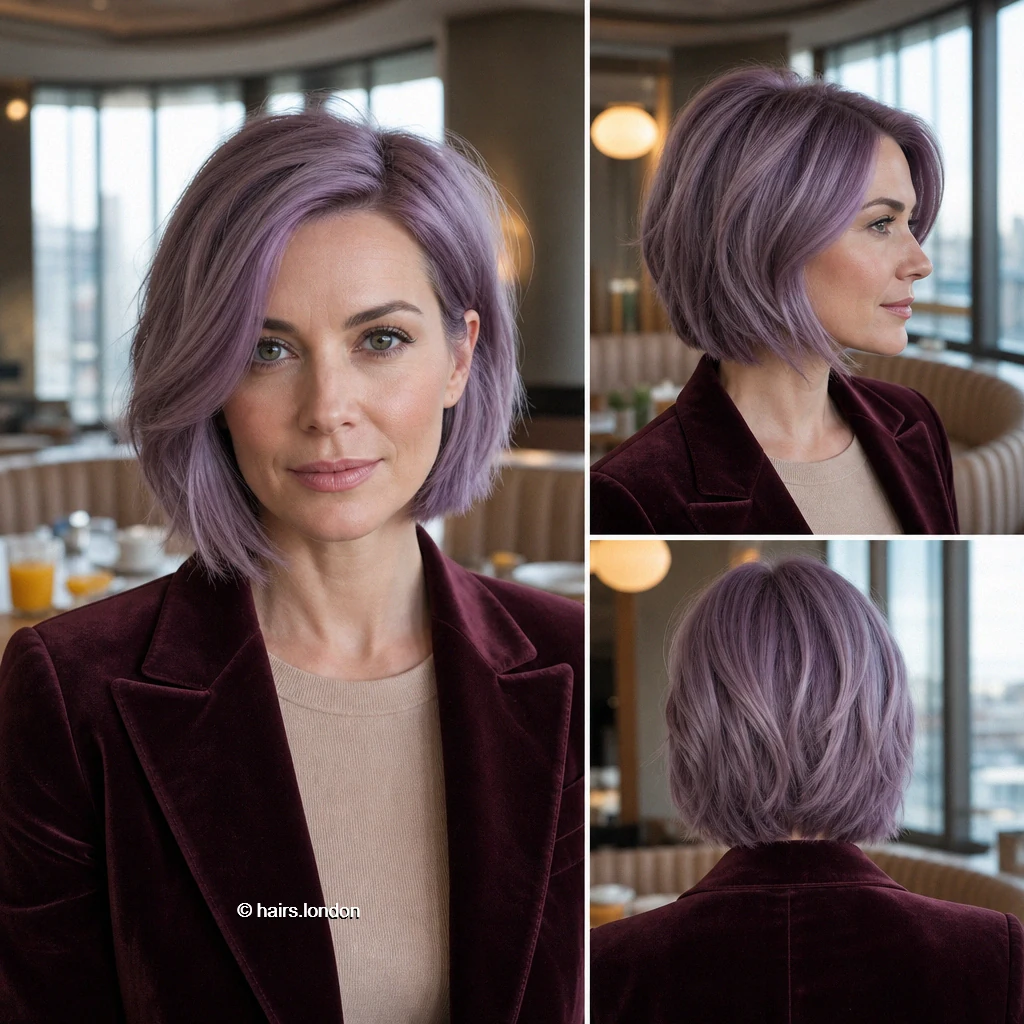
Lilac color brightens this bob with a long side sweep. One front section reaches below the jaw before tapering away. The opposite side sits shorter, creating visible asymmetry around face. Its back edge rests near the neckline with soft texture. Ask your stylist to check both sides before refining balance. Smooth the long front while leaving the back lightly tousled. Tuck the shorter side when you want clearer contrast. This cut may require adjustment around your part and growth. Plan tone refreshes if cool lilac color matters to you. Trim the front before its length overwhelms the softly angled silhouette.
18. Fuchsia Bob with a Straight, Textured Edge
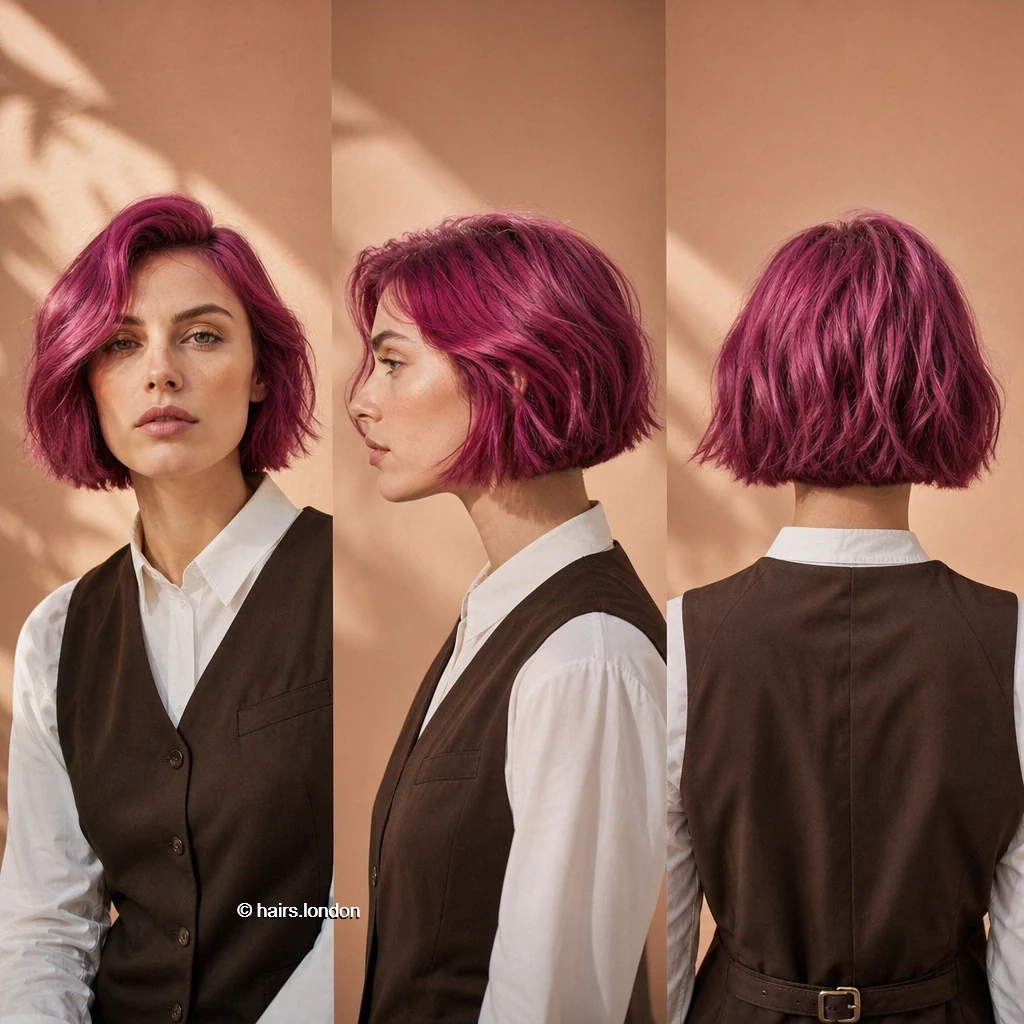
Fuchsia pink energizes this short bob with tousled texture. Its lower edge sits around the jaw and looks fairly straight overall. A deep side part lifts the front away from forehead. The back keeps a compact outline with lightly separated ends. Ask for perimeter weight if you like this defined length. Scrunch only the upper sections to avoid widening the bottom. A little smoothing product can settle flyaways along the edge. Natural waves may produce more bend than shown here. Protect saturated color when using heat for a smoother finish. Trim regularly if the straight lower outline remains your priority.
19. Rose Pink Bob with a Sweeping Front
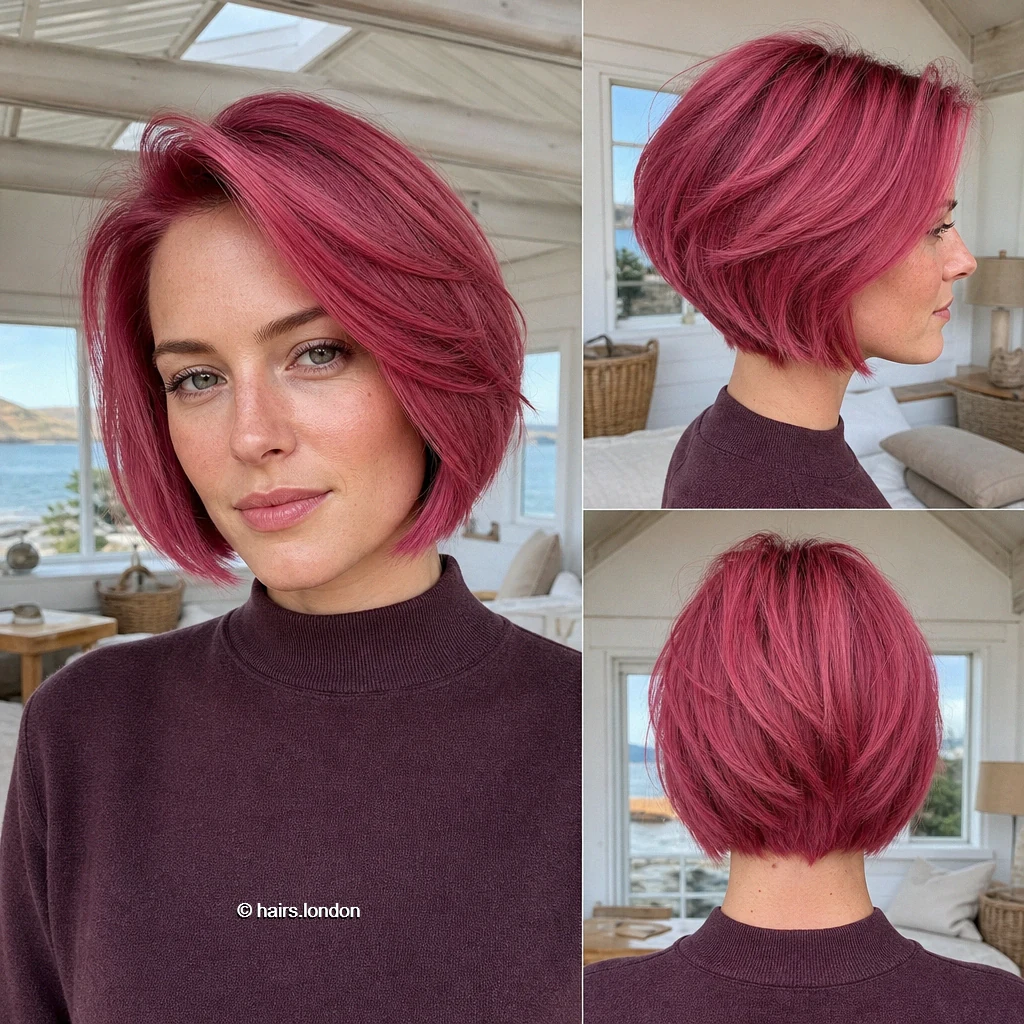
Rose pink color defines this compact bob with sweeping movement. A long side section curves across the forehead and cheek. The back sits close to the neck beneath fuller layers. Side views show a shorter back and longer front. Ask whether this angled shape suits your natural growth patterns. Blow dry the front smoothly while lifting the crown gently. Avoid overworking the ends if you prefer their softness. Dense hair may require careful internal shaping behind the ears. Color refreshes help maintain the pink tone you prefer. Trim the neckline before its shorter shape becomes noticeably bulky around the neck.
20. Blush Pink Bob with a Curved Perimeter
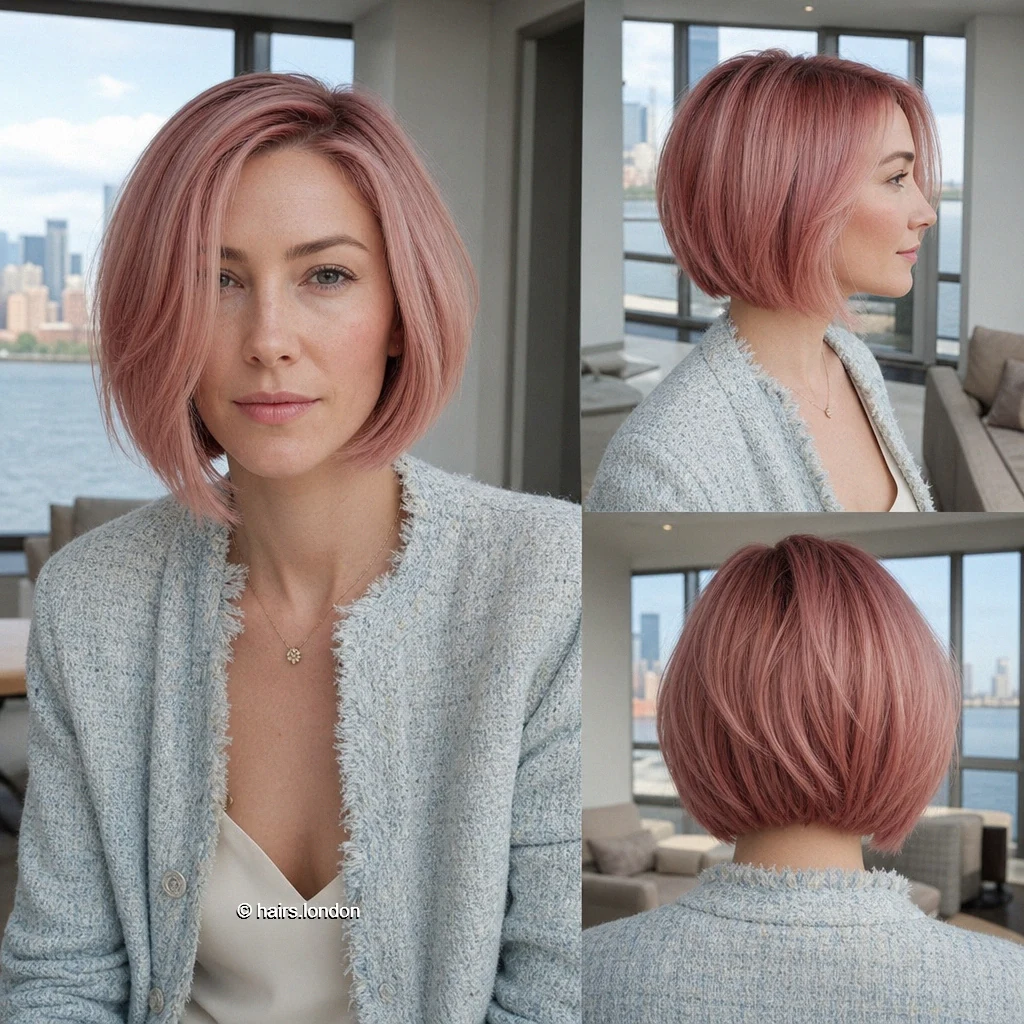
Blush pink softens this polished bob with gentle graduation. The side part creates a longer piece beside the cheek. Its back curves inward above the neck with visible fullness. The sides settle near the jaw instead of reaching shoulders. Ask for a manageable perimeter that respects your hair density. Brush the ends inward while keeping the crown softly lifted. Lightweight serum can add shine without collapsing that rounded shape. Straight hair may need less daily work than stronger waves. Discuss color toning if you want this muted pink maintained. Schedule trims when the softly curved back begins losing its definition.
How to Choose Bob Length and Shape
Start with where you want the perimeter to fall: at the jaw, below the chin or nearer the shoulders. A compact rounded bob emphasizes fullness; a layered bob trades some edge weight for movement. If you want a longer front, show your stylist a side-view reference. An A-line outline describes that front-to-back length difference, while a stacked or graduated bob also needs visible shaping through the back. Your density, natural texture, nape growth and willingness to style should guide the final choice.
Styling Fine, Thick, Wavy and Curly Textures
Fine hair often looks fuller when its lower edge retains weight; use light root lift rather than coating the ends. Thick hair may need carefully placed internal shaping so a bob moves without becoming triangular or hollow. For waves, scrunch a small amount of cream into damp hair and diffuse gently. Natural curls need their own length assessment because the finished bob can sit higher when dry; ask for a shape that supports curl groupings. Smooth a precise perimeter with directed airflow, but avoid brushing out waves or curls you want to keep.
Keeping Plum, Lavender and Pink Color Fresh
The shades shown range from deep violet browns to pale lilacs and saturated pinks, so upkeep will differ. Ask your colorist what fading and root growth to expect from your starting color. Wash as gently as your scalp allows, limit unnecessary hot-tool passes and use heat protection when styling. Cool pastels may need toning to maintain their cast, while vivid pinks may call for more frequent color refreshes. Keep a plan for both the color and the cut rather than assuming they need appointments at identical intervals.
Maintaining the Bob Perimeter and Graduation
A tidy jaw-length edge can lose its shape sooner than a loose, layered lob. Check the outline at the sides and back as it grows, particularly where hair meets the neck. If your bob has visible graduation, ask your stylist to preserve the relationship between the shorter back and fuller shape above it; avoid trimming the front in isolation. Textured bobs can tolerate a less uniform edge, but their layers still need enough weight to move cleanly. Fringe may need attention between full haircut appointments.
What to Discuss with Your Stylist
Bring the image whose front, side and back views best match what you want. Point out the perimeter, parting, fringe, amount of layering and any visible front-to-back difference that matters to you. Describe your usual drying routine and show how your hair sits without extensive styling. Ask how your density, wave or curl pattern and growth direction might change the result. If you also want the pictured color, discuss your starting shade, upkeep budget and whether you prefer a vivid or muted finish.
Frequently Asked Questions
What is the difference between a bob and a lob?
A lob is a longer bob, generally falling below the jaw and toward the shoulders. The distinction is useful when deciding how much length you want to retain.
Is an A-line bob the same as a stacked bob?
No. A-line describes a perimeter that is longer toward the front. Stacking or graduation describes visible shorter-to-longer shaping at the back; a cut can feature both, but one does not automatically imply the other.
Can fine hair wear a layered bob?
Yes, provided the layers do not remove more lower-edge weight than your density can support. Ask your stylist to compare a lightly layered shape with a fuller perimeter.
How can thick hair avoid a bulky bob?
Thoughtful internal shaping can reduce bulk while leaving the visible edge intact. Placement matters, so discuss where your hair expands before requesting extensive thinning.
Can a bob work with natural curls?
A curl-specific shape can work well, but the finished length depends on your curl pattern and shrinkage. Have your stylist assess how the hair sits dry before settling on the perimeter.
Should I add bangs to a bob?
Choose bangs according to your growth pattern and willingness to style them. Wispy fringe may separate easily, while a fuller fringe creates a stronger line and may need more frequent trims.
What is the easiest bob to style daily?
Often it is the shape closest to your natural texture and parting. A precise smooth edge may take more work on strong waves, while a textured bob may need more encouragement on very straight hair.
How often does a bob need trimming?
It depends on how precisely you want to preserve its outline. Short, neat necklines and visible graduation usually show growth sooner than a loose layered lob.
Will a side part change how a bob looks?
Yes. Moving the part can shift apparent volume and change how the front frames your face. Have the cut checked with the part you normally wear.
How do I keep a vivid pink or lavender bob looking fresh?
Use the washing, heat and refresh plan recommended for your color. Ask what fading to expect from your starting shade, especially if you want a cool pastel or saturated pink.
Can I grow out a graduated bob?
Yes. Your stylist can gradually rebalance the shorter back as it grows while keeping the front and perimeter intentional during the transition.
What reference photos should I bring to a bob consultation?
Bring front, side and back views when available. Explain which details you want to copy, since the color, fringe, length and back shape may call for different decisions.
Conclusion
The best reference is not simply your favorite color: it is the bob whose length, outline and movement fit the way you want to wear your hair. Compare the views, decide which details matter most and take those specifics to a stylist who can adapt them to your texture, density and upkeep preferences.