

11. Shaggy Raspberry Bob with Wispy Bangs
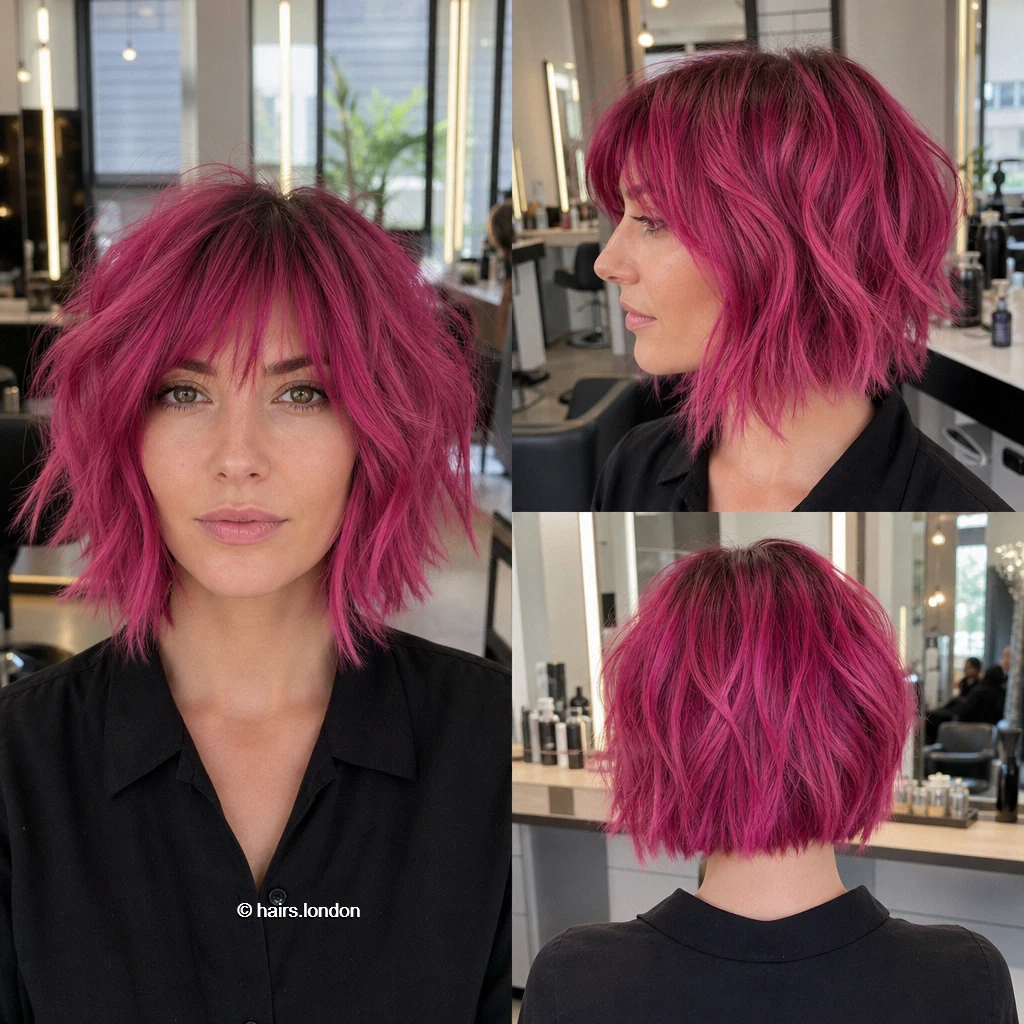
Deep raspberry makes this shaggy bob especially dimensional visually. Wispy bangs graze the brows above airy, irregular side pieces. The uneven perimeter hovers around the jaw and upper neck. Visible back layers create texture without a tightly stacked nape. Ask for piecey layers only when your density permits separation. Scrunch mousse through damp lengths, then diffuse using gentle airflow. Style bangs first so their direction settles before drying completely. Skip oily products that could make these fine tips clump together. Refresh fringe and ragged ends when the silhouette loses balance. Color appointments can address both raspberry fading and visible regrowth.
12. Choppy Magenta Bob with Textured Bangs
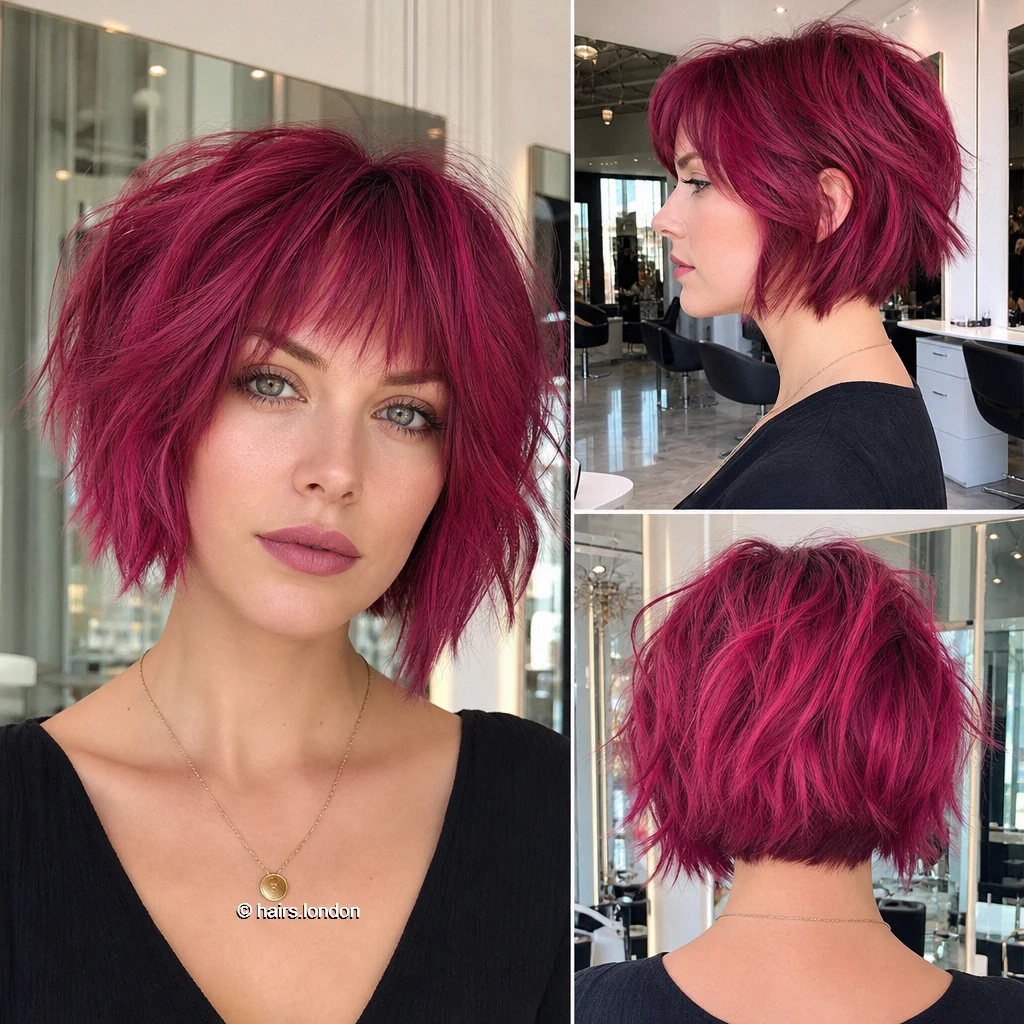
Bright magenta energizes this tousled bob with textured bangs throughout. Choppy jaw grazing sides end in lightly separated pieces below. The back stays near neck length with softly broken ends. Loose layers produce volume without obvious compact nape graduation here. Request fringe placement that works with your natural growth pattern. Scrunch texture spray sparingly to keep the ends touchable still. Wave prone hair may achieve this finish with minimal heat. Trim bangs separately if they obscure your eyes between cuts. Schedule perimeter tidying when choppy detail starts looking accidental instead. Ask about fading and root upkeep before choosing magenta color.
13. Asymmetrical Magenta Bob with a Graduated Nape
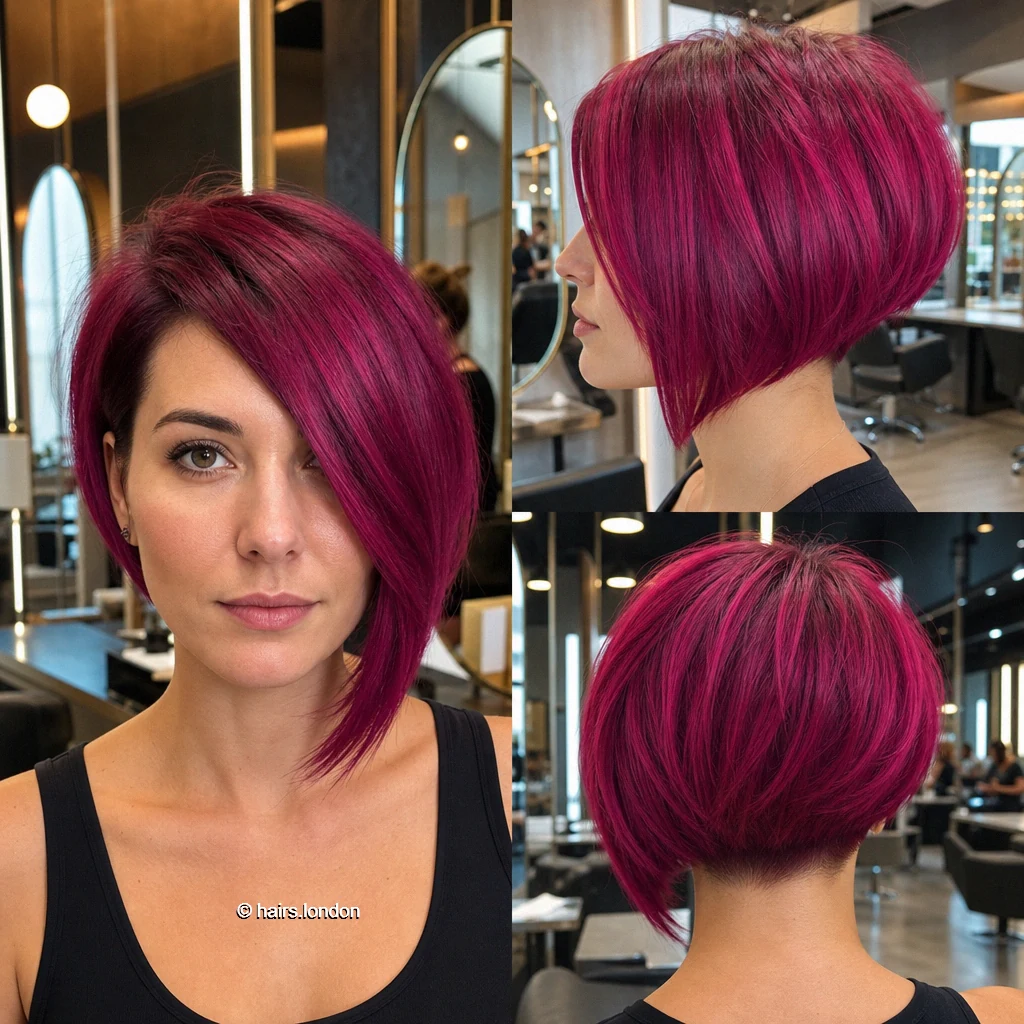
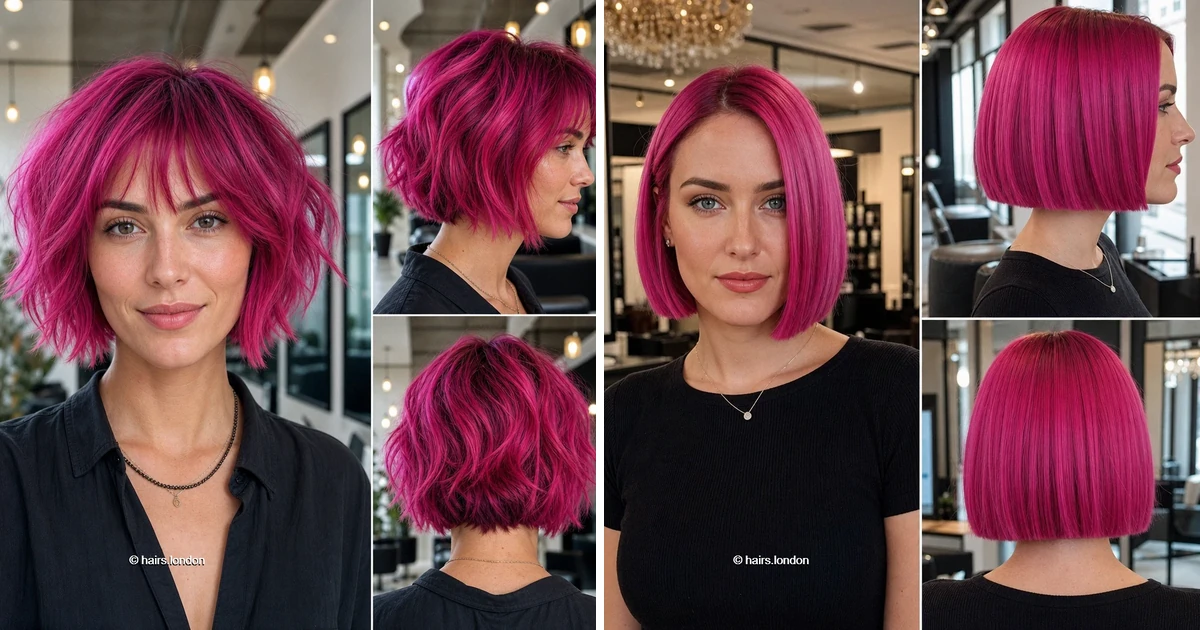
Rich magenta shapes this sharply angled, visibly graduated bob beautifully. The long side swept front drops below the jaw noticeably. Behind it, stacked layers narrow dramatically toward the exposed nape. The shorter opposite side reinforces an intentionally asymmetric silhouette here. Check your preferred parting before committing to unequal front lengths. Blow dry forward, then smooth the long point carefully downward. Direct airflow over the back to emphasize its graduated curve. Thick densities may need weight managed without hollowing that crown. Trim the nape and front point before proportions drift noticeably. Magenta gloss schedules should reflect your washing habits and fading.
14. Angled Fuchsia Bob with a Sweeping Front
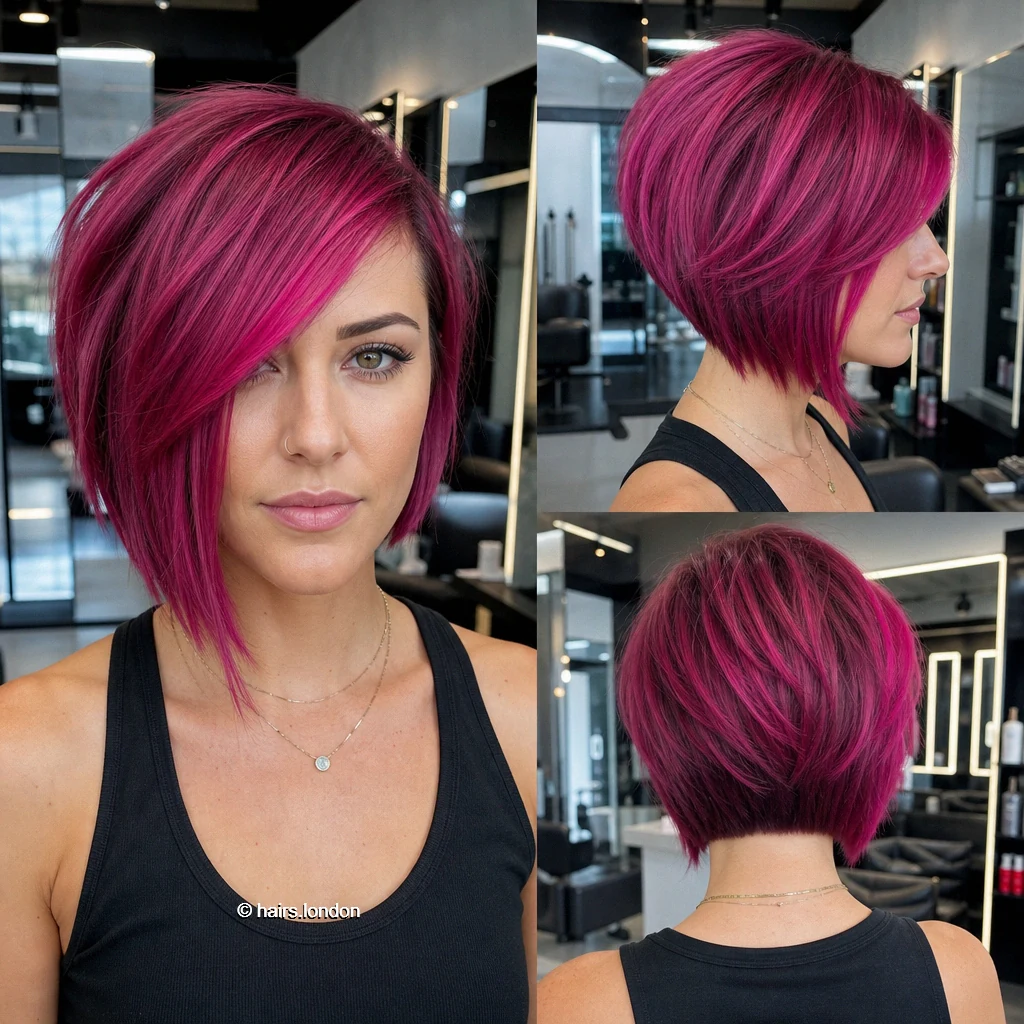
Vivid fuchsia highlights this angled bob with pronounced side sweep. Long front strands reach below the jaw beneath heavy fringe. The shorter back exposes the neck and shows layered graduation. An angled profile distinguishes this shape from a uniform bob. Consider fringe weight according to your density and daily routine. Guide the sweeping panel across while drying, then polish ends. Keep root lift soft so the crown remains rounded naturally. Frequent nape detailing helps preserve the graduated profile behind neatly. Bright color may need refreshing sooner than the cut itself. Discuss parting changes before requesting such an extended front section.
How to Choose Your Bob Length and Shape
Start with the shortest point you would comfortably wear at the neck, then decide where the front should land against your jaw or shoulders. A blunt bob keeps a stronger edge; a lob leaves more length for tying back. An A-line shape runs longer toward the front, while a stacked or graduated bob has visible build-up through the back. Consider your hairline, density and preferred part before choosing a close nape, heavy fringe or long front points.
Styling Fine, Thick, Wavy and Curly Textures
Fine hair often benefits from a supported perimeter and lightweight root lift rather than extensive thinning. For thick hair, ask about removing bulk inside the shape while keeping the ends substantial. Scrunch wavy hair with a small amount of mousse and let bends separate; diffuse curly hair gently and assess its dry length before setting the perimeter. On smoother bobs, direct airflow downward to polish the edge. Style a fringe early, using less product than you put through the rest of the hair.
Keeping Magenta Bob Color Fresh
The pink, raspberry and berry tones shown here may fade or reveal regrowth at different rates. Ask your colorist what refresh schedule makes sense for your starting color and washing habits. Gentle cleansing, fewer unnecessarily hot washes and heat protection can help preserve the visible finish. A color refresh and a shape trim need not always happen on the same day.
Maintaining the Bob Perimeter and Graduation
Check the detail that defines your cut: the straight edge of a blunt bob, the separated tips of a shaggy bob, or the short neckline beneath a graduated one. Precision edges and exposed napes usually show growth sooner than soft lob layers. Arrange trims when that defining line changes, rather than waiting for every section to feel long. If you are growing out a stacked bob, ask for a plan that gradually balances the back with the front.
What to Discuss with Your Stylist
Bring views of both the front and back of your preferred shape. Point out whether you want a solid edge, visible graduation, unequal front lengths or simply loose layers; these details are not interchangeable. Discuss your natural texture, density, parting, nape growth patterns, fringe habits and daily heat-styling tolerance. For vivid color, also ask how the shade will look as it fades and what upkeep you are willing to schedule.
Frequently Asked Questions
What is the difference between a bob and a lob?
A bob generally sits around the jaw or neck, while a lob is a longer bob that approaches or reaches the shoulders. The exact boundary matters less than where the ends fall on your hair.
Is an A-line bob the same as a stacked bob?
No. A-line describes a perimeter that gets longer toward the front. Stacked describes visible graduation building shape at the back. A cut can have both features.
How can I tell whether a bob is inverted?
Look for a clearly shorter, graduated back and substantially longer front. A slight front-to-back slope alone does not establish an inverted shape.
Can fine hair support a layered bob?
It can, but preserving enough weight at the perimeter may be important. Ask your stylist to assess how much layering your density can support without making the ends look sparse.
How do I keep a thick bob from looking bulky?
Discuss targeted internal weight removal and the amount of fullness you want at the sides. Avoid assuming that heavily thinned ends will solve bulk through the whole shape.
Can naturally curly hair be cut into a graduated bob?
Yes, if the shape is planned for your curl pattern and shrinkage. Ask to assess its dry silhouette and whether a shorter back will create the balance you want.
Should I add bangs to a magenta bob?
Consider how your fringe grows, separates and behaves between washes. Wispy bangs need different daily attention from a long side sweep.
Which bob needs the least daily smoothing?
A softly layered or tousled shape may let natural movement show more readily than a precision blunt line. The easier choice depends on your texture and desired finish.
How often does a blunt bob need a trim?
Book a cleanup when its straight perimeter starts to lose definition. How quickly that happens depends on growth, length and how precise you want the edge.
What maintenance does a stacked nape require?
The short back often needs attention as it grows away from the neck and loses its graduated contour. Ask your stylist when to return based on your particular shape.
How can I grow out an asymmetrical bob?
Decide whether to retain the longer side temporarily or bring the shorter side toward a more even outline. Interim trims can tidy the nape without removing all your progress.
Will magenta color upkeep match my haircut schedule?
Not necessarily. Visible fading and regrowth may call for a color refresh before a soft layered cut needs reshaping, while a precise nape may need trimming first.
Conclusion
The best reference is the bob whose shape you would enjoy maintaining as much as its magenta color. Compare the perimeter, fringe and back view, then take those specific details to your stylist for a cut and color plan suited to your hair and routine.