


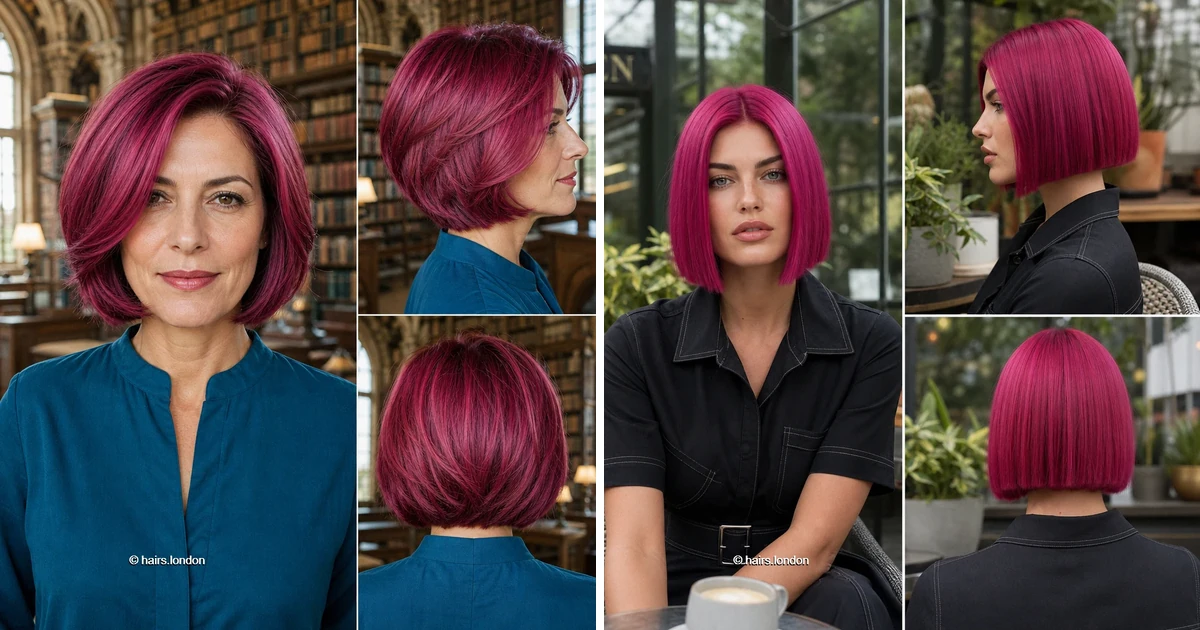
11. Loose Magenta Bob with Textured Ends
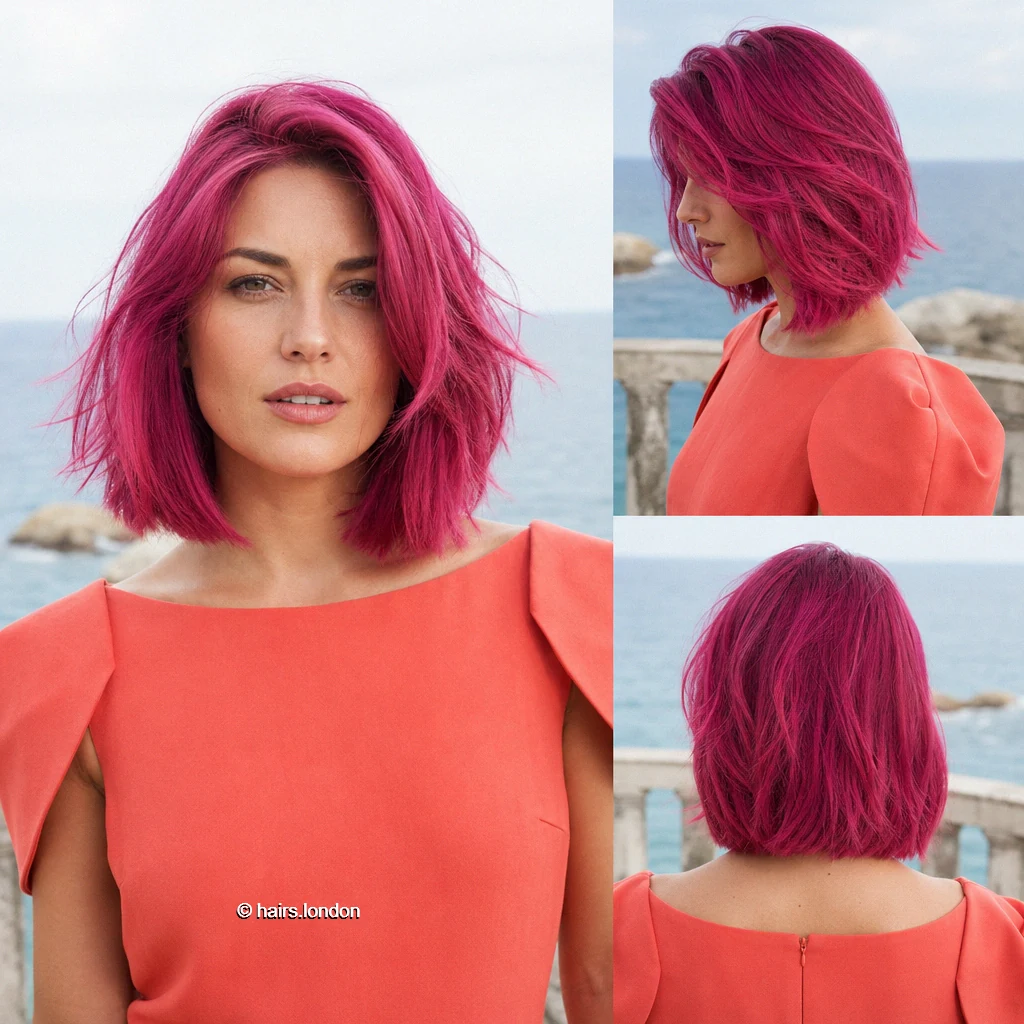
Loose magenta strands give this bob a relaxed, slightly windswept finish. The side part lifts one front section above the brow. Unevenly separated ends graze the jaw and upper neck. Back views show softness rather than a severe, straight baseline. Add a few soft bends only where your natural texture needs help. Finger-comb afterward to preserve visible movement and avoid uniform curls. This styling approach may suit hair with an existing wave. Finer density could benefit from keeping the lowest edge substantial. Ask for texture that remains visible after everyday washing. Trim straggly ends and refresh color as they fade.
12. Shoulder-Skimming Magenta Layered Lob
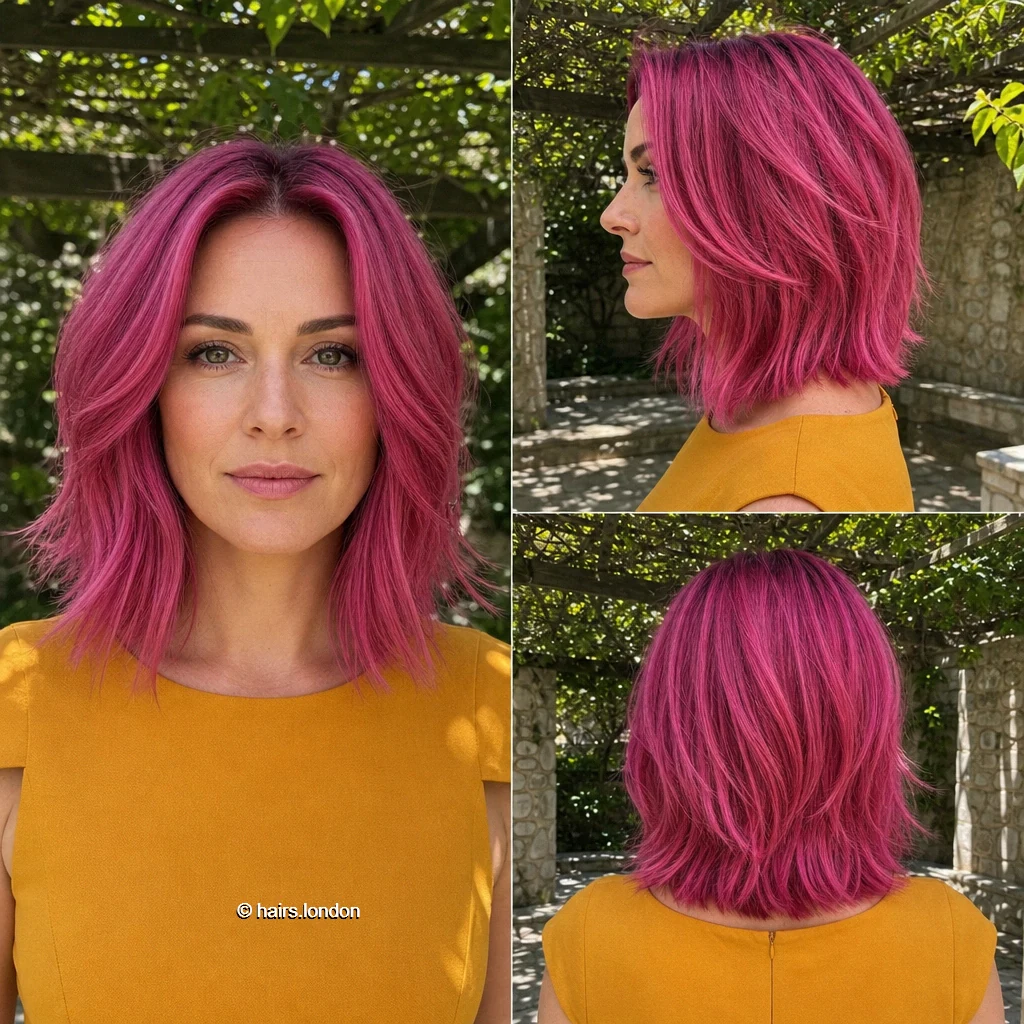
This longer magenta shape falls close to the shoulders, qualifying as a lob. A center part frames the face with softly layered sides. The ends look feathered rather than cut into one blunt line. The back carries visible layers through its shoulder-skimming length. Enhance waves with lightweight cream and gentle scrunching. Smooth the top only if you prefer a neater finish. This length offers more movement around the shoulders than shorter bobs. Thick hair may need balanced layering to prevent a wide base. Ask where the ends will rest when fully dry. Trim damaged tips and plan color upkeep separately.
13. Short Graduated Magenta Bob
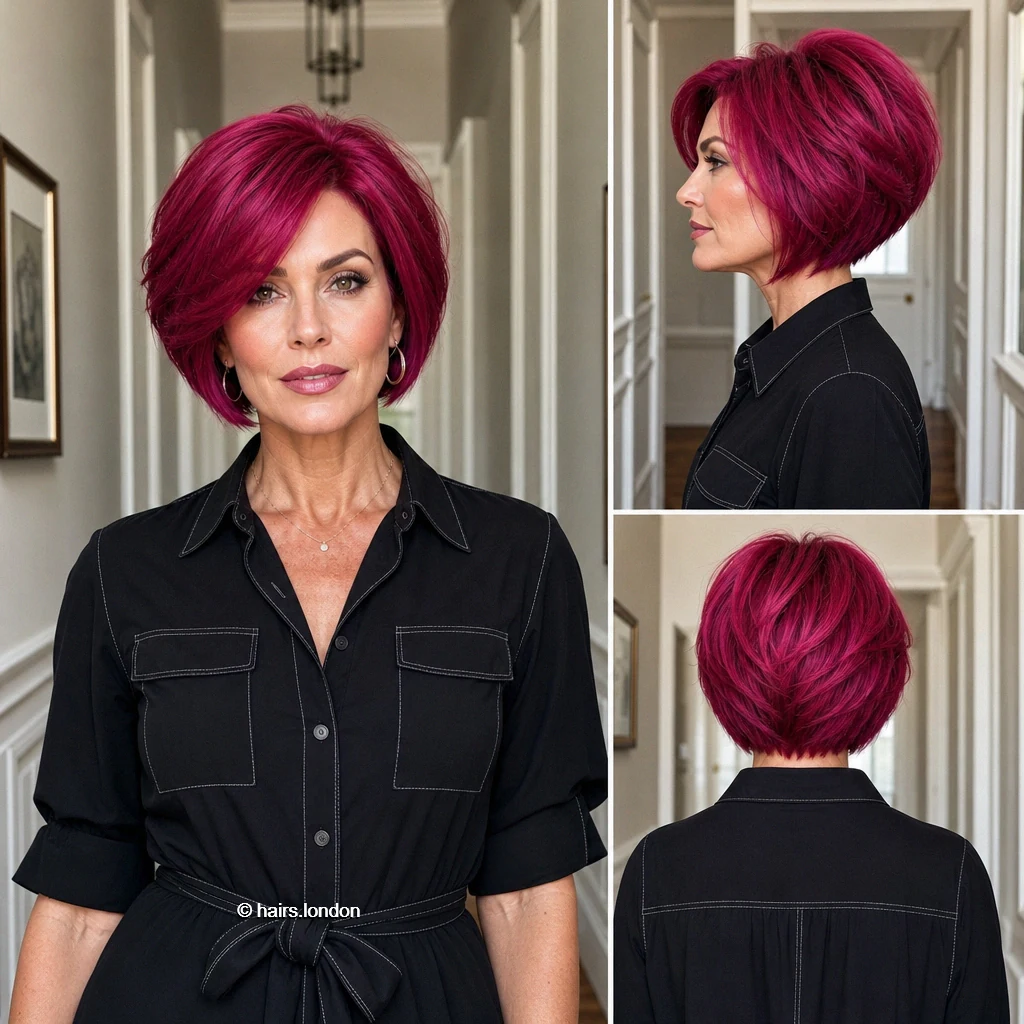
A sweeping magenta front contrasts with this bob’s shorter back. The side view shows fullness rising above a closely shaped nape. Visible overlapping back layers support a soft, rounded, visibly graduated silhouette. Long front pieces keep the cut firmly within bob territory. Smooth the sweeping section while lifting the crown gently during drying. Avoid heavy product that could flatten the stacked-looking back volume. This shape demands attention to growth patterns around the nape. Discuss whether your density can support the intended back fullness. More frequent trims preserve the short-to-long relationship. Maintain the vivid shade with a regular colorist-approved refresh routine.
14. Tapered Magenta Bob with a Sweeping Front
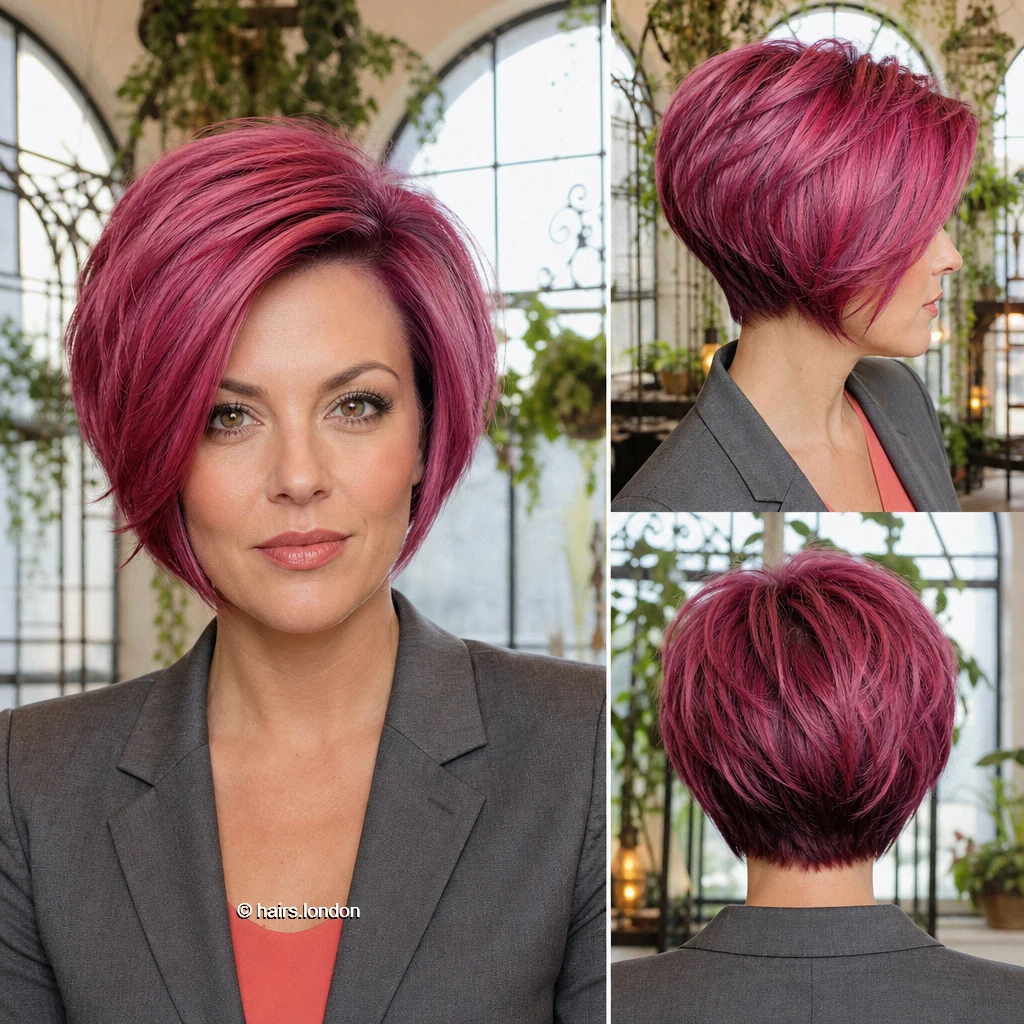
Magenta layers sweep forward over this compact, rounded bob shape. The front crosses the forehead and reaches toward the jaw. Side and back views show a distinctly tapered, short nape. Visible layering builds fullness above that narrow lower edge. Direct the top forward with a brush for controlled volume. Keep the nape smooth rather than adding bulk beneath it. This shorter silhouette may require regular daily styling around strong growth patterns. Ask whether your texture will sit comfortably at the back. Frequent short nape maintenance protects the shape as it grows. Choose color appointments according to root contrast and fading.
15. Long-Front Magenta Graduated Bob
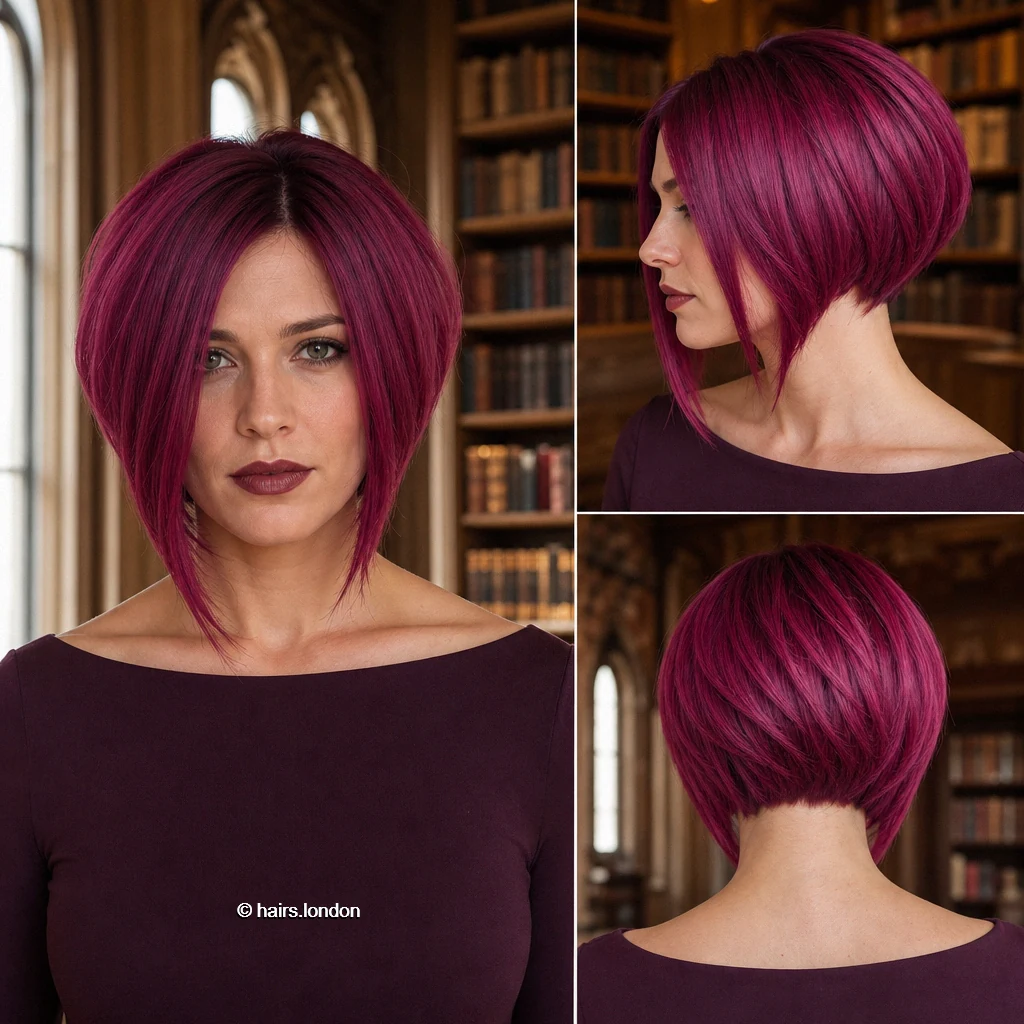
Two long magenta front pieces extend noticeably below this bob’s jawline. The side view reveals a much shorter, rounded back. A close nape and visible layered rear establish visible graduation. Together, they create a pronounced short-back, long-front profile. Carefully smooth the extended pieces downward to emphasize their clean direction. Lift the back lightly without overinflating its rounded weight line. This contrast needs sufficient density through those narrow front sections. Discuss asymmetry only if you want intentionally unequal lengths on either side. Book trims before nape growth obscures the graduated outline. Regular vivid color upkeep remains a separate commitment from cutting.
16. Asymmetrical Pink-Magenta Graduated Bob
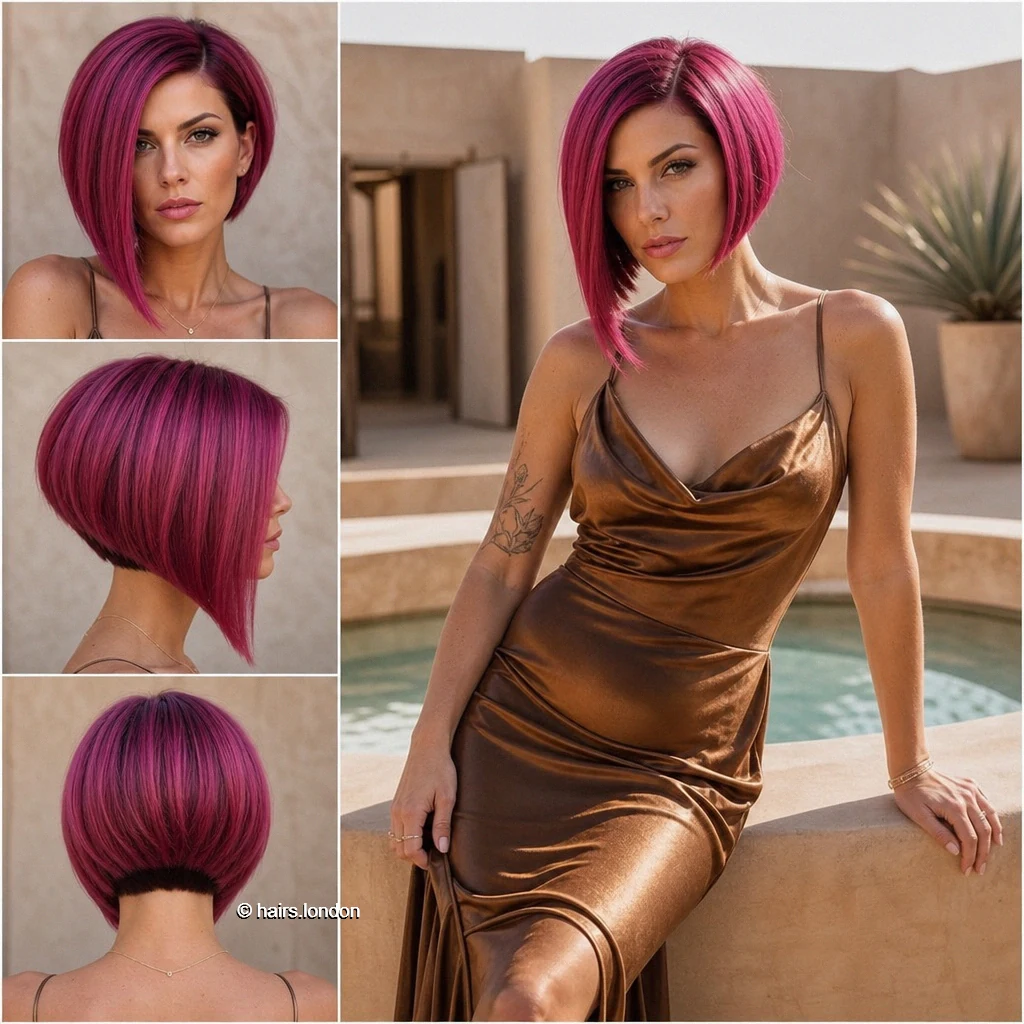
This glossy pink-magenta bob has noticeably unequal front lengths. One extended side falls below the jaw; the other is shorter. The side and back views also show a close nape. Rounded rear fullness makes the graduation visible, not merely implied. Carefully blow-dry the long side downward for a smooth edge. Tuck or smooth the shorter side according to its growth. This dramatic difference needs careful planning around your usual part. Ask your stylist to confirm both front lengths before cutting. Frequent trims protect the asymmetry and the closely shaped back. Discuss regular color refreshes if visible roots would bother you.
17. Shaggy Magenta Bob with Light Bangs
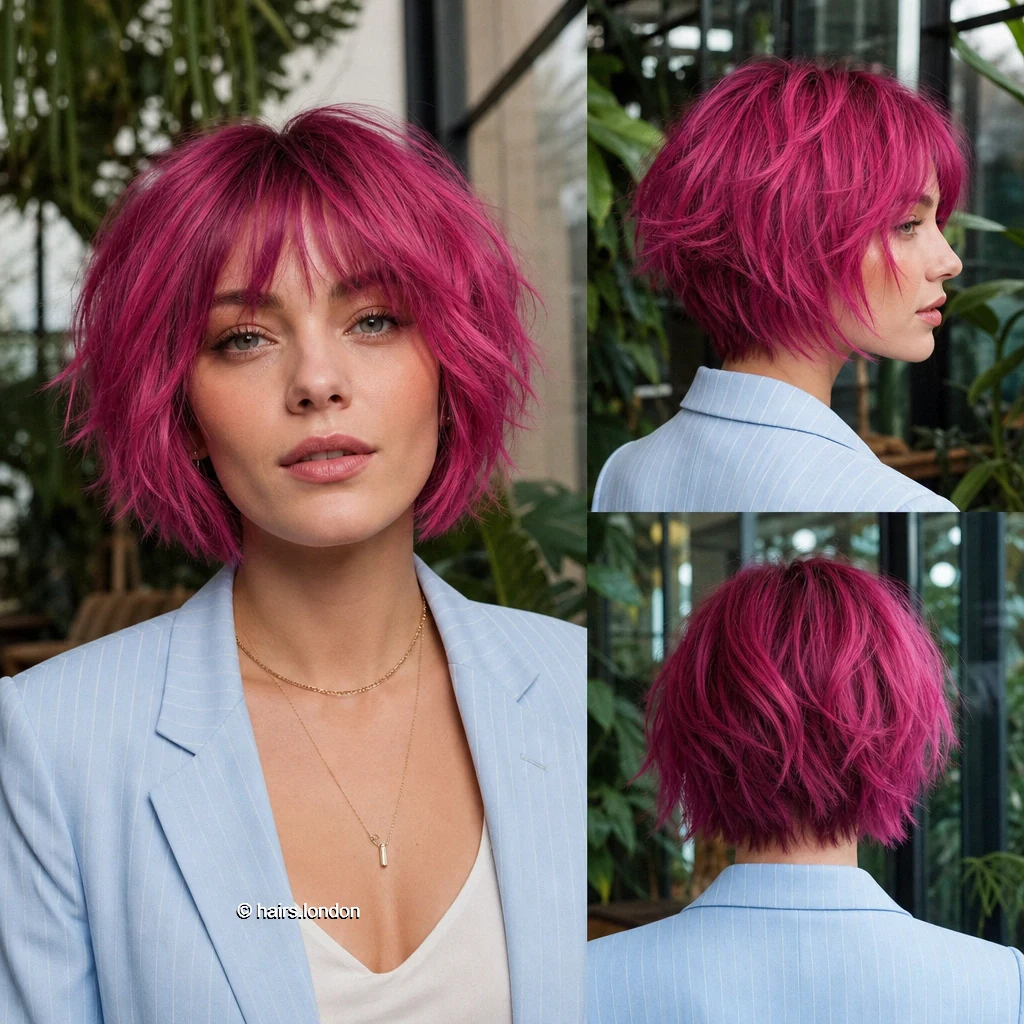
Short, broken magenta layers give this bob a shaggy silhouette. Light bangs separate across the forehead rather than forming density. The lower sides sit around the jaw with textured tips. From behind, layered strands soften the outline above the neck. Scrunch damp hair to bring out natural bends and piecey ends. Dry the fringe gently so it stays light and flexible. This shape may suit naturally wavy hair particularly well. On fine hair, excessive thinning could weaken the lower edge. Ask for layers that move without becoming bulky at the crown. Refresh the bangs and color whenever their definition fades.
18. Choppy Magenta Bob with Side Fringe
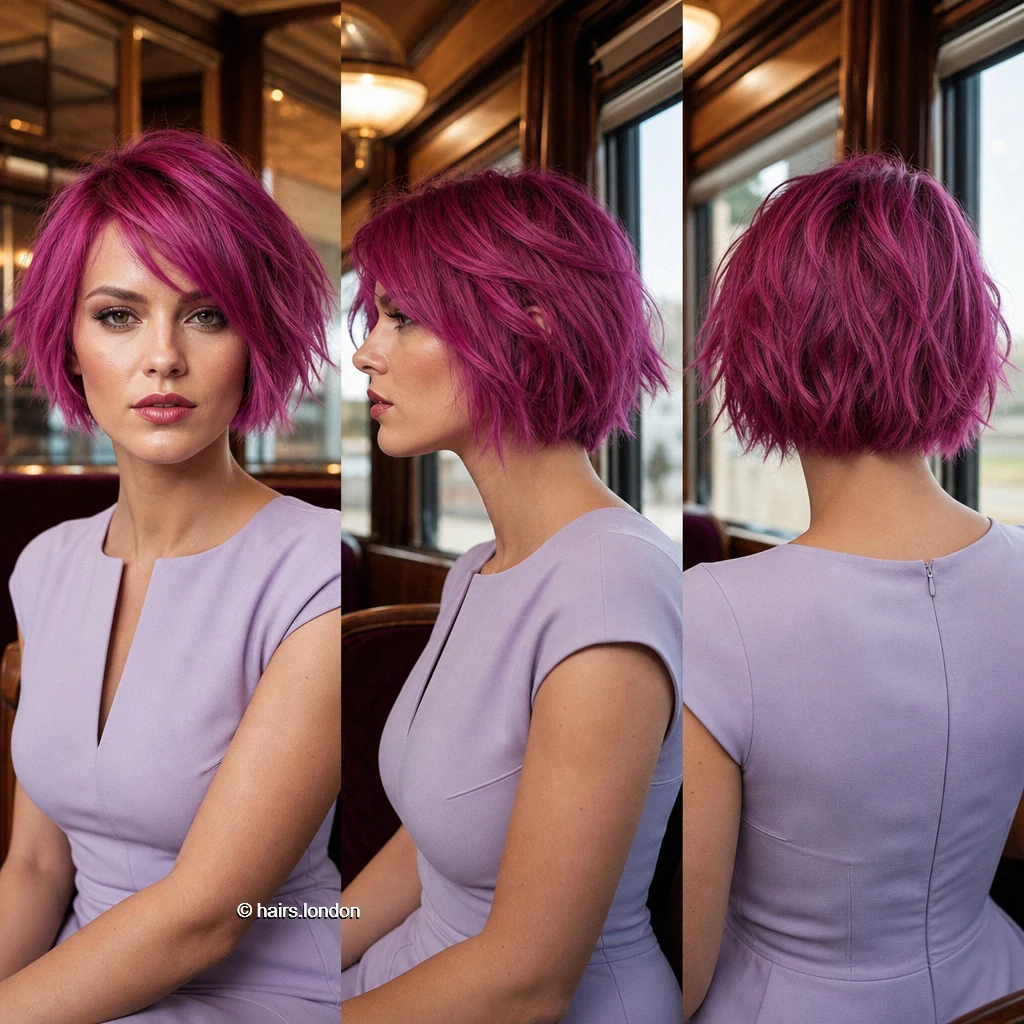
A side fringe cuts diagonally across this vivid magenta bob. Choppy layers create airy separation from the crown through the ends. The jaw-length sides and short back retain a recognizable bob outline. Rear strands overlap loosely instead of forming one polished surface. Use a small amount of texture spray, then separate selected pieces with fingers. Keep the fringe aimed across the forehead during drying. This cut can complement hair with bend and moderate density. Discuss how much layering your natural texture can tolerate. Regular reshaping stops the ends from turning indistinct. Protect the bright tone when using heat for styling.
19. Angled Magenta Bob with a Short Nape
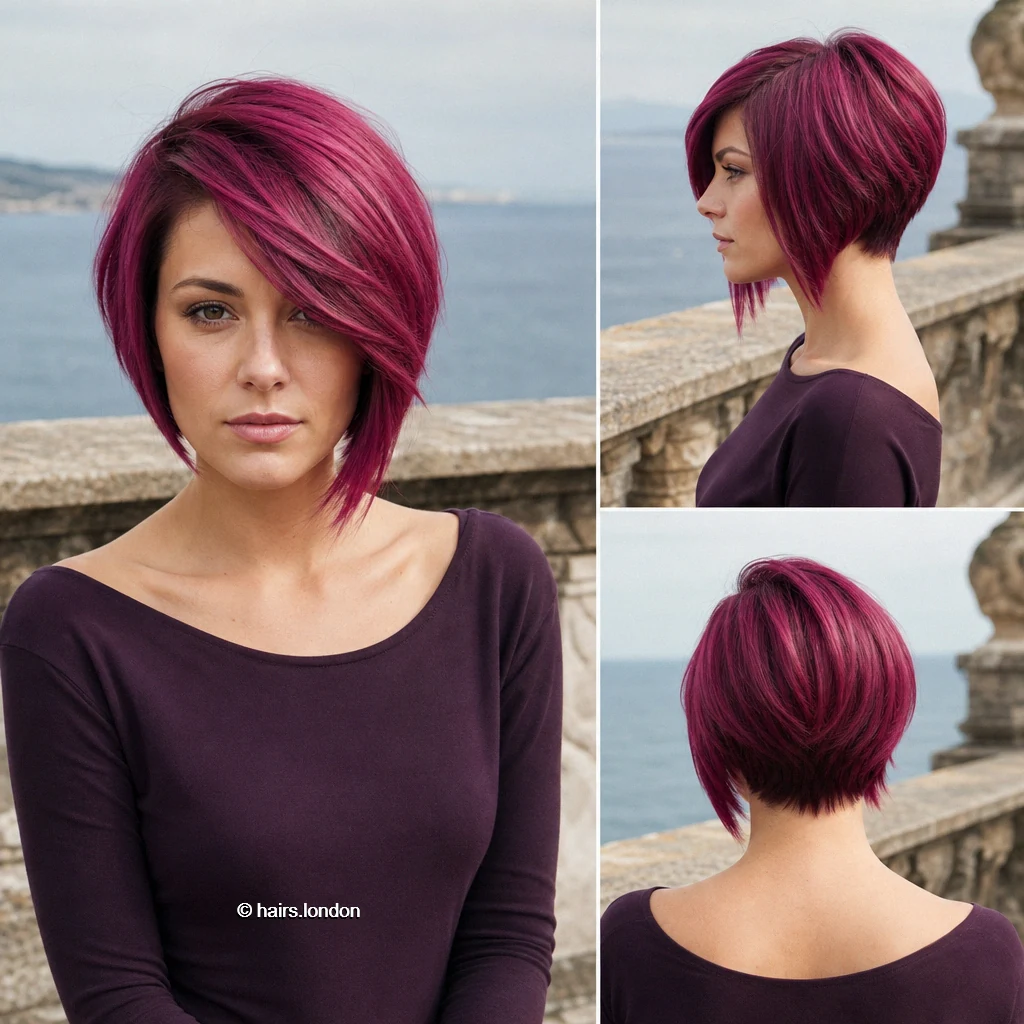
A long side-swept front drops clearly past the jaw here. The back sits slightly shorter, close to the neck, with visible fullness. Magenta highlights emphasize the direction of the smooth, overlapping layers. Side views make the front-to-back length change especially clear. Smooth the front away from the face with slow, controlled airflow. Preserve lift behind it without making the crown excessively round. This shape benefits from discussing nape growth patterns before cutting. If hair is very dense, ask about balanced internal weight. Trim the back regularly to retain the angled profile. Refresh color when the brighter strands lose their contrast.
20. Sculpted Pink-Magenta Bob with a Long Front
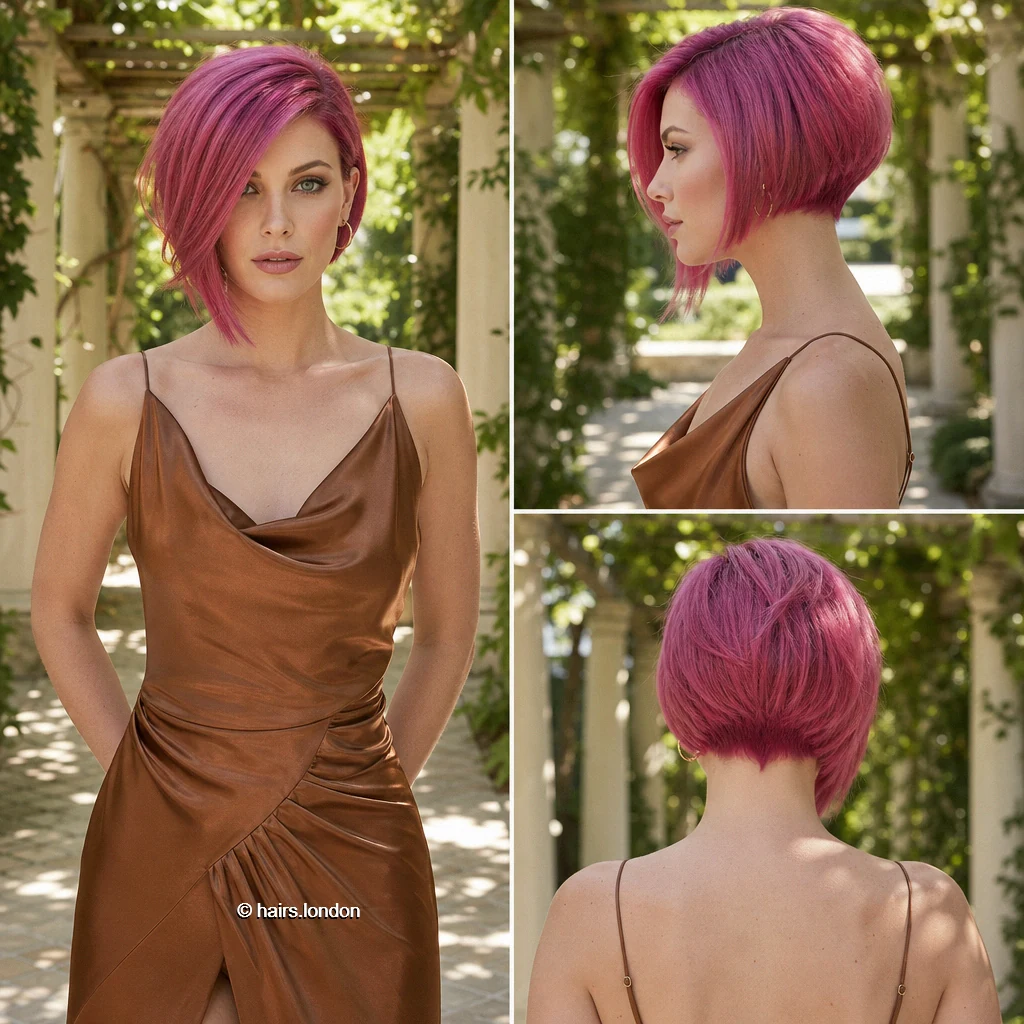
The sweeping pink-magenta front reaches well below the shorter side. A rounded back rises above a neatly tapered nape. This visible graduation creates fullness behind the elongated face-framing section. The short side exposes the ear more than its counterpart. Carefully smooth the long section while keeping the back softly lifted. Avoid loading the nape with product that obscures its outline. This shape may suit someone happy to maintain precise contrasts. Discuss parting and growth patterns before choosing the front length. Schedule regular trims when the tapered back begins to lose definition. Plan separate visits if the vivid color fades sooner.
How to Choose Your Bob Length and Shape
Start with where you want the perimeter to fall: above the jaw, at the chin or closer to the shoulders. A solid edge emphasizes precision; layers make the outline softer. Longer fronts create an A-line direction, while a visibly shortened, layered back adds graduation. Check the side and back views before requesting either feature. Your density, natural texture, growth patterns and willingness to style should guide the final shape.
Styling Fine, Thick, Wavy and Curly Textures
Fine hair often benefits from retaining weight at the perimeter and using light products. Thick hair may need selective internal weight removal, not indiscriminate thinning at the ends. For waves, scrunch or diffuse before deciding which pieces need a little polish. If your hair curls naturally, ask your stylist to assess its dry shape and shrinkage; these images do not show a curly bob result. Smooth a blunt edge when you want precision, but keep layered styles flexible rather than brushing out all their movement.
Keeping Magenta Bob Color Fresh
The images range from deeper berry-magenta to brighter pink tones, so upkeep will depend on the color chosen and your starting hair. Ask your colorist how often the shade is likely to need refreshing and whether visible roots matter to you. Color-safe cleansing, moderate water temperatures and heat protection can help limit avoidable fading. Follow a personalized plan rather than assuming every vivid shade needs the same schedule.
Maintaining the Bob Perimeter and Graduation
A blunt bob shows uneven growth quickly, so book a trim when its edge stops looking level. Textured bobs can tolerate a softer outline, but benefit from reshaping when the ends lose separation. Short graduated backs need particular attention: nape growth can change the profile before the longer front feels overgrown. Fringe checks may fall between full appointments. Let your desired level of precision determine the timing.
What to Discuss with Your Stylist
Bring front, side and back references for the shape you prefer. Point out the exact area you want to keep full, whether you want a solid or broken perimeter, and where the front should fall when dry. Discuss your usual part, fringe habits, natural texture, density, nape growth and daily styling time. For color, agree on a magenta tone and a realistic refresh plan before committing.
Frequently Asked Questions
What is the difference between a bob and a lob?
A bob generally ends around the jaw or neck, while a lob extends toward the shoulders. The shoulder-skimming layered shape here is a lob.
Is an A-line bob the same as a stacked bob?
No. A-line describes a front that is longer than the back. Stacked or graduated describes visible layering that builds shape at the back. A cut can have both features.
Can fine hair wear a layered bob?
Yes, if the layering leaves enough weight where your hair needs it. Ask your stylist to assess density before removing weight near the perimeter.
How can thick hair avoid a bulky bob?
Discuss where weight gathers when your hair is dry. Selective internal weight removal may help, while keeping the outer outline suited to your chosen shape.
Can naturally curly hair have a bob?
Yes, but curl pattern, shrinkage and density affect the dry length and silhouette. Have your stylist plan the shape around your curls rather than assuming it will fall like a smooth reference image.
Should I choose bangs or a sweeping front?
Bangs add a separate section that may need frequent adjustment. A longer sweeping front offers another way to frame the face; choose according to your growth patterns and styling preferences.
Which bob needs less daily styling?
Usually one that works with your natural texture and part. A precise smooth edge or closely shaped graduated back may demand more attention if your hair resists that finish.
How often should a blunt bob be trimmed?
Trim it when growth makes the perimeter visibly uneven or changes where it sits. The right interval depends on your hair growth and how precise you want the line.
Does a graduated bob need different maintenance?
Often, yes. Growth at a short nape can alter the back shape before longer front sections need cutting, so you may prefer more frequent back reshaping.
How do I grow out a short bob?
Ask for small reshaping trims that control the back while allowing the front and sides to gain length. You can gradually transition toward a more even bob or lob.
Will vivid magenta fade?
Vivid color can change between appointments. Ask your colorist what to expect from your chosen shade and starting hair, and use the care routine they recommend.
What should I bring to a bob consultation?
Bring images showing the front, side and back, plus examples of finishes you would wear. Explain your preferred length, part, styling time and color-maintenance limits.
Conclusion
The most useful choice is the bob whose perimeter, layers and front-to-back shape work with your hair as it actually behaves. Save the views that show those details clearly, and use them to plan both the cut and the magenta color upkeep with your stylist.


