


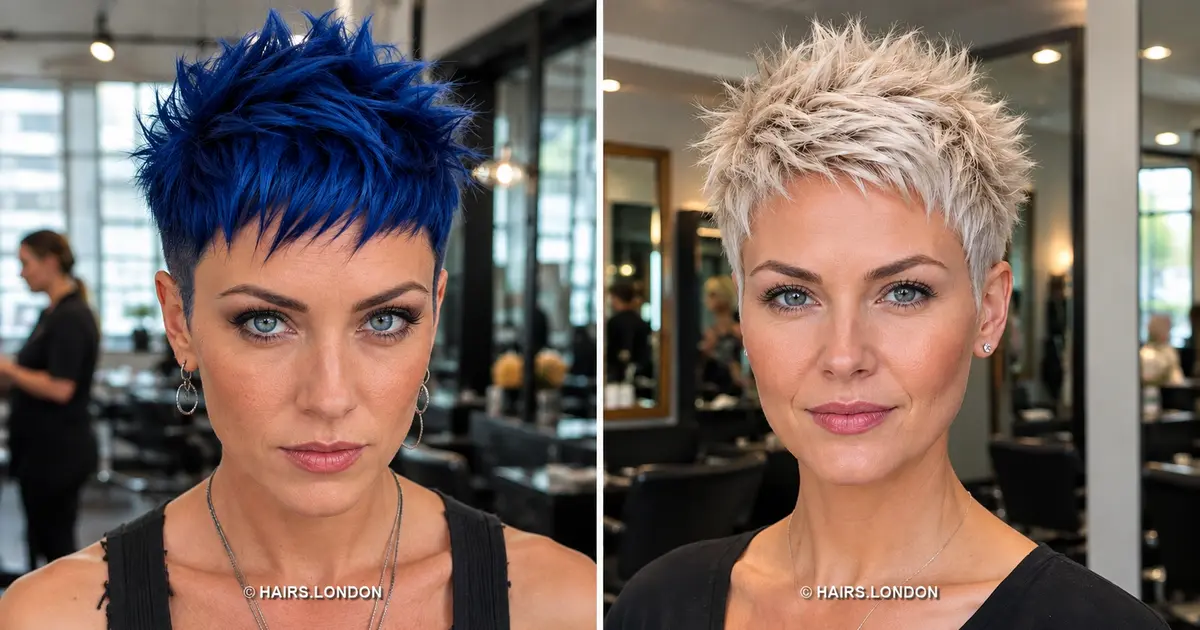
11. Lilac Feathered Pixie with Long Side Bangs
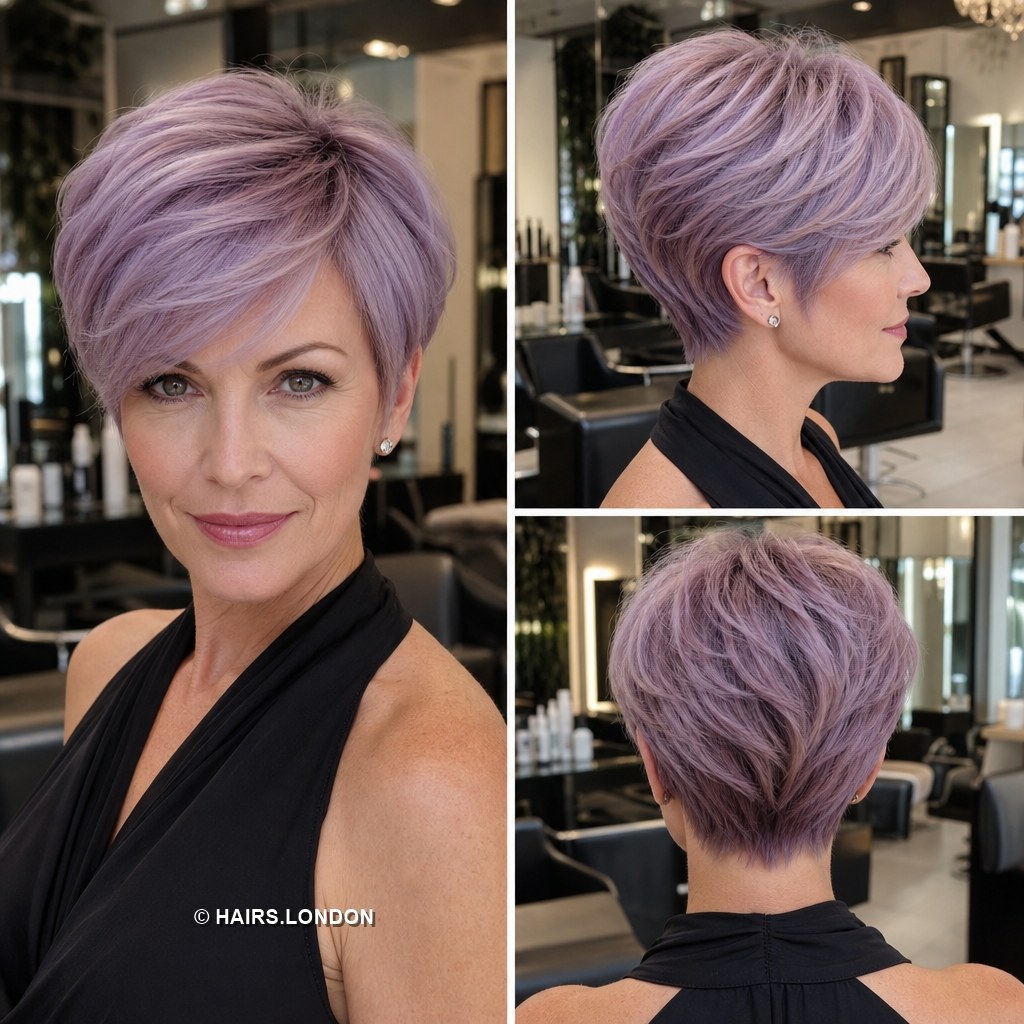
Lilac layers sweep into long side bangs, giving this pixie a smooth, feathered finish rather than a sharply spiked surface. The crown is rounded, and the short nape keeps the longer front balanced. Ask your stylist to set the fringe length according to your preferred parting and comfort around the eyes. Guide the hair sideways during drying, then loosen the ends so they retain movement. Keep finishing product light, especially if your hair is fine. A pastel shade may require a suitably light base, so discuss that process separately. The back view helps clarify how much fullness you want retained.
12. Pearl Blonde Layered Pixie with a Soft Rounded Back
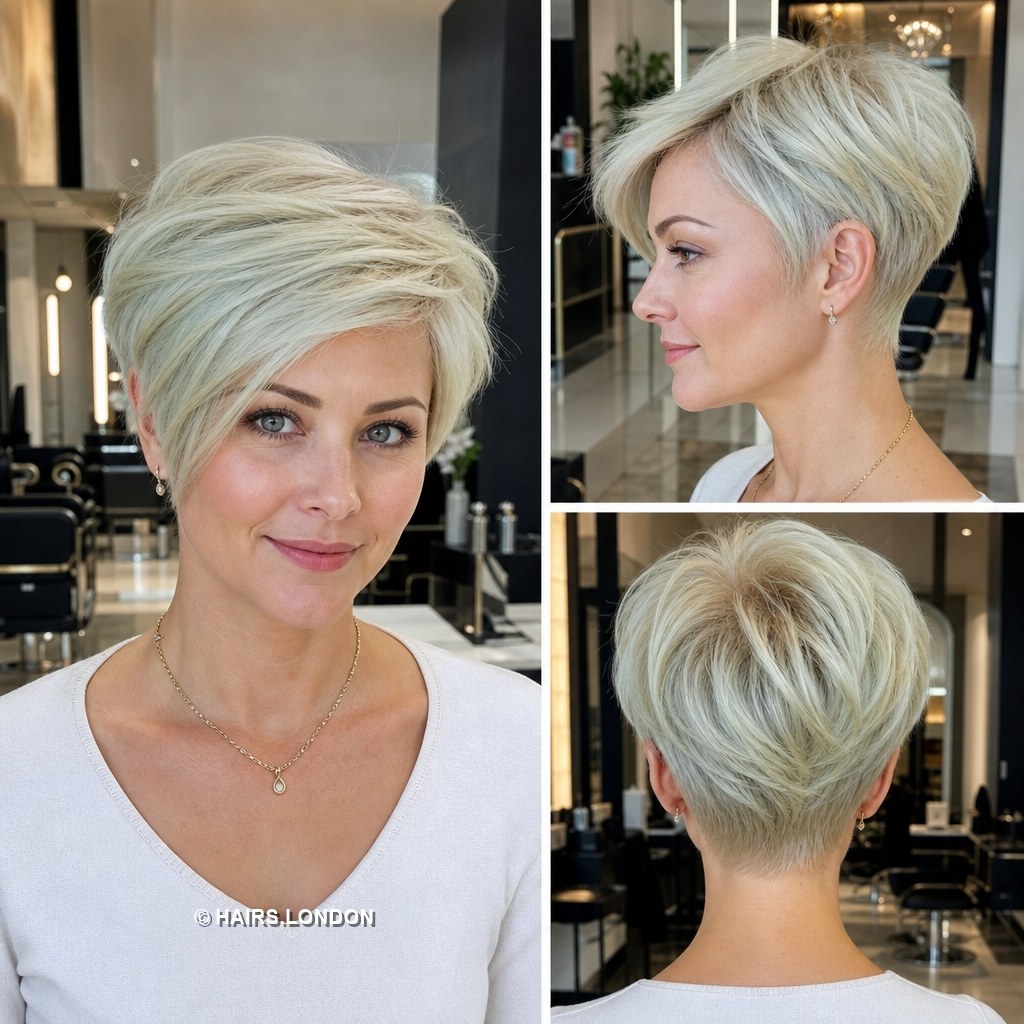
Pearl blonde layers create a soft outline around the face, with a sweeping fringe and a rounded back above a neatly shortened nape. This pixie is useful if you want short hair that still has gentle movement. Ask your stylist to retain enough density in the front while refining the ends. During drying, direct the fringe toward your usual side and avoid flattening the crown completely. A small amount of lightweight cream can help arrange the surface. Decide whether you want the ear exposed or lightly covered. That adjustment changes the profile without losing the softness of the pale color.
13. Dark Pixie with Rainbow Streaks and a Sweeping Fringe
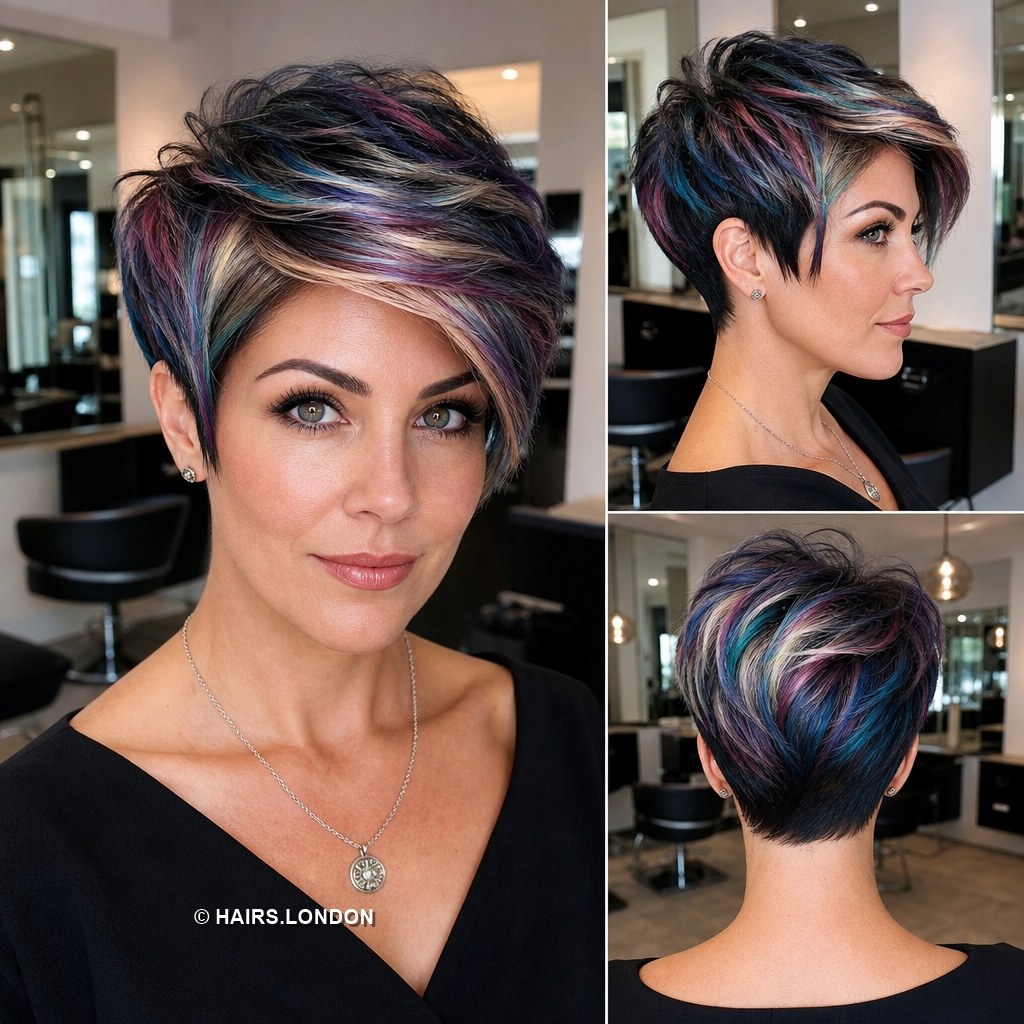
Rainbow streaks thread through this dark pixie, following the sweeping front rather than coloring every section equally. Pink, blue, and lighter pieces create dimension above a compact back and short sides. Ask your colorist to coordinate placement with your usual parting so the strands remain visible where you wear the fringe. Blow dry diagonally, then separate the ends lightly with your fingers. The darker base helps the colors stand out, but your starting shade determines the preparation needed. Discuss how the different tones may fade before committing. The haircut itself can also work beautifully with a simpler highlight arrangement instead.
14. Chestnut Pixie with a Lifted Swept Back Front
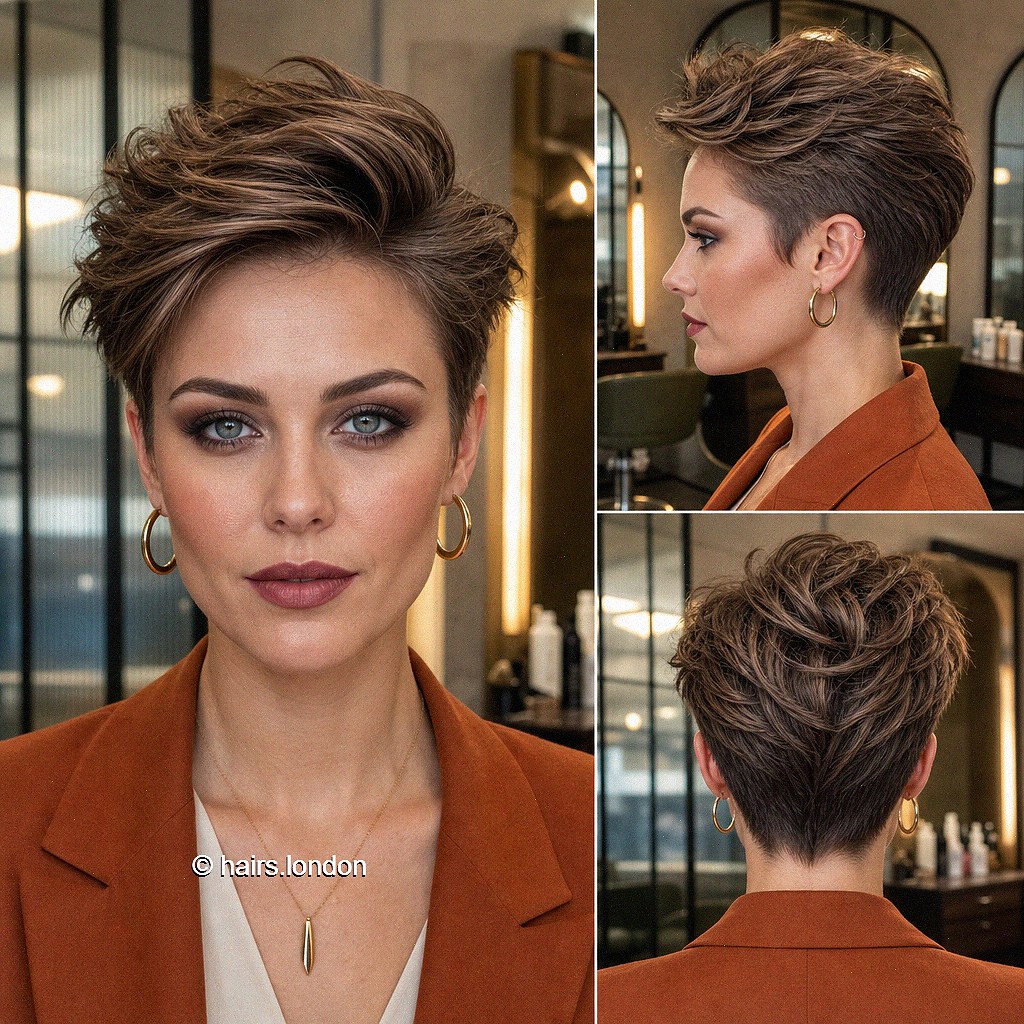
Chestnut layers sweep upward and back, opening the forehead while keeping the sides close to the head. The crown remains textured rather than perfectly smooth, and a short nape gives the back a clean outline. Ask your stylist whether your front growth direction supports this finish naturally. Begin styling by lifting the damp roots away from your face, then guide the ends backward. A little flexible product can help hold the direction without making it stiff. If you prefer lower maintenance, discuss a softer version with less height. The warm highlights should follow the visible movement of the finished layers.
15. Pewter Gray Spiky Pixie with a Closely Shaped Nape
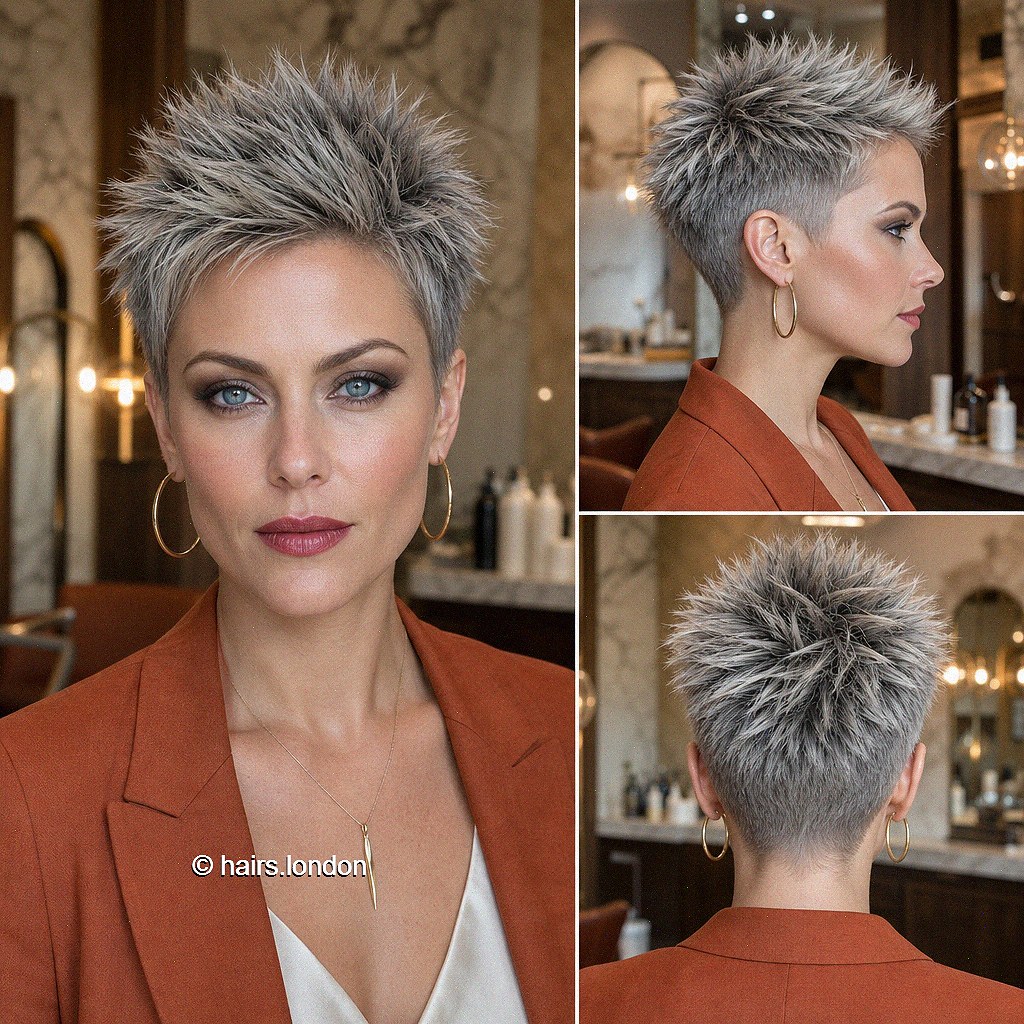
Pewter gray points give this short pixie a compact, defined shape, with darker roots adding depth beneath the pale top. The fringe is minimal, while the sides and nape stay closely controlled. Ask your stylist how much length should remain at the crown for flexible texture. Use a little paste on dry ends, lifting selected pieces rather than creating one solid upright section. Fine strands need enough density to avoid looking transparent through the top. If your hair is naturally gray, discuss whether the pictured tone needs any adjustment. The back photograph is useful for agreeing on your preferred taper.
16. Smoky Gray Pixie with a Long Diagonal Fringe
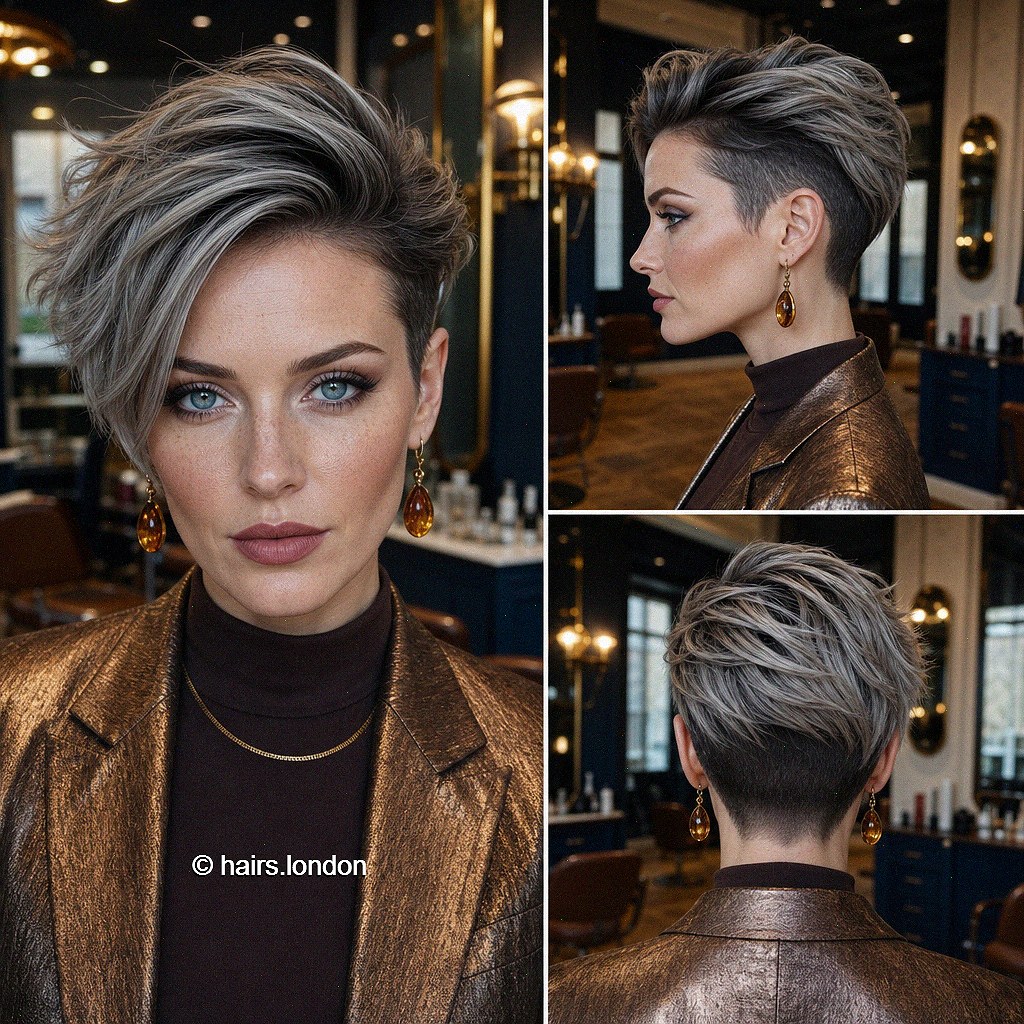
A long smoky gray fringe sweeps diagonally over a dark base, creating strong movement at the front of this pixie. The opposite side is shorter, and the nape remains compact beneath a fuller crown. Ask your stylist where you want the longest section to finish when dry. Blow dry across the forehead, lifting lightly at the roots before smoothing the ends. Keep product mainly on the areas that need separation. This haircut offers more front styling options than a uniform crop. Discuss whether the shorter side should be softly blended or clearly contrasted, especially if you change your parting regularly.
17. Greige Wavy Pixie with a Sculpted Front
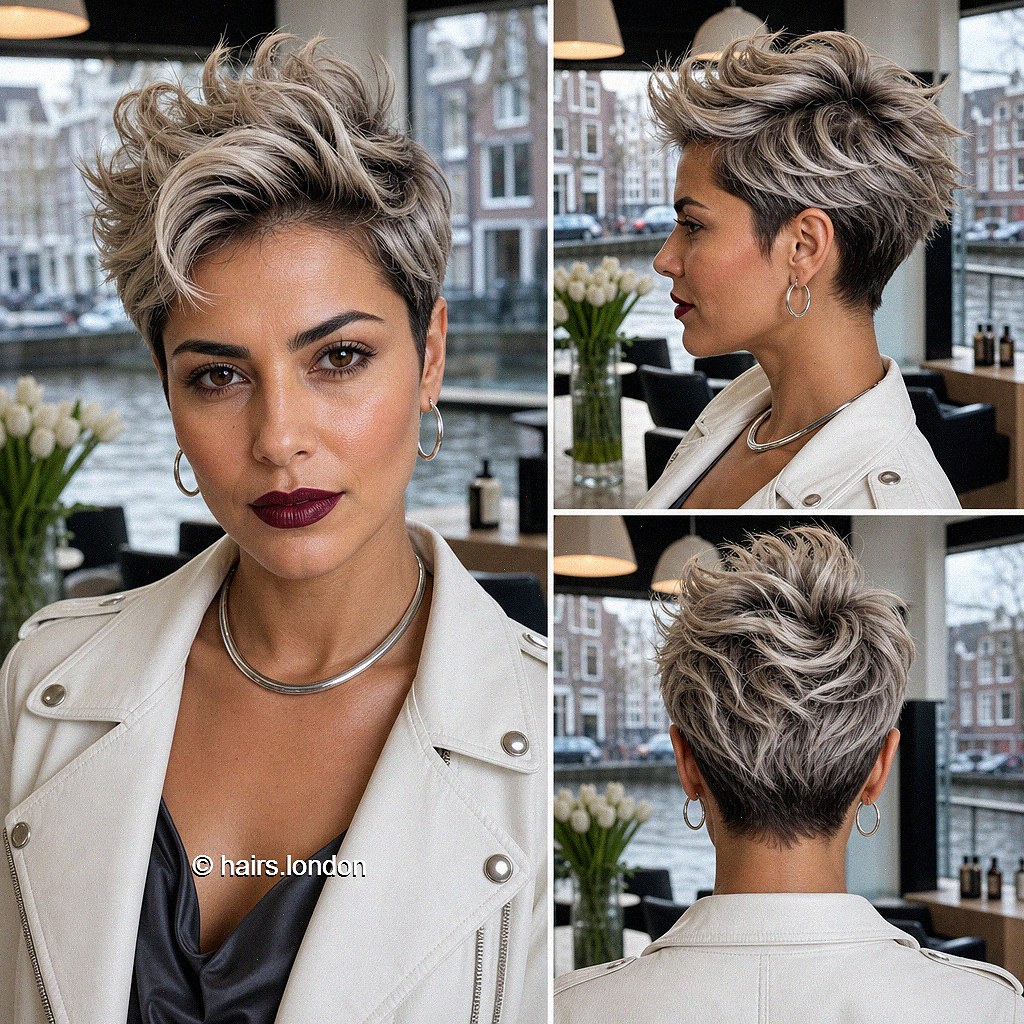
Greige highlights trace the waves in this sculpted pixie, with a lifted front and softly rounded crown above short sides. The texture feels fuller and more fluid than the tightly pointed crops. Ask your stylist to retain enough upper length for your natural movement to show. If your hair is straight, discuss the styling needed rather than assuming the wave will appear from the cut alone. Guide the front away from your face during drying, then arrange the surface gently. A small amount of cream can soften the ends. The back view shows how the longer layers meet the nape.
18. Silver Cropped Pixie with Fine Upright Texture
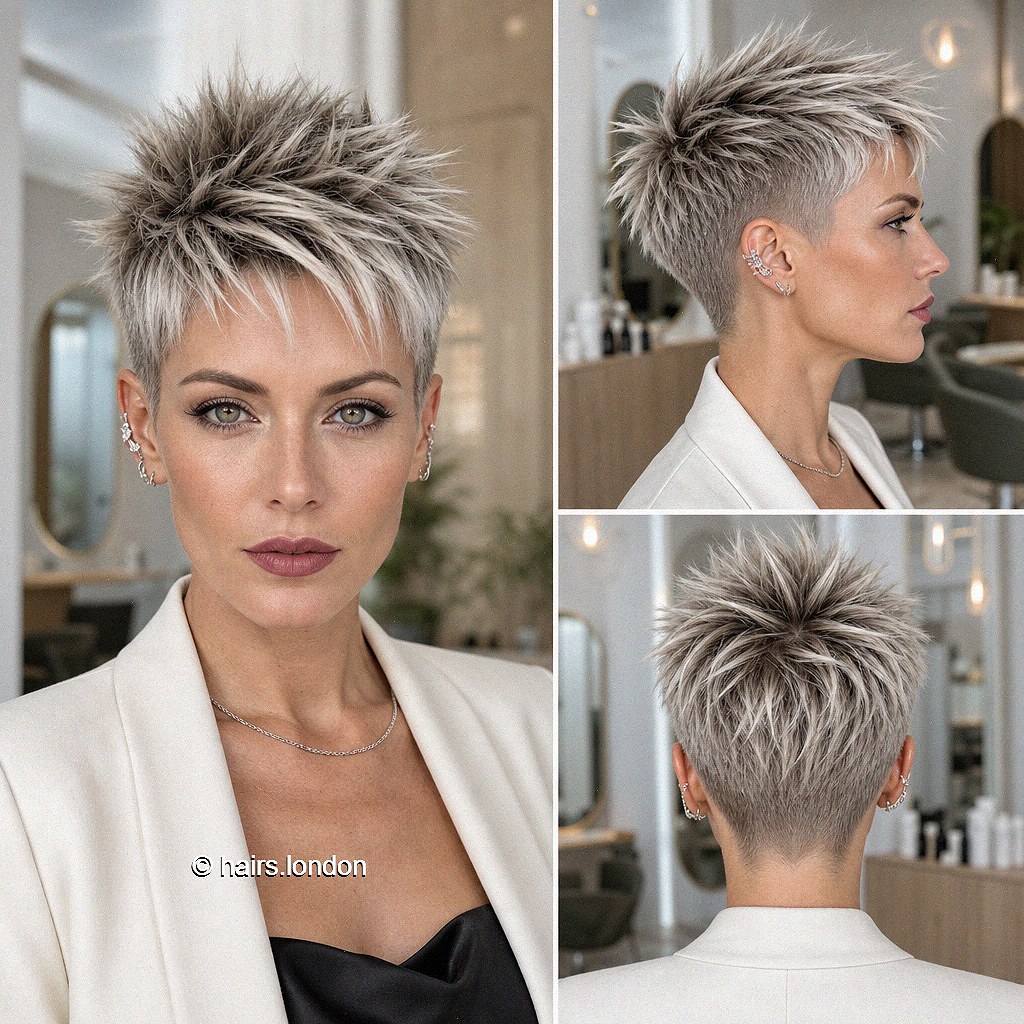
Fine silver layers rise through this cropped pixie, forming an airy surface above a closely shaped perimeter. The short fringe keeps the face open, and the crown follows a compact outline rather than a high quiff. Ask your stylist to adjust the texture according to your density; delicate hair may need fewer layers to retain substance. Dry with your fingers, then pick out selected ends using a small amount of paste. Avoid repeatedly adding product at the roots. The pale color helps reveal the texture, but the silhouette can work in other shades. Compare the nape view before choosing length.
19. Wine Burgundy Pixie with an Undercut and Side Fringe
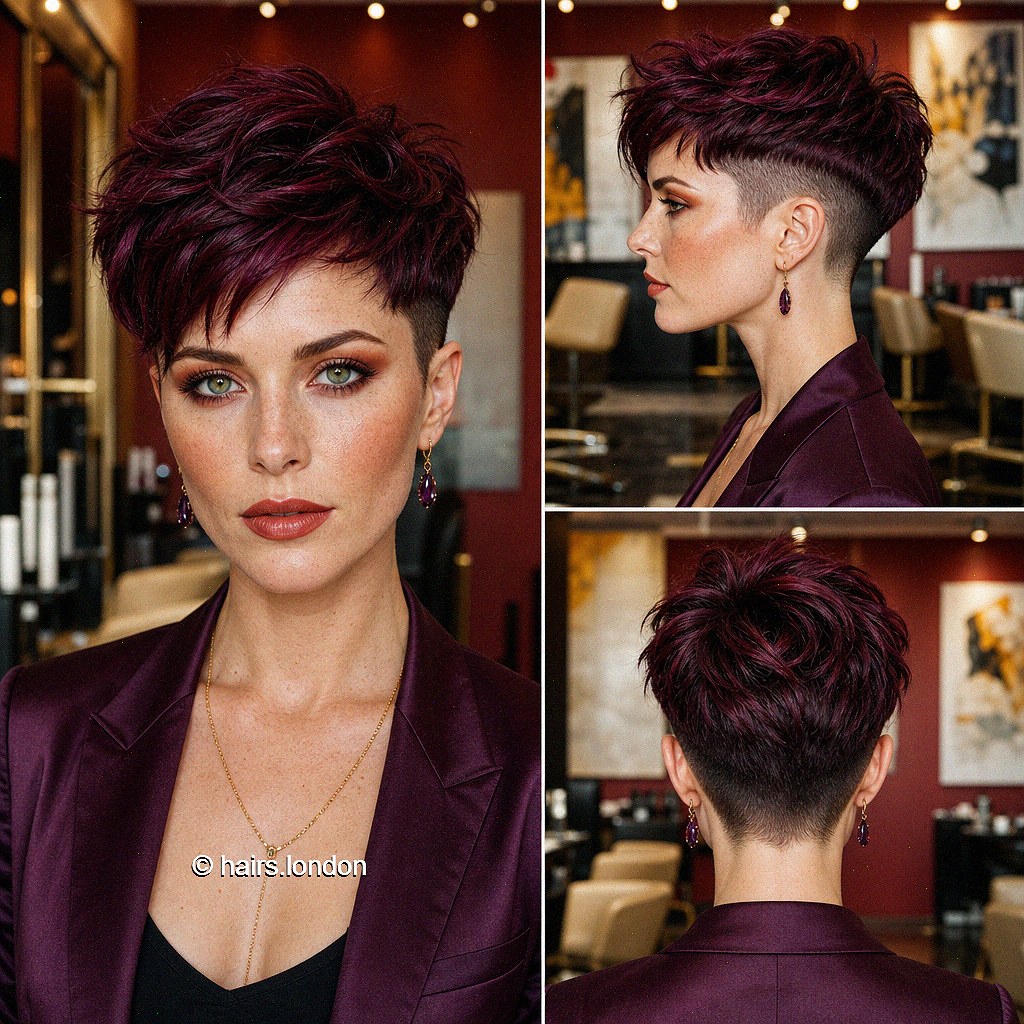
Wine burgundy layers sweep across the front, creating a rich contrast above a closely shortened side. The top retains enough texture for movement, while the back narrows neatly beneath the crown. Ask your stylist to agree on how visible the undercut should be when the fringe falls naturally. Dry diagonally with light root lift, then separate a few ends with paste. The deep color may look different under salon lighting and daylight, so compare swatches before choosing the tone. If you want a softer profile, request a gentler blend around the ear without losing the longer, sweeping front shape entirely.
20. Raspberry Pixie with a Swept Fringe and Textured Crown
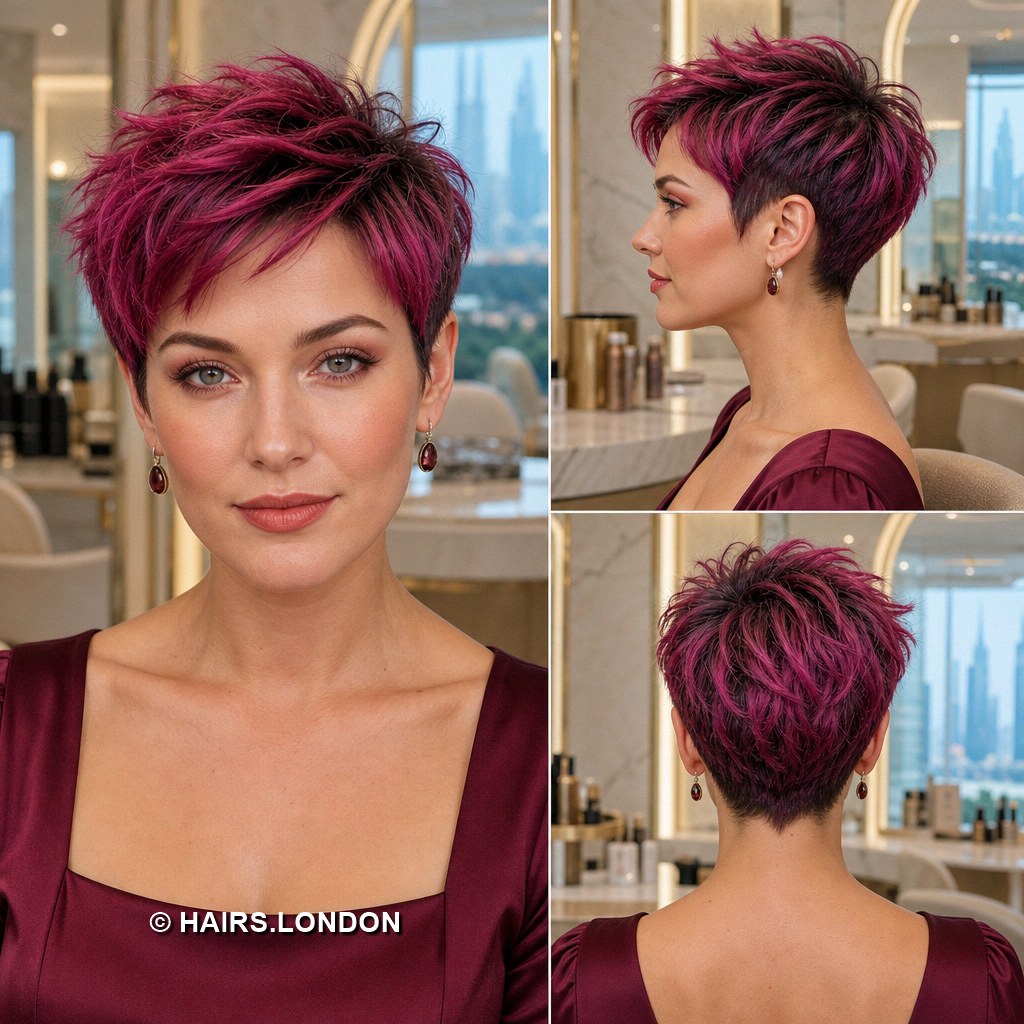
Raspberry color brightens the top of this pixie, with a swept fringe and separated crown layers keeping the finish lively. The sides sit close around the ears, while the back follows a rounded shape above a tidy nape. Ask your stylist to preserve enough front length for a diagonal sweep rather than shortening every section equally. Guide the fringe sideways during drying, then loosen the ends with your fingers. A little paste can add definition without making the surface rigid. Discuss the intensity and fading of the pink tone before coloring. Bring the back view to clarify your preferred fullness.
How to make a pixie reference work for your hair
Match the density before copying the layers
Fine strands and low density are not the same thing. You can have many fine hairs or fewer coarse ones, and those differences affect how a pixie holds its outline. Ask your stylist where the cut needs fullness and where weight needs reducing. The taupe swept pixie and pearl blonde layered look are useful references for a fuller front; the honey spiked crop shows a more separated finish.
Let your natural movement influence the length
A wave can give a longer top shape, but it can also lift a fringe away from its intended position. The greige wavy pixie leaves room for that movement, while the very short pointed crops rely on a different outline. Tell your stylist how the hair behaves when left to dry naturally. That information matters more than how smooth it looks after a salon blowout.
Decide how much contrast you want around the ears
The buttercream and tangerine undercuts create a clear difference between the long top and short side. A softly tapered version can retain a similar sweep with a gentler profile. Neither detail needs to be copied automatically. Agree on the amount of ear coverage, whether the side should be clipped or scissor cut, and how visible the shorter section should remain when the fringe falls.
Choosing a fringe you can live with
A fringe changes how a short haircut feels throughout the day. The longer lilac and smoky gray fronts offer a strong diagonal line, but their length should stay comfortable around your eyes. The ivory and honey crops use much shorter bangs, which give less coverage. If you often push hair away from your face, a lifted chestnut front may be a better direction to discuss.
Bring your glasses to the appointment if you wear them regularly. Check how the fringe falls when the frames are on, and whether the temple pieces sit comfortably. Mention a front cowlick before washing or styling, so your stylist can see the natural direction. Small adjustments to length can make more difference than a stronger styling product.
Using color to emphasize the shape
Keep highlights connected to the way you style the hair
The bronze tousled pixie and onyx choppy cut show how a few warmer pieces can outline movement without changing the whole base. Placement should follow the sections that are visible in your usual parting. If you wear a long fringe across one side, ask where the lighter pieces should sit when it is dry and arranged. Otherwise, highlights can disappear beneath the top or collect in places you rarely expose.
Agree on brightness before committing to a vivid shade
Sapphire, raspberry, and rainbow streaks offer different levels of color contrast. Decide whether you want the bright tone across most of the top or only through selected strands. Discuss your starting shade, previous treatments, and the preparation required. A photograph establishes the visual goal, but it cannot tell your colorist what process your hair needs. Ask how the shade may change as it fades and how you would maintain that result.
Separate a cool blonde from a true gray
Ivory blonde, pearl blonde, and pewter gray can look similar under certain lighting, yet they create different impressions. Compare salon swatches rather than describing every pale shade as silver. If your hair is naturally gray, your existing pattern may supply some of the contrast already. Choose the silhouette first, then decide whether a tonal adjustment would add anything useful.
A practical routine for swept and spiky pixies
Set the direction while the hair is damp
For a swept fringe, guide the roots toward your preferred side before smoothing the ends. For a lifted front, start by directing the roots away from your forehead. If a section has dried in the wrong direction, lightly dampen and reset it instead of layering product over the problem.
Define the ends gradually
For spikes or choppy pieces, warm a small amount of paste between your palms and apply it selectively to dry ends. Lift a few sections, then check the outline. Keep the roots relatively light so the finish does not become heavy or separate into greasy looking strands.
Keep a longer fringe flexible
A smooth sweep still needs movement. Once the front is dry, loosen it gently with your fingertips rather than press it into one solid section. If hair near your eyes remains troublesome, ask about changing the length; product should support a practical cut rather than constantly fight an uncomfortable one.
Learn a softer version of the same cut
Ask your stylist to demonstrate both the photographed finish and a relaxed alternative. Many longer crown layers can be arranged diagonally instead of upright. Knowing how to change the direction gives you more options between washes without requiring a different haircut.
Maintenance depends on which detail defines your pixie
A close undercut can feel untidy around the ears before the fringe needs attention. A longer swept front may become difficult to place while the back still looks neat. Watch those changes and ask whether a small perimeter tidy would help between full reshaping appointments. Your growth rate and preferred precision should guide the schedule.
Color upkeep may follow a separate rhythm. Vivid tones can change visibly while the shape still looks good, and pale finishes may show a different contrast as roots grow. Discuss both routines before committing. If you plan to grow toward a longer pixie or bob, let the sections you want longer gain length and use selective tidying to keep the outline balanced.
What to take to your consultation
- The front, side, and back views of two or three favorite looks
- A clear preference for fringe length and coverage around the ears
- Your usual parting, drying method, and realistic styling time
- Information about cowlicks and the way your crown naturally falls
- Your color history and the degree of brightness or contrast you want
- A decision about whether you want to maintain this shape or grow it longer
Frequently asked questions about pixie cuts and color
Which haircut should I choose first if I am unsure about going short
Start by comparing the taupe swept pixie, pearl blonde layered cut, and lilac feathered style. They retain more movement at the front than the tightly cropped looks. Ask your stylist which lengths would make the transition comfortable on your hair rather than choosing solely by the model or shade.
Can I combine the cut from one image with the color from another
Yes, that can be a useful way to explain your preferences. The color placement may need adapting to the chosen layers and parting, however. Show both images and point out exactly what you like, so your stylist and colorist can discuss a coherent result.
Does a pixie have to include shaved sides
No. A pixie can be shaped with scissors and a gradual taper. The undercuts in this collection are specific details, not a requirement of every short cut. Explain how much side coverage you want and whether you prefer a visible contrast or a softer transition.
Can a long pixie fringe work on fine hair
It can, provided the front retains enough density to look substantial. Excessive thinning may make the ends appear sparse. Ask your stylist whether a fuller fringe and fewer upper layers would suit your hair, and keep finishing products light so the shape does not collapse.
How can I tell whether a spiky finish suits my routine
Ask for a styling demonstration and notice how much drying and product application it takes. A compact crop may dry quickly but still need direction through the crown. If you prefer minimal styling, discuss a softer finish that follows the way your hair grows naturally.
Will the sapphire blue require lightening
The preparation depends on your starting color, previous coloring, and the brightness you want. A clear vivid blue may need a suitably light base, but the photograph alone cannot determine the process. Ask your colorist to assess your hair and explain the realistic result and upkeep.
How should I describe the difference between ivory blonde and silver
Use swatches and the reference images to compare warmth and depth. Ivory has a pale blonde impression, while pewter or silver reads more gray. Lighting can blur those differences in photographs, so agreeing on the tone in person helps avoid a result that feels too warm or too cool.
Can these styles work with naturally gray hair
Yes. The pewter, smoky gray, greige, and silver looks offer different silhouettes to discuss. Your natural gray distribution may create its own dimension, so coloring is not automatically necessary. Choose the framing and crown shape first, then decide whether a tonal change would support them.
What if I have a front cowlick
Show your stylist the natural growth pattern before the hair is wet or styled. A short fringe may lift in a different way from a longer one. The right length and direction can help the hair settle, while a reference photograph alone cannot show how your cowlick will behave.
Why does my fringe fall flat after styling
Possible contributors include the root direction, the amount of weight in the front, and too much finishing product. Reset the damp roots toward the shape you want before arranging the ends. If the problem persists, ask your stylist to assess the cut and product amount rather than simply add stronger hold.
How do I grow out an undercut pixie
Plan for the shorter side and longer top to gain length at different rates. Your stylist can tidy the perimeter and adjust the balance while preserving the sections you want to grow. Repeatedly cutting everything back to the original lengths will delay the transition.
What should I ask if I want a softer version of a bold reference
Point to the details you want to soften: the side contrast, the pointed ends, the crown height, or the color intensity. Each can be adjusted separately. For example, a gentler taper and a diagonal styling direction may keep the movement of a spiky look while reducing its sharpness.
Choose the balance that feels right on your hair
The strongest pixie reference makes the important details clear. Choose a fringe you enjoy wearing, a side profile you are comfortable maintaining, and a crown shape that works with your texture. Then decide how color should emphasize that structure. From soft taupe layers to sapphire crops and copper undercuts, these 20 looks give you plenty to discuss, but the finished haircut should make sense in your own everyday routine.