

11. Glossy Crimson Bob with a Clean Perimeter
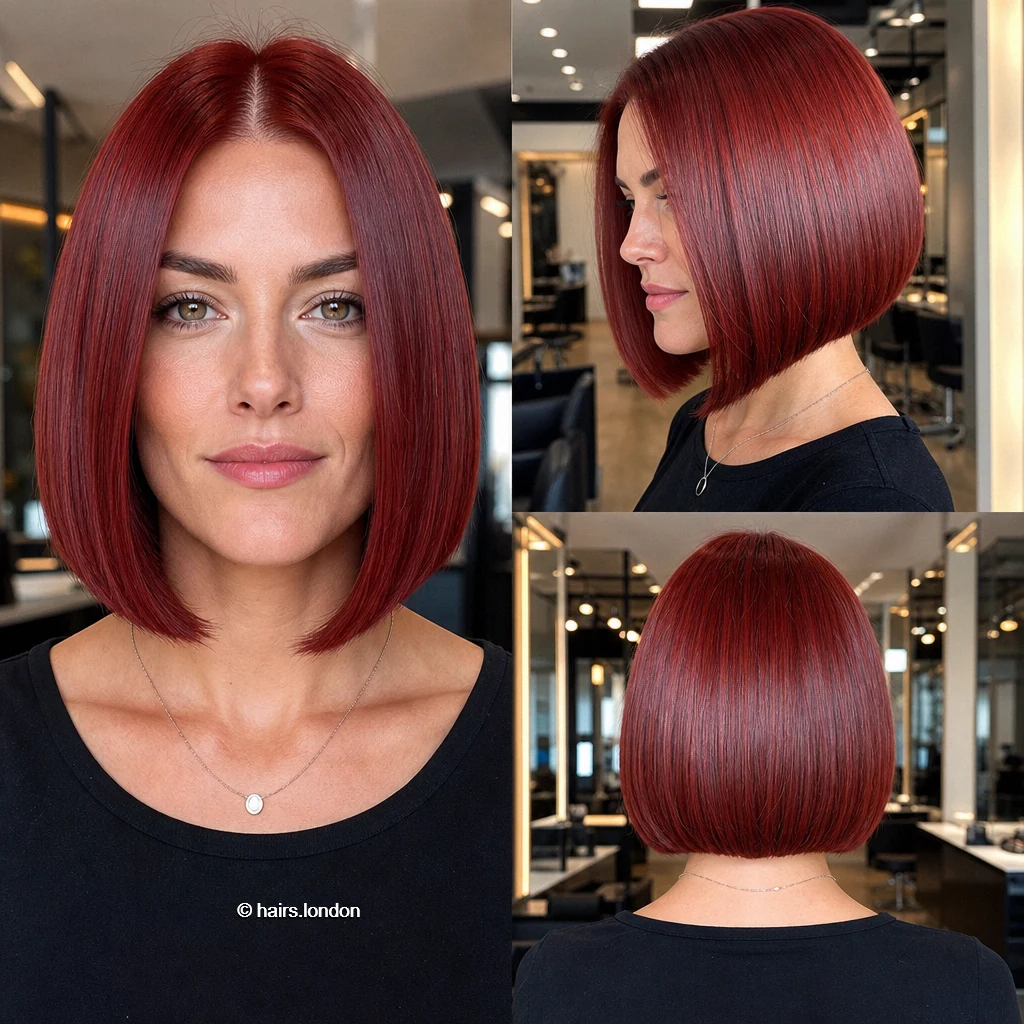
A glossy crimson finish emphasizes this bob’s carefully defined edge. The center part creates balanced panels around the face. Front lengths extend slightly below the jaw toward the neck. In profile, the back curves inward above a short nape. The rear perimeter looks even, dense and softly rounded. Smooth with a brush while keeping airflow directed toward the ends. Use shine product sparingly so the outline retains movement. This full shape may benefit finer hair that dislikes layering. Dense hair could need hidden weight control for easier smoothing. Plan trims around perimeter precision and discuss color refresh timing as needed.
12. Burgundy Bob with Gentle Front-to-Back Angling
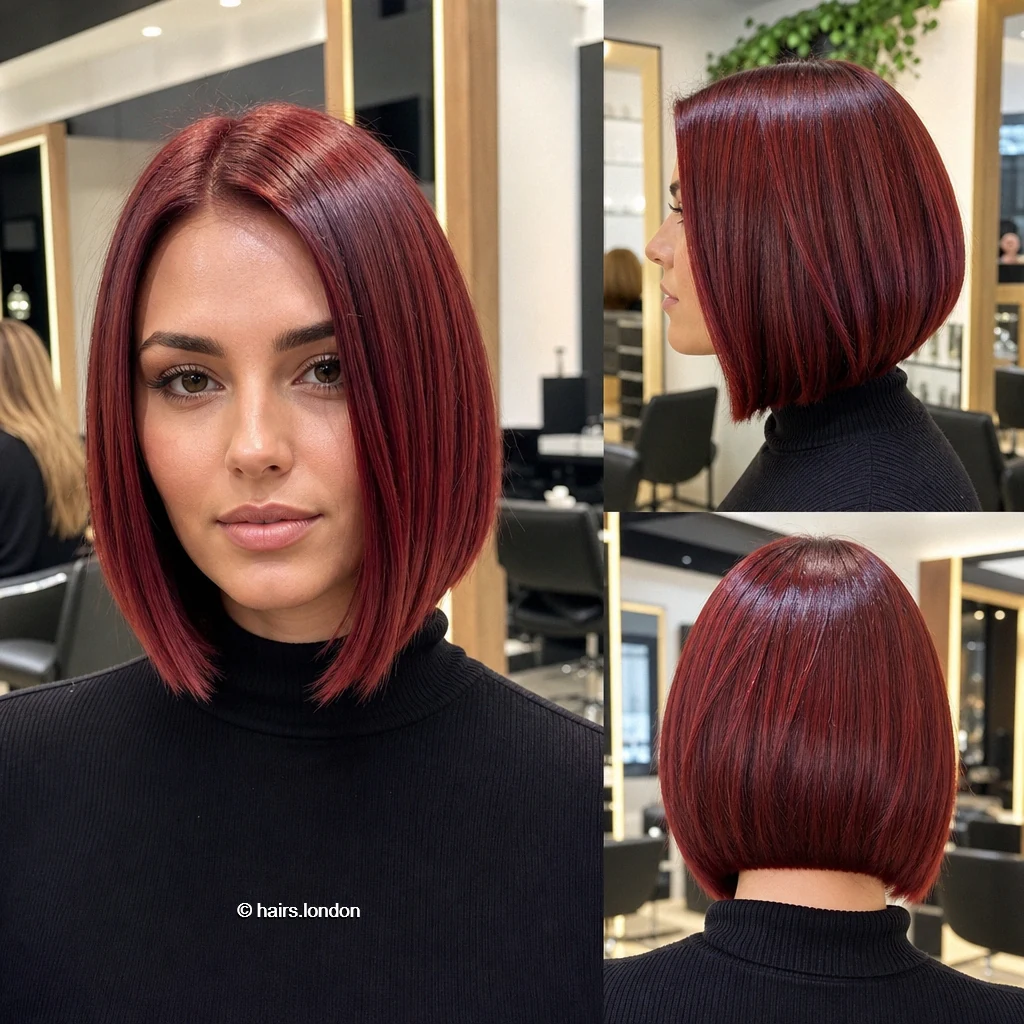
This burgundy bob balances longer front panels with a rounded back. An off-center part keeps both sides open and smooth. The front points fall below the jaw in the portrait. Its nape sits higher, making the modest angle visible sideways. Straight styling draws attention to the cut’s uninterrupted surface. Dry sections downward, then turn the ends inward if desired. Avoid removing so much weight that the front becomes wispy. The shape can vary depending on density and natural bend. Ask your stylist to check both sides at your usual part. Maintain the shorter back before its outline drops too low.
13. Copper Bob with Full Rounded Sides
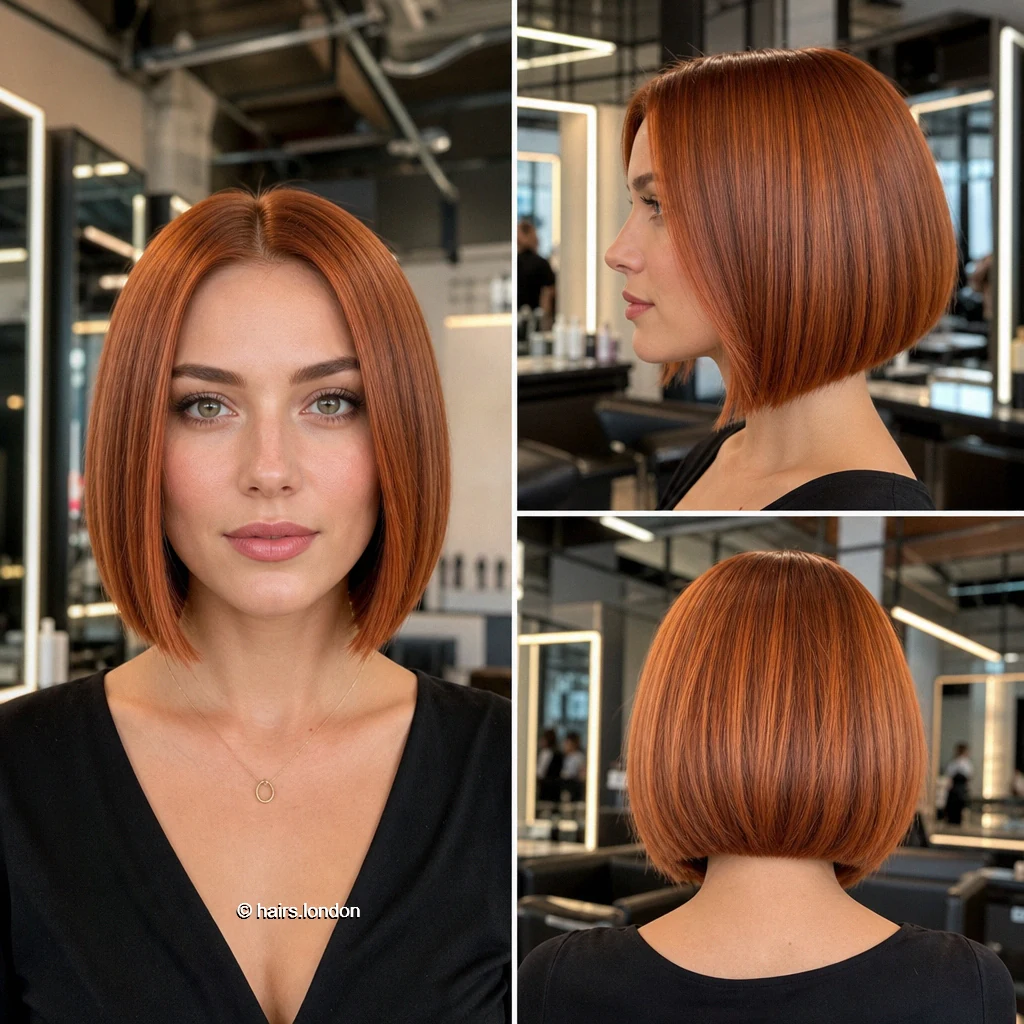
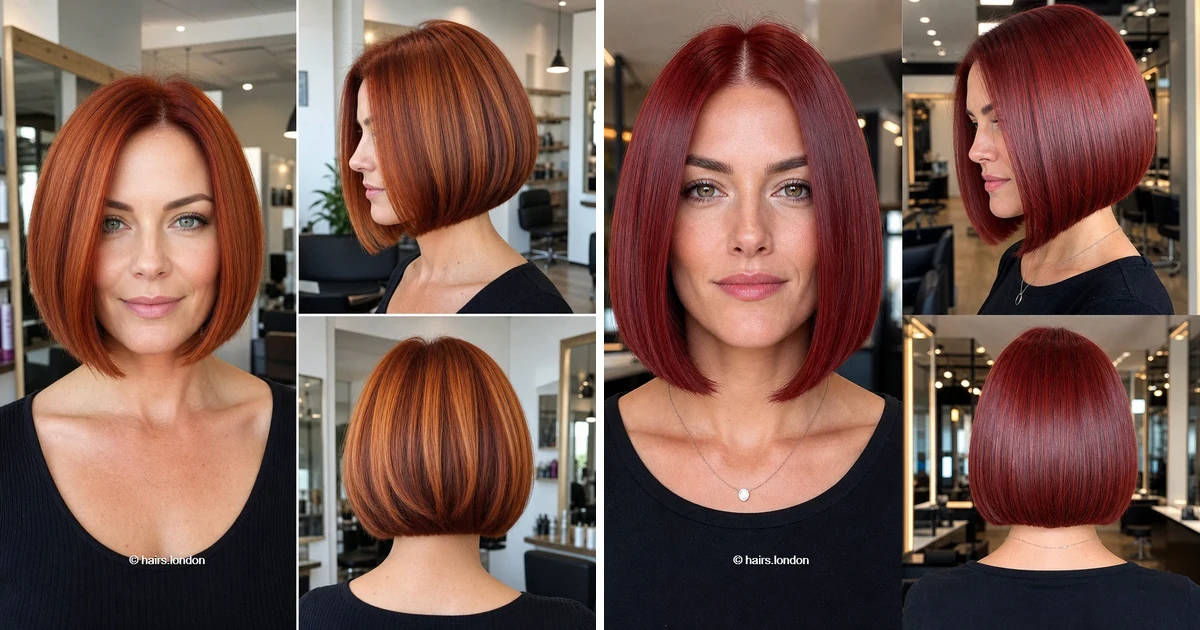
Copper color and a center part define this balanced bob. Smooth sides curve toward the face at about jaw level. The profile shows a slightly longer front and shorter nape. From behind, a rounded weight line supports the full silhouette. Its ends look tidy rather than heavily broken into layers. Brush downward while drying, then gently tuck the final inch. Keep styling products light to avoid flattening the side volume. Finer hair may appreciate the substantial edge this shape retains. Denser hair might require internal shaping beneath its smooth surface. Trim whenever the rounded back begins losing its clean boundary.
14. Deep Wine Bob with a Smooth Center Part
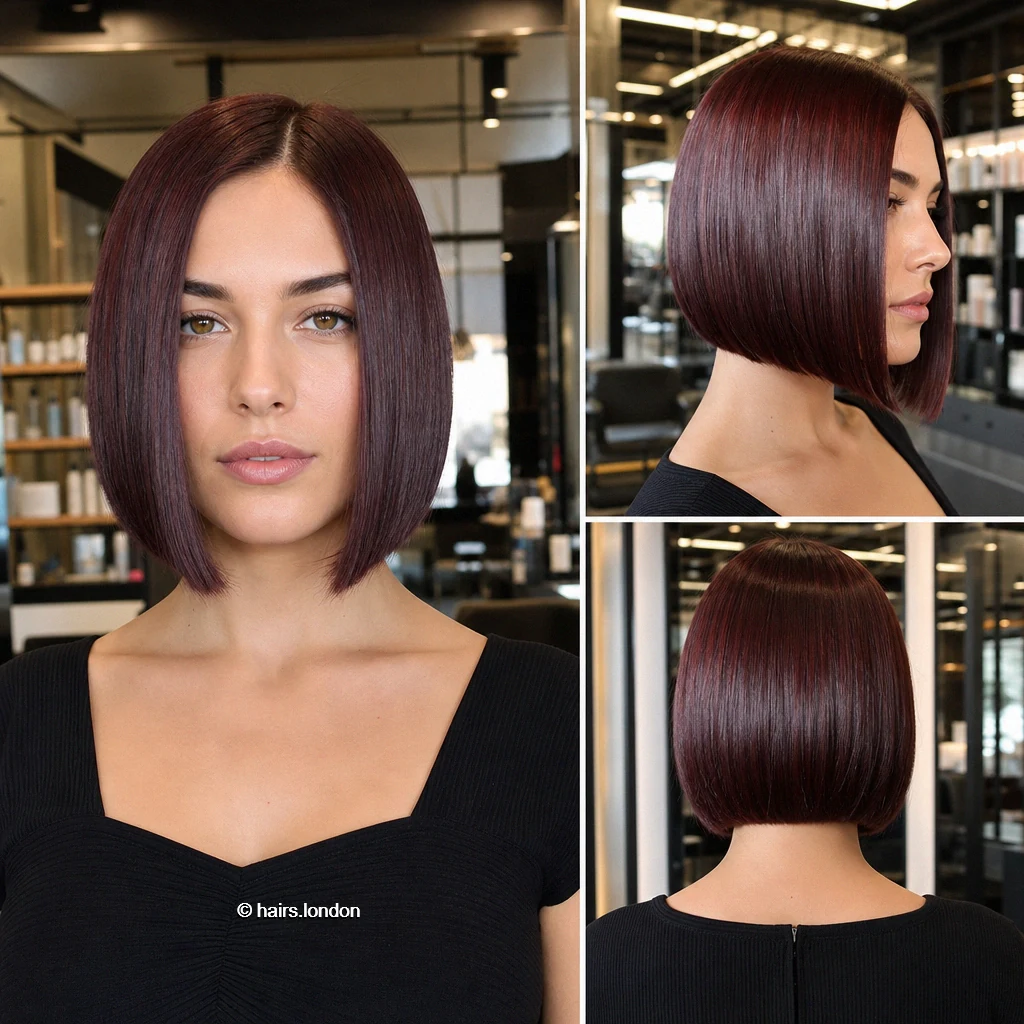
Deep wine color gives this center-parted bob a polished appearance. The front panels end near the jaw with softly pointed tips. Its side view shows a curved back and shorter nape. A neat rear edge keeps the silhouette compact and controlled. The smooth finish makes small changes in length more noticeable. Guide a brush down each side, keeping heat moving constantly. Apply a small amount of serum through the lower lengths. Hair with strong waves may need more smoothing time. Discuss whether your density needs weight removed behind the sides. Arrange trims before the sharp nape outline becomes visibly soft.
15. Side-Parted Mahogany Bob with Rounded Volume
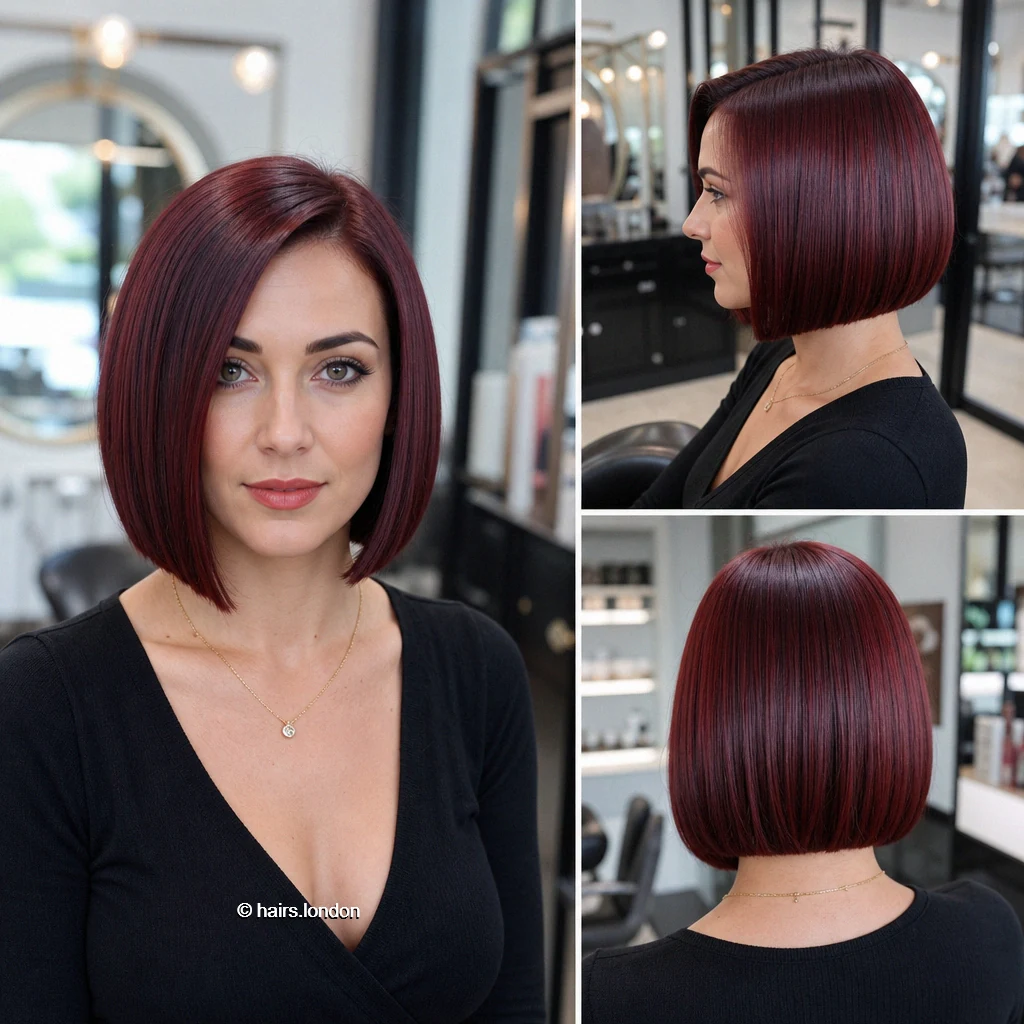
Mahogany red brings subtle variation to this smooth, side-parted bob. The longer sweep crosses the forehead without a separate fringe. Side and rear views reveal rounded volume above the nape. Front pieces extend toward the jaw, preserving a gentle angle. The lower edge remains tidy despite its softly curved outline. Dry the heavier side first to establish the part. Smooth the ends while leaving a little lift at roots. Dense hair could need internal weight removal for this finish. Fine hair may prefer keeping the perimeter as full as possible. Revisit the salon when nape growth changes the rounded profile.
16. Asymmetrical Auburn Bob with a Long Front Point
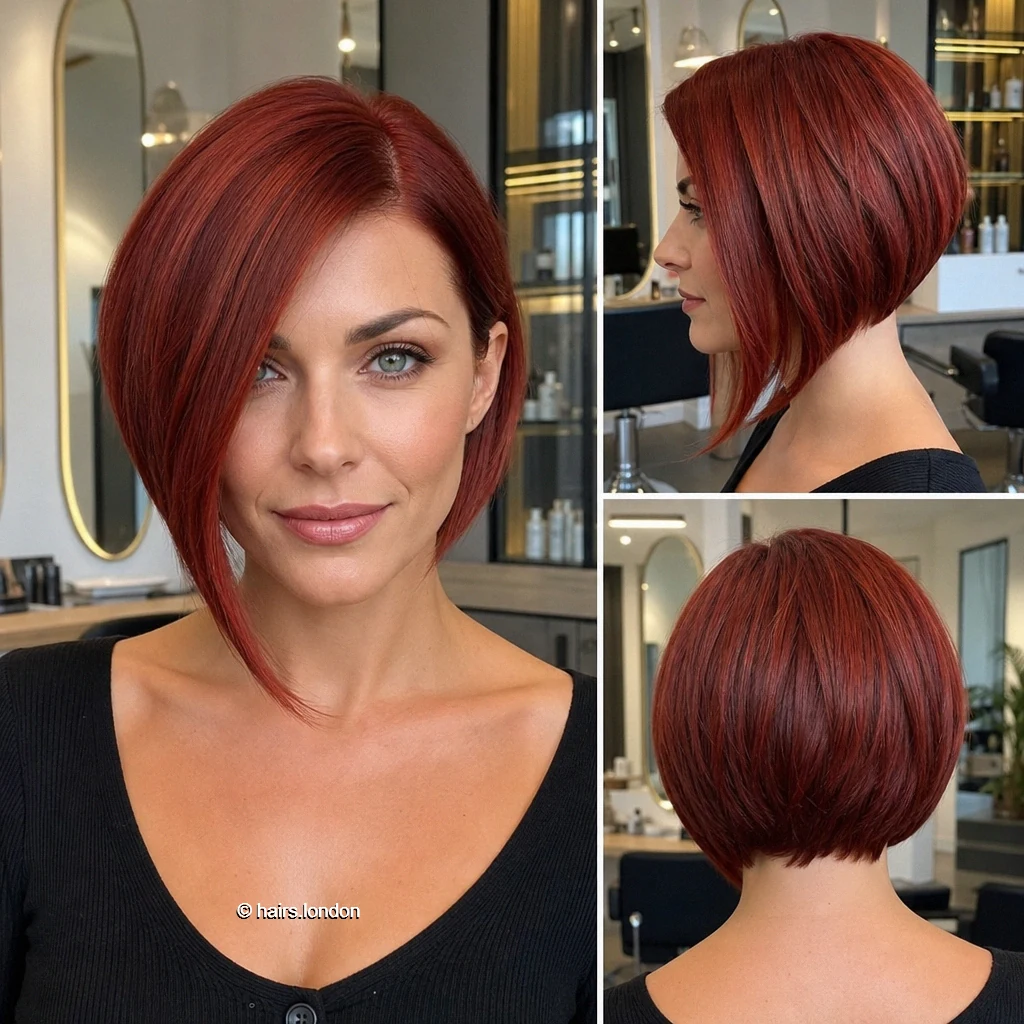
Auburn color draws attention to this bob’s pronounced asymmetry. One front section extends well below the opposite side. The longer piece falls past the jaw toward the neck. A shorter, rounded back tapers into a textured nape. Its sweeping front doubles as a side-directed, fringe-like panel. Smooth that panel downward while keeping the crown gently lifted. Ask your stylist to position the long point deliberately. Density matters because thin ends can weaken its visible line. Check the shape with your usual part before committing. Frequent perimeter checks will keep the uneven lengths looking intentional, especially around the long front point.
17. Long-Front Copper Bob with a Shaped Nape
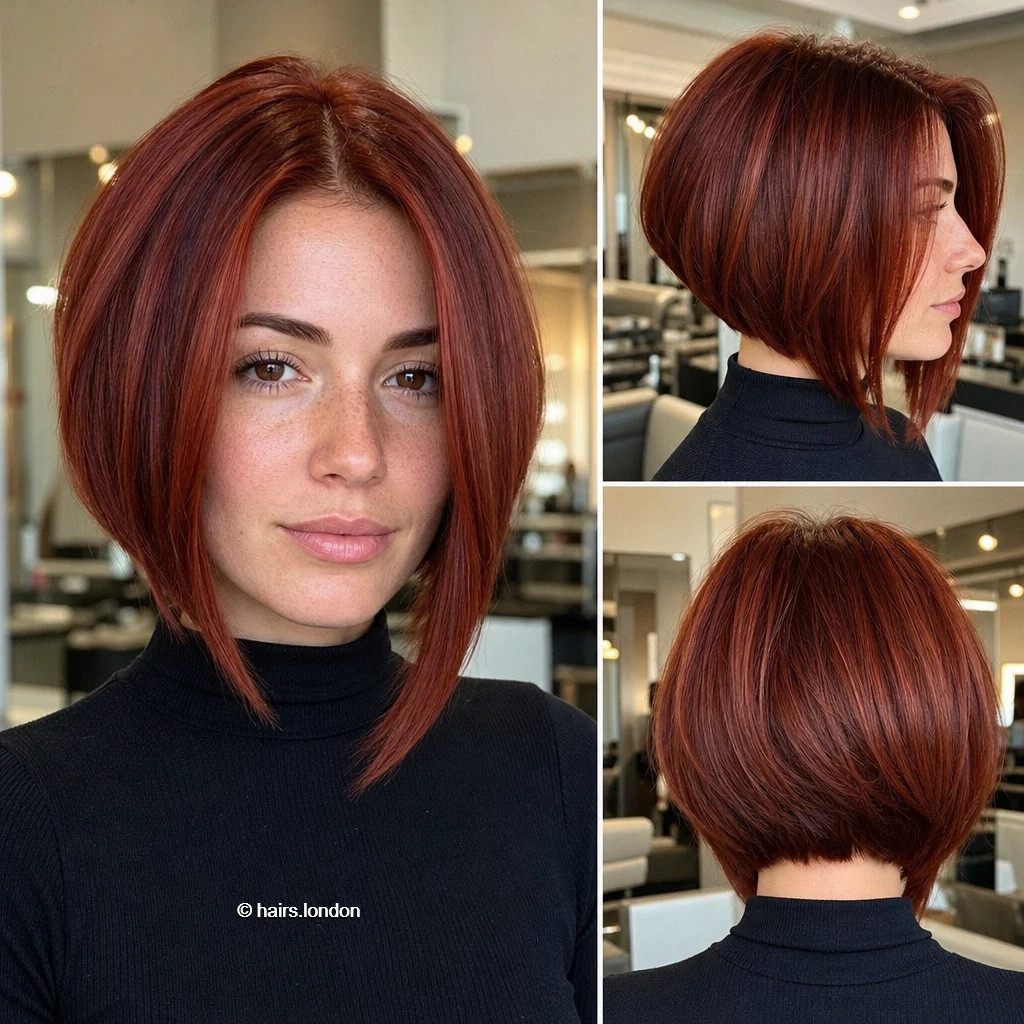
Copper and auburn tones give this angled bob visible depth. A center part separates two longer, face-framing front sections. Both extend below the jaw, beyond the rounded back. The nape is shorter, with visible shaping through its lower layers. That contrast creates a more defined angle in profile. Smooth the front lengths and preserve lift behind the crown. Use a brush that controls ends without flattening the back. Thick hair may need tailored removal beneath the rounded weight for easier styling. Discuss how your natural texture affects the front points. Trim the nape as it grows to retain the contrast.
18. Layered Ginger Bob with Face-Framing Movement
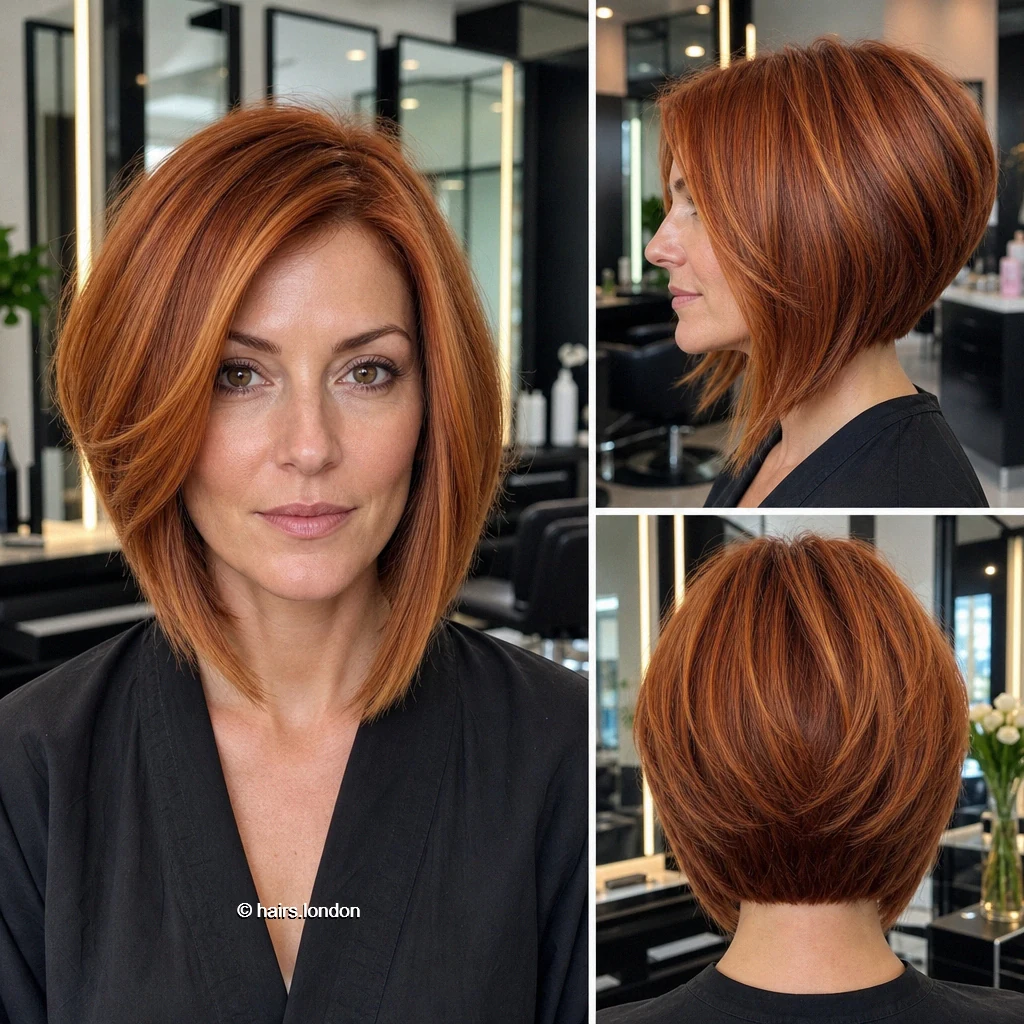
Ginger strands and lighter copper pieces brighten this layered bob. A generous side sweep blends into cheek-skimming front sections. Longer ends reach below the jaw, creating an open frame. The back appears rounded, with visible layers above the nape. This is a softer outline than a precision-cut bob. Blow-dry the sweep away from the face for movement. Define selected layers with lightweight cream, avoiding a heavy finish. Thick hair may welcome shaping that releases excess side bulk. Fine hair needs enough length retained around the face. Discuss trim timing for both the nape and front layers as those sections grow.
19. Deep Burgundy Bob with Extended Front Sections
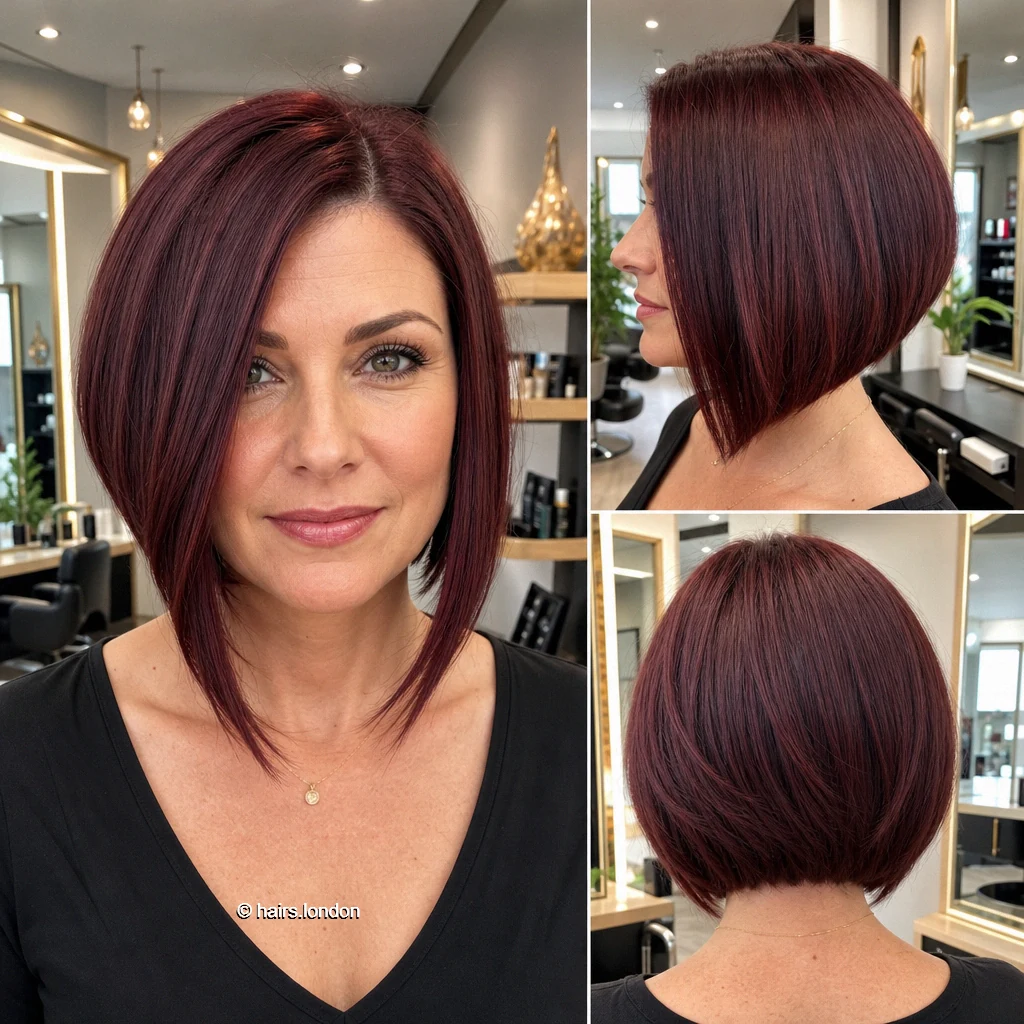
Deep burgundy gives this bob a smooth, dimensional finish. A side part sends one section across the forehead. Long front pieces taper toward the neck below the jaw. The rounded back ends higher, creating clear front-to-back contrast. Its rear perimeter remains compact rather than visibly stacked. Smooth the sides downward and bend their tips very lightly. Keep the back lifted enough to retain its curved shape. Dense hair may require concealed weight removal near the nape. Ask whether your part will keep both front points balanced. Regular trims protect the angle as the shorter back grows between scheduled salon visits.
20. Plum-Red Bob with a Sweeping Front
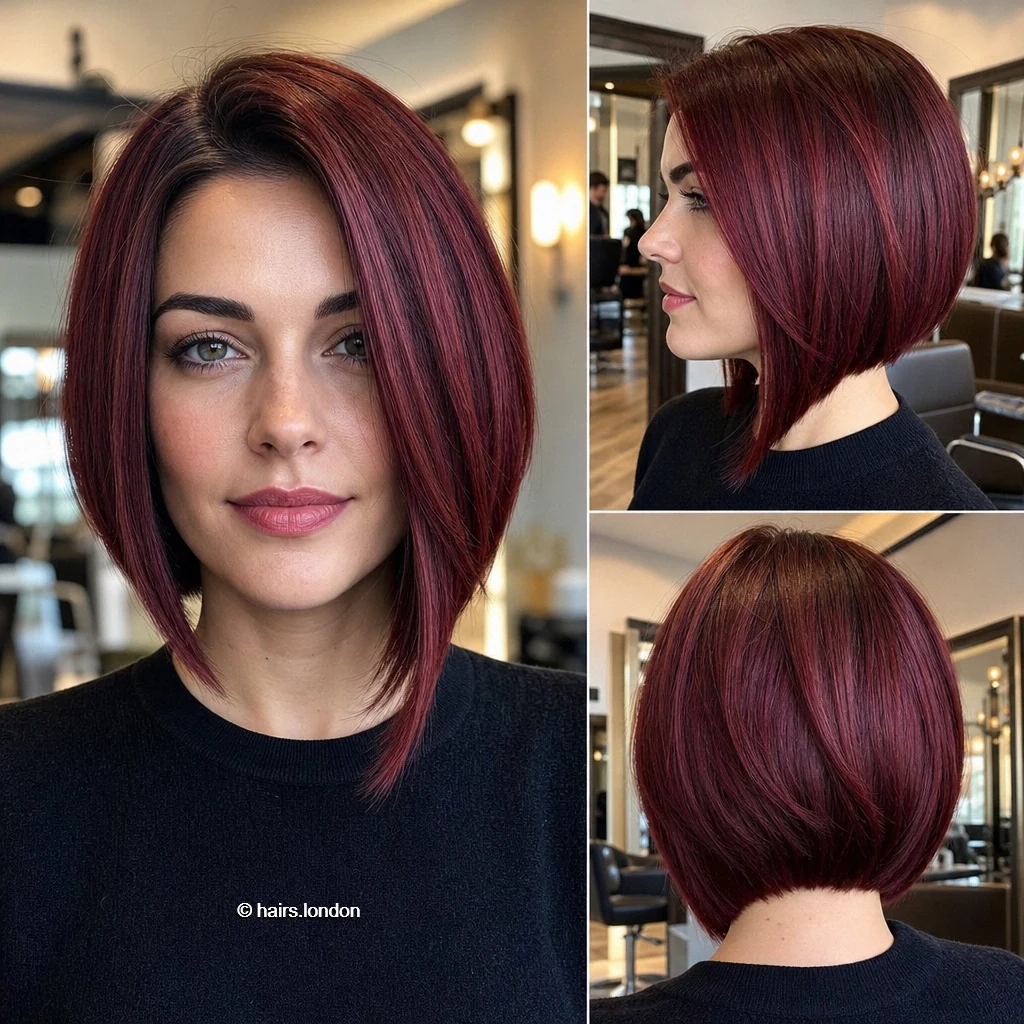
Plum-red tones deepen this bob’s smooth, rounded silhouette. The side part creates a long sweep across one cheek. That front section reaches below the jaw toward the neck. In profile, the shorter back curves neatly above the nape. The rear view shows a full shape with tidy ends. Blow-dry the long sweep downward before polishing the perimeter. A small amount of serum adds shine without stiffening movement. Thick hair could benefit from discreet internal weight control. Consider your natural part before choosing the longer front placement. Maintain the nape and color as their definition gradually softens between your salon visits.
How to Choose Your Bob Length and Shape
Start with the point where you want the front to fall: at the jaw, just below it or closer to the neck. Then compare it with the nape. A modest difference creates a gentle A-line effect; the longer front points in several images create a stronger angle. A rounded bob keeps more visual fullness through the sides and back. For a short layered bob, consider whether you are comfortable showing more of the neck and styling a fringe. Check the proposed length with your natural part and with your hair dry, especially if it springs upward.
Styling Fine, Thick, Wavy and Curly Textures
Fine hair often benefits from a substantial perimeter and lightweight products; removing too much weight can make angled front points look sparse. Thick hair may need internal shaping to reduce bulk without making the outer edge uneven. For natural waves, encourage bends with a diffuser or gentle scrunching rather than forcing every strand straight. If you have curls, plan the bob around their dry shape and shrinkage, leaving enough room for a balanced outline. On the shorter layered cuts, dry a side fringe first and use only a little paste to separate the ends.
Keeping Red Bob Color Fresh
These images show several red families, from bright copper and ginger to crimson, burgundy and plum. Ask your colorist which tone and refresh schedule fit your starting color and routine. Wash with products intended for colored hair, limit unnecessary heat and use heat protection when smoothing a sleek bob. A gloss or color-depositing product may help between appointments if your colorist recommends one. Pay attention to the front panels and part, where changes in tone or new growth are especially visible.
Maintaining the Perimeter and Shorter Back
A smooth bob depends on its lower edge: even modest growth can change where a rounded shape meets the neck or soften the contrast of an angled front. Short, tapered napes and side-swept fringes often need attention sooner than longer, softly layered sections. If your cut has visible graduation or a shaped nape, ask your stylist to preserve its weight and outline rather than simply removing the same amount everywhere. Bring a photo of the cut at the stage you liked best to help set a realistic trim schedule.
What to Discuss with Your Stylist
Show front, side and back references, then identify the specific feature you want: a curved weight line, long front points, a full edge or an airy layered crown. Discuss density, natural texture, cowlicks, your usual part and how much daily drying you will do. Ask to see where the front and nape will fall when the hair is dry. If you want red color as well, agree on a shade, upkeep plan and whether you prefer a uniform finish or visible tonal variation.
Frequently Asked Questions
What is the difference between a bob and a lob?
A bob generally finishes around the jaw or neck, while a lob is a longer bob that approaches the shoulders. The front and back can fall at different points, so assess the complete outline.
How is an A-line bob different from a stacked bob?
An A-line bob is defined by a front that is longer than the back. A stacked bob has visible graduation that builds weight at the back. A haircut can have both features, but one does not automatically imply the other.
Does a rounded bob require layers?
Not necessarily. A rounded outline can come from its perimeter and styling. Internal shaping or layers may be useful when density makes the sides or back too bulky.
Can fine hair wear a short angled bob?
It can, provided the front points retain enough density to look substantial. Ask your stylist whether a gentler angle or fuller edge would better support your hair.
How can thick hair avoid looking bulky in a bob?
Discuss selective internal weight removal and a length that does not concentrate all the fullness at one point. Keep enough surface hair to preserve the intended smooth or rounded outline.
Can naturally curly hair wear these bob shapes?
Yes, but the result will look different from the straight-styled examples. Plan around curl shrinkage and the dry shape, and decide whether you want a defined curly perimeter or a softer layered finish.
Which bob needs more fringe styling?
The short layered bobs with side-swept fringe will usually need more attention around the forehead than the center-parted, fringe-free shapes. Growth patterns can make a significant difference.
Do I need to straighten an angled bob every day?
No. Smoothing makes an angle especially clear, but natural waves can soften it attractively. Choose the cut with your preferred everyday finish in mind.
How often should I trim a bob?
It depends on how precise the perimeter is and how short the nape or fringe sits. Arrange a trim when those features begin changing the silhouette, rather than following one schedule for every bob.
Will a side part change how a bob looks?
Yes. It can create a stronger sweep and make one front section appear more prominent. Have the length checked at the part you normally wear.
What happens when a short layered bob grows out?
The fringe may fall into the eyes and the nape can lose its taper before the sides gain much length. Small reshaping appointments can make the transition to a longer bob easier.
How should I choose a red shade for a bob?
Use the pictured copper, auburn, burgundy and plum tones as references, then discuss your starting color, desired brightness and maintenance preferences with a colorist.
Conclusion
The most useful comparison is not simply which red bob haircut catches your eye first, but which outline you would like to maintain. Notice how a compact nape, longer front, full edge or layered crown changes each shape. Bring the views that match your goals to a salon consultation, along with an honest account of how you prefer to style your hair.