
41. The midnight blue secret
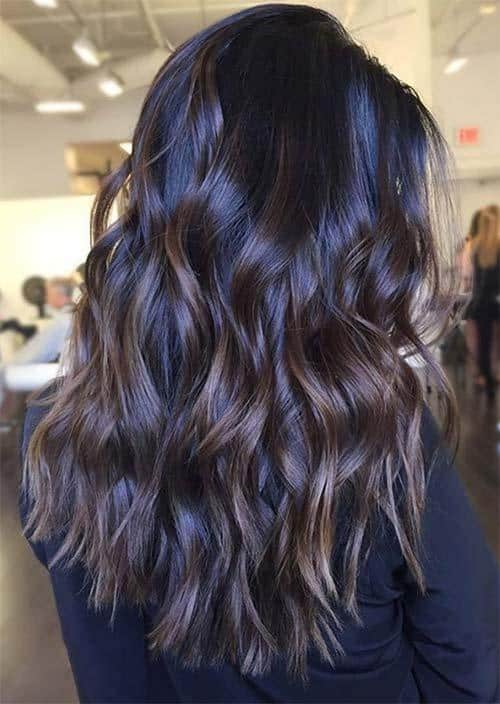
You might miss it indoors, and that’s the point. A near-black base is painted with midnight blue on the outer layer, and long, loose waves reveal the color only where the light hits. From the back, the blue reads as a silky sheen rather than a bold shade. It’s a fashion color for anyone with a dress code, or anyone who likes a secret.
- Best for: Very dark hair; anyone wanting a subtle fashion shade.
- Ask your stylist for: Midnight blue balayage on the outer layer of dark hair.
- How to style it: Wave with a curling wand.
- Upkeep: Gloss every 4 weeks.
42. The denim-dipped lob
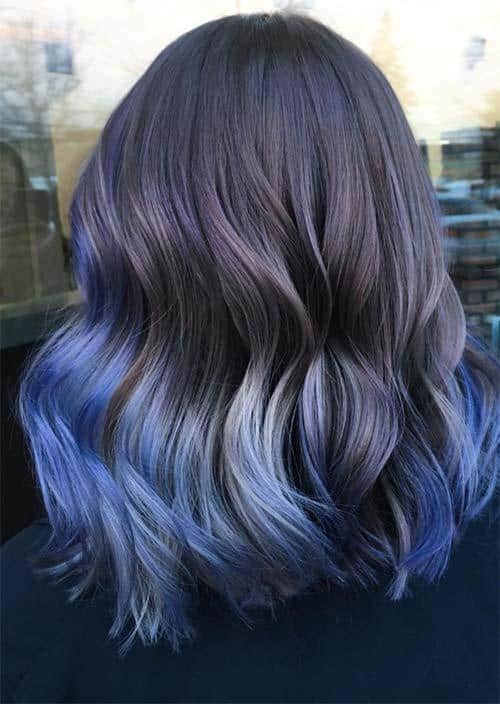
Denim blue is pastel with a darker mood, and this lob shows why. A smoky, gray-violet root softens into denim and periwinkle blue on the shoulder-length waves, and the brightest blue sits on the very ends. Because the transition is so soft, it feels moody instead of loud. Keep it in waves to show off the shift in tone, and use cool water to slow the fade.
- Best for: Dark hair; cool skin tones.
- Ask your stylist for: Denim blue balayage on the ends of a dark lob.
- How to style it: Wave with a flat iron.
- Upkeep: Gloss every 3 to 4 weeks.
How to style balayage hair at home
For soft waves that show off the color
- Apply a heat protectant to damp hair and rough-dry until about 80 percent dry.
- Take vertical sections and wrap them around a 25 to 32 mm curling wand, alternating directions.
- Leave the last inch or two straight so the brightest ends stay visible.
- Once cool, rake through with your fingers and finish with a light shine spray.
For a sleek, straight finish
- Apply a smoothing cream and heat protectant.
- Blow-dry with a paddle brush, directing the hair down.
- Run a flat iron over the lengths at a medium temperature.
- Finish with a drop of shine serum.
For curls
Apply curl cream to soaking-wet hair, scrunch upward and diffuse on low heat. Lightened curls are more porous, so a leave-in conditioner first helps prevent frizz.
Caring for balayage hair
Lightened hair needs moisture. Use a sulfate-free shampoo, a weekly hydrating mask and a heat protectant every time you style. Blonde and silver shades benefit from a purple shampoo once a week, ash brunettes from a blue shampoo, and reds and coppers from a color-depositing conditioner. If you want the longest gap between appointments, our low-maintenance hair colors lean on the same soft-root idea.
Balayage grows out softly, but the tone fades. Book a toner or gloss every six to ten weeks to keep the color clean, and a full repaint every three to six months. A bond-building treatment during lightening and regular trims keep the ends healthy.
What to tell your colorist
- Bring two or three photos of the color you want, and one you do not want.
- Say how much contrast you want: subtle and natural, or bright and bold.
- Tell them how often you are happy to come back for toning and repainting.
- Mention any recent box dye, henna or keratin treatment.
- Ask whether the change can be done in one session or will need two.
Frequently asked questions
What is the difference between balayage and highlights?
Highlights are woven and placed in foils from the root, giving an even, defined result. Balayage is painted freehand, usually starting below the root, which gives a softer look and a more natural grow-out.
How long does balayage last?
The lightened pieces last until they are cut off, but the tone fades. Most people need a toner every six to ten weeks and a repaint every three to six months.
Can you get balayage on dark hair?
Yes. Caramel, toffee, mocha, copper and burgundy all work well on dark hair, because they only need a lift of two or three shades. Going all the way to light blonde usually takes more than one session to keep the hair healthy.
Does balayage damage hair?
Any lightening causes some damage, but balayage usually lightens less hair than allover color. Bond-building treatments and regular trims keep it healthy.
Keep exploring with our balayage ideas for short hair, balayage on medium-length hair, balayage for straight hair and partial balayage ideas.