


11. Espresso Brown Compact Jaw-Length Bob
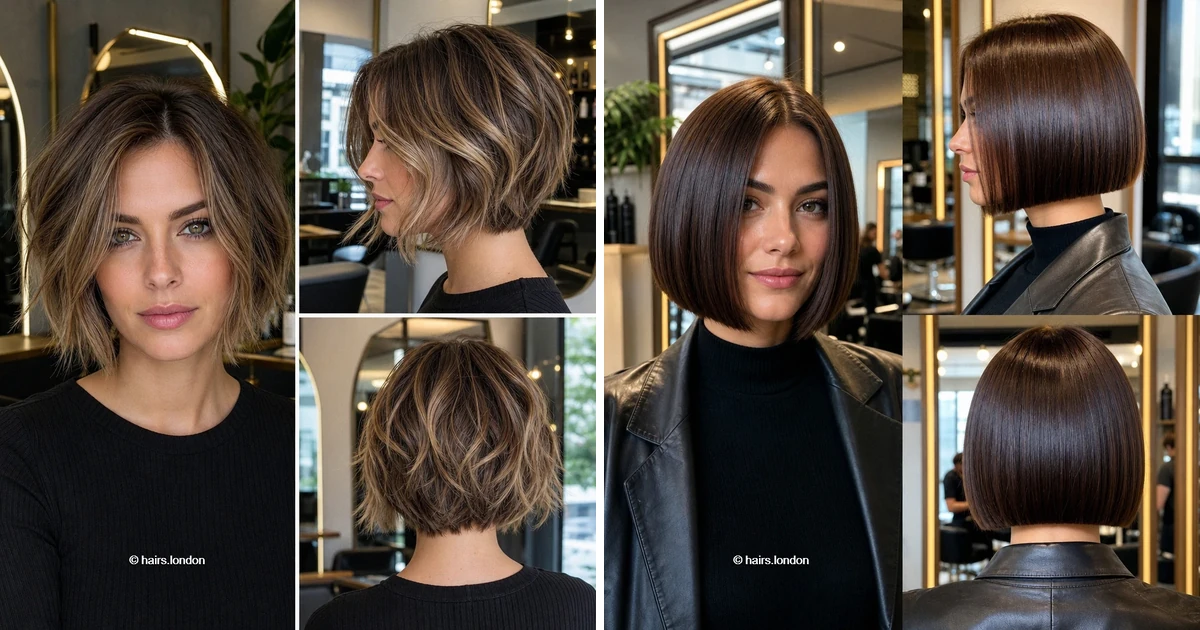
Espresso brown hair forms a smooth, compact jaw length bob. A center part lets both sides frame the face evenly. The visible back curves inward above a tidy neck line. There is little obvious surface layering to disrupt its fullness. Ask whether the lower edge needs adjustment for your density. Dry with downward tension, then release ends into a curve. Keep finishing product light so the outline retains some movement. Natural curls would create a different shape at this length. Refresh the cut when its back edge loses clean definition. A glossing conditioner can support shine without requiring color changes.
12. Soft Brown A-Line Bob
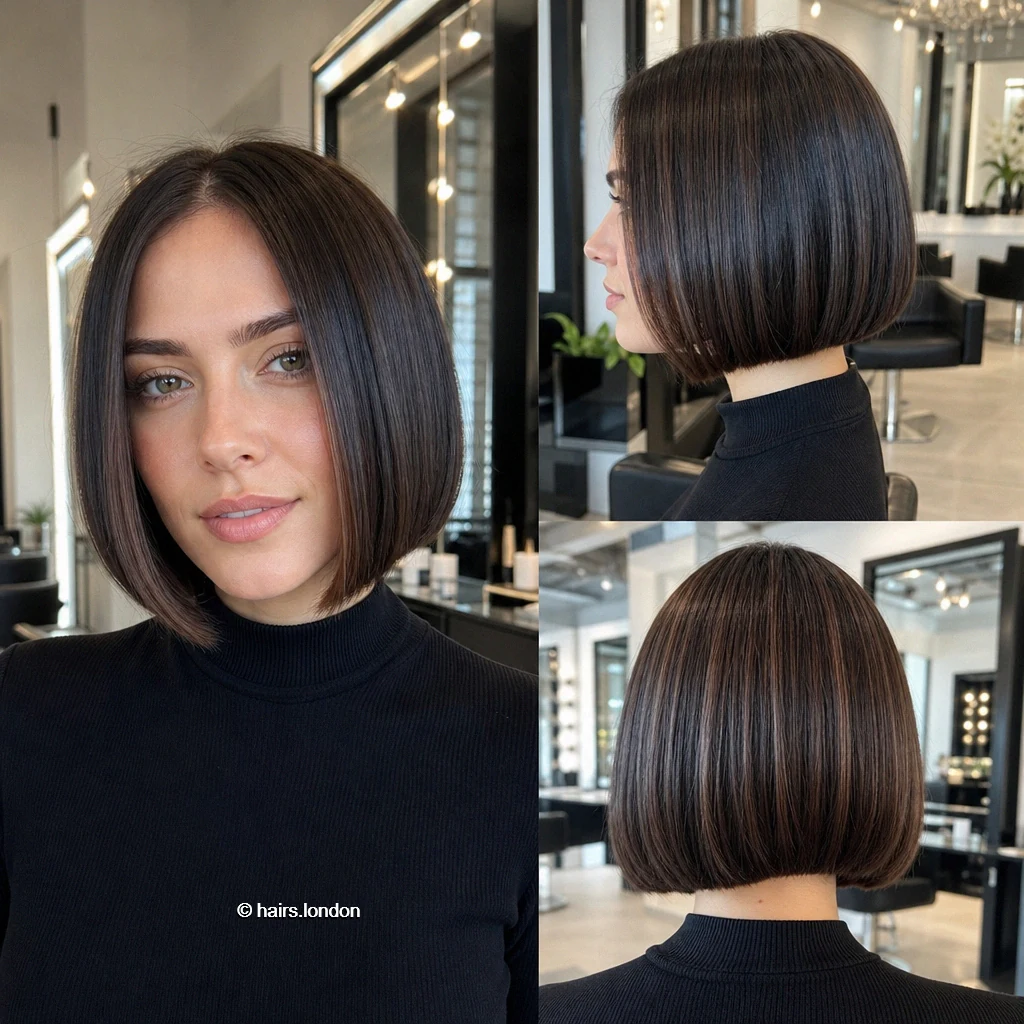
Soft brown hair falls from a clear, central part. Face framing front sections extend slightly beyond the shorter back. The side view supports an A-line shape without obvious stacking. Behind, the gently rounded edge sits close to the upper neck. Ask for subtle length contrast if dramatic points feel impractical. A smooth blowout reveals the front to back difference. Guide ends inward lightly rather than forcing a tight curl. This cut may suit straightforward styling when hair lies smoothly. Watch the shorter back, which can blur the line first. Discuss how natural waves would change the apparent front length slightly.
13. Warm Brown Precision Bob
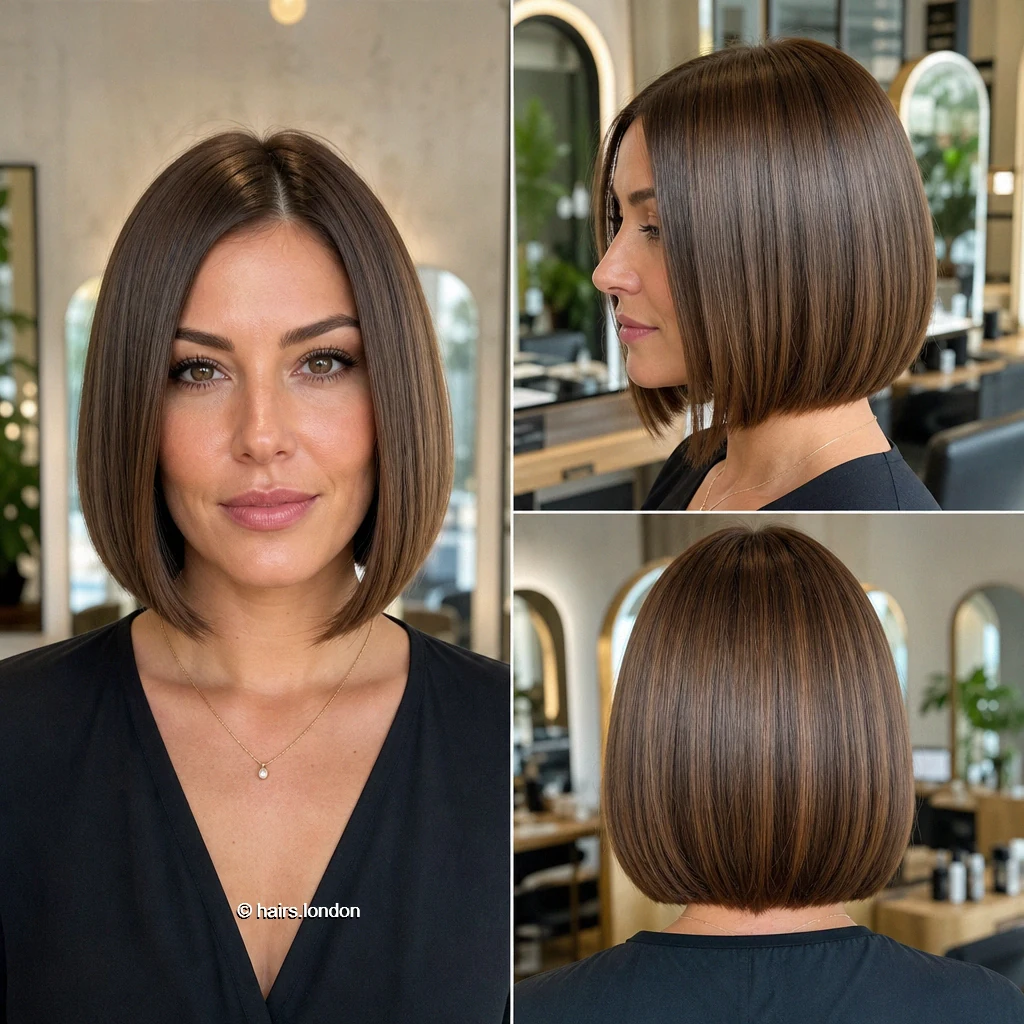
Warm brown hair appears naturally sleek with a gently rounded finish. The center part leaves longer sides falling near the jaw. At the back, a crisp line rests above the neck. A slight inward bend softens what remains a substantial perimeter. Request precise checking around both sides before leaving the chair. Use a paddle brush to smooth lengths toward the ends. Avoid overloading the lower edge with creamy styling products. Dense hair might need discreet weight removal away from ends. Book maintenance when that clean back boundary becomes visibly uneven. Keep heated tools moving to preserve softness and surface shine.
14. Rounded Brunette Bob With Subtle Graduation
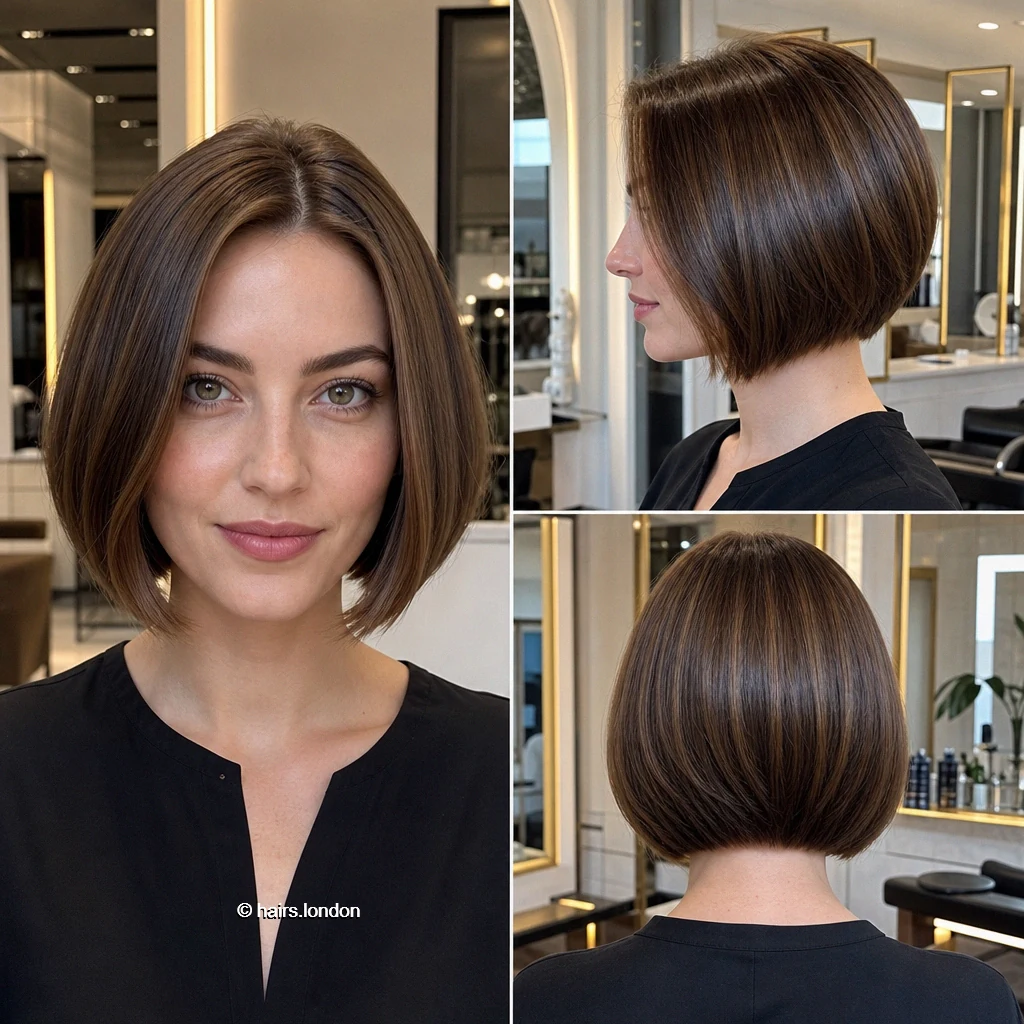
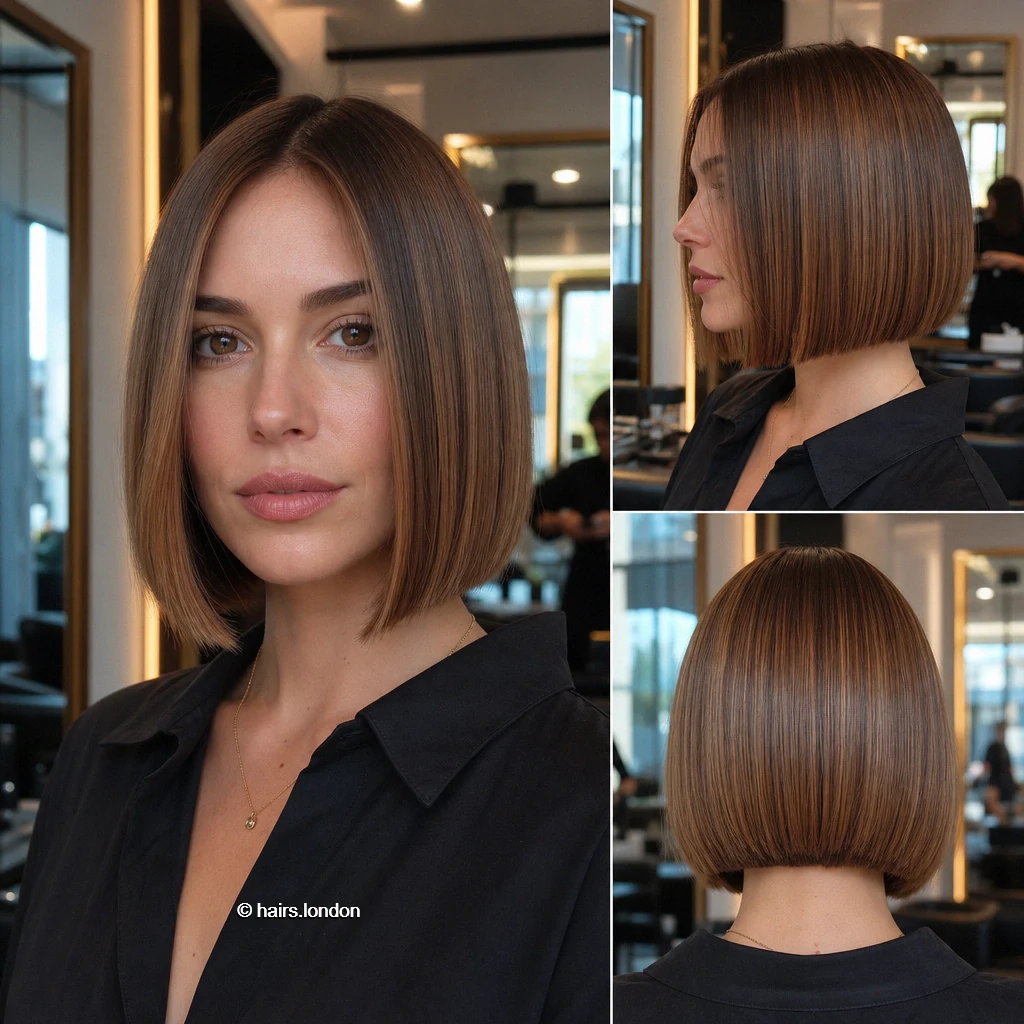
Brunette hair curves into a rounded silhouette around the jaw. A soft center part keeps the front balanced and open. The profile shows longer face framing hair above shorter back. Behind, the outline narrows gently toward the exposed neck. Ask about subtle graduation rather than assuming a sharply stacked finish. Direct airflow along the hair, encouraging that controlled inward curve. Fine strands may need root lift instead of heavy smoothing. With thicker hair, discuss reducing weight beneath the rounded surface. Reshape the back when its taper begins to look bulky. Check your preferred front length before agreeing to shorter sides.
15. Dark Brown Graduated Bob With Extended Front Pieces
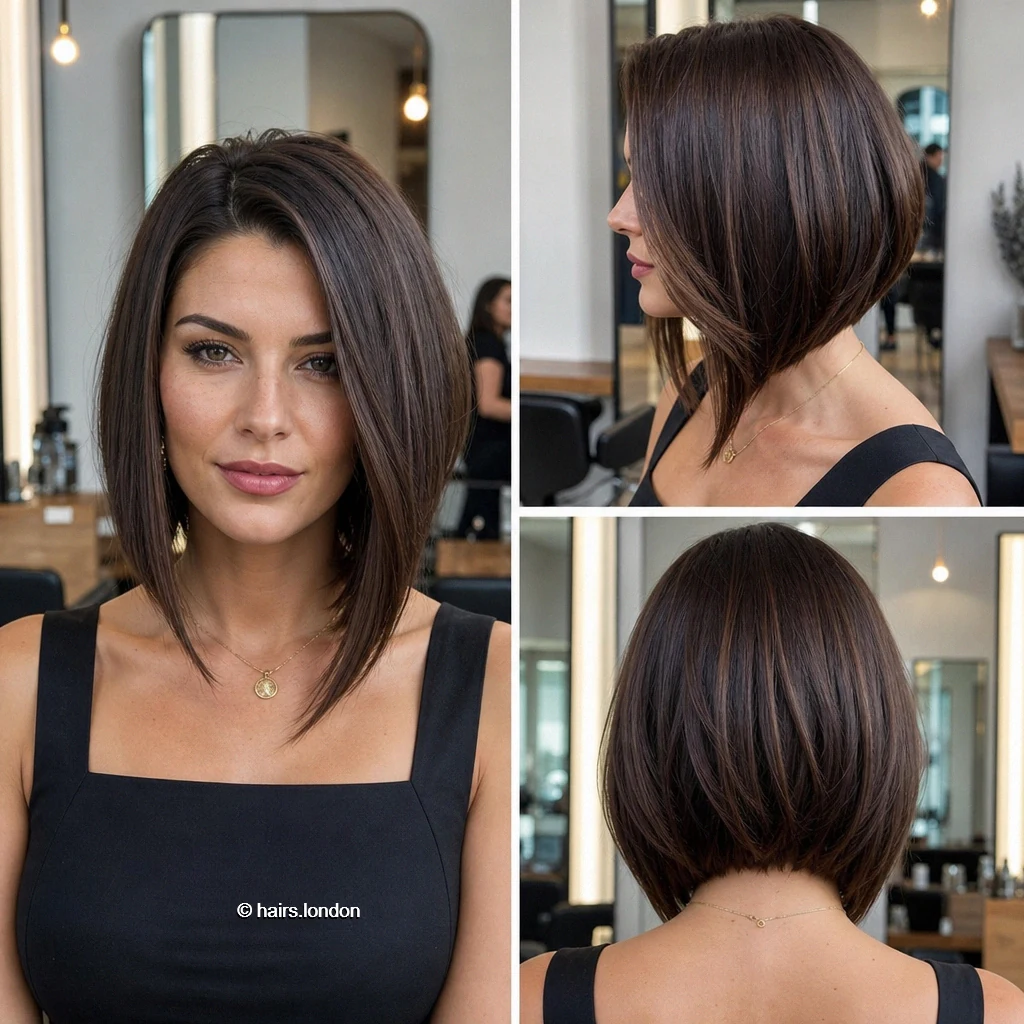
Dark brown hair shows soft, warmer strands near the front. Long face framing pieces reach toward the collarbone in front. The profile reveals a shorter, rounded back and nape. Visible graduation supports fullness above that closely shaped neck area. Ask your stylist to balance those lengths for everyday wear. Blow dry the back into shape, leaving front pieces smooth. A light cream can separate ends without emphasizing excess bulk. Consider whether your growth patterns make the nape difficult to control. Trim the shorter section before it overwhelms the intended contrast. Condition longer ends so they remain flexible around the face.
16. Softly Layered Brunette Bob
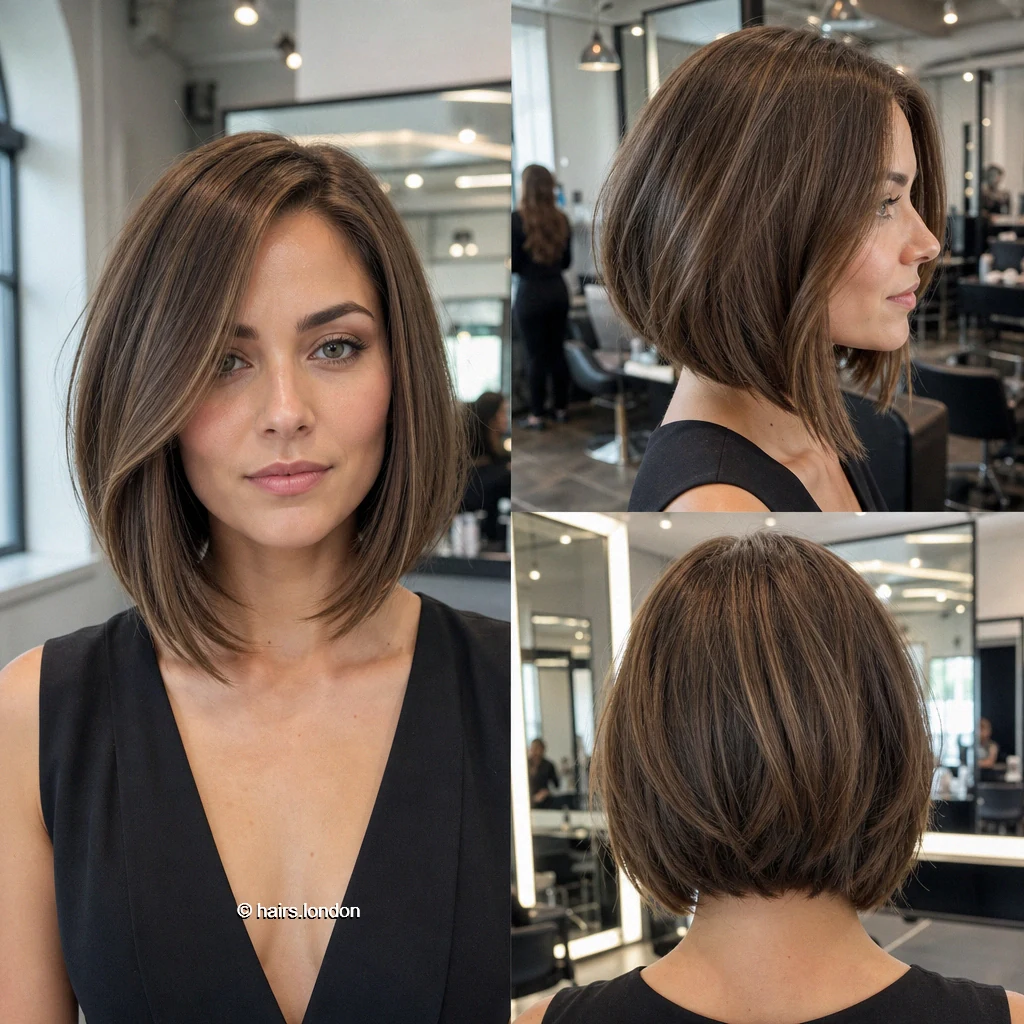
Medium brunette hair includes fine, subtle lighter strands throughout its layers. Side swept front pieces reach just below the jawline. The back forms a soft curve above the exposed neck. Subtle surface layers add movement without creating obvious choppy ends. Ask to retain enough perimeter weight for a rounded finish. Blow dry the front away from the face for lift. Let the lower lengths settle naturally instead of curling tightly. This balance depends on density and your usual part placement. Trim when the neck edge starts losing its gentle shape. Conditioning helps highlighted strands stay smooth during regular brush styling.
17. Deep Brown Bob With a Rounded Back
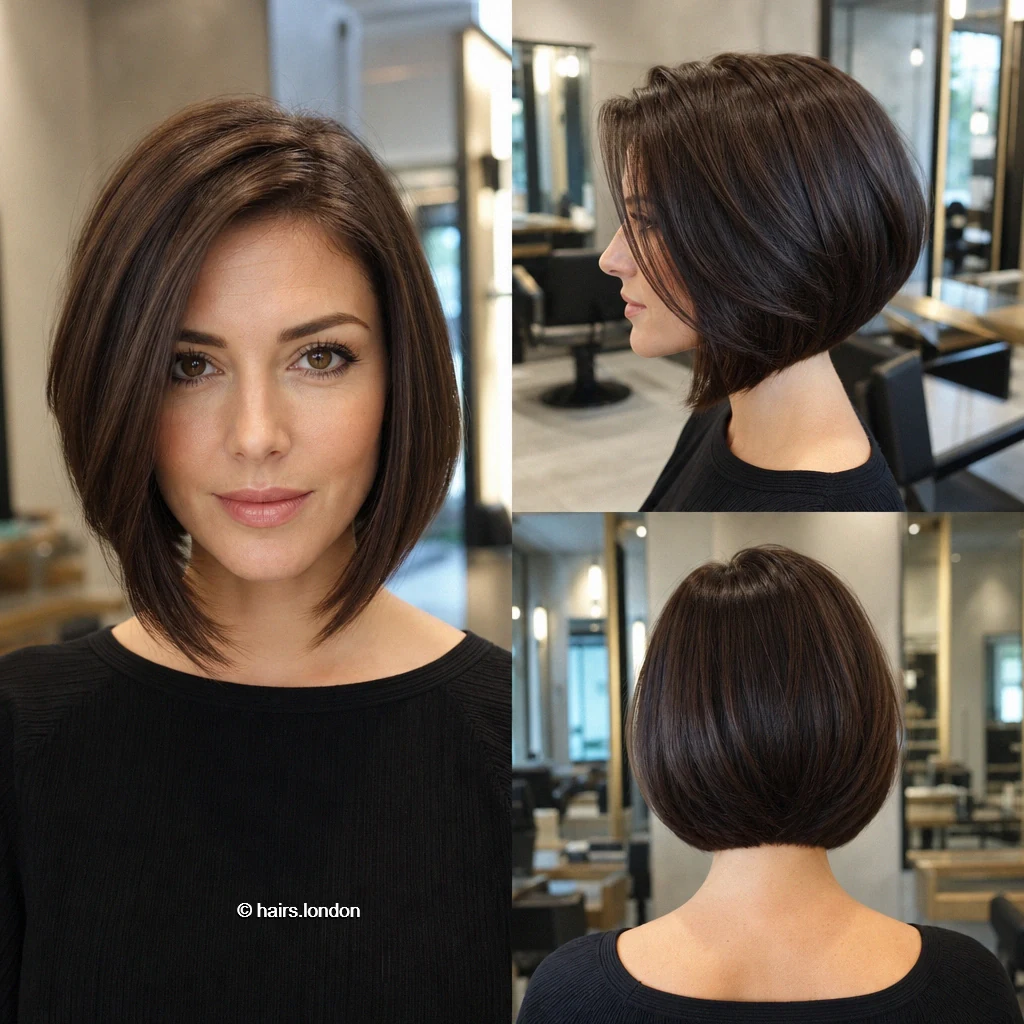
Deep brown hair looks smooth with slight movement through ends. A side part gives one front section extra visible weight. The front falls below jaw while the back clears neck. From behind, its perimeter rounds inward instead of appearing blunt. Ask for modest shaping if you prefer this restrained silhouette. Guide the heavier side across a brush while blow drying. Use a small amount of serum only on dry ends. Hair with strong waves may need more time for smoothness. Recut the back when its inward curve begins to drop. Confirm that the front stays long enough around your jaw.
18. Layered Espresso Bob With Long Front Points
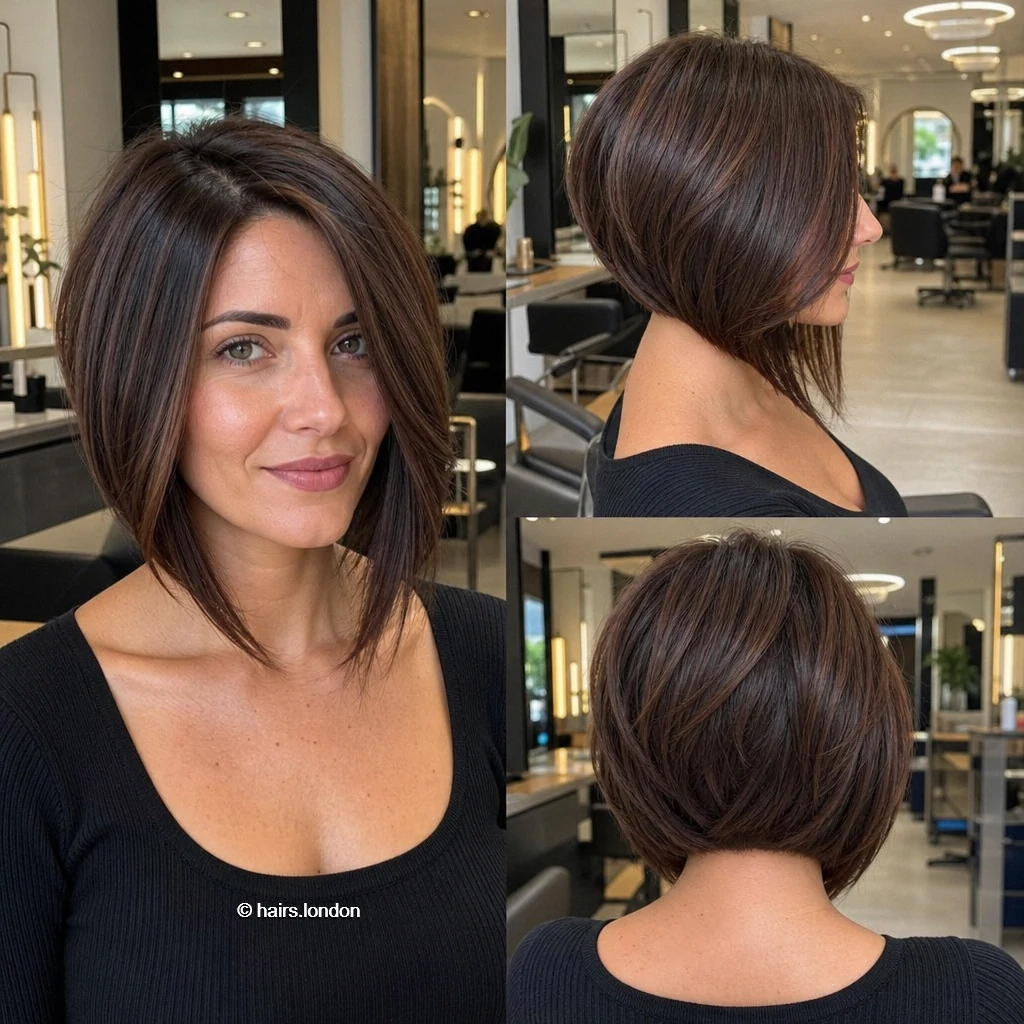
Espresso brown hair carries warm glints through loose surface layers. Its side parted front extends well below the jawline. The back sits high at the neck beneath rounded volume. This contrast creates a strong forward sweep in profile. Ask how much graduation suits your hair’s natural fullness. Direct airflow down the long pieces to prevent outward flips. Separate upper layers gently with fingers after drying so the back keeps visible movement. Dense hair may need carefully placed weight reduction beneath volume. Keep the short nape maintained to preserve length contrast. Protect the longer front ends from repeated, concentrated heat styling.
19. Caramel Highlighted A-Line Bob
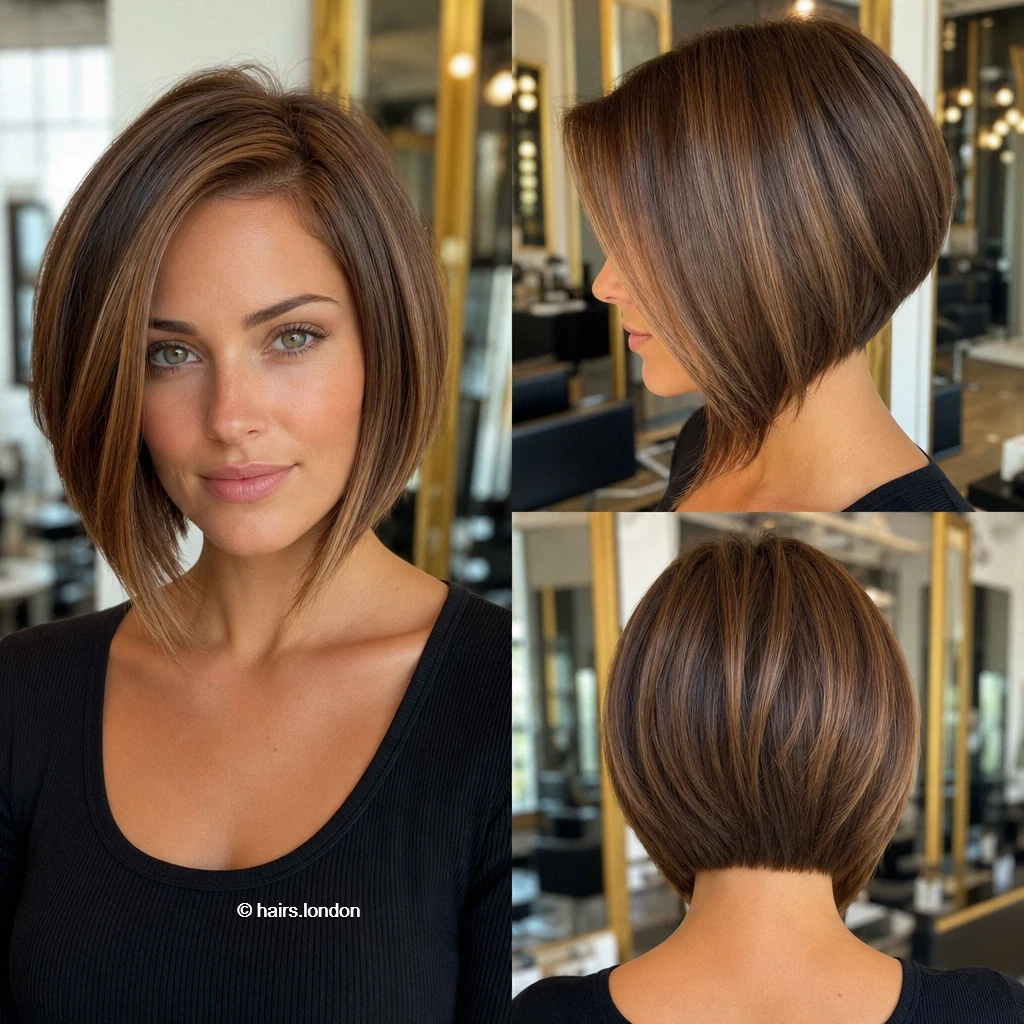
Warm brown hair has caramel highlights tracing the side sweep. Longer front sections descend below the jaw toward the neck. The back is visibly shorter, rounded and closely shaped underneath. From the side, the perimeter slopes forward into distinct points. Ask whether internal graduation is needed for your particular density. Smooth the longer panels while lifting the rounded back lightly. Avoid piling product near the nape, where definition matters most. Natural waves can soften the angle unless you style them. Trim the back promptly when its short edge grows out. Maintain highlighted warmth with gentle cleansing and consistent conditioning care.
20. Copper Brown Angled Bob With a Rounded Nape
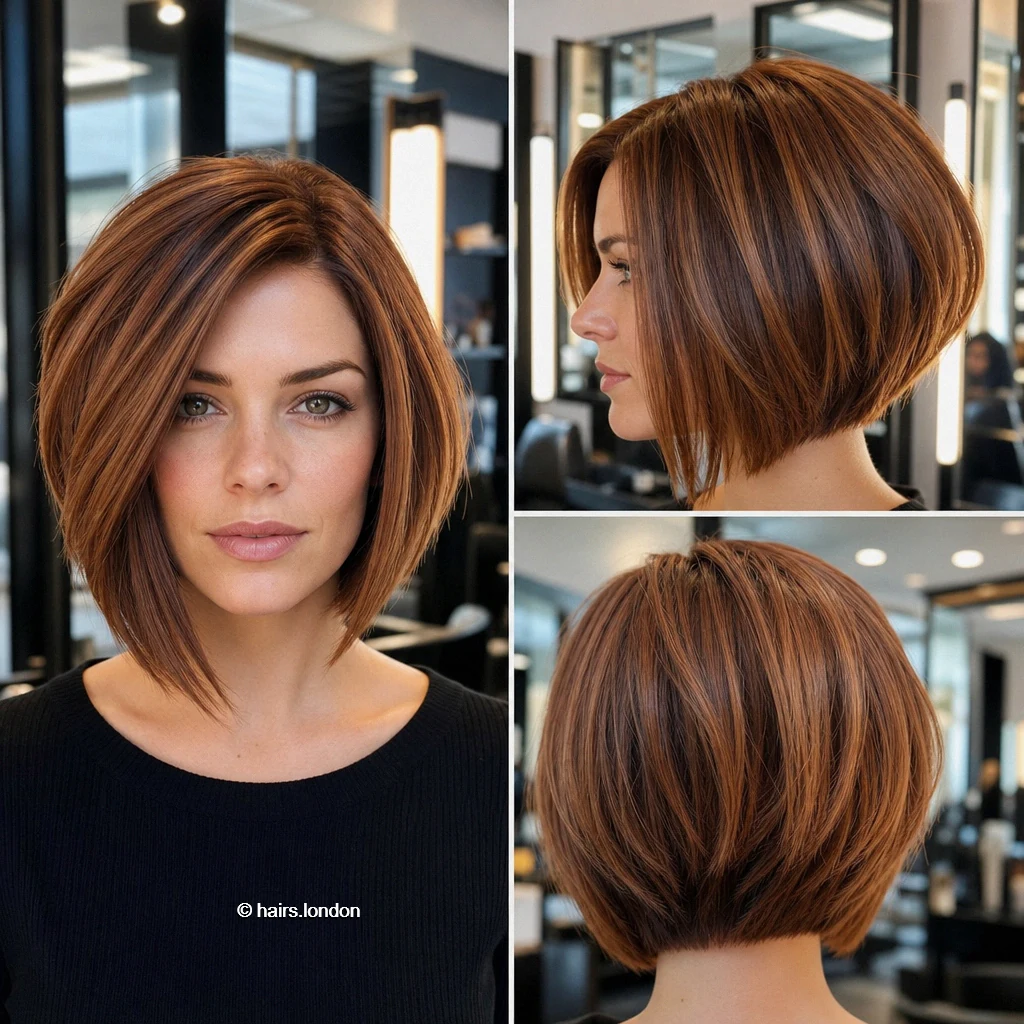
Copper brown highlights brighten a deeper base across swept layers. The side parted front reaches below the jaw in points. Behind, shorter lengths round into a closely shaped nape. A visible forward angle gives the smooth sides their definition. Ask for enough fullness above the nape to avoid gaps. Blow dry the front downward, then softly lift back sections. Keep texture product sparse so those long points stay sleek. The shape depends on density, growth patterns and styling preference. Maintain its shorter back before the angle becomes less noticeable. Condition colored lengths regularly and protect them when using heated brushes.
How to Choose a Bob Length and Shape
Start with the length you want around your face, then consider where the back will sit against your neck. A jaw-length perimeter emphasizes a compact outline; longer front pieces create more framing. An A-line bob has a longer front than back, while a stacked or graduated bob also shows a buildup of shorter lengths at the back. Bring front, side and back references, and decide whether you prefer a crisp edge or one that moves freely.
Styling Fine, Thick, Wavy and Curly Textures
Fine hair often benefits from a substantial perimeter and lightweight root lift rather than heavy oils. For thick hair, ask about removing weight internally while keeping the outer line intact. Encourage natural waves with a small amount of mousse or cream and gentle diffusing; smooth just the perimeter if you want a cleaner finish. With curls, agree on the shape and length in their natural state before cutting, since shrinkage changes where a bob appears to fall. Direct a sweeping fringe early in the drying process, and use product sparingly so shorter layers retain movement.
Keeping Bob Color Fresh
The highlighted bobs here show how lighter pieces can make layers and long front sections more visible. Use conditioning care on lightened ends, protect hair before heat styling and ask your colorist how often your particular tone needs refreshing. A polished dark bob can also benefit from gentle cleansing and a finish that adds shine without weighing down its perimeter.
Maintaining the Bob Perimeter and Graduation
Check the outline in the mirror from the front and sides, but pay attention to the neck as well. A blunt back edge shows small changes quickly, while a short graduated nape can become heavy as it grows. Textured bobs offer more flexibility, although their layers can lose separation. Set trim timing with your stylist according to your growth rate and how precise you want the original shape to remain.
What to Discuss with Your Stylist
Show where you want the front to land when your hair is dry, and explain whether you normally wear it smooth or in its natural texture. Discuss density, cowlicks, part placement, fringe length and the amount of time you will spend styling. For an angled bob, clarify whether you want only a longer front or visible graduation at the back. Ask your stylist to show you how to recreate the finish without adding unnecessary bulk.
Frequently Asked Questions
What is the difference between a bob and a lob?
A bob generally finishes around the jaw or neck, while a lob is a longer bob that approaches or reaches the shoulders. Long front pieces can make a short-backed bob look longer from the front.
How is an A-line bob different from a stacked bob?
An A-line bob is longer at the front than the back. A stacked bob has visible graduation at the back that builds fullness above shorter lengths; a cut can have both features.
Does a blunt bob work with fine hair?
It can, because a substantial perimeter may make the ends look fuller. Ask your stylist to assess your density before adding layers or removing weight.
How can thick hair avoid a bulky short bob?
Discuss internal weight reduction and the placement of layers while preserving the perimeter you want. The right approach depends on density, texture and growth patterns.
Can naturally curly hair be cut into a bob?
Yes, but plan the length around your curls in their natural state. Shrinkage, curl pattern and density all affect the finished outline.
Should I add a fringe to a short bob?
Choose a fringe if you enjoy how it frames your face and are comfortable styling it. A long side fringe offers a different effect from short, straight bangs.
Which bob in these images needs the least daily smoothing?
The softly textured styles may need less smoothing if your hair already has compatible waves. Your natural texture, not the photograph alone, determines the work involved.
How do I keep an angled bob looking intentional?
Keep the front points smooth enough to show their length, and maintain the shorter back before growth obscures the contrast.
How often should I trim a bob?
It depends on growth and precision. A sharp blunt line or closely graduated nape usually shows changes sooner than a loose, textured perimeter.
Will a side part change how my bob looks?
Yes. Moving the part shifts weight and can change how balanced the front lengths appear, particularly on a sweeping or asymmetrical cut.
What should I expect when growing out a graduated bob?
The shorter back may need occasional reshaping while it catches up with the front. Tell your stylist whether you ultimately want an even bob or a lob.
How do I protect highlighted bob ends?
Condition them regularly, use heat protection and avoid repeatedly concentrating hot tools on the same short sections. Ask your colorist about upkeep for your particular shade.
Conclusion
The most useful bob inspiration shows more than a flattering front view. Compare the side angle, back perimeter and amount of visible layering, then choose the version that fits your texture and styling routine. A clear discussion of those details will help your stylist translate a favorite image into a bob you can maintain.


